Shakespeare’s Hamlet: Master Post


I am reading Shakespeare’s Hamlet. I’ve read this play twice before, but never as an adult. I imagine my understanding of the play will be VERY different this time around. In addition to reading the play, I’m going to watch some movies, read critiques, and try out a couple of re-tellings. Not all of this will happen in only one month’s time, so I will be making several posts over the next year. I will keep updating this master post each time I do so that everyone can keep track of my posts. 🙂

Notes on Introduction by Harold Jenkins
Act I, Scene i
Act I, Scenes ii – v
Act II
Act III


The Social Conquest of Earth, by Edward O. Wilson

2012 Book 154: The Social Conquest of Earth

Written by Edward O. Wilson, Narrated by Jonathan Hogan

Reason for Reading: Group read in our LibraryThing “Science, Religion, History” group


Review 

In The Social Conquest of Earth, Wilson expounds upon the theories that were set forth in his classic work Sociobiology. His main thesis is that group selection, not kin selection, drove evolution and helped us to develop societies. He compares the way human society developed to the way ant “society” developed (ants are his specialty). He suggests reasons why religion and xenophobia would have originally developed as protective characteristics of groups. This book covers a large swath of material…from ants to human prehistory, to history, to today. I think he did a pretty good job organizing the book considering what a wide topic he was covering. His theories were clear and for the most part convincing. I think Wilson is an atheist, but he did a pretty good job of stating his opinions in an agnostic sort of way to avoid insulting the faithful. The only statement that rather jarred me was when he suggested that there surely exist better ways to find spiritual fulfillment than total submission to God. This statement jarred me because it seemed he was saying that this religious process developed for a reason, but that reason is now obsolete. However, in an earlier chapter, he pointed out that homosexuality developed for a reason, so homophobia is not helpful to society. I wholeheartedly agree with him that homophobia is hateful and ignorant. But it is not particularly scientific to say homosexuality developed for a reason, therefore it’s good…religion developed for a reason, but it’s obsolete now. What are his reasons for deciding one is good and the other is obsolete? His reasons are emotional rather than scientific. But I’m just being nitpicky here. I think the book was well-written, interesting, and approachable by a non-scientific audience. I had no issues with Hogan’s narration–he read the book well, but it wasn’t anything worth raving about.

Around the World in 80 Books

I’m joining in a five-year project to read “around the world” in 80 books. This blogging project is hosted by Have Books, Will Travel. You can sign up here. Here are my (somewhat modified rules):

My rules for this challenge are:
  • I have five years to complete my journey. My start date is November 2012 and I will complete my journey in October 2017.
  • I generally read a variety of books (I THINK!) so this is more of a how many countries can I hit in five years? challenge, rather than a challenge to read precisely 80 books. I will list the books off by country. It is the setting of the book that I’m counting (rather than the nationality of the author), and if the book takes place in more than one country, I will choose the country in which most of the book is set.
  • For books set in the US, I will try to read one from all 50 states in the next 5 years.

United States

The Americas (not US)
Europe
Africa
Australia

Polar Regions

Oceania 

Outer Space


visited 12 states (24%)
Create your own visited map of The United States


visited 11 states (4.88%)
Create your own visited map of The World

The Horse and His Boy, by C. S. Lewis

2012 Book 153: The Horse and His Boy, by C. S. Lewis

Reason for Reading: Fifth Book (publication order) of the Chronicles of Narnia

Review*****

Shasta grew up as practically a slave to his “father,” until he meet a talking horse. Bree (the horse) has been kidnapped from Narnia, a foreign land that Shasta has never heard of. Bree is convinced that Shasta, too, has been taken from Narnia. They escape together, and have many adventures on the way to Narnia. This book takes place during the original reign of High King Peter and his brother and sisters. It was a delightful little book, and complements the Narnia series quite well. I DID have a good laugh at the rather xenophobic treatment of Archenland–most people from this land were portrayed as corrupt, degenerate, and evil. By the way they dressed and some of their habits, Lewis clearly meant for Archenland to be similar to the Orient. This snafu made me chuckle a little bit, since I took into consideration the age in which Lewis was writing…and that he was writing about a fantasy land. In the end, I enjoyed this book just as much as the other books in the series. It is fun, cute, and a delight to read.

Sunday Salon – November 4, 2012


Well, another month has passed, and this one has been busy! I gave up on job prospects here in Ohio and decided to try the waters in Minnesota where my family (and many friends) live. I won’t move until December, but I’ve already made one trip to move my stuff up there. I can’t believe it costs less to make three trips in my car than it does to rent a truck!!! What’s with that?

I also got lots of books read and participated in a few blog events. 🙂

Weekly Update

Reviews

Events/Memes
  • The first three books that I reviewed were for the R.eaders I.mbibing in P.eril VII event hosted by Stainless Steel Droppings. That was my first time participating in the RIP event, and I really enjoyed meeting all the new bloggers and seeing good spooky/scary books to read!
  • The last book reviewed was for the Harry Potter Read Along hosted by Lost Generation Reader. This event is still ongoing, but I’m beginning to fear that I won’t make it through all the Harry Potter books in time! Oh well, I can continue them on my own. 🙂
  • I participated in my second Feature and Follow Friday, a weekly blog hop hosted by Parajunkee and Alison Can Read. I found several new book blogging buddies there. I really like the you-follow-me I-follow-you rule. I think I’ll generally try to return the favor to book bloggers who follow me on GFC from now on. It broadens my horizons and increases my own following. 🙂
  • I joined Random Reads hosted by i’m loving books. I’ve been feeling trapped within a highly structured reading curriculum for a while now. This way, I can introduce one random book a month into my reading schedule. Yay for structured randomness! 😀 My random book for November is Three Men in a Boat, by Jerome K. Jerome.
  • I joined Project Fairytale hosted by The Cheap Reader.  This event will take place either in February or March of next year. Each person chooses a different fairy tale, reads the original, reads a few retellings, and does a comparison. Sounds like fun, doesn’t it? 🙂 Sign-up ends on November 30th, so you can still join! (Vote for March! :p) My fairy tale is Donkey Skin. My introductory post is here


And now! Let me introduce the theme that I’m hosting in February 2012: Social Justice Theme Read

This is going to be an informal theme read where people can hop in at any time and   comment with a link to their blog posts about social justice (or social injustice). At the end, I’ll have a wrap-up post including everyone’s links. To see my potential reading list, you can read my introductory post. If you’d like to participate, you can sign up in advance at my intro post, or you can just jump in at any point as it suits you. If you sign up on my introductory post by February 7th, 2013 AND write one blog post / book review about social justice (or the lack thereof) you will be entered to win a $10 gift certificate from Amazon

Finally, my post popular blog post for this week was: Cleopatra: A Life, by Stacy Schiff. I have no idea why this post is suddenly so popular. 🙂

October Wrap-up

Books Reviewed
  1. The Headless Cupid, by Zilpha Keatley Snyder
  2. Blood and Chocolate, by Annette Curtis Klause
  3. Harry Potter and the Sorcerer’s Stone, by J. K. Rowling
  4. Roll of Thunder, Hear My Cry, by Mildred D. Taylor
  5. Surprised by Joy, by C. S. Lewis
  6. Devil’s Pass, by Sigmund Brouwer
  7. Narcopolis, by Jeet Thayil
  8. Blood and Other Cravings, ed. Ellen Datlow
  9. Pride and Prejudice (A Norton Critical Edition), by Jane Austen
  10. The Poisoner’s Handbook, by Deborah Blum
  11. The Assassin’s Code, by Jonathan Maberry
Additionally, I led a discussion of The Embittered Ruby, by Nicole O’Dell for the ACFW bookclub

Plans for November

Our theme in the 75ers group on LibraryThing is “New Novels November,” so I will try to read a few books that were published in 2012. 🙂 I’m also participating in a Russian Reading month over at Tuesday in Silhouette. I’ll be reading Pale Fire, by Vladimir Nabokov.

I’m participating in Let’s Read Plays! hosted by Fanda at Fanda Classiclit and Dessy at Ngidam Buku. This is a year-long event in which we will read classic plays. This month, I’m reading Shakespeare’s Hamlet.

Harry Potter and the Chamber of Secrets, by J. K. Rowling

2012 Book 152: Harry Potter and the Chamber of Secrets

written by J. K. Rowling, narrated by Jim Dale

Reason for Reading: I’m rereading these books along with Lost Generation Reader

My Review*****

Harry hopes his second year at Hogwarts School for Witchcraft and Wizardry will be calmer than last year’s. However, even before the school-year begins, Harry meets a house elf who is determined to keep Harry from even STARTING his school year. Harry perseveres, however, and delves into trouble yet again when the Chamber of Secrets is opened and some stealthy beast begins to petrify his classmates. Will Harry and his friends be able to stop the beast before it manages to kill someone? Harry also gets his first taste of xenophobia in the wizarding world, when he learns a new naughty epithet (the m-word). And I bet you’d never guess which bratty little villain uses the word? I’ll give a hint. He’s blonde. 😉

This second installment of the Harry Potter series is just as delightful as the first. It, like its predecessor, is aimed at the younger end of the YA spectrum, which suits me just fine. The narration by Jim Dale is quite enjoyable–in fact, I liked this narration better than his narration of the Sorcerer’s Stone. He’s got different voices for each of the characters, and his voice definitely engaged me. 

The entire Harry Potter is a popular book on the “banned and challenged” lists released by the ALA. Personally, I didn’t see anything objectionable in this book. Accusations of “satan worship” and “encourages interest in the occult” are silly. There isn’t any language or objectionable morals that I can see–other than the fact that Harry, Ron, and Hermione steal, lie, and generally disobey rules. Of course, they do these things with the best intentions, and often because they feel the adults don’t listen to them. Also, they don’t hurt anyone with their antics (though they certainly endanger themselves). But let’s be honest with each other. Would YA books be interesting to ANYBODY if the protagonists were perfect little angels who allowed the adults to take care of all the important stuff? Of course not. 


Flesh & Bone, by Jonathan Maberry

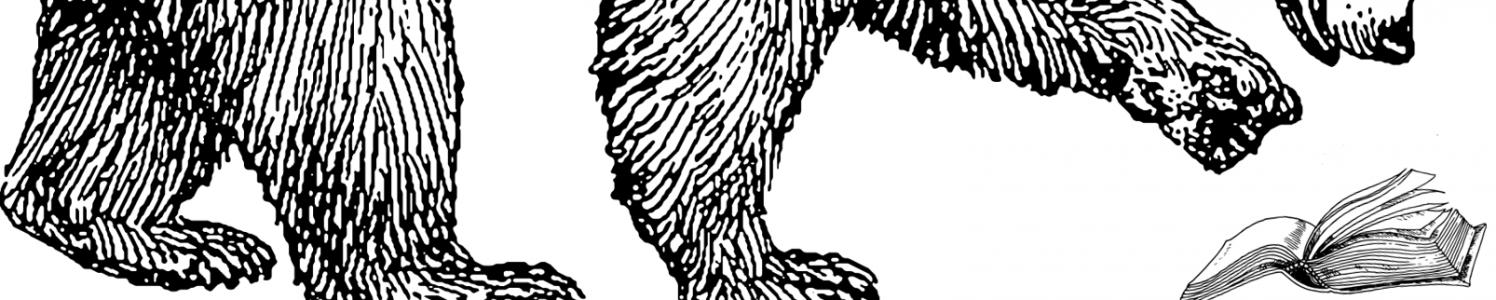
2012 Book 151: Flesh & Bone, by Jonathan Maberry

Reason for Reading: Third book in the Benny Imura series


Review:

Benny, Nix, Chong, and Lilah are on a quest through the zombie-infested Rot & Ruin to find a rebuilt civilization that they can only hope is out there. In the Mojave dessert (doesn’t that just scream “Area 51” at you?) they clash with a religious death-cult whose goal is to send all living humans into the darkness before they, themselves, are allowed to enjoy the eternity of dark peace. However, our team of teens also discovers more evidence that somewhere out there civilization is trying to re-exert itself. This book isn’t as strong as the first two in the series, but it was still enjoyable. Maberry tries to squeeze in so much action into his books that I go into action overload and start to get bored. I think the first book this series was strongest because Maberry spent a good amount of space developing the characters and setting. But the characters, setting, and plot don’t make a whole lot of progress in this book…That space is reserved for extra action scenes. The theme that I appreciated from the earlier books was upheld in this one (zombies were people too, and sometimes the real monsters are human), and there is a newer theme of coping with loss. This theme could have helped the characters develop, but their development was pretty shallow. (As an aside, I notice that other reviewers liked the “mature development of Nix’s and Benny’s relationship,” so I may be alone in feeling that they didn’t really develop any. :p) That said, I’m not trying to tear the book apart…it was a fun read and had lots of action. 🙂 It’s good fluff and I’m eager for what I believe is the fourth and final book.


Assassin’s Code, by Jonathan Maberry

2012 Book 150: Assassin’s Code

written by Jonathan Maberry, narrated by Ray Porter

Reason for Reading: 4th book in the Joe Ledger series. Figured the brainless action would be entertaining for a long car ride. Also, it fits in nicely with the Halloween theme. 🙂


My Review

In this fourth installment of Joe Ledger’s story, Ledger kicks the @$$ of evil Iranians, a Romanian? weirdo cult, and a group of religious doomsday vampires…all while trying to figure out where the mysterious group of psychotic women fit in to this mess. This book is brainless military sci-fi/horror action at its best. I only gave the book three stars because I started to get bored of all the bad @$$ military action. And it waxed a little too political for me at times. This is also a book that you shouldn’t think too deeply about–for instance, why the heck did he bring his DOG for a mission in Iran (when clearly the dog wasn’t being used for the mission)? Certainly, the dog HAPPENED to come in handy at times, but it seems poor planning to bring a dog and then leave him pointlessly in the hotel during the mission, so that if things didn’t go as smoothly as planned, Ledger would have to go back and get his dog before getting out of harm’s way. I also felt some of the “intrigue” plot was rather overcooked. Really? Intrigue in the Catholic Church? Gasp! Never seen THAT in a book before! So, like I said, this book is great if you’re interested in some mindless action…just don’t think too much. 🙂

If you liked the rest of the Joe Ledger books, then this is more of the same. If you liked the first and felt “meh” about the rest, then this book is similar to the rest of the sequels. If you haven’t read any of the others, pick up Patient Zero (it’s good!) and then keep in mind that the rest of the books are less intelligent, but just as much pulpy action.


The Poisoner’s Handbook, by Deborah Blum

2012 Book 149: The Poisoner’s Handbook 

written by Deborah Blum, narrated by Coleen Marlo

Reason for Reading: October Halloween theme

My Review

This fascinating book outlines the development of forensic science in the 1920’s. It begins by describing the poor state of forensics the late nineteen-teens, and pointing out WHY it was so necessary to develop a proper procedure for determining cause of death. I’ve always taken such things for granted and never even thought about the effort it would take to develop the science–not only scientifically, but also as a social movement. Although the Prohibition theme resonates throughout the book, each chapter focuses on a different poison–including the background/development of the poison, the effects it has on the victim, and the measures taken by forensic scientists to discover cause of death. This book was fascinating on so many different levels. It’s interesting as a Prohibition-era history, but it would also be interesting to lovers of popular science. Highly recommended for a little light reading.