Facing My Demons 1

pexels-photo-356147.jpeg

Before I was diagnosed with Bipolar Disorder, I was diagnosed with depression and put on an antidepressant. Doctors need to be careful when prescribing antidepressants to people with Bipolar Disorder because many antidepressants can cause mania in patients with Bipolar Disorder. I recently unearthed some of my poetry from my first-ever truly manic days. (Ever since then, I have had several manic episodes. I think the antidepressant rewired my brain.)

Over the next few weeks, I will publish it stanza by stanza.

Facing my Demons

I sit in a tomb

dark, except for a flickering red glow.

Eerie screams of tortured souls

slither up from the catacombs.

The despair of the lost potentiates my own.

But they’re not really there.

All in my head.

My friends outside push and heave at the tombstone.

They want to save me.

But they can’t. Because they’re not really there.

All in my head. Shall I go down?


Everyday Parenting – Lectures 1 and 2

pexels-photo-701014.jpeg

These are notes from a Coursera lecture series entitled Everyday Parenting – The ABCs of Child Rearing.

Lecture one: Praise

Doctor Kazdin suggests using effusive (his word) praise immediately after a child’s behavior in order to reinforce that behavior. For instance, I should say M, great job putting on your outside clothes quickly! While having tone of voice rise with excitement and gesturing with my hands. This should be followed by a light, kind touch like a hug, kiss, high five or whatever. (I am not good at effusive praise because I think praise should match the task completed. Effusive praise for getting on outside clothes seems condescending.)

Lecture two: Antecedents 

Doctor Kazdin suggests that using antecedents can make behavior either more or less likely to occur depending on the content of the antecedent. For instance, if you started a sentence with “If you really loved me…” it makes the child less likely to obey. Antecedents should be used strategically. There are three types of antecedent that change behavior.

The first type he names “prompts.” They are instructions that ask or tell someone to do something. Often, it’s best for that prompt to be specific. For instance the verbal prompt “I want you to brush your teeth,” could then be followed up with a physical prompt of leading the child to her toothbrush.

The second type of antecedent he calls “positive setting events,” and the third “negative setting events.” Following a positive antecedent a child is more likely to behave and she is less likely to behave after a negative antecedent. These can be subtle like tone of voice or facial expression. Ordering a child to do something with a frown on your face is a negative antecedent. Whenever possible, use a gentle tone of voice. If you are far away, come closer so that you don’t have to yell across a room.

Providing a child a choice may also help the child to behave. For instance, a choice of what to wear when you tell them to get dressed. “Please put on one of these two shirts.”

Dr. Kazdin suggests using the word “please” as an antecedent, though he says many parents don’t like using “please” with their children. (I’m not sure why parents would feel that way, but ok.)

Another way of encouraging a child to behave is to offer help. Once the behavior is started, help can be slowly withdrawn and praise can be given to the child for starting the behavior on her own.

He also suggests challenging a child by saying “I bet you can’t do that again. No child could do that until they’re all grown up.” (This, like the effusive praise, seems a bit too condescending to me and I would feel fake doing it.)


Classics Club Spin #17

classicsclub

Classics Club is doing another spin. We choose 20 books from our Classics Club list and on March 9th, and Classics Club will choose a number between 1 and 20. We will then read that book by April 30th. Unfortunately, my Classics Club list is meant to be read in a specific order, so I will create a new list of 20 books.

  1. The Picture of Dorian Gray, by Oscar Wilde
  2. Invisible Man, by Ralph Ellison
  3. A Room of One’s Own, by Virginia Woolfe
  4. The Souls of Black Folk, by W. E. B. Du Bois
  5. Breakfast of Champions, by Kurt Vonnegut
  6. Discipline & Punish, by Michel Foucault
  7. On Human Nature, by Edward O. Wilson
  8. A Tale of Two Cities, by Charles Dickens
  9. A Study in Scarlet, by Sir Arthur Conan Doyle
  10. The End of the Affair, by Graham Greene
  11. Master and Commander, by Patrick O’Brian
  12. The Merry Adventures of Robin Hood, by Howard Pyle
  13. The Jungle, by Upton Sinclair
  14. The Selfish Gene, by Richard Dawkins
  15. Catch-22 by Joseph Heller
  16. The Witches of Eastwick, by John Updike
  17. Swann’s Way, by Marcel Proust
  18. Bleak House, by Charles Dickens
  19. Oliver Twist, by Charles Dickens
  20. Nicholas Nickleby, by Charles Dickens

Jacob earns Rachel as his wife

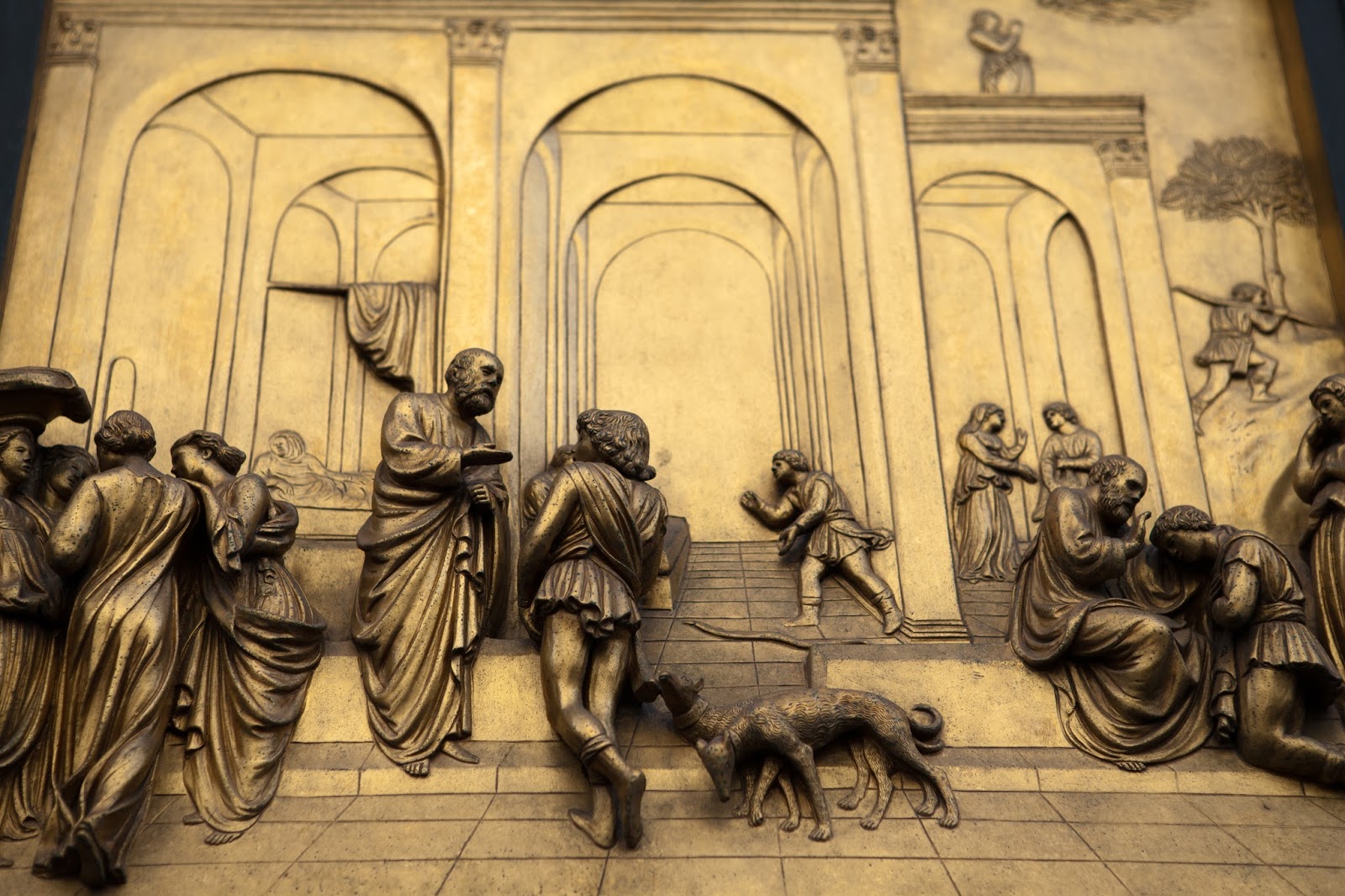
After Jacob steals Esau’s blessing, he flees Esau to journey to the land of his maternal uncle Laban. At a well, Jacob sees and falls in love with Rachel, Laban’s daughter. He asks Laban for Rachel as a wife, offering to work for Laban for seven years in order to earn Rachel. After the seven years are up, he has a wedding, and only discovers after the consummation that he had been tricked into marrying Leah, the older (and less attractive) sister of Rachel. Laban points out that Leah is the older, and should be married first, so Jacob offers to work for another seven years for Rachel. After his marriage to Rachel, Jacob fathers several sons by Leah, a couple by Leah’s servant woman, and a copule by Rachel’s servant woman. Finally Rachel bears Joseph (Jacob’s favorite son) and Ben. 


In the meantime, Jacob makes a fortune in livestock by offering to work for Laban for several years, taking only the spotted and striped goats as payment. God was kind to Jacob and gave him many goats (however, Jacob did encourage the goats to give birth to spotted and striped by breeding them among sticks – I’m not sure how that works, but ok). 

After a while, Laban’s sons became angry at Jacob for “stealing” their father’s fortune and Jacob decides to flee Laban with his family and fortune. Rachel steals her father’s household gods before the flight. Laban pursues Jacob, and searches for the household gods, but finds nothing because Rachel sits upon them and lies to Laban, saying she is bleeding. 

Laban finally allows Jacob to leave, and he travels to his homeland. When he gets near, he fears that his brother Esau is still angry and will kill him. So he splits his group into two encampments, and sends many gifts ahead for Esau to receive before meeting with Jacob. Despite Jacob’s fears, Esau embraces Jacob and welcomes him back home. 

Why did Rachel steal the household gods? Did she worship them instead of Jacob’s God? Or was she trying to anger her father? What does this show about how the ancient Hebrews viewed the worship of other gods? Did they accept that there were more gods than one, but that their God alone should be worshiped by themselves?

Why was Esau so willing to welcome Jacob and forgive him? Was this a sign that Esau had changed into a more honorable man? Or was he just pleased by the gifts provided by Jacob? It seems that the first is the more reasonable option since Esau tells Jacob to keep his gifts, for he himself had more than enough. 

The story of Jacob and Esau


After God’s test of Abraham in the sacrifice of Isaac, Sarah dies, Isaac marries Rebekah, and Abraham dies. Following these events comes the story of Jacob and Esau. The story almost ignores Isaac’s life as an adult, and skips on to his sons Jacob and Esau. 


Jacob and Esau were twins born to Rebekah. Esau was the first twin to emerge, and therefore the rightful heir to Isaac. But Jacob was born holding the heel of Esau, which has become a symbol of the stealing of a birthright. Later, Jacob actually steals Esau’s birthright as well as Esau’s blessing from Isaac. 

Jacob was a mamma’s boy. He lived in the tents. What he did there is a mystery that is not explained in the Bible, other than that he was a quiet man. Esau, on the other hand, was a hunter. Isaac preferred Esau, because Isaac liked himself some game. 

At one point in the story, Esau returns from hunting famished, to find Jacob cooking a stew. Esau asks for some of the stew (which seems fair, but maybe this is meant to portray that Esau wasn’t successful in his hunting whereas Jacob was successfully providing food for the family). Jacob refuses to give any stew to Esau unless Esau gives up his birthright. Esau is very hungry and readily gives up his birthright. 

Then Isaac wants to give Esau his blessing as the firstborn and favorite of the twins. He asks Esau to bring some game and prepare it the way Isaac likes. Rebekah, who favors Jacob, encourages him to take advantage of his father’s blindness and feebleness and to steal the blessing. She tells him to bring her a goat and she would prepare them as Isaac likes. Then she gave Jacob Esau’s clothes (that smelled like Esau) and put fur on Jacob’s hands so that he felt hairy like Esau. Jacob lied more than once to Isaac, who recognized Jacob’s voice but was fooled by the food, the smell, and the fur. He thus blessed Jacob. 

When Esau returned from hunting and discovered Jacob’s deception, he threatened to kill Jacob. So, with the encouragement of God, who told Jacob where to flee to, Jacob ran away from Esau. 

Jacob was a mamma’s boy and lived in tents. I wonder what the ancient Hebrews thought of men who lived in tents and did not have an occupation. Were the Hebrews approving of mamma’s boys? 

What are we supposed to think of Esau selling his birthright? Of course, it seems that Esau didn’t appreciate the gift given to him by God – being the firstborn. He treasured corporal things such as food. But on the other hand, what are we supposed to think of Jacob manipulating Esau into giving up his the birthright? It didn’t seem honest or fair. I’m not a fan of the behavior of either of the brothers. This story is yet another example of the imperfections of people in the Bible. 

Another character flaw that comes up in the Bible is that Jacob and Rebekah are so willing to take advantage of Isaac’s feebleness and to steal Esau’s blessing. Jacob isn’t even the one who prepares the goats for Isaac. He lets his mother do the hard work. He outwardly lies to his father. Then he appears cowardly when he runs from Esau instead of facing the consequences of his actions. 

Abraham’s offering of Isaac

Finally, God gave Sarah the promised son, Isaac. Due to her love of Isaac and her jealousy of Hagar and Ishmael she expelled the two. Abraham was loathe to abandon Ishmael to the elements, but God promised to take care of Ishmael, and that he would be the father of of a nation, so Abraham trusted God and did what he was told. 


But God wasn’t done testing Abraham. He asked Abraham to bring Isaac up the mountain and sacrifice him. Abraham did so, but just as he was about to kill Isaac, an angel called called to him from heaven, telling him not to sacrifice Isaac, but to sacrifice a lamb that was caught in the brambles. 

This is another example of why I wonder if God was considered omnipotent by the writers of the Pentateuch. I wonder why God did so much testing of Abraham if God knew that Abraham would pass. It seems cruel. 

I was disappointed in the Abraham’s personality again when he lied to Isaac about the sacrifice: “And Isaac said to his father Abraham, ‘My father!’ And he said, ‘Here am I, my son.’ He said, ‘Behold, the fire and the wood, but where is the lamb for a burnt offering?’ Abraham said, ‘God will provide for himself the lamb for a burnt offering, my son.'” (Genesis 22:7-8 ESV) Wouldn’t it have been better for Abraham to give Isaac the chance to volunteer for the mission? God did not order Abraham to lie to his child. 

The Destruction of Sodom and Gomorrah

In Chapter 18 of Genesis two angels and God appeared at Abraham’s tent. Abraham saw them and thought they were three men, so he rushed to extend his hospitality to the guests. Hospitality was of very high importance to Abraham’s culture, and he did everything right. He set Sarah to work kneading flour, prepared a calf, and provided curds and milk. After this, the angels and the LORD revealed themselves to Abraham and told him that Sarah would bear a child. Sarah, who was eavesdropping, laughed at this, and the LORD scolded her. Sarah, afraid, denied laughing. 


After this, the LORD forewarned Abraham that he was going to destroy the city of Sodom. This was a turning point in the narrative – God had never before used Abraham as a confidant, and Abraham jumped right on top of his new level of relationship by questioning “Suppose there are fifty righteous within the city. Will you then sweep away the place and not spare it for the fifty righteous who are in it?” (Genesis 18:24 ESV). When the LORD said that he would not sweep away the city for the sake of the fifty, Abraham questioned about forty-five, forty, thirty, twenty, and ten. Each time the LORD answered that he would save the city for the sake of those righteous people. 

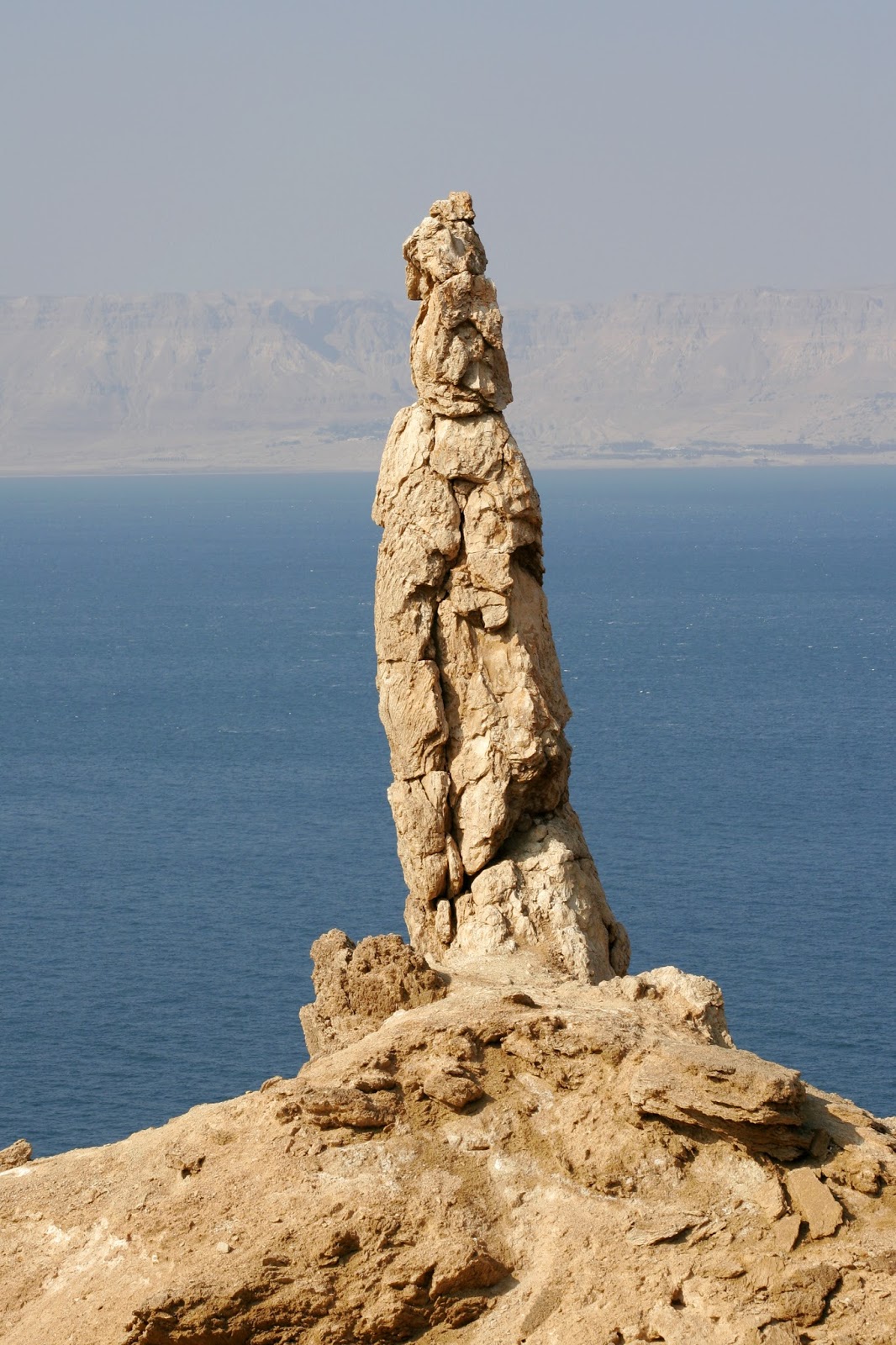
Then, the two angels went down to Sodom. Lot saw them, and thinking they were men, invited them to his home, and provided a feast. But the evil men of Sodom surrounded Lot’s house and demanded the guests be sent out so the men could sodomize them. Lot stepped out into danger himself and refused to send out the guests, instead offering his virgin daughters as an exchange. When the evil men of the city threatened to worse-than-sodomize Lot, the angels intervened and struck blind the men at the gate. They told Lot to take his entire family, including his daughters’ grooms, and leave the city for it was about to be destroyed. But Lot’s sons-in-law thought he was joking and didn’t heed the warning. The angels insisted, and finally Lot left the city with only his daughters and wife. They were told not to look back, and because Lot’s wife looked back, she was turned to a pillar of salt. 

Lot was living in a cave alone with his daughters, who were concerned that there were no longer men to marry. They worried that Lot’s line would thus end. So they got Lot drunk and raped him while he was passed out. 


This is an early example of the thriller/suspense genre. The reader hears that these cities will be destroyed, and wonders (along with Abraham) whether God will destroy the righteous with the evil. And how will God respond at being questioned so closely by Abraham? Did Abraham overstep his relationship with God? It seems not, because God answered Abraham patiently and kept his promise.

The suspense heightens throughout the story, with each incident showing how evil the men of Sodom were and how righteous Lot was. That is, assuming that when the story was written readers would interpret Lot’s offer of his virgin daughters instead of his guests as the height of hospitality (and therefore worthy of God’s smiles). Of course, to me, sending out innocent girls doesn’t seem a good solution at all. 

The action peaks when Lot’s wife is turned to a pillar of salt because she looks back at the destruction of Sodom. This don’t-look-back plot point is similar to the older story of Orpheus, who went on a quest into Hades to rescue his deceased (and dearly loved) wife Eurydice. He was told not to look back when leaving Hades, but couldn’t resist looking back to see the face of Eurydice, who then disappeared back into Hades. 

The end of the story is a bit puzzling. Why, after Lot had been so righteous throughout the story, was he rewarded by being raped by his daughters? Surely this incest was just as disgusting to the readers of the time as it would be to us? 

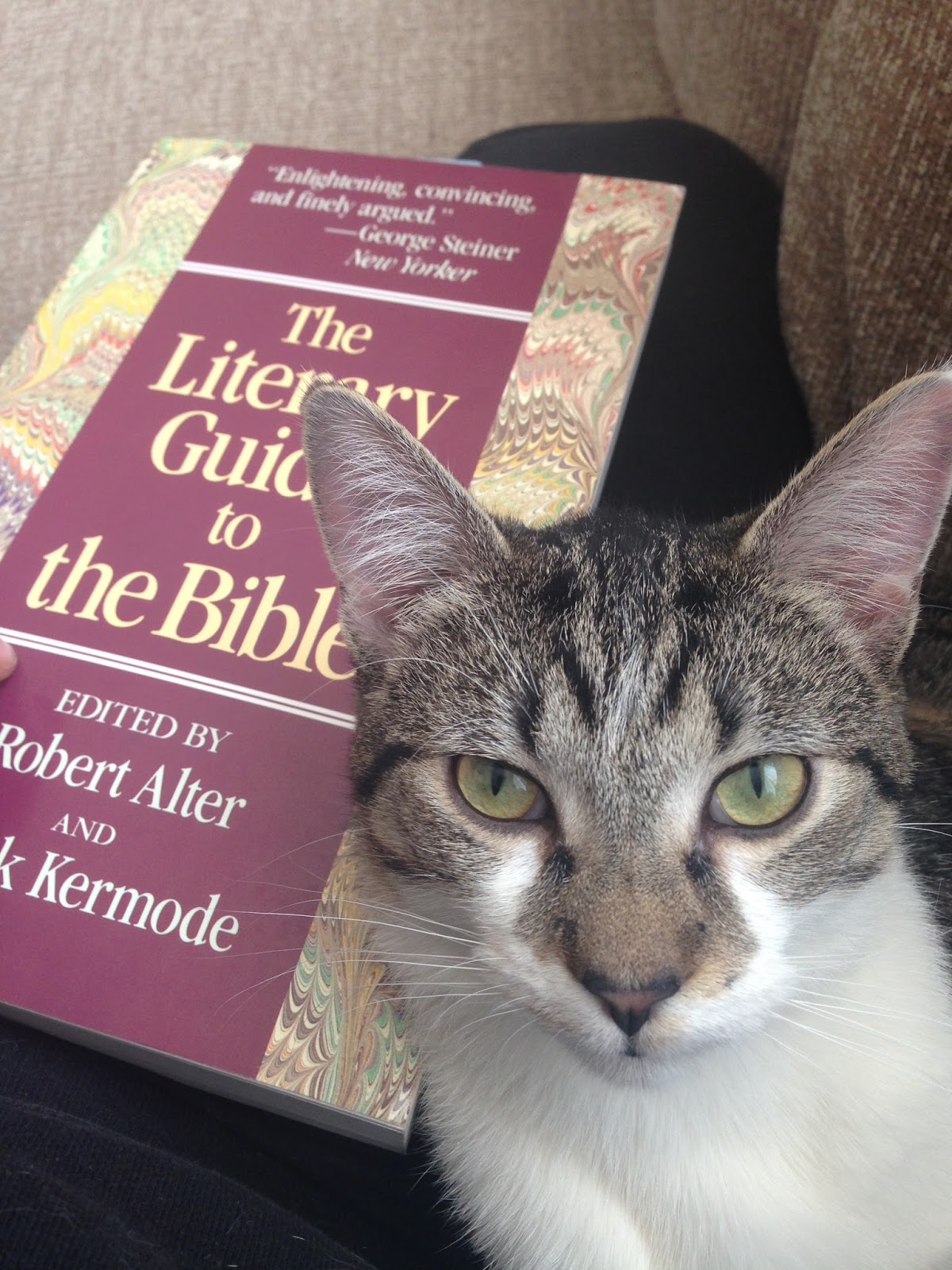
The notes in The Literary Study Bible have a different interpretation of Lot’s righteousness than I do. It points out that despite the New Testament commentary on Lot as a righteous man (2 Peter 2:6-8), Lot was closely tied to the evil city of Sodom. This close tie was shown by his reluctance to leave the city, even when the angels said that it would be destroyed. They had to drag him out of the city by his hand, in fact. The commentary ends by saying “it is easier to get the family out of Sodom than it is to get Sodom out of the family.” 

The woes of spraying

This has been an uneventful week for me. Things are going well at work, though I’m working a little too hard these days and have decided I don’t have enough time for all the books I’m reading. Sadly, I’ve had to cut out a few of the books in my currently reading list, so that I can finish SOMETHING this month. Also my male cat, Puck, whom I have not had money to fix yet, has started spraying. Yuck. It has not been going on long and I’m hoping the behavior will stop once he’s neutered. The internet says that he’ll probably spray for a little while after being fixed, but if the behavior has not been going on long there’s a good chance he’ll stop. This is exactly why I didn’t want a male cat at all, but, alas, when I had the chance at two free kittens one of them was male. And the vets convinced me to fix the female first. Shouldn’t have listened. 


I have not been exercising as I’ve had a busy work schedule (16 hour days), and I’m being a bit lazy. Hopefully I can get back to training next week, or the week after. But I’ve been doing a good job of eating healthier and less. 

Also, I’ve decided to go off the Abilify altogether because of the huge price-hike. I just upped the dose of my Lamictal and hope that is enough to keep me stable. I am very aware of the tells of going manic or depressed, so hopefully if I start to destabilize I will notice right away and do something about it. The problem of going manic is that it’s fun and I get lots of things done. People with bipolar disorder tend not to want to keep up their meds when they start to go manic. 

Currently Reading: I cut out the Paradise Lost. I just don’t have time to keep up with a group read right now. I may read PL next year. We’ll see. I decided to set aside Evicted, Swann’s Way, and The Stand until I finish what I’m currently reading/listening to. I’ve also decided that after Wizard of Oz, I will stop reading the Baum series this year, and not read one a month. There are other books I’d like to read for the Pop Sugar and Back to the Classics challenges and a little variety in my reading will help me enjoy the year better. I got behind on the Harry Potter because I was toying with the idea of quitting it, too. But I decided I need a little fun in my life. 

Abram becomes Abraham

Abram’s story continues with a vision from the LORD. Abram complained to the LORD that despite His promise when Abram left Chaldea, God had given Abram no offspring. So God renewed his promise that Abram would have numbers of descendants to rival the stars. But Abram was still not satisfied. He asked: “O LORD GOD, how am I to know that I shall possess it?” (Genesis 15:8 ESV). God requested a sacrifice, which Abram provided. Thus a covenant was formed. But the LORD said “Know for certain that your offspring will be sojourners in a land that is not theirs and will be servants there, and they will be afflicted for four hundred years. But I will bring judgement on the nation that they serve, and afterward they shall come out with great possessions.” (Genesis 15:13-14 ESV). 


Because Sarai had given Abram no children, she told him to sleep with her servant. When the servant, Hagar, became pregnant with Ishmael, Hagar scorned Sarai for being barren, and Sarai became so angry that Hagar ran away. But the LORD found Hagar and told her to return to Sarai, and that her descendants would be innumerable. 

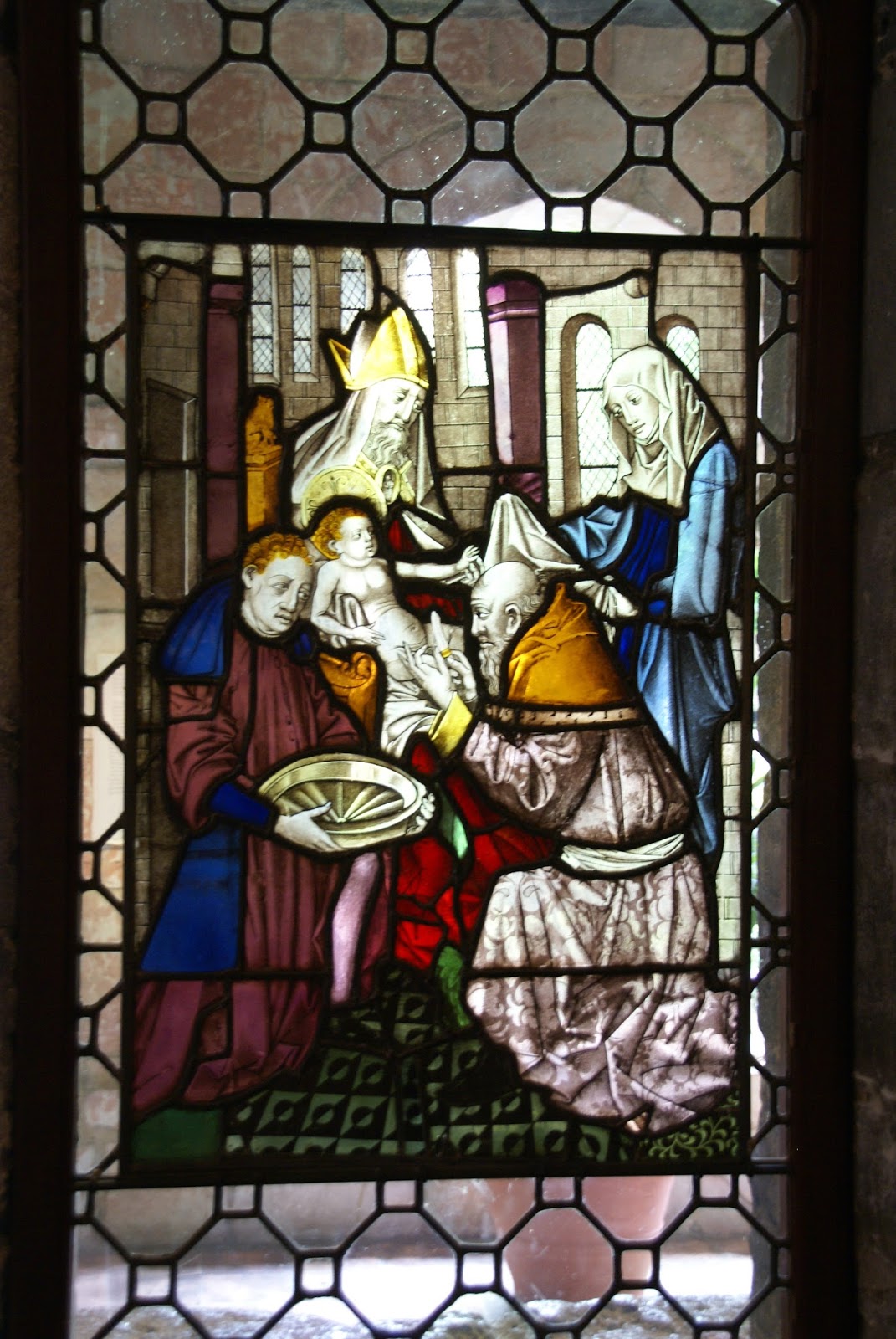
Time passed until the LORD again reminded Abram of the covenant. The LORD said “No longer shall your name be called Abram, but your name shall be Abraham, for I have made you the father of a multitude of nations.” (Genesis 17:5 ESV). God told Abraham that for him to keep the covenant he must circumcise himself and his entire household, including family, servants, and slaves. God also changed the name of Abraham’s wife from Sarai to Sarah. God promised to bless Sarah and make her the mother of nations. But Abraham laughed at this proposal. Weren’t he and Sarah too old to bear children? Couldn’t God bless Ishmael? But God told Abraham that Sarah would bear a son, and that he should be named Isaac. But that Ishmael, too, would be the father of kings. 

So Abraham circumcised himself and his entire household. 

This story shows the patience of God despite the ongoing doubt of Abraham – a doubt which foreshadowed those of Abraham’s many descendants during the Exodus from Egypt – a doubt which seemed to encourage God to punish Abraham’s ancestors by bonding them into slavery for centuries. 

But why was God so patient with Abraham. What was so special about him? And why the name changes? What did these changes signify? 

In addition to further developing the characters of God and Abram/Abraham, this story also developed the character of Sarai. Before this, she was only mentioned as a passive character, but here she was shown to love her husband so much that she wanted him to bear a child, even from someone else. But when that someone else, a servant, scorned her, Sarai was no longer placid and giving. She became bitter and angry. This character development foreshadows further angst later in the narrative. 

The call of Abram


Genesis 12 describes God’s call to Abram to leave his home and family in the land of Chaldea and travel forth to the land which God appoints for him. God promises “And I will make of you a great nation, and I will bless you and make your name great, so that you will be a blessing. I will bless those who bless you, and him who dishonors you I will curse,” (Genesis 12:2-3 ESV). So Abram, his wife Sarai, and his nephew Lot all traveled forth to the land of Canan, where they settled. 


But a famine drove them to Egypt. There, Abram was afraid that he’d be murdered because his wife Sarai was so beautiful, so he told her to call him her brother. Pharaoh took Sarai into his harem, and Abram became rich because of his “sister.” But soon, a curse fell upon Pharaoh, who discovered that Sarai was Abram’s wife not his sister. He was angry at the deception, but sent Abram and Sarai safely on their way. Presumably for fear of Abram’s god. This lie is how Abram made his fortune. 

Later, Abram and Lot separate, both to build their families in peace. Lot went to live in Sodom. But there was war going on between rivaling cities, and Lot was taken prisoner by Sodom’s enemy. Abram built and army and saved his nephew. The king of Sodom then praised Abram and told Abram to take the goods that he had rescued, but Abram refused, saying he didn’t want people to say that he had become rich because of the king of Sodom. 

These chapters (Genesis 12 – 14) introduce a hero, Abram, who becomes a lasting part of the biblical narrative henceforth. Abram is considered righteous – why else would God have chosen him – but he also has his flaws. Instead of telling the truth and hoping for the best, Abram lies about Sarai in Egypt. Despite Sarai’s probable mortification of being part of Pharaoh’s harem (did she deserve this fate?), Abram profited greatly off the situation, and then happily left with his wife and his fortune when he was found out. He could be said to have been made rich by Pharoah, but then later he refuses to be made rich by the king of Sodom. Why is this? Does he have more respect for the king of Sodom (a city later destroyed by God because of its wickedness?) than he did for Pharaoh? Or did he simply want to be more careful when he was so close to home? 

I also wonder about Abram’s lack of faith in God during his time in Egypt. Why didn’t he trust that God would keep him and Sarai safe? Why, instead, did he put Sarai in harm’s way? And why did God save Abram despite his lack of faith? What had Abram done that was so respectable in God’s eyes?