Goblin Secrets, By William Alexander

2012 Book 167: Goblin Secrets, by William Alexander

Reason for Reading: This book won the National Book Award for Young People’s Literature in 2012

Review
Rownie is one of a flock of orphans under the “care” of Graba, a chicken-legged house-moving witch. His life revolves around running errands for Graba while scrounging enough food to live. When a troupe of goblins come to town, Rownie risks imprisonment by the guard and (worse) the wrath of Graba to see the play. He has soon joined leagues with the goblins in hopes of discovering more about the disappearance of his brother Rowan. Graba is very pissed off. This was a really cute book with a mixture of fairy tale, steam-punk, and Oliver Twist. But the execution wasn’t as great as I’d hoped. I took a long time getting into the book…I felt like I should be enjoying it, but just couldn’t concentrate. After I got used to the world, language, and characters, though, I enjoyed it a lot more. In the end, it was a good book, but it had potential to deliver more.

Crossed, by Ally Condie

2012 Book 164: Crossed

Written by Ally Condie, Narrated by Kate Simses and Jack Riccobono

Reason for Reading: Second book the the Matched trilogy


Review

Cassia has been at a work camp for months now, but she hasn’t had the chance to find her lost love, Ky. So, when an opportunity arises for her to be sent “accidentally” to the Outer Provinces she snatches it up. Upon landing in the Outer Provinces, Cassia and her new friend Indie run away from Society, following Ky’s path. Meanwhile, Ky has also run away from Society with a couple of new friends. Will they find each other before Society or The Enemy find them? I thought Matched was a cute book – nothing amazing, but not disappointing. Crossed was pretty much the same. This story is more about world building than action or teenanged angst. That makes it unique in the YA dystopia genre right now. I look forward to reading the third, but it’s not going to be in my hands tomorrow, by any means. 🙂


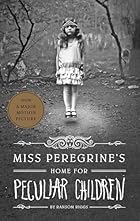
Miss Peregrine’s Home for Peculiar Children, by Ransom Riggs

2012 Book 163: Miss Peregrine’s Home for Peculiar Children, by Ransom Riggs

Reason for Reading: I was originally going to give it to my dad for Christmas, but it wasn’t as amazing as I thought it would be

Review

Jacob has grown up believing that his grandfather’s tales of adventure and magical children were a fantasy. However, when Jacob’s life is suddenly turned upside down, he must go on a quest to a tiny island off Wales to see the orphanage his grandfather grew up in. There, he discovers that there was some element of truth in his grandfather’s stories…and he finds out that his life is in danger. This book was a fantastic idea. Riggs used some unique vintage photographs that he’d borrowed from a few collectors and built a story around the weird images. The photos were fascinating…I really loved looking at them. And I was excited to see what sort of story was built around them. However, the story was a bit contrived. I suppose that it would have to be, given that it’s built around some randomly rescued photos…So Riggs deserves some credit for a good eye and a creative idea. His writing was a bit lack-luster…as I said, it was a bit contrived, and it leaned too heavily on formulaic fantasy. Shades of X-men, Groundhog Day, etc. abound. Nothing wrong with using old formulas, of course – no concept is every fully new – but overall the writing just didn’t hold its own. I might or might not pick up the next book in the series…we’ll see. 🙂 I’ll probably read it eventually because I imagine Riggs’ writing might improve on the second book, and it will seem less contrived if it’s based on plot development instead of photographs. 🙂

Harry Potter and the Goblet of Fire, by J. K. Rowling

2012 Book 162: Harry Potter and the Goblet of Fire

Written by J. K. Rowling, Narrated by Jim Dale

Reason for Reading: Harry Potter Read-along hosted by Lost Generation Reader.


Review

In this fourth installment of the Harry Potter series, Harry is thrust against his will into the Triwizard Tournament – a competition for which he is his underaged and underqualified. Is someone trying to get him killed? Furthermore, Harry, Ron, and Hermione are experiencing the first pangs of teenaged angst. They all feel misunderstood and a bit angry at times. Will they be able to overcome their emotions in order to quash the rising power of Lord Voldemort? Well, at least they’ll have a lot of adventure while they’re trying. One of the highlights of this book is meeting the students of the two other large wizarding schools in Europe: The dark and broody students from Durmstrang and the too-formal sissies from Beauxbatons. (Ok, maybe they’re not ALL sissies.) 😉 This is my favorite book of the series because it has *swoon* Viktor Krum. It is also the first book in the series with “mature” content. It’s longer, moodier, and more dangerous than the first three. And, it’s the first book in the series to leave significant strings untied – leaving room for more plot development. I’m SO glad Rowling knew what to tie up and what to leave open though. She’s managed to leave a reasonable opening without cliffhangers. I really appreciate that. Thank you Ms. Rowling!


Harry Potter and the Prisoner of Azkaban, by J. K. Rowling

2012 Book 155: Harry Potter and the Prisoner of Azkaban

Written by J. K. Rowling, Narrated by Jim Dale

Reason for Reading: I read this for Lost Generation Reader’s Harry Potter Readalong. On which I’m falling catastrophically behind. But at least I’ll get some of them read before the end of the readalong.


My Review *****
Harry Potter thinks he’s in big trouble when he accidentally blows up his aunt, but luckily for him the powers-that-be are distracted by the shocking escape of Sirius Black from the wizard’s prison Azkaban. Black is purported to be “You-Know-Who’s biggest supporter.” (Though I’m not certain what made everyone decide that Black was the most dedicated supporter, rather than the one who’d made the biggest bang? But let’s not question the Rowling.) With the dementors out in force – ready to snatch Black up the moment he rears his unkempt head, Harry, Ron, and Hermione don’t have much chance to misbehave. Will they catch Black before Black kills again? I loved this book more this time around than I did the first time. (Mainly because I have a fondness for the entire story now, whereas when I read it, I was just continuing a series that I’d started.) I DID notice, however, a few snafus that made me chuckle. Just little inconsistencies here and there. I didn’t notice anything like that in the first two books. Usually I ignore little inconsistencies in YA lit, but these surprised me because I’d always thought Rowling had done an amazing job tying up all the loose ends. I suppose inconsistencies are almost impossible to avoid this TIME around though. 😉 I remember reading some comments a while back that said that Rowling’s writing developed from a bit amateurish to more skilled as the series progressed. Now I see what they mean. I’ll keep an eye out for loopholes in the future, now that I know she has them. :p I’m curious if she gets a lot better at avoiding them in the later books. Overall, though, excellent stuff. I’m enjoying Dale’s narrations more and more now that I’m getting used to his style. 


The Horse and His Boy, by C. S. Lewis

2012 Book 153: The Horse and His Boy, by C. S. Lewis

Reason for Reading: Fifth Book (publication order) of the Chronicles of Narnia

Review*****

Shasta grew up as practically a slave to his “father,” until he meet a talking horse. Bree (the horse) has been kidnapped from Narnia, a foreign land that Shasta has never heard of. Bree is convinced that Shasta, too, has been taken from Narnia. They escape together, and have many adventures on the way to Narnia. This book takes place during the original reign of High King Peter and his brother and sisters. It was a delightful little book, and complements the Narnia series quite well. I DID have a good laugh at the rather xenophobic treatment of Archenland–most people from this land were portrayed as corrupt, degenerate, and evil. By the way they dressed and some of their habits, Lewis clearly meant for Archenland to be similar to the Orient. This snafu made me chuckle a little bit, since I took into consideration the age in which Lewis was writing…and that he was writing about a fantasy land. In the end, I enjoyed this book just as much as the other books in the series. It is fun, cute, and a delight to read.

Harry Potter and the Chamber of Secrets, by J. K. Rowling

2012 Book 152: Harry Potter and the Chamber of Secrets

written by J. K. Rowling, narrated by Jim Dale

Reason for Reading: I’m rereading these books along with Lost Generation Reader

My Review*****

Harry hopes his second year at Hogwarts School for Witchcraft and Wizardry will be calmer than last year’s. However, even before the school-year begins, Harry meets a house elf who is determined to keep Harry from even STARTING his school year. Harry perseveres, however, and delves into trouble yet again when the Chamber of Secrets is opened and some stealthy beast begins to petrify his classmates. Will Harry and his friends be able to stop the beast before it manages to kill someone? Harry also gets his first taste of xenophobia in the wizarding world, when he learns a new naughty epithet (the m-word). And I bet you’d never guess which bratty little villain uses the word? I’ll give a hint. He’s blonde. 😉

This second installment of the Harry Potter series is just as delightful as the first. It, like its predecessor, is aimed at the younger end of the YA spectrum, which suits me just fine. The narration by Jim Dale is quite enjoyable–in fact, I liked this narration better than his narration of the Sorcerer’s Stone. He’s got different voices for each of the characters, and his voice definitely engaged me. 

The entire Harry Potter is a popular book on the “banned and challenged” lists released by the ALA. Personally, I didn’t see anything objectionable in this book. Accusations of “satan worship” and “encourages interest in the occult” are silly. There isn’t any language or objectionable morals that I can see–other than the fact that Harry, Ron, and Hermione steal, lie, and generally disobey rules. Of course, they do these things with the best intentions, and often because they feel the adults don’t listen to them. Also, they don’t hurt anyone with their antics (though they certainly endanger themselves). But let’s be honest with each other. Would YA books be interesting to ANYBODY if the protagonists were perfect little angels who allowed the adults to take care of all the important stuff? Of course not. 


Flesh & Bone, by Jonathan Maberry

2012 Book 151: Flesh & Bone, by Jonathan Maberry

Reason for Reading: Third book in the Benny Imura series


Review:

Benny, Nix, Chong, and Lilah are on a quest through the zombie-infested Rot & Ruin to find a rebuilt civilization that they can only hope is out there. In the Mojave dessert (doesn’t that just scream “Area 51” at you?) they clash with a religious death-cult whose goal is to send all living humans into the darkness before they, themselves, are allowed to enjoy the eternity of dark peace. However, our team of teens also discovers more evidence that somewhere out there civilization is trying to re-exert itself. This book isn’t as strong as the first two in the series, but it was still enjoyable. Maberry tries to squeeze in so much action into his books that I go into action overload and start to get bored. I think the first book this series was strongest because Maberry spent a good amount of space developing the characters and setting. But the characters, setting, and plot don’t make a whole lot of progress in this book…That space is reserved for extra action scenes. The theme that I appreciated from the earlier books was upheld in this one (zombies were people too, and sometimes the real monsters are human), and there is a newer theme of coping with loss. This theme could have helped the characters develop, but their development was pretty shallow. (As an aside, I notice that other reviewers liked the “mature development of Nix’s and Benny’s relationship,” so I may be alone in feeling that they didn’t really develop any. :p) That said, I’m not trying to tear the book apart…it was a fun read and had lots of action. 🙂 It’s good fluff and I’m eager for what I believe is the fourth and final book.


Devil’s Pass, by Sigmund Brouwer

2012 Book 145: Devil’s Pass, by Sigmund Brouwer

Reason for reading: This book was provided by the publisher through the LibraryThing Early Reviewers program. The thoughts expressed in this review are mine, and I receive no benefit from giving a good review.


My Review:

When 17-year-old Webb’s grandfather dies, he leaves a list of seven mysterious tasks to be completed by his seven grandsons. Webb’s task is to hike out into the Northwest Territories on a mission to find a buried secret. While on this trip, Webb struggles with his own identity, and the changes he’s seen in himself ever since his widowed mother remarried an abusive husband. On this trip, Webb learns a lot about his well-loved grandfather…and a lot about himself. This is part of a series of seven books, about the seven grandsons–each with a task from his deceased grandfather. In order to give each grandson an entirely unique personality, the series was written by seven different authors. This is the only book in the series that I have read. Technically, it’s the fifth book in the series, but since the story of each grandson is completely independent of the other books, they can be read in any order. 

I was pleasantly surprised by this little book. Not that I expected bad things from it, but I didn’t expect to be caught up in the action. Brouwer has worked in some interesting action scenes right at the beginning of the story, and by the time the action has slowed to a pace more suited for plot and character development, I was already quite interested in the book. I read it in only a couple of sittings. This would be an excellent book for boys in the 5th or 6th grade age range, even though the main character is 17. 


Character Thursday:

Fanda at Fanda Classiclit has organized a weekly blog event in which we can provide a detailed character analysis of a book that we’ve been reading. I thought I’d try my first character analysis out on Webb. I thought he’d be an interesting character to start with because his identity is developing throughout the story. The following information will contain more details than I usually provide in my review, but I’ll try not to include any plot-vital spoilers. 

When Webb was 5th grade-ish, his widowed mother remarried a man who was abusive to Webb, but apparently not to Webb’s mother. So Webb was manipulated and threatened into keeping the abuse a secret. Eventually, at maybe 16 or 17, he ended up living on the streets. This is where he was when his grandfather died and the adventure begins.


Because of the abuse in Webb’s past, he adopted a protective role for other victims of abuse. At the beginning of the story, he saw a young woman being beaten by her boyfriend, and in order to defend her, he ended up in a fight with this very dangerous man. 


At first blink, you’d see Webb’s behavior as “good.” He was using his own experience to help a woman in trouble. But soon you find out that as Webb gets angrier and angrier, he loses his logic…he wants to seriously hurt this man. A rational part of his brain says that seriously hurting people in self defense isn’t necessary, but that rational part of his brain isn’t working once his rage has fired up. So Webb is a protector of the weak, but he’s also teetering on the brink of violent, hateful jerk himself. The identity crisis that Webb struggles with throughout the book is where to draw the line between protector and wrathful avenger? 


Webb didn’t think that his grandfather knew about Webb’s troubles. But his grandfather is more astute than Webb expected. Webb was left with two Nietzsche quotes to ponder during his hiking trip in the Northwest Territories. The first was: That which does not kill us makes us stronger. The second was: He who fights with monsters must take care lest he thereby become a monster. And if you gaze for long into an abyss, the abyss gazes also into you.


Webb had already experienced and accepted the meaning of the first quote. But he was puzzled by the second quote. It made him question what he was becoming…whether he needed to become that…and what the alternatives were. 


Webb’s identity crisis was, granted, quite straightforward and clearly-laid-out for the readers. That’s because this book was written for 5th graders, who aren’t as attuned to subtlety as they will be as adults. I think Webb’s identity crisis allows someone of the appropriate reading age to learn something new about how the world affects their personalities…and how their personalities can affect the world. Thus, Web was a fascinating character, and I’m happy I met him. 🙂


Roll of Thunder, Hear My Cry, by Mildred D. Taylor

2012 Book 143: Roll of Thunder, Hear My Cry, by Mildred D. Taylor
Reason for Reading: This is my fourth and final book for Book Journey’s blog tour for Banned Books Week. This year, I read only YA books that I happened to have lying around in my TBR pile…it was fun! 🙂

My Review

In this Newbery Medal-winner, fourth grader Cassie Logan learns that African Americans are treated as second class citizens in Depression-era Mississippi. She and her family rebel the nasty Wallace brothers by arranging a boycott of their store. Wallace-brothers-and-friends respond with horrifying violence. This was an amazing book. The narrative was engaging, the characters were lovable, and suspense was high–I sincerely worried about what the ugly white-folk were going to do. While reading, I was struck by how similar in theme this book was to all the unoriginal dystopias that are being cranked out by the YA market these days. It was about a young girl realizing that her society was not as wonderful as she had grown up thinking…it was about fighting for your rights against a seemingly hopeless situation. But, wait! This book was actually meaningful because it was describing a REAL situation! Something tragic that people actually suffered! That makes Roll of Thunder, Hear my Cry a much more powerful book than any of those dystopias can ever hope to be. I think an intelligent fourth grader who loves dystopias couldn’t help but love this book as well. 


(Oh, wait, sorry, Roll of Thunder, Hear My Cry IS missing the cheesy cliche love triangle that YA dystopias all seem to have these days. Sorry girls!)


This book was banned because of racism, violence, and language (including the use of the infamous n-word). There is no doubt at all–This book HAD racism, violence, and the n-word. However, the purpose of the book was to show young readers the horrors of racism–so that they could learn a bit of history AND learn to be better people themselves. This book is not going to make children into racists. The bad influence of parents, role models, and friends lead to racism. This book, with the right discussion, will be a good influence on our children. Yes, the book has scary scenes in it, but nothing most fourth graders couldn’t handle. We can’t protect our children from the real world indefinitely, and as far as I’m concerned it’s better for them to know what it’s like than to enter it in compete innocence and immediately have their fresh young spirits crushed. My philosophy–breed them tough, because sheltering only hurts them later!