Pumpkins and Reading

Well, this was a busy week for me. It started out on Sunday with a pumpkin carving party with my friend and my 12-yo nephew. My nephew’s pumpkin is on the left and mine is on the right. My pumpkin has already been devoured by squirrels on my front porch. 


The work-week was good. I’m settling in to my new job well and am feeling more confident in the patient care aspect of it. 

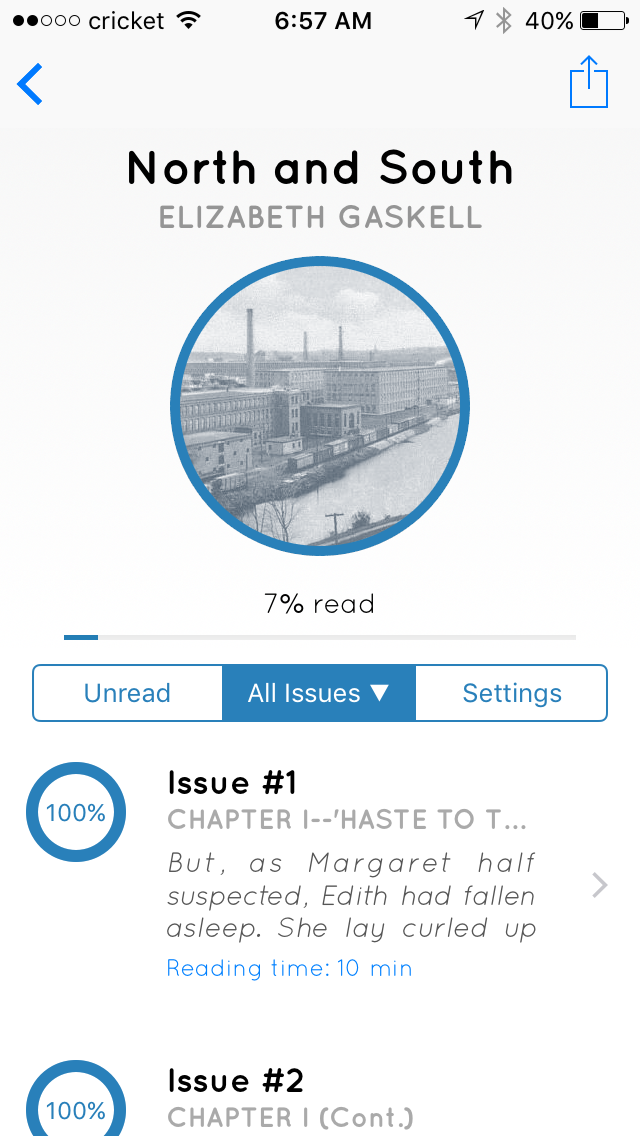
I tried out the Serial Reader app because I saw so many people on Litsy using it. It gives you a short (maybe 10 page) “issue” of a classic novel of your choice to read each day. Figured it would be a great way to bully through some of the longer books that I look at wistfully and never pick up. So far, it’s been fun but a little difficult to stop reading at the end of the issue.

As many of you know, Saturday was Dewey’s 24-hour readathon, where people all around the world join in to read as much as they can in 24 hours. I was hoping to read for the full 24 hours (with some breaks), but I got tired and fell asleep after 16. It’s probably for the best. People with bipolar disorder, like myself, should be getting their full allotment of sleep lest they tip their mental health scale accidentally. So I’m happy today with the amount that I read – which was about twice as much as I would usually read on a lazy Saturday. I read: 

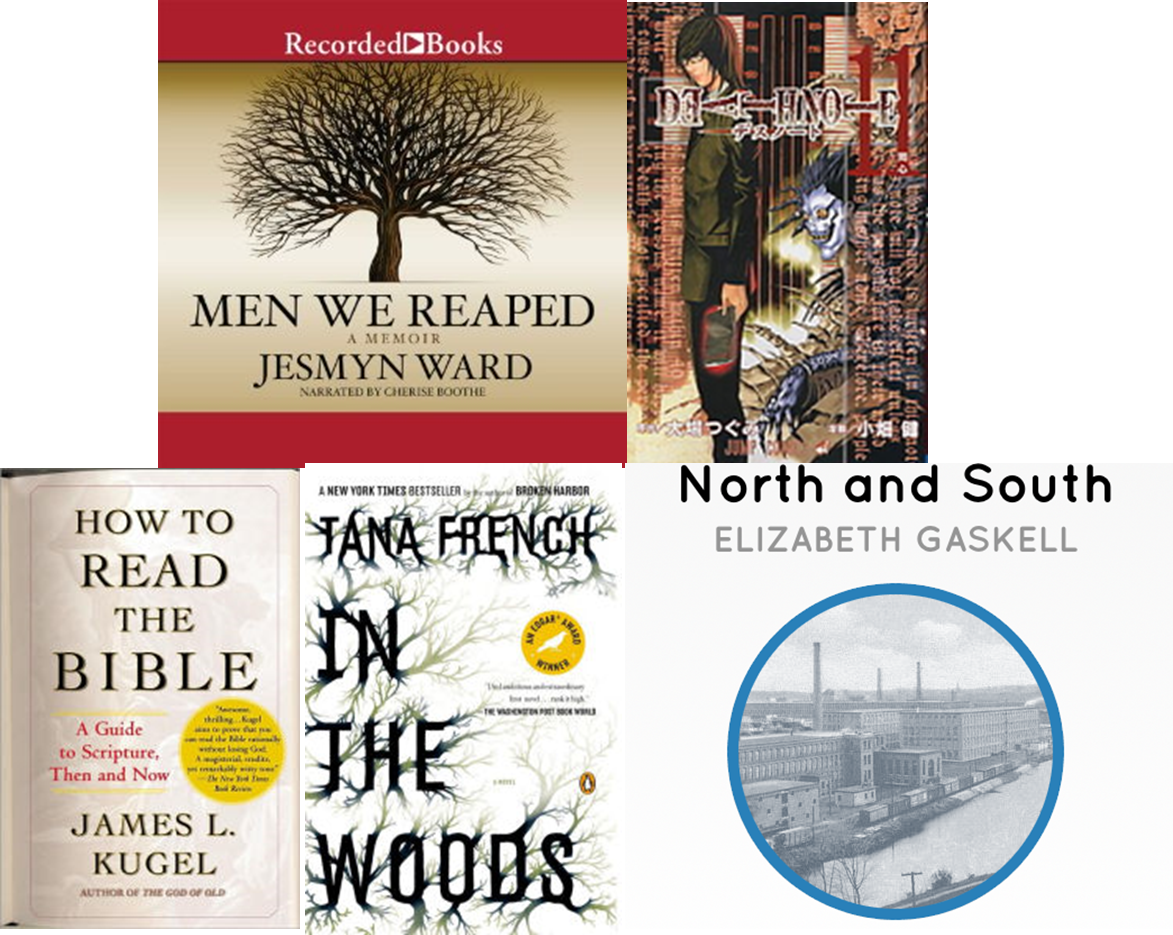
2 Serial Reader Issues of North and South, by Elizabeth Gaskell
2 hours of Stiletto, by Daniel O’Malley
3 hours of Men We Reaped, by Jesmyn Ward
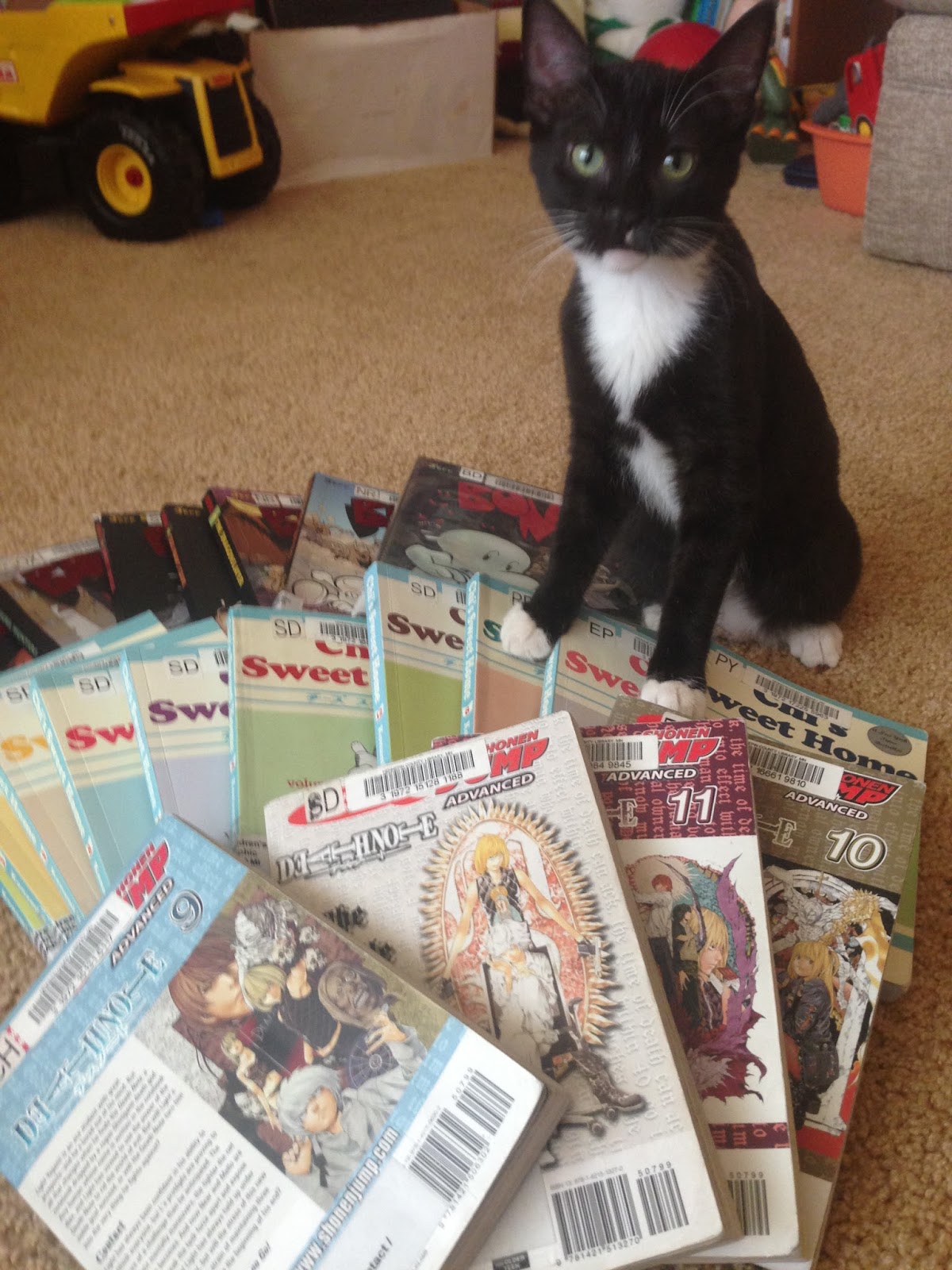
Volume 10 of Death Note, by Tsugumi Ohba
100 pages of Into the Woods, by Tana French
50 pages of How to Read the Bible, by James Kugel


This week I watched The Addams Family and Home, both during the pumpkin carving party: 

I finished listening to Stiletto, by Daniel O’Malley and Volume 10 of Death Note, by Tsugumi Ohba

I’m currently reading Men We Reaped, by Jesmyn Ward with the Social Justice Book Club; Death Note, by Tsugumi Ohba; In the Woods, by Tana French; How to Read the Bible, by James Kugel; and North and South, by Elizabeth Gaskell as my serial read. 


Dewey’s 24 Hour Readathon Opening Post


Well, the day of Dewey’s 24 hour readathon has finally come, and I’m really looking forward to it. I’ve never participated for the full 24 hours before, and am eager to see how I hold up (especially since I had a long day at work yesterday). My strategy is simple: read until I need a break, then read again. I have a mixture of fiction, nonfiction, graphic novels, and audiobooks to get through. I don’t know if I’ll participate in the challenges or not, but this will be my base post which I’ll update throughout the next 24 hours. 


1) What fine part of the world are you reading from today?

I’m reading from Minneapolis, MN. It’s a beautiful fall day here…a little too cold for me to go outside and read, but nice weather to sit by a window.

2) Which book in your stack are you most looking forward to?

I’m hoping to get a huge chunk out of In the Woods, by Tana French. 

3) Which snack are you most looking forward to?

I didn’t have time to prepare snacks because I was called in to work unexpectedly on Thursday and worked a 16 hour day on Friday. So I might have to go snack shopping during a break. I’ll probably settle for chips and salsa. 

4) Tell us a little something about yourself!

Well, what do you want to know? I work in healthcare and I read a lot. 

5) If you participated in the last read-a-thon, what’s one thing you’ll do different today? If this is your first read-a-thon, what are you most looking forward to?

This is my first readathon where I’m really participating rather than participating in spirit. I’m curious to see how long I will last. And I’m hoping to get lots and lots read. 

Updates


Hour 0: Got out of bed at 6 for a 7am start.  


Hour 1: I started with today’s Serial Reader issue of North and South (is anyone else using this app?), and have now moved on to How to Read the Bible, by James Kugel.

Hour 2: Continued to read How to Read the Bible. 


Hours 3-6: Finished the audiobook Stiletto, by Daniel O’Malley, and delved into In the Woods, by Tana French.

Hour 7: Listened to Men We Reaped, by Jesmyn Ward as an eye-ball break.  


SOCIAL JUSTICE BOOK CLUB: MEN WE REAPED — MIDWAY DISCUSSION

I’m reading Men We Reaped, by Jesmyn Ward for the Social Justice bookclub hosted by Kerry at Entomology of a Bookworm. The discussion questions are provided by Kerry, and will contain spoilers. 

1) In the very first pages of her book, Ward calls this her “rotten fucking story.” Did this change how you approached the chapters to come in any way?

I don’t think her terminology here affected the way I approached the following chapters. I guess I expected a pretty rotten story to begin with, based on reviews of the book. But I think using such strong words made that passage more powerful. 

2) When she lists the names and dates of the black men in her life who died in the four years between 2000 and 2004, Ward writes, “That’s a brutal list, in its immediacy and its relentlessness, and it’s a list that silences people. It silenced me for a long time.” She then goes on to wonder “why silence is the sound of our subsumed rage, our accumulated grief. I decide this is not right, that I must give voice to this story.” I’ve read a lot about voice and the importance of voice lately, so I’m curious what others think of the importance of voicing the horrors of this story, these losses.

I know several people with PTSD, so I know that it is very hard recounting the horrors of your life because it drags everything to the front of your mind again. On top of that, a lot of people don’t want to hear your pain. They have an attitude that everyone experiences pain and that your pain is no worse than anyone else’s. That you are simply being whiny or that you exaggerate. It’s hard putting up with that rejection after you’ve borne your heart to the world. However, it’s important for people to hear stories like this because it makes them think about how their own actions might be affecting the people around them. Unfortunately, it’s the thoughtful people who read these books – the ones who would benefit the most are not interested.

3) What do you make of the two timelines in Men We Reaped? To what effect do you anticipate–or perhaps hope?–Ward will use these inverse chronologies?

I admit, at first I found the two chronologies a bit confusing because I’m listening to the audiobook. But eventually I realized what was going on. I think this is the best way to tell this story instead of straight chronological order because she’s building up the suspense for what I assume is the most powerful of the four stories. 

4) The idea of gender is woven throughout Ward’s memoir, but particularly in reflecting the unique freedoms–and risk of lack of freedoms–of the black men in her life (as compared to the black women in her life, herself included). How do the men and women in Ward’s stories subscribe to (or not) these gender expectations, and how do you think that influences their experiences?

So far, the elder women in the book seem to follow the gender rules of their culture – no smoking, working all the time (both in the home and out), etc. On the other hand, the younger women are more liberated. Strangely, I don’t think that the liberated women are any more happy than the non-liberated women because liberation brings a whole new set of problems like the availability of alcohol, drugs, and unsafe sex. Not that I’m criticizing liberation, only that I think that socioeconomic status strongly affects the stresses in one’s life. 

5) Ward frames her story with a hope: “I’ll understand a bit better why this epidemic happened, about how the history of racism and economic inequality and lapsed public and personal responsibility festered and turned sour and spread here.” Based on the first several chapters, do you think her exploration of these deaths will get her where she hopes to go? Or are these kinds of events impossible to ever truly understand?

Although reliving the horrors of one’s life is extremely difficult, it is a common treatment for PTSD. Reliving horrors helps the person to process them. So, yes, I think writing this book will help her to gain some understanding of what has happened in her life.
Halloween month adventures

Hero with Chi Three


This week was a lot of fun. I had three days off in the middle of the week, and got lots of reading done. I’m also stockpiling my TBR of graphic novels for Dewey’s readathon (coming up on the 22nd). No, I don’t plan on only reading graphic novels, but I know that if I sit reading for 24 hours straight my eyes are going to be blurring over at the end. Thus, easy reading choices.  

Selfie with supermoon
On Saturday I went to The Trail of Terror with my best friend and my boyfriend. We got to enjoy the supermoon. The supermoon is supposed to be at its best at moon-rise this (Sunday) evening, so check it out! The Trail of Terror was fun – it was a set of maybe five little fun/spook houses, a wooded walk (shortened because of flooding), and a heated “maze” all surrounding a karaoke bar. There were also spooktacular rides, games, food booths, and three bars. 

I didn’t really find anything scary, but there were a couple of times I felt thoroughly lost in the spook houses and maze when there were too many strobe lights or too little light. I have this weird thing where my vision starts flashing whenever there’s not enough light, making it even harder for me to find my way in darkness. (Apparently I have an inner strobe light?) I had to just hang on to my boyfriend to guide me through those parts because they were very disorienting. But I guess that’s the point. 

Today I plan on carving pumpkins with my nephew and my best friend. I’m sure I’ll have some pictures to share in my next update. 

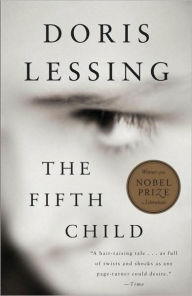
This week on my blog I wrote one book review: The Fifth Child. It’s a spoiler review, so watch out. That was my one Halloween book for the season, unless In the Woods counts (it’s a mystery). 

Books Completed

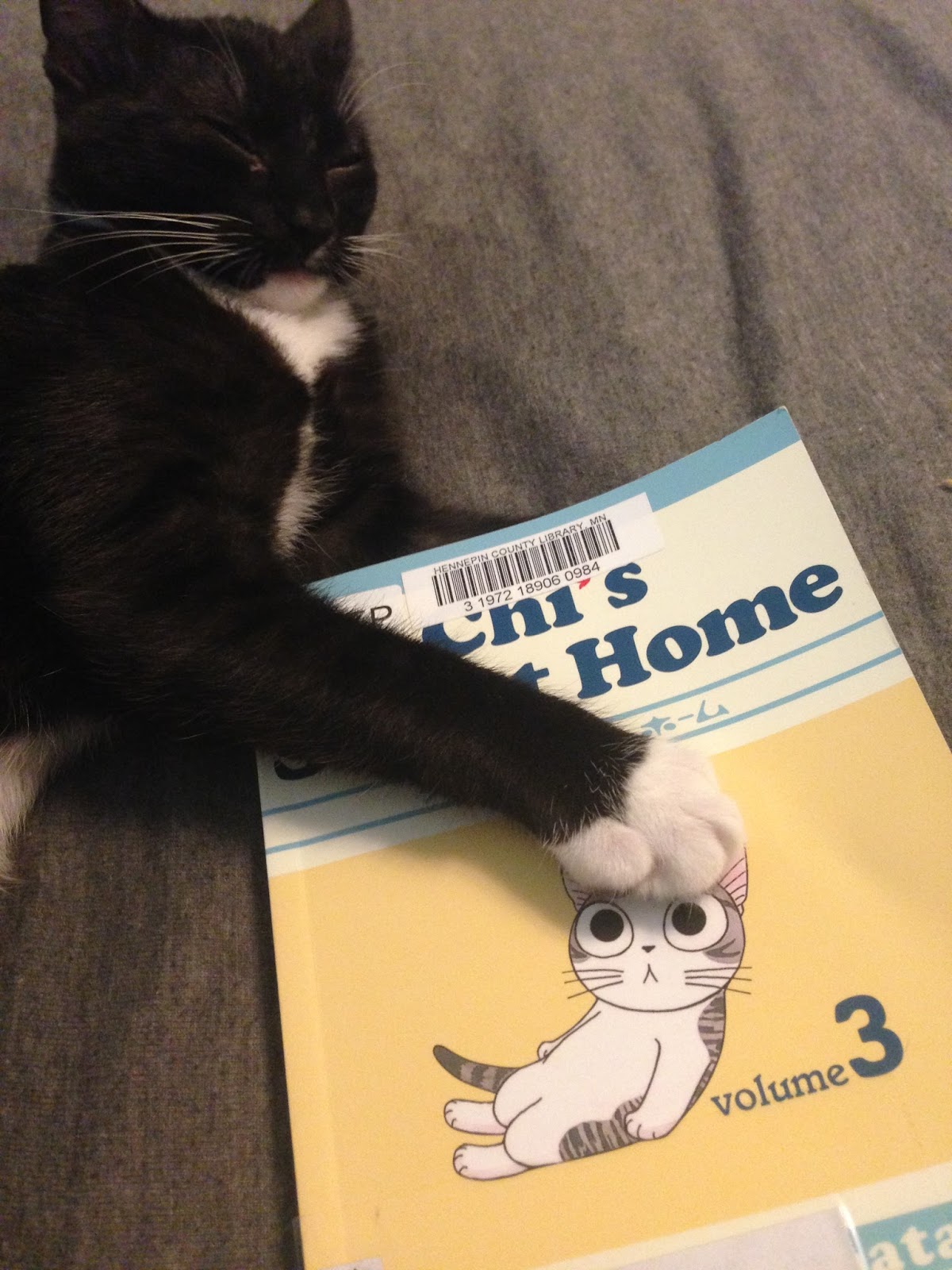
I finally finished Harry Potter and the Chamber of Secrets, which I hadn’t been making very quick progress on despite loving it (again). I then sprinted through The Fifth Child, by Doris Lessing – I didn’t expect that to be such quick reading. And because my eyes were getting blurry from all that reading, I settled down to read one of my graphic novel stack: Chi’s Sweet Home Volume 3. Adorable!

Watched

I watched the first two Terminator movies with my boyfriend.


Currently Reading: 


The Fifth Child, by Doris Lessing

WARNING: This review contains spoilers. 


This story begins with Harriet and David standing apart from the crowd. They observe the crowd as outsiders would – they are old fashioned & reserved; they have morals. But when they see each other, they instantly recognize a similar soul.

They become a happy young couple who defies social norms and wants to have at least six children. The first four children are splendid, but the fifth comes too early. A terrible pregnancy produces a child which seems only partly human – Ben is some mutation or maybe a fallback to neanderthal times. Ben is endlessly hungry. He’s angry and brutal. 

Harriet’s maternal instinct tells her to love Ben, but she struggles to do so. As Ben grows, she feels blamed for his brutish personality. The doctors and teachers imply that there’s nothing wrong with Ben, the problem is that she doesn’t love him enough. Her family blames her for having so many children to begin with, and then afterwards for not institutionalizing him. The family falls apart as she focuses all her attention on Ben.

This story was disturbing and poignant in so many ways. To a certain extent, it was left open to interpretation about whether Ben’s problems were exasperated by everyone’s loathing of him – or did he simply not need love because he was not “human?” It’s possible that the sequel, Ben in the World, answers that question. I may pick it up after mulling this one over for a while longer. I’m going to have to assume for the time being that Ben was human and needed love, however.

This is a story about intense self-involvement. Harriet and David begin as incredibly self-absorbed individuals who blossom into a self-absorbed couple. Everything is about them. They want a large house they can’t afford? Ask daddy for money. They want more children then they can pay for? Ask daddy for money. They want to have children faster than they are physically capable? Ask mommy to move in. They selfishly take and take, only feeling a little pang of injured pride that they aren’t able to show the world that they can do it themselves. Even their thank-you’s seem just-for-show. 

Then Ben comes along. Outwardly, it would seem that everything becomes about Ben. He needs a lot of attention in order to keep his brutality in check. Harriet focuses her energy on Ben and David focuses on work, and the other children are emotionally neglected. In reality, everything is all about Harriet, not Ben. Even when she rescues Ben from certain death in an institution, this rescue is not about saving a life – it’s about saving Harriet’s morals. She can’t just let Ben die, that would sacrifice who she is. But she doesn’t save him because she feels he should live. She saves him because she couldn’t live with herself if she let him die. Thin line, I know.

From reading other reviews, most people seem to feel that this is a book about a mother trying her hardest to love a child no matter what. And I do feel that Harriet wanted to love Ben. But, again, I question her motives in wanting to love Ben. Did she love him out of maternal instinct that was repulsed by a “changeling?” Or did she want to love him because she had self-pride in her old fashioned morals? The latter, I think. 

Maybe upon reading the sequel and re-reading this book I’ll look at Harriet differently. I hope so. I wanted to like her. But she just seemed so selfish to me. I do think she did the best she could, though…and a good bit more than many people would have done.

I’m going to pair this book up with a memoir about a real mother raising a violent child – The Price of Silence.


Birthday week

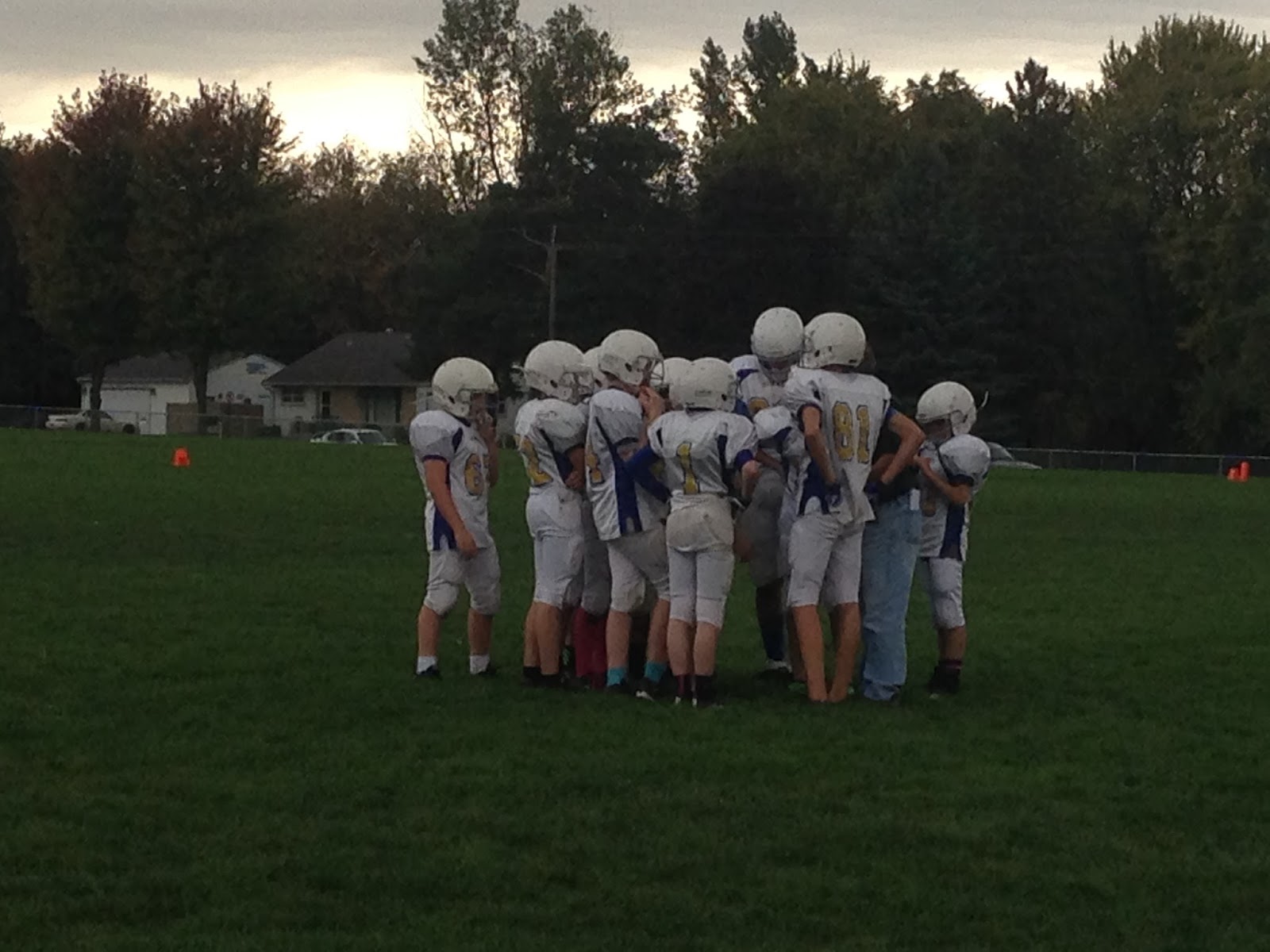
This was a pretty good week for me. On Monday I went to a steakhouse with my family to celebrate mine and my mom’s birthdays. I’m one of the lucky ones who can say that I love spending time with my family. And on Wednesday, I went out to celebrate again, this time with my boyfriend and my best friend at a woodfire grill. Yum! On Thursday, I saw my nephew play football. This time the teams were more evenly matched, so it was a good game, even if it did start raining at the end.

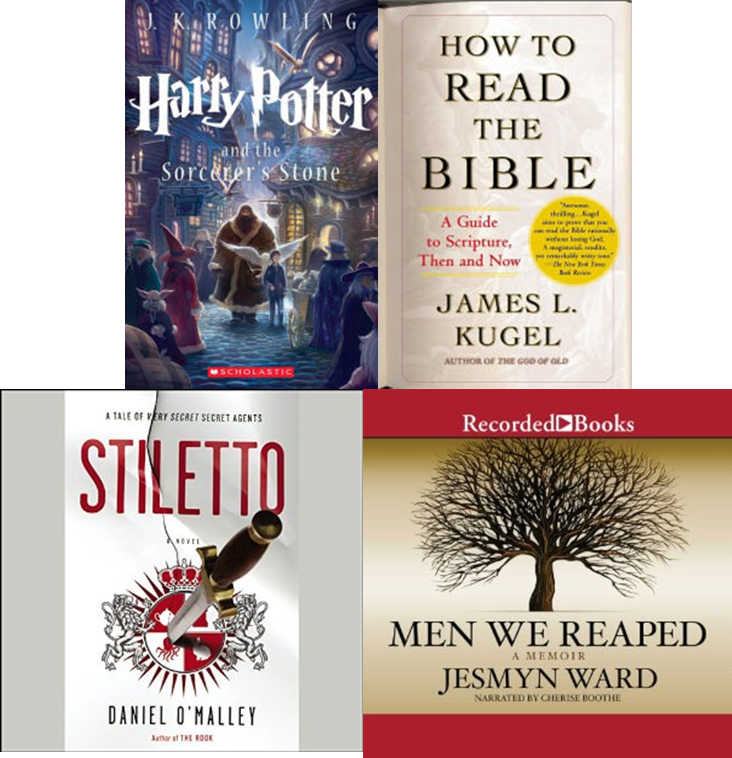
I got over-eager this week and started signing up for stuff in the blogging world, which I’ve been trying to cut down on since I know I’ll be busy with my Bible group read next year. (Yes, I keep bringing it up, but that’s because I’m excited.) I signed up for Dewey’s 24hour Readathon. I’ve participated once before, but have never had an opportunity to go the full 24 hours. I’m going for it this time. I’ve already borrowed a bunch of graphic novels from the library to read when my head starts getting weary. Here’s my reading list below (the readathon isn’t until the 22nd, so this is subject to change):

I also signed up for a reading of Men We Reaped, by Jesmyn Ward, with the Social Justice Book Club over at Entomology of a Bookworm. I voted to read Neurotribes for November’s edition of Doing Dewey’s Nonfiction Book Club. And I joined Litsy. For those of you who are unfamiliar with Litsy, it’s like an Instagram for book lovers. As far as I can determine, it’s a social network that is available only as an app on  your phone. It’s pretty darned amazing. I’m @the_hibernator. 

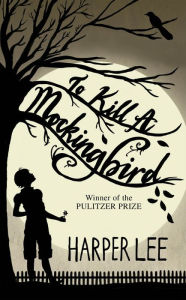
On my blog, I wrote two posts about How to Read the Bible  (Chapter 4 and Chapter 5), by James Kugel, and a review for To Kill a Mockingbird, by Harper Lee

Currently Reading: 


To Kill a Mockingbird, by Harper Lee

In this timeless story, a little girl named Scout comes of age during a difficult time for her family. Her father, a lawyer, is defending a black man charged with the rape of white woman. Scout learns about racism from both children and adults. 

Part of the charm of this story is that it is all through Scout’s eyes, so sometimes you have to infer what’s going on in the adult world – sometimes it takes a careful reading. However, Scout is intelligent and she picks up on a lot of stuff, so it’s the perfect combination of inference and easy-reading. I loved the ending for a couple of reasons – it was beautiful and touching, and I laughed because I could tell exactly why my mom said “I didn’t get it.” She’s so literal. 🙂

This book is considered one of the first of the Young Adult/teen genre, though I feel that it’s only placed there because of the age of the protagonist. I would highly recommend it to everyone teen and up. 

Happy October

Happy first day of October everyone! October is my favorite month because I love (normal) October weather here in Minnesota. And who can argue with Halloween? 

This last week was uneventful. My newly rearranged schedule worked out, and I managed to make all of my scheduled goals for the week. Work is going well, and I got lots read and lots published on my blog. 

On my blog, I published notes on chapter 2 and chapter 3 of How to Read the Bible, by James Kugel, which I’m reading in preparation for my Bible Group Read next year. I also published a review of Why Zebras Don’t Get Ulcers, by Robert Sapolsky.

Watched: Tremors and the third season of Castle


Currently Reading: How to Read the Bible, by James Kugel; Stiletto, by Daniel O’Malley; and Harry Potter and the Chamber of Secrets, by J. K. Rowling. Yes, I know, they’re the same books I’ve been reading for two weeks. And at the rate I’m going, they’ll probably be the books I’m reading next week, too. 


Why Zebras Don’t Get Ulcers, by Robert Sapolsky

In this humorous and informative book, Robert Sapolsky explains how and why stress affects our bodies. The premise is that prey animals like zebras use a stress response in an evolutionary sensible way by upping certain hormones while they are being hunted, but then the zebras’ stress levels drop again when they escape. Humans have the same bodily changes, only our stress tends to be small amounts for long periods of time, meaning the effects on the nervous system (lower digestion, higher blood pressure, reduced growth, etc.) remain continuously activated. Therefore, human stress is not sensible from an evolutionary standpoint. Each chapter in Sapolsky’s book covers a different bodily system and explains in detail how and why stress affects it. He ends with a rather lengthy description of how lower socio-economic status affects our bodies. Although this section was interesting, it seemed a bit lengthy and out of place from the rest of the book. The subject could be a book all on its own. 


One thing I loved about this book is it’s approachability. It was easy to read and made me laugh several times each chapter. Sapolsky has an excellent dry sense of humor. He also included a picture of baboons smack in the middle of his book for seemingly no reason. That made me laugh as well. 

I was listening to his companion set of lectures Stress and Your Body concurrently, though I dropped behind and still have several lectures yet to finish of the course. You can see some details of the information covered in the book and lectures if you check out the above link. In hindsight, although both were enjoyable, only one or the other was necessary as most of the material was exactly the same – even to the wording. 

This is a very stressful book to read, so watch out if you are prone to stress. 

(For another theory about why stress evolved, you can check out my review of the Noonday Demon by Andrew Solomon). 

Kitty’s first vet appointment


It won’t surprise anyone that knows me that I love cats. Sorry dear boyfriend, bunnies are just ok. And even less ok when they eat through the furniture. My precious little babies haven’t destroyed anything yet. Except my bank account. This week I took all three of them to the vet. Boy is that expensive!

Overall the week went well. It was my first week in my new dialysis clinic for work. It was nice meeting all my new patients. I miss the old ones, but I’ve found some friendly faces in my new work-home. 


I’m currently reading: How to Read the Bible, by James Kugel; Harry Potter and the Chamber of Secrets, by J. K. Rowling; and Stiletto, by Daniel O’Malley. 
I have acquired: The Literary Guide to the Bible, by Robert Alter and Frank Kermode. This is a book of essays about each book or section of the Bible, and I will peruse it as I’m reading the Bible next year for my Bible Group Read
This post is linked up to Sunday Salon (on Facebook) and  Deep Fried Fruit‘s Lovin’ Life.