
Does the DSM-5 encourage overmedication?

Oh, the irony of life – I clicked on a link to read an article by Dr. Allen Frances (chair of the DSM-IV task-force and author of Saving Normal: An Insider’s Revolt against Out-of-Control Psychiatric Diagnosis, DSM-5, Big Pharma, and the Medicalization of Ordinary Life) – and I was forced to wait through a 15 second advertisement on a psychiatric medication. This is exactly the type of thing Dr. Frances complains about. People have “too much” access to information that they are not trained to understand. Dr. Frances urges the public to beware self-overdiagnosis. (This could also be referred to as cyberchondria.) 


Before the publication of DSM-5 Dr. Frances strongly argued against many of the changes proposed…he even admitted that there were some mistakes made in the DSM-IV. One of his main arguments is that the DSM-5 added many new diagnoses that could push people formerly considered “normal” into the disordered range. For instance, disruptive mood dysregulation disorder is a new diagnosis for children who have too many temper tantrums; internet gaming disorder is a diagnosis for hard-core gamers. The DSM-5 also rejected the bereavement exclusion, which had previously discouraged clinicians from diagnosing major depressive disorder in people who had undergone a major loss in the past two months. 



At the time that DSM-5 was being written, media pounced on the omission of the bereavement exclusion, claiming that people who were going through a natural process of grief would be stigmatized by a “mental illness” diagnosis. But is this really what happens?
The 2012 study The bereavement exclusion and DSM-5 concludes that the symptoms of bereavement aren’t fundamentally different from those of major depressive disorder. If the grieving individual’s symptoms and impairments are as severe as a person with major depressive disorder, they may benefit from treatment – and treatment requires a diagnosis. The purpose is not to throw drugs at every bereaved soul that walks through the doctor’s door. In fact, most people who are bereaved will not go into their doctors because they think their symptoms are “normal.” Those that go into their doctors are most likely suffering from more severe symptoms which might need to be treated.

In his 2013 PsychCentral post How the DSM-5 Got Grief, Bereavement Right, Ronald Pies argued that clinicians will not have to diagnose major depressive disorder in grieving patients, but they will be able to if such a diagnosis would be beneficial. 

On the other hand, Allen Frances argues in his 2013 Psychology Today post Last Plea to DSM 5: Save Grief From the Drug Companies that the “medicalization of grief” will provide more “normal” patients at which to fire Big Pharma’s semi-automatic pill-dispensing guns (that’s not a direct quote). It will be a huge profit to the drug companies, but will the over-medicated grievers really be helped? Frances insists that we should focus our attention on the more severely mentally ill, who are in more need of treatment, but who are being lost in the bonanza of over-diagnosis.   

Frances argues (understandably, since he was chair of the DSM-IV task-force) that there was no problem in the DSM-IV bereavement exclusion, why fix what isn’t broken? We should let the bereaved grieve with respect and dignity. If they were severely impaired, they were still diagnosable for major depressive disorder, so there was no need for change. 

Here’s my conundrum: Who’s right? Ronald Pie or Allen Frances? With the DSM-IV were doctors just as capable of diagnosing a bereaved individual with major depressive disorder if necessary, as Dr Frances claims? If that truly is the case, then I’d say he’s right. Allowing too much freedom in the diagnosis might encourage general practitioners – who, despite their relative ignorance of mental illness compared to psychiatrists, are the go-to doctors for anti-depressants and anxiety meds – to over-diagnose and over-medicate. Generally, allowing the natural grieving process to progress is the best way to heal. 

What concerns me about the bereavement exclusion, though, is that grieving patients who have some severe symptoms of major depressive disorder (persistent insomnia, weight loss, profoundly impaired concentration), but who do not admit to suicidal ideation would not be treated for depression. It is too likely that such patients are not entirely honest about their suicidal ideations, and the doctor may therefore miss this crucial criterium for diagnosis. Are we “better safe than sorry” – providing treatment to people who might not need it? Should we risk overmedicating and supporting the “evil” Big Pharma? 

Honestly, I don’t know.

This is a series of posts summarizing what I’m learning in my Abnormal Psychology course. Much of the information provided comes from reading my James N. Butcher’s textbook Abnormal Psychology. To read the other posts, follow these links: 

The Definition of Abnormal
A History of Abnormal Psychology
Abnormal Psychology in Contemporary Society
Contemporary Viewpoints on Treating Mental Illness – Biology
Contemporary Viewpoints on Treating Mental Illness – Psychology
Frontline: New Asylums
Brave New Films: This is Crazy
Clinical Mental Health Diagnosis: Biological Assessment
Clinical Mental Health Diagnosis: Psychological Assessment
Does the DSM Encourage Overmedication?
Post Traumatic Stress Syndrome – The Basics
Panic Disorder
Obsessive Compulsive Disorder
Hoarding and Body Dysmorphic Disorders
Depression – an Overview
Personality Disorders – Clusters and Dimensions
Personality Disorders – Cluster A
Personality Disorders – Cluster B
Personality Disorders – Cluster C
Biological Effects of Stress on Your Body
Somatic Symptom and Related Disorders
Dissociative Disorders
Borderline Personality Disorder
Dialectical Behavioral Therapy
Paraphilic Disorders
Gender Dysphoria – Homosexuality and Transgender
Anxiety Disorders
Bipolar Disorder – The Basics
Suicide – An Overview

References: 

Frances, Allen. (2010, July 08). Normality Is an Endangered Species: Psychiatric Fads and Overdiagnosis. Retrieved from: http://www.psychiatrictimes.com/blogs/dsm-5/normality-endangered-species-psychiatric-fads-and-overdiagnosis.

Zisook S, Corruble E, Duan N, Iglewicz A, Karam EG, Lanouette N, Lebowitz B, Pies R, Reynolds C, Seay K, Katherine Shear M, Simon N, Young IT. (2012).The bereavement exclusion and DSM-5.  Depress Anxiety. (29):5, 425-43.
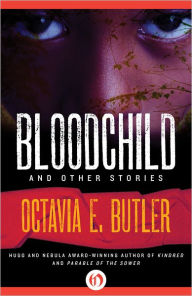
Bloodchild and Other Stories, by Octavia E. Butler

Bloodchild and Other Stories, by Octavia E. Butler

This is a book of horror / dark fantasy stories by the amazing author Ocativa E. Butler. Believe it or not, this is the first book by Butler that I have ever read, and I was amazed at her brilliance. 

Her stories were incredibly creative. They covered important issues like race, slavery, sexuality, and identity, all in the guise of alien occupation or dystopic disease and other dark fantasy themes. Her prose was smooth and eloquent.

The most interesting of the stories was her novella Bloodchild, which is about a child that is about to be “sexually” adopted by some alien worm-thing. The story encompassed the feelings of the boy, his mother, and the alien – providing some very startling insight. 


After each story, Butler included a short essay of what she intended the story to mean or background in her life when the story was written. These brought further understanding to the story, though I was a little skeptical when she insisted that she hadn’t intended Bloodchild to be about slavery. But, I guess, sometimes meanings creep in there unintended. And there’s also something to say for the readers’ interpretation regardless of intended meaning. To me, slavery was one of the many underlying themes of the story. 

At the end of the book, Butler included a couple of essays about what it was like being an African American science fiction author, and encouraged young people to follow their dreams and become authors. Finally, there were a couple of never-before-published stories. 

This little book is well worth your time if you are interested in deeper cultural issues of race, slavery, and sexuality – possibly even if you are not specifically interested in science fiction and fantasy.

For pure brilliance


This post is for R. I. P. X @TheEstellaSociety and the 2015 Halloween Reading Challenge @ReadingEverySeason. It is also for #Diversiverse, @BookLust, which is all about reading books by people of a variety of ethnic/racial backgrounds, so I will provide tell you a little about the author, Octavia E. Butler.

Octavia E. Butler was born in 1947 into an impoverished African American community to a 14-year-old girl. Despite struggling with dyslexia, she had a passion for reading and writing ever since she was very young. As a teenager, she started attempting to publish her stories, despite the extreme difficulty for African Americans publishing science fiction / fantasy. At the time she was one of only a couple African American sci-fi writers. Despite being taken advantage of by money-hungry agents, she finally published Patternmaster in 1976. This book was praised for its powerful prose, and she ended up writing four prequels. She finally became mainstream upon publication of Kindred in 1979. Butler died outside of her home in 2006.

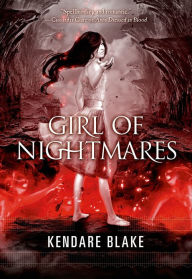
Girl of Nightmares, by Kendare Blake

Girl of Nightmares, by Kendare Blake

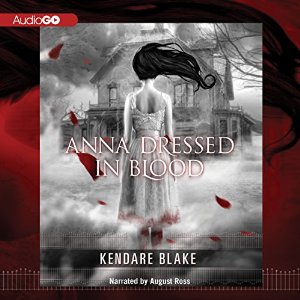
After listening to the audio version of Anna Dressed in Blood, by Kendare Blake (and disliking the narrator), I decided to pick up an old-fashioned copy its sequel Girl of Nightmares

Cass Lowood has now become used to life in Thunder Bay. He’s finished a school year in the same school for the first time in years. He has friends: the beautiful and popular Carmel Jones and nerdy voodoo teenage witch Thomas Sabin. The three have tried to move on from the devastating events in Anna Dressed in Blood. They’ve been going to school by day and killing ghosts by night. But when Anna starts haunting Cass, he becomes obsessed with saving her from whatever hell she is suffering. His quest to save her drives a wedge between him and his friends, and leads him across the ocean to follow ominous clues sent by anonymous people.


I enjoyed Girl of Nightmares even more than Anna Dressed in Blood. I began the book with an attachment to all the characters, and was genuinely concerned about Anna’s fate. Cass, Carmel, and Thomas begin to develop more rounded personalities in this book – showing sides of themselves that weren’t obvious in the first book. Girl of Nightmares had a good mixture of action and intrigue, which kept me turning the pages. I’m hoping there will be another book coming up soon. 

4 stars for fluffy YA fun

Anna Dressed in Blood, by Kendare Blake

Anna Dressed in Blood, by Kendare Blake; narrated by August Ross
Anna Dressed in Blood, Book 1

Cas Lowood has always worked alone on his quest to dispatch murderous ghosts and discover the demon who killed his father. Imagine his annoyance when he moves to Thunder Bay to kill the intensely horrific ghost Anna Dressed in Blood and he accidentally picks up a couple of teenaged tag-a-longs. When he attempts to dispatch Anna, he discovers that she’s unlike any ghost he’s ever fought before. She’s frightening and mesmerizing in her power. Cas digs deeper into Anna’s story and begins, for once, to see a ghost as an unwilling victim rather than simply a supernatural murderess.


Initially, I picked up this book because of the fantastic cover art (Yup! I’m one of those people). Turns out Anna Dressed in Blood was a really good choice if you’re a fan of teen horror. I hadn’t read a good ghost story in a long time, and this one was quite refreshing. The characters were easy to like, and the mystery kept the book interesting. This book was fun and quick. 

Unfortunately, I listened to the audiobook rather than reading the book. I don’t recommend this course. Ross annoyed me with his too-clear annunciations, his pauses, and his slow reading. It ruined the rhythm of the narrative, and made the dialog fall flat. There were several times I wanted to give up on the book just because the narration was annoying me. But I couldn’t do it because I was enjoying the story too much.

4 snowflakes for fluffy YA fun

This post is for R. I. P. X @TheEstellaSociety and the 2015 Halloween Reading Challenge @ReadingEverySeason. It is also for #Diversiverse, @BookLust, which is all about reading books by people of a variety of ethnic/racial backgrounds, so I will provide tell you a little about the author, Kendare Blake

Kendare Blake


Kendare Blake was born in Seoul, Korea and was adopted by her American parents when she was very young. She writes dark fantasy including, but not limited to: The Girl of Nightmares series and The Goddess War series (beginning with Antigoddess). 

After enjoying The Girl of Nightmares series so much, I’ll probably be picking up Antigoddess sometime soon. 

Clinical Mental Health Diagnosis – Psychological Assessment

In my post about the biological assessment of mental health diagnosis, I mentioned that there are three ways a clinician can focus a mental health assessment: biological, psychodynamic, and behavioral. In this post I will discuss the psychodynamic and behavioral assessments of patients. 

I’m not sure what a psychological assessment feels like to the clinician, but I have been through several assessments as a patient. Some of them have been very grueling and embarrassing – my 2 hour long assessment for dialectical behavioral therapy comes to mind. Generally, the mental health worker will ask a series of questions to determine personality (am I maladaptive?), social context (am I from an abusive family? caring for an sick family member? a bullied teen?), and culture (I’m a WASC) .


Such an assessment can be either a structured or unstructured interview. In the structured interview, the patient is asked a set of pre-determined questions, even if some of the questions seem inapplicable. In the unstructured interview, the clinician decides which questions to ask. The unstructured interview is much less grueling than the structured one, but it is more likely to produce bias due to the direction of questions that the clinician chooses. 

Generally while the clinician is giving the interview, she also assesses the general appearance and behavior of the individual. Is he well-dressed, have good hygiene, look the clinician in the eye? Does he seem to be lying? Observation can also be done through role-playing and self-monitoring. Self-monitoring is a fantastic way to get information that the clinician might miss in a one-hour interview, but it tends to be biased towards what the patient is willing and able to record.


There are also a lot of tests to determine personal characteristics.  A famous one of these is the Rorschach Inkblot Test. It’s a series of 10 inkblot pictures to which the patient tells the clinician what she sees and thinks while looking at the picture. The Rorschach test takes a lot of time both to administer and to evaluate, though it can be very enlightening to a clinician who is well-trained in the system.


Another well-known personality-trait test is the Thematic Apperception Test (TAT). The TAT uses a series of simple pictures of people in various contexts. The patient tells a story about what the character is doing and why. Like the Rorschach test, the TAT takes a long time to administer and interpret. The TAT has become a bit obsolete since the pictures were designed in 1935, making them harder for the modern patient to relate to. 

The Rorschach and TAT are considered subjective assessments, because they are subject to the clinician’s interpretation. There are also objective tests like the Minnesota Multiphasic Personality Inventory (MMPI), which was introduced in 1943, and revised to the MMPI-2 in 1989. The MMPI-2 is a computerized test consisting of 550 true-false questions on topics ranging from physical condition and psychological states to moral and social attitudes. From these 550 questions, several “clinical scales” are determined. Such scales quantify hypochondria, depression, hysteria, pscyhopathic deviance, masculinity-femininity, paranoia, psychasthenia, schizophrenia, hypomania, and social introversion. It also quantifies the likelihood of lying (inconsistent answers), addiction proneness, marital distress, hostility, and posttraumatic stress.

Such computerized objective tests are helpful because they (for the most part) lack clinician bias, and they are inexpensive. However, they depend upon the patient’s ability to honestly and accurately describe themselves, which many patients are unable or unwilling to do. These tests also tend to be impersonal, and might alienate the patient.

This is a series of posts summarizing what I’m learning in my Abnormal Psychology course. Much of the information provided comes from reading my James N. Butcher’s textbook Abnormal Psychology. To read the other posts, follow these links: 

The Definition of Abnormal
A History of Abnormal Psychology
Abnormal Psychology in Contemporary Society
Contemporary Viewpoints on Treating Mental Illness – Biology
Contemporary Viewpoints on Treating Mental Illness – Psychology
Frontline: New Asylums
Brave New Films: This is Crazy
Clinical Mental Health Diagnosis: Biological Assessment
Clinical Mental Health Diagnosis: Psychological Assessment
Does the DSM Encourage Overmedication?
Post Traumatic Stress Syndrome – The Basics
Panic Disorder
Obsessive Compulsive Disorder
Hoarding and Body Dysmorphic Disorders
Depression – an Overview
Personality Disorders – Clusters and Dimensions
Personality Disorders – Cluster A
Personality Disorders – Cluster B
Personality Disorders – Cluster C
Biological Effects of Stress on Your Body
Somatic Symptom and Related Disorders
Dissociative Disorders
Borderline Personality Disorder
Dialectical Behavioral Therapy
Paraphilic Disorders
Gender Dysphoria – Homosexuality and Transgender
Anxiety Disorders
Bipolar Disorder – The Basics
Suicide – An Overview

References:

Butcher, James N. Hooley, Jill M. Mineka, Susan. (2014) Chapter 4: Clinical Assessment and Diagnosis. Abnormal Psychology, sixteenth edition (pp. 101-127). Pearson Education Inc.

Clinical Mental Health Diagnosis – Biological Assessment

One of the most difficult tasks for mental health workers is to clinically assess and diagnose mental illnesses – especially when comorbidity (having more than one mental illness) is so common. It usually begins with a psychological assessment through tests, observation, and interviews so the clinician can catalog the symptoms. Then the DSM-5 is consulted to give the diagnosis. 

A clinician may focus the assessment in three ways – biological, psychodynamic, and behaviorally. 


Biological approach

For the sake of appropriate treatment, it is very important to make sure that the symptoms are not due to a physical rather than a mental illness. In my experience, many doctors shrug off certain types of symptoms as those of a mentally ill patient. For instance, when I fainted at work a while back I was told it was “anxiety.” (And because it was diagnosed as a mental problem, my insurance didn’t pay – but that’s a problem to discuss on another day.) Granted, my fainting spell could have been anxiety-induced, but it could have been many things. 

A more extreme example that I heard of from a doctor at a large university hospital was that a foreign patient (I can’t remember his origin) kept coming in complaining that there was a worm in his head. The doctors kept shunting him off to mental health. Eventually, the man came back and said “There’s a worm in my eye!” They looked, and sure enough there was a worm in his eye. (Possibly something like this?) Yeah. Sometimes the patient knows what he’s talking about.


Of course generally there aren’t really worms in people’s heads – but symptoms that seem mental could be due to head injuries, strokes, seizures, etc. There are a number of brain scans that can be performed to check for such problems. 

One is computerized axial tomography (CAT) scan, which moves X-ray beam around the head to create a 2D image of the brain. CAT scans have become more rare because of the availability of magnetic resonance imaging (MRI). MRI quantifies magnetic fields affecting varying amounts of water content in tissue, thus giving a sharp image of different structures (or lesions / tumors) in the brain. 

Another brain imaging technique is the positron emission tomography (PET) scan. PET scans measure the metabolic activity in the brain, thus allowing more clear-cut diagnoses to be made. PET can reveal problems that are not anatomically obvious. However, the images in PET images are low-fidelity and the scans are prohibitively expensive. 

Functional MRI (fMRI) measures blood flow of specific areas of tissues, thus providing information about which areas of the brain are active. fMRI is the scan that helps researchers discover which parts of the brain are important for certain types of thoughts or activities. At the moment, it is more important in the research than in the clinical world, but there is some optimism that fMRI might eventually be used to map cognitive processes in mental disorders.

Sometimes, a lesion hasn’t developed enough to be recognizable by brain scans. In this case, neuropsychological tests can be performed to quantify a person’s cognitive, perceptual, and motor performance to determine what parts of the brain might be affected. The neuropsychological assessment usually involves a battery of tests such as the Halstead-Reitan assessment for adults. This assessment is composed of 5 tests. 


1. Halstead Category Test: Measures learning, memory, judgement, and impulsivity. Patient hears a prompt and selects a number 1-4. A right choice gets a pleasent bell sound and a wrong choice gets a buzzer. Patient must determine the underlying pattern in prompt-number combinations. 

2. Tactual Performance Test: Measures motor speed, response to the unfamiliar, and the ability to use tactile / kinesthetic cues. A blindfolded patient is asked to place blocks in the correct spaces on a board. Then she draws the board from memory, without ever seeing the board.

3. Rhythm Test: Measures attention and concentration. The patient listens to 30 pairs of rhythmic beats and must determine whether the pairs are the same or different.

4. Speech Sounds Perception Test: Determines whether patient can identify spoken words, and measures concentration, attention, and comprehension. Nonsense words are spoken, and the patient must choose the word from a list of four printed words.

5. Finger Oscillation Task: Measures the speed at which the patient can press a lever.

This is a series of posts summarizing what I’m learning in my Abnormal Psychology course. Much of the information provided comes from reading my James N. Butcher’s textbook Abnormal Psychology. To read the other posts, follow these links: 

The Definition of Abnormal
A History of Abnormal Psychology
Abnormal Psychology in Contemporary Society
Contemporary Viewpoints on Treating Mental Illness – Biology
Contemporary Viewpoints on Treating Mental Illness – Psychology
Frontline: New Asylums
Brave New Films: This is Crazy
Clinical Mental Health Diagnosis: Biological Assessment
Clinical Mental Health Diagnosis: Psychological Assessment
Does the DSM Encourage Overmedication?
Post Traumatic Stress Syndrome – The Basics
Panic Disorder
Obsessive Compulsive Disorder
Hoarding and Body Dysmorphic Disorders
Depression – an Overview
Personality Disorders – Clusters and Dimensions
Personality Disorders – Cluster A
Personality Disorders – Cluster B
Personality Disorders – Cluster C
Biological Effects of Stress on Your Body
Somatic Symptom and Related Disorders
Dissociative Disorders
Borderline Personality Disorder
Dialectical Behavioral Therapy
Paraphilic Disorders
Gender Dysphoria – Homosexuality and Transgender
Anxiety Disorders
Bipolar Disorder – The Basics
Suicide – An Overview

References:

Butcher, James N. Hooley, Jill M. Mineka, Susan. (2014) Chapter 4: Clinical Assessment and Diagnosis. Abnormal Psychology, sixteenth edition (pp. 101-127). Pearson Education Inc.

The Hobbit, by J. R. R. Tolkien

The Hobbit, by J. R. R. Tolkien, narrated by Inglis
Caution: There will be spoilers!

A couple of months ago I had the immense pleasure of listening to the Rob Inglis narrations of The Hobbit and Lord of the Rings. If you ever have the slightest wish to listen to these books, just do it. Inglis’ voices are fantastic; he even sings the songs! It was a true delight. 

A humble hobbit named Bilbo Baggins is unwillingly thrown into a “nasty adventure” when the wizard Gandalf thrusts himself into Bilbo’s home, a troop of dwarves in his wake. Gandalf has misinformed the dwarves that Bilbo is a burglar – the dwarves want Bilbo to burgle a gigantic horde of treasure from the dragon Smaug, who had stolen the treasure (with their mountain kingdom) from the dwarves’ ancestors decades before. This is a strange coming-of-age story, since the character is 50 years old already (which is youngish for a hobbit, but still firmly in the adult range). But as the story progresses, Bilbo recognizes that he is a brave hobbit, an adventuresome hobbit, and a very sneaky burglar. 


The Hobbit was Tolkien’s first major work about Middle Earth, and although it is an excellent book on its own, it is unfortunately overshadowed by his later work The Lord of the Rings. Although LOTR is a sequel to The Hobbit, these two books are very different styles. The Hobbit was intended for children, and therefore has a light-hearted, almost silly air to it. The songs tend to be funny and childish rather than somber and chilling, as in LOTR. An example is when the dwarves are teasing Bilbo with the song: 

Chip the glasses and crack the plates!
Blunt the knives and bend the forks!
That’s what Bilbo Baggins hates—
Smash the bottles and burn the corks!

Cut the cloth and tread on the fat! 
Pour the milk on the pantry floor!
Leave the bones on the bedroom mat!
Splash the wine on every door!

Dump the crocks in a boiling bowl;
Pound them up with a thumping pole;
And when you’ve finished if any are whole,
Send them down the hall to roll!

That’s what Bilbo Baggins hates!
So, carefully! carefully with the plates!


Another factor of the young audience is that the characters in the book are much more silly than they are in the live-action movies. (I will discuss the movies in a later post.) A striking example is of Thorin’s character, who in the book is silly and long-winded, but who in the movie is dark and romantic (not to mention quite handsome). 

The spider scene in the movie is dark and scary. Bilbo is heroic and rescues his friends through cleverness and brave swordsmanship. In the book, he swings through the trees singing a silly song that diverts the spiders’ attention. 

Old fat spider spinning in a tree!
Old fat spider can’t see me!
Attercop! Attercop!
Won’t you stop,
Stop your spinning and look at me!
Old Tomnoddy, all big body,
Old Tomnoddy can’t spy me!
Attercop! Attercop!
Down you drop!

You’ll never catch me up your tree!

After dragging the spiders off on a wild goose chase, Bilbo is able to return to his friends and cut them down from the webs. 


The themes in The Hobbit also tend to be a bit black and white – probably for the sake of the young audience. There is a clear good and evil. The good characters always end up choosing mercy and righteousness over power and wealth. (Though, there is a bit of wealth to go around!) As in any good book, there are momentary shades of grey. Thorin, who is otherwise quite honorable, is temporarily blinded by greed – though he eventually redeems himself. 


An interesting fact that I found out while researching this review is that J. R. R. Tolkien changed The Hobbit after writing LOTR in order to better fit with the dark purpose of the One Ring. Originally, Gollum willingly bet the ring in the riddle contest. Gollum was dismayed when he found out that he could not keep his promise of the ring, and he instead bargained to lead Bilbo out of the cave. They parted on good terms. 

In LOTR, the ring changed from a helpful charm to a powerful device that would suck the soul out of the wearer. Because of this change in the ring’s nature, The Hobbit‘s Gollum had to turn murderous when he discovered the ring was missing. 

Overall, this story was quite enjoyable, and I’m glad that I decided to “re-read” it as an adult. I got a lot more out of it this time around than I did when a child. 

4.5 snowflakes for originality, adventure, humor, morals, and fun

Reason for reading: Interest, TBR Pile, Classics Club List
Format: Audiobook

Knights of Badassdom


In the spirit of the Halloween season, I watched The Knights of Badassdom with my boyfriend. As expected, it was both cheesy and hilarious. For those of you unfamiliar with this phenomenon, here is the YouTube official trailer.  In summary, Joe is an intelligent underachiever who lives with his accidental millionaire friend in a castle. When Joe is dumped by his long-time girlfriend, his friends decide it would be a great distraction to kidnap Joe. He wakes up at a LARPing (Live Action Role Playing) expedition at the “Fields of Evermore” (a large parking lot near a forested park). There, an “epic battle” is about to take place. It’s all going pretty well until Joe’s sorcerer friend accidentally summons a succubus that looks exactly like Joe’s ex-girlfriend. The succubus wanders around the forest attacking LARPers, who mistake her for a lost LARPer soul who has stumbled upon the “wrong” LARPing event. Joe and his friends must send the succubus back to hell.


This movie is exactly what you would expect from the summary. It’s silly. It’s funny (if you “get” LARP). And it’s gory, but only in a humorous way. One of Joe’s friends is played by Peter Dinklage (of Game of Thrones fame). Yes everyone. You can stream this on Netflix.


For humor, originality, and quality LARPing

Reason for watching: Thought this would be a nice touch for the Halloween season

My Bipolar Mixed State


Hi All! My plan is to give a monthly update rather than a weekly (or biweekly in this case) update, but I had some interesting developments in my life over the last couple of weeks and thought it was a good idea to share – since one of the goals of this blog is to decrease stigma of mental illness, I should share my own experiences. 

I got a bit burnt out on all the activities I’ve been participating in as described in my September updateQuick summary, I’d been working full time, volunteering 4 hours a week at a crisis hotline, taking a 3 credit Abnormal Psychology class as well as a 7 credit EMT class. When I first signed up for the EMT class, I hadn’t realized it was 7 credits (that wasn’t mentioned on the class description), so I didn’t realize how hard it would be. After a few weeks of it, I got so burnt out that I got really sick – this was last week. 

I decided to drop the EMT class, and they were kind enough to let my tuition transfer to next semester. I will NOT sign up for another class – so I’ll be able to focus on the EMT class in January.

Then on Monday, I had a 3 hour anxiety attack. I’m not sure how many of you have had anxiety attacks before, but they aren’t supposed to last that long. It’s sort of like running a marathon for 3 hours. This happened at work, and because I’m the manager, I can’t call my boss and be like: “oh, gotta go home.” I simply had to finish the work. It was an exhausting day. 

The next day, I freaked out on my boyfriend for no reason (other than our political differences), and then when I was trying to sleep I felt like a screaming monster was trying to claw its way out of my brain. That’s when I realized I was in a bipolar mixed state.

Bipolar mixed states have characteristics of both depression and mania. They’re very dangerous because they have suicidal ideation mixed with impulsivity, motivation, and energy. Mixed state people are much more likely to commit suicide than a depressed person, because depressed people often lack the energy and impulsivity, motivation, and energy to commit suicide. 

Yesterday, I called my psychiatrist but I got stuck in the labyrinthine maze of monsters that is the Park Nicollet phone reception system. One of the monsters even hung up on me, and I had to proceed to “Go” without collecting my $200. By the time I got through to the nurse (an hour later), I was rather worked up. She calmly told me that this is not a crisis line, and I should call Crisis Connection (where, by the way, I volunteer). I practically yelled at her that I didn’t want a crisis hotline, I wanted to talk to my psychiatrist. She made an appointment for me to see her later that afternoon. I also made an emergency appointment with my therapist, who I haven’t seen since March. 

In the end, my psychiatrist tweaked my mood stabilizer and gave me a prescription to Klonopin, which is a benzodiazepine – an addictive sedative. I’m a little worried since addiction runs in my family, and when I start getting symptoms of mania (or apparently mixed symptoms) I start craving alcohol, pain meds, and other such things. I’m not much of drinker, and I’m not in the habit of taking unprescribed pain meds, but I crave them all the same. So getting permission to take a benzodiazepine is a little troubling to me. However, I recognize that I need it in situations like those described earlier in my post. 

On a happier note, I was able to go to the Nobel Conference at Gustavus Adolphus College on Tuesday and Wednesday. The theme was addiction, and my Abnormal Psychology prof took a bunch of his students. There were 6 speakers and they were all really interesting. 

One of the speakers was Marc Lewis, the author of The Biology of Desire, which I just finished. It turns out Marc Lewis is a bit annoying. He kept trying to push his point (that addiction is a choice and not a disease), until Eric Kandel, the 2000 Nobel Prize Laureate in Medicine, told him “it’s either bullshit or science.” Another speaker, Carl Hart, who is big on social justice, tried to break the tension by saying “I didn’t know we could swear at this conference!” And then the next day during Hart’s speech he said “and to quote Dr Kandel, this is bullshit!” It was a pretty amusing conference. Of course, the science was really interesting too, but I plan on writing a review both of the conference and of Biology of Desire, so I’ll stop here. 

I’m currently reading or listening to:

Books completed:


Movies/Shows watched: