Weekend Update Week 22

Not much to say about this week. I spent a lot of it recovering from the fatigue of pneumonia, and I’m getting better every day. The kids, unfortunately, got a lot of TV time as a result, but I got a lot of reading done, so…..I added a lot more books to the pile of “currently reading,” probably because I have been feeling so stir crazy and wanted some control over my life while stuck in bed.

We had a serious talk with M and he said that he wanted to go to brick and mortar school after all. I’m glad that was his decision, as he really needs to develop his socialization skills, and the choice gave him empowerment in a time when he feels very helpless about what’s going on in his life.

On a high note, I finally made some blog posts last week. I reviewed Hammered, by Kevin Hearne; and I made notes on the first chapter of How to Read the Bible, by James L. Kugel.

Next week, I already have two posts scheduled: Chapters 2 and 3 of How to Read the Bible, and I hope to finally finish Don Quixote and review that as well.

Currently Reading

Currently Reading

Yeah, that’s a lot of books, but I get restless when I’m sitting in bed, and I have a short attention span, lol.

I’m also working through a few of the Great Courses, which is how I chose some of the books I’m reading:

great courses

In my own twisted way, I feel that these courses, and my reading of the Bible, all fit in together quite well. But like I said, I’m getting a bit stir-crazy with all the bed-rest.

Acquired

Acquired

I’ve always wanted to learn a little more about philosophy, and as soon as I finish this course, I will start the Eastern Philosophy course. The Coppleston books were borrowed from my dad, as they are rather expensive.

I plan to spend a lot of this weekend reading, and hopefully next week I will be up and about a little more. At least enough to wash the dishes and pay my bills.

Upcoming Events

readathon1

The 24 in 48 Readathon is coming up next weekend, July 21-28. Check it out.

julyreadaton1

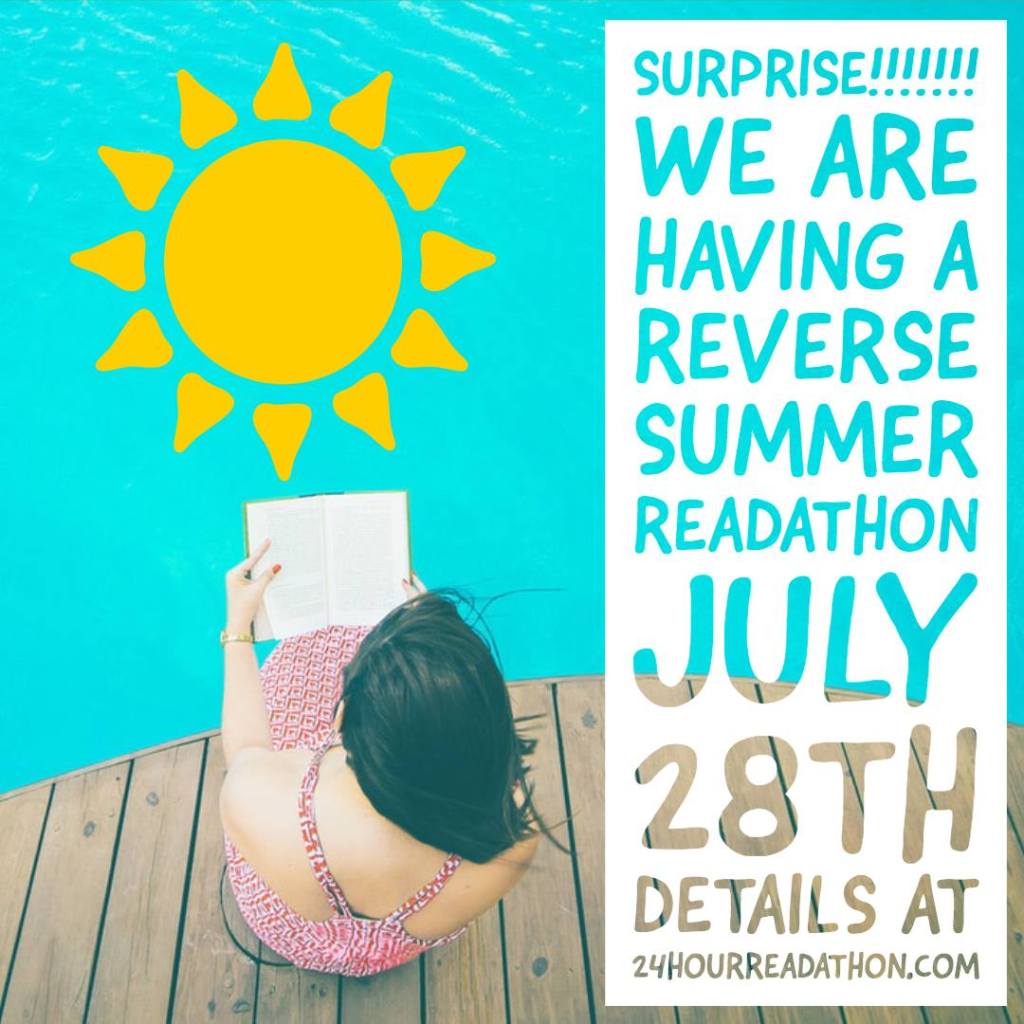
Dewey’s is having a Summer Readathon on 7/27-7/28. Check it out.


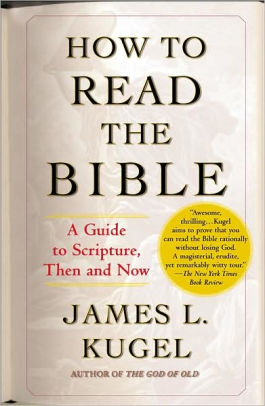
How to Read the Bible, Chapter 1 by James L. Kugel

9780743235877_p0_v1_s550x406

In 2016 I started a project to read the Bible, including the book How to Read the Bible, by James Kugel. I began by writing chapter-by-chapter summaries of this information-packed book while reading the Bible at the same time. This year, I have restarted my project and restarted the book, hoping for better results – is that insanity? This time, I will read this book first (along with other supplementary books) and THEN begin the Bible. This is intended on being a multi-year project, as my attempt to “read the Bible in a year” proved too difficult.

In his first chapter, Kugel describes the content of the Hebrew Bible. It is partly a history of the people of Israel, starting at the very beginning of time. Interspersed within this history are many laws of the Hebrews. A third aspect of the Hebrew Bible is the pronouncements of various prophets, and a fourth aspect is the writings of Israel’s sages (the “wisdom writings”). The final aspect of the Hebrew Bible is prayers and songs of thanksgiving.

Kugel suggests that an allegorical reading of the Bible was not originally intended by the Hebrews. It was meant to be exactly what it was – a mixture of history, laws, prophetic statements, and prayers. The allegorical meaning came later when the Hebrews wanted to make the Bible seem up-to-date. The Jewish commentator Philo of Alexandria (ca. 30BCE-Ca. 55CE) was a leader in allegorical interpretation. An allegorical interpretation was especially important to the Christians, who wanted the Hebrew Bible to fit their new faith (for example, predict as much as it could about Jesus) and be applicable to the present day. Soon, Christians had a belief that each passage in the Bible could have four-fold meaning – the literal, the allegorical, the moral, and the anagogical.

Biblical interpretation until the Renaissance was left to scholars, as the general population couldn’t read and didn’t own Bibles. This is why, when more people began to learn to read, and had more access to printed word, many long-held interpretations of the Bible were overturned. This, of course, helped stimulate the Protestant Revolution.

Another revolution in Biblical interpretation came with the scientific arguments of Nicholas Copernicus (1473-1543), Galileo Galilei (1564-1642) and Johannes Kepler (1571-1630). Science seemed to be able to unlock the secrets of life without divine revelation – and it even suggested that some of the points written in the Bible were false.

In his introductory chapter, Kugel points out that there are some confusing or conflicting passages in the Bible; therefore, four assumptions were made in ancient times to interpret the Old testament and get rid of these inconsistencies.

Assumption 1: The Bible is a fundamentally cryptic text, and there is hidden meaning.

Assumption 2: The Bible is a book of lessons meant to apply to our own times as well as the time in which it was written.

Assumption 3: The Bible contains no contradictions or mistakes.

Assumption 4: The Bible was divinely inspired.

These assumptions have lasted through time. However, in the late 1800’s, after the publication of Darwin’s On the Origin of Species and other revolutionary and “heretical” scientific theories were being discussed, people started questioning these assumptions. Was the Bible indeed verbally inspired (that is, did every word of it come from God, or just the basic idea)? Clearly, the Bible contained “errors” or inconsistencies in the text. Also, did Moses really write the Pentateuch?

The question of who wrote the Pentateuch is one of the touchiest subjects in modern Biblical scholarship. Some reasons to believe that Moses, indeed, did not write the Pentateuch is that he would have had to know things that he couldn’t possibly have known during his own lifetime. Counter-arguments suggest that Moses is a prophet, so of course he knew things that he wouldn’t have normally known. Another questionable section is when the Bible states “Now the man Moses was very humble, more so than anyone else on the face of the earth” (Num 12:3). Would such a humble man write that about himself?

Many modern Biblical scholars believe that the Pentateuch was written by at least four or five different authors over a period of centuries. Two of the authors can be identified by the way they refer to God: some parts of the Pentateuch referred to him as “‘elohim” other parts referred to him as “Yahweh.” The author who referred to God as “Yahweh” is now called J, and the author who referred to God as “‘elohim” is now called E. The author of Deuteronomy (who had a different writing style and apparently lived in a different era, based on knowledge of the past) is now called D. On top of all that, style analysis showed that there was yet another writer – one who was a priest and focused on laws – who is now called P.

The purpose of the rest of Kugel’s book is to describe modern vs. classical interpretations of the Bible, in reference to specific passages.
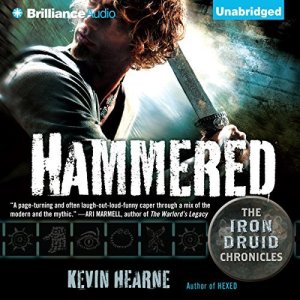
Hammered, by Kevin Hearne

61dncgofiel-_sl500_

Summary: Thor, Norse god of Thunder, has created many enemies over time – and more than one of them is friends with Atticus O’Sullivan, the last remaining Druid on Earth – and someone who has a proven ability to kill gods. Against his better judgement, Atticus is drawn into an assassination attempt on Thor.

My Thoughts: This is the third book of the Iron Druid Chronicles, and although it’s not as fantastic as the first, it is hilarious and kept my husband and myself happily occupied for our long drive to our honeymoon. This series is highly recommended to people who like urban fantasy – but I’d suggest starting with the first.

four snowflakes

Weekend Update Week 21

silhouette of pregnant standing on seashore during golden hour
Photo by Pixabay on Pexels.com

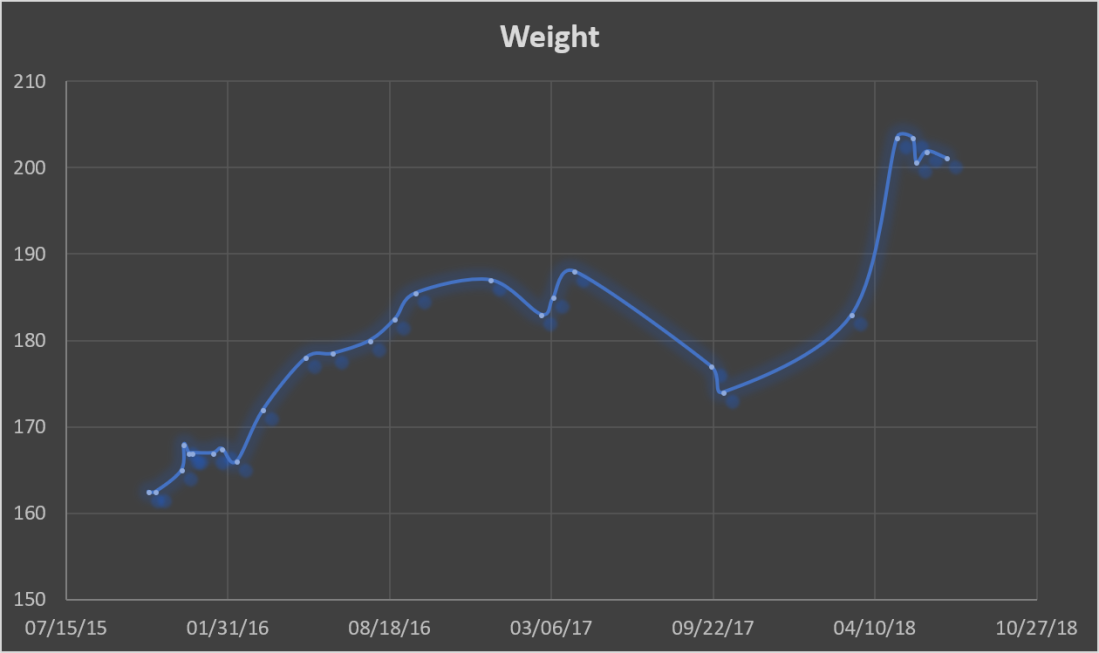
Hello after a vacation from making any posts at all! The picture above looks nothing like me, except the pregnant part. Especially since my weight loss goals were derailed first by a change in medication and then by becoming pregnant. But never fear! Someday I will get back down to my ideal weight! I have faith! If you’re interested, here’s my latest graph (which I find interesting because I like data).

Picture1

I’m eating plenty of healthy foods (my cravings lean mostly towards fruits and veggies – and in case you think that means I’m having a girl because you’ve been reading silly internet myths, it’s a boy). I have NOT been getting much exercise, though, because I first caught some nasty virus and then developed pneumonia. I’m on antibiotics now, so I’m slowly getting better. 🙂 Luckily, my mother-in-law is in town helping out while I’m on recovery, so the housework is still getting done.

The kids have been doing great ever since M went on his meds for ADHD. Though the other day he requested to be homeschooled. He seems to associate school with being “bad.” We’re trying to convince him that first grade will be so much better because he’ll have the meds and the new social skills he’s been learning. Regardless, I have been doing research into other options. I’m certainly not ready to maintain my own curriculum on such short notice, but the online public school system looks promising. I don’t suppose anyone has feedback about Connections Academy, do they? I have read the reviews, and they seem mostly positive, though there are certainly some negative ones as well. I guess it all depends on the kid and how she learns. I will be going to an information session next week to determine whether this might be a good choice for me. A is skeptical, but M’s mom seems open to the idea.

While we’re on the subject of school difficulties, does anyone have experience with dysgraphia? We are concerned that D may be showing signs, and will be watching her carefully next year. She has very distressing writer’s block, poor legibility, and poor spelling. Of course, she’s just entering the third grade, so this may just be her natural progression. But I was just wondering if anyone out there has had experience?

Currently Reading

Currently Reading

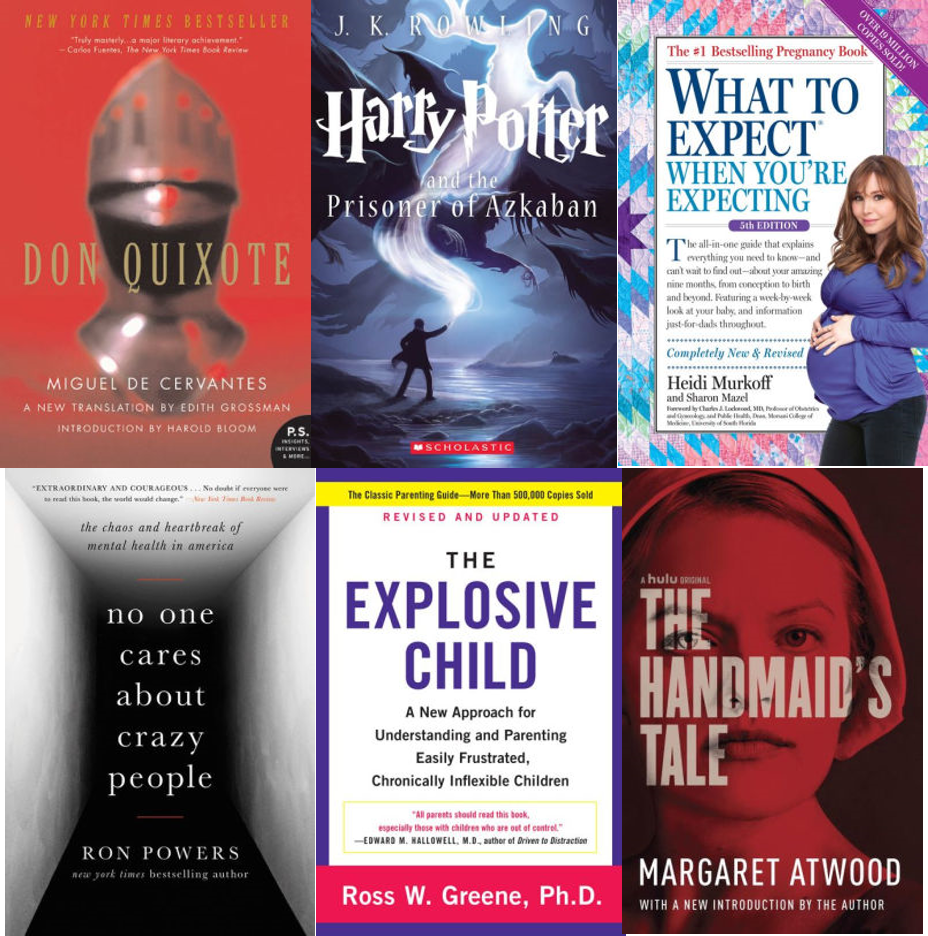
I’ve gotten to the point where I’m reading too many books at once again. It’ll probably fade away with time, but for now I’m re-reading the Harry Potter series for some light reading, Handmaid’s Tale for some more literary fiction, No One Cares About Crazy People as a general nonfiction book, The Explosive Child, which was suggested by M’s ADHD assessor (and now seems unnecessary since he hasn’t thrown a temper tantrum in a couple of months), and What to Expect When You’re Expecting, for obvious reasons.

Completed

Completed

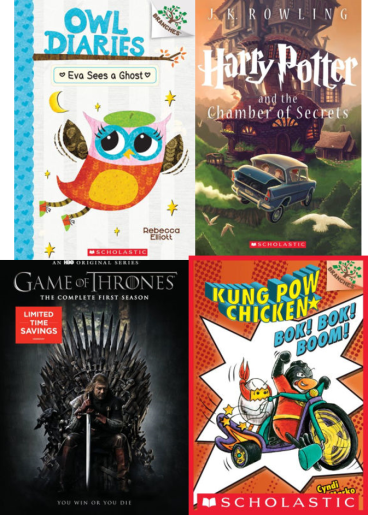
M read two Scholastic Branches books to me recently. They are presumably above his reading level, as they appear to be aimed at second graders and he’s going into the first. But for the most part he’s doing great. I need to help him with a word every now and then, but that’s no problem. I’m so proud of him!

I finished the second Harry Potter book and started the third. And I watched Game of Thrones Season 1 with A and my nephew J. Yeah, we got J’s mom’s approval before subjecting J’s young mind to all that sex and violence – but apparently that’s the kind of stuff she watches with him. J is now addicted and has moved on to season 4 himself. Season 1 is as far as I’ve gone.

julyreadaton1

Also, if I am recovered enough from my pneumonia, I will participate in Dewey’s Summer Readathon on 7/27-7/28. Check it out.

This links up to Sunday Post at Caffeinated Reviewer and Sunday Salon (on FB).