The Many-Colored Land, by Julian May

The Many-Colored Land, by Julian May

Genre: Science Fiction / Fantasy Mesh (Adult)

Reason for reading: I read this book a long time ago and always intended on picking up the rest of the series. This year, I convinced my real-life book club to read it. So hopefully I’ll get to the rest of the series soon!

Synopsis: In the near future, an alien federation called the Galactic Milieu has intervened on Earth, and welcomed humans into the its fold. For most of humanity, the Milieu is a blessing. Long life, health, an ethical law system, the adventure of space travel – these are the perks that humans enjoy. But some feel confined by the rules of the Milieu and yearn for a simpler life. And some are too sociopathic to be accepted in the Milieu’s society. These people can go into Exile – they are sent back in time to the Earth’s Pliocene epoch. The Many-Colored Land follows the story of one group of exiles as they discover what lies on the other end of the time-portal. Life isn’t as simple as they expect, and they are soon swept up in a world of war and conspiracy. 

My thoughts: I must have read a lot more hard-core science fiction when I was a teenager, because I don’t remember this book being as heavy as it felt this time around. All the descriptions of futuristic technologies / cultures slowed me down because I don’t read enough science fiction to be used to the terminology. It may have been slow reading for me, but I felt refreshed by the newness of the plot. This is a very complex book, with many layers of hidden foundation. Superficially, I think the characters could have used a little more development – but I’m sure they grow throughout the series. This first book in the Pliocene quartet was mainly world-building. We were introduced to the alien cultures – both the good and the bad aspects. We got a hefty background on the Pliocene epoch. And we got some hints of how these events in the Pliocene might have impacted humanity’s development millions of years later. It’s a fascinating set-up, and I’m eager to see how the rest of the series plays out. I’ve heard so many good things about it.

How do we know about Jesus?

As I pointed out in my New Years Resolutions, this year I have decided to explore my relationship with Jesus. Who is Jesus, and what does he mean to me? This has always been a sticky question that I avoided. My first book in my quest is: The Meaning of Jesus: Two Visions, by Marcus Borg and N. T. Wright. Borg is a liberal Jesus historian and Wright a conservative one. The book is a set of essays which outlines an ongoing discussion that these two friends have continued for years. 

In the introduction, they list three target audiences: first, they hope that this book will be of interest to Christians and non-Christians alike. 

“We both believe strongly that what we say about Jesus and the Christian life belongs, not in a private world, inaccessible and incomprehensible except ‘from faith to faith,’ but in the public world of historical and cross-cultural study, in the contemporary world as well as the church.”


Second, they hope that this book will provide new insight into a debate that has become gridlocked among Christians – liberal vs. conservatives.

Third, they hope that their book will speak to people who want to better understand how different visions of Jesus translate into Christian life. This, I suppose, is why I bought the book originally – though the academic arguments will probably be of more interest to me. 🙂

In their first section, they ask the question: How do we know about Jesus? In their separate essays, Borg and Wright point out the difficulties of deciphering the historical data about Jesus. They agree that everybody’s interpretation of history is viewed through the lens of their own perception or worldview. Borg describes four lenses through which he views Jesus: 

  1. Gospels are history remembered as well as history metaphorized
  2. Jesus was a Jewish figure teaching and acting within Judaism
  3. Jesus’ legacy was developed by the community of early Christians
  4. Jesus’ legacy was developed by a variety of modern forms of Christianity, as well as other religions.
Borg and Wright agree that modern secular culture, which believes that the universe can be studied, understood, and described by natural laws, can be used as a weapon against faith. Borg says that it is easy to lose sight of the divine Jesus when you have a strongly secular worldview. Wright points out that with a secular worldview, you are focused on data and theories. Both scientists and historians ask the questions: 

Does the theory make sense of the available data? Does it have the appropriate simplicity? Does it shed lights on other areas of research? 

History differs from science in that there are no agreed-on criteria for what counts as “making sense” and “simplicity.” Therefore, it is very hard to for Jesus historians to come up with any consensus. 

Both Wright and Borg focus on the difficulty of working out the historical evidence of Jesus and the gospels. Borg thinks it is necessary to see and appreciate both the historical Jesus and the spiritual one, lest you lose sight of Jesus altogether. These two entities are not the same – the first is an actual man who was once alive, the second is a concept that has influenced spirituality for thousands of years. 

“When we emphasize his divinity at the expense of his humanity, we lose track of the utterly remarkable human being that he was.” 


On the other hand, Borg believes that if you emphasize only historical fact and what Jesus meant in his own time to his own people, you lose sight of how strongly his message has influenced today’s culture, and what he means to us today. 

In contrast, Wright says that he doesn’t think the early Christians made a distinction between the historical Jesus and the divine Jesus, so why should he? He feels that these “two versions” of Jesus are one and the same, and that whenever he reads literature about the historical Jesus, it reinforces his faith in the spiritual Jesus. 

Personally, I’m inclined to agree with Borg on this subject. I think that he nailed my problem directly on the head: all my life I’ve tried to combine the historical Jesus and the divine Jesus into one entity. Thus, my faith and my secular worldview were battling for prominence in my perception of Jesus, and I lost sight of Him altogether. If I can separate the two entities in my head, I will be able to appreciate both the wisdom of the historical man and the divine love of the Christ Jesus. 

Intercessory Prayer – Does it influence the Divine Opinion?


Throughout my life, I’ve often wondered about the power of prayer. If God is all-powerful, and He wishes the best for all of us, then why do prayers matter? If I pray that my friend’s medical school applications will go well, for instance, what difference do I make? Certainly God already has a Divine Opinion on whether my friend should get into medical school or not. Certainly God has the power to help my friend get into the right medical school without my prayers. So why pray? Of course, there is the chance that by praying I’m releasing endorphins or reducing levels of stress hormones in my body. So maybe prayer is more for my own physical well-being than to nudge God into seeing things my way? 

There have been several scientific studies which explored the power of prayer. I think the most frequently cited is the Study of the Therapeutic Effects of Intercessory Prayer in Cardiac Bypass Patients. But, as I pointed out in a previous post about whether God belongs in science, these studies tend to be inconclusive and easily misinterpreted. Clearly, I will not find a scientific answer to my question. 

Prayer seems to be a very natural human urge. It’s not just people from the mainstream religions that pray. For instance, some people “pray” to the universe, as in Rhonda Byrne’s The Secret. Byrne’s philosophy uses positive thinking to direct the power of the universe, with life-changing results. Similarly, my Wiccan friend once likened spell-casting to a form of prayer. He said that if you focus your mind on a certain goal, you are more likely to achieve that goal – regardless of whether you consider this spell-casting or prayer. The universal belief among these religions and philosophies is that there is some sort of greater power out there (whether it be a self-aware God or simply the universe) that is ready to be harnessed for the good of humanity. 

Personally, I have a Christian perspective on prayer. The idea is: pray to Jesus / God for what you want and then finish up with a nice “Thy will be done.” This phrase always gets to me though. Of course God’s will is going to be done. I realize that this phrase is supposed to help me accept the fact that sometimes God’s answer will be “no.” But the phrase still bothers me – and maybe that’s because I still haven’t decided whether prayer really influences God’s Divine Opinion or not. 

I have two basic types of intercessory prayer that I commonly use. The first is the general “please God, let such and such happen. Please, please, please. Thanks! Oh…yeah. Thy will be done and all that jazz!” I pray like this because a part of me doesn’t really believe that I’m influencing the Divine Opinion. But I go ahead and pray, because part of me really does believe. *sigh* Wavering doubt has always been my biggest weakness, as you can read in my recent post about doubt.  

Surprisingly, I am much more confident about my second type of intercessory prayer. I meditate upon God’s love…I visualize it streaming out of the sky and filling me till I’m overflowing. Then I concentrate on whoever I happen to be praying for. I visualize a string of love pumping out of me and into the other person. This isn’t difficult, since I have an inexhaustible source of love coming from God. I hold this connection with the other person as long as I am able. 

In my heart, I know that this form of prayer works. I really AM channeling God’s love when I pray that way. So this is the way I prefer to pray. (Although it tends to be more about love and less about getting my dream job, so I have to pray the other way too!) But why am I so confident about this type of prayer and so doubtful of the other? I mean, shouldn’t the same questions be raised? If God is all-powerful, why would He need me to channel His love for Him? But I thought – maybe that’s what He put us here on Earth for. To amplify and channel his love. Maybe we’re part of His power. Maybe we’re meant to provide this love to our neighbors. This interpretation seems to fit with Christian philosophy. So I’m running with it. 🙂

On the other hand, I still need to reconcile myself to my other type of intercessory prayer. Perhaps my readers would like to share their thoughts on the subject?


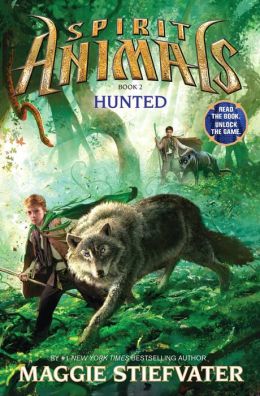
Hunted, by Maggie Stiefvater


Hunted: Spirit Animals Book 2, by Maggie Stiefvater

Genre: Middle School Fantasy / Adventure

Reason for Reading: This is the second book in a so-far excellent series

Synopsis: (May contain slight spoilers for book 1). Conor, Abeke, Meilin, and Rollan hike across Eura on quest to capture the talisman of the Great Boar before the Conquerors get their hands on it. But the Conquerors have a few surprises up their sleeves – they are now able to force an unnatural bond between humans and animals! They now have the advantage of superior numbers of bonded warriors. In order for our heroes to survive, they must learn to trust one another and fight as a team. 

My Thoughts: This was an excellent follow-up to Brandon Mull’s Wild Born (reviewed here). The characters are developing – and so is the philosophy. In this book, our heroes struggle with trust. It’s a story of strengthening ones bond with friends – how such a bond can never fully be broken, even when trust fails. It’s a story about following your heart, even when your heart leads you astray from logic (a fitting theme given my thoughts on doubt last month!) I’m eagerly awaiting the third book in this series, Blood Ties, which comes out in March.

This is my first book by Maggie Stiefvater, and I’m eager to pick up some more now! I like the way this series is designed – with a different author for each book. That way, I am introduced to authors that I might otherwise never gotten around to reading. 🙂

February Update


Another good month has passed, and as you can see I’ve accumulated more books than I’ve read – yet again! As far as my resolutions go, I 1) posted 3 book reviews this month: Hero’s Lot by Patrick W Carr, The Mark of Athena by Rick Riordan, and Wool by Hugh Howey; as well as an entry about my career development and some thoughts on doubt. 2) I’ve done a terrible job of getting back into shape for a mud run this summer. 😦 3) I’ve worked really hard on buffing up my resume, and 4) I have only joined one group read – which I quickly realized I wouldn’t be able to keep up with. So, yay for partly keeping up on my resolutions!

As for personal news, my mom found out she has breast cancer this month. 😦 She had the lumpectomy a couple of weeks ago, and now she’ll have 6 months of chemotherapy followed, most likely, by a couple months of radiation. On happier news, my sister announced that she is pregnant again – another boy. That should be a big change for the family!

Film and Reading Completed This Month

Watched this with my good friend (eeblue) while I was waiting for the New Year to ring in. This is the world’s first introduction to the Daleks, and I really enjoyed it despite (or perhaps because of) the cheesy acting and special effects. I LOVE that they haven’t changed the design in all these years – the Daleks STILL have a plunger for a hand. 🙂

In this story arc, The Doctor, Susan, Barbara, and Ian land on another planet which has been ravaged by nuclear war. On the planet are two races – the peaceful Thal and the violent Dalek. The Thal would like to carve a truce with the Dalek, they will share their anti-radiation medication and the Dalek will share their food. But the Dalek have another plan. EXTERMINATION.

I love the philosophy of these shows. It questioned whether the Thal were really pacifist if it came down to defending themselves, or whether they simply THOUGHT they were pacifist. It also raised the point: There is pride in being unafraid to die, but there is shame in being afraid to live.

I also watched this story arc while waiting for the ball to drop. This story wasn’t very interesting to me, I’m afraid. The TARDIS “crashed” and the group was stuck in the ship for two whole episodes. They went paranoid (for seemingly no reason) and started accusing each other of conspiracy. The story didn’t present any new concepts or philosophies, and the acting / directing  wasn’t strong enough to carry such an uneventful story. 😦 I almost fell asleep.


I started this audiobook months ago for my real-life book club (eeblue and morphidae). I finally decided I ought to finish it.  


Adorable picture book about a monster who wants to be loved, but he’s the only non-cute guy around. He searches and searches for love until… 


I read this book when I was a teenager, and always planned on getting to the rest of the series – but never did. I chose this as a re-read for my real-life bookclub (eeblue and morphidae) with hopes that I’ll finish the series this time around. I enjoyed the book, though it was harder-core science fiction than I recalled. I used to read a lot more hard-core stuff when I was a teen. 
Read this book because it was one of the nominations for the World Fantasy Award last year. 


Newly Acquired


Recommendation from a friend on LibraryThing – she says it will help me on my quest to understand 🙂
Another recommendation from my friend on LibraryThing
Gift from my Aunt 
Gift from my best friend
Free Friday book for Nook
Despite my resolution that I wouldn’t commit myself to group reads this year, I have broken down within the first few days of January. 🙂 There is a thread on LibraryThing to read and discuss the books of this series, and I thought it would fit in well with my “Question of Jesus” resolution. 🙂
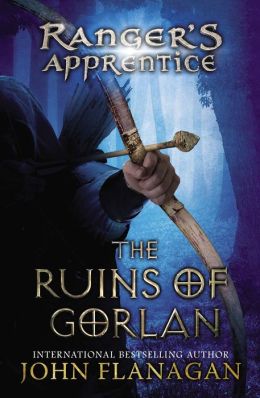
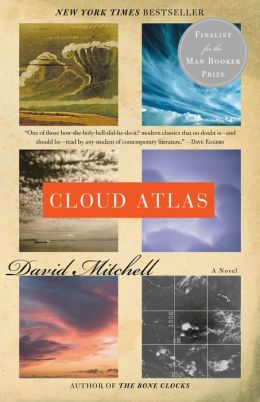
I’ve been meaning to read this series for a long time. Looks pretty good.
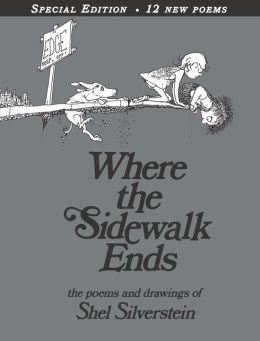
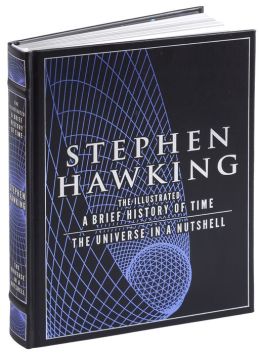
I couldn’t resist buying this beautifully illustrated book at bargain price at Barnes and Noble
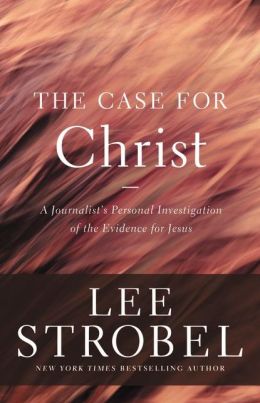
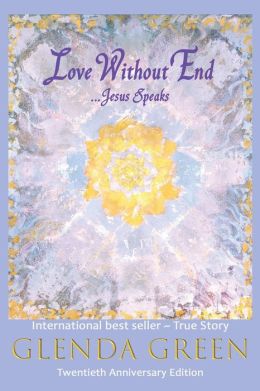
My aunt sent me this book because it helped her fall back in love with Jesus – she thought it would help me answer the “Question of Jesus”
This is the second book to a series that I started last year. I hope it’s as cute as the first.
Will read this for a bookclub meeting in April..
Thought I’d perk up my resume a bit. This seems to be a popular resume-writing book.
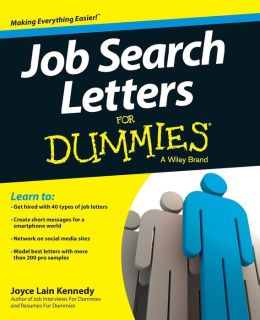
Yes, I’ve gotten to the point where I’m buying “For Dummies” books. What has the world come to? I’m hoping they provide some good tips, though.


This is one of the textbooks suggested for The Great Courses – The New Testament, which I’m using as one of my guides to my New Testament and Discovery of Jesus quest.
And this is the other main textbook for The Great Courses – The New Testament
Free Friday book for Nook
My friend Liz is going to teach me how to knit. I want to knit a sweater! She says I should start with a wash cloth. 
Will listen to this audiobook with my friend Liz while I learn how to knit.


Bought this for my nephew
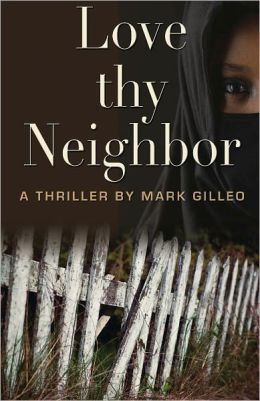
Signed by author. I’m leading a discussion on this book at the end of February for the American Christian Fiction Writer’s Association. You can join the discussion by joining the email list. There’s still plenty of time to read the book!
Free Friday Nook Book


This monthly update was cross-posted on The Sunday Salon, Caffeinated Book‘s Sunday Post,  The Story Siren‘s In My Mailbox, Book Journey‘s It’s Monday What are You Reading?, and on Mailbox Monday.

Wool, by Hugh Howey


Genre: Post-apocalyptic dystopia for adults, short stories

Reason for Reading: This was the choice for my real-life book club several months ago, but I only finished it this month. I had a bit of a reading slump in there, but I prevailed! 

Synopsis: In this collection of related novellas, we explore a post-apocalyptic world in which everyone is living in a “silo” spanning downwards into the earth, instead of up into the sky. There, they are safe from the toxic fumes that ravage the earth’s surface. However, it’s not at all clear how humanity got into this underground silo, why the people of the past have revolted so many times, and…slowly…new evidence arrives to suggest that possibly the people in power are hiding something nefarious. This set of novellas follows several different characters as they independently discover secrets of the silo.

My Thoughts: This book had a really slow start for me since I prefer novels rather than short stories. I like the character and plot development that is only possible with a novel-length story. Wool is a long book, but it is a collection of loosely connected novellas rather than one continuous story. This creates an intriguing atmosphere of mystery, and allows for different characters to discover different types of secrets of the silo – which is a refreshing turn from most dystopic literature these days in which one character manages to discover all. I guess this format is more believable in that way. But the format slows down plot and character development. The book started picking up about half-way through for me, though. This is when it started focusing on certain characters for longer. Thus, more character development. Also, about half-way through the book is when I started to realize that perhaps Wool was ideologically different than most dystopias. I began to wonder if maybe the choices the government was making really were protecting the people. Maybe ignorance – though abhorrent – was necessary in this case? I’m not going to say what my final conclusion on this subject was…you’ll have to find out for yourself. And I probably still need to read the prequel, Shift, and the sequel, Dust, in order to come to a conclusion.There’s still a lot of mystery to me about the silo.

Doubt

Jonah and the “great fish” on the South doorway of Dom Saint Peter
Image source: Wikipedia

I’m sure most of my readers are familiar with the story of Jonah. God told Jonah to go to Nineveh to prophesy against their wickedness. But Jonah didn’t want to go to Nineveh. He was afraid to prophesy in a foreign land full of wicked people who hated Hebrews. Plus, he didn’t want God to show mercy to his enemies. So he ran. But he couldn’t escape God, who in His Great Wisdom made a whale swallow Jonah until Jonah was able to see the error of his ways and continue more willingly on God’s path.

I’ve been thinking a lot about Jonah recently. So I was surprised when a coworker jokingly compared ringing at the registers of our bookstore as her “Nineveh.” She added “but if God told me to go to Nineveh, I would go.” I half jokingly answered “then perhaps you haven’t found your Nineveh yet.” (She looked a bit taken aback. Perhaps I should have kept my mouth shut.)

I think we all have a personal Nineveh (even those of us who are agnostic or atheist). Some of us have more Nineveh than others. Recently, I have found a Nineveh. It’s a personal issue, and I don’t think the details matter for this post…but the basic idea is this: I have a series of choices that I feel God has encouraged me to make. I don’t like those choices, because I’m very much afraid of getting hurt. After much prayer, I decided to go ahead and have faith and make the plunge. It backfired in my face, I got hurt, I hurt someone else, and it all seems to be spiraling downhill from here. 

I am faced with two interpretations: I can assume that I foolishly mislead myself with wrong expectations; or I can have faith that God led me down this path, that He had a reason to do so, and that some good will come of it.

Neither interpretation is inherently wrong as a Christian. Lots of people mislead themselves into thinking they’re doing what God wants them to do when they’re really doing what they want to do. Easy mistake to make. And with this interpretation, I can safely backpedal out of the situation I’ve created and abandon the path that I’d foolishly chosen. (Yeah, it leaves a mess behind, but …. woops! my bad!) Unfortunately, losing faith in myself isn’t too healthy. If I choose this interpretation, then I need to believe that I don’t really know when God is calling me and when He’s not. Because I was pretty darn certain He was calling. And if that wasn’t God calling me, then I’m probably a little crazy and certainly can never have faith in my interpretation of God’s call again. So it seems like a good choice, as long as I’m ok with losing faith in myself and in God. 

The second interpretation is more scary. It means I have to continue on the path I’d chosen, having faith that I was, indeed, hearing God’s call, and that if He got me into this mess, something good must come of it. 

I haven’t yet chosen which of these interpretations to make, and am fluctuating a lot lately. But my instinct tells me that as a Christian I ought to believe that God was calling me, and that he’s still calling me to follow that path. The path to Nineveh. Where I really, really, really don’t want to go.

And while I wallow in self-doubt, as well as religious doubt,  let’s not forget that Jesus asked God to take away the burden of His chosen path: “Abba, Father,” he said, “everything is possible for you. Take this cup from me. Yet not what I will, but what you will.” (Mark 14:36 NIV, see also Luke 22:42). Let’s not forget one of Jesus’ last statements on the cross: “My God, My God, Why have you forsaken me?” (Mathew 27:46 and Mark 15:34. He was quoting Psalm 22.).

Jesus, that miraculous man who is loved by millions of people even 2000 years after his death, also had a path he didn’t want to follow. He also had his moments of doubt. Doubt is human. None of us should ever forget this fact when we are struggling with our own doubts. We need to always remember that we are human. That doubt is natural. 

Always accept that you are human – that even Jesus doubted – and forgive yourself for your weaknesses. That is the best way to restore your faith. 

The Mark of Athena, by Rick Riordan

The Mark of Athena, by Rick Riordan

Genre: Middle School fantasy / adventure

Reason for Reading: This is the third book in a series that I’ve already started. 

Synopsis: In this third book of the Heroes of Olympus series, 7 heroes – Percy, Hazel, Frank, Jason, Piper, Leo, and Annabeth – set out on a dangerous quest to Rome. The Romans and the Greeks must cooperate if they are to quell the rise of Gaia, but war is brewing between the two camps. Our heroes must try to postpone war while saving Rome from apocalypse-hungry giants and following the Mark of Athena – an ancient clue that only Annabeth can decipher. 


My Thoughts: I’m not a huge fan of Riordan’s writing, though I think this series is a heck of a lot better than the Percy Jackson series. While reading this book, I finally figured out what it is about Riordan’s writing that bothers me – the audience is too childish. All the adults in these books talk as if they were kids. That grates on me. I guess I prefer kids books where adults sound like adults – even if they sound like silly or disinterested adults (which is often the case in middle school books). Despite my dislike of the style, though, I found this book well-researched and interesting. The plot isn’t very complex, but there’s a lot of action and some good humor. I’m not rushing to Barnes and Noble to buy a copy of the next book, but I’m planning on reading it “some day.” (Which probably means I’ll wait until the NEXT book comes out and reminds me that I still haven’t read House of Hades…which is what happened with Mark of Athena.) One thoughtful question about this book – and maybe this will be answered in House of Hades – is why did Riordan only write first person narrative from the Greek heroes’ points of view? Is he hiding something about the Romans?


Hero’s Lot, by Patrick W. Carr

The Hero’s Lot, by Patrick W. Carr 

Genre: Young Reader Christian Fantasy

Reason for Reading: This is the second book in a series I began last year. The first was quite interesting – reviewed here – and I’m eager for the third to come out later this year. 

Synopsis: In this second book of The Staff and the Sword series, Errol is compelled by powerful members of the conclave to go to a dangerous land and kill the traitor Sarin Valon. With a mixture of stubbornness and bravery, the princess follows Errol on his dangerous journey.


My thoughts: This book didn’t have quite the flare of the first in the series, but it was nevertheless quite enjoyable. The adventure was much more clearly laid out in this book, which made it less mysterious than the first, but the plot was thicker as a result. The story emphasizes the importance of forgiveness, and raises interesting questions about whether Church authority is “good” just because it follows conservative values that have worked for centuries. I tend to believe that Carr’s church is symbolic for the Catholic Church, and the hints of church-shattering philosophical changes that will come in the next book symbolize the conversion to Protestantism or perhaps simply the disgust many people have these days about the sex scandals in the Catholic Church. However, that’s a message intended for adults, I suspect, and the target audience – ages 12-15 will probably mostly miss it. The dangerous foreign land that Errol traveled to clearly symbolized Egypt / Muslims – Carr included some rather direct hints to that effect. I felt a little sad that the people of that land were generalized as evil, except for those that had been converted by God’s Christian word. Those few characters who weren’t pure evil seemed rather weak and a little selfish. Messages like this always make me sad – especially in children’s books – but I understand that it’s difficult to write an epic fantasy without having a hint of xenophobia. Someone has to be “evil” right? I’m not sure how this problem can be gracefully avoided. At the very least, there were “bad” people and “good” people on both sides of the border, which is as much as I can rightfully wish for, I suppose. 🙂

January Update

Well, it’s a new year! Last year was a difficult one for me – I moved back “home” to Minnesota, and was immediately distracted by family issues. Illnesses and other stresses abounded in my family this year. But I’m thankful that I was living in Minnesota at this time because I was able to be there for my family. Unfortunately, my family problems took away from my available internet time, so I got behind on writing my own blog as well as reading everyone else’s.

Resolution 1: Blog about it! One of my New Year resolutions is to get back to writing blog posts and checking everyone’s blogs again. So hopefully I’ll see you around soon! I’m also going to make a better effort to write editorial pieces for my blog since it tapered off to ONLY book reviews lately. I’m not going to stop with the book reviews, of course, but I’d like to include some other thoughts as well.

I’d been studying the “Question of Evil” for a while, but my studies tapered off when I became too involved in internet-based reading challenges and with my family. This year, I resolve that I will not commit myself to so many challenges and group reads – I will focus on my own interests. Those are: social justice, the “question of evil,” and, my new interest, the “Question of Jesus.” 

Even when I was a child, I asked myself who Jesus was and why people prayed to Jesus instead of directly to God. As the good little Catholic girl that I was, I decided that this was a very sticky question and decided to shunt it off to some corner of my brain and stop worrying about it. Because of this shunt, I have very little relationship with Jesus at all, and even feel a little uncomfortable when other people talk about their bond with Jesus. I just simply don’t know who Jesus is, I suppose. I’m a rather liberal Christian who believes that all religions are “right,” and so I’ve ignored my lack-of-bond with Jesus for quite a long time. However, I have recently decided to read a little about Jesus and find out what He means to me. 

Dedicated to this cause, I went to Barnes and Noble, and browsed the Christian Life and Christianity sections. I resolved that I would buy a “spiritual” book rather than an academic one – because I think the root of my problem is that I have always viewed the question from an academic standpoint. Of course, I failed miserably at my resolution, and bought four academic books. 🙂 Oh well. There’s always next time! Or maybe since I think academically, perhaps I’ll find the answer in academic books? We’ll see. Hopefully I’ll do a better job at keeping my “blog about it!” resolution. Christian friends be warned – my thoughts on the subject of Jesus will most likely stick to academic ponderings.

Resolution 2: Just do it already! I make exercise goals for myself every year, and sometimes I complete them and sometimes I don’t. I DID end up doing a couple of sprint triathlons a couple years ago, and I had been thinking of doing one last year. But I realized that I simply don’t like swimming. It’s so wet and chlorinated! I’ve always wanted to do the Tough Mudder, but that’s one of those mud races where you need a team. And I couldn’t find a team. 

But this year, I have a coworker whose friends do the Tough Mudder every year. Now I have a team! 🙂 So I’m going to train for the 2014 Tough Mudder (Minnesota). I’m a little skeptical that I can make the July 2014 race because right now I would consider myself a “mudderling” in the Tough Mudder Boot Camp. At the very least, I’ll be fit enough for the 2014 Warrior Dash (Minnesota), right? Sadly, I hear the Run for Your Lives races have now been canceled or I’d certainly to THAT again this year. 😦


Resolution 3: Move forward! I resolve to move my career forward. 

Resolution 4: Keep up! I resolve to do a better job of keeping up on my reading of the news / current events magazines. My problem is I really want to know what’s going on in the world, but I’d much rather sit down and read a nice relaxing novel. I need to keep my reading more balanced with heavier stuff that I want to read but am always too tired to get around to. I’m also a pretty slow reader, so my book clubs take up a bit more of my reading availability than I’d like. I wish I had more free time!

Resolution 5: Please, just stop! I resolve to make fewer resolutions. I always make so many of them, and then I get burnt out and don’t complete any of them. I need to focus on those resolutions mentioned above. So no reading challenges! I’ll read whatever I want whenever I want, and not commit myself to group reads and challenges (unless I’m really eager to participate). I set a personal challenge this year to finish up as many already-started series and off-the-shelf (currently owned) books as possible. 

Good luck to all of you and your New Years resolutions!

Reading and Film Completed Last Month


My nephew and a friend of mine watched the first season in one weekend. My friend had just had surgery, so she had a lot of down time to just sit – and my nephew just kept wanting more and more. He also learned to use the rainbow loom while watching Doctor Who, and made me this awesome bracelet (pictured below). I’m glad that we agreed to watch this series through in order, it’s a lot of fun. So far, I’m impressed with the fact that British TV has so much racial diversity – American TV tends to have shows that are biased towards one particular race, but Doctor Who has a more believable race ratio in its casting. Also, I admit that the Dalek are the most awesome enemy EVER. Lethal trashcans with suction cups and lasers?! AWESOME! They make me so happy. 🙂

Awesome Bracelet made by my nephew with the Rainbow Loom
I managed to find the money to re-subscribe to The Economist, which is my favorite current events magazine for foreign news. My first copy was the December 14th – 20th edition.

  • It had an interesting article about the pros and cons of raising minimum wage in America – though the lean was slightly conservative (at worst, it won’t harm anything! It COULD help.) Personally, I don’t understand the deeper economic repercussions of raising minimum wage, but my gut feeling says that it would probably help people who are struggling at the current minimum wage, and I doubt it would cause a permanent dent in the unemployment rate. 

I’m still not a great fan of Rick Riordan, but I’m going to bully through and finish this series. He did a much better job both in writing and in research for this series than he had for the original Percy Jackson series, but there are still some quirks about his writing style that grate on me. Check my upcoming review for more details. 


I watched the first story arc of the 1963 Doctor Who Series – An Unearthly Child – with my good friend and her parents. We enjoyed this campy B&W show, though the Doctor certainly isn’t as charismatic as the more recent ones. And I had a really hard time believing that the 23-year-old Carol Ann Ford was a 15-year-old child. She DID slouch a lot to add verisimilitude.  

In this show, we are introduced to the Doctor and his grand-daughter Susan. Susan’s teachers begin to wonder who Susan is, and why she lives in an old junk-yard. So they follow her in to the TARDIS and are accidentally swept away into the stone age.

I’m slowly puttering through these fairy tales. I end up reading one every couple of weeks. It’s great fun to read this mixture of familiar and unknown stories. Folklore is pretty fascinating, isn’t it?


The Story of Bensurdatu: Three princesses disappear and the King promises that anyone who should rescue his princesses will get to marry one of them. A couple of knights set out to rescue the princesses, but they fail miserably and become servants in an inn because they’re out of money. Then Bensurdatu sets out, rescues the two knights from servitude, and rescues the princesses by jumping into a magical river which the knights are too cowardly to enter. The knights betray Bensurdatu, though, and they leave him to die and take the three princesses home, claiming that they were the rescuers. They marry two of the princesses, but the youngest refuses to marry anyone but Bensurdatu. Luckily, the young man manages to rescue himself, and returns to the king as a hero. He marries the youngest princess, and the two nights are expelled from the kingdom. I feel sorry for the two older princesses, but I guess they should have been strong like the youngest one. 🙂

Newly Acquired

Advance Review Copy. Never read a book by Lisa Unger, but thought I’d grab it since it was free. 
I got an autographed copy of this book for my mom for Christmas. Klassen is supposed to be a fantastic writer, and apparently does fantastic historical research for her novels. I’ll have to read it when mom’s done with it. 

Nook Free Friday