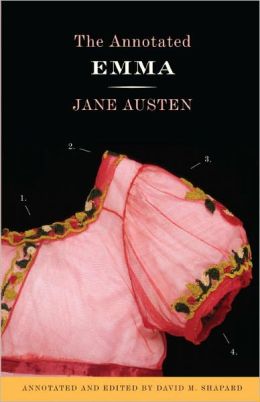
The Annotated Emma, by Jane Austen

The Annotated Emma, by Jane Austen

Genre: Classic / Regency Romance

Reason for Reading: I’m rereading all of Austen’s novels. I’ve seen these Annotated versions and been tempted to try them out for a while, and this is the one I ended up picking up. 

Synopsis: Emma is young, rich, beautiful, and the most important gentleman’s daughter in her neighborhood. When her governess marries and moves away, Emma must find another friend to entertain herself. She chooses Harriet Smith, the love-child of nobody-knows-whom, and boarder at a local country school for girls. Emma, well-meaning but naively self-important, makes a mess by foisting potential suitors upon poor Harriet, while Emma’s old friend Mr. Knightly tries in vain to check Emma’s eager naivete. 

My thoughts: I’m a huge fan of Jane Austen. This is the third time I’ve read this novel, and I’ve seen all the movie renditions multiple times. I love watching Emma grow in wisdom throughout the story. And her romance is, in my opinion, the sweetest of those written by Austen. But I recognize that this is a difficult book for many people to get into because of Emma’s painful flaws and poor choices. Another reason that Emma is less appealing to some readers is because the narrator’s perspective is so unique. The POV focuses almost entirely on Emma’s perception of the world, to the point where it is easy to be mislead about what is really occurring since we are only seeing what Emma sees. Emma, especially at the beginning of the novel, tends to be very self-centered and aloof, and so is the narration of the novel. However, even though this POV makes the story harder to get into than the other Austen novels, this is Austen’s most appealing work for character study.  

The annotations of this book are lengthy and detailed. Many interesting images and comments are included so that we can visualize antique customs, fashions, and furniture that Austen’s readers would take for granted. That aspect of the annotations was fantastic. The annotations also included a lot of character analysis commentary, such as “Emma thinks such-and-such is happening, which shows you how much she lacks self-awareness at this stage.” These annotations included a lot of spoilers (the reader is warned which annotations include spoilers, but sometimes these warnings were dropped out of the ebook version – so caution should  be practiced if you’re reading the book for the first time and you have ebook format). These character analysis annotations were sometimes interesting, but mostly they told me things I’d already knew – either because I was familiar with the story or because I am sensitive to Austen’s nuances. Therefore, I think this annotated version is for you if 1)You are interested in having some historical perspective, 2)You are reading the book for the first time and don’t mind spoilers, 3)You’re re-reading the book, but don’t remember the details and nuances, and/or 4)You just love reading annotations. In other words, I am glad that I read this one book from The Annotated Austen series, because I enjoyed the historical perspective notes, but I probably will not pick up any of the others because I think I got the main idea now. 


Practicing Tolerance in a Religious Society – Thoughts on the first week

Practicing Tolerance in a Religious Society

The first week of Coursera’s Practicing Tolerance in a Religious Society, taught by Bernard Dov Cooperman at the University of Maryland is complete! And I’ve thoroughly enjoyed it. One thing that impresses me is the development of Coursera’s discussion platform since the last time I took a course (a couple years ago). The discussion board is much easier to navigate now. Plus, there is a striking lack of trolls considering the topic. Trolls were a huge problem in the last class I took (one on Greek Mythology). I don’t know if this lack of trolls is specific to this course, or if they’ve been beaten away from Coursera altogether, though. We’ll see!

In this course, Dr. Cooperman wants to depart from the question that is usually asked: “Why were the Jewish people persecuted throughout history,” and look at the issue from a different angle: 

“Our focus is not on why a majority society saw Jews as different or reacted with violence to Jews’ “otherness.” Rather, we ask how, in a society dedicated to religious uniformity, one group of people was tolerated even though it refused to join the dominant faith. Many modern writers assume that Christianity, and perhaps religion itself, is inherently intolerant of non-believers. But we will see that neither religious nor secular world views necessarily lead to toleration or discrimination…Our question then is not: how tolerant was this religious society towards members of other faiths? Rather we ask, how did a religious society manage to practice tolerance, and under what circumstances did that practice break down?

Dr. Cooperman begins his lectures by asking the students a question: what is the difference between tolerance and toleration, and why do we think he chose the phrase “the practice of tolerance” for the title of his course. 


When I looked up the definitions of toleration and tolerance in the Merriam-Webster dictionary, this is what I came up with:

toleration – a) the act of tolerating something; b) a government policy of permitting forms of belief and worship not officially established

tolerance – a willingness to accept feelings, habits, or beliefs that are different from your own. 

From these definitions, many of us concluded that toleration was an act and tolerance a feeling. However, there is also a more subtle difference: the “practice of toleration” in Cooperman’s course title could refer to the act of accepting and embracing people who are different than ourselves. So this course is about how, at some times throughout history, the Roman Catholics truly accepted the Jewish people rather than just allowing them to remain in their midst. It remains for Cooperman to show us the ebbs and flows of this “practice of toleration.”

Cooperman then provided many links and references to introduce us to the Jewish faith, including this YouTube link to part 2 of a series called “History of the Jews.” This week, Cooperman is focusing mainly on Judaism and Christianity as it was during Jesus’ time and during the following Jesus Movement of early Christianity. An important issue to note about the dynamics of these two groups was that the early Christians were Jews. Cooperman points out that Paul was not a systematic thinker trying to re-create rules of Judaism, but a Jew who had undergone a powerful spiritual experience and who was most likely struggling to make sense of these new revelations. He urged us to read Paul’s letters to the Romans and keeping an eye out for passages that show this tension in Paul. Unfortunately, I haven’t had time to complete this assignment yet, but I’ll post my findings when I do. 🙂


The Ghost Box, by Catherine Fisher

The Ghost Box, by Catherine Fisher

Genre: Middle School Fantasy / Reluctant Readers

Reason for Reading: In exchange for an honest review, this book was provided by Myrick Marketing & Media, LLC via Netgalley.

Synopsis: When Sarah discovers that the ancient tree outside her window is haunted by the ghost of a boy, she is both terrified and fascinated. The ghost boy gives her a beautiful old box and begs her to find a key to open it. But soon, Sarah’s pesky goth step-brother Matt is sticking his nose into her business. Can Sarah find a key to the box without Matt figuring out what’s going on? 

My Thoughts: This book was written specifically for middle-school-aged reluctant readers. I’d say the interest level / maturity is for a 10 to 12 year old, but it is second grade reading level. For that target audience, I think this is a wonderful  novel! The plot is just the type of story I loved reading when I was in the 4th grade, and the difficult dynamics between Sarah and her step-brother are something that a lot of kids this age will relate to. And, these dynamics end with a message of cooperation, teamwork, and new understanding. So there’s a great message to the story, too. If you are struggling to find books that are age-appropriate for your dyslexic child, I highly recommend this book. In fact, I wish there were a lot more books like this available. The more our reluctant readers enjoy their books, the more likely they are to become readers. 

Practicing Tolerance in a Religious Society: The Church and Jews in Italy – Enrollment!

Practicing Tolerance in a Religious Society: The Church and Jews in Italy

Well, I’ve shown a terrible lack of discipline this week. Quite against the spirit of Resolution 5: Please, Just Stop! I have signed up for several Coursera MOOCs this year – Practicing Tolerance in a Religious Society begins on March 10, and runs for 6 weeks. I intend to post my thoughts on this course weekly. 
a little later…
I’ve now looked over all the lecture notes for the first week and I’m so thrilled at all the wonderful supplemental reading suggestions provided by Dr. Cooperman! One reason I only rarely sign up for these Coursera classes is because I have an OCD need to read all suggested readings and totally immerse myself in a subject. And such a thing simply isn’t possible within a course’s time-frame. And then I get all nervous and shaky and feel overwhelmed. So I tend to focus on Great Courses lecture series instead, because I can go as slowly as I want. But I really love being able to interact and network with people who have similar interests (albeit different opinions) – and that’s what I love about Coursera.  

So I’ve vowed that I will simply move through this entire course and not fret about reading everything. I’ll just write down all the suggested readings, and I can get to them later during my personal studies.

Does anyone else have this tendency to get frustrated when you can’t read everything, or to over-commit to your passions and interests?

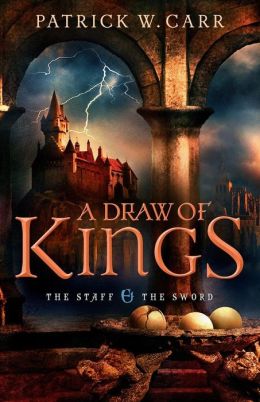
A Draw of Kings, by Patrick W. Carr

A Draw of Kings, by Patrick W. Carr 

Genre: Teen / Christian Fiction / Fantasy

Reason for Reading: This was a galley copy provided by the publisher through Netgalley in exchange for an honest review. This is the third book in a trilogy that I have been enjoying. 

Synopsis (May contain slight spoilers for previous books in the trilogy): In this third, and final, book of the Staff and Sword trilogy, the war for Illustra begins. In order to maintain order within the Judica, Errol must retrieve The Book that was left behind in Merakh. Meanwhile, Adora and Liam must journey to the Shadowlands to make a pact with these newly discovered allies. A feeling of dread descends upon everyone, as the people of Illustra realize they are surrounded by vast armies of enemies and demon spawn. They must discover who their king and savior is – or else the barrier will never be restored and the demons will destroy Illustra.

My Thoughts: This book was every bit as good as the previous two – and it tied off most of the loose ends quite well. For fantasy fans, this book was packed with battles, intrigue, foreign lands, and ranging demon-spawn. I was also quite impressed with Carr’s ability to write religious allegory. He deftly got his message across by showing it within the story instead of writing lectures into the dialog as many authors do. In fact, I bumped this book up an extra half a star (something I rarely do) because I admire how much finesse it takes to write a good allegory without sermonizing. 
One of the allegorical issues presented is the fallibility of humans (as well as the organizations that we create). The church, in Carr’s world, was composed of many good men (as well as a few villains) who often made mistakes and were suffering under misunderstandings of God which had accumulated after the loss of their religious book. This is the message that I originally interpreted as criticisms of the Catholic Church in my review of Hero’s Lot, though after reading this book the criticism feels more forgiving. The message is: no one is perfect, we are all human, and we’re going to make mistakes. We can’t judge everyone in a group based upon the mistakes of some of its leaders. I’m not sure if this is the message that Carr intended, but it is how I felt when I read A Draw of Kings

The other allegorical message that I felt was done tremendously well related to faith and doubt. There was a moment when Adora as climbing a cliff and Liam was behind her, and even though she knew Liam was there to catch her if she fell, she suddenly doubted that he was there at all – that he had ever been there. And then he carried her. I’m sorry if that is a spoiler, but I couldn’t help but point out the beauty of that moment. Because it’s so true, isn’t it? It’s so easy to lose faith – even though this loss of faith is irrational when viewed from the outside-the-moment.

My interpretation of this story has evolved so much while reading this third book, that I feel I ought to go back and revise some of the criticisms I made about the second book. Of course, I always have to include criticisms, but…. Which brings me around to my criticisms of A Draw of Kings. My first complaint is how violent it was. I felt that the good guys (Adora especially) were sometimes more violent than they ought to have been. Of course, this could simply be another way in which we are only human – and therefore fallible. So this is only a small criticism. The other criticism is that I felt threads were dropped in relation to the countries other than Merakh. There needed to be a little more tie-up after that much build-up. But that, too, is only a minor issue since the major threads were tied up wonderfully.

Overall I was greatly pleased with this book, and I will recommend it to all of my friends who read books of this genre. In fact, I’m hoping it wins some awards – it’s well-deserving of the Christy Award for Young Adult literature.

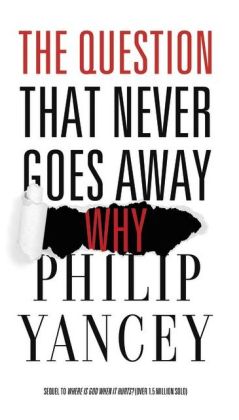
The Question that Never Goes Away, by Philip Yancy


The Question that Never Goes Away, by Philip Yancy

Genre: Christian Living

Reason for Reading: A galley copy of this book was provided by Netgalley in exchange for an honest review. I wanted to read this book because I’m interested in theodicy, and I’ve been pretty impressed with the bits of Yancy’s writing that I’ve seen.

Synopsis: After over a decade of traveling the world giving lectures on Where is God When it Hurts, Philip Yancy has decided to revisit this subject in his most recent book The Question That Never Goes Away. I have not read his earlier book, so I can’t compare the messages of each, but I assume the newer book has a similar message to the older, with recent examples and insights that he has gathered since writing the first book. 

He starts by describing two different types of disaster: the devastating 2011 tsunami in Japan and the horrifying 4-year seige of Sarajevo in 1992. The first example is a natural disaster, but the second is man-made. Such disasters beg the question “Why?” Why would a God who loves us allow such destruction?

Yancy points out that atheists have a field day with such calamity – using it as evidence that God doesn’t exist. For, clearly, a loving God wouldn’t allow such things to happen; therefore it is erroneous to believe in God. But Yancy counters: if, indeed, this is an impersonal universe of random indifference, why are the atheists so shocked and upset about someone else’s tragedy? Clearly, their morals are shaped by the philosophical framework of Christianity. 

My thoughts: I don’t really think this is an adequate counter to the claim that God doesn’t exist. First of all, Christianity is not the only religion which is founded on the power of love. Second, there is no evidence that God created our revulsion to other peoples’ tragedy. Such revulsion can be explained by evolution of social behavior. Humans might simply have an instinct to protect our neighbors because we are better able to survive in a group than alone. On the other hand, I don’t think asking the age-old question “Why?” proves God doesn’t exist, either. To think so is a bit naive.

Yancy continues by explaining that there’s nothing wrong with asking the question “Why?” In fact, it is a question asked over and over again in the Bible. God expects such questions, and he understands our grief and frustration at getting no answer. BUT, He still doesn’t provide an answer. Not in the Bible. And not in the world. 

Ours is not to reason why. Ours is but to do and die. 

Yancy suggests that we shift our focus from cause to response. When disaster strikes, we should appreciate the outpouring of humanitarian aide that comes from individuals, communities, and countries. Yes – some of this humanitarian aide can be poorly planned, but notice what lies at the heart: love. We, as human beings, want to reach out and help those who are suffering. So where is God when it hurts? He is in those friends, neighbors, and complete strangers who reach out to help the suffering. God hates our suffering as much as we do – but he loves us so much that he sent his own son to suffer among us. Because we can relate to a suffering God. 

Finally, Yancy criticizes the claim that God sends suffering in order to build character. He points out that Jesus healed the afflicted. He never once said to them “But think of how character-building this experience is!” Yancy points out that God has promised to redeem our suffering. This does not mean that God sends suffering, but that when tragedy occurs, He inspires and directs good to result from the evil. Thus, we do gain character from suffering. 

My thoughts: Well, I know for a fact that good often comes out of bad situations in my life. I don’t know if that is only because I like to be optimistic and think of how I’ve learned from an experience, or become stronger, or had a good experience that otherwise never would have happened. I could just as easily dwell on the tragedy and what good that might have happened if tragedy hadn’t occurred. If I did so, I would certainly live a more miserable life. But would I be any more right or wrong? Regardless, it makes me happy to think that God redeems my suffering. I’d rather not be miserable, thanks.

My thoughts: This is a very difficult book to read because Yancy dwells on quite a few tragic events in detail. However, the book has a strong message and is written with a very humble and personal air. Yancy impresses me with his intelligent observations and powerful examples. I highly recommend this book to anyone interested in the question of why God allows suffering. I am eager to read more of Yancy’s work.

March Update


Well, February was another good month! I watched the Superbowl and went skiing with my nephew – who was the most important young man to give me Valentine’s day candy…ok. He was the only young man to give me Valentines. But hey. Someone thought about me!

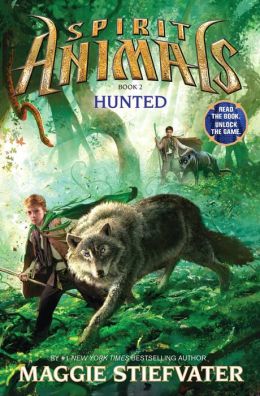
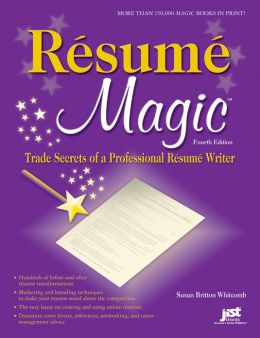
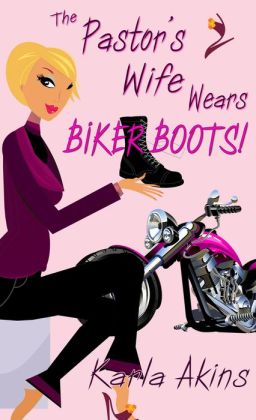
I wrote a couple of posts about my religious ruminations: Intercessory Prayer – Does it Influence the Divine Opinion?, How Do We Know About Jesus?, and several book reviews: Hunted, by Maggie Stiefvater; The Many-Colored Land, by Julian May; The Pastor’s Wife Wears Biker Boots, by Karla Akins; The Drowning Girl, by Caitlin R Kiernan; and Resume Magic, by Susan Britton Whitcomb

As far as my other New Year’s Resolutions go, I spent my free-time working on my resume, personal brand, and job applications (yay resolution 3) but left little time for workouts (boo, resolution 2). I decided that I will probably not be able to pull off a Tough Mudder this year if I am to concentrate on more important issues (my career), so I’m slipping back to the more familiar triathlon training goal. 🙂 


Read and Viewed

My nephew, friend, and I have now completed season 2 of the 2005 Doctor Who. So far, I admit that I like David Tennant the best of all the Doctors I’ve seen. But I still have a lot of Doctors to go! This season wasn’t as philosophical as the first season, but it had better special effects and was more exciting. 
Apparently, my sister and her man didn’t realize that my 9-year-old nephew (who plays on a football league) would know what the Superbowl was. Superbowl party plans were made. He was left out. 😦 So my friend taught me how to knit while we watched the Superbowl with my nephew. Independently, we all chose to cheer for the Seahawks. I, because I think hawks are cooler than Broncos, my friend because she likes blue better than orange, my nephew for unspecified reasons that probably have something to do with who his friends were cheering for. Imagine our delight when the Seahawks totally creamed the Broncos. Additionally, I learned to knit while a 9-year-old explained the rules of American football. 🙂 
Idiot’s Guide to Knitting, project 0.5 – The tiny misshapen washcloth.
This was my project during the Superbowl, and I’m VERY proud of it. Yes, it took me the entire pre-game and game to knit that little scrap. But isn’t it pretty? 🙂 I also accidentally learned how to increase from 10 stitches to 13 while knitting this. I’m not sure how I managed that, but I’m told it’s a skill I’ll need to know for the future. 🙂
Reviewed here
Reviewed here
Watched this with a friend. It’s a modern retelling of Emma, and I’m currently watching a bunch of Emma movies so I can do a comparison. 
Reviewed here
This is a cute little picture book about a vain fish which loves its beautiful rainbow scales more than anything….until it realizes that its own vanity and selfishness has made it the loneliest fish in the sea, even if it WAS the most beautiful. An endearing story about how friendship and giving is more important than outer beauty. 
They say this movie is crazy awesome. They are right.
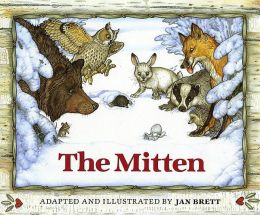
Cute story about the stretchiest mitten ever knitted. Think my knitting skills will ever compare? Fantastic illustrations!
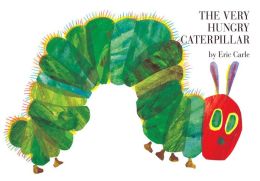
Classic! I especially love the caterpillar’s face after it ate all the junk food. 🙂


Newly Acquired

Free Friday book for Nook
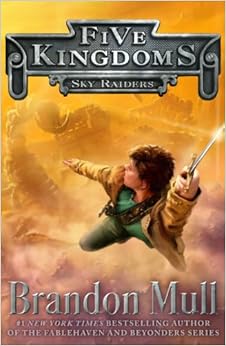
Brandon Mull is my favorite YA novelist right now. I just pre-ordered the first book in his new series. Can’t wait! 🙂
Loaned to me by a friend. This book was written by one of her professors in college.
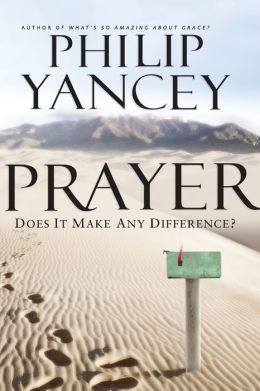
Thought this would be an interesting book to read after I made my post about prayer in February.
ARC from Netgalley – really excited to read it!
Book release date 3/24/14
ARC from Netgalley
It was released on 2/4/2014
ARC from Netgalley
Release date 11/18/2013
ARC from Netgalley
Release date 10/17/2013
ARC from bookstore
Release Date 3/4/2014
ARC from work
Release date 2/11/2014
ARC from bookstore
Release date 8/12/2014
ARC from bookstore
Release date 3/4/2014
ARC from bookstore
Release date 1/7/2014
ARC from Netgalley
Published 1/7/2014
Given to me by a friend
My very first study bible


One of the textbooks for The Great Courses set Sacred Texts of the World
I’m afraid I’ve skipped on to Lesson 25 with this course, so that it fits with my New Testament / Jesus Studies
Suggested reading for The Great Courses set Why Evil Exists
I’m told this is a fantastic book for job searchers. I was hoping to find a book that is “inspirational” so that I can give it as a gift when I’m done with it.
Free Fridays for Nook


Resume Magic, by Susan Britton Whitcomb


Resume Magic, by Susan Britton Whitcomb

Genre: Self-Improvement – Job Hunt


Reason for Reading: Trying to buff up my resume so that I feel more presentable.


Synopsis: This book contains a lot of information about content and format of resumes. It starts by encouraging the reader to find his or her own personal brand, so that it can shine through on the resume. Then, Whitcomb discusses the differences between a chronological resume and a functional resume and provides suggestions about when each type of resume would be helpful. She helps the reader create an outline of the resume, later fleshing it out with helpful tips about content. She emphasizes the importance of listing accomplishments. Finally, she dwells on proof-reading. She provides a guide of the basic grammar and punctuation mistakes people make while writing resumes. The final few chapters outline her thought on job search through social media and on cover letters. These sections, of course, aren’t as thorough as the chapters about resumes, but I think she’s trying to whet our appetites for her other books..which I hear are just as thorough.


My thoughts: First. DON’T get the ebook! Get a hard-copy, because the figures and tables are really tiny in ebook format. Second, this book did not really have a lot of information that was relevant to writing a CV, for those of us who have a PhD. Although Whitcomb provided examples of resumes for a large variety of job types, she focused primarily on business, sales, and marketing. Sometimes I wondered if her tips applied to me or not. However, the book DID provide enough information for me to make my resume more presentable. Third, the title. Ouch. I almost didn’t buy this book because the title was too pretentious. Fourth, Whitcomb was a bit heavy-handed with her self-marketing: Resume Magic often read like an advertisement for Whitcomb’s webpage and other books. 


And now I see that my thoughts are rather top-heavy in criticism. I hadn’t intended my review to be negative. Resume Magic is loaded with information and tips, and I’m much happier with my CV now than I was before reading this book. Resumes and job hunting have changed dramatically in the last few years, and books like these are very helpful for catching up on what employers are expecting. Because, let’s face it, first impressions are a LOT about presentation. And don’t we all want to make a good first impression?


I haven’t read any other resume books, and I don’t have the time to do so right now, so I can’t very easily compare this to other books on the market. I have been reading Joyce Lain Kennedy’s Job Interviews for Dummies and Job Search Letters for Dummies, though, so I can make a guess at what her Resumes for Dummies is like. My guess is that Whitcomb’s book is more heavy in specific tips, and Kennedy’s books tend to be more general. They both provide a lot of good examples, and they both explain what makes those examples stand out. But Whitcomb’s style is more self-aggrandizing and opinionated. Kennedy recommends books by authors other than herself (including Whitcomb!), which makes her advice seem more sincere and approachable. So I guess if you’re trying to choose between the two – pick Whitcomb if you want a book heavy in information, and Kennedy if you want more general advice from someone who’s willing to reference opinions other than her own (even when they do not exactly coincide with her own).  


Tips that most helped me in my resume redesign:

Content


  • I am applying to several different types of jobs, mostly branching out from my degree in science. Each job type requires a different set of basic skills, so I prepared a few basic resume types, each arranged in a way that accentuated the traits requested by each job type.
  • In order to determine the what skills to emphasize in each resume type, I searched the internet for job listings and company mission statements to determine what is required for a good candidate in each job type.
  • Each time I apply for a job, I change my “qualifications” section, so that it directly reflects the skills requested by the job listing as well as the mission statement of the employer.
  • I emphasized numbers-based accomplishments for each job that I listed.
  • I did not include affiliations or bio, since this information made my resume way too long. So I’ve decided to include a link to my blog bio (which I am currently re-writing). Thus, my potential employers can get a sense of my “personal brand.” 
Formating
  • I put my strongest attributes / qualifications in the visual center of the first page (just below the name and contact information), drawing further attention by setting this section off with lines.
  • I included a keyword section for electronically submitted resumes.
  • I created two versions of the resume – one for printing off, and one for submitting on the internet. The one for submitting on the internet must have very common fonts, and minimal fancy formatting (avoid tables, for instance).
Looking ahead
  • Although I certainly hope that whatever job I find will be long-term, I am going to start a file of all accomplishments, evaluations, letters / memos of approval, etc. This information might come in handy in the future. I’d never thought of collecting it before!
Clearly, this is not an exhaustive list of the tips provided in Resume Magic, but these include the major changes I made to my resume. 

The most vital changes that were made to my resume after reading this book were that I made it more accomplishment-oriented, I learned how to direct the qualifications/special skills section towards a specific job, and (for most basic versions) I moved my retail and TA experience into a separate section from my research experience. Thus, I had a chronological “Research” section and a second chronological “Mentorship”section. This really tightened up the resume.


The Drowning Girl, by Caitlin R Kiernan

The Drowning Girl, Written by Caitlin R. Kiernan, Narrated by Suzy Jackson

Genre: Dark Fantasy

Reason for Reading: This was one of the nominations last year for the World Fantasy Awards

Synopsis: In The Drowning Girl a young schizophrenic woman, Imp, tells the story of her meetings with Eva Canning – a ghost? a mermaid? a werewolf? a normal, disturbed young woman? As Imp’s mind roils in schizophrenic fantasy, the readers are left wondering how much of the story is reality and how much is fantasy. 

My thoughts: I’m having a hard time coming up with viable thoughts about this book. I just don’t know what to think! I was interested throughout; I always cared about Imp – and about her girlfriend Abalyn – but I never knew quite what to think. Which, I suppose, is the point of the book? Kiernan did a fantastic job of spiraling Imp’s writing in and out of control, and the pacing of the spirals was quite amazing. This is a skilled bit of writing. Likewise, Jackson was a superb narrator for this role. Her inflections were perfect for hinting at whether Imp was “in control” or “out of control” when certain passages were read. I would recommend this book to people who enjoy open-ended stories, especially those stories with an aura of unreality. 

The Pastor’s Wife Wears Biker Boots, by Karla Akins


The Pastor’s Wife Wears Biker Boots, by Karla Akins

Genre: Christian Fiction / Women’s Fiction

Reason for reading: I’m leading a discussion on this book from February 24th through 28th on the American Christian Fiction Writer’s Association book club. You can join the email discussion group if you wish! Just click on the link, and subscribe to the yahoo group. There’s still plenty of time to read the book!

Synopsis: Kirstie is stressed out trying to maintain the image of the perfect pastor’s wife. She’d really just like to relax and not worry about what everyone in her congregation thinks. On top of that, she has a severely autistic son, and another rebellious teenage son – both of whom lead to a lot of sideways looks from her conservative neighbors.  When she realizes that riding a motorcycle releases her built up tension and makes her love life again, she has to deal with the prejudices of small-town gossips. 

My Thoughts: This is not the type of book that I usually read, so I was surprised when, after about 30-or-so pages, I became really attached to the characters and their issues. This was a sweet, funny book about finding friends in unexpected places, letting go of preconceived notions, forgiving those who gossip about you, and putting your family above work and social image. I got lots of good laughs over the antics of our “biker chicks.” 

I was a little concerned at the beginning of the book when the subject of autism was first brought up: Kirstie called it an “ugly disease” and her “enemy.” It is possible that some people will find this portrayal of autism to be offensive. However, I was glad to see Kirstie grow throughout the rest of the book. As she released her woes on the road, Kirstie became less depressed and was better able to cope with the difficulties of autism. Hidden here is a fantastic message that we can not give fully to loved ones unless we take care of ourselves too. 

I don’t want to drop any spoilers, but I have to say that the ending of the book was not only the most exciting part, it was the funniest as well. Wow. Way to pack it in at the end! 🙂 Fantastic finish.