The Believing Brain, by Michael Shermer

2012 Book 133: The Believing Brain, by Michael Shermer (9/13/2012)

Reason for Reading This book is longlisted for the Wellcome Trust Prize which “aims to stimulate interest, excitement and debate about medicine and literature, reaching audiences not normally engaged with medical science.”

My Review: 
 
In The Believing Brain Michael Shermer, the founder and editor of Skeptic Magazine, shows the reader how and why we believe. He begins the book with a discussion of religious beliefs, providing a few examples of life-altering religious (or irreligious) experiences, including his own. I found these stories engaging and enjoyed Shermer’s philosophical discussion. Then Shermer defines “agenticity”–the tendency to assume patterns have meaning and intention (an outside agent) instead of seeing them as non-intentional or even random events. He describes the cellular mechanics of our brains and why we would have evolved “agenticity,” and then provides many examples of how we see patterns even when they don’t exist. This part was pretty funny. I enjoyed his examples. Shermer describes how we can become convinced that our own beliefs are accurate and unbiased, how confirmation bias leads to unconsciously ignoring data that contradict our ideas while noticing in minute detail all the examples in which the data confirm our ideas. This leads to a political discussion of liberals versus conservatives versus libertarianism (because, after all, we simply MUST hear about Shermer’s libertarian beliefs!). The final third of the book describes the progress of scientific beliefs from world-is-flat to the multi-verse (again, Shermer inserts a commentary about what HE believes, which seemed a small digression from his main point). This third of the book also describes how the scientific method works. I found the final third of the book less interesting than the first two thirds. It seemed a little less organized than the first two parts, but that may have been because my mind was wandering since I was already familiar with the material he covered. In the end, this was a fun and interesting read, but nothing I’m going to read again. 

This is the first book I’ve read on the Wellcome Trust Prize longlist, so I can’t say how it compares to the other books. I think it made medicine fun and interesting and would make medicine more accessible to fresh audiences. However, I think this book might not be the BEST choice because many people in the general public (at least in the US) are offended by skepticism. And Shermer expresses no qualms about his skepticism. Therefore, I think his message about medicine won’t reach much of the general public because they will be too stuck on his “offensive” skepticism. Mind you, I’m not saying he WAS offensive, IMO. But I am only offended with skepticism when it is mixed with judgmental comments about those who believe. Shermer was very respectful of those who believe, he just poo-pooed their beliefs. 😉

The Complete Booker


I have joined The Complete Booker blog challenge so that I can keep track of and discuss books that have won or been nominated for the Man Booker Prize. 

Booker Prize
The English Patient, by Michael Ondaatje (1992)
Life of Pi, by Yann Martel (2002)

Wolf Hall, by Hilary Mantel (2009)

Booker Shortlist
A Bend in the River, by V.S. Naipaul (1979)
Never Let Me Go, by Kazuo Ishiguro (2005)

In the Country of Men, by Hisham Matar (2006)
Bring Up the Bodies, by Hilary Mantel (2012)

Booker Longlist
The Amber Spyglass, by Philip Pullman (2001)

The Curious Incident of the Dog in the Nighttime, by Mark Haddon (2003)
Jonathan Strange & Mr Norrell, by Susanna Clarke (2004)

Skios, by Michael Frayn (2012)
The Unlikely Pilgrimage of Harold Fry, Rachel Joyce (2012)

The Orange Prize Project

I’ve decided to join the The Orange Prize Project to help keep track of all the Orange Prize winners / nominees that I’ve read. Here’s my list so far:

Orange Prize Winners:
Half of a Yellow Sun, by Chimamanda Ngozi Adichie (2007)
The Song of Achilles, by Madeline Miller (2012)

Shortlisted books:
Wolf Hall, by Hilary Mantel (2010)


Longlisted books:
The Secret Life of Bees, by Sue Monk Kidd (2002)
The Lovely Bones, by Alice Sebold (2003)
The Time Traveler’s Wife, by Audrey Niffenegger (2004)
The Bastard of Istanbul, by Elif Safak (2008)

The Septembers of Shiraz, by Dalia Sofer (2008)
The Help, by Kathryn Stockett (2010)
Translation of the Bones, by Francesca Kay (2012)

Rose Daughter, by Robin McKinley


2012 Book 132: Rose Daughter, by Robin McKinley (9/9/2012)

Reason for Reading: More light reading. 🙂 I chose this book because I had just finished reading Beauty, by Robin McKinley and I wanted to compare her two versions of the Beauty and the Beast story. They had a lot of similarities (both were rather canonical retellings rather than “twists.” But they were also very different. In the end, I think I enjoyed reading Beauty more, but I found the ending of Rose Daughter more satisfying.

My Review
Beauty and her two sisters were living in the lap of luxury with their successful father when suddenly everything changed. Her father’s business failed, and they were left destitute. They made a new beginning in Rose Cottage, where things weren’t quite what they seemed. The coming of Beauty’s family to Rose Cottage was the first step to opening an ancient curse that would change their lives forever. This was an adorable little story…just as enjoyable as McKinley’s first retelling of the Beauty and the Beast story. I was skeptical that McKinely could tell the story twice but, although there were some similarities, the two stories were very different. THIS Beauty used her magical gardening capabilities to change the world…

Matched, by Ally Condie


2012 Book 131: Matched, by Ally Condie (9/9/2012)

Reason for Reading: Needed something light to get rid of all that “meaning” that’s been invading my mind from all those “meaningful” books I’ve been reading. This one was sufficiently fluffy, and was one of my top 5 LibraryThing recommendations. (LT seems to think that I love YA dystopia, which isn’t particularly true, but oh well.)

My Review
Cassia is thrilled about her matching ceremony, in which the officials of her government choose her perfect match…her future husband. But when she views her match, she is perplexed–TWO faces show up on her screen. Because of this “mistake” Cassia is thrown into a confusion of emotions and falls for the “wrong” boy. She begins to question the right of her government to make so many choices for their citizens. Perhaps no one is free in this seeming utopia? This was a cute book, and I certainly am eager to read the rest of the series. I appreciate it as one of the few non-violent YA dystopias out there on the market. On the other hand, love triangles are getting rather blase, aren’t they? And it’s not really possible to write a unique YA dystopia at the moment. Everything’s been done over and again. That said, it was certainly a quick, fun read; and it had very likable characters.

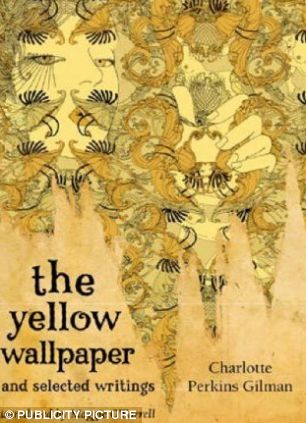
The Yellow Wall Paper, by Charlotte Perkins Gilman

I decided that since I’m reading Herland, by Charlotte Perkins Gilman, I would read Gilman’s best-known piece of fiction, the short story “The Yellow Wallpaper.” This is one of the few short stories included in the list of 1001 Books You Must Read Before You Die (the others mostly being by Edgar Allan Poe). 


The main character is a young wife and mother who is taken by her affectionate husband to a summer home so that she could rest from her “nervous” behavior for a while. Her husband wanted her to rest as much as possible–not to exert herself by writing, reading, taking care of her baby, or doing any other sort of wifely work. She was kept in a room with viciously ugly yellow wallpaper. At first, she wanted to be free of the wallpaper, but her husband affectionately refused to move her to another room. As the story continues, she (in the boredom of “rest”) becomes more and more fascinated by the wall-paper and is eventually driven to madness. Her descent into madness is so eerie that this work was classified as “horror” before it was brandished as a feminist gem. 

Gilman describes the descent into madness with the naked honesty that can only come from a semi-autobiographical story. In fact, this story was a dire warning to herself, and to the world. Gilman became deeply depressed after giving birth to her own daughter. Her affectionate husband sent her to the well-known neurologist S. Weir Mitchell, who was a specialist in “women’s disorders.” Mitchell’s famous cure involved a regimen of rest–the woman would give up all work and simply gain back her health by bed-rest and isolation. Gilman was forbidden to write or paint, and was only allowed to read for 2 hours a day. Such treatment is enough to drive anyone crazy in my opinion! As Gilman got worse and worse, she made the difficult decision to leave her affectionate husband and find her health by other means. She never fully recovered, and she suffered from the world’s censure for leaving an affectionate husband–this was in the late 1800’s when such a divorce was a scandal. She wrote “The Yellow Wallpaper” as a warning to herself that she would have gone mad had she stayed with her husband. She wrote it as a warning to the doctors who supported Mitchell’s cure–she even sent a copy of the story to Mitchell himself. And she wrote it as a warning to young women who might be suffering from similar “cures.” Gilman never suffered from hallucinations herself, but the description of the descent into madness clearly bore her soul, making the story frighteningly realistic. 

Creationism: A Worldwide Phenomenon?

I was rather shocked today to see this in my Scientific American newsfeed: Science and Archaeopteryx Overcome Creationism in South Korea, by Soo Bin Park (reprinted from a Nature publication). I had no clue classroom rejection of evolution in favor of creationism is a world-wide phenomenon! I figured it was something that stubborn ultra-Christians clung to only in the US. I suppose that’s just my Americentric mind at work again. I wonder how wide-spread this problem is?

This issue reminds me of a forum conversation that’s been going on at my favorite book-social-network LibraryThing. We’ve been discussing the movement of some parents to decline immunization for their children–for fear of unproven (and unlikely) threats like the autism-due-to-vaccination scare. These parents fail to appreciate the pain and suffering and endless fear of their parents’ parents during epidemics such as for polio in the early 20th century. Out of sight, out of mind, as it were! By not vaccinating their children, these people are not only risking the health of their own children, they’re risking the health of others’ children AND the health of our already-fragile medical system here in the US. 

Furthermore, there is a discouraging trend in the US for ultra-conservatives to take an anti-science stance. They want our kids to be world leaders in the classroom, but they also want them to be taught that evolution and global warming are “just theories” for which there is scanty evidence. Furthermore, they often approve of huge funding cuts for scientific research. Although I’ve posted a couple of times about studies where I asked “really? my tax dollars paid for that?!” I think funding for scientific research is an investment that the US needs to make if we want to continue as a world power. If we don’t stoke the fire, it’s going to die. I have personally witnessed the changes that have occurred in academia due to the funding lapses during the Bush administration, and the temporary relief that the Obama administration provided. Unfortunately, this relief came too late and academic (rather than for-profit) scientific research is on the decline. It’s harder and harder for professors to get tenure, so more and more of them enter “industry,” where the “evil” drug companies take over their souls. 😉 

I don’t know what the right solution is, but we mustn’t let academic science research go on a decline. We must nip the anti-science movement in the bud before it impacts our global position (and the quality of our health system) irrevocably. 

I am also reminded of this article in the Scientific American newsfeed: Obama and Romney Tackle 14 Top Science Questions. Romney isn’t as supportive of science as I’d wish, but at least he’s not leaning too far in the anti-science direction. There’s a (very small) blessing. I DID get a chuckle about how Romney made almost all of his answers about how Obama is a failure, whereas Obama actually focused on the questions at hand. 

A Princess of Mars, by Edgar Rice Burroughs

2012 Book 131: A Princess of Mars, by Edgar Rice Burroughs (9/8/2012)

Reason for Reading: Coursera Science Fiction and Fantasy course. 🙂 

Review
In the post-Civil War era, John Carter enters an Arizona cave and is unexpectedly whisked away to Mars. There, he witnesses the depravity of a “highly developed” race of people who, because medicine helps them to live long lives, they perform population control by warring with each other. In some ways, though, they’re happier than people on Earth, because they have no lawyers. John Carter takes Mars (and a Princess’s heart) by storm. I’m not a huge fan of pulp fiction, so I expected very little out of this book. Because of that, I was impressed at how “not bad” it was. Actually, it was sort of interesting in a history-of-science-fiction sort of way. It did have some rather racist comments about Native Americans (an artifact of when it was written), and the Princess was a weak annoying little thing whose only virtues were rare beauty and a penchant for getting into trouble so that we could witness the excitement of her rescue (this is an artifact of being pulp). Overall, not too shabby. But not literature, either. I DID wonder whether John Carter was meant to be some sort of pulpy Christ figure. He was very good at saving people. And he had the right initials. 😉

August Sunday Salon

I’ve decided to try out posting for The Sunday Salon, only I’m going to limit these posts to summaries of last month’s reading. I’m starting a little late, but this will be my August round-up. 

In August, I participated in The Middle Eastern Literature theme read on LibraryThing, it ran July through September and I’ve read quite a few Middle Eastern-themed books over the past few months. In August, I finished The Lemon Tree, by Sandy Tolan. 

I have also been taking the a free internet course Fantasy and Science Fiction: The Human Mind, Our Modern World from Coursera. It’s a fun little class (notwithstanding some growing pains for the system and the persistence of mean “anonymous” people on the forum). For that, I read: Alice in Wonderland, by Lewis Carroll; Dracula, by Bram Stoker; and The Bells and The Philosophy of Composition, by Edgar Allan Poe. 

As group reads for the 1001 Books You Must Read Before You Die group on LibraryThing, I read Agnes Grey, by Anne Bronte; and attempted to read White Teeth, by Zadie Smith. I gave up on White Teeth because it had too much crudity and obscenities, though I thought it was a rather witty book. 

I read Beauty, by Robin McKinley as a group read with The Green Dragon on LibraryThing. The Embittered Ruby, by Nicole O’Dell for a group read at a Christian Fiction group ACFW…I’m leading the discussion for it in October. Skios, by Michael Fryan for the Booker 2012 longlist. 

And, finally, I read Inheritance, by Christopher Paolini; Al Capone Shines My Shoes, by  Gennifer Choldenko;  and Riptide, by Douglas Preston & Lincoln Child just for fun. 

I finished only one issue of The Economist and one issue of New Scientist. 

I’ve been preparing to read Paradise Lost, by John Milton, and have made a few new posts on my blog. 

In September, my plans are to participate in the R.eaders I.mbibing P.eril VII challenge, I’ll continue with the Fantasy and Science fiction class on Coursera, I’ll continue reading Booker longlisted books (at least those that are available in the US), I’ll START reading the Wellcome Trust Book Prize longlist (at least those that are available in the US), and at the end of the month I’ll start another Coursera class in Greek and Roman Mythology. So I’ll have a busy month ahead! 🙂

Man’s Search for Meaning, by Viktor Frankl


2012 Book 130: Man’s Search for Meaning, by Viktor Frankl (9/5/2012)


Reason for Reading: One of the essays in Fantasy Media in the Classroom, talked about a fusion class which combined Man’s Search for Meaning and The Lucifer Effect with science fiction books like The Invisible Man and The Strange case of Dr Jekyll and Mr Hyde in which men choose “evil.” I thought since I’ve been reading a lot of books about men who choose “evil” that I’d try out Man’s Search for Meaning. I’ll try to fit in The Lucifer Effect soon. It gives an interesting perspective on why some people choose “good” and other choose “evil.” Frankl’s message was that people can choose to be “swine” or “saints,” but they make this choice over and over throughout their lives and their search for meaning is the motivation behind each decision.

My Review
In the first half of this fascinating little book, Frankl describes his years in the concentration camps (including Auschwitz) with the purpose of analyzing the behavior of people in extreme situations. He admits that someone who wasn’t there can’t give a very detailed or personal account, but a person who WAS there can’t give a detached account because they were emotionally involved. I think he did an excellent job of viewing the situation with detachment, considering the situation. This was a really interesting little memoir. The second half of the book introduces his theory of psychoanalysis: logotherapy. Logotherapy is focused on man’s search for meaning; in contrast to Freudian theory focusing on man’s search for pleasure and Adlerian theory focusing on man’s search for power. I think Logotherapy is the most sensible form of psychotherapy I’ve ever heard of. How can I argue that our happiness depends on our perceiving our own purpose? I admit I felt a little skepticism when he kept bringing up examples of how he’d “cured” someone after only one session–he must have been a particularly clever person to manage that so often. 😉 But that aside, I think the technique of finding meaning in a patient’s life is rather useful. 🙂