The Country of the Blind, by H. G. Wells


SPOILERS OF THEMATIC RATHER THAN PLOT-SPECIFIC NATURE

As another Coursera Fantasy and Science Fiction assignment, I’ve finished reading H. G. Wells’ short story “The Country of the Blind,” first published in 1911. In this story, a mountaineer has an accident and falls into a valley inhabited by blind people who have been separated from humanity for fourteen generations. They do not believe that there is a sense called “sight.” Likewise, the mountaineer discovers that the blind people have strengthened hearing and smell which make them much less helpless than he’d imagined. 

This story is deeply meaningful on many levels, and I had difficulty grasping exactly what to say about it. I could see that it was an allegory in perception…but what was he REALLY trying to say? One student on the class forum suggested a novel with a similar theme of questionable perception: Flatland: A Romance of Many Dimensions, by Edwin A Abbott, first published in 1884. I haven’t had time to read it yet, but it, too, introduces the concept that what we perceive might only be shadows of reality–there may be more dimensions out there that we are blind to. 


A few other students noticed the similarity of Wells’ story to the “Allegory of the Cave” in Plato’s Republic.  I should have seen this myself, but apparently I am blind. 😉 This metaphor pops up often. The best-known reference in today’s popular culture is probably The Matrix–which I suppose can be considered cyberpunk Plato with a Christ figure. 🙂

The allegory is a conversation that Plato attributed to Socrates with Plato’s brother Glaucon. The idea is this: People are chained to chairs in a cave and cannot even turn their heads. Their whole lives, they’ve been watching shadows of the real world which are cast on the cave wall by the light of a fire behind them. To them, these shadows ARE the real world. But imagine the confusion of someone who is untied from his chair and introduced into the real “real world.” After suffering from shock of seeing direct light for the first time in his life, he grows accustomed to the light. Then he is amazed by all that he learns. He wants to share his new knowledge with those in the cave, but when he returns he is blinded by darkness. This blindness is true of the mind’s eye, as well. Both upon walking into and walking out of the light, a person is confused and blinded. I believe Plato meant for the light to be goodness of spirit or divine contemplation.  

Like the people in the cave, the blind people have lived their entire lives without the sense of sight…indeed, without knowing that sight existed. They can’t even imagine what sight is when the mountaineer describes it to them. The mountaineer sees them as blind (literally and figuratively) to the “real world.” Thus far, the allegory fits with Plato’s. However, because the blind people had heightened smell and hearing, I don’t feel that they were in “darkness” and the mountaineer in “light.” I think they were all equally in the dark because they assumed that their OWN world view was the correct one. 

That was the reason I thought this story might be an allegory about the evils of colonization. The mountaineer is like the white man who tries to “enlighten the savages” by forcing “civilized” customs and religions on them. Finally, the mountaineer realized that “you cannot even fight happily with creatures who stand upon a different mental basis to yourself. ” He couldn’t convince them of something that their own senses told them was impossible. In order to fight, you have to be in the same plane of reality.

The Unlikely Pilgrimage of Harold Fry, by Rachel Joyce

2012 Book 130: The Unlikely Pilgrimage of Harold Fry, by Rachel Joyce

Reason for Reading: This is the third Booker longlist book for 2012 that I’ve read.

My Review:
When Harold Fry gets a letter from an old friend who’s dying of cancer, he decides in a leap of faith to take a pilgrimage across England to “save” her. Along the way, he meets many interesting characters and learns to listen to their troubles. He also has time to reminisce about his past…some happy memories, but mostly memories of things he should have done better. This is a bitter-sweet story with deep characters and a good message. The type of person who would love this book is sentimental, and loves reminiscent stories about past mistakes and new beginnings. 

Personally, I’m not that sort of person. Bitter-sweet stories tend to make my eyes tear up, and then I get angry at myself for being so infernally hormonal. 🙂 Stories in which people reminisce about past mistakes also are a little depressing to me. I’ve always felt that we should learn from the past, but not waste energy with regrets. Everybody makes mistakes. If we regret them, do something about it. If we can’t do something about it, accept it as a part of our pasts that makes us who we are today. Try not to make the mistake again. But maybe I just feel that way because I don’t have anything worth regretting yet, I don’t know. *shrug* 

This was a cute book, but I don’t see it winning the Booker.

The Star, by H. G. Wells

Image taken from a NASA Google+ post*

The Star” is an apocalyptic short story written by H. G. Wells in 1897. According to Wikipedia, it founded a science fiction sub-genre of post-apocalyptic fiction in which two celestial objects crash into each other. The description of apocalypse-on-Earth was probably rather original for its time–it was vivid and striking. It also had a very powerful message that was told in a rather unique way. I was reminded of a book I read recently, Half of a Yellow Sun, by Chimamanda Ngozi Adichie…not in narrative style (not in the slightest!) but in underlying message.

Spoilers start here:
While I was reading “The Star” I was distracted by the detachment of it all. We seemed to be observing it from afar rather than experiencing it through the eyes of tortured souls. At the last sentence, I realized WHY he made the story so detached. He was writing with the detachment of a far-away observer. Of someone who’s just reading about the events in a newspaper. We see the murders, the famines, the plagues; but we don’t FEEL them. This reminded me of a touching novel about the Biafra / Nigeria civil war: Half of a Yellow Sun, by Chimamanda Ngozi Adichie. In this gut-wrenching, but beautiful book Adichie asks the question “were you silent when we died?” 

Spoiler-free zone commences:
I think it’s horrible how we can watch news of horror and tragedy from afar and simply shake our heads and say “that’s too bad….” and not worry about it any more. The idea of such uncaring thoughts (literally) brings tears to my eyes. And then the biologist in me rears her ugly head and says: this detachment is necessary for our own individual sanity. We have to, at some level, separate personal tragedy from the tragedy of people who have no impact on ourselves. If we didn’t, we would be constantly overwhelmed by emotions that distract us from our own lives and do not provide any personal advantage. I suppose if I were constantly overwhelmed with emotion about distant tragedies, I’d be on the far-opposite end of the autism spectrum. 🙂 I think we should honestly consider the pain of other people and, if we can, do something about it. But where do we draw the line for emotional involvement? I suppose this is something that each individual must answer for him or herself.


Walks Alone, by Sandi Rog

2012 Book 129: Walks Alone, by Sandi Rog (9/2/2012)


Reason for Reading: I’m leading a discussion on this book later this month


My Review

In the chaos of post-Civil War America, Anna flees her abusive uncle in New York and travels alone to Denver. On the way, she is kidnapped by some Cheyenne warriors and is forced to marry. But these disasters turn out to be a blessing in disguise as she finds God in the most unlikely of places. This is the second book I’ve read by Sandi Rog, and the second time I’ve been impressed at her poignant characters and deeply moving narrative. Although novels about the atrocities of white settlers on Native Americans abound, this one really holds its own. It is a book about atrocities, yes, but it’s also about love and forgiveness and about freedom and independence. In short, this is an amazing book that every Christian Fiction reader should pick up–but can also be enjoyed by lovers of historical romances.

The Invisible Man, by H. G. Wells

2012 Book 128: The Invisible Man, by H. G. Wells (9/1/2012)

Reason for Reading: Coursera fantasy and science fiction course


My Review

In H. G. Wells’ classic novel, a scientist turns himself invisible and wreaks havoc in rural England. This book is a versatile classic because it could be read by someone who is young or who simply wants to read fluff, but it can also be appreciated by more careful readers who are looking for undercurrents of meaning. It’s a tragi-farcical romp in 19th century England, but it’s also a warning about what people might do simply because they can get away with it. This is a classic that anyone interested in science fiction should read.

Essay on The Invisible Man, by H.G. Wells for Coursera Fantasy and Science Fiction. May contain spoilers!!!

In his 1897 novel The Invisible Man, H. G. Wells portrayed a tragic anti-hero, a trend which had become popular among romantic writers following in the footsteps of Milton. Well’s character Griffin isolated himself from humanity at first because he wanted all the glory of his discoveries. Later, he was driven to isolation by a fear of discovery. Finally, he was driven mad by the effects of his self-imposed isolation. 

Wells used two narrative styles for this novel. One style was Griffin’s first person narrative. This style not only established Griffin as the protagonist of the story, but it also painted him in a tragic light: he was naked, hungry, and alone; facing the unforeseen difficulties of invisibility. He had striven diligently for success only to have it wrenched away as he recognized his own impotence in isolation. Only upon this dreadful realization did he seek out compatriots. However, he faced rejection not only from the general populace, but also from his chosen companions. Like Satan in Paradise Lost, Griffin had rebelled against the social order, and been mortified by his own failure. Like Satan, he failed to recognize his own fault in his fall, and instead sought revenge.

The other narrative style used in The Invisible Man was that of a semi-omniscient reporter/observer who told the story as seen through the eyes of individual characters. This style was distanced from the motivations of characters, resulting in the farcical effect of watching people rushing after flying objects and thrashing wildly at thin air. This narrative style made Griffin’s plight seem pathetically silly. It is reminiscent of the comic debasement of Satan at the end of Paradise Lost. It suggests that Griffin doesn’t deserve the tragic grandeur of a real hero–because he’s just a sad little man with poor morals and no friends.


The literary background of Paradise Lost

The Great Courses
Western Literary Canon in Context
Lecture Twenty-Two 
The Rebel as Hero—Milton’s Paradise Lost

The purpose of this course is to introduce readers to pivotal works in the Western Literary Canon. Professor Bowers focused a good deal of his lecture on outlining the literary sources that Milton referenced when writing his epic:

Milton was a very well educated man. He is said to have read every book available, usually in its original language. Many of these books were used as the framework for Paradise Lost. Milton based his epic loosely on the Book of Genesis, but changed a few incidents and added many of his own invention. 

Much of Milton’s inspiration came from the the Greek and Roman ancient texts. He very likely considered Aeschylus’s Prometheus for his model of Satan revolting against divine law. Likewise, Sophocles’s Oedipus served as a model for the suffering and fall of Adam. And Virgil’s Aeneas is called to mind when, in the end, Adam sees a vision of the future. 

Satan uses Athenian rhetoric when he twists logic and makes the worse situation seem better. Milton’s God imposes order on the universe with the scientific precision of an Aristotelian God. Professor Bowers says: “Aristotelian notions of pattern, logic, connection, and plausibility hold the whole epic together. ”  

Milton also relied heavily on medieval theology. Milton’s avowed purpose for the epic was to “justify the ways of God to men.” Early on, he sets a theme that even very bad situations result in good with God’s plan. He seems to support the medieval Christian concept of felix culpa: “the happy fault” which suggests that the seemingly disastrous fall of Adam was, indeed, good because it necessitated the coming of Christ. This philosophy is in keeping with Boethius’s notion of theodicy in The Consolation of Philosophy. (Theodicy attempts to resolve the problem of evil by suggesting that in God’s omnibenevolence all evil leads to good.) Another theologian we are reminded of by Milton is Augustine–Milton’s portrayal of original sin as a fall into sexual depravity has a distinct Augustinian ring to it. And Milton got many of his notions of Heaven and Hell and of the war between Satan and God’s angels from Dante. 

Finally, Bowers suggests that Milton may have wanted to model Satan’s craving for revenge on Shakespeare’s Hamlet, but “in the end, Satan lacks the grandeur of Shakespeare’s tragic characters; instead, he suffers a kind of comic debasement also found in Shakespeare.”

Milton’s learnedness extended beyond just literature. He studied all maps of Africa, Asia, and the Americas which were being produced during his time. Paradise Lost can be considered an allegory for British colonization. Each mention of modern-day places could be a reference to a British colony, or a place which Milton imagines the empire might soon set its boots upon. 

Milton also intended Paradise Lost to be an allegory for the failure of Oliver Cromwell’s rebellion. This allegory led to one of the many paradoxes of Paradise Lost. Milton was a very voluble supporter of Oliver Cromwell throughout the rebellion and right on to the Cromwell’s terrible end. Milton only escaped execution because he was seen as a “harmless” blind man. Although in life he was a champion of freedom from tyranny and a supporter of the fallen rebel, he outwardly condemned Satan’s revolt. Because Milton could sympathize with Satan’s injured pride, he made Satan into an alluring character–so charismatic that many people thought (and some still think) that Milton was on Satan’s side without knowing it.  

This view led to a romantic view of Milton which strongly influenced literature for the following centuries. Wordsworth and Keats both longed to emulate Milton. Lord Byron emulated Milton, but chose a comic epic: Don Juan. However, none of the emulations reached the literary sublimity of Paradise Lost, which was the last great epic Poem of English literature. However, the epic style was soon adopted in a new format: the novel. James Joyce carried on the epic tradition, while Virginia Woolf introduced lyrical novels. Milton’s rebel-as-a-hero tradition was picked up in the 19th century in Lord Byron’s Manfred and Shelley’s Prometheus Unbound. Heroes like Bronte’s Heathcliff, Goethe’s Faust, and Melville’s Captain Ahab are anti-heroes. 

Professor Bowers even suggests that in a twist of mimesis, the cultural climate created by this barrage of Satanic heroes opened the door for a real-life Satanic hero: Napoleon. The rise of Napoleon later influenced writers like Tolstoy and Stendhal. Life imitates art, and art imitates life. 🙂

(TO SEE MORE ABOUT PARADISE LOST, GO TO MY MASTER POST)

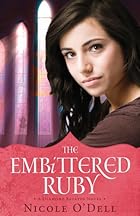
The Embittered Ruby, by Nicole O’Dell


2012 Book 127: The Embittered Ruby, by Nicole O’Dell (8/29/2012)


Reason for Reading: I’m leading a discussion on this book for my Christian Fiction bookclub in October.


My Review

When Carmen’s parents get a divorce, she is forced to move with her mother and two sisters from her classy home in upstate New York to a small, dilapidated apartment in Hackensack New Jersey. Willing to do anything to get her classy life back, Carmen makes bad decision after bad decision. Finally, she has no choice but to leave her family for The Diamond Estates–a refuge for teenage girls who need to get away from life and find God. This was a very difficult book for me to read and review. Carmen’s decisions were so supremely selfish that I spent most of the book either groaning or feeling angry at her. I think O’Dell was very brave to create a character like Carmen for readers of Christian fiction. That said, O’Dell did an impressive job of making Carmen likable despite an overwhelming number of unlikable traits. That takes talent. I would recommend this book to parents of troubled teens or to troubled teenagers who are seeking God.

Skios, by Michael Frayn


2012 Book 126: Skios, by Michael Frayn (8/29/2012)


Reason for Reading: I’m trying to get through at least SOME of the Booker longlist before the winner is announced. This is one of the 5 easily available in the US, and one of the 3 which is available in audiobook format (since I seem to be limited in my ability to physically read books lately, this seemed the best place to start).


My Review

Dr. Norman Wilfred has flown to Skios to give a distinguished speech to a group of rich academics at the Toppler Foundation. Due to an unfortunate string of coincidences, he is whisked off to a villa while a con artist, Oliver Fox, takes his place at the Toppler gathering. At first blush, this may seem to be only a farcical comedy of errors. Fun is poked at the distinguished empty-headedness of academia, at silly assumptions people make when they don’t have all the information (which, of course, they never do), and at the openness of people to accept whatever is said–as long as it is said by a charismatic person. However, I can see why this book was chosen for the Booker longlist–upon a more careful reading this book has a much deeper undercurrent. It asks questions about identity and about chance Eureka! moments. I found the ease with with Oliver Fox moved into Norman Wilfred’s life almost believable because that IS how academia works sometimes. Sometimes, it IS more about how charming you are than about what’s actually coming out of your mouth. Sometimes it IS more about your name and about who people think you are than about who you ACTUALLY are. I understand that this book isn’t for everybody…but I’m a person who doesn’t generally read farcical novels, and I enjoyed this one immensely.

Al Capone Shines My Shoes, by Gennifer Choldenko


2012 Book 125: Al Capone Shines my Shoes, by Gennifer Choldenko (8/24/2012)


Reason for Reading: Sequel to Al Capone Does My Shirts, which was adorable.


My Review

In this sequel to the Newbery Honor book Al Capone Shines my Shoes, Moose Flanagan continues his adventures on Alcatraz Island–this time he must face consequences for choices he made in the previous book. VERY cute and funny and every bit as enjoyable as the first book.

Beauty, by Robin McKinley

2012 Book 124: Beauty: A Retelling of the Story of Beauty and the Beast, by Robin McKinley (8/23/2012) 

Reason for Reading: Green Dragon Group Read

My Review

Beauty must sacrifice her own freedom in order to save her father…she ends up trapped in a castle with a beast who wants to marry her! I really enjoyed this story because it was sweet and simple. It was a refreshing change from all the more recent “twist” retellings of the story. Highly recommended to any fan of children’s fairy tales.