The Philosophy of Composition, by Edgar Allan Poe

Gustave Dore


I just finished reading “The Philosophy of Composition,” by Edgar Allan Poe, which is an essay published in 1846 in response to nasty critiques and parodies of his poem “The Raven.” Keep in mind, Poe was himself a rather feisty critic, so he probably needed to take a little of what he’d been dishing out. The purpose of the essay was to show the modus operandi by which he assembled his poem. 

It is my design to render it manifest that no one point in its composition is referable either to accident or intuition–that the work proceeded step by step, to its completion, with the precision and rigid consequence of a mathematical problem [1].

If I hadn’t been forewarned by G. R. Thompson that this essay may have been half tongue-in-cheek [2], I might have been quite confused. In his essay, Poe provides a step-by-step description of the birth and growth of “The Raven.” 
  1. Consider length: “there is a distinct limit, as regards to length, to all works of literary art–the limit of a single sitting…can never properly be overpassed in a poem” [1] (Here, he inserts an aside suggesting that Paradise Lost, by John Milton, is half-poetry/half-prose, since it is too long for one sitting.) However, “a certain degree of duration is absolutely requisite for the production of any effect at all.” Thus, approximately 100 lines was chosen for his new poem.
  2. Consider effect to be conveyed: Poem should be universally appreciable. “Beauty is the sole legitimate province of a poem.” 
  3. Consider tone: “Beauty of whatever kind, in its supreme development, invariably excites the sensitive soul to tears. Melancholy is thus the most legitimate of all poetical tones.”
  4. Artistic piquancy: here, he realized that refrains as an artistic effect were vastly underused.
  5. Refrain choice: Limited to lyric verse. Depends on the force of repetition for its effect. Decides to diversify by changing the context, but leaving the answer the same. Refrain must be brief. Must form the end of each stanza. Must be “sonorous and susceptible of protracted emphasis.” The long “o” is the most sonorous vowel, and “r” is the most producible consonant. Hmmm, what word has a long “o” and an “r” in it, but keeps the tone of the poem? Oh, of course! “Nevermore!”
  6. Pretext for refrain: A human being wouldn’t say “nevermore” over and over again, but an unthinking being might. Like a talking parrot, or better, a raven (for they talk too, and ravens are fitting for the tone). 
  7. Subject: “I asked myself–‘Of all the melancholy topics, what, according to the universal understanding of mankind, is the most melancholy?’ Death–was the obvious reply. ‘And when,’ I said, ‘is this most melancholy of topics most poetical?'” This was also obvious: “death…of a beautiful woman is, unquestionably, the most poetical topic in the world–and equally is it beyond doubt that the lips best suited for such topic are those of a bereaved lover.”
  8. He then wrote the denouement because “nothing is more clear than that every plot, worth the name, must be elaborated to its denouement before any thing be attempted with the pen.
And the poem continued to be written through the same process. Without Thompson’s forewarning, I would have been shocked and skeptical that Poe actually wrote his poems in this way. This mechanical process might pump out a poem-esque work, but would it have any soul? The whole process seems rather art-defying. According to enotes, critics have suggested that “The Philosophy of Composition” was anything from a deliberate hoax to “possibly half tongue-in-cheek [2].” However, I have also noticed quite a few people on the internet who find it inspirational and say that it really helps them to compose their own works. I’m sure these people really DO find the structure helpful. It is very sensible. But I imagine, if anything, that Poe came up with the idea of “The Raven” and THEN went through a rigorous process of refining it. 

That said, I think the essay is a fantastic look into the mind of Poe. It explains why the majority of his poems are about dead women–because he felt that melancholy is the most legitimate of poetic tones, and that the most melancholy of all themes is the death of a beautiful woman. My dad disagrees with Poe here and says that the death of a child is the most melancholy topic. Personally, I think that doubt in God’s existence or in his love for me would be the most melancholy. But I agree that the death of a child is more melancholy than the death of a beautiful woman. 

Out of curiosity, what do other people think the most melancholy theme is?


Find all of Gustave Dore’s illustrations for The Raven here: http://www.artsycraftsy.com/dore_raven.html


[1] The Philosophy of Composition, by Edgar Allan Poe. Reprinted in: The Selected Writings of Edgar Allan Poe (Norton Critical Edition). Ed. G.R. Thompson. New York: W. W. Norton and Company, Inc. pp675-684. 


[2] The Selected Writings of Edgar Allan Poe (Norton Critical Edition). Ed. G.R. Thompson. New York: W. W. Norton and Company, Inc. pp57.

Culture of blame: how we perceive certain diseases

In her article Scandal of Underfunded and Undertreated Cancer” [1], Linda Geddes describes the heart-breaking struggle of a non-smoking mother-of-two against the ravages of lung cancer. The purpose of the article was to point out the disparity between research funding and number of deaths for the various cancer types. Leukemia and breast cancer draw from huge sources of public and private funds, receiving much more than their deaths : research-dollars share. There are more deaths from lung cancer than from breast cancer or leukemia, but the funding for lung cancer research is pathetically small. Part of the reason for this is that many family physicians view lung cancer as untreatable–a diagnosis of death–so why fund research into an untreatable disease? But, after all, how are we to learn how to treat the disease without research? And how shall we perform research without funding? 

The article suggests another alarming reason for this funding disparity as well: many people, consciously or unconsciously, believe that lung cancer is the fault of the victim. If they hadn’t smoked, after all, would they be in this situation? Shame on them! And they’re endangering us with their second-hand smoke as well! But what about non-smokers who get lung cancer? (After all, that second-hand smoke is going somewhere, isn’t it?) And what right do we have to blame the victim of a disease, anyway? Is a person’s death less tragic because he was a smoker? Trust me, I fall prey to those adverts of children with leukemia…I want to send them money, too. But does our culture of blame induce us to spend money on those we consider “deserving” but not on the “undeserving?” Are we ok with that? 

I think a good example of our society (and the world) overcoming a prejudice against a culture-of-blame disease is our relative success with suppressing the dreaded AIDS epidemic. Many a politically-incorrect statement about AIDS victims was bandied about when I was younger…but now, I think, those negative connotations are mostly remembered only by older members of society. And although we haven’t successfully “cured” or fully protected against AIDS, we can now suppress it with anti-viral drugs–the result of well-spent research funding. Perhaps we can take a good lesson from our success with AIDS. Perhaps we can see lung cancer for what it is–a tragic disease that steals the lives of tens of thousands of people in the US every year*. Perhaps we can bring a halt to our culture of blame.

Geddes, Linda: Scandal of Underfunded and Undertreated Cancer. New Scientist issue 2871. 28Jun, 2012.

*This number was 35,000 deaths in the UK in 2010 according to Geddes’ article.

The Bells, by Edgar Allan Poe

Listen to The Bells


The first of Poe’s poems that I’ve read (recently) is The Bells (you might want to listen to it before reading my commentary). This poem was written in 1948, in the year following his wife Virginia’s death of consumption at the age of 25. Wikipedia suggests that the poem depicts a man mourning his lost wife. He courted her at Christmas to the sound of sleigh-bells in stanza one, married her in the second stanza, and then she dies in a fire as the husband watches in the third stanza. In the fourth stanza,  the grief-stricken husband goes mad. This is certainly an approachable interpretation. I think a life-cycle interpretation is more interesting though. In my opinion:

The first stanza is about the playful innocence of childhood. The merry tinkling of sleigh bells suggests a care-free mood–pure enjoyment of the moment. Even the Heavens twinkle with delight at the youthful merriment. But the poem also suggests that time is passing: 
              Keeping time, time, time
              In a sort of Runic rhyme 

“Runic rhyme” suggests an occult influence…perhaps a spell is cast over the innocents, trapping them in a ghoulish foreplay for the dance that lay ahead.

In the second stanza, the poem has matured. It is no longer care-free, since it is motivated by love for a new spouse, rather than by simple delight at existence. The bells are now “mellow” with “molten-golden notes.” These words suggest a sunset. Immediately following this symbolic sunset, the moon rises:

              What a liquid ditty floats
              To the turtle-dove that listens while she gloats
              On the moon!

Notice in this stanza the Heavens no longer join in the celebration, instead they are admired from afar. The universe has distanced itself from the poem. 

The third stanza tells of torture in the eve of death. This torture could represent a plethora of pains. To me, the fire recollected the turbulence of war and politics. Throughout Poe’s life he would have experienced the tortuous birth-pains of a new nation in a world at war. It could also symbolize the suffering of someone dying of disease–such as consumption, like his wife. Or the “deaf and frantic fire” could be the moral or religious guilt of a man who has lived a life of profligacy and regrets his youthful vices. He might be overcome by waves of self-abhorrence.

             Yet the ear, it fully knows,
             By the twanging 
             And the clanging,
             How the danger ebbs and flows–
  
In this third stanza the poet is “now to sit, or never / By the side of the pale-faced moon.” No longer does the poet admire the splendor of the moon. It is pale–it has lost its glory. Now, or never, he must sit and mourn by the Heavens which have deserted him.

In the final stanza Death (or perhaps Satan) triumphs. There are people–ah, the people! that dwell up in the steeple…all alone. These are spirits separated from their bodies. 

             They are neither man nor woman–
             They are neither brute nor human,
             They are Ghouls:

These ghouls have lost their identities. They are now simply servants of the king, Death. With finality they: “Feel a glory in so rolling / On the human heart a stone–” This is a tombstone, rolled over their hearts so they can no longer love. And the king’s merry bosom swells as he dances and yells

             Keeping time, time, time,
             In a sort of Runic rhyme
             To the throbbing of the bells–

Again, the “Runic rhyme” casts its spell over the ghouls. And they are captured for eternity.

Similarity to Paradise Lost:

While writing my interpretation of The Bells, I was reminded of my studies of Milton’s Paradise Lost. In lecture 18 of his series Why Evil Exists, Professor Charles Mathewes suggests that the difference between Satanic sin and human sin is that Satan sins out of a self-aware wish to rebel against God; Adam’s sin is that he loves Eve more than he loves God. He eats the forbidden fruit because Eve has already partaken. If he denies her, she will be “dead” to him, and he can’t handle that loss. So human sin ropes in feelings about other people. (See my full summary of the lecture here.)

While I was pondering how to express my feelings on Stanza II, I thought that this second stanza could represent Adam’s choice of Eve over God. It represents his marriage to her, and his subsequent separation from the Heavens–which, now, he could only admire from afar instead of living in its presence as in the first stanza. Following this train of thought, the third stanza would represent a human’s life on earth after the fall–filled with waves of earthly disaster. The final stanza would be the torment of Hell. 

Of course, I’m not suggesting that this is what Poe had in mind when he wrote the poem. But I think it’s interesting how such themes recur in literature. They are very powerful images that resound throughout time. Perhaps I’ll even wax Jungian and suggest that they are an archetype of our collective consciousness. 😉

Successors?
Another issue that struck me while I was reading this poem is thematic similarities between Poe’s poem and Quasimodo’s song about his bells in Notre Dame de Paris. I wonder if the playwright was influenced by Poe when he wrote this song? 🙂

Image taken from: http://schoolworkhelper.net/2011/06/edgar-allan-poe%E2%80%99s-the-bells-summary-analysis/

Dracula, by Bram Stoker

2012 Book 123: Dracula, by Bram Stoker (8/15/2012)

Reason for Reading: Coursera Fantasy and Science Fiction Course. Listened to it on my car ride to MN. 🙂 Didn’t finish it in time for the assignment though!

My Review
This review is for the Audible Edition of Dracula, narrated by Alan Cumming et al. (Wow, I just used et al. in a review. That makes me pretty darned special.) 

In this classic novel, a group of acquaintances must rid themselves of the sinister Count Dracula who has descended upon London with the eager desire to create a flock of bloodsucking fiends. This is my second reading of the novel–the first being when I was a young teenager. This time, I was impressed by Stoker’s ability to set a dark mood and maintain it through the entire book. There was always some creepy fog or a terrified dog or a creepily sleep-walking woman to spook the reader. The full-cast performance was delightful. It really brought the various characters to life. The end of the book dragged for me a little because I was on a long car trip, counting down the last 6 hours in 10 minute intervals. But that’s not really the fault of the book. 🙂

Riptide, By Douglas Preston and Lincoln Child

2012 Book 122: Riptide, by Douglas Preston and Lincoln Child (8/8/2012)

Reason for Reading: It was there 

My Review
Malin Hatch has avoided Ragged Island, Maine ever since he had witnessed a disaster there as a child. But when a treasure hunter finally convinces him that it’s time to delve into the mysteries of the Ragged Island Treasure once again, he signs on as the team’s physician. The team must wend their way through a booby-trapped tunnel to find the treasure. This book was a quick, light read without much substance. It’s much like Douglas and Preston’s other adventure novels (and rather like Michael Crichton)–a mixed team of scientists gathers for the “big find” and ends up with more than they bargained for. I felt that the characters made poor decisions throughout the book, but I guess gold has that effect on some people. If you like Preston&Child, you’ll probably like this book.

Inheritance, by Christopher Paolini

2012 Book 120: Inheritance, by Christopher Paolini (8/7/2012)

Reason for Reading: Fourth and final book of the Inheritance Cycle

My Review 
I can’t claim to actually have READ this book. I only burdened myself with it because I wanted to know how Galbatorix was killed (assuming he was, of course). I read the first 300 pages, skimmed the next 350 pages, and skipped the last 100 pages. 🙂 I got what I wanted out of it, which is the important part. All I can really say to those of you who are interested: Paolini’s writing got significantly better in this book. Still not fantastic, but he’s got potential. He did a much better job of pacing (though it could have been shorter), and the style flowed better than the last two books–it was less pedantic. If you’re a more patient person than me and are interested in how the story ends, I think it’s worth a read. 🙂

Alice in Wonderland (Norton Critical Edition)

2012 Book 119: Alice in Wonderland Norton Critical Edition, by Lewis Carroll (8/5/2012)

Reason for Reading: Coursera Fantasy and Science Fiction course

My Review 
This NCE contains Alice’s Adventures in Wonderland, Through the Looking Glass, and The Hunting of the Snark. I was pleased with the footnotes, which were helpful in clarifying many of Carroll’s jokes. The critical information included some interesting biographies/diaries of Dodgson (Carroll), as well as a few critical essays. I was disappointed in these because although they were mostly good, the editor clearly has some negative feelings about Dodgson’s morals and included many unnecessary Freudian-finger-pointing passages. If I were younger or more impressionable, I’d have been left with a very negative view of Dodgson indeed! Because of these attempts at manipulating the readers’ good opinions of Dodgson, I wish I had gotten The Annotated Alice instead.

Note about the stories themselves: These were a re-read for me. Although I love Alice and really enjoyed reading the stories with footnotes (I understood them a lot better this time around!), I tend to prefer books with a little more plot development. Scandalous, I know, but what can I say?

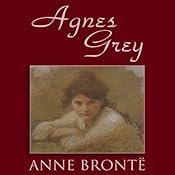
Agnes Grey, by Anne Bronte

2012 Book 121: Agnes Grey, by Anne Bronte (8/8/2012)

Reason for Reading: Group read 1001 Books You Must Read Before You Die

My Review
When the Grey family begins to have financial problems, Agnes, a sheltered minister’s daughter, begins life as a governess. She is shocked and appalled by how she is treated and what miracles she is expected to achieve. This book is a social commentary on the treatment of governesses and unruly children. It also touches on the charms of marrying for love instead of money. It was a quick read, but rather unexceptional.

Alice Transformed: Coursera Essay

Lewis Carroll*


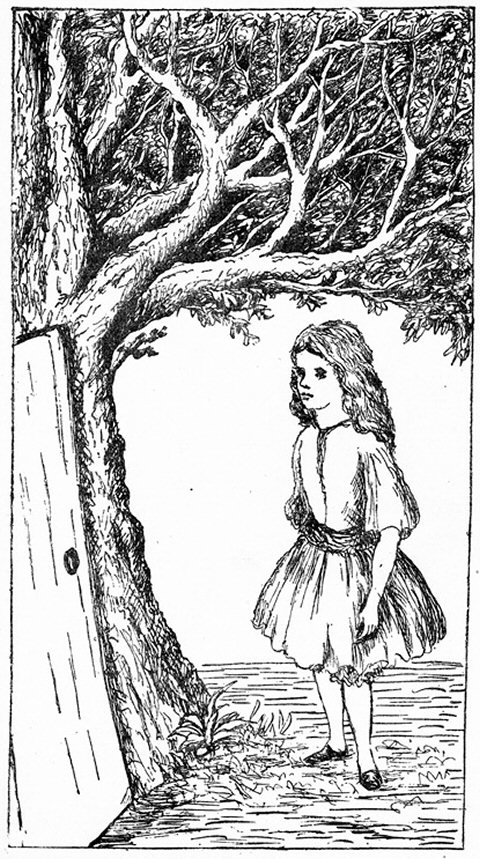
In the beginning, Alice falls down a rabbit-hole, landing in a room containing a tiny key, a tiny door, and a large table. When she is small, the door is locked–she’s not allowed out. But then she grows very large…so large, she can hardly fit into the womb room anymore. Ah! Now she can reach the key! But the way out is so tiny! Luckily, she is taken up by a force outside of her control (a sea of tears) and is thrust into Wonderland.

This initial entrance into Wonderland is a metaphor for Alice’s birth into a new life. In Wonderland, she sees many unusual sights that amaze, frustrate, and/or delight her. The Caterpillar leads her to question her own identity—an elusive concept in the ever-changing world of Wonderland. The Cheshire Cat encourages her to be self-aware: “we’re all mad here. I’m mad. You’re mad.” The Cat is the only creature in Wonderland who recognizes his own madness! After talking to the Cat, Alice is less frustrated by the madness that surrounds her. She allows the Mad Tea-Partiers to entertain instead of frustrate her.

After the tea party, she again finds the room from which she was first thrust into Wonderland. This time, she does not hesitate. She confidently grabs the key, drinks the shrinking potion, and walks through the door–reborn as a new, confident Alice.

Alice is essentially “born” into Wonderland twice. The first birth is full of frustration and self-doubt. But the second birth is followed by self-confidence. She now applies lessons that she learned the first time around. For instance, she stops herself before telling the Mock-Turtle that she eats lobsters and fish. She confidently deals with the intimidation tactics of the Queen of Hearts, whereas she would have been frightened or angry before. Alice’s Adventures in Wonderland is an allegory in transformation. It’s a story about growing up.

*******
Yes, I have done the unthinkable. Just to spite all those angry essay-format-Nazis, I have written *dum dum dum* AN ESSAY WITHOUT A THESIS STATEMENT. I hope you will all forgive me for this unkindness. 😉


*Images were taken from: 

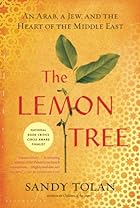
The Lemon Tree, by Sandy Tolan

2012 Book 118: The Lemon Tree: An Arab, a Jew, and the Heart of the Middle East, by Sandy Tolan (8/4/2012)

Reason for Reading: I realized I know much less than I should about this politically vital conflict and am enjoying learning more about it. I read this for the Reading Globally Middle Eastern Literature theme read.


My Review

Ostensibly, this is the (true) biography of the friendship between the Israeli woman Dalia Eshkenazi and the Palestinian man Bashir Khairi. However, the book also focuses strongly on background information–providing a wonderful history of the Israel-Palestine conflict since the 1940’s. I was hugely pleased by this book for two reasons. First, the friendship between Dalia and Bashir was touching because they both had such strong nationalistic feelings. Somehow, despite their very different views, they were able to remain on good terms for many years. That’s touching to me because many books with this let’s-make-peace message tend to be about people who are all about love and peace and aren’t as strongly influenced by their negative emotions as Dalia and (especially) Bashir. This is a friendship that was difficult to maintain, and yet it prevailed. The second reason I loved this book is because of the wonderful history of the region it provided. It’s supposedly a “balanced” view–and it is, in the sense that it recommends justice (and sacrifice) be made by both sides. However, I’d say the book tended to be sympathetic towards to Palestinians. This SLIGHT bias is necessary in this case because many people in the Western world are over-exposed to the Israeli side and don’t realize the Palestinians have a side at all. This book is highly recommended to anyone interested in the conflict.