Dracula, by Bram Stoker

2012 Book 123: Dracula, by Bram Stoker (8/15/2012)

Reason for Reading: Coursera Fantasy and Science Fiction Course. Listened to it on my car ride to MN. 🙂 Didn’t finish it in time for the assignment though!

My Review
This review is for the Audible Edition of Dracula, narrated by Alan Cumming et al. (Wow, I just used et al. in a review. That makes me pretty darned special.) 

In this classic novel, a group of acquaintances must rid themselves of the sinister Count Dracula who has descended upon London with the eager desire to create a flock of bloodsucking fiends. This is my second reading of the novel–the first being when I was a young teenager. This time, I was impressed by Stoker’s ability to set a dark mood and maintain it through the entire book. There was always some creepy fog or a terrified dog or a creepily sleep-walking woman to spook the reader. The full-cast performance was delightful. It really brought the various characters to life. The end of the book dragged for me a little because I was on a long car trip, counting down the last 6 hours in 10 minute intervals. But that’s not really the fault of the book. 🙂

Alice in Wonderland (Norton Critical Edition)

2012 Book 119: Alice in Wonderland Norton Critical Edition, by Lewis Carroll (8/5/2012)

Reason for Reading: Coursera Fantasy and Science Fiction course

My Review 
This NCE contains Alice’s Adventures in Wonderland, Through the Looking Glass, and The Hunting of the Snark. I was pleased with the footnotes, which were helpful in clarifying many of Carroll’s jokes. The critical information included some interesting biographies/diaries of Dodgson (Carroll), as well as a few critical essays. I was disappointed in these because although they were mostly good, the editor clearly has some negative feelings about Dodgson’s morals and included many unnecessary Freudian-finger-pointing passages. If I were younger or more impressionable, I’d have been left with a very negative view of Dodgson indeed! Because of these attempts at manipulating the readers’ good opinions of Dodgson, I wish I had gotten The Annotated Alice instead.

Note about the stories themselves: These were a re-read for me. Although I love Alice and really enjoyed reading the stories with footnotes (I understood them a lot better this time around!), I tend to prefer books with a little more plot development. Scandalous, I know, but what can I say?

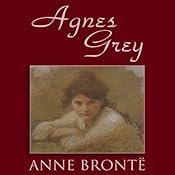
Agnes Grey, by Anne Bronte

2012 Book 121: Agnes Grey, by Anne Bronte (8/8/2012)

Reason for Reading: Group read 1001 Books You Must Read Before You Die

My Review
When the Grey family begins to have financial problems, Agnes, a sheltered minister’s daughter, begins life as a governess. She is shocked and appalled by how she is treated and what miracles she is expected to achieve. This book is a social commentary on the treatment of governesses and unruly children. It also touches on the charms of marrying for love instead of money. It was a quick read, but rather unexceptional.

Kidnapped, by Robert Louis Stevenson

2012 Book 117: Kidnapped, by Robert Louis Stevenson (7/30/2012)

Reason for Reading: It was one of the top 5 books in LibraryThing’s recommended list for me. 🙂

My Review
When 16-year-old David Balfour meets his estranged uncle for the first time, he is shocked by the man’s cruelty. Soon, Balfour has been kidnapped and he must rescue himself and travel back to the town of his uncle to claim his inheritance. This is an exciting little book…not quite up to scratch with Treasure Island, but still has quite an adventure. It would probably be a fun book for teenagers to read, if they like classics (or if you want to thrust classics upon them).

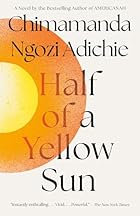
Half of a Yellow Sun, by Chimamanda Ngozi Adichie

Half of a Yellow Sun takes place in Nigeria during the Biafra War. The narrative follows 3 characters: Ugwu, a village boy who is taken in by some politically-inclined academics as a house boy; Olanna, Ugwu’s mistress and a rich heiress; and Richard, a British expat who desperately wants to be accepted by the Biafrans as one of them. The stories of these three characters are superbly and tragically woven together on a backdrop of war, racial hatred, and famine. This is one of the most impressive books I’ve read in quite a while. The characters were so deep that I felt I knew them. The events described had an eerie realism to them that comes from the author’s intimate knowledge of the history and people. This is one of those books that makes you feel like every incident described is important and well-planned. This is a story not only of war, but of people–their dreams, their loves, their fears, their strengths and weaknesses. Half of a Yellow Sun is a must-read for anyone interested in international literature.

In Cold Blood, by Truman Capote

2012 Book 80: In Cold Blood, by Truman Capote (5/24/2012)

Reason for Reading: Murder and Mayhem in May

My Review 4/5 stars
In Cold Blood is a first-of-its-kind true crime book where journalism was written in novel-form. In a small Kansas town in 1959, four members of the Clutter family were brutally slaughtered in their home. The book begins by personifying the members of the Clutter family and laying out the last couple days of their lives. It also brings to life (disturbingly) the two murderers, outlining their histories and motivations. This is a work of genius in real-life characterization. The author clearly had compassion for at least one of the murderers, so much so that he was accused of being “obsessed.” I don’t find this obsession as shocking as some people, I suppose, because I understand that psychopaths are generally EXTREMELY charming and are able to manipulate people into feeling empathetic towards them. I wonder, though, if Capote knew as much about the diagnostic criteria of psychopaths back then as a good journalist-doing-his-job would have today, would he have portrayed the two men the same way? While reading, I kept saying, “these men are psychopaths, and yet they are portrayed as having (very tiny!) consciences…” If the book were written today, I don’t think it would be the same book. Regardless, I think it’s a classic that will stay with us forever simply BECAUSE it portrays a world that was perhaps less complex and more innocent than today’s.

Kim, by Rudyard Kipling

2012 Book 50: Kim, by Rudyard Kipling (3/20/2012)

Reason for Reading: 12 in 12 group read

My Review 4/5 stars
Kim is an orphaned boy living on the streets of Lahore. When he meets a Buddhist monk who is on a quest to find a healing river, Kim joins the lama as his student and friend. Together they travel, learn lessons, and have adventures. I enjoyed watching Kim grow up in this story, and enjoyed the colorful descriptions of the people Kim and the lama met. However, I’m still trying to figure out what the deeper meaning of this story is. Perhaps time will help.

The Reader, by Bernhard Schlink

2012 Book 29: The Reader, by Bernhard Schlink (2/14/2012)

Reason for Reading: Filled in a 1001 Books and an International Fiction slot in my 12 in 12 challenge (and it was nice and short)

My Review 3.5/5 stars
15-year old Michael has a love affair with an older woman, who then disappears leaving him with uneasy feelings of guilt and abandonment. Years later, he discovers that she was a guard at Nazi concentration camps. While he attends her trial, and in the years following, Michael explores what it means to love someone who has done terrible things. For me, this was a new way to view the Holocaust, and so the story was very interesting. However, it’s not the type of book I generally enjoy, so this is the only reason I gave it a lower rating. I think it’s a very well written and thought-provoking book.

One Hundred Years of Solitude, by Gabriel Garcia Marquez

2012 Book 22: One Hundred Years of Solitude, by Gabriel Garcia Marquez (2/5/2012)

Reason for Reading: This book was recommended by a couple of friends. It’s been on Mt. TBR for quite a while now.

My Review: 4/5 stars
One Hundred Years of Solitude chronicles 100 years of a family (of Buendia) and a village (city) that the “first of the family line” founded. The prose is lyrical and flows as smoothly as a river. That is, sometimes there are rapids and other times calm. The genre is magical realism, and it is fascinating watching the magic evolve with the family and village. After finishing this book, I’m not 100% certain what Marquez meant by it, though. It has anti-war and anti-oppressive-regime themes, but there’s something more that I haven’t quite put my finger on yet. I may need to re-read it after letting it settle for a while.