Physics of the Impossible, by Michio Kaku


2012 Book 27: Physics of the Impossible, by Michio Kaku (2/12/2012)

Reason for Reading: Because it was there

My Review: 3.5/5 stars
Physics of the impossible explores common themes in science fiction, and explains in simplified physics whether such things are possible soon, or far in the future. Kaku has an engaging writing style, and his physics is basic enough that most popular readers would be able to follow. However, I don’t think people who follow physics regularly would enjoy the simplified science. I enjoyed this book, though I have one major complaint: Kaku would give examples of science fiction phenomena from popular novels. Apparently assuming that everyone has read all of these books, he almost always tells the ending of the book. I hadn’t read several of these books and was quite annoyed since telling the end of the book did not add any merit to his own arguments. The book lost star-points because of this problem.

The Complete Persepolis, by Marjane Satrapi

2012 Book 24: The Complete Persepolis, by Marjane Satrapi (2/7/2012)

Reason for reading: I wanted to read a YA book with Muslims in it, though this turned out to be neither YA nor to have very much about the Muslim faith. But it was still enjoyable.

Personal note: I am currently reading The Landmark Xenophon’s Hellenika and I keep coming across the word “satrap,” which is the title of a governor of a provence in ancient Persia. So it was very amusing to me to come across the modern Persian name Satrapi. I feel like I’ve made a connection. 🙂

My Review: 4/5 stars
Persepolis is a graphic memoir about Marjane Satrapi, a young “modernized” girl growing up in Iran during the Islamic revolution. Due to the trials of being an outspoken modern girl in this oppressive regime, she must leave her family and live alone in Austria to finish her education. There, she loses herself before finally coming to terms with her own identity. It was a heartbreaking memoir. The story and art were very dark, but humorous as well. I thought this book would be for young adults, but feel it would appropriate only for a VERY mature teenager. It has topics such as torture, rape, violence, and drugs. It was very educational about the revolutionary regime, though I don’t know how biased it is.

The Secret Garden, by Frances Hodgeson Burnett


2012 Book 23: The Secret Garden, by Frances Hodgeson Burnett (2/5/2012)

Reason for reading: Working on reading some of the classics that I should have read when I was a child but never got to (despite my parent’s encouragement).

My Review: 4/5 stars
10-year-old Mary was being raised as an emotionally neglected, but very spoiled, brat in colonial India when she is suddenly orphaned by a cholera epidemic. She is sent to the house of a rich uncle in England, where she is ignored. Despite these tragic events, Mary somehow manages to make friends, and discover the magic of nature, for the first time in her life. This was an adorable book, though greatly contrasted from A Little Princess, in which the main character was sweet and lovable all the way through. I hadn’t thought I’d seen the movie when I read this book, but clearly I have since I knew the story too well. I will have to re-watch the movie now.

Prince Caspian, by C. S. Lewis


2012 Book 19: Prince Caspian, by C. S. Lewis (1/30/2012)

Peter, Susan, Edmund, and Lucy return to Narnia centuries after their departure to help Prince Caspian wrest the kingdom out of the hands of his tyrant uncle. A very cute story with a wonderful moral. I look forward to reading the rest of the series. I’m reading them in publication order, so this is the second book. 5/5 stars

Another attempt at reading some of the books I should have read as a child.

Calculating God, by Robert J. Sawyer

2012 Book 18: Calculating God, by Robert J. Sawyer (1/29/2012)

An alien lands in Toronto with hopes of studying the ROM’s fossil collection; meanwhile she provides “scientific evidence” for the existence of God. This book had a good idea with poor execution. Sawyer completely ignored the “show-don’t-tell” rule of novel-writing. The book is a clod of sci-religious dialog decorated with a thin veneer of plot. The scientific evidence consisted of debates about: 1)What are the odds? and 2) Where did altruistic behavior come from? Neither argument is fresh, but it’s interesting to have it all thrown into the mouth of an alien (who is also using facts that only the fictional aliens know to support her pro-God arguments). The second argument falls flat since cooperative behavior (i.e. “altruism” as Sawyer was defining it) has evolved in more than just humans. Also, Sawyer adds a short punt about abortion. Although I completely agree with his point of view, I don’t read novels to get a lecture on these views. SHOW-don’t-tell!!!! On the other hand, this book won the Audie award, which means it had a fantastic performance—which I enjoyed on a long car trip I just took. That made the book worth it for me. 3/5 stars

Winnie-the Pooh & The House at Pooh Corner, by A. A. Milne


2012 Book 16: Winnie-the-Pooh, by A. A. Milne (1/28/2012)

2012 Book 17: The House at Pooh Corner, by A. A. Milne (1/30/2012)

I admit that this is the first time I’ve read either of these books. The combined Winnie-the-Pooh stories were very cute and enjoyable. I’m guessing they are meant to be read aloud to young children. From the cartoons when I was a kid, I remember really loving Eeyore, but found him to be much grumpier than I expected in the books. But children often see things in books that adults don’t, so what can I say. 4/5 stars

I’m on a quest to read all the books that I should have read when I was a kid, and didn’t because I was too busy being “grown up,” hehe. I’ve still got to finish the Narnia series and read any of the Oz books, to name a few. This will probably take me a while! If anyone has suggestions about books I ought to have read as a child, let me know so that I remember to read them all. 🙂

A Little Princess, by Frances Hodgson Burnett


2012 Book 9: A Little Princess, by Frances Hodgson Burnett (1/18/2012)

A Little Princess is a classic story of a rich little girl who is put under the care of a bitter, selfish schoolhouse matron. At first, the girl is treated as a star pupil; but when her father dies a ruined man, she is cruelly forced to become a servant of the schoolhouse—but her sweet, vibrant nature keeps her alive during these hard times. I have seen quite a few movie adaptations, but the book is much better than the movies. This is a good book for people of all ages to read. 4/5 stars.

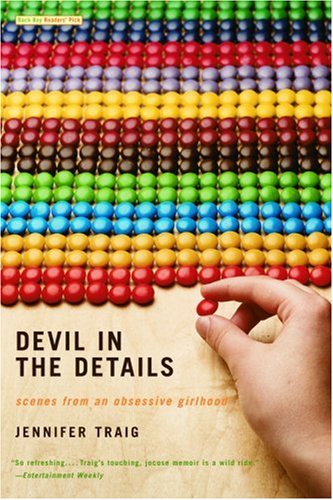
Devil in the Details

In this bittersweet memoir, Jennifer Traig laughs about her puzzling problems growing up with obsessive compulsive disorder in an era before OCD was a recognized disorder. With a witty humor, she describes trials that would have permanently scarred a less resilient youth. In a world where OCD is stereotyped in pop culture, TV shows, and movies it is a relief to find someone willing to provide a more realistic, though upbeat, view of this very debilitating disorder. I imagine many people will be able to find a little of themselves in Jennifer Traig, and teens now facing such issues will find the upbeat happy ending comforting. I give this book 5 out of 5 stars.

The Day After Tomorrw, by Alan Folsom


  • In “The Day After Tomorrow,” Alan Folsom weaves together a wide array of well-developed, interesting characters in an international murder mystery. It begins when Paul Osborne accidentally spies the man who murdered his father more than a decade earlier. Obsessed, he initiates a man-hunt which propels him into a powerful political intrigue as well as setting himself up as the prime suspect for an international serial killer. Despite the promising beginning, Folsom fails to deliver the anticipated suspense. Folsom’s attempts at tantalizing foreshadows belly-flop when, by page 300 of this 600 paged book, he feeds enough information that an experienced reader will easily guess the “shocking” end. The final 300 pages of the book tediously develop a new (scientifically and historically impossible) twist on a plot which has been regurgitated since the mid-1900’s.

  • Although Folsom’s writing style is generally fast-paced and entertaining, unfortunately the suspense is repeatedly interrupted by over-ambitious development of the characters’ sexual identities. Some of this development is necessary, but most of it is superfluous.

  • I would recommend this book for people who read quickly and do not try to interpret foreshawdows. I give this book 2 out of 5 stars.