Classics Club: October Meme

It’s time for my post for the Classics Club October Meme! This meme is a way for all of us classics clubbers to interact with each other and remind ourselves that we can’t always be introverts. 😉 The question of the month is: Why are you reading the classics?


I have always loved reading the classics. First of all, if they’ve survived this long, that’s generally because they’re so powerful that they resonate throughout the ages. I appreciate a good book! Second, I enjoy learning about history. Reading books that were written in a certain historical period is a fantastic way to help me learn about that time period. Third, I enjoy picking up on allusions to classics in popular culture (and other books). It is fascinating how certain ideas stay with us forever…how some of them morph with time and become new ideas. I enjoy following this process because it helps me understand what is important to us psychologically. 

Update: So far, I have read and reviewed 3 of 50 on my classics club list.

For those of you who are not members of the classics club (and therefore don’t have your own blog post on the topic) please feel free to answer this month’s question in my comments! 🙂


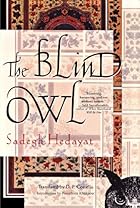
The Blind Owl, by Sadegh Hedayat

2012 Book 136: The Blind Owl  

Written by Sadegh Hedayat; Translated by D.P. Costello; Introduction by Porochista Khakpour

Reason for Reading: 
In order to increase awareness of speculative fiction authors-of-color for A More Diverse Universe blog tour, I have read and reviewed The Blind Owl, by Sadegh Hedayat. Although The Blind Owl may not be considered speculative fiction by critics, I felt that the surreal nature of this book fit with the spirit of speculative fiction. 

My Review
In this surreal novella, an unnamed protagonist unburdens the deadly weight on his chest by confessing to his own grotesquely owl-shaped shadow on the wall. 


“in order to explain my life to my stooping shadow, I am obliged to tell a story. Ugh! How many stories about love, copulation, marriage and death already exist, not one of which tells the truth! How sick I am of well-constructed plots and brilliant writing!”

In his mind-spinning narration, it is difficult to tell when the events described are cloaked with opium, veiled with madness, or are simple truth. This novel is deeply disturbing in many ways. It narrates horrific events, certainly, but it is the manner that they are conveyed that is frightening. His imagery is surreal. His repetition is hypnotic. His words are oppressive. 

“Only death does not lie. The presence of death annihilates all superstitions. We are the children of death and it is death that rescues us from the deceptions of life.”

The imagery and symbolism used by Hedayat portrays his personal marriage between Western and Eastern culture. Although this book is considered the essence of Persian literature, there are signs of Poe and Kafka. The Blind Owl bled, vomited, and wept Freudian symbolism. 

This was an amazing book, and highly recommended to people interested in Persian fiction or in modernist fiction. 

About the Author and Book: 

Sadegh Hedayat (1903-1951) was one of the two fathers of Persian fiction, and sole father of modernist Persian literature. He was born to an aristocratic family in Tehran, and grew up during a turbulent time in the history of Iran. After WWI, the country underwent “modernization” and “Westernization.” As always happens with modernization, many people felt oppressed by the loss of culture and ceremony…by the loss of what makes them THEM and by the adoption of foreign values. Hedayat was apparently not one of these people. In 1925 he left Iran for studies in Europe. After short-lived attempts at studying engineering, architecture, and dentistry, he dedicated his life to studying Western literature and to learning Iranian folklore and history. From 1937 to 1939, Hedayat lived in India. The Blind Owl was first published in 1937 in Bombay, India with the label: “Not for publication in Iran.” At the time of publication Iran was suffering from the oppressive later years of the reign of Reza Shah. Free press was limited, the middle class was ruled with an “Iron Fist,” and the bureaucracy was falling apart under corruption. 

In Hadayat’s later years, his writings attacked the monarchy and the clergy of Iran, which he felt were leading to its downfall. However, he felt alienated by everyone around him in Iran, and moved to Paris. In 1951, he gassed himself in his apartment by plugging all the windows and doors with cotton. He left money for his burial in plain view. 

The introduction to The Blind Owl, written by Porochista Khakpour in the Costello translation is well worth reading. She tells about her history with the novel…how her father wouldn’t let her read it when she was a child because it had lead to so many suicides among Iranian youths. I get the impression that Khakpour’s family was of a melancholic nature and was strongly affected by books of this nature. I found The Blind Owl disturbing, but I didn’t experience any inconvenient urge to off myself after reading it. 

Personal interpretation that will contain middle-of-story SPOILERS:

I generally roll my eyes whenever the phrase “Oedipus complex” is introduced into an interpretation. However, in this case, I think “Oedipus complex” is exactly what Hedayat was aiming for. The ONLY character named in the entire book was his mother. He described his mother’s dancing in sensual detail. He obsessed sexually about all maternal figures in his life, including his aunt and his nanny. He admits to marrying “that bitch” his wife because she reminded him of his aunt (whom he worshiped with an almost sensual passion). He viewed his mother, nanny, and aunt as sexually unattainable…but that view was extended to his wife. He insisted that he had never slept with her. That he had gone mad from her denial of him and her promiscuity with flea-ridden brutes off the streets. I interpreted these obsessive delusions as false. I assumed that he had, indeed, coupled with his wife, but in his madness repressed those memories and created new delusional memories about other men. (On a side note, I’m not even certain his wife was his aunt’s child…she may have been the daughter of his nanny…but I don’t know why that would matter?)

The Oedipus complex extended towards his feelings for his father, his father’s brother, and his father-in-law. He seemed to fear and loathe the very idea of any of these men–they had, in fact, merged with each other in his own mind. Worse, they had merged with his own self-image so that he feared and loathed himself–probably for his unsatisfied sexual desires towards maternal figures. 

Of course, I don’t think the entire story was about an Oedipus complex…that was just the theme that jumped out at me on my first perusal. The story was about a man who was isolated from the rest of the world. A man who would never belong. A man who had no one to unburden himself to as the world around him crumbled into surreal chaos. The isolation was likely a reflection of Hedayat’s own feelings of alienation. The world crumbling around him was likely how he viewed the socio-economic failure of Iran. 

I’m sure this is the type of book that you find something new each and every time you read it…even if you meticulously study it for years.


The Martian Chronicles, by Ray Bradbury

2012 Book 135: The Martian Chronicles
Written by Ray Bradbury, Narrated by Peter Marinker

My Review

This is a collection of Ray Bradbury’s Mars colonization stories which were originally published in pulp magazines over a period of a few years. They are independent of each other in plot, but it is fascinating how Bradbury managed to pull them all together in a cohesive whole which told a story in itself. This book is considered the bridge between classic pulp science fiction (which targeted lowest-common-denominator audiences) and the more thoughtful and sophisticated modern science fiction. The stories have the same raw imagination as pulp, but each one tackles one or more social issues as well. The stories are fast and fun, and yet intriguing.
My favorite story is about two missionaries bent on saving the Martians from sins that we humans haven’t even imagined yet. The philosophical discussion of sin and the ironic use of Christian symbolism meshed surprisingly well with the sf-pulpy imagery. Bradbury also touched on evils-of-colonization, race-relations and xenophobia, and politics…to name but a few issues. I was also impressed by Bradbury’s expectations of “the future” (1999 – 2020). Unavoidably, some of his themes were dated–we no longer worry about nuclear holocaust and (I hope!) lynch mobs are very rare in the US these days. He didn’t foresee the civil rights movement or the cooling of the arms race. Despite this lack of foresight, he showed that humans never change. We may think we’re living in an enlightened age, but xenophobia still exists and we’re still willing to destroy the history and of an old land in order to set up our new world. Yes, I did feel that the stories tended to be a bit on the dreary side, but for some reason it didn’t bother me so much because it was made palatable by Bradbury’s fantastic imagination.
This is a fantastic classic that any science fiction fan should read.

Herland, by Charlotte Perkins Gilman

2012 Book 134: Herland, by Charlotte Perkins Gilman 9/14/2012

Reason for Reading: Fantasy and science fiction Coursera

My Review:

On an exploratory trip in “savage” lands, three young American men find a country composed entirely of women. As these men learn about the history and culture of Herland, they are at first dismayed but later impressed at the asexuality and absolute social perfection of these women. For the first time, they notice the flaws in their own society and feel ashamed. 


I’m having a really hard time deciding what to think about Herland. I tend to prefer plot-driven novels, or at the very least character-driven novels. Herland was neither plot- nor character-driven…it was concept driven. Gilman was trying to convey a set of principles using an allegorical dialog. Gilman felt that women are subjugated by their sexuality. Because their economic happiness depends on their ability to attract men, they resort to jealousies and obsessions with fripperies. In Herland, there are no men…therefore they do not depend upon their sexuality to land them a desirable place in life–they depend only upon hard work and virtue. Since there are no men, they have no reason to be jealous, catty, gossipy, or hysterical. Thus, they are perfect. 

My major shock was that I’d previously had the impression that Gilman believed in the healthiness of sexuality. I believed this partly because of a comment in the introduction to the Charlotte Perkins Gilman Reader, ed. Ann J. Lane, which suggested that Gilman was deeply sexually attracted to her first husband, but that he had felt overwhelmed by her expressions of desire in their Victorian-valued home. However, the women in Herland are completely asexual. They have no sexual desires at all (not surprising, since they have no men). I find it disturbing that Gilman might have been suggesting that sexual desires (outside procreation) may be a male phenomenon? It’s also possible that Gilman felt the men had something to teach the Herlanders after all…they could teach them about healthy sexuality. At first, I interpreted the story this way. But after further thought, I decided that useful men are completely out of character in this book. I think she actually intended to convey the idea that sexuality-only-for-procreation was the most sensible and healthy alternative. But I could be wrong. The jury’s still out on that one. 🙂

In her comments on Herland, Fence objected to the focus of the women on maternity. This issue (like the sex-only-for-procreation issue) is in stark contrast with the views of today’s feminists. There’s nothing wrong with maternal feelings, but most feminists feel that women should have a choice about maternity…and they may not WANT to be mothers. I think there’s a little irony with Gilman’s focus on maternity in Herland. She, herself, suffered from the censure of society after she left her daughter under the care of her first husband. Of course, the fact that she divorced her husband for “no good reason” exacerbated the censure (for more on that, read my comments on “The Yellow Wallpaper”). Perhaps the focus on maternity in Herland was expressions of guilt for her inability to care for her daughter due her own illness. I know depressed people DO tend to be wracked by misplaced guilt. 

At some level, I approved of the socialist views displayed by Gilman’s allegory. I thought it was wonderful how everything was shared among the whole…there was no poverty and there were no insanely rich. This made the socialist education system work perfectly. Educating the children was considered fun by both the children AND the adults. Education was not a burden, but a joy which all members of society shared. However, I think the only way a socialist society like that would work is if everyone is equal in skill, and devoid of individuality and self-serving jealousies. These women WERE devoid of such horrific traits, but they were also really boring and annoyingly perfect.

For the most part, I did not enjoy reading Herland. I found the dialog grating due to the sickening perfection of the women and the irksome sexism of the men. The men’s characters were very flat–their purpose was simply to present a contrast to the perfection of Herland. The three men came in three stereotypical varieties: gentlemanly to the point of sexism, brutishly sexist, and imperfect-but-somewhat-objective observer. Other than these characteristics, the men had no personality at all. The women also lacked character partly due to their obnoxious perfection, but also due to their nature as a social “we” instead of being unique individuals. In other words, the perfection and socialism merged them into one character with many names (with the slight exception of Alima who  brought Terry’s brutish behavior on herself by having a “far-descended atavistic trace of the more marked femaleness, never apparent till Terry called it out.”) In other words, the presence of men brought out the bad characteristics of women? Of COURSE they did. 😉 

See? Herland needed these men so that they could catalyze atavistic femaleness. This trait could then be bred out of the next generation. Men ARE useful after all! 

Seriously, though, the eugenics of Herland was a little disturbing. The officials of Herland apparently got to decide who was worthy of giving birth to none, one, or *gasp at the honor* TWO children. The officials also got to choose how much influence the mother had over the child’s rearing. I didn’t view this process as racist since I assumed they were all of the same race (at least, they were all white by the time the men arrived), but according to Wikipedia, “Gilman also believed old stock Americans of British colonial descent were giving up their country to immigrants who, she said, were diluting the nation’s reproductive purity.” So I can’t discount the possibility that she DID mean that the women of Herland bred out the “less desirable” races. 

I think Herland was an interesting thought experiment, but I personally didn’t enjoy reading it. If your’e interested in concept-driven allegories, especially feminist and socialist allegories, then this is the book for you. 😀

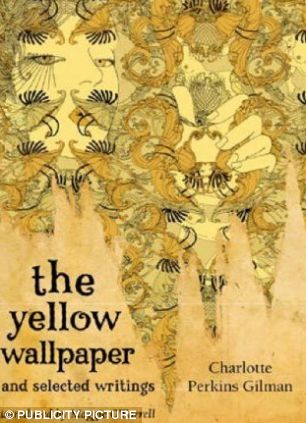
The Yellow Wall Paper, by Charlotte Perkins Gilman

I decided that since I’m reading Herland, by Charlotte Perkins Gilman, I would read Gilman’s best-known piece of fiction, the short story “The Yellow Wallpaper.” This is one of the few short stories included in the list of 1001 Books You Must Read Before You Die (the others mostly being by Edgar Allan Poe). 


The main character is a young wife and mother who is taken by her affectionate husband to a summer home so that she could rest from her “nervous” behavior for a while. Her husband wanted her to rest as much as possible–not to exert herself by writing, reading, taking care of her baby, or doing any other sort of wifely work. She was kept in a room with viciously ugly yellow wallpaper. At first, she wanted to be free of the wallpaper, but her husband affectionately refused to move her to another room. As the story continues, she (in the boredom of “rest”) becomes more and more fascinated by the wall-paper and is eventually driven to madness. Her descent into madness is so eerie that this work was classified as “horror” before it was brandished as a feminist gem. 

Gilman describes the descent into madness with the naked honesty that can only come from a semi-autobiographical story. In fact, this story was a dire warning to herself, and to the world. Gilman became deeply depressed after giving birth to her own daughter. Her affectionate husband sent her to the well-known neurologist S. Weir Mitchell, who was a specialist in “women’s disorders.” Mitchell’s famous cure involved a regimen of rest–the woman would give up all work and simply gain back her health by bed-rest and isolation. Gilman was forbidden to write or paint, and was only allowed to read for 2 hours a day. Such treatment is enough to drive anyone crazy in my opinion! As Gilman got worse and worse, she made the difficult decision to leave her affectionate husband and find her health by other means. She never fully recovered, and she suffered from the world’s censure for leaving an affectionate husband–this was in the late 1800’s when such a divorce was a scandal. She wrote “The Yellow Wallpaper” as a warning to herself that she would have gone mad had she stayed with her husband. She wrote it as a warning to the doctors who supported Mitchell’s cure–she even sent a copy of the story to Mitchell himself. And she wrote it as a warning to young women who might be suffering from similar “cures.” Gilman never suffered from hallucinations herself, but the description of the descent into madness clearly bore her soul, making the story frighteningly realistic. 

A Princess of Mars, by Edgar Rice Burroughs

2012 Book 131: A Princess of Mars, by Edgar Rice Burroughs (9/8/2012)

Reason for Reading: Coursera Science Fiction and Fantasy course. 🙂 

Review
In the post-Civil War era, John Carter enters an Arizona cave and is unexpectedly whisked away to Mars. There, he witnesses the depravity of a “highly developed” race of people who, because medicine helps them to live long lives, they perform population control by warring with each other. In some ways, though, they’re happier than people on Earth, because they have no lawyers. John Carter takes Mars (and a Princess’s heart) by storm. I’m not a huge fan of pulp fiction, so I expected very little out of this book. Because of that, I was impressed at how “not bad” it was. Actually, it was sort of interesting in a history-of-science-fiction sort of way. It did have some rather racist comments about Native Americans (an artifact of when it was written), and the Princess was a weak annoying little thing whose only virtues were rare beauty and a penchant for getting into trouble so that we could witness the excitement of her rescue (this is an artifact of being pulp). Overall, not too shabby. But not literature, either. I DID wonder whether John Carter was meant to be some sort of pulpy Christ figure. He was very good at saving people. And he had the right initials. 😉

The Invisible Man, by H. G. Wells

2012 Book 128: The Invisible Man, by H. G. Wells (9/1/2012)

Reason for Reading: Coursera fantasy and science fiction course


My Review

In H. G. Wells’ classic novel, a scientist turns himself invisible and wreaks havoc in rural England. This book is a versatile classic because it could be read by someone who is young or who simply wants to read fluff, but it can also be appreciated by more careful readers who are looking for undercurrents of meaning. It’s a tragi-farcical romp in 19th century England, but it’s also a warning about what people might do simply because they can get away with it. This is a classic that anyone interested in science fiction should read.

Essay on The Invisible Man, by H.G. Wells for Coursera Fantasy and Science Fiction. May contain spoilers!!!

In his 1897 novel The Invisible Man, H. G. Wells portrayed a tragic anti-hero, a trend which had become popular among romantic writers following in the footsteps of Milton. Well’s character Griffin isolated himself from humanity at first because he wanted all the glory of his discoveries. Later, he was driven to isolation by a fear of discovery. Finally, he was driven mad by the effects of his self-imposed isolation. 

Wells used two narrative styles for this novel. One style was Griffin’s first person narrative. This style not only established Griffin as the protagonist of the story, but it also painted him in a tragic light: he was naked, hungry, and alone; facing the unforeseen difficulties of invisibility. He had striven diligently for success only to have it wrenched away as he recognized his own impotence in isolation. Only upon this dreadful realization did he seek out compatriots. However, he faced rejection not only from the general populace, but also from his chosen companions. Like Satan in Paradise Lost, Griffin had rebelled against the social order, and been mortified by his own failure. Like Satan, he failed to recognize his own fault in his fall, and instead sought revenge.

The other narrative style used in The Invisible Man was that of a semi-omniscient reporter/observer who told the story as seen through the eyes of individual characters. This style was distanced from the motivations of characters, resulting in the farcical effect of watching people rushing after flying objects and thrashing wildly at thin air. This narrative style made Griffin’s plight seem pathetically silly. It is reminiscent of the comic debasement of Satan at the end of Paradise Lost. It suggests that Griffin doesn’t deserve the tragic grandeur of a real hero–because he’s just a sad little man with poor morals and no friends.


Dracula, by Bram Stoker

2012 Book 123: Dracula, by Bram Stoker (8/15/2012)

Reason for Reading: Coursera Fantasy and Science Fiction Course. Listened to it on my car ride to MN. 🙂 Didn’t finish it in time for the assignment though!

My Review
This review is for the Audible Edition of Dracula, narrated by Alan Cumming et al. (Wow, I just used et al. in a review. That makes me pretty darned special.) 

In this classic novel, a group of acquaintances must rid themselves of the sinister Count Dracula who has descended upon London with the eager desire to create a flock of bloodsucking fiends. This is my second reading of the novel–the first being when I was a young teenager. This time, I was impressed by Stoker’s ability to set a dark mood and maintain it through the entire book. There was always some creepy fog or a terrified dog or a creepily sleep-walking woman to spook the reader. The full-cast performance was delightful. It really brought the various characters to life. The end of the book dragged for me a little because I was on a long car trip, counting down the last 6 hours in 10 minute intervals. But that’s not really the fault of the book. 🙂

Alice in Wonderland (Norton Critical Edition)

2012 Book 119: Alice in Wonderland Norton Critical Edition, by Lewis Carroll (8/5/2012)

Reason for Reading: Coursera Fantasy and Science Fiction course

My Review 
This NCE contains Alice’s Adventures in Wonderland, Through the Looking Glass, and The Hunting of the Snark. I was pleased with the footnotes, which were helpful in clarifying many of Carroll’s jokes. The critical information included some interesting biographies/diaries of Dodgson (Carroll), as well as a few critical essays. I was disappointed in these because although they were mostly good, the editor clearly has some negative feelings about Dodgson’s morals and included many unnecessary Freudian-finger-pointing passages. If I were younger or more impressionable, I’d have been left with a very negative view of Dodgson indeed! Because of these attempts at manipulating the readers’ good opinions of Dodgson, I wish I had gotten The Annotated Alice instead.

Note about the stories themselves: These were a re-read for me. Although I love Alice and really enjoyed reading the stories with footnotes (I understood them a lot better this time around!), I tend to prefer books with a little more plot development. Scandalous, I know, but what can I say?

Agnes Grey, by Anne Bronte

2012 Book 121: Agnes Grey, by Anne Bronte (8/8/2012)

Reason for Reading: Group read 1001 Books You Must Read Before You Die

My Review
When the Grey family begins to have financial problems, Agnes, a sheltered minister’s daughter, begins life as a governess. She is shocked and appalled by how she is treated and what miracles she is expected to achieve. This book is a social commentary on the treatment of governesses and unruly children. It also touches on the charms of marrying for love instead of money. It was a quick read, but rather unexceptional.