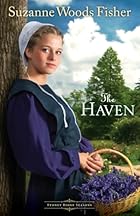
The Haven, by Suzanne Woods Fisher

2012 Book 170: The Haven, by Suzanne Woods Fisher

Reason for Reading: I’m leading a discussion on The Haven for the ACFW bookclub. Discussion starts tomorrow, but it lasts until the end of the month, and anyone is welcome to read the book quickly and join in the discussion! This is the second book in the Stoney Ridge Seasons series.

Review
When Sadie Lapp returns home after several months of living with her newly-married sister, she comes bearing a foundling baby. She wants the baby to remain a secret until she can discover who the  mother might be, but to her dismay rumors immediately start flying around town that she is the mother. On top of all that stress, Sadie is now questioning her own interest in Gideon Smucker, who has been in love with her for years. Does she like him? Or does she prefer Will Stoltz, the city-boy who’s living on the farm as a wildlife intern who babysits a pair of endangered falcons that are nesting in the area? This is a sweet romance about the painful effects of gossip and  the power of forgiveness. I think this was a wonderful follow-up to the first book in the series, The Keeper. Although you could, theoretically, read The Haven as a stand-alone book, I’m really glad I read The Keeper first. Reading The Keeper helped me to understand some issues that would have gone right over my head if I hadn’t read it first. On the other hand, although The Haven continues with themes introduced in The Keeper, The Haven is a very different book because the lead characters are so different. Sadie is a cautious, awkward, unobtrusive girl who (at the beginning of the book, anyway) allows people and circumstances to take advantage of her. She needs to blossom into a more assertive young lady. Although I’ve read reviews which criticized her personality, I rather liked her. She reminded me of myself when I was that age. Fisher did a wonderful job of portraying the tortured shyness of Sadie – and then Sadie’s transformation into assertiveness was very touching. No, her character isn’t perfect, she made mistakes – as everyone else in the book did – but she was a realistic character. And one that I loved. If you like Amish romance, you’ll like this series. 🙂 (These were my very FIRST Amish books, to be honest!)
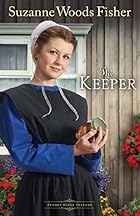
The Keeper, by Suzanne Fisher

2012 Book 166: The Keeper, by Suzanne Fisher

Reason for Reading: It’s the first book in a series. I’ll be leading a discussion on the second book, The Haven, from 20Dec – 31Dec for the ACFW Bookclub. Anyone is welcome to join, and apparently you don’t have to read the first book to enjoy the second. 🙂

Review 
When Julia Lapp’s fiance, Paul Fisher, postpones their wedding again, Julia blames Roman Troyer, a wandering bee-keeper who isn’t too fond of emotional attachments. Blaming Roman is easier than blaming Paul, after all. Julia keeps herself busy trying to regain Paul’s attention and taking her frustrations out on Roman while at the same time holding together the crumbling pieces of her family’s farm. Her father is having heart problems, and the family needs to stand strong in order to get through these difficult times. This is a sweet and simple romance, with a lot of emotional twists. The entire Lapp family (as well as Roman) are very lovable, and you can’t help but root for them. I’m eager to read the second book, The Haven, which tells the story of Julia’s younger sister. 

The Marshal’s Promise, by Rhonda Gibson

Book 158: The Marshal’s Promise, by Rhonda Gibson


Reason for reading: This is one of November’s picks for the American Christian Fiction Writers Association online book club. Anyone is welcome to join. Discussions start on the 20th, and this book only takes a couple hours to read.

My Review
In this sweet little Christian historical romance put out by the Harlequin publishing company, Rebecca Ramsey has been forced by her evil stepmother to answer an advert for a mail-order bride. But upon arriving in New Mexico territories, she discovers that her husband-to-be has been killed. With nowhere to go, she decides to make her home in New Mexico. Luckily, the Marshal offers her a job as his housekeeper. But does the Marshal have an ulterior motive for his offer? Sparks fly as these two learn that communication works better than secrets. This was a very cute little book, and there were some really sweetly romantic moments in it. There were also some tartly romantic moments. 😉 If you’re looking for a light historical romance, this is a good choice; however, this book has quite a few anachronisms in it so it’s not to be read by the seriously hard-core historical fiction readers. This book is meant to be fun and sweet, not cerebrally historic. 


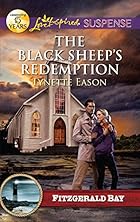
The Black Sheep’s Redemption, by Lynette Eason

2012 Book 157: The Black Sheep’s Redemption, by Lynette Eason

Reason for Reading: This is one of November’s picks for the American Christian Fiction Writers Association online book club. Anyone is welcome to join. Discussions start on the 20th, and this book only takes a couple hours to read.


My Review

In this sweet little Christian romantic suspense from the Harlequin, Charles Fitzgerald has been accused of the murder of his nanny, and the only woman who is willing to replace the nanny is Demi Taylor, a young woman who recently suffered a head wound and can’t remember who she is. Fitzgerald’s family, who pretty much runs the town, is suspected of hiding evidence on the case. Will they be able to clear his name to everyone’s satisfaction? And just who IS Demi, and why does she feel someone is stalking her?

This book is the penultimate book in a romantic suspense series about the Fitzgerald family (who apparently has a very suspenseful and romantically inclined few months during the murder investigation). Although I hadn’t read any of the previous books in the series, this book had all of the information needed to understand what was going on. However, there are several loose ends in the book, leaving an opening for us to explore the romantic inclinations of Ryan Fitzgerald AND to discover *dum dum dum* the murderer. (At least I certainly HOPE we discover who the murderer is.) 🙂 I really needed some fluffy reading at the moment that I picked this book up, and this certainly delivered. Light, quick, fun, romantic, and suspenseful. I’m glad I read it, and I’ll probably pick up some of the others in the series.

The Horse and His Boy, by C. S. Lewis

2012 Book 153: The Horse and His Boy, by C. S. Lewis

Reason for Reading: Fifth Book (publication order) of the Chronicles of Narnia

Review*****

Shasta grew up as practically a slave to his “father,” until he meet a talking horse. Bree (the horse) has been kidnapped from Narnia, a foreign land that Shasta has never heard of. Bree is convinced that Shasta, too, has been taken from Narnia. They escape together, and have many adventures on the way to Narnia. This book takes place during the original reign of High King Peter and his brother and sisters. It was a delightful little book, and complements the Narnia series quite well. I DID have a good laugh at the rather xenophobic treatment of Archenland–most people from this land were portrayed as corrupt, degenerate, and evil. By the way they dressed and some of their habits, Lewis clearly meant for Archenland to be similar to the Orient. This snafu made me chuckle a little bit, since I took into consideration the age in which Lewis was writing…and that he was writing about a fantasy land. In the end, I enjoyed this book just as much as the other books in the series. It is fun, cute, and a delight to read.

Surprised by Joy, by C. S. Lewis

2012 Book 144: Surprised by Joy

Written by C. S. Lewis, Narrated by Geoffrey Howard

Reason for Reading: I’m slowly working through the books of C. S. Lewis out of curiosity for his theology. 


Reveiw

In this short memoir, C. S. Lewis describes his spiritual journey from youthful atheist to firm and faithful believer. This isn’t really a memoir of Lewis’ life, although it does contain some interesting anecdotes about his school years. Mostly, he only focuses on incidents in his life that impacted his spiritual development. I have read many spiritual development memoirs, and this one is like the others…only it stands out because it is a classic. It was written when these types of journeys were not as commonly shared in memoirs. (In fact, I suspect that this book was one of the ones that inspired so many of the spiritual-journey memoirs that we see today.) One thing I found interesting about this book is it explained to me why so many people retro-diagnose Lewis with Asperger’s syndrome. He talked about his difficulties dealing with other students…not knowing how to respond in social situations and being told to “take that look off [his] face” when he was trying very hard to keep an appropriate facial expression. I think it is important to recognize that we can’t accurately retro-diagnose people with today’s syndromes, but it IS interesting to see how such personality traits were present in Lewis’ day, and how he excused them with stories about how childhood events affected his social interactions. It was definitely an interesting read…and anyone who likes to hear about others’ spiritual journeys really should start with C. S. Lewis.


Man’s Search for Meaning, by Viktor Frankl


2012 Book 130: Man’s Search for Meaning, by Viktor Frankl (9/5/2012)


Reason for Reading: One of the essays in Fantasy Media in the Classroom, talked about a fusion class which combined Man’s Search for Meaning and The Lucifer Effect with science fiction books like The Invisible Man and The Strange case of Dr Jekyll and Mr Hyde in which men choose “evil.” I thought since I’ve been reading a lot of books about men who choose “evil” that I’d try out Man’s Search for Meaning. I’ll try to fit in The Lucifer Effect soon. It gives an interesting perspective on why some people choose “good” and other choose “evil.” Frankl’s message was that people can choose to be “swine” or “saints,” but they make this choice over and over throughout their lives and their search for meaning is the motivation behind each decision.

My Review
In the first half of this fascinating little book, Frankl describes his years in the concentration camps (including Auschwitz) with the purpose of analyzing the behavior of people in extreme situations. He admits that someone who wasn’t there can’t give a very detailed or personal account, but a person who WAS there can’t give a detached account because they were emotionally involved. I think he did an excellent job of viewing the situation with detachment, considering the situation. This was a really interesting little memoir. The second half of the book introduces his theory of psychoanalysis: logotherapy. Logotherapy is focused on man’s search for meaning; in contrast to Freudian theory focusing on man’s search for pleasure and Adlerian theory focusing on man’s search for power. I think Logotherapy is the most sensible form of psychotherapy I’ve ever heard of. How can I argue that our happiness depends on our perceiving our own purpose? I admit I felt a little skepticism when he kept bringing up examples of how he’d “cured” someone after only one session–he must have been a particularly clever person to manage that so often. 😉 But that aside, I think the technique of finding meaning in a patient’s life is rather useful. 🙂

Revelations, by Elaine Pagels


2012 Book 85: Revelations: Visions, Prophecy, and Politics in the Book of Revelation, by Elaine Pagels (6/17/2012)

Reason for Reading: General interest in Church history and apocalyptic literature

My Review: 4/5 stars
In her newest book, Pagels explores the history of John of Patmos’ Book of Revelation. She outlines what we know about John of Patmos, what he was trying to say with his preaching, and how contemporaries may have responded. The second half of the book covers the history of Christianity in the first two centuries C.E., with emphasis on Pagels’ favorite topic of disparate beliefs among early groups. She completes the book with a description of how the Bible Cannon was chosen, with some suggestions about why John of Patmos’ Book of Revelation was the only apocalyptic literature included. Pagels’ writing is clear and interesting, though a bit repetitive–especially if you’ve read some of her earlier works. If you’re interested in early church history, especially the disparate groups of Christians, then this is the book for you. If you’re interested in apocalyptic literature in early Christian history, then the first half of this book, and the tail end, is for you.

The Gnostic Gospels, by Elaine Pagels


2012 Book 66: The Gnostic Gospels, by Elaine Pagels (4/24/2012)

Reason for Reading Am interested in reading a few of Pagels’ books, and I thought this was the best place to start

My Review 4/5 stars
Pagels objectively introduces the subject of the Gnostic Gospels—she describes the history of the texts, some basic differences between Gnostic beliefs and Orthodox beliefs, and then summarizes by saying that Christianity would have developed quite differently (or perhaps even fizzled out like other mystic fad religions) if Gnosticism had survived. She supports neither Orthodoxy or Gnosticism in this book, but provides an objective historian’s view on the two faiths. This is a fantastic introduction to Gnosticism, and it lacks the sensationalism of many Gnostic scholars today. Highly recommended.

The Book of Mormon, by Joseph Smith


2012 Book 52: The Book of Mormon, by Joseph Smith (3/22/2012)

Reason for Reading: I like to read scripture books from a variety of religions because I am interested in how they compare and what sort of message they relay. This book was given to me by a couple of Mormon elders who knocked on my door last year. “Elder,” by the way, means that they were 20 year old boys who weren’t allowed to enter my home without having an older male as an escort because apparently I am a threat to their innocence. Ah! I feel so sophisticated now! The fact that the escorts were meant to protect THEM and not me. 😉

My Review 3/5 stars
Although I think it’s a good idea to educate oneself on other religions (especially those religions which have an undeserved bad reputation), I’m not sure reading the Book of Mormon is the best way to learn about LDS. It was dense, difficult reading. It starts out with some wanderings in foreign lands, then they have lots of wars, then Jesus comes and saves them all, then they have a bunch more wars. Half the sentences begin with “And it came to pass that…” There are some passages of uplifting spirituality, but these passages were few and bogged down by a lot of unexciting depictions of war. Personally, I think the best way to learn about LDS is to talk to some missionaries and THEN (once you’ve gotten a good idea of what the religion is about) read the Book of Mormon if you’re still interested. But that’s just my humble opinion.