The Tower of Babel

Until this year, I wasn’t very familiar with the Tower of Babel. I’d heard of it, of course, but never thought about it. The story is one paragraph in Chapter 11 of Genesis. The people, who were united and had only one language, said “Come, let us build ourselves a city and a tower with its top in the heavens, and let us make a name for ourselves, lest we be dispersed over the face of the whole earth.” (Genesis 11: 3 ESV) And God came down to see the tower and was displeased because “Nothing that they propose to do will now be impossible for them.” (Genesis 11:6 ESV) So God confused the language of the people so that there were many languages. The people could no longer understand each other, so they dispersed across the earth. 

Why is this short story included in the Bible between the story of Noah and the story of Abram? I suppose if you look at Genesis as a history of the people, this story was necessary to show how people dispersed around the world and developed different languages. It introduced the fact that there were now many peoples, and that Abram would have to navigate through some of those peoples in his migration later in the biblical narrative. 

Looking at the story more minutely, though, why was God displeased by the city and tower? Is it because humans aspired to become like God? Was he teaching them a lesson in humility? That’s what many scholars think of this story. But that makes little sense to me because of verse 6. If everything humans aspire to is now possible to them, then that implies that it is possible to be like God. It implies that God felt threatened. This is not our modern conception of God, certainly. Was it the ancient perception of God? 

Ryken and Ryken point out in The Literary Study Bible that the story is satirical. The people are trying to build a tower that reaches the heavens, and yet God has to “come down” from the heavens to look at it. Also, they were building with bitumen and asphalt instead of mortar. But, again, if their attempt was in vain, then why did God say that everything they aspire to will be possible to them? 

Ryken and Ryken also point out that this story is typical of human nature. We strive to develop technology that will make us more comfortable and more powerful – in essence, we strive to be like gods over our planet. 

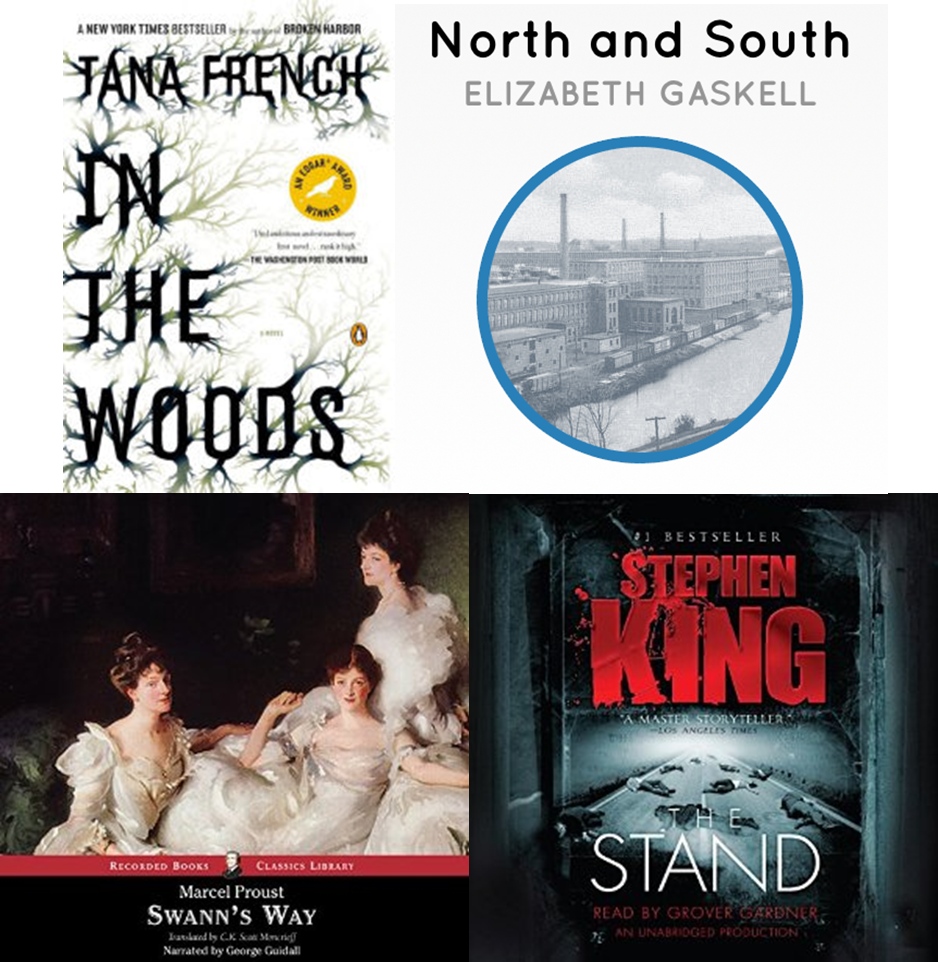
In the Woods, by Tana French

Years ago, three children disappeared into the woods near the small town of Knocknaree – only one was found. He was covered in blood and remembered nothing of what happened. Years later, that little boy is a grown man and is a detective with the Dublin Murder Squad. When a new child murder case pops up in Knocknaree, detective Ryan struggles to remember what happened to him all those years ago. 

This book is really hard for me to review because in some ways it was very, very satisfying, and in some ways it was dissatisfying. But the dissatisfying aspects were where realism meets mystery / police procedural. I guess the element of realism, and the fantastic writing, are why people consider this a piece of “literary fiction” (whatever that means). I can say that some of the twists were predictable to me, but I was still very interested in how the story was going to turn out. I can’t say more without spoilers, so I’ll leave it at that. 


North and South, by Elizabeth Gaskell

This review will contain light spoilers. 


Margaret is living the high life in London with her cousin and aunt, but when her cousin gets married, Margaret goes back to her humble, but peaceful life with her parents at a parsonage in Helstone. But all this changes when her father unexpectedly decides that he no longer agrees with his church, and will leave the religious calling to be a tutor in the Northern factory city of Milton. There, the family lives in relative poverty, but earns the friendship of Mr. Thornton. He is a self-made man, who worked his way up from curtain sales to merchant, and he would like to educate himself in the classics under the tutelage of Margaret’s father Mr. Hale. But Margaret is proud and thinks gentlemen and ladies should be considered higher than merchants. Although she appreciates the friendship that Mr. Thornton offers her lonely father, she looks down upon the merchant class and Milton in general. 

Margaret is in for an education, though. She soon becomes enmeshed in the union politics. She kindly bestows her friendship upon a poor factory worker’s family, and hears both sides of the union politics – the side of the factory workers as well as Mr. Thornton’s side. Much of this tome is dedicated to discussions on this subject, thus educating the reader on the subject. 

And of course, let’s not forget the romance. After a time, Mr. Thornton begins to admire Margaret, despite her lack of fortune. However, Margaret does not admire (or believes she does not) admire Mr. Thornton because of his lowly merchant class. There is a lot of romantic tension throughout the story.

I have to say, although I love Jane Austen’s satires and I think she’s probably the better student of human nature, Elizabeth Gaskell is by far the better student of societal issues. In fact, I’d say Gaskell is a fascinating mixture of Austen’s romance and Dickens’ social commentary. Throughout my reading, I learned a lot about why unions were developed and what good (and bad) they did the factory workers. I also learned about class structure between the merchant and the gentry. 

Gaskell described the poor working conditions and low pay that the factory workers suffered. But she also showed the reader how a strike, in those early days of unions, could make the poor laborers lose money and suffer consequences when scab workers are called in. They can, in fact, be ruined themselves. On the other hand, Mr. Thornton carefully explains why he’s making the choices he’s making in response to the union strike, and you can’t help but feel his pain as well. 

Overall, an excellent novel, and I look forward to reading more Gaskell in the future. 


Ramping up for New Year

Well, the new year has begun quite well for me on the reading front. As you can see below I’m reading a lot of books. This new reading mania is mostly due to the new year and new goals which I haven’t whittled down to a reasonable level yet. But part of it may actually be the start of hypomania. I dropped my Abilify cold turkey a week ago because my new insurance was going to charge me $240 per month for it. Isn’t that ridiculous? I feel like taking a moment to rant about the broken system in which people have to pay so much money for insurance, and then so much money for medical care. The system is so broken. 


If only my newly found hypomania extended to either cleaning my house (being more organized is a goal of this year) or exercising. But alas. Just to reading. I have been doing a moderate job of cleaning out my closets and making a huge pile for Goodwill this week, but of course that only makes my rooms look more messy! And exercising – nada. But there’s always tomorrow, right? 

Books completed this week: In the Woods, by Tana French. Just in time for my RL book club on Sunday. And my first Serial Reader book, North and South, by Elizabeth Gaskell. Reviews coming up on Sunday and Monday.


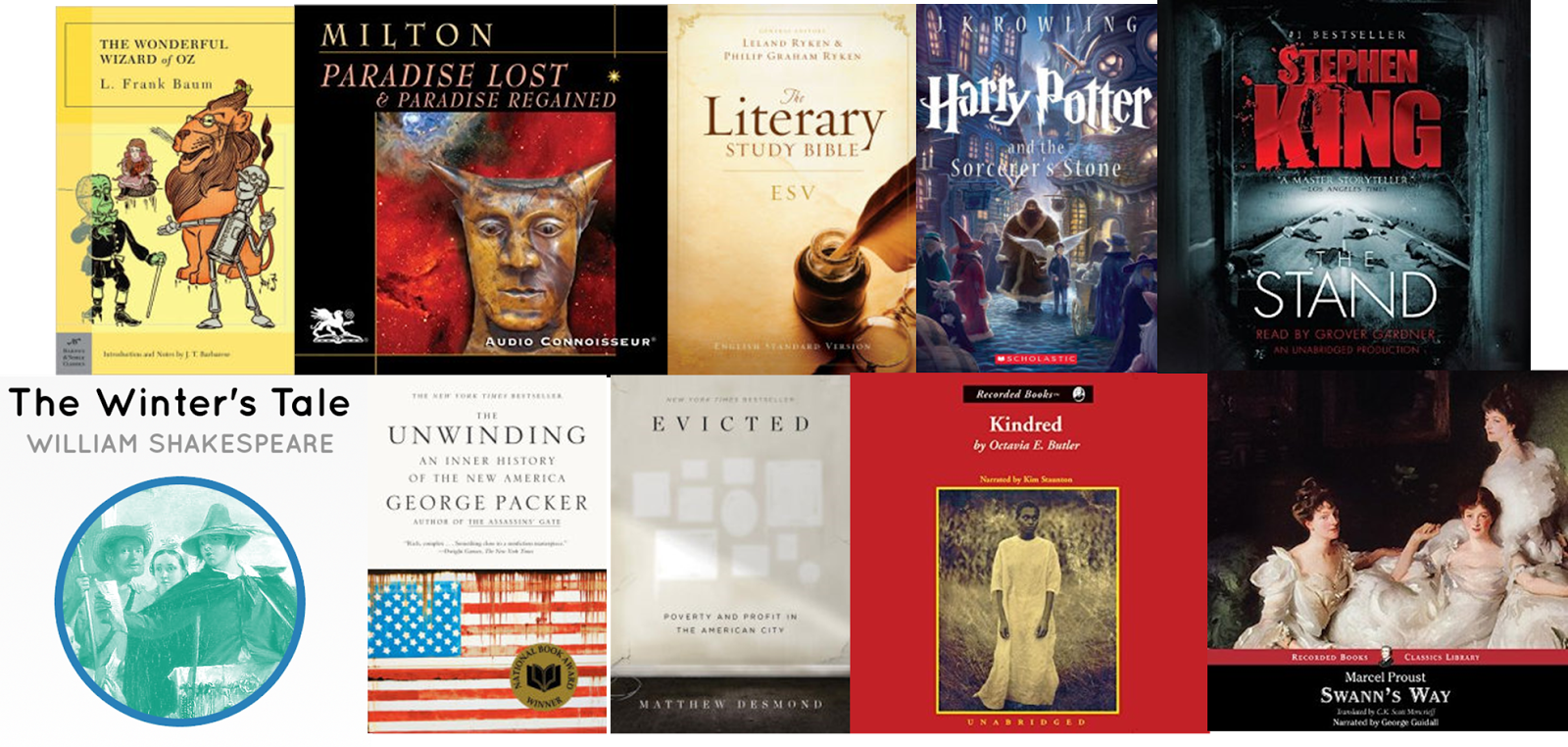
I’m currently reading this unwieldy compilation of books which will probably be whittled down to a more reasonable number of books soon: Wizard of Oz (read-a-long), Paradise Lost (read-a-long), Bible (read-a-long), Harry Potter (#hpchapteraday), The Stand (been working on this one for a while, it’s long), The Winter’s Tale (Serial Reader book for “A book with one of the four seasons in the title” category of Pop Sugar Challenge and “Romance” category of Back to the Classics 2017), The Unwinding (read-a-long), Evicted (group read on LibraryThing), Kindred (group read on LibraryThing), Swann’s Way (group read on LibraryThing). As it is, I don’t expect to finish any of them during the following week. 🙂

And I acquired a graphic novel of Pride and Prejudice (this was actually an accidental purchase, but I’m still happy with it); Listen, Liberal by Thomas Frank; The Populist Explosion, by John B Judis; Strangers in Their Own Land, by Arlie Russell Hochschild (all three for the understanding Trump’s win read-a-long); and Ben in the World, by Doris Lessing (the sequel to The Fifth Child, which I read in November). 

Post-publication PS: I guess I should really start answering my blog comments daily. I’m used to waiting a week because I’d get like 2-3 comments per week. But Now I’ve got around 20 unanswered comments! Sorry everyone! I do love your comments!

Noah and his Ark

One of the best known stories of Genesis is that of Noah’s Ark:

Because the world was filled with evil people, God “regretted that he had made man on the earth, and it grieved him to his heart.” He decided to blot humans out. Luckily for humanity, though, Noah found favor in God’s eyes. God gave Noah precise instructions on how to build an ark to protect Noah, his family, and pairs of every living thing of the world from the flood. After they were safely ensconced in this ark, “the fountains of the great deep burst forth, and the windows of the heavens were opened” (Genesis 7:11). The rain fell for 40 days and 40 nights. The earth was covered even to the tips of the highest mountains. And the water remained for 150 days. Another 40 days elapsed, and Noah released a dove from the ark to determine if it were safe to disembark. On the second attempt, the dove returned with an olive branch, and on the third, it didn’t return at all. But Noah still waited until God told him to come out before disembarking. (I’d say this was probably the wisest choice.) When the occupants of the ship were safely on dry ground, God made a covenant with Noah and his descendants that he would never again destroy the earth by flood. The rainbow is the sign of that covenant. 

This flood story is likely one that was well-known in the region when the book of Genesis was written, given its similarities to Utnapishtim’s flood story in the Epic of Gilgamesh (which precedes the book of Genesis). In order to determine what was important in this story, it is interesting to compare the similarities and differences between the two legends. 

For instance, both stories have a flood that destroys the earth – leaving only one protagonist, his family, and a pair of every living thing to survive. Both have an ark, in which all of these lucky survivors seek refuge. Both end in a covenant saying the earth’s occupants will no longer be destroyed. This is the skeleton of the story around which the author of Genesis and the author of Gilgamesh weave their details. This is the adventure part of the story. The part we all remember. But the differences are the parts that make Noah stand out from Utnaphishtim. 

The main differences I notice in the story are all about righteousness. First of all, the reason the gods had to destroy the earth in Utnapishtim’s story was simply that men were loud and annoying. The LORD God’s reason, on the other hand, was because men were enmeshed irrevocably in evil. In Noah’s story, therefore, there is a moral – if we become evil, we will suffer for it. Whereas in Utnapishtim’s story the moral (if there is one) is that the gods make arbitrary choices that we have no control over. 

Another difference is that in Utnapishtim’s story, he was told to lie to his neighbors, telling them that if they helped him build the ark for the gods, a season of plenty (beginning with some nice heavy rains) would ensue. Noah, on the other hand, was saved because he was a righteous man, and God wouldn’t tell a righteous man to lie to his neighbors. In fact, the author of Genesis leaves it a complete mystery how Noah’s neighbors reacted to his ark and how Noah managed to build the thing all alone. 

(I’ve always thought that Noah warned the people around him of the impending flood, but to no avail. I see no reference to that in the Genesis story. Does this omission mean that Noah kept it a secret? Is that really a righteous thing to do?)

Noah’s story continues with a debacle which throws a shadow on Noah’s righteousness. After the flood disperses, Noah goes into his tent and drinks to the point of passing out. His youngest son, Ham, enters the tent, finds his father naked, and goes out to gossip with his brothers. His brothers don’t find the situation worthy of gossip, though, and they back into the tent (so as not to see their father naked) and cover him with a blanket. When he awakens, Noah curses Ham and his descendants and blesses his older sons. 

Why did the author of Genesis include this little tail end to the story, which until then held Noah in such a fine light? Was it to show that evil did still pervade humanity despite the flood? 

Cain and Abel

Adam and Eve at first bear two sons – Cain and Abel. These two offer sacrifices to God, who smiles upon Abel’s offering but is not pleased with Cain’s offering. In a jealous rage, Cain kills his brother. When God discovers the murder, he banishes Cain to a life of wandering – he can no longer work the land to get food, so he becomes a nomad. Cain worries that someone will kill him for what he has done, but God says that anyone who kills Cain will be punished seven-fold. 

This story is the crime and punishment motif. It begins with Cain offering disrespect to authority (God) by offering “fruit of the ground.” I take this to mean he just picked up some fruit off the ground. Potentially it was rotten or had worms in it, but at best he didn’t toil or sacrifice in order to give this offering to God. Abel, on the other hand, offered the firstborn of his flock and some nice juicy fat – a real sacrifice. Was Cain lazy? Selfish? Or simply disrespectful? When God rejected Cain’s sacrifice, Cain held a grudge. He then committed murder. And murdering his own brother makes the crime even darker. Finally, he lied to God when asked if he knew where Abel was. 

Clearly, Cain had the heart of a criminal. His crime was even worse than that of his parents. So why did God say that if anyone murdered Cain the murderer would be punished seven-fold? Was that to show the mercifulness of God? Or was it to explain the existence of nomadic peoples (Cain’s descendants)? Also, given that Cain was an evil person, what does that say about the Hebrews’ view of the nomadic peoples that descended from Cain? Were they viewed as evil as well? 

One thing that struck me is that God does not appear to be omniscient in this story. He does not know where Abel is at first, and thus asks Cain. Or was he simply setting Cain up for a lie? That seems unmerciful, and contrasts with the mercy shown when God says that anyone who murders Cain will be punished seven-fold. Did God have human-like flaws like inconsistencies? Unlikely. Therefore I’ll have to assume that God is not omniscient in this story. 

Another thing that stuck me is the assumption that there were enough people out there that someone would murder Cain if he wandered away from his family. And whom did he marry? This wife of his was not mentioned in the genealogy of Adam and Eve (which occurs at the end of the chapter). Though women are notably absent from the genealogy. But if he did marry his sister, what does this say about her, that she would marry her brother’s murderer? I feel that the story means to imply that there were more than just Adam and Eve’s family, but that contradicts Genesis 3:20 which said that Eve “was the mother of all living.” I am tempted to consider each story as partly independent from the others.  

The Fall

The second chapter of Genesis expands upon the story of the creation of man, which is introduced in the first chapter. This second chapter takes place in a slightly different order than God’s acts in the first chapter – the two chapters are attributed to different authors

Like Chapter 1, Chapter 2 is also filled with vivid imagery: man being formed of dust, woman being formed of man’s rib while he sleeps, a description of the four rivers emerging from the Garden of Eden. All beautiful and worthy of perusing slowly. 

In this chapter, though, we have two characters – God and Adam. Little is said about Adam, other than that he is lonely, but God appears in this chapter to be sympathetic and compassionate to his lonely creation, even to the point of making it clear that God put Adam to sleep before taking out his rib to make “Woman” (who remains unnamed in the second chapter). 

There’s an ominous last line: And the man and his wife were both naked and were not ashamed. (Genesis 2:25 ESV). The assumption here is that the reader believes that being naked is something to be ashamed of. It also sets up Adam and his wife for a rather nasty discovery. But for now, Adam and his wife seem innocent and child-like.

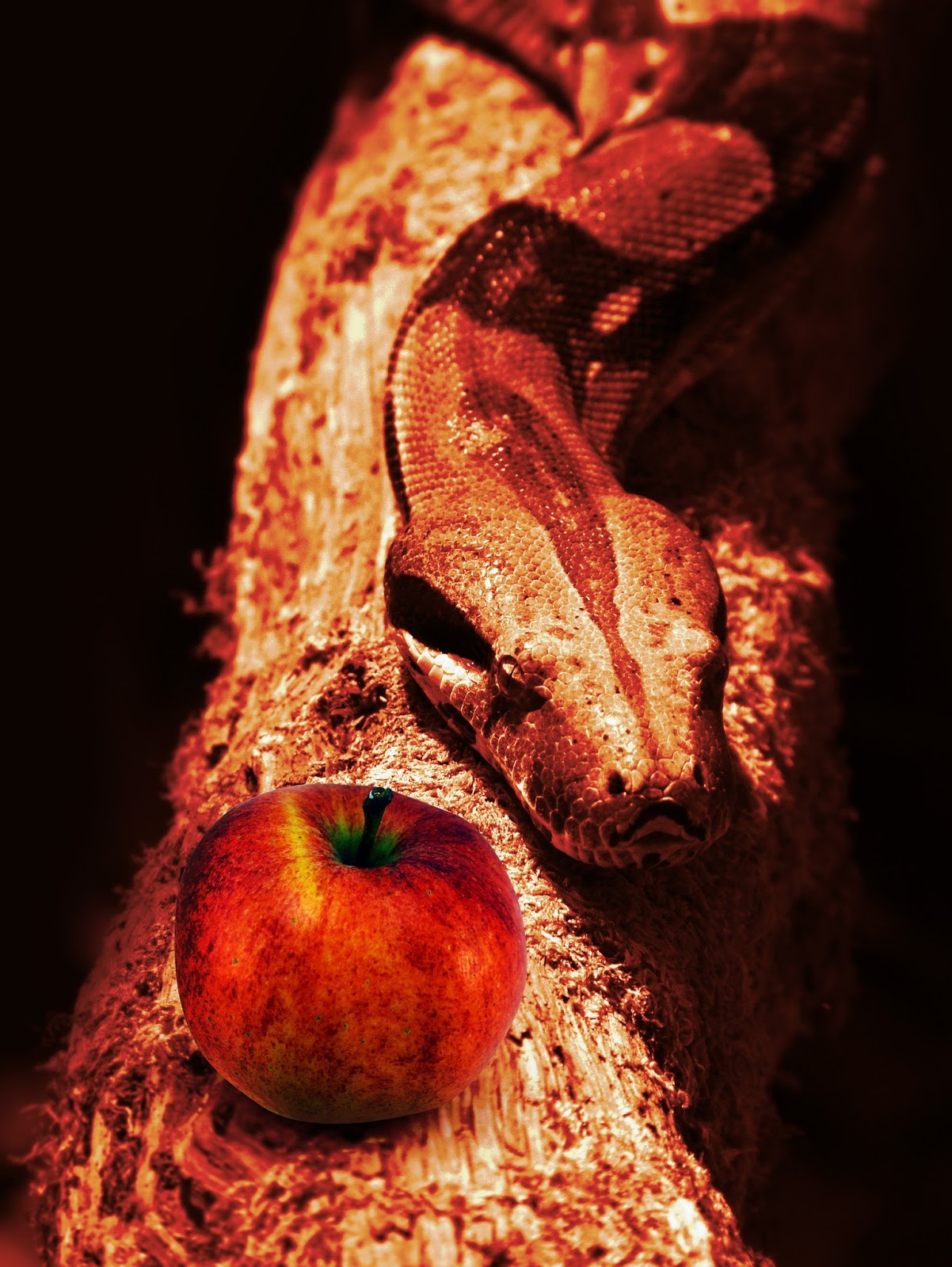
Chapter 3 of Genesis describes the Fall of Adam and his wife (who remains unnamed until after the Fall). A clever serpent tempts Adam’s wife into eating of the forbidden Tree of Life by telling her that she will “be like God” and know good from evil if she eats. She eats, and shares a piece with her husband who was with her. When God finds out, Adam, like a whiny child, blames it on his wife, and his wife, also whiny, blames it on the serpent. Indeed, it is the fault of both Adam and his wife that they ate of the Tree of Knowledge. They both could have said no. 

God punishes Adam’s wife by giving her pain in childbirth and saying that her desire shall be contrary to Adam’s, and that he will rule over her. He punishes Adam by making him toil the land for food and foretelling his eventual death. And he punishes the serpent by making him crawl upon the ground and foretelling how he shall be the enemy of woman and her children. After all this, Adam names his wife Eve because she shall be the mother of all peoples. Perhaps he doesn’t name her before because she was not to be a mother until after the Fall? 

Here’s where the action begins in the Bible. There are four main characters: God, Adam, Eve, and the serpent. They are following a temptation/punishment motif. God here appears to be a just judge, and Adam and Eve are whiny children from whom the truth is to be wheedled. It is also an how-it-came-to-be story which explains why there is strife and labor. 

One thing that struck me while I read this chapter is when “The LORD God said ‘Behold, the man has become like one of us in knowing good and evil.'” (Genesis 3:22 ESV). Who is he talking to? And who are “us?” There’s no mention before this of other gods or other creatures like God. Was this written at a time when the worshiping of other gods was so accepted that it was assumed others existed? Kugel, in his book How to Read the Bible, suggests that this is so. That Hebrews were supposed to worship the LORD God alone, but that they accepted that other gods existed. 

Another striking issue is that God walks among Adam and Eve like a creature rather than as a spirit. Was God supposed to be incarnate like His animals and people? 

In the Beginning: Creation

Chapter one of Genesis sets the scene. The creation story is filled with beautiful imagery. My favorite line is before God actually creates anything. “And the spirit of God was hovering over the face of the waters.” (Genesis 1:2 ESV) Because I liked it so much, I found it interesting to see how this line was translated in the different versions:
                    NABRE: And a mighty wind sweeping over the waters.
                    NRSV: While a wind from God swept over the face of the waters.
                    kjv: And the spirit of God moved upon the face of the waters.
Personally, I like the ESV best.
The style is formulaic with a certain set of ingredients on each of 6 creation days: 1) the announcement “and God said,” 2) a divine command beginning with “let” 3) the report “and it was so” 4) an evaluation “God saw that it was good” and 5) placement in time “there was evening and there was morning, the _______ day.” [1]
There is only one character in the chapter – God – and very little is said about who he is…only what he does. What we should think of God? He created the earth, but was he omnipotent? What were his reasons? Who was God? These issues are left a mystery. Most people already have an idea of who they think God is before starting the Bible. Is this why God was left a mystery? Or is it because God is a mystery?
[1] Ryken, Leland. Ryken, Philip.(2001) The Literary Study Bible, Wheaton, IL, Good News Publishers.

A Vacation with my Sister and the Kiddos

The week leading up the New Year was quite a delight for me. I enjoyed Christmas quite a bit – spending time with both my own family and my boyfriend’s family. The day after Christmas, my sister, her kids, and I went to a lodge to celebrate her 40th birthday. It was a lot of fun. We did some chillaxing, took the kids to a bouncy house and to the pool and basically just enjoyed ourselves. And then, bonus, I had the day after my vacation off of work (just the way the schedule worked out) so I got time to rest from my vacation. Climbing after a toddler in a bouncy house is a lot harder than you’d think!

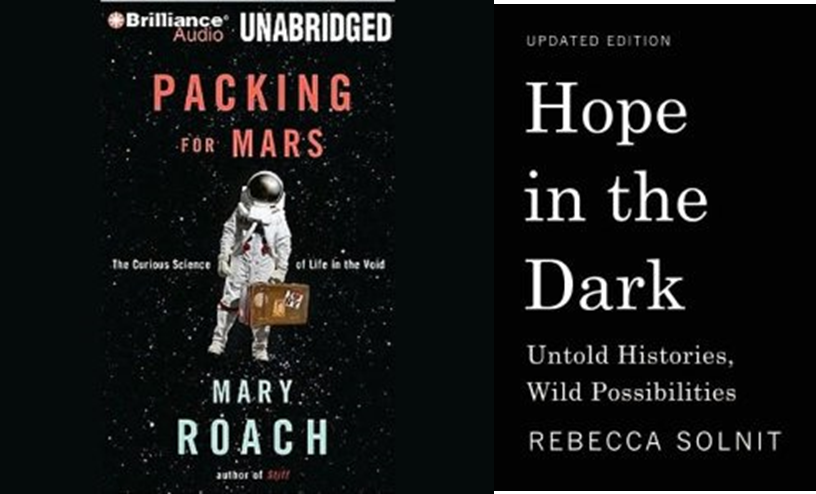
This week I finished two books. I finished listening to Packing for Mars on my drive up to the lodge, and read Hope in the Dark while at the lodge. Hope in the Dark is the January selection for the Social Justice Bookclub

I switched out Packing for Mars with Proust’s Swann’s Way, which is actually more interesting than I expected. 

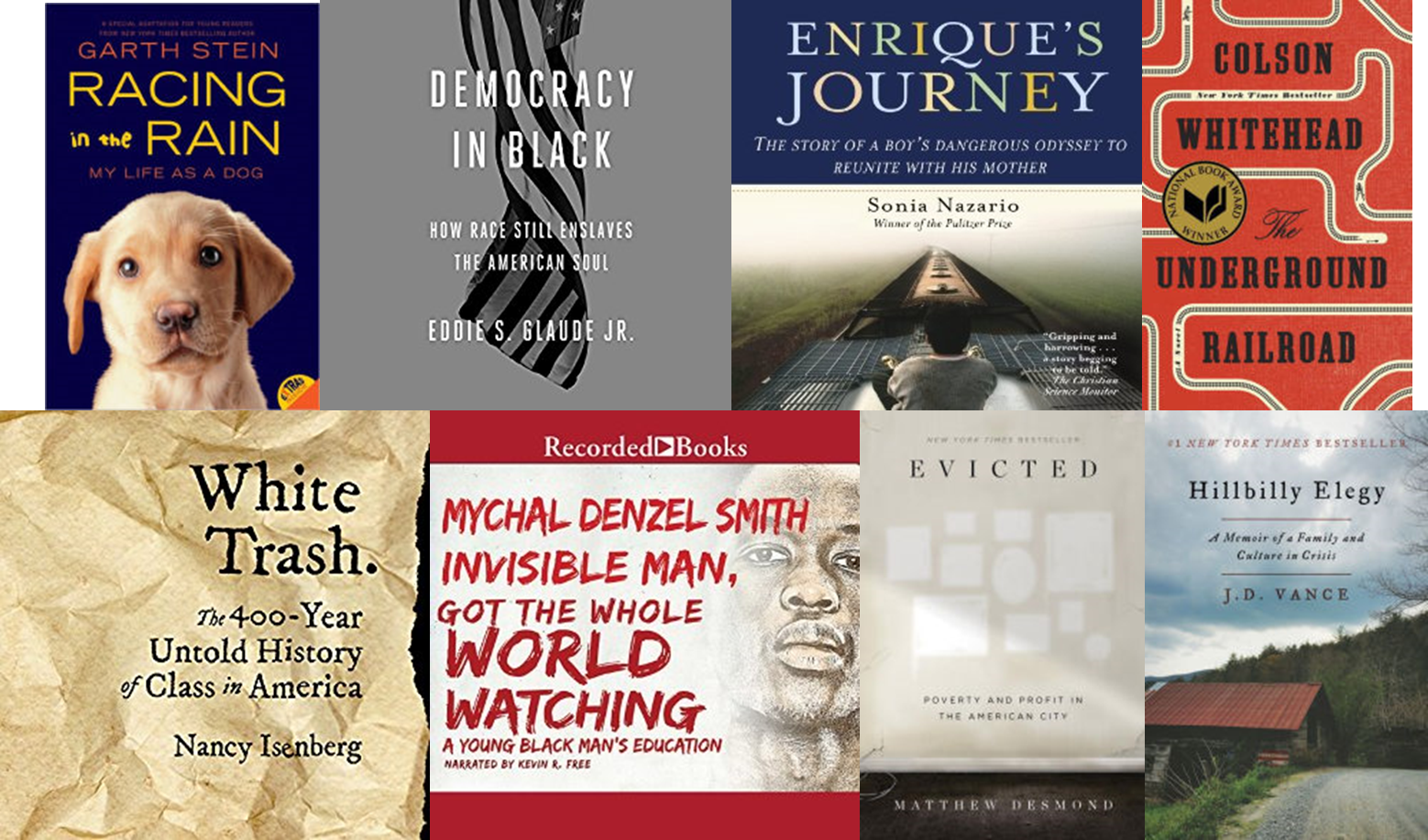
And, of course, I acquired a lot of books this week as well. Racing in the Rain is from my Aunt Michele. The Underground Railroad and Hillbilly Elegy were given to me by both my sister and my boyfriend’s dad – apparently they have good taste. 🙂 Evicted I bought when the ebook went on sale for $4 during the Goodreads Choice Award sale – which is fantastic because I was just about to buy it in hardback for a group read in January. And Democracy in Black, Enrique’s Journey, White Trash, And Invisible Man Got the Whole World Watching were on 2-for-1 sale at Audible. Enrique’s Journey is the March selection for the Social Justice Bookclub. 

And, the moment you’ve all been waiting for, my top five books of 2016. 

Packing for Mars, by Mary Roach

Packing for Mars is a hilarious and informative book about the difficulties astronauts face in outer space. It covers most bodily functions, eating, and what happens to food (and bodily fluids) in zero gravity. However, it has very little to do with visiting Mars. 

I admit that I found this book a bit slow at the beginning, but it perked  up around the time she started talking about the sleep studies NASA is performing. I want $7000 to lie around in bed all day for 3 months! I even called up the number provided on the NASA website to volunteer, but the number didn’t work. *sigh* Oh well, I really didn’t want to ruin my bones. Having studied bones for my dissertation, I recognize the long-term effects of a study like that. I was also thrilled when Roach quoted my dissertation adviser on the effects of hibernation on bear bones. How funny!

I definitely recommend this quirky book to anyone who enjoys knowledge for the sake of knowledge and isn’t easily grossed out.