Harry Potter and the Sorcerer’s Stone, by J. K. Rowling

2012 Book 142: Harry Potter and the Sorcerer’s Stone


Written by J. K. Rowling, Narrated by Jim Dale


Reason for Reading: This is my third book for Book Journey‘s blog tour for Banned Books Week, and this time I decided to try something familiar. Since Lostgenerationreader is having a Harry Potter readalong, I decided to join in and read the first HP book for Banned Books week. 🙂 This is probably my third time reading this particular book, but it will be my first time reading the series “in one go.”


My Review:
Harry Potter has been living with his neglectful and emotionally abusive parents ever since his parents died when he was a baby. But on his 11th birthday, everything changes. He finds out that his parents were a witch and a wizard and that he, himself, has been accepted to Hogwarts, a school for witchcraft and wizardry. He is thrilled to feel comfortable and welcome for the first time in his life, but he soon discovers that not all the teachers at Hogwarts are looking after his best interest. Can Harry and his adventurous friends save the Sorcerer’s Stone from being stolen and used for nefarious purposes?

Of course, you all know the answer to that question. If you don’t, then you probably aren’t interested in the answer and I’m surprised you’ve gotten this far into my review. Any comments I make about my appreciation for this book will fade in the wake of the raving of others. Therefore, I’ll only comment on the Jim Dale narration (which was the narration released in the US, but which is apparently no longer for purchase–I’m not sure if they intend on putting out a different narration? Releasing the Stephen Fry narration in the US would be a kind, generous, and profitable move!) Jim Dale did a pretty good job on the narration–If I didn’t already have a very set impression of what all the characters should sound like, then I’d have been much more happy with this rendition. Unfortunately for Dale, however, most anybody who would listen to this audiobook today already has a very set impression of how a centaur should sound and how to pronounce “Voldemort.” This isn’t Dale’s fault, but I suspect his reading has been taken off the market because of these issues. However, I was quite able to ignore this rather amusing issue and enjoy the audiobook. 🙂 I will continue with the rest of the Dale narrations.


My comments on book banning

Harry Potter is #1 Top 100 Banned/Challenged Books: 2000-2009 AND #48 on 100 most frequently challenged books: 1990–1999.  As several people commented, Harry Potter was banned for similar reasons as The Headless Cupid, which was my first Banned Books Week review. Parents are concerned that their (apparently not-very-bright and way-too-malleable) children will be driven to the darkside of the occult and Satan worship by this book. I’m afraid I have to disagree and say “that is hogwash.” Harry Potter and the Sorcerer’s Stone had a very clear good vs. evil message. Loyalty, bravery, and camaraderie are emphasized as important traits in the characters of Harry Potter. Love stands out as pretty much THE most powerful force of good available to humanity. That seems to be a pretty healthy message, even to a fundamentalist Christian. On the other hand, “doing ANYTHING to succeed in life” is portrayed as an undesirable characteristic. Killing or taking advantage of the innocent is touted as the most sinful act possible. People whose views of good and evil have faded away to “there’s-only-the-weak-and-the-powerful” are portrayed as demented. Again, the views of “evil” that are communicated in this book are in fitting with Christian views. This is NOT a morally ambiguous book! So why are the fundamentalists so worried? Just because their kids might use their imaginations a little bit? 
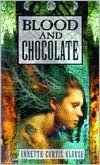


Blood and Chocolate, by Annette Curtis Klause

2012 Book 141: Blood and Chocolate, by Annette Curtis Klause

Reason for Reading: This is my second post for Book Journey’s Banned Books Week 2012 blog tourBy reading banned books, I feel that I’m expressing my freedom of speech (or in this case, the author’s freedom of speech), but I’m also interested in learning more about WHY people ban books. I don’t approve of banning most of the books on ALA’s top banned books lists, though for some of them I can empathize with the objections. In the case of this particular book, I understand the objections, though I think banning it only gives the book added attention. Blood and Chocolate is #57 on the ALA’s list of Top 100 Banned/Challenged Books 2000-2009.

My Review 

Vivian is a 15-year-old werewolf living happily with her pack in the country when a murder destroys the world she loves. In tragic disarray, her pack moves to the suburbs and tries to get reorganized. In the midst of this chaos, Vivian has an identity crisis and falls for a human “meat-boy.” Her experiences trying to fit in with meat-people teaches her a lot about herself. Meanwhile, the grisly murders continue, and the pack must hunt down the killers before they, themselves, become hunted. This book was very engaging. It was interesting and suspenseful enough that I really wanted to know how it ended, despite the fact that I disliked all the characters. Vivian was manipulative and conceited. Her mother had little character other than expressing concern for her daughter and being obsessed with sex. Vivian’s meat-boy boyfriend seemed likable enough at first (though not particularly alluring), but then his qualities took a nose-dive towards the end of the book. Honestly, I’m not sure why this book gets such good reviews, but I suppose it’s simply because the narrative is so engaging. 


My feelings about why this book was banned

I had the feeling while reading Blood and Chocolate that Klause intended this book to be a slap in the face to prudish book-banners. For me, that took a lot of the enjoyment out of the book because I felt like I was being beat over the head with a Message. Even if I agree with the Message, I think a novel’s MAIN objective should be to tell a story. If the story is told well, the message comes through in a smooth allegory. This book seemed like Klause was going for shock-value to pump up her sales. The reason I believe that this slap-in-the-face was purposeful and not simply part of the story is because Klause included a conversation between Vivian and her boyfriend about adults that objected to certain types of behavior and wanted to burn his books. 


Klause included almost all of the qualities that our book-banners of America hate: explicit sexualization of everything, the occult, disrespect for religious symbols, obscenties, violence, age-inappropriate relationships, and an entire page musing about different ways to commit suicide. None of this was bad enough to scar a child or young teen. However, I feel she REALLY overdid it with the sexualization. You’d think from this book that the defining characteristic of werewolves is that they were unabashedly and continuously horny. This seems to be the defining trait of teen-aged boys and middle-aged men as well ;). It was a bit obnoxious. The randiness of every character was SO overdone that it distracted from the story. So in the end, no, I don’t think this is subversive literature. But I have no respect for Klause’s ability to portray a message with finesse.


The Headless Cupid, by Zilpha Keatley Snyder

2012 Book 140: The Headless Cupid, by Zilpha Keatley Snyder 


Reason for Reading: This is my first post for Book Journey’s Banned Books Week 2012 blog tour. By reading banned books, I feel that I’m expressing my freedom of speech, but I’m also interested in learning more about WHY people ban books. I don’t approve of banning most of the books on ALA’s top banned books lists, though for some of them I can empathize with the objections.  For the most part, I think the people who are objecting to these books need to give their children more credit for non-gullibility. All parents should watch what their children are reading, watching on TV, playing on the computer, etc. I believe that the best way to raise children is through a lot of communication. Banning books isn’t going to save our children from the real world. 


My Review
David, the eldest of the Stanley kids has had to take care of his three younger siblings ever since his mother died. When his father gets remarried, David has to adjust not only to the new mother, but to a new teen-aged sister. And what a strange sister she is! Amanda dresses in dark flowy clothing, has a triangle in the center of her forehead, and wears an upside-down smile. Amanda begins to teach the Stanley kids about the occult, but soon things get out of hand when they awaken a poltergeist! This book is appropriate for 3rd-5th grade range.


The Headless Cupid is 98th on on the ALA’s list of the top 100 books banned between 1990-2000. The complaints about the book were that kids might become interested in the occult (or even learn to practice the occult) from this book. Of course, this is preposterous. This is not a story about an evil little teen-aged witch–it’s a book about an angry girl who wants to get revenge on her mother for getting remarried. This is a book about the very real emotions children feel when their parents make life-changing decisions. It’s about coping with that anger. It’s about love and forgiveness. Any child reading the book will end on a note of acceptance and forgiveness (unless they don’t finish the book). I think people who fear a book about kids playing let’s-pretend probably ought to lock their doors and hide away…because the real world is a lot scarier than this book.


Rose Daughter, by Robin McKinley


2012 Book 132: Rose Daughter, by Robin McKinley (9/9/2012)

Reason for Reading: More light reading. 🙂 I chose this book because I had just finished reading Beauty, by Robin McKinley and I wanted to compare her two versions of the Beauty and the Beast story. They had a lot of similarities (both were rather canonical retellings rather than “twists.” But they were also very different. In the end, I think I enjoyed reading Beauty more, but I found the ending of Rose Daughter more satisfying.

My Review
Beauty and her two sisters were living in the lap of luxury with their successful father when suddenly everything changed. Her father’s business failed, and they were left destitute. They made a new beginning in Rose Cottage, where things weren’t quite what they seemed. The coming of Beauty’s family to Rose Cottage was the first step to opening an ancient curse that would change their lives forever. This was an adorable little story…just as enjoyable as McKinley’s first retelling of the Beauty and the Beast story. I was skeptical that McKinely could tell the story twice but, although there were some similarities, the two stories were very different. THIS Beauty used her magical gardening capabilities to change the world…

Matched, by Ally Condie


2012 Book 131: Matched, by Ally Condie (9/9/2012)

Reason for Reading: Needed something light to get rid of all that “meaning” that’s been invading my mind from all those “meaningful” books I’ve been reading. This one was sufficiently fluffy, and was one of my top 5 LibraryThing recommendations. (LT seems to think that I love YA dystopia, which isn’t particularly true, but oh well.)

My Review
Cassia is thrilled about her matching ceremony, in which the officials of her government choose her perfect match…her future husband. But when she views her match, she is perplexed–TWO faces show up on her screen. Because of this “mistake” Cassia is thrown into a confusion of emotions and falls for the “wrong” boy. She begins to question the right of her government to make so many choices for their citizens. Perhaps no one is free in this seeming utopia? This was a cute book, and I certainly am eager to read the rest of the series. I appreciate it as one of the few non-violent YA dystopias out there on the market. On the other hand, love triangles are getting rather blase, aren’t they? And it’s not really possible to write a unique YA dystopia at the moment. Everything’s been done over and again. That said, it was certainly a quick, fun read; and it had very likable characters.

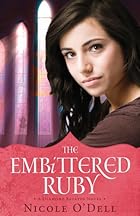
The Embittered Ruby, by Nicole O’Dell


2012 Book 127: The Embittered Ruby, by Nicole O’Dell (8/29/2012)


Reason for Reading: I’m leading a discussion on this book for my Christian Fiction bookclub in October.


My Review

When Carmen’s parents get a divorce, she is forced to move with her mother and two sisters from her classy home in upstate New York to a small, dilapidated apartment in Hackensack New Jersey. Willing to do anything to get her classy life back, Carmen makes bad decision after bad decision. Finally, she has no choice but to leave her family for The Diamond Estates–a refuge for teenage girls who need to get away from life and find God. This was a very difficult book for me to read and review. Carmen’s decisions were so supremely selfish that I spent most of the book either groaning or feeling angry at her. I think O’Dell was very brave to create a character like Carmen for readers of Christian fiction. That said, O’Dell did an impressive job of making Carmen likable despite an overwhelming number of unlikable traits. That takes talent. I would recommend this book to parents of troubled teens or to troubled teenagers who are seeking God.

Al Capone Shines My Shoes, by Gennifer Choldenko


2012 Book 125: Al Capone Shines my Shoes, by Gennifer Choldenko (8/24/2012)


Reason for Reading: Sequel to Al Capone Does My Shirts, which was adorable.


My Review

In this sequel to the Newbery Honor book Al Capone Shines my Shoes, Moose Flanagan continues his adventures on Alcatraz Island–this time he must face consequences for choices he made in the previous book. VERY cute and funny and every bit as enjoyable as the first book.

Beauty, by Robin McKinley

2012 Book 124: Beauty: A Retelling of the Story of Beauty and the Beast, by Robin McKinley (8/23/2012) 

Reason for Reading: Green Dragon Group Read

My Review

Beauty must sacrifice her own freedom in order to save her father…she ends up trapped in a castle with a beast who wants to marry her! I really enjoyed this story because it was sweet and simple. It was a refreshing change from all the more recent “twist” retellings of the story. Highly recommended to any fan of children’s fairy tales.

Inheritance, by Christopher Paolini

2012 Book 120: Inheritance, by Christopher Paolini (8/7/2012)

Reason for Reading: Fourth and final book of the Inheritance Cycle

My Review 
I can’t claim to actually have READ this book. I only burdened myself with it because I wanted to know how Galbatorix was killed (assuming he was, of course). I read the first 300 pages, skimmed the next 350 pages, and skipped the last 100 pages. 🙂 I got what I wanted out of it, which is the important part. All I can really say to those of you who are interested: Paolini’s writing got significantly better in this book. Still not fantastic, but he’s got potential. He did a much better job of pacing (though it could have been shorter), and the style flowed better than the last two books–it was less pedantic. If you’re a more patient person than me and are interested in how the story ends, I think it’s worth a read. 🙂

Alice in Wonderland (Norton Critical Edition)

2012 Book 119: Alice in Wonderland Norton Critical Edition, by Lewis Carroll (8/5/2012)

Reason for Reading: Coursera Fantasy and Science Fiction course

My Review 
This NCE contains Alice’s Adventures in Wonderland, Through the Looking Glass, and The Hunting of the Snark. I was pleased with the footnotes, which were helpful in clarifying many of Carroll’s jokes. The critical information included some interesting biographies/diaries of Dodgson (Carroll), as well as a few critical essays. I was disappointed in these because although they were mostly good, the editor clearly has some negative feelings about Dodgson’s morals and included many unnecessary Freudian-finger-pointing passages. If I were younger or more impressionable, I’d have been left with a very negative view of Dodgson indeed! Because of these attempts at manipulating the readers’ good opinions of Dodgson, I wish I had gotten The Annotated Alice instead.

Note about the stories themselves: These were a re-read for me. Although I love Alice and really enjoyed reading the stories with footnotes (I understood them a lot better this time around!), I tend to prefer books with a little more plot development. Scandalous, I know, but what can I say?