Iron House, by John Hart

2012 Book 5: Iron House, by John Hart (1/9/2012)

Iron House is a beautifully written mystery/suspense novel that delves into the psychological effects of a childhood of violence and abuse. Michael is an orphan who, after running away from a violent scene at an orphanage, grows up to be an enforcer for a powerful mobster. When he falls in love with a beautiful waitress and retires from organized crime, he is suddenly thrown into a violent mystery leading him to explore things he had left behind. Despite my need to suspend disbelief a few times (and to frown upon a few clichés), I feel that Hart kept up the action (and mystery) throughout the book, making for an engaging read. This is an excellent book for people who enjoy mystery/thrillers (assuming they don’t mind violence). I gave the book 3.5/5 stars…it lost points for violence and small clichés.

The Golden Tree, by Kathryn Lasky


2012 Book 6: The Golden Tree, by Kathryn Lasky (1/9/2012)

The Golden Tree is the 12th book of the Guardians of Ga’hoole series, which I have been reading for years (long before the movie covering the first three books came out). In this book, the new king Coryn explores his identity as the possible son of a hagsfiend (an evil owl-witch). He leaves with Soren and the Band for a short adventure to distract himself from his woes, but finds more than he’d bargained for. In addition, he’s left the ember back in the Tree under the care of owls with weaker personalities than himself—leading to self-absorbed ember worship (almost akin to a criticism of organized religion?). I can’t say that this book is as good as the first 6 (which could have been a complete series in themselves), but it was cute enough. This series has a 3 book detour in the middle, and this is the first book that picks up where the story left off. Much of the book was spent reminding the reader of things that occurred before the detour, and I think that subtracted from the normal action of these books. Therefore, I only gave it 3/5 stars. However, I am curious how the story will proceed, as the series seems to have started out with themes of Cute Kids against Naughty Bad Guys (book 1), progressed to Valiant Knights against Evil Racists (books 2-8), detoured to Good vs. Evil (books 9-11), and now seems to be entering Inward-Strength vs. Inward Weakness. What next?

Lizzie Bright and the Buckminster Boy, by Gary D. Schmidt

2012 Book 2:Lizzie Bright and the Buckminster Boy, by Gary D. Schmidt (1/3/2012)

Lizzie Bright and the Buckminster Boy is a children’s historical novel about a minister’s son who must confront narrow-mindedness in the townspeople and even his own father when his family moves to a small town in Maine. This book gives a “realistic” look at how blinded people can be by their own prejudices. I listened to it as an audiobook, and found myself in the awkward position of tearing up in public while I was listening to it on a walk. Luckily I pretended it was the sharp winter air that was giving me the sniffles. This book’s reading level is appropriate for perhaps 5th graders, but the content is a bit mature. I hated depressing books when I was that age! I gave this book 3.5/5 stars (it lost half a star for making me cry!)

The Last Lecture, by Randy Pausch


2012 Book 3: The Last Lecture, by Randy Pausch (1/4/2012)

When Randy Pausch found out that he had terminal cancer and only a few months to live, he decided to give a “last lecture” providing insightful life advice about achieving goals and remaining optimistic. Everyone I have spoken to about this book absolutely loved it. Indeed, I found it very inspirational. He seems to have achieved all of his childhood dreams and managed to remain optimistic when he only had a few months left to live. However, it fell a bit short for me because his goals were so very different than my own. He was a self-proclaimed workaholic—ALL of his achieved goals were career driven. Apparently despite the wishes of his wife, he decided to spend a lot of time during his final months preparing this final high-impact lecture. The lecture was indeed a success. Good for him—clearly it was something he needed to do. But I hope I am never so focused on my career that I would spend the final months of my life working instead of spending time with my family and loved ones. Perhaps I am just pessimistic, but I seem to be the only one who found his story outwardly inspiring, but for the wrong reasons. I gave this book 3.5/5 stars.

I Capture the Castle, by Dodie Smith


2012 Book 1: I Capture the Castle, by Dodie Smith (1/2/2012)

I Capture the Castle has been sitting on my to-read pile for years…ever since my aunt gave me a copy and told me I’d love it. She was right! It is a sweet (and a little silly) coming-of-age story about a girl, Cassandra, who lives in poverty in a dilapidated castle with her eccentric family. She wants to live in a 50/50 mix of a Jane Austen and Charlotte Bronte novel, so you can guess how the story progresses when a rich family moves in nearby! I’m happy that I took time to read this gem. I gave it 4/5 stars.

Devil in the Details

In this bittersweet memoir, Jennifer Traig laughs about her puzzling problems growing up with obsessive compulsive disorder in an era before OCD was a recognized disorder. With a witty humor, she describes trials that would have permanently scarred a less resilient youth. In a world where OCD is stereotyped in pop culture, TV shows, and movies it is a relief to find someone willing to provide a more realistic, though upbeat, view of this very debilitating disorder. I imagine many people will be able to find a little of themselves in Jennifer Traig, and teens now facing such issues will find the upbeat happy ending comforting. I give this book 5 out of 5 stars.

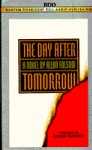
The Day After Tomorrw, by Alan Folsom


  • In “The Day After Tomorrow,” Alan Folsom weaves together a wide array of well-developed, interesting characters in an international murder mystery. It begins when Paul Osborne accidentally spies the man who murdered his father more than a decade earlier. Obsessed, he initiates a man-hunt which propels him into a powerful political intrigue as well as setting himself up as the prime suspect for an international serial killer. Despite the promising beginning, Folsom fails to deliver the anticipated suspense. Folsom’s attempts at tantalizing foreshadows belly-flop when, by page 300 of this 600 paged book, he feeds enough information that an experienced reader will easily guess the “shocking” end. The final 300 pages of the book tediously develop a new (scientifically and historically impossible) twist on a plot which has been regurgitated since the mid-1900’s.

  • Although Folsom’s writing style is generally fast-paced and entertaining, unfortunately the suspense is repeatedly interrupted by over-ambitious development of the characters’ sexual identities. Some of this development is necessary, but most of it is superfluous.

  • I would recommend this book for people who read quickly and do not try to interpret foreshawdows. I give this book 2 out of 5 stars.

Guns, Germs, and Steel

I have been watching the National Geographic Documentary “Guns, Germs, and Steel,” based on the best-selling book by Jared Diamond. This was excellently filmed and very interesting. I recommend it to anyone interested in anthropology or history. The main question addressed is—“Why do white men have more cargo?” In other words, why were Europeans successful in conquering and colonizing most of the world? For risk of simplification, I will summarize Diamond’s idea:

The Fertile Crescent in the Middle East was the geographically lucky origin of not only wheat and barley (VERY important staple crops) but also of most of the domesticated animals. This herding and farming culture provided enough agricultural excess to support non-herders and non-farmers, who were able to develop technology and skills (like writing). Their closeness to animals also exposed these people to germs, which over hundreds of years they developed a genetic immunity to. The ideas, animals, and crops easily spread along an East-West axis (where people were attracted to similar climates and lengths of days) into Europe, Asia, and Northern Africa. So in the end, Europeans had guns, germs, and steel on their side.

The Americas, unlike Eurasia, are narrowly shaped along the East-West axis and broadly shaped along the North-South axis. Therefore, although there were some crops, one domesticated animal (the llama), and one written language (that of the Mayans in Central America), technology and food was not easily interchanged in the Americas. When Europeans came with their guns, germs, and steel, the native population was decimated.

Although I find this idea very fascinating and fairly convincing, I have a few qualms. First of all, I understand that the area around Panama is very narrowly shaped along the East-West axis, making exchange of ideas and goods difficult. However, North America, at least, is not too VERY long and narrow. Not narrow enough for this to be the main factor which slowed the progress of civilization. The documentary also does not address the reason why the Europeans apparently won this war. After all, if it is merely geographical closeness along an East-West axis to the Fertile Crescent, then wouldn’t Asia be just as likely to succeed as Europe? And, in fact, the moors were quite successful for quite a long while. So why didn’t they colonize the Americas, India, Africa, and Australia?

My answer to that is “just wait.” The war isn’t over yet.