Abraham’s offering of Isaac

Finally, God gave Sarah the promised son, Isaac. Due to her love of Isaac and her jealousy of Hagar and Ishmael she expelled the two. Abraham was loathe to abandon Ishmael to the elements, but God promised to take care of Ishmael, and that he would be the father of of a nation, so Abraham trusted God and did what he was told. 


But God wasn’t done testing Abraham. He asked Abraham to bring Isaac up the mountain and sacrifice him. Abraham did so, but just as he was about to kill Isaac, an angel called called to him from heaven, telling him not to sacrifice Isaac, but to sacrifice a lamb that was caught in the brambles. 

This is another example of why I wonder if God was considered omnipotent by the writers of the Pentateuch. I wonder why God did so much testing of Abraham if God knew that Abraham would pass. It seems cruel. 

I was disappointed in the Abraham’s personality again when he lied to Isaac about the sacrifice: “And Isaac said to his father Abraham, ‘My father!’ And he said, ‘Here am I, my son.’ He said, ‘Behold, the fire and the wood, but where is the lamb for a burnt offering?’ Abraham said, ‘God will provide for himself the lamb for a burnt offering, my son.'” (Genesis 22:7-8 ESV) Wouldn’t it have been better for Abraham to give Isaac the chance to volunteer for the mission? God did not order Abraham to lie to his child. 

The Destruction of Sodom and Gomorrah

In Chapter 18 of Genesis two angels and God appeared at Abraham’s tent. Abraham saw them and thought they were three men, so he rushed to extend his hospitality to the guests. Hospitality was of very high importance to Abraham’s culture, and he did everything right. He set Sarah to work kneading flour, prepared a calf, and provided curds and milk. After this, the angels and the LORD revealed themselves to Abraham and told him that Sarah would bear a child. Sarah, who was eavesdropping, laughed at this, and the LORD scolded her. Sarah, afraid, denied laughing. 


After this, the LORD forewarned Abraham that he was going to destroy the city of Sodom. This was a turning point in the narrative – God had never before used Abraham as a confidant, and Abraham jumped right on top of his new level of relationship by questioning “Suppose there are fifty righteous within the city. Will you then sweep away the place and not spare it for the fifty righteous who are in it?” (Genesis 18:24 ESV). When the LORD said that he would not sweep away the city for the sake of the fifty, Abraham questioned about forty-five, forty, thirty, twenty, and ten. Each time the LORD answered that he would save the city for the sake of those righteous people. 

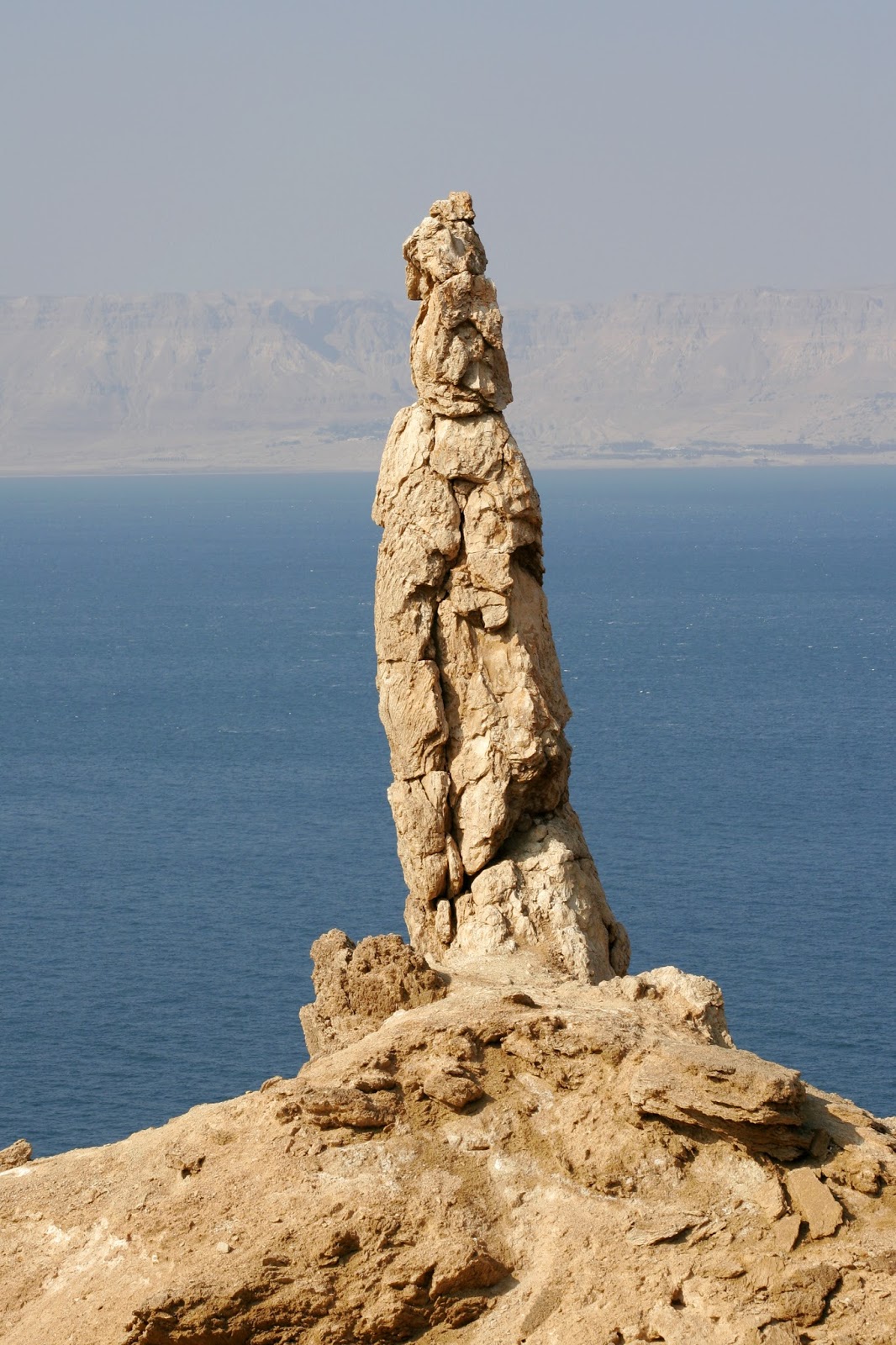
Then, the two angels went down to Sodom. Lot saw them, and thinking they were men, invited them to his home, and provided a feast. But the evil men of Sodom surrounded Lot’s house and demanded the guests be sent out so the men could sodomize them. Lot stepped out into danger himself and refused to send out the guests, instead offering his virgin daughters as an exchange. When the evil men of the city threatened to worse-than-sodomize Lot, the angels intervened and struck blind the men at the gate. They told Lot to take his entire family, including his daughters’ grooms, and leave the city for it was about to be destroyed. But Lot’s sons-in-law thought he was joking and didn’t heed the warning. The angels insisted, and finally Lot left the city with only his daughters and wife. They were told not to look back, and because Lot’s wife looked back, she was turned to a pillar of salt. 

Lot was living in a cave alone with his daughters, who were concerned that there were no longer men to marry. They worried that Lot’s line would thus end. So they got Lot drunk and raped him while he was passed out. 


This is an early example of the thriller/suspense genre. The reader hears that these cities will be destroyed, and wonders (along with Abraham) whether God will destroy the righteous with the evil. And how will God respond at being questioned so closely by Abraham? Did Abraham overstep his relationship with God? It seems not, because God answered Abraham patiently and kept his promise.

The suspense heightens throughout the story, with each incident showing how evil the men of Sodom were and how righteous Lot was. That is, assuming that when the story was written readers would interpret Lot’s offer of his virgin daughters instead of his guests as the height of hospitality (and therefore worthy of God’s smiles). Of course, to me, sending out innocent girls doesn’t seem a good solution at all. 

The action peaks when Lot’s wife is turned to a pillar of salt because she looks back at the destruction of Sodom. This don’t-look-back plot point is similar to the older story of Orpheus, who went on a quest into Hades to rescue his deceased (and dearly loved) wife Eurydice. He was told not to look back when leaving Hades, but couldn’t resist looking back to see the face of Eurydice, who then disappeared back into Hades. 

The end of the story is a bit puzzling. Why, after Lot had been so righteous throughout the story, was he rewarded by being raped by his daughters? Surely this incest was just as disgusting to the readers of the time as it would be to us? 

The notes in The Literary Study Bible have a different interpretation of Lot’s righteousness than I do. It points out that despite the New Testament commentary on Lot as a righteous man (2 Peter 2:6-8), Lot was closely tied to the evil city of Sodom. This close tie was shown by his reluctance to leave the city, even when the angels said that it would be destroyed. They had to drag him out of the city by his hand, in fact. The commentary ends by saying “it is easier to get the family out of Sodom than it is to get Sodom out of the family.” 

The woes of spraying

This has been an uneventful week for me. Things are going well at work, though I’m working a little too hard these days and have decided I don’t have enough time for all the books I’m reading. Sadly, I’ve had to cut out a few of the books in my currently reading list, so that I can finish SOMETHING this month. Also my male cat, Puck, whom I have not had money to fix yet, has started spraying. Yuck. It has not been going on long and I’m hoping the behavior will stop once he’s neutered. The internet says that he’ll probably spray for a little while after being fixed, but if the behavior has not been going on long there’s a good chance he’ll stop. This is exactly why I didn’t want a male cat at all, but, alas, when I had the chance at two free kittens one of them was male. And the vets convinced me to fix the female first. Shouldn’t have listened. 


I have not been exercising as I’ve had a busy work schedule (16 hour days), and I’m being a bit lazy. Hopefully I can get back to training next week, or the week after. But I’ve been doing a good job of eating healthier and less. 

Also, I’ve decided to go off the Abilify altogether because of the huge price-hike. I just upped the dose of my Lamictal and hope that is enough to keep me stable. I am very aware of the tells of going manic or depressed, so hopefully if I start to destabilize I will notice right away and do something about it. The problem of going manic is that it’s fun and I get lots of things done. People with bipolar disorder tend not to want to keep up their meds when they start to go manic. 

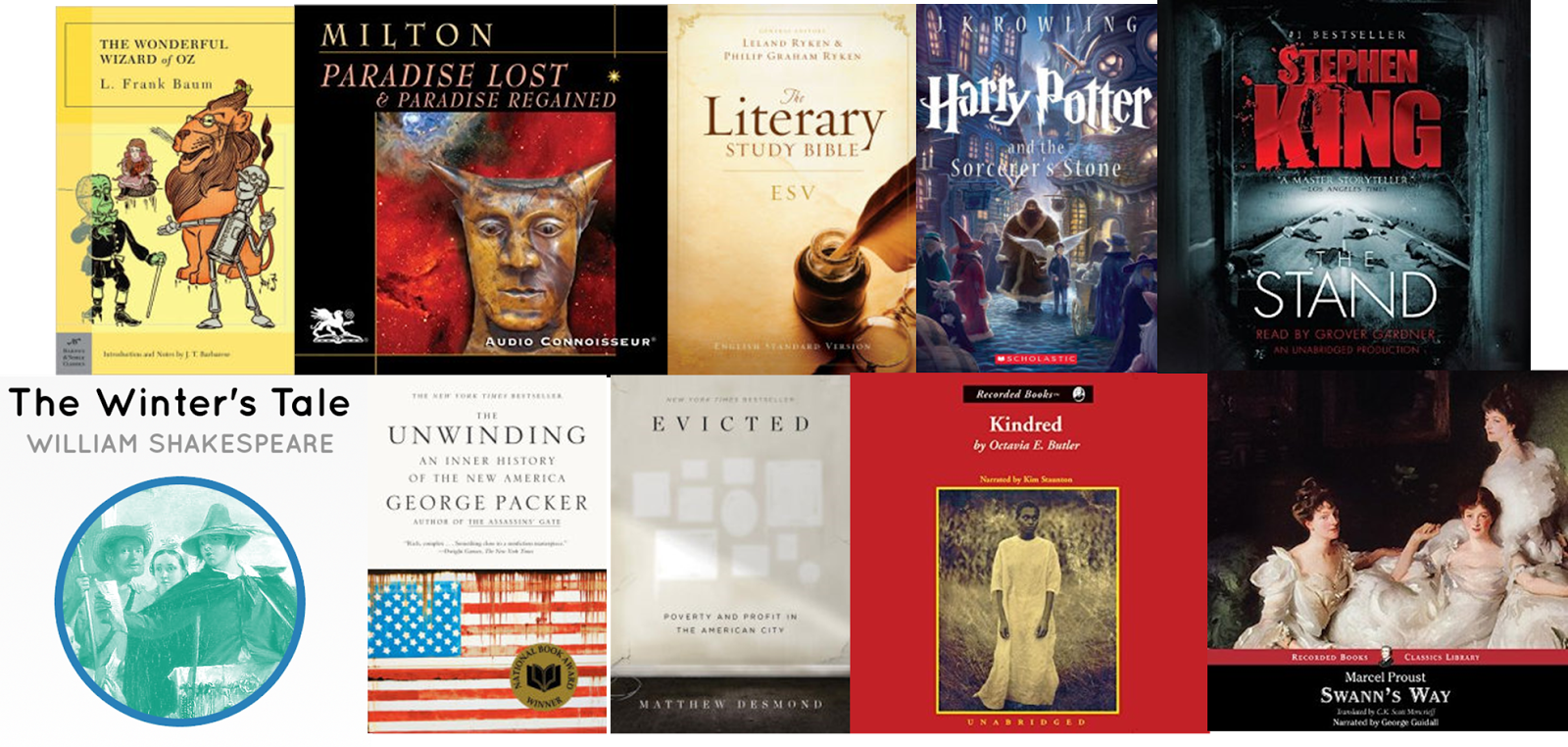
Currently Reading: I cut out the Paradise Lost. I just don’t have time to keep up with a group read right now. I may read PL next year. We’ll see. I decided to set aside Evicted, Swann’s Way, and The Stand until I finish what I’m currently reading/listening to. I’ve also decided that after Wizard of Oz, I will stop reading the Baum series this year, and not read one a month. There are other books I’d like to read for the Pop Sugar and Back to the Classics challenges and a little variety in my reading will help me enjoy the year better. I got behind on the Harry Potter because I was toying with the idea of quitting it, too. But I decided I need a little fun in my life. 

Abram becomes Abraham

Abram’s story continues with a vision from the LORD. Abram complained to the LORD that despite His promise when Abram left Chaldea, God had given Abram no offspring. So God renewed his promise that Abram would have numbers of descendants to rival the stars. But Abram was still not satisfied. He asked: “O LORD GOD, how am I to know that I shall possess it?” (Genesis 15:8 ESV). God requested a sacrifice, which Abram provided. Thus a covenant was formed. But the LORD said “Know for certain that your offspring will be sojourners in a land that is not theirs and will be servants there, and they will be afflicted for four hundred years. But I will bring judgement on the nation that they serve, and afterward they shall come out with great possessions.” (Genesis 15:13-14 ESV). 


Because Sarai had given Abram no children, she told him to sleep with her servant. When the servant, Hagar, became pregnant with Ishmael, Hagar scorned Sarai for being barren, and Sarai became so angry that Hagar ran away. But the LORD found Hagar and told her to return to Sarai, and that her descendants would be innumerable. 

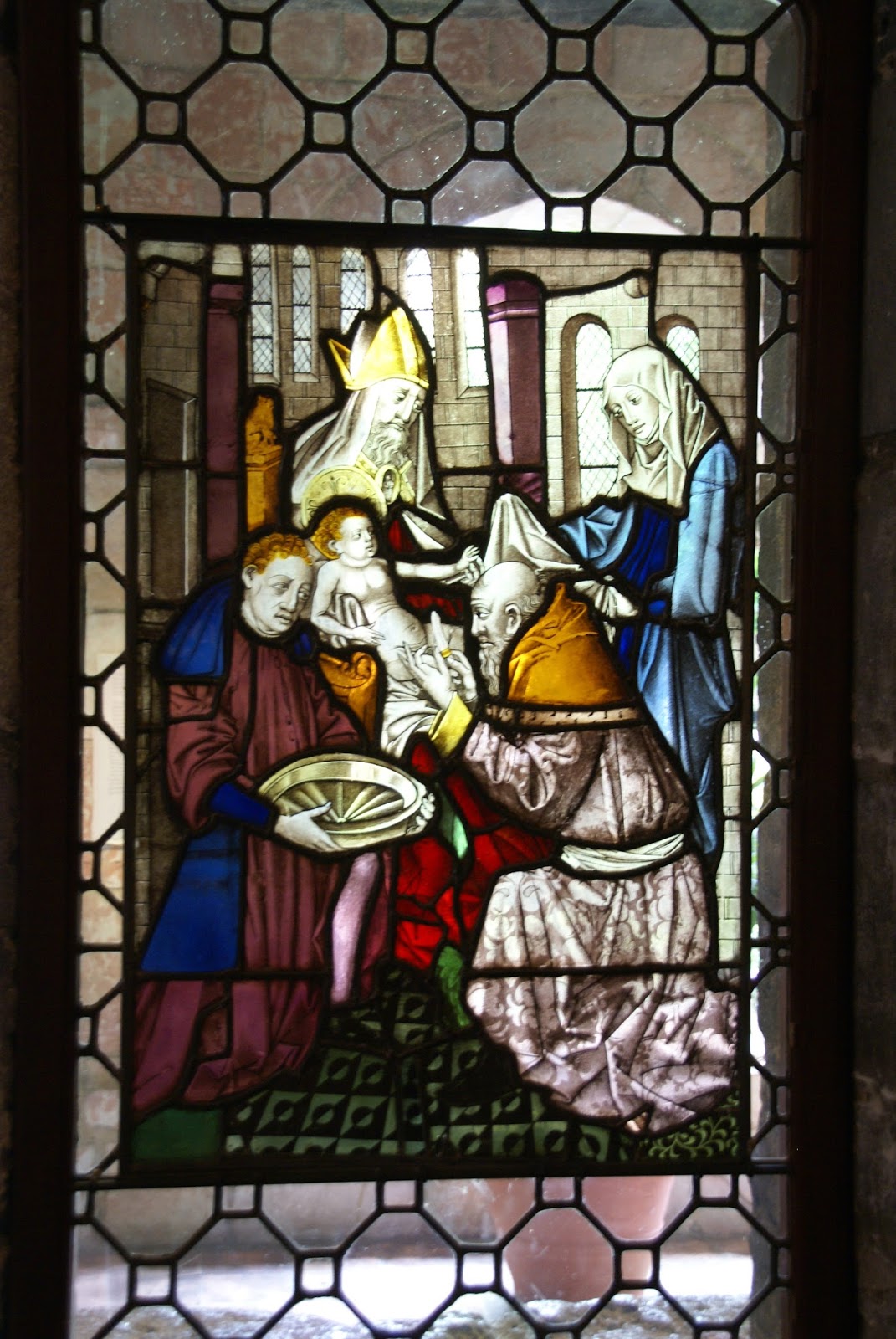
Time passed until the LORD again reminded Abram of the covenant. The LORD said “No longer shall your name be called Abram, but your name shall be Abraham, for I have made you the father of a multitude of nations.” (Genesis 17:5 ESV). God told Abraham that for him to keep the covenant he must circumcise himself and his entire household, including family, servants, and slaves. God also changed the name of Abraham’s wife from Sarai to Sarah. God promised to bless Sarah and make her the mother of nations. But Abraham laughed at this proposal. Weren’t he and Sarah too old to bear children? Couldn’t God bless Ishmael? But God told Abraham that Sarah would bear a son, and that he should be named Isaac. But that Ishmael, too, would be the father of kings. 

So Abraham circumcised himself and his entire household. 

This story shows the patience of God despite the ongoing doubt of Abraham – a doubt which foreshadowed those of Abraham’s many descendants during the Exodus from Egypt – a doubt which seemed to encourage God to punish Abraham’s ancestors by bonding them into slavery for centuries. 

But why was God so patient with Abraham. What was so special about him? And why the name changes? What did these changes signify? 

In addition to further developing the characters of God and Abram/Abraham, this story also developed the character of Sarai. Before this, she was only mentioned as a passive character, but here she was shown to love her husband so much that she wanted him to bear a child, even from someone else. But when that someone else, a servant, scorned her, Sarai was no longer placid and giving. She became bitter and angry. This character development foreshadows further angst later in the narrative. 

The call of Abram


Genesis 12 describes God’s call to Abram to leave his home and family in the land of Chaldea and travel forth to the land which God appoints for him. God promises “And I will make of you a great nation, and I will bless you and make your name great, so that you will be a blessing. I will bless those who bless you, and him who dishonors you I will curse,” (Genesis 12:2-3 ESV). So Abram, his wife Sarai, and his nephew Lot all traveled forth to the land of Canan, where they settled. 


But a famine drove them to Egypt. There, Abram was afraid that he’d be murdered because his wife Sarai was so beautiful, so he told her to call him her brother. Pharaoh took Sarai into his harem, and Abram became rich because of his “sister.” But soon, a curse fell upon Pharaoh, who discovered that Sarai was Abram’s wife not his sister. He was angry at the deception, but sent Abram and Sarai safely on their way. Presumably for fear of Abram’s god. This lie is how Abram made his fortune. 

Later, Abram and Lot separate, both to build their families in peace. Lot went to live in Sodom. But there was war going on between rivaling cities, and Lot was taken prisoner by Sodom’s enemy. Abram built and army and saved his nephew. The king of Sodom then praised Abram and told Abram to take the goods that he had rescued, but Abram refused, saying he didn’t want people to say that he had become rich because of the king of Sodom. 

These chapters (Genesis 12 – 14) introduce a hero, Abram, who becomes a lasting part of the biblical narrative henceforth. Abram is considered righteous – why else would God have chosen him – but he also has his flaws. Instead of telling the truth and hoping for the best, Abram lies about Sarai in Egypt. Despite Sarai’s probable mortification of being part of Pharaoh’s harem (did she deserve this fate?), Abram profited greatly off the situation, and then happily left with his wife and his fortune when he was found out. He could be said to have been made rich by Pharoah, but then later he refuses to be made rich by the king of Sodom. Why is this? Does he have more respect for the king of Sodom (a city later destroyed by God because of its wickedness?) than he did for Pharaoh? Or did he simply want to be more careful when he was so close to home? 

I also wonder about Abram’s lack of faith in God during his time in Egypt. Why didn’t he trust that God would keep him and Sarai safe? Why, instead, did he put Sarai in harm’s way? And why did God save Abram despite his lack of faith? What had Abram done that was so respectable in God’s eyes? 

The Tower of Babel

Until this year, I wasn’t very familiar with the Tower of Babel. I’d heard of it, of course, but never thought about it. The story is one paragraph in Chapter 11 of Genesis. The people, who were united and had only one language, said “Come, let us build ourselves a city and a tower with its top in the heavens, and let us make a name for ourselves, lest we be dispersed over the face of the whole earth.” (Genesis 11: 3 ESV) And God came down to see the tower and was displeased because “Nothing that they propose to do will now be impossible for them.” (Genesis 11:6 ESV) So God confused the language of the people so that there were many languages. The people could no longer understand each other, so they dispersed across the earth. 

Why is this short story included in the Bible between the story of Noah and the story of Abram? I suppose if you look at Genesis as a history of the people, this story was necessary to show how people dispersed around the world and developed different languages. It introduced the fact that there were now many peoples, and that Abram would have to navigate through some of those peoples in his migration later in the biblical narrative. 

Looking at the story more minutely, though, why was God displeased by the city and tower? Is it because humans aspired to become like God? Was he teaching them a lesson in humility? That’s what many scholars think of this story. But that makes little sense to me because of verse 6. If everything humans aspire to is now possible to them, then that implies that it is possible to be like God. It implies that God felt threatened. This is not our modern conception of God, certainly. Was it the ancient perception of God? 

Ryken and Ryken point out in The Literary Study Bible that the story is satirical. The people are trying to build a tower that reaches the heavens, and yet God has to “come down” from the heavens to look at it. Also, they were building with bitumen and asphalt instead of mortar. But, again, if their attempt was in vain, then why did God say that everything they aspire to will be possible to them? 

Ryken and Ryken also point out that this story is typical of human nature. We strive to develop technology that will make us more comfortable and more powerful – in essence, we strive to be like gods over our planet. 

In the Woods, by Tana French

Years ago, three children disappeared into the woods near the small town of Knocknaree – only one was found. He was covered in blood and remembered nothing of what happened. Years later, that little boy is a grown man and is a detective with the Dublin Murder Squad. When a new child murder case pops up in Knocknaree, detective Ryan struggles to remember what happened to him all those years ago. 

This book is really hard for me to review because in some ways it was very, very satisfying, and in some ways it was dissatisfying. But the dissatisfying aspects were where realism meets mystery / police procedural. I guess the element of realism, and the fantastic writing, are why people consider this a piece of “literary fiction” (whatever that means). I can say that some of the twists were predictable to me, but I was still very interested in how the story was going to turn out. I can’t say more without spoilers, so I’ll leave it at that. 


North and South, by Elizabeth Gaskell

This review will contain light spoilers. 


Margaret is living the high life in London with her cousin and aunt, but when her cousin gets married, Margaret goes back to her humble, but peaceful life with her parents at a parsonage in Helstone. But all this changes when her father unexpectedly decides that he no longer agrees with his church, and will leave the religious calling to be a tutor in the Northern factory city of Milton. There, the family lives in relative poverty, but earns the friendship of Mr. Thornton. He is a self-made man, who worked his way up from curtain sales to merchant, and he would like to educate himself in the classics under the tutelage of Margaret’s father Mr. Hale. But Margaret is proud and thinks gentlemen and ladies should be considered higher than merchants. Although she appreciates the friendship that Mr. Thornton offers her lonely father, she looks down upon the merchant class and Milton in general. 

Margaret is in for an education, though. She soon becomes enmeshed in the union politics. She kindly bestows her friendship upon a poor factory worker’s family, and hears both sides of the union politics – the side of the factory workers as well as Mr. Thornton’s side. Much of this tome is dedicated to discussions on this subject, thus educating the reader on the subject. 

And of course, let’s not forget the romance. After a time, Mr. Thornton begins to admire Margaret, despite her lack of fortune. However, Margaret does not admire (or believes she does not) admire Mr. Thornton because of his lowly merchant class. There is a lot of romantic tension throughout the story.

I have to say, although I love Jane Austen’s satires and I think she’s probably the better student of human nature, Elizabeth Gaskell is by far the better student of societal issues. In fact, I’d say Gaskell is a fascinating mixture of Austen’s romance and Dickens’ social commentary. Throughout my reading, I learned a lot about why unions were developed and what good (and bad) they did the factory workers. I also learned about class structure between the merchant and the gentry. 

Gaskell described the poor working conditions and low pay that the factory workers suffered. But she also showed the reader how a strike, in those early days of unions, could make the poor laborers lose money and suffer consequences when scab workers are called in. They can, in fact, be ruined themselves. On the other hand, Mr. Thornton carefully explains why he’s making the choices he’s making in response to the union strike, and you can’t help but feel his pain as well. 

Overall, an excellent novel, and I look forward to reading more Gaskell in the future. 


Ramping up for New Year

Well, the new year has begun quite well for me on the reading front. As you can see below I’m reading a lot of books. This new reading mania is mostly due to the new year and new goals which I haven’t whittled down to a reasonable level yet. But part of it may actually be the start of hypomania. I dropped my Abilify cold turkey a week ago because my new insurance was going to charge me $240 per month for it. Isn’t that ridiculous? I feel like taking a moment to rant about the broken system in which people have to pay so much money for insurance, and then so much money for medical care. The system is so broken. 


If only my newly found hypomania extended to either cleaning my house (being more organized is a goal of this year) or exercising. But alas. Just to reading. I have been doing a moderate job of cleaning out my closets and making a huge pile for Goodwill this week, but of course that only makes my rooms look more messy! And exercising – nada. But there’s always tomorrow, right? 

Books completed this week: In the Woods, by Tana French. Just in time for my RL book club on Sunday. And my first Serial Reader book, North and South, by Elizabeth Gaskell. Reviews coming up on Sunday and Monday.


I’m currently reading this unwieldy compilation of books which will probably be whittled down to a more reasonable number of books soon: Wizard of Oz (read-a-long), Paradise Lost (read-a-long), Bible (read-a-long), Harry Potter (#hpchapteraday), The Stand (been working on this one for a while, it’s long), The Winter’s Tale (Serial Reader book for “A book with one of the four seasons in the title” category of Pop Sugar Challenge and “Romance” category of Back to the Classics 2017), The Unwinding (read-a-long), Evicted (group read on LibraryThing), Kindred (group read on LibraryThing), Swann’s Way (group read on LibraryThing). As it is, I don’t expect to finish any of them during the following week. 🙂

And I acquired a graphic novel of Pride and Prejudice (this was actually an accidental purchase, but I’m still happy with it); Listen, Liberal by Thomas Frank; The Populist Explosion, by John B Judis; Strangers in Their Own Land, by Arlie Russell Hochschild (all three for the understanding Trump’s win read-a-long); and Ben in the World, by Doris Lessing (the sequel to The Fifth Child, which I read in November). 

Post-publication PS: I guess I should really start answering my blog comments daily. I’m used to waiting a week because I’d get like 2-3 comments per week. But Now I’ve got around 20 unanswered comments! Sorry everyone! I do love your comments!

Noah and his Ark

One of the best known stories of Genesis is that of Noah’s Ark:

Because the world was filled with evil people, God “regretted that he had made man on the earth, and it grieved him to his heart.” He decided to blot humans out. Luckily for humanity, though, Noah found favor in God’s eyes. God gave Noah precise instructions on how to build an ark to protect Noah, his family, and pairs of every living thing of the world from the flood. After they were safely ensconced in this ark, “the fountains of the great deep burst forth, and the windows of the heavens were opened” (Genesis 7:11). The rain fell for 40 days and 40 nights. The earth was covered even to the tips of the highest mountains. And the water remained for 150 days. Another 40 days elapsed, and Noah released a dove from the ark to determine if it were safe to disembark. On the second attempt, the dove returned with an olive branch, and on the third, it didn’t return at all. But Noah still waited until God told him to come out before disembarking. (I’d say this was probably the wisest choice.) When the occupants of the ship were safely on dry ground, God made a covenant with Noah and his descendants that he would never again destroy the earth by flood. The rainbow is the sign of that covenant. 

This flood story is likely one that was well-known in the region when the book of Genesis was written, given its similarities to Utnapishtim’s flood story in the Epic of Gilgamesh (which precedes the book of Genesis). In order to determine what was important in this story, it is interesting to compare the similarities and differences between the two legends. 

For instance, both stories have a flood that destroys the earth – leaving only one protagonist, his family, and a pair of every living thing to survive. Both have an ark, in which all of these lucky survivors seek refuge. Both end in a covenant saying the earth’s occupants will no longer be destroyed. This is the skeleton of the story around which the author of Genesis and the author of Gilgamesh weave their details. This is the adventure part of the story. The part we all remember. But the differences are the parts that make Noah stand out from Utnaphishtim. 

The main differences I notice in the story are all about righteousness. First of all, the reason the gods had to destroy the earth in Utnapishtim’s story was simply that men were loud and annoying. The LORD God’s reason, on the other hand, was because men were enmeshed irrevocably in evil. In Noah’s story, therefore, there is a moral – if we become evil, we will suffer for it. Whereas in Utnapishtim’s story the moral (if there is one) is that the gods make arbitrary choices that we have no control over. 

Another difference is that in Utnapishtim’s story, he was told to lie to his neighbors, telling them that if they helped him build the ark for the gods, a season of plenty (beginning with some nice heavy rains) would ensue. Noah, on the other hand, was saved because he was a righteous man, and God wouldn’t tell a righteous man to lie to his neighbors. In fact, the author of Genesis leaves it a complete mystery how Noah’s neighbors reacted to his ark and how Noah managed to build the thing all alone. 

(I’ve always thought that Noah warned the people around him of the impending flood, but to no avail. I see no reference to that in the Genesis story. Does this omission mean that Noah kept it a secret? Is that really a righteous thing to do?)

Noah’s story continues with a debacle which throws a shadow on Noah’s righteousness. After the flood disperses, Noah goes into his tent and drinks to the point of passing out. His youngest son, Ham, enters the tent, finds his father naked, and goes out to gossip with his brothers. His brothers don’t find the situation worthy of gossip, though, and they back into the tent (so as not to see their father naked) and cover him with a blanket. When he awakens, Noah curses Ham and his descendants and blesses his older sons. 

Why did the author of Genesis include this little tail end to the story, which until then held Noah in such a fine light? Was it to show that evil did still pervade humanity despite the flood?