


This week had its ups and downs. I was dealing with a sick step-son-to-be (presumably the flu) most of the week, and didn’t get any exercising done. Which, of course, isn’t new for me, I’m trying to START exercising, which is the hardest part. The good things are: Monday was my fiancé’s birthday. My step-daughter-to-be baked him a strawberry shortcake – his favorite dessert. It turned out pretty amazing.

On my fiancé’s birthday, we also went to a big indoor park with my family and then we all went out to dinner. Turned out to be an excellent birthday.
Currently Reading

This week, I started reading Fablehaven, by Brandon Mull to the kids. I think part of the attraction of being read to is sitting in my bucket chair. They insisted that the topper picture be posted on my blog. 🙂 I set aside my studies of Don Quixote for a little while in hopes of renewing my interest with a palate-cleanser, so I started studying The Island of Doctor Moreau instead. I will use the strategy outlined by Susan Wise Bauer in The Well-Educated Mind. I set aside Storm of Swords for a palate-cleanser, so I’m reading Rachel Cain’s Ink and Bone instead. I started reading of the ARC of I Stop Somewhere by Te Carter. Caesar’s Last Breath is my next book club book. The other two books I’m reading for my own personal edification.
Acquired

I decided to check out what sort of power I had at NetGalley now that I’d started a new blog, so I requested a bunch of books. The only one approved so far is I Stop Somewhere, which I’ll review next week. I’ve been rejected by three books, so apparently my pull isn’t what it once was.
Completed

I watched X-Men: First Class with my nephew and fiancé, and finished Mouse Guard: Fall 1152 (personal edification) and The Shadow Land (next weekend’s book club).
On my blog:
I reviewed Incarceration Nations, by Baz Dreisinger, published notes on lecture set one, two, and three of the University of Michigan’s Teach-Out: Democratic to Authoritarian Rule, and posted about my reasons for setting aside Don Quixote.
This post will be published on Sunday Salon and on Caffeinated Reviewer’s Sunday Post.

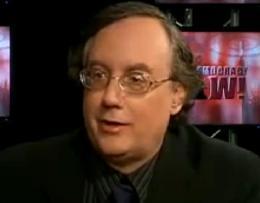 The third set of lectures, Tools of Authoritarianism, begins with a set of lectures by Juan Cole, a Professor of History at the University of Michigan. He speaks about the Arab Spring of the 2010s. The Arab Spring took place because the post-colonial Arab world was ruled mainly by presidents-for-life. The Millennials became angry and scared because the colonial times that these presidents had saved their countries from had been long before the Millennials were born – the Millennials couldn’t remember and therefore couldn’t relate. Some of these presidents-for-life were setting up their children to take over for them, and the Millennials wanted a democratic vote. They mobilized by word-of-mouth and social media and managed to overthrow their governments. However, the presidents who were voted in during the Arab Spring also had authoritarian tendencies, such as arresting dissenters and suppressing gatherings using military force. These presidents had learned their lessons about social media and began to monitor it. Professor Cole warns against ignoring such prying into our private documents here in the US.
 The third set of lectures continues with a commentary by Brian Porter-Szucs, a Profesor of History at the University of Michigan. He talks about everyday authoritarianism in today’s Poland. Poland is ruled by the party that is in control, rather than by the President or Prime Minister per se. That means the leader of the Law and Justice Party (PiS), Jaroslaw Kaczynski, is the authoritarian ruler of Poland. Porter-Szucs points out that in any political argument, someone always gets compared to Stalin or Hitler, and says that this is usually an overstatement. However, he also points out that to MOST people during Stalin or Hitler’s regimes, life went on like normal. They went to work, fell in love, hung out with their friends, dreamed their dreams. It was the minorities targeted by these regimes that mainly suffered. Porter-Szucs’ point is that it is easy to ignore what is going on around you, and to not even realize that an authoritarian regime is being built.
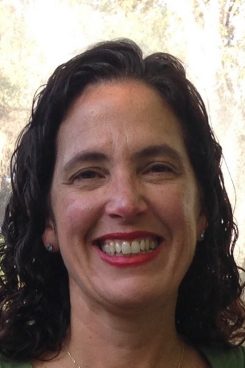 Pauline Jones, the Director of the University of Michigan’s International Institute and a Professor of Political Science, completes the third set of lectures by describing Putin’s Russia. He came to power through what seems to be a fair democratic vote, but soon started changing the laws so that the country became an autocracy. For instance, he increased the length of time he could be in power before another vote. He also indirectly supported assaults against, and assassinations of, journalists who disagreed with his regime. Professor Jones’ main point was how easy and often legal it is for a person in power to begin the first steps to create an autocracy.
 The first lecture was by Professor Arun Agrawal, who explained how modern democracy can become authoritarian. In both older and modern authoritarianism, the leader/regime attempts to disable the basic building blocks of democracy, such as elections, free press, check and balances on their power, and rule of law. They may also unfairly enforce laws against people of certain race, ethnicity, sexual orientation, etc. For instance, the regime might promote what they call a democratic election, but undermine the election by keeping some populations from voting (like the modern ID laws, which make it difficult for very poor and homeless people to vote) and by calling the election fraudulent when they don’t agree with the outcome. They might undermine the rule of law by criticizing the judicial system when it disagrees with the regime’s own point of view. (Or by removing the Judicial Branch from the list of government branches on the White House webpage.) They can undermine free press by calling it “fake news” and handing out awards for the “fakest” news. They might claim that they are above the law (for instance, are unable to be sued). [Specific examples aimed at Donald Trump are my own insertions.]








 ill patients and the emptying of state-funded mental hospitals. Due to terrible conditions in state hospitals and to the discovery of antipsychotics, many well-intended people wanted to improve the condition of mentally ill people by giving them independence and better living conditions through outpatient treatment. So the founders of NIMH, with the help of President Kennedy, began a federal program intended to care for patients on an outpatient basis, as well as providing resources which were intended on reducing the onset of mental illness in future generations. Unfortunately, as the state hospitals closed en masse, these federal programs didn’t do their job as intended. The federal programs focused too much on trying (and failing) to reduce the new onset of mental illness, and not enough on taking care of people who were released from hospitals. Many people from the hospitals had nowhere to go and/or stopped taking their meds (for various reasons). The populations of homeless and jailed/imprisoned mentally ill people skyrocketed. Violence by and against people with mental illness skyrocketed. Chaos ensued.