Cain and Abel

Adam and Eve at first bear two sons – Cain and Abel. These two offer sacrifices to God, who smiles upon Abel’s offering but is not pleased with Cain’s offering. In a jealous rage, Cain kills his brother. When God discovers the murder, he banishes Cain to a life of wandering – he can no longer work the land to get food, so he becomes a nomad. Cain worries that someone will kill him for what he has done, but God says that anyone who kills Cain will be punished seven-fold. 

This story is the crime and punishment motif. It begins with Cain offering disrespect to authority (God) by offering “fruit of the ground.” I take this to mean he just picked up some fruit off the ground. Potentially it was rotten or had worms in it, but at best he didn’t toil or sacrifice in order to give this offering to God. Abel, on the other hand, offered the firstborn of his flock and some nice juicy fat – a real sacrifice. Was Cain lazy? Selfish? Or simply disrespectful? When God rejected Cain’s sacrifice, Cain held a grudge. He then committed murder. And murdering his own brother makes the crime even darker. Finally, he lied to God when asked if he knew where Abel was. 

Clearly, Cain had the heart of a criminal. His crime was even worse than that of his parents. So why did God say that if anyone murdered Cain the murderer would be punished seven-fold? Was that to show the mercifulness of God? Or was it to explain the existence of nomadic peoples (Cain’s descendants)? Also, given that Cain was an evil person, what does that say about the Hebrews’ view of the nomadic peoples that descended from Cain? Were they viewed as evil as well? 

One thing that struck me is that God does not appear to be omniscient in this story. He does not know where Abel is at first, and thus asks Cain. Or was he simply setting Cain up for a lie? That seems unmerciful, and contrasts with the mercy shown when God says that anyone who murders Cain will be punished seven-fold. Did God have human-like flaws like inconsistencies? Unlikely. Therefore I’ll have to assume that God is not omniscient in this story. 

Another thing that stuck me is the assumption that there were enough people out there that someone would murder Cain if he wandered away from his family. And whom did he marry? This wife of his was not mentioned in the genealogy of Adam and Eve (which occurs at the end of the chapter). Though women are notably absent from the genealogy. But if he did marry his sister, what does this say about her, that she would marry her brother’s murderer? I feel that the story means to imply that there were more than just Adam and Eve’s family, but that contradicts Genesis 3:20 which said that Eve “was the mother of all living.” I am tempted to consider each story as partly independent from the others.  

The Fall

The second chapter of Genesis expands upon the story of the creation of man, which is introduced in the first chapter. This second chapter takes place in a slightly different order than God’s acts in the first chapter – the two chapters are attributed to different authors

Like Chapter 1, Chapter 2 is also filled with vivid imagery: man being formed of dust, woman being formed of man’s rib while he sleeps, a description of the four rivers emerging from the Garden of Eden. All beautiful and worthy of perusing slowly. 

In this chapter, though, we have two characters – God and Adam. Little is said about Adam, other than that he is lonely, but God appears in this chapter to be sympathetic and compassionate to his lonely creation, even to the point of making it clear that God put Adam to sleep before taking out his rib to make “Woman” (who remains unnamed in the second chapter). 

There’s an ominous last line: And the man and his wife were both naked and were not ashamed. (Genesis 2:25 ESV). The assumption here is that the reader believes that being naked is something to be ashamed of. It also sets up Adam and his wife for a rather nasty discovery. But for now, Adam and his wife seem innocent and child-like.

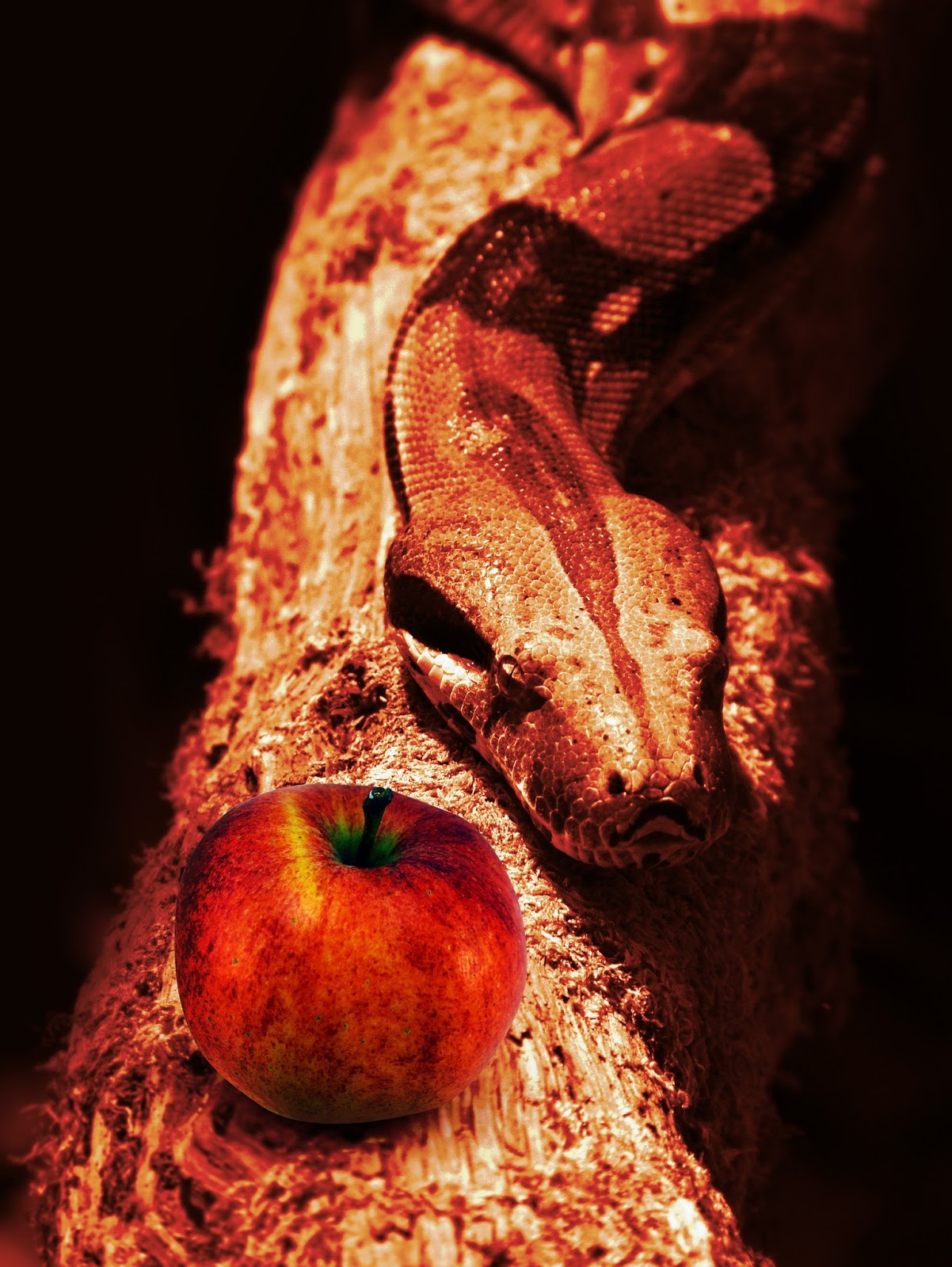
Chapter 3 of Genesis describes the Fall of Adam and his wife (who remains unnamed until after the Fall). A clever serpent tempts Adam’s wife into eating of the forbidden Tree of Life by telling her that she will “be like God” and know good from evil if she eats. She eats, and shares a piece with her husband who was with her. When God finds out, Adam, like a whiny child, blames it on his wife, and his wife, also whiny, blames it on the serpent. Indeed, it is the fault of both Adam and his wife that they ate of the Tree of Knowledge. They both could have said no. 

God punishes Adam’s wife by giving her pain in childbirth and saying that her desire shall be contrary to Adam’s, and that he will rule over her. He punishes Adam by making him toil the land for food and foretelling his eventual death. And he punishes the serpent by making him crawl upon the ground and foretelling how he shall be the enemy of woman and her children. After all this, Adam names his wife Eve because she shall be the mother of all peoples. Perhaps he doesn’t name her before because she was not to be a mother until after the Fall? 

Here’s where the action begins in the Bible. There are four main characters: God, Adam, Eve, and the serpent. They are following a temptation/punishment motif. God here appears to be a just judge, and Adam and Eve are whiny children from whom the truth is to be wheedled. It is also an how-it-came-to-be story which explains why there is strife and labor. 

One thing that struck me while I read this chapter is when “The LORD God said ‘Behold, the man has become like one of us in knowing good and evil.'” (Genesis 3:22 ESV). Who is he talking to? And who are “us?” There’s no mention before this of other gods or other creatures like God. Was this written at a time when the worshiping of other gods was so accepted that it was assumed others existed? Kugel, in his book How to Read the Bible, suggests that this is so. That Hebrews were supposed to worship the LORD God alone, but that they accepted that other gods existed. 

Another striking issue is that God walks among Adam and Eve like a creature rather than as a spirit. Was God supposed to be incarnate like His animals and people? 

In the Beginning: Creation

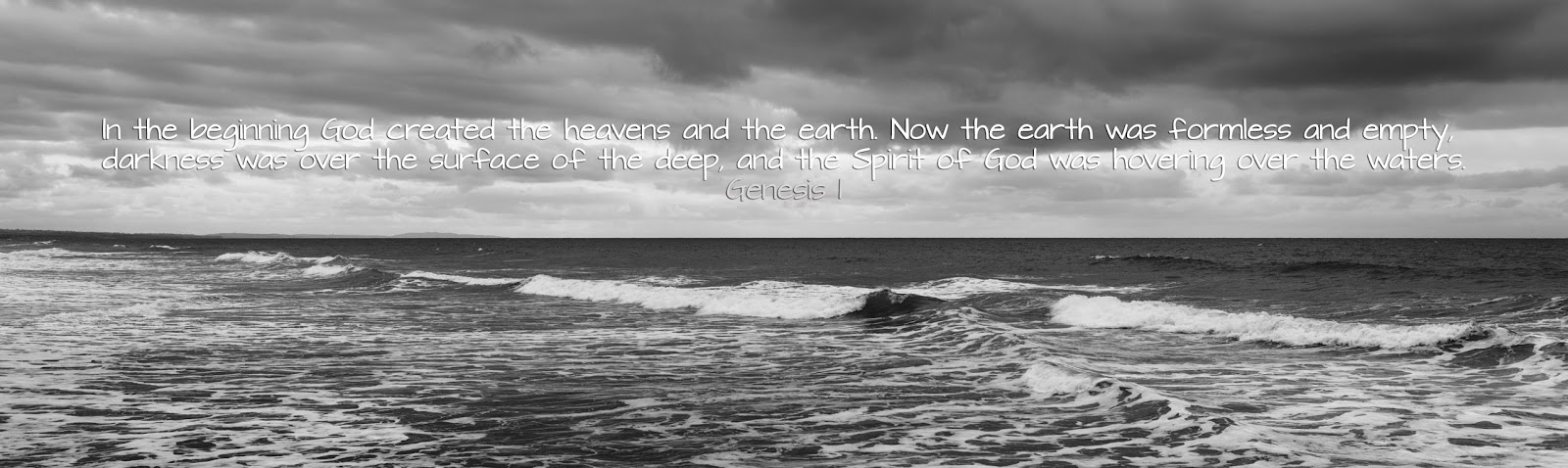
Chapter one of Genesis sets the scene. The creation story is filled with beautiful imagery. My favorite line is before God actually creates anything. “And the spirit of God was hovering over the face of the waters.” (Genesis 1:2 ESV) Because I liked it so much, I found it interesting to see how this line was translated in the different versions:
                    NABRE: And a mighty wind sweeping over the waters.
                    NRSV: While a wind from God swept over the face of the waters.
                    kjv: And the spirit of God moved upon the face of the waters.
Personally, I like the ESV best.
The style is formulaic with a certain set of ingredients on each of 6 creation days: 1) the announcement “and God said,” 2) a divine command beginning with “let” 3) the report “and it was so” 4) an evaluation “God saw that it was good” and 5) placement in time “there was evening and there was morning, the _______ day.” [1]
There is only one character in the chapter – God – and very little is said about who he is…only what he does. What we should think of God? He created the earth, but was he omnipotent? What were his reasons? Who was God? These issues are left a mystery. Most people already have an idea of who they think God is before starting the Bible. Is this why God was left a mystery? Or is it because God is a mystery?
[1] Ryken, Leland. Ryken, Philip.(2001) The Literary Study Bible, Wheaton, IL, Good News Publishers.

A Vacation with my Sister and the Kiddos

The week leading up the New Year was quite a delight for me. I enjoyed Christmas quite a bit – spending time with both my own family and my boyfriend’s family. The day after Christmas, my sister, her kids, and I went to a lodge to celebrate her 40th birthday. It was a lot of fun. We did some chillaxing, took the kids to a bouncy house and to the pool and basically just enjoyed ourselves. And then, bonus, I had the day after my vacation off of work (just the way the schedule worked out) so I got time to rest from my vacation. Climbing after a toddler in a bouncy house is a lot harder than you’d think!

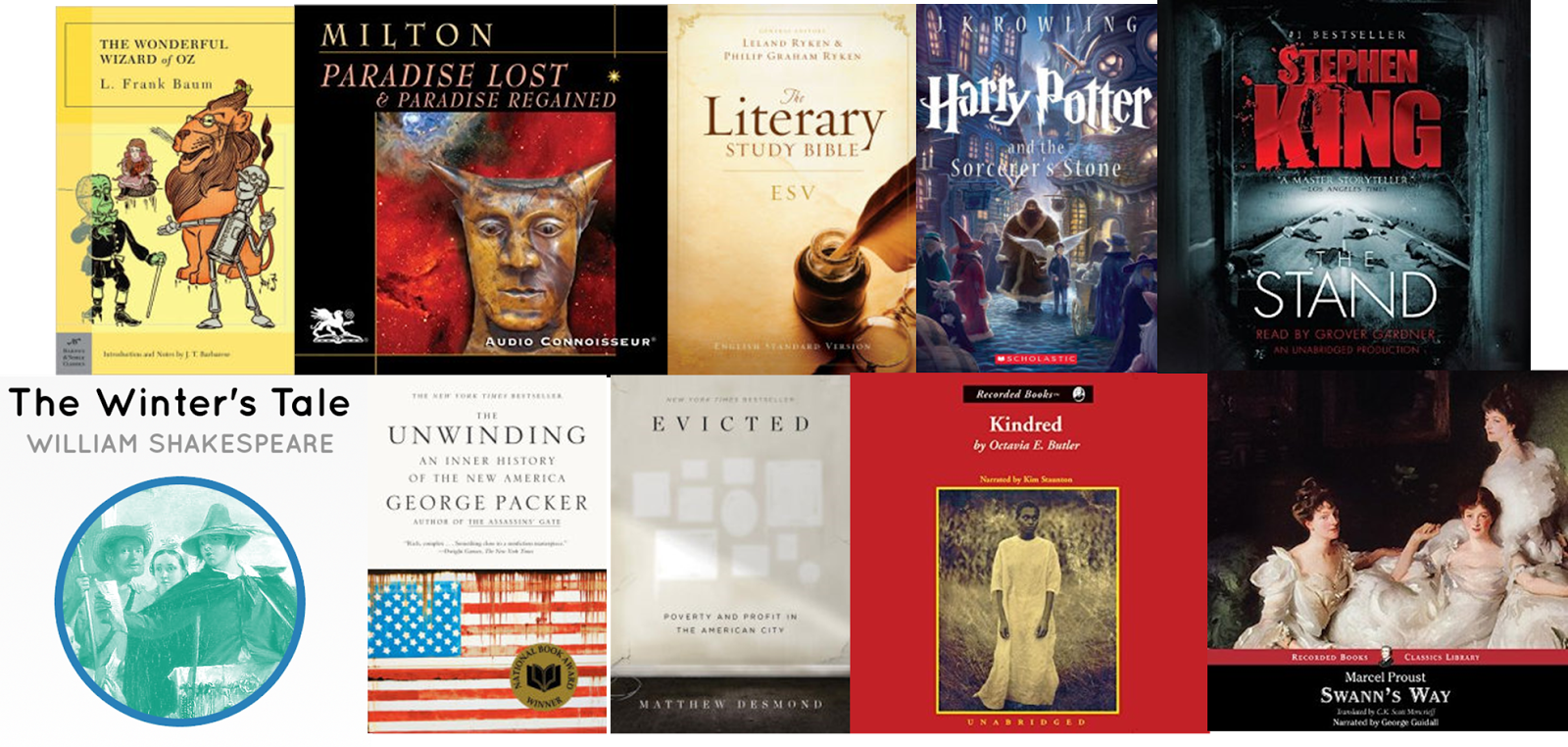
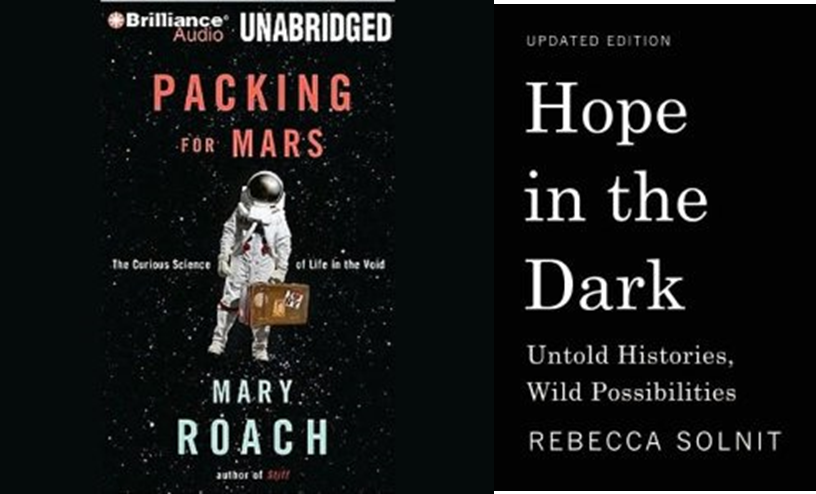
This week I finished two books. I finished listening to Packing for Mars on my drive up to the lodge, and read Hope in the Dark while at the lodge. Hope in the Dark is the January selection for the Social Justice Bookclub

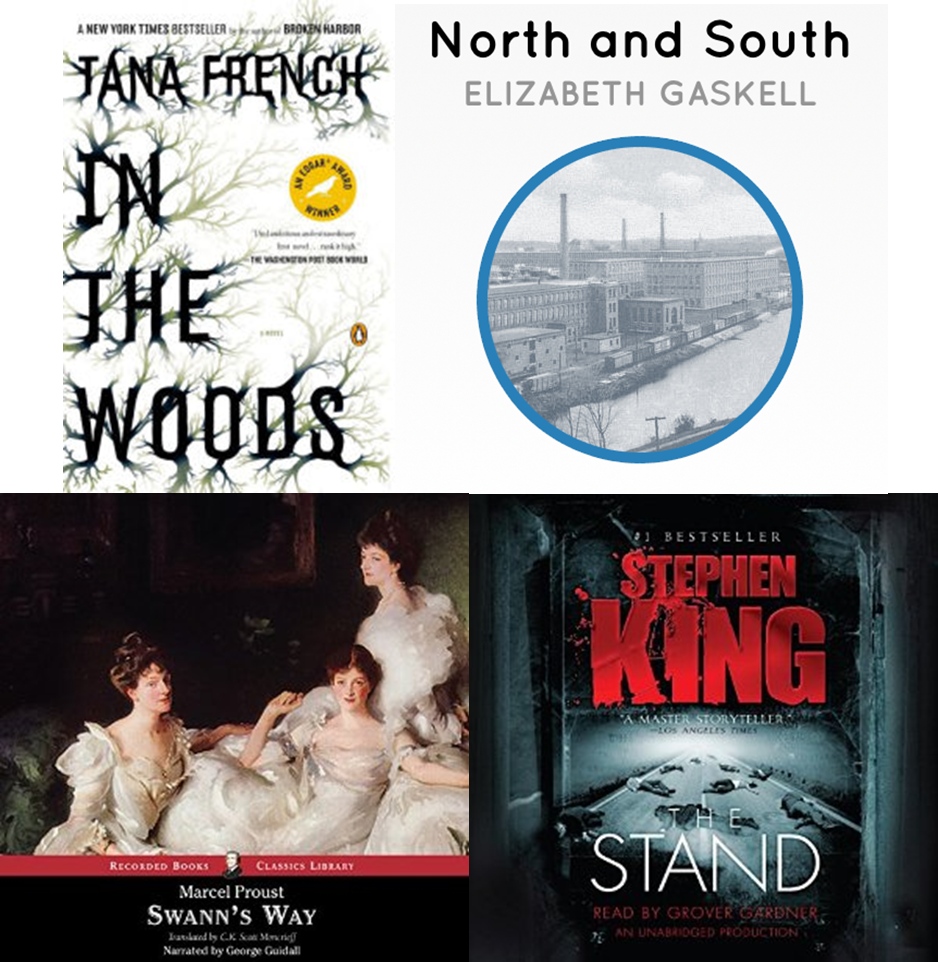
I switched out Packing for Mars with Proust’s Swann’s Way, which is actually more interesting than I expected. 

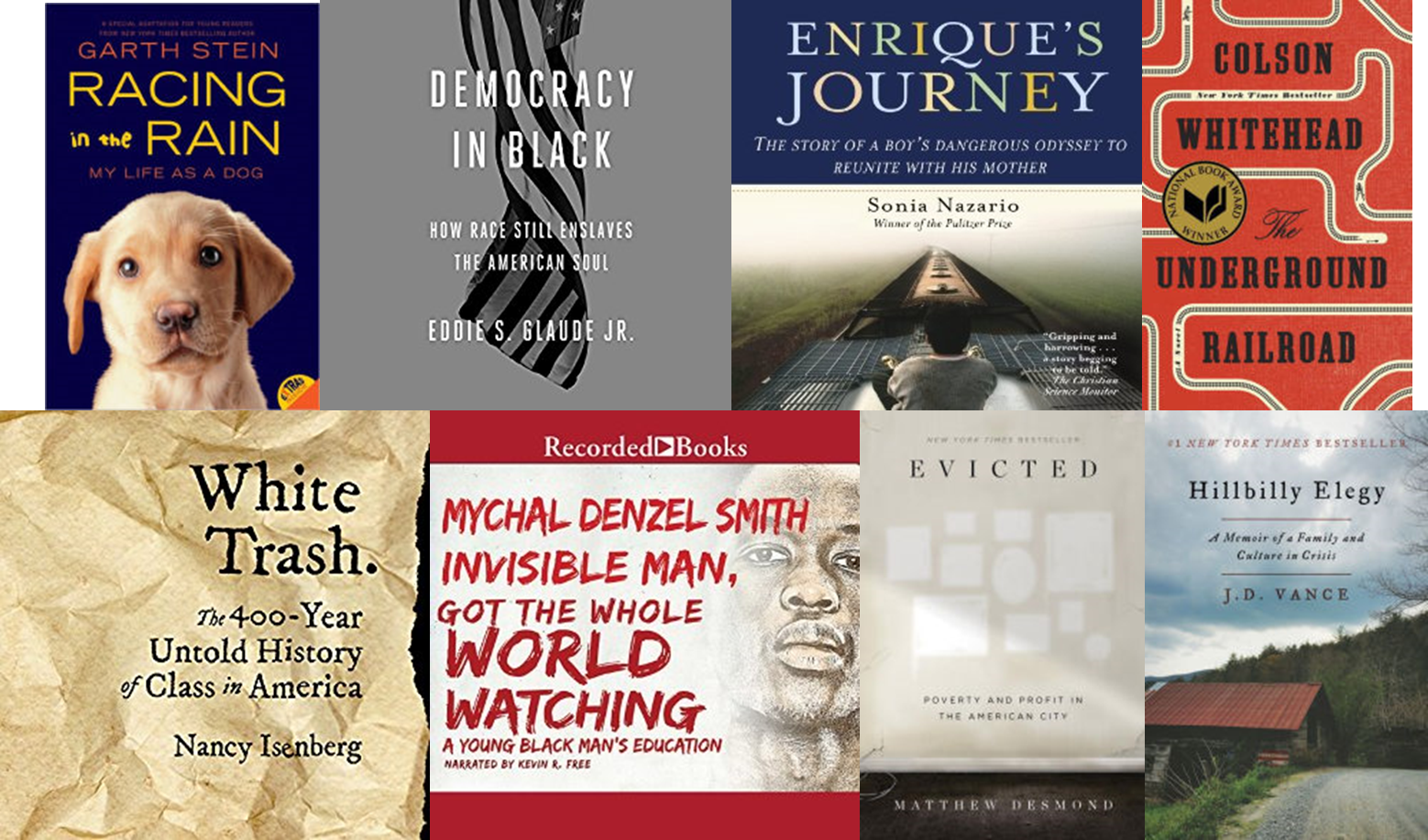
And, of course, I acquired a lot of books this week as well. Racing in the Rain is from my Aunt Michele. The Underground Railroad and Hillbilly Elegy were given to me by both my sister and my boyfriend’s dad – apparently they have good taste. 🙂 Evicted I bought when the ebook went on sale for $4 during the Goodreads Choice Award sale – which is fantastic because I was just about to buy it in hardback for a group read in January. And Democracy in Black, Enrique’s Journey, White Trash, And Invisible Man Got the Whole World Watching were on 2-for-1 sale at Audible. Enrique’s Journey is the March selection for the Social Justice Bookclub. 

And, the moment you’ve all been waiting for, my top five books of 2016. 

Packing for Mars, by Mary Roach

Packing for Mars is a hilarious and informative book about the difficulties astronauts face in outer space. It covers most bodily functions, eating, and what happens to food (and bodily fluids) in zero gravity. However, it has very little to do with visiting Mars. 

I admit that I found this book a bit slow at the beginning, but it perked  up around the time she started talking about the sleep studies NASA is performing. I want $7000 to lie around in bed all day for 3 months! I even called up the number provided on the NASA website to volunteer, but the number didn’t work. *sigh* Oh well, I really didn’t want to ruin my bones. Having studied bones for my dissertation, I recognize the long-term effects of a study like that. I was also thrilled when Roach quoted my dissertation adviser on the effects of hibernation on bear bones. How funny!

I definitely recommend this quirky book to anyone who enjoys knowledge for the sake of knowledge and isn’t easily grossed out. 


Hope in the Dark, by Rebecca Solnit

Hope in the Dark is a short book of essays about the importance of recognizing small victories in the face of what seems insurmountable challenge. Solnit is a radical activist who passionately protests many issues such as NAFTA, the destruction of the environment, and war. The book was beautifully written – Solnit surely knows how to compose a sentence. 


The reviews of this book seem overwhelmingly positive, and I, too, thought the book had an important point. However, I was not moved by the book as other people are. I think part of the problem is that many of the issues were older – it was originally published in 2004 and republished in 2016 with a new forward and afterward which address more timely issues. Unfortunately, I couldn’t get my hands on a 2016 copy since I was trying to get it read in time for the Social Justice bookclub (still time to sign up!) which will read it in January. (I have too many other books in January to be able to fit it in then.) 

Another issue I had with the book is it assumed prior knowledge of the issues such as why NAFTA is bad. I’ve never thought about NAFTA in the past – in fact, I only became aware of it being a controversial issue when Trump recently suggested nixing it. Perhaps that’s a lack of awareness on my part, but I would have appreciated more information. But explaining the issues was not what this book was about. This book was about hope, not about education. Because of this “flaw,” I found the book very boring in parts – I’m a fan of educational books more so than uplifting ones. 

That said, I totally understand why people are moved by this book, and I appreciate the timeliness of preaching hope in the appearances of failure. 


Merry Christmas to all who celebrate


Happy holidays to everyone! Personally, I celebrate Christmas as my seasonal holiday, and it happens to be Christmas, so Merry Christmas to all! 


I had a pretty average week here leading up to Christmas. Nothing exciting to report except that I went to dinner with my parents and boyfriend last night (steak!) and then he and I went to Rogue One. Which was awesome. And later today I will be headed out to celebrate Christmas with my boyfriend’s family. But first Christmas Mass with my parents. 

It’s a freezing drizzly Christmas here, with wind and rain all day long, followed by snow on Monday. Lovely driving weather for me, my sister, and my nephew who are planning on going up north to a lodge tomorrow to celebrate her 40th birthday. Hopefully everything will work out as planned! 

Currently Reading: Same books as last week. But I’m nearing the end of two of them. 🙂 

Completed: It’s been an uneventful week for reading, so I haven’t actually completed ANYTHING to report this week. 

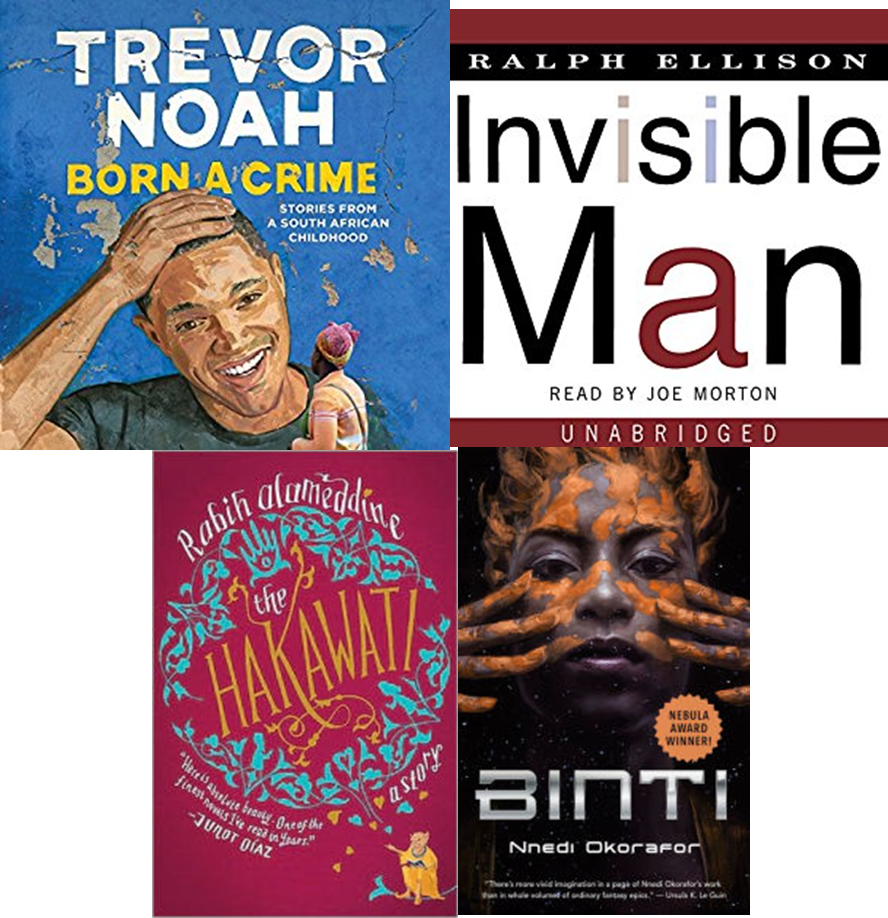
Acquired: I haven’t opened all my presents yet, so this isn’t my complete Christmas haul. I managed to get free copies of Trevor Noah’s Born a Crime and Ralph Ellison’s Invisible Man from Audible. And a friend on LibraryThing sent me two books I hadn’t heard of before: The Hakawati, by Rabith Alameddine and Binti, by Nnedi Okorafor. I’ll report the rest of my Christmas Haul next week. 🙂 

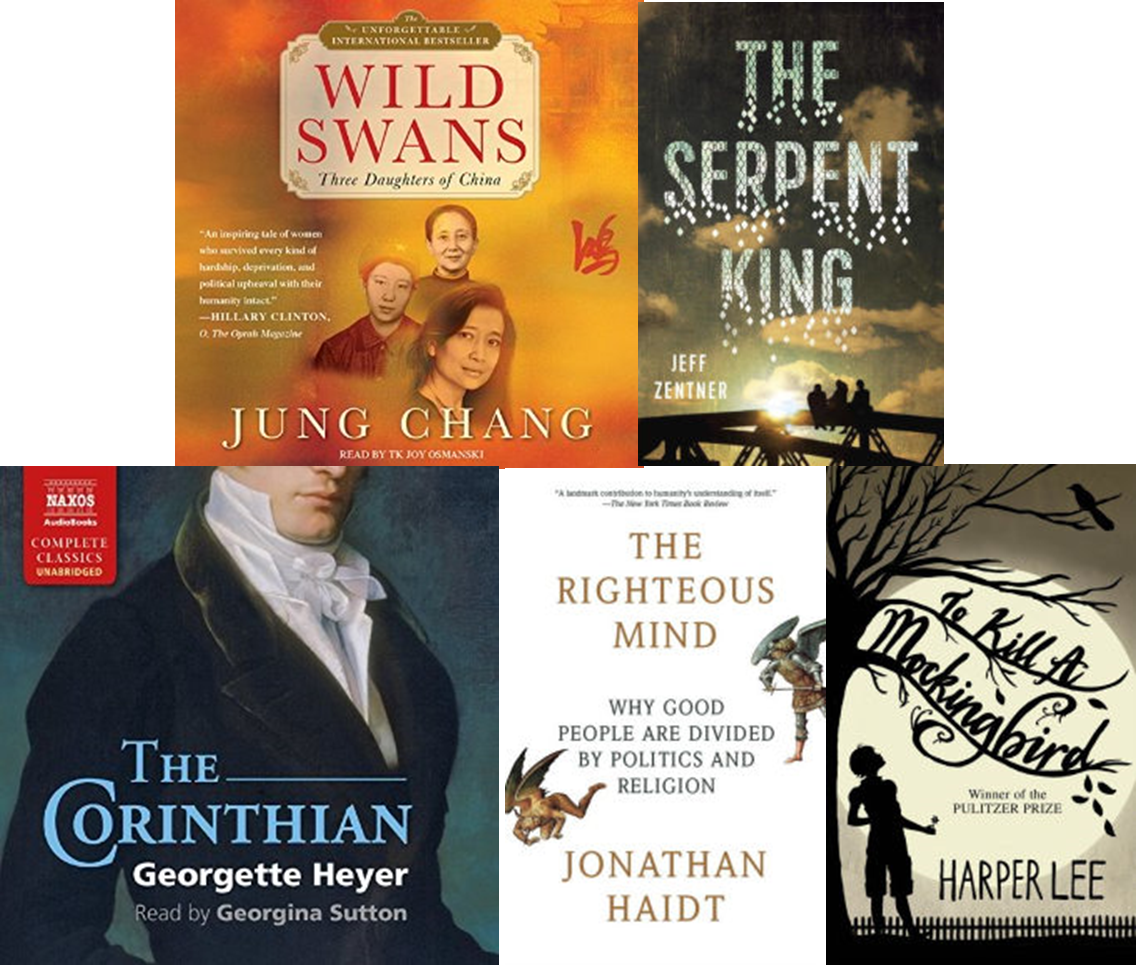
The Righteous Mind, by Jonathan Haidt

The Righteous Mind explores the polarization of American politics with a focus on the different moral foundations of conservatives versus liberals. He explores the question of why both conservatives and liberals tend to think they are morally in the right and that the other side is morally wrong. Haidt spends the first two chapters providing experimental evidence of why Hume was right to say that reason is the slave of passion. He suggests that you can’t make reasoned decisions without emotional backing. Haidt uses Damasio’s findings, presented in his book Descartes’ Error, to back this up. Damasio found that people who do not feel emotion due to brain damage are flummoxed by even small decisions like what brand of milk to buy or what order to perform a set of tasks. Haidt then references studies that suggest that people will use emotional intuition to come up with a point of view, and then look specifically at evidence that supports this intuition, ignoring evidence that contradicts their own views. 


In his own studies (see figure below), Haidt breaks down people’s morals into categories: care about others, fairness, loyalty, authority, and sanctity. According to Haidt’s studies, liberals value caring about others and fairness much more than loyalty, authority, and sanctity. Conservatives value loyalty, authority, and sanctity more, and value care and fairness to a lesser degree. The interesting bit is that conservatives have a broader (more diverse) range of what they care about than liberals do. They care about their less important values more than liberals care about their less important values. Haidt suggests that this is why Republican candidates purposely apply to the emotional side of people more than Democrats do. And since people’s rational decisions are based on emotion, the Republican candidates have an advantage with moderate voters. 

Haidt goes on to answer the question: “Why do poor, rural, white folk vote against their economic best interests?” He suggests that they’re voting for their moral interests – loyalty, authority, and sanctity. 

The next part of the book is about evolutionary group selection. Many people believe that groupish behavior evolved in our species because a group of individuals was more successful at producing offspring than single individuals. But Haidt asks the question: how can such behavior evolve when selfish individuals within a group can take advantage of the group to be even more successful than the altruistic group members? Wouldn’t evolution then favor the selfish ones? He answers this question describing a situation breeding chickens. If the chickens who produce the most eggs are inbred, then the offspring end up laying more eggs. But they also end up more aggressive, which is a trait linked to high production of eggs. Because the chickens are more aggressive, they attack and kill each other, leading to lower egg production per cage. If you, instead, breed the cage that produces the most eggs compared to the other cages, the cages of offspring end up with more eggs. Thus, evolutionary group selection is about selecting an entire group, and not about breeding individuals within a group. Haidt suggests that this is why humans tend to break into groups. 

Haidt goes on to suggest that religious belief evolved as group selection (groups of religious people survive better than groups of nonreligious people) rather than as an evolutionary trait of individuals. So people not only have a tendency to break into groups, but to have a formal set of values within each group. In the end, we follow our values and tend not to understand that another group’s values may be founded in truth as well. 


#Readers’ Workouts: Issue 1

Despite my minimal-meme policy on my blog, I’ve decided to participate in Joy’s Readers’ Workouts meme to help me be held accountable in my workouts. As I said in my update this weekend, I have decided to get healthy again by training for a 100 mile bike ride in September. Part of that choice is just enjoyment in the accomplishment, but part of it is because I want to lose weight. Ever since I was diagnosed with bipolar disorder and went on medications, I have been gaining weight. I would like to lose that weight again and be back to the person I was. So I will eat healthier, exercise more, and mostly give up diet soda (not altogether – failed attempts in the past have taught me that giving up soda altogether only leads to relapse later). I’m giving up the diet soda because I’ve heard rumor that it negatively affects one’s metabolism so that people gain weight when drinking it. 


In case you’re interested, I have no shame: here’s a graph of my weight over the past few years: 

Impressive amount of weight gain, eh? The data starts shortly after I went on medications. 

Today I headed over to the fitness center try my first workout (yeah, I made it a whole 15 minutes of cycling – 4 miles) and to ask about a personal trainer. The PT would be a lot of money, which I expected, but I didn’t expect the 6 month contract. I’m going to have to think about whether the PT is worth it. But I might need one. We’ll see. I’ll update you next week!

Polar Vortex Baby

So Polar Vortex 2017 has hit Minnesota. And on top of that Winter Storm Decima is coming! We’re supposed to be pelted with ice and snow tonight and then have temperatures down to -23 degree Fahrenheit tomorrow. Mmmm. I look forward to going to work at 4:30am. At least I don’t have to drive far! 

My New Year Resolution is to start exercising more often. So in January I’m hoping I’ll have a lot more time to listen to audiobooks while I’m slaving away in the gym. I do better when I have a goal in mind, so I’ve decided to train for the Itascatur. It’s a 100 mile bike ride around Lake Itasca State Park (that’s where the headwaters to the Mississippi are). It’s in September, so that gives me plenty of time to get rid of the extra chubbiness and figure out how to train for the hills. Distance I can do. It’s the hills that kill me. I wish I had someone to accompany me on the ride, though!


Currently Reading: (Yup, same as last week)


Completed: