Among the Creationists, by Jason Rosenhouse

Among the Creationists: Dispatches from the Anti-Evolutionists Front Line
by Jason Rosenhouse, Narrated by George Orlando

This is the story of Rosenhouse’s exploration of Creationism. Rosenhouse is an intelligent, rational mathematician and declared atheist (though the way he describes his beliefs I’d put him in the agnostic category myself). He decided in college to explore the seemingly irrational views of ultra-conservative Christians to try to understand how they can possibly deny evolution. This book describes his journey through conferences, museums, and personal conversations. It also has a light smattering of history of the creationist-evolutionist debate.


This was a surprisingly considerate and fair book considering the fact that it was coming from an atheist talking about Creationists. From the beginning, Rosenhouse insisted that although he was well-known as “that atheist guy who goes to Creationist conferences,” he was almost always treated with respect and kindness. This is possibly because his main goal was to educate himself rather than to change anyone’s mind. He did, of course, make public comments/questions to the speakers at the conferences, but they always were polite and seemed to be answered politely as well. 

Despite this even-handedness, there were a few times that I cringed while reading this book. For instance, he lumped Intelligent Design, Theistic Evolution, Christian Science and and other lesser known ideologies all in with Creationism. He even said that they were pretty much the same thing. They’re really not, though. Denying the possibility of evolution is not the same as saying that God directed evolution. Yes, I can see where an atheist might think the second option wasn’t sensible either. But the basic difference remains – one set denies evolution altogether the other does not. To me, and I would imagine to many atheists as well, an all-out denial of the evidence for evolution is less sensible than saying God directed the evolution. Another lapse in his even-handedness was when he criticized the Creationists as being name-callers – as if that doesn’t go both ways. Trust me, I’ve been disappointed in interviews and essays by prominent evolutionary theorists like Stephen Jay Gould and Richard Dawkins. Scientists can disparage and name-call too.

From what I could tell of his book, the conferences were all about getting together with people who totally agree with you to say “Here’s what we agree on, now how can we get others to see the light?” Then they’d have the requisite book signings and other gatherings. So Rosenhouse had plenty of time to hobnob. In his book, he related several interesting conversations between himself and Creationist individuals. Most of these conversations seemed to include teenagers. He’d give information about which authors to read if they wanted to learn more about evolution, or just have an interesting discussion about the points of each argument. I imagine he had a lot of conversations with teenagers because they’re less jaded about trying to convince people of their points of view.

This was an interesting book, and I’m glad I read it. It had some shortcomings (noted above), but listening to this book actually educated me on certain things. For instance, years ago I was turned off by Richard Dawkins when I heard an NPR interview in which he disregarded a question from a Creationist. This question could have been easily answered: it was the old “how could evolution be scientifically possible when entropy (chaos) is always increasing?” (This is the second law of thermodynamics.) 

The answer is: entropy always increases in a “closed system.” A closed system is one that doesn’t have any exchange of energy with the outside. Like the entire universe. There’s only one universe. There’s nothing that it can exchange energy with. On the other hand, Earth is not a closed system. It’s always losing atmosphere to the space surrounding it. It’s always getting light and heat from the sun. That’s called an open system. Animals are open systems too. We breathe, we eat, we poop. That’s energy exchange. Evolution took place in an open system, therefore the second law of thermodynamics doesn’t apply and there is no contradiction. 

Ok, maybe that wasn’t easy to explain…Point is, Dawkins could have answered the question politely instead of rudely disregarding it. Although I still think Dawkins was in the wrong, after reading this book I now understand how frustrating it might be to be constantly answering exactly the same question over and over and people ignoring my answer. 


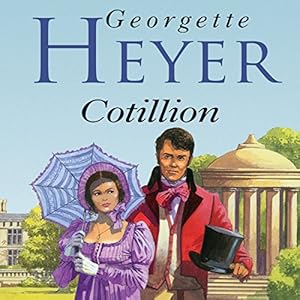
Cotillion, by Georgette Heyer

Cotillion, by Georgette Heyer, narrated by Phyllida Nash
When Kitty’s cantankerous care-taker insists that one of his own nephews marry Kitty for her to inherit his fortune, three of them rush to Kitty’s home to propose. When she spurns those three, they patiently explain that she must marry one of them or else she will be left destitute. Kitty hatches a plan (which the reader is left only vaguely aware of) to free herself from these constraints – but it requires her to go to London for a few weeks. That’s where her cousin Freddy comes in. He didn’t propose – had no wish to propose – but only came because he was curious what this big summons from his uncle was about. In secret, Kitty convinces Freddy to propose marriage so that he could take her to London. Of course, she’ll break it off when the few weeks are over….


This is my first book by Georgette Heyer. I’ve heard so many great things about her that I wanted to see for myself. At first, I wasn’t too pleased with the book, but I warmed to it once time had passed, and Kitty matured in London. You see, I didn’t like Kitty at first. She seemed so manipulative – getting Freddy to propose when he clearly didn’t want to. And it seemed her plan could end up destructive to both of them – even if we didn’t know what the whole plan was about. I realized as she grew that the plan was just naivete and not pure manipulation, but I still found all the dangerous lies a bit disturbing. Regardless, everything turned out well in the end, and I was left with a warm fuzzy feeling about the novel. 

Heyer’s writing is delightful. She mixes humor with the beloved Regency Romance genre, and she’s often suggested to readers who have finished all the Jane Austen novels. They definitely have the same feel as an Austen, though the humor has a slightly different tone. Austen has more sarcasm in her books. Both writers have a mixture of wit and silliness. I will hopefully have time to read another Heyer soon. Just think, a brand new author to explore!


The Chimes, by Charles Dickens

The Chimes, by Charles Dickens, narrated by Richard Armitage
When Trotty’s daughter brings him a happy surprise (tripe and news of her engagement for the upcoming New Year), he is quickly disillusioned by a group of wealthy people who delight in “putting-down” poor folk. That evening, Trotty explores his beloved bell-spire and sees things that he never expected to see. 

This story was hard to read at first because it was so darned depressing. I mean, here Trotty was as happy as a clam (because we all know clams smile all the time) and suddenly these horrible wealthy men stomp all over his happiness. As the story goes on, the family becomes even more downtrodden. In fact, I was wondering if the story was going to turn around into a happy Christmas story until the very end. 

This wasn’t my favorite of Dickens’ works. It’s nice to read another of his lesser known Christmas stories, but I guess it’s lesser-known for a reason. It was quaint and a good poke-in-the-eye to the strong who “put-down” the weak. But other than that, it was kind of a “meh” book for me. 


Merry Christmas One and All!


Merry Christmas to all of my readers! (Disclaimer: Happy Holidays too!)


This week has been a good one. It’s been really nice being on break – and I got so much stuff done I can’t believe it. For one thing, I supposedly fixed my financial aid problem. I was told when I filed my FAFSA that I couldn’t get financial aid until I declared a major. But I didn’t want to declare a major. My major is “getting myself into PA program.” So this week, I declared a major. I am now pursuing an AA with emphasis in Biology. HA! That’s a step down from my PhD. Anyway, I’m hoping that if I get proper funding, I can move down to a part-time job (hopefully as an EMT) and take more classes each semester. That’ll speed up my process quite a bit.

If you remember from my last update, I was entering into a #nocaffeine challenge. The first week is complete, and I never even suffered from a headache! I did suffer from mildly crippling exhaustion, though. That may have been exacerbated by giving platelets on Monday. In fact, sometimes I wonder if giving platelets is just really bad for me. It seems like every time I give platelets, I get exhausted. But there are always extenuating circumstances. Like last time – I worked till 1 am and then was in to work at 6 am the next day. Isn’t that reason enough to be exhausted? So for right now, I’m going to continue my donations. 🙂  

Next week I’m going to start reading chapters in my EMT textbook – getting ahead for the semester. My reason is that 1) I know how much reading there is because I tried taking the class last semester and 2) My first month of the class will be difficult since I will be busy two evenings per week training for the COLUMNS program (you know, the one where I work with a life-term parolee recently released from prison). I plan on keeping bullet points of things I’ve learned from the chapters and from class so because I think it’s sort of fun. You are welcome to peruse, skim, or skip. 

Feature and Follow Question: What was the best Christmas (or other holiday) gift I ever received?

Well, my dad usually gets me a $100 gift card for Barnes and Noble. This year he got me a $150 gift card. Totally the best. 

Posts: 


Books Completed:
Books Acquired:


Film and Theater:


Bookish presents (to others): 

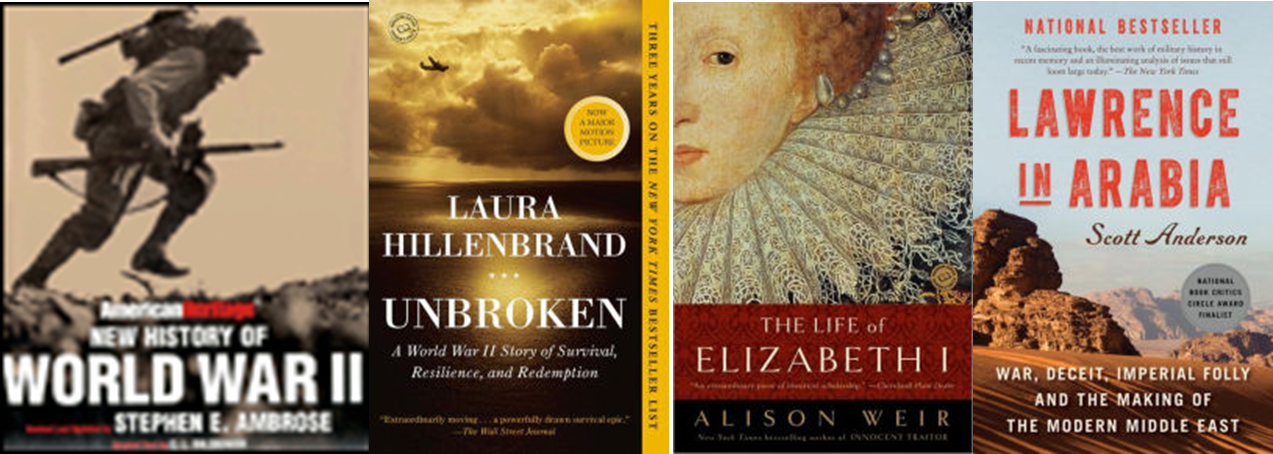
These were given to one of the residents at the nursing home I work at. She said she liked history. I thought it was a good selection. 
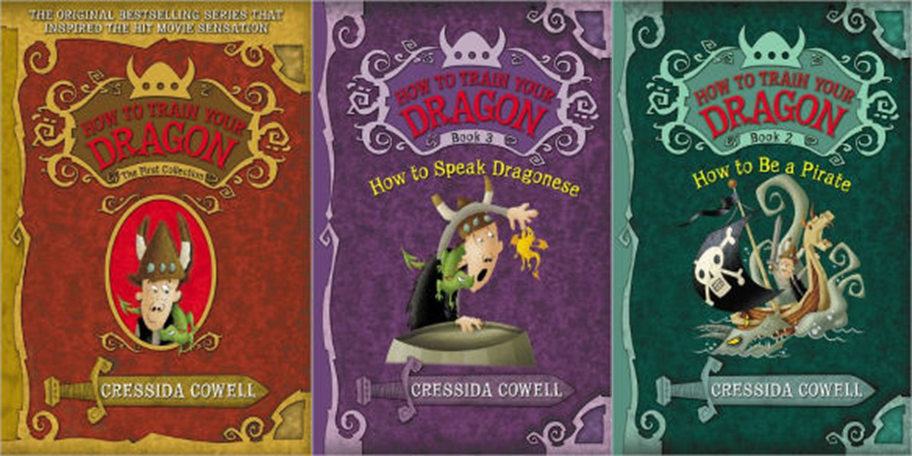
Gave these books to my boyfriend’s nephew. He’s too young for them, but I figure his parents can read them to him. They’re on the Harry Potter books now. 
These went to my mom
To my friend Liz (who is hopefully not reading this.
If you are, I also got you chocolates). 
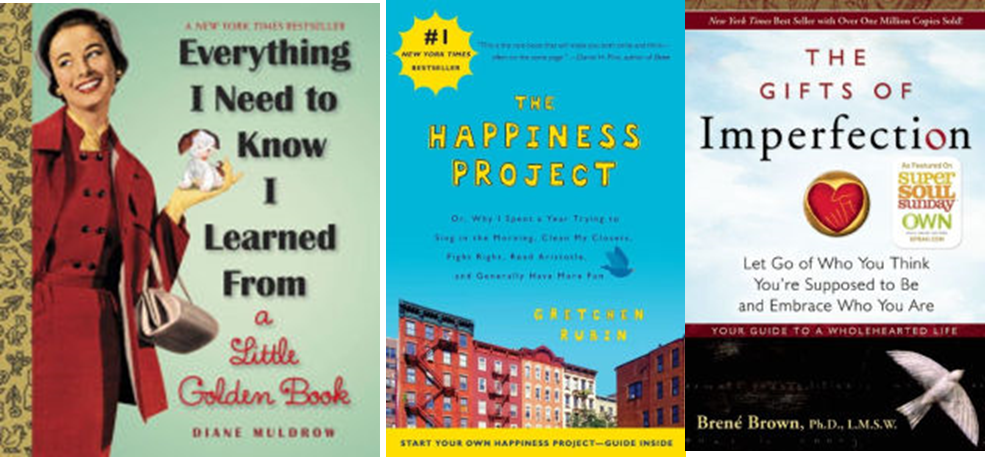
These go to my aunt


This update is posted to Feature and Follow Friday @Parajunkee and @Alison Can ReadStacking the Shelves @Tynga’sReviews, Sunday Salon, Sunday Post @CaffeinatedBookReviewer,   @MailboxMonday, It’s Monday What are You Reading @BookDate

The First Christmas, by Marcus J. Borg and John Dominic Crossan

The First Christmas: What the Gospels really Teach About Jesus’ Birth
by Marcus J. Borg and John Dominic Crossan
Narrated by John Pruden

In this fascinating little book, Borg and Crossan explore the historical meaning behind the birth-of-Jesus story. They first point out the factual differences between Matthew’s and Luke’s versions of the birth story. Then they explain how, after the Enlightenment, many people want everything to be either literally true or false. Many Christians are in denial of the “factual inconsistencies” in the Bible, and the ones who are aware of the inconsistencies often feel a little uncomfortable and don’t know quite what to think about them. Borg and Crossan point out that the stories are meant to be parables. They were not meant to be taken as literal truth. They explore a deeper truth within the limits of historical culture. 

Borg and Crossan study (practically line-by-line at times) each birth story separately, explaining the cultural, literary, or mythological meaning of the Biblical text. For instance, in his story of the Magi and Herod, Matthew was bringing to mind parallels to the Moses story in his Gospel. Like Pharaoh, Herod wanted to kill all the baby boys because he’d heard that one was born who would overthrow him. As with the parents of Moses, Jesus’ parents had divine inspiration to have a child despite great obstacles – in the case of Moses’ parents, they had to have faith that their son wouldn’t die; in the case of Joseph, he had to have faith that Mary was yet a virgin. Against all odds, both boys survived and became great leaders. Such parallels to the Moses story would help justify to first century Christians the divinely-inspired leadership of Jesus. 

I really enjoyed learning about the cultural reasons for the choices Matthew and Luke made while writing their gospels. At times, I felt the book didn’t translate well to audio, though, because the authors went into great detail in their lists of gospel references (for instance, every reference of to Jesus as “light,” and what the word “light” meant in that sense). The lists didn’t translate well to audio since they were something I would normally either skim over or use as a Bible study guide. Neither could be done in an audiobook. Regardless, I’m glad I had the chance to listen to this book, and I hope to read their first book The Last Week. I’ll save that one for Easter, though.


The Lord of the Rings – A short comment on Allegory

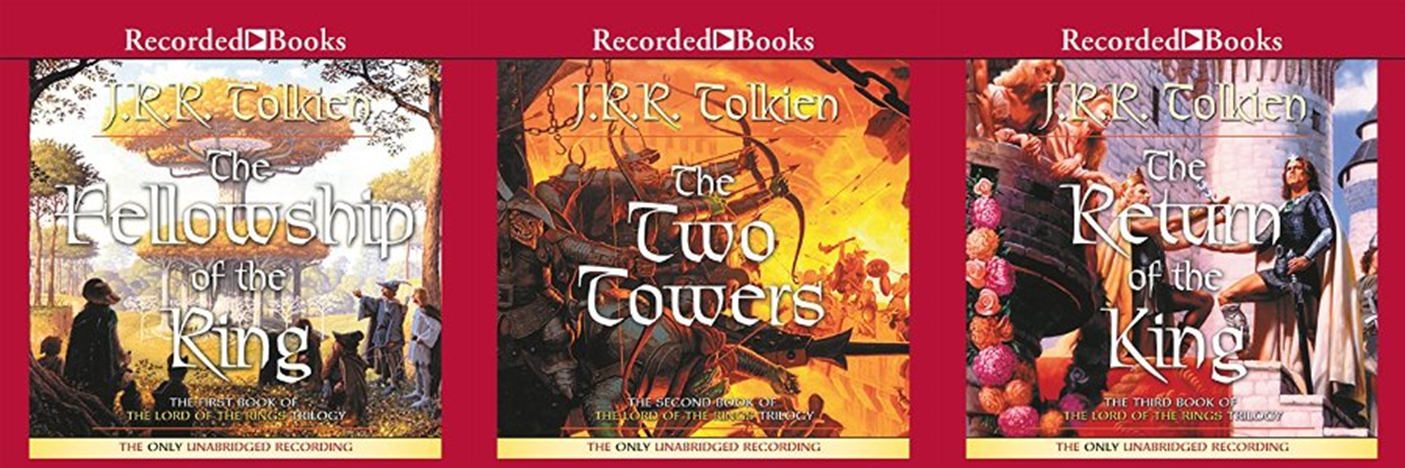
The Lord of the Rings, by J. R. R. Tolkien; narrated by Rob Inglis
Anyone who cares knows what Lord of the Rings is about, so I’ll skip the summary here. What I will say is that among my favorite narrations of audiobooks, Inglis’ narrations of The Hobbit and The Lord of the Rings are among my favorites. He not only reads the book perfectly, but he sings all the songs! I would listen to these books over and over again. 


Lord of the Rings is a difficult book to write about because so many have already written so much. Some critics hate it as cult literature which has few (and flat) women characters and a too-black-and-white contrast between good and evil; worst of all, it’s escapist literature. Others praise his allegories – attributing themes such as nuclear war, the Passion of Jesus, and anything in between. 

Tolkien’s strong religious beliefs – and his own admission that The Lord of the Rings was a deeply spiritual work – support the Savior allegory. And there is no question that Tolkien was strongly impacted by his experience in WWII – enough that his writings would most certainly reflect his thoughts on war. But I think it’s also important to remember what Tolkien himself thought about allegory: 

“I cordially dislike allegory in all its manifestations, and always have done so since I grew old and wary enough to detect its presence. I much prefer history – true or feigned– with its varied applicability to the thought and experience of readers. I think that many confuse applicability with allegory, but the one resides in the freedom of the reader, and the other in the purposed domination of the author.”

I think this is a beautiful quote. Although I grew up believing that all good books are allegories, I appreciate what Tolkien is trying to say. Allegories, in his mind, are very specific messages that the author is trying to convey. They can often be stuffed down the readers’ throats. When the reader is left with the freedom of interpretation, then the book is so much more alive and meaningful. And that meaningfulness is what is so special about The Lord of the Rings

I propose to call The Lord of the Rings a parable – a story that has meaning and applicability, but is left open for interpretation. 

How to Train Your Dragon, by Cressida Cowell

How to Train Your Dragon, Book 1
by Cressida Cowell
Narrated by David Tennant
Hiccup Horrendous Haddock III isn’t what you would call a Viking hero, He’s small and scrawny, and prefers scholarly entertainment rather than ruffian ones. However, he is the son of the tribe leader, so he must be a hero. When, in an initiation-to-tribe trial he must find a baby dragon to train, he ends up with the smallest, toothlessest dragon he could imagine. But he must persevere in order to be accepted into his tribe. Little does the tribe know that danger lurks near. 


This was the funniest book I’ve listened to in a long time. And, of course, it’s narrated by David Tennant, which makes it absolutely fantastic. This isn’t just a story for 5th graders, anybody can enjoy it. But don’t expect it to be anything at all like the movie. 

How to be a Pirate
by Cressida Cowell

Narrated by David Tennant
In order to learn to be pirates, Hiccup and his friend Fishlegs learn to sail ships and sword fight. But while sailing, they find, floating in the ocean, a coffin labeled “do not open.” Of course they open it, and when the dead rise, unlikely adventure ensues. I’m really enjoying this series so far. 

How to Speak Dragonese
by Cressida Cowell

Narrated by David Tennant

In this installment, Hiccup and Fishlegs must learn to board enemy ships.  But when they accidentally board a Roman ship, they are kidnapped. They must escape before they are killed in a tournament. Again, fantastically funny with wonderful narration. 

How to Cheat a Dragon’s Curse
by Cressida Cowell

Narrated by David Tennant
In the fourth installment of How to Train your Dragon, Hiccup find out Fishlegs has been bitten by a tiny poisonous dragon. Hiccup must steal the vegetable-that-must-not-be-named from a dangerous nearby tribe in order to save his friend. 

All four were hilarious. I loved Tennant’s narrations. I will certainly pick up the rest of the series soon.

5 stars for all of them


The Sixth Extinction, by Elizabeth Kolbert

The Sixth Extinction: An Unnatural History
by Elizabeth Kolbert
Narrated by Anne Twomey
I read this book a couple of months ago with Doing Dewey‘s nonfiction book club, but luckily I took notes. 

This book documents the mass extinction that Kolbert (along with quite a few scientists) believes is due to humans. It’s not only about hunting animals out of existence. It’s about carrying invasive species (including animals, plants and fungus) into new environments. These species are destructive to foreign ecological systems because each system did not develop in parallel with the new species – thus the system did not develop immunity and protection against the invasive species. For instance, our travels around the world transport fungus that have caused plague among bats world-wide, and frogs in the Southern Americas. This book is mainly a scientific endeavor written by a journalist, but we also get to follow Kolbert as she shadows scientists around the world in their quests to study and prevent extinction. 


At first, this book made me feel guilty for the extinctions that humans have caused. But then I realized that we are a kind of invasive species too. Is it really our fault that we developed minds and then tools capable of carrying us around the world? Had we any idea of the destruction that we would cause? No. We were just doing what any species does – procreate, expand, and diversify. I also feel that Kolbert was catastrophizing a bit in her book. Although humans have certainly caused a lot of damage to our planet, I don’t think we are capable of destroying a world that has survived so many other massively destructive events. We are just another blip in the planet’s development. 


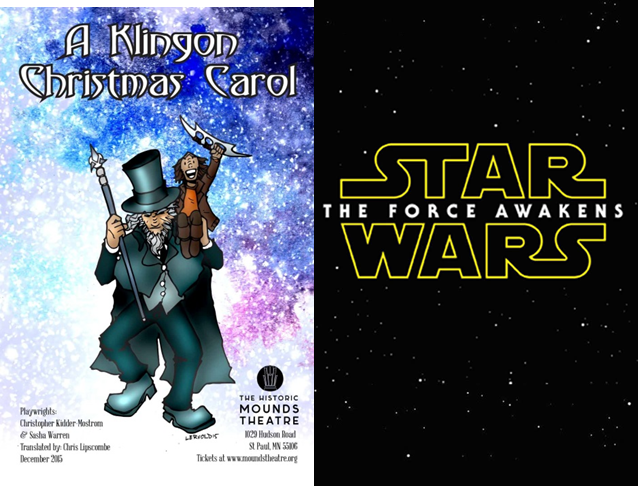
A Klingon Christmas Carol

Yesterday I had the pleasure of watching A Klingon Christmas Carol performed at the Historic Mounds Theatre in Saint Paul. In case you’re wondering: yup, that’s a thing. It is the first play written and performed in Klingon (preceding the Klingon Shakespeare plays). The playwrights are Christopher Kidder-Mostrom and Sasha Warren. Its translation into English, shown on a screen behind the actors, was by Sasha Warren. 

SQuja’ is a cowardly money lender who not only refuses to take place in the yearly warrior festival of Kahless, refuses to donate money for orphans to be trained as warriors, and forces his assistant to work so much that he is unable to train his crippled son tImHom to spar.

But on the eve of Kahless, his friend marlI’, who is as dead as a “red shirt” appears to SQuja’ to warn him that he will be visited by three spirit warriors on this evening. The spirit of Khaless past, present, and future visit him and at the end of the night SQuja’ has gained courage to become a generous and brave warrior himself. 

The play was quite funny and well-performed by our local Klingons here in the Twin Cities. The only thing that struck me as a little off was that marlI’ was as dead as a “red shirt” but appeared as a doorknob, like Marlee of the Dickens story – if you remember he was as dead as a doorknob. marlI’ should have appeared as a red shirt. 


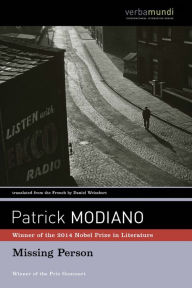
Missing Person, by Patrick Modiano

Missing Person, by Patrick Modiano
Ten years ago, amnesiac Guy Rowland hired a private investigator to figure out who he was and where he came from. Soon afterwards, the PI gave Guy a new identity and a job as the PI’s assistant, saying that sometimes it’s best not to remember who you are. But now that his good friend and employer has retired, Guy again begins his search for identity. 

Reading this book made me understand why Modiano won the Nobel Prize in literature. The prose was almost poetic, and the imagery was gripping. For instance, he found a drained, emotionally dying clue to his past in a run-down bar. The whole chapter was filled with coffin and morgue imagery, complete with an “embalmed man” who observed everything, no matter how stimulating, without blinking an eye. All of Modiano’s chapters were set up in this way – with vivid imagery fitting the clue that he had found – though the imagery was always dark and mysterious. 

Unsurprising for a book about amnesia, the over-arching theme of the story was identity. Who am I? Does my past change who I am? These questions are explored as Guy’s own vision of who he is transforms as he gets more clues. We can only wonder at the end if he’s really found his real self, or if he’s just adopted the identity of a man who fits the person Guy wants to be. 

I definitely urge you to read Missing Person. I hope I find the time to read more Modiano in the future.