I decided to drop the EMT class, and they were kind enough to let my tuition transfer to next semester. I will NOT sign up for another class – so I’ll be able to focus on the EMT class in January.
Movies/Shows watched:
![]() |
| Favorite picture of the month my brand new niece Leilani |
My book reviews are:
The Blank Slate, by Stephen Pinker
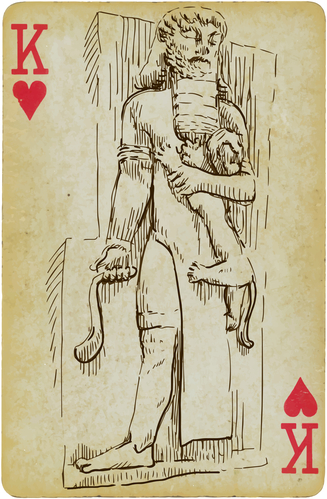
The Epic of Gilgamesh – Historical Background
Game of Thrones, by George R. R. Martin
I am currently reading or listening to:
![]() |
| I’m hoping to finish this one in time for Aarti’s A More Diverse Universe |
![]() |
| Thought this spooky book would be a good one for October |
This month I finished reading or listening to:
![]() |
| This was my RL book club’s choice for September |
![]() |
| I read this with Doing Dewey‘s nonfiction book club |
![]() |
| Read this to supplement my posts about warehousing the mentally ill in prisons |
![]() |
| I think I’m going to a conference on addiction in a couple weeks. Thought this would be a nice supplement. |
Next month’s blogging activities include:
![]() |
| Aarti’s A More Diverse Universe at BookLust |
![]() |
| The Halloween Reading Challenge at Reading Every Season |
![]() |
| R.I.P. X hosted this year by The Estella Society Picture used by permission by creator Abigail Larson |
The video begins by dramatically pointing out a problem: police and correctional officers are not trained to deal with mentally ill “offenders,” which results in unnecessary deaths. This is an issue that I’ve already been seething about in my home suburb here in Minnesota. There have been a few times in recent years when our police have killed mentally ill people that they have been called to help. For instance, an officer shot a knife-wielding suicidal teen after his family called the police for help. Because the police are untrained to deal with mentally ill, families are left in a quandary: they sometimes don’t feel safe around their mentally ill loved one, but they don’t want to call the police for fear that their loved one will either be killed or get tied up indefinitely in a revolving-door judicial system.
The video continues by describing the Crisis Intervention Training (CIT) program. In CIT, officers are trained to drop the authoritative attitude that they are supposed to use in non-crisis occasions. They are trained to use soothing and empathetic tones of voice to disarm the mentally ill. The video included a heartwarming interview with a mother of a schizophrenic man who is grateful for the CIT officers’ treatment of her son during a crisis – how the officers managed to defuse the situation without anyone getting hurt or being sent to jail.
CIT officers in San Antonio can now bring mentally ill people to treatment centers instead of emergency rooms. This change keeps ER and officer overtime costs down. (Officers must be paid overtime because they spend hours in the ER waiting for the “offenders” to get psych evaluations.) An officer on the video claims that in the past 5 years they’ve saved about $50 million of taxpayer money by utilizing CIT and treatment centers.
Watching this video made me feel optimistic about the future of mental health. There’s a lot of work to be done – a lot of training to do, a lot of lobbying to resistant politicians (and an unsympathetic public), a lot of treatment centers to be built – but there is a solution. New Asylums was a fantastic documentary, but it left me feeling hopeless. I’m happy I found the Brave New Films’ snippet.
I also watched this Brave New Films documentary:
This video begins in much the same way as Why are we using prisons to treat mental illness, providing different examples. It continues by discussing brutality within prisons, and the over-use of solitary confinement for mentally ill inmates. One mentally ill woman claims that of the 18 years she spent in prison, 4 of them were in solitary confinement. Each person in solitary confinement costs taxpayers $75,000 a year; compared to the $16,000 a year per person in supportive housing.
Finally, This is Crazy discusses the fate of prisoners once they are released from prison. As discussed in New Asylums, prison is like a revolving door for the mentally ill. Most of the homeless population are mentally ill. They break laws either because they are delusional or because they have basic needs. When they are arrested, they spend 3 to 4 times more jail time than “normal” inmates. They often get shuttled back and forth between stabilization hospitals and jail (where their psychiatric treatment, and their mental state, degenerates). When released, they are given 2 weeks’ worth of medication and are left out on the streets again – with nowhere to look for treatment. Despite the fact that community treatment would save taxpayer money, the first item on the political finance chopping block are treatment centers and institutions for mental illness.
The take-home point of these documentaries is that because police are not trained to deal with mentally ill people in crisis, many mentally ill people end up being abused, killed, or put in a revolving door prison system. Once a mentally ill person has a bad experience with cops, he is likely to be fearful and uncooperative in the future. I have seen this myself. I have a mentally ill friend who suffers from PTSD after being brutalized by police for a case of mistaken identity. Now whenever he sees a cop, even if the cop is completely uninterested in him, my friend goes into a blind panic. I strongly suspect that my friend wouldn’t have been brutalized by the cops if he hadn’t been mentally ill. Another important point is that outrageous amounts of taxpayer money would be saved, and deserving human beings would be treated with compassion, if only cities around the US would develop CIT programs and fund more treatment centers. If only the taxpayers and politicians would listen to reason.
Psychologists study the genetic factor in mental illness using three models: pedigree analysis, twin studies, and adoption studies. In pedigree analysis, a psychologist can determine the strength of heritability within a family by comparing incidence within a family versus incidence within the community at large. The problem with this method is that families not only share genes, but also environments.
Thus, the other two methods are used to tease out the environmental factors from the genetic factors. Looking at the concordance rate in identical twins (the percentage of twins who share the disorder), compared to the concordance rate in siblings or fraternal twins could indicate how big of a role genetics plays.
Another method to tease out environmental factors from genetic factors is studying siblings (or better yet, identical twins) who are adopted into different families – and thus different environments. If identical twins who are adopted into different families have a high concordance rate for a mental illness, then it is likely that the genetic effect is strong.
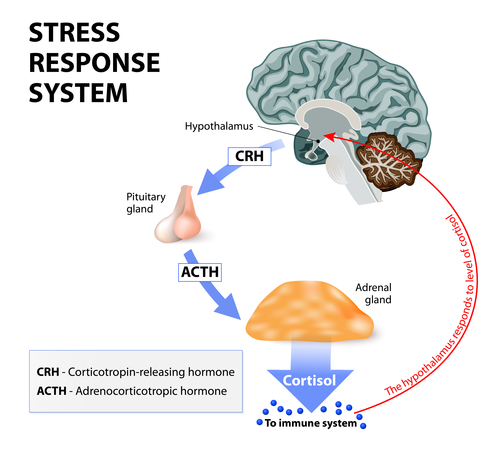
An environment that is often forgotten is the womb during pregnancy. The child of a mother who was undergoing intense stress during pregnancy may have an inclination to respond strongly to stressful situations. The stress during pregnancy could be the cause of epigenetic changes – in which the genes themselves don’t change, but there are changes in the chromosomes, such as the binding of certain molecules which change the expression of a particular gene (or set of genes).
This is a series of posts summarizing what I’m learning in my Abnormal Psychology course. Much of the information provided comes from reading my James N. Butcher’s textbook Abnormal Psychology. To read the other posts, follow these links:
The Definition of Abnormal
A History of Abnormal Psychology
Abnormal Psychology in Contemporary Society
Contemporary Viewpoints on Treating Mental Illness – Biology
Contemporary Viewpoints on Treating Mental Illness – Psychology
Frontline: New Asylums
Brave New Films: This is Crazy
Clinical Mental Health Diagnosis: Biological Assessment
Clinical Mental Health Diagnosis: Psychological Assessment
Does the DSM Encourage Overmedication?
Post Traumatic Stress Syndrome – The Basics
Panic Disorder
Obsessive Compulsive Disorder
Hoarding and Body Dysmorphic Disorders
Depression – an Overview
Personality Disorders – Clusters and Dimensions
Personality Disorders – Cluster A
Personality Disorders – Cluster B
Personality Disorders – Cluster C
Biological Effects of Stress on Your Body
Somatic Symptom and Related Disorders
Dissociative Disorders
Borderline Personality Disorder
Dialectical Behavioral Therapy
Paraphilic Disorders
Gender Dysphoria – Homosexuality and Transgender
Anxiety Disorders
Bipolar Disorder – The Basics
Suicide – An Overview
Traditional treatments, with pharmacotherapy, occupational therapy, and individual group therapy. For instance, a friend of mine was recently released from a mental health ward which had psychological therapy, psychiatry, yoga, prayer meetings, knitting classes, and all sorts of social groups.
Paul and Lentz studied 28 schizophrenic patients for resocialization, learning new roles, and reducing bizarre behavior. From the social learning program, 90 percent of the patients remained in the community after release; compared to the 70 percent who’d had milieu therapy, and the less than 50 percent who’d had traditional therapy. I haven’t read it, but there’s a review of Paul and Lentz’s study available here.
All of these programs seem like a positive change from the early 20th century, but in order to voluntarily get into one of these hospitals, the patient must have both resources and mindfulness of illness. In order to get involuntarily committed, the patient must have an advocate willing to report his danger. Most of the homeless do not have such advocates, and thus they slip between the cracks.
References:
This is a series of posts summarizing what I’m learning in my Abnormal Psychology course. Much of the information provided comes from reading my James N. Butcher’s textbook Abnormal Psychology. To read the other posts, follow these links:
The Definition of Abnormal
A History of Abnormal Psychology
Abnormal Psychology in Contemporary Society
Contemporary Viewpoints on Treating Mental Illness – Biology
Contemporary Viewpoints on Treating Mental Illness – Psychology
Frontline: New Asylums
Brave New Films: This is Crazy
Clinical Mental Health Diagnosis: Biological Assessment
Clinical Mental Health Diagnosis: Psychological Assessment
Does the DSM Encourage Overmedication?
Post Traumatic Stress Syndrome – The Basics
Panic Disorder
Obsessive Compulsive Disorder
Hoarding and Body Dysmorphic Disorders
Depression – an Overview
Personality Disorders – Clusters and Dimensions
Personality Disorders – Cluster A
Personality Disorders – Cluster B
Personality Disorders – Cluster C
Biological Effects of Stress on Your Body
Somatic Symptom and Related Disorders
Dissociative Disorders
Borderline Personality Disorder
Dialectical Behavioral Therapy
Paraphilic Disorders
Gender Dysphoria – Homosexuality and Transgender
Anxiety Disorders
Bipolar Disorder – The Basics
Suicide – An Overview
References: