Hamlet, Act I

In the first act of Shakespeare’s Hamlet, the scene is set. We meet the mournful young prince Hamlet who feels wronged by his mother’s hasty marriage to her deceased husband’s brother…and by their incessant partying in a time of sorrow. We meet Ophelia, admired by Hamlet, her brother Laertes and father Polonius. Finally, we are handed a juicy bit of gossip (adultery and murder!), which give Hamlet his excuse to vent his rage against the tyrant King Claudius. (For a more detailed summary, look below.)

This is my first time reading Hamlet since I was in high school, and I’m looking at it through very different eyes this time around. For instance, I’ve always been under the impression that Polonius was ridiculous. But this time, he appeared long-winded, but his advice seemed sound enough. Is he really ridiculous, or just verbose? I was gratified upon reading Harold Jenkins’ endnotes, where he suggests that Polonius was not meant to be ridiculous but paternal. Emphasizing Polonius’ fatherly relationship develops Laertes’ role as an avenger against Hamlet later in the play. 

A phrase that jumped out at me on this reading was when the ghost told Hamlet (I.v): “Taint not thy mind nor let thy soul contrive against thy mother aught.” Interesting. Because I recall Hamlet being very lusty in his anger against the Queen later in the play. Do I remember wrongly? Or is Hamlet disobeying the ghost? I will have to read on and see. Also, what did the ghost mean by “taint not thy mind”? Was the it admonishing Hamlet to keep his mind clear? Because Hamlet either feigns madness or actually goes mad later in the play. Again, did Hamlet disobey the ghost? 

The final thing that struck me in Act I was the questionable nature of the ghost. If Horatio (a clear-headed scholar) hadn’t believed in the ghost, I would suspect that Hamlet had hallucinated it in a fit of psychotic rage. Hamlet does incoherently rant during the scenes with the ghost. In his endnotes, Harold Jenkins suggests another alternative – perhaps Shakespeare meant the ghost to be a devil – an evil apparition sent to drive young Hamlet to vengeful madness. After all, the ghost has gone below stage, which represents Hell in classical theater. In a later scene (II.ii), Hamlet even questions the nature of the ghost: “The spirit that I have seen May be a devil.” However, based on all the swearing which closes Act I, Hamlet does seem to believe the ghost’s story, even if the ghost’s nature is questionable.

Perhaps I’ll be able to answer these questions as I read on…

(TO SEE MY OTHER POSTS ABOUT HAMLET, GO TO MY MASTER POST)

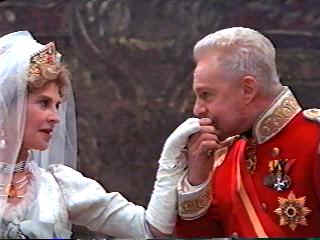
Claudius and Gertrude
Kenneth Branagh’s 1996 film

Act I, Scene ii: Only months after King Hamlet’s death, his brother Claudius has married the Queen, and wrested the throne Denmark. Claudius scolds Hamlet mourning the  dead King and then leaves to continue reveling in his new-found power. Left behind, Hamlet bemoans the disgraceful marriage…How could his mother have married so quickly? And to such a man?! Horatio then rushes in to tell Hamlet about the king’s ghost. Hamlet decides that he MUST see this for himself.


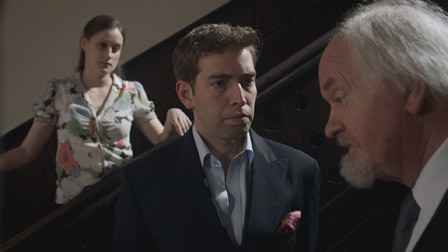
Ophelia, Laertes, and Polonius
The Royal Shakespeare Production 2009
Directed by Gregory Doran

Act I, Scene iii: Ophelia believes that Hamlet loves her, but her brother Laertes and her father Polonius both caution her against the young prince. Laertes believes that Hamlet, as heir to the throne, will not choose Ophelia for future Queen. Polonius agrees. “Hamlet is young!” he says. “Don’t set your heart on him.” Despite her assertions that Hamlet is courting her in a gentlemanly manner, Ophelia agrees to be cautious. After a long-winded speech from Polonius, Laertes departs for France.

Plate XLIV from Volume II
of 
Boydell’s Shakespeare Prints
Image taken from Emory’s Shakespeare Illustrated

Act I, Scene iv and v: It’s night, and Hamlet, Horatio, and Marcellus are looking for the ghost. When the apparition appears, it beckons Hamlet to follow. Hamlet desperately tries to follow, while his friends hold him back. Finally, he orders them to let him be.

Once alone, the ghost demands that Hamlet avenge his death. But it admonishes: “Taint not thy mind nor let thy soul contrive against thy mother aught.” Hamlet swears to avenge his father’s death, and then forces Horatio and Marcellus swear an oath of silence.

Our Lady of Alice Bhatti, by Mohammed Hanif

2012 Book 162: Our Lady of Alice Bhatti 

Written by Mohammed Hanif, Narrated by Nimra Bucha 

Reason for Reading: Shortlisted for the Wellcome Trust Book Prize 


Review 

After spending over a year in a women’s prison on some jacked up manslaughter charges, Alice Bhatti secures a job as a junior nurse in a Catholic hospital in the predominantly Muslim city of Karachi. There, she fights to salvage some amount of pride as she fends off roaming hands and gun-toting suitors. In the midst of this chaos, she manages to save a few lives. But is she performing miracles? Hanif’s narrative has some truly beautiful moments, but I was left wondering: What’s the point? There wasn’t really a story-line…it was just a series of events. The scenery and characters supported the novel, but they lacked plot. This book was shortlisted for the Wellcome Trust book prize, and I understand why – it displays the woes of practicing medicine in a religiously-charged, seedy environment. I certainly have a better appreciation, now, for medical practitioners in neighborhoods like this. I was moved by the characters, but not enthralled by the story. 

Harry Potter and the Goblet of Fire, by J. K. Rowling

2012 Book 162: Harry Potter and the Goblet of Fire

Written by J. K. Rowling, Narrated by Jim Dale

Reason for Reading: Harry Potter Read-along hosted by Lost Generation Reader.


Review

In this fourth installment of the Harry Potter series, Harry is thrust against his will into the Triwizard Tournament – a competition for which he is his underaged and underqualified. Is someone trying to get him killed? Furthermore, Harry, Ron, and Hermione are experiencing the first pangs of teenaged angst. They all feel misunderstood and a bit angry at times. Will they be able to overcome their emotions in order to quash the rising power of Lord Voldemort? Well, at least they’ll have a lot of adventure while they’re trying. One of the highlights of this book is meeting the students of the two other large wizarding schools in Europe: The dark and broody students from Durmstrang and the too-formal sissies from Beauxbatons. (Ok, maybe they’re not ALL sissies.) 😉 This is my favorite book of the series because it has *swoon* Viktor Krum. It is also the first book in the series with “mature” content. It’s longer, moodier, and more dangerous than the first three. And, it’s the first book in the series to leave significant strings untied – leaving room for more plot development. I’m SO glad Rowling knew what to tie up and what to leave open though. She’s managed to leave a reasonable opening without cliffhangers. I really appreciate that. Thank you Ms. Rowling!


Pale Fire, by Vladimir Nabokov

2012 Book 161: Pale Fire

Written by Vladimir Nabokov, Narrated by Marc Vietor

Reason for Reading: November was Russian Reading Month, hosted by Tuesday in Silhouette. 

Review

In this complex piece of literature, we explore the psyche of Charles Kinbote, an eccentric and obsessive man who is writing the introduction and notes to a 999-line poem entitled Pale Fire by a recently deceased poet with whom Kinbote has become enamored. Nabokov’s novel isn’t written in novel-form, though. It has four major parts: Kinbote’s introduction to Pale Fire, the poem itself, Kinbote’s prolific footnotes, and his index. This doesn’t really sound like an engrossing story, I know, but descriptions can be misleading. Kinbote’s notes are hilarious, sad, and frightening. As the book proceeds, we readers become more aware of the depth of Kinbote’s obsessions – we learn more about who he is (arguably, who he thinks he is) and, through the unreliable testimonies of Kinbote, we learn about the passions of the poet John Shade. This is the type of book that has so many layers, you’ll never find the core…but you’ll be fascinated and laughing in turns while you look. This was my first reading of the book, and I’d have to read it again to decide on my own interpretation. I was really impressed by the audiobook production…this isn’t the type of story that lends itself well to audio, but they did an admirable job. There were two readers, one for Kinbote’s thoughts and one for the poem of John Shade. Both readers did a fantastic job…especially Vietor with Kinbote. He put JUST the right emphasis on words so that I would catch the humor in the complex word-play. However, if I read it again, I’ll probably do it using the written-word so I can flip back and forth. This book is definitely worth a read if you like unique stories and complex psyches.

Culture and Imperialism, by Edward W. Said

2012 Book 160: Culture and Imperialism

Written by Edward W. Said, Narrated by Peter Ganim

Reason for Reading: Got it on sale from Audible

Review

Culture and Imperialism describes how the language used in literature can powerfully impact our stereotypes of other cultures. Using examples in classical literature (ranging from Jane Austen, to Joseph Conrad, to Albert Camus), Said shows us how imperialism was reinforced by the written word. Then, (using examples including V.S. Naipaul and Salman Rushdie) he illuminates how today’s societies – who are so focused on multi-culturalism – read the right books for the wrong reasons. I found this book intriguing. I listened to it on audiobook – Ganim’s reading was smooth and engaging – but I’m now tempted to pick up a hard-copy of the book and use it as a reference in my perusal of literature. This book would be interesting to anyone interested in the culture of imperialism or in literary criticism of literature in the imperialist era.

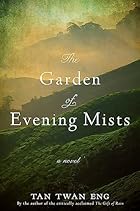
The Garden of the Evening Mists, by Tan Twan Eng

2012 Book 159: The Garden of the Evening Mists, by Tan Twan Eng

Reason for Reading: Short-listed for the 2012 Booker Prize

Review

Having suffered through a Japanese slave-camp during WWII, Yun Ling Teoh, a young Chinese-descent lawyer in Malaysia, carries around a lot of anger against the Japanese. However, she’d made a promise to her deceased sister that she would build a Japanese garden, so she reluctantly visits Aritomo – the only Japanese gardener in Malaysia. Aritomo refuses to design a garden for Yun Ling, but he offers to take her on as his apprentice so that she may design one herself. Yun Ling learns to let go of her anger as her friendship with Aritomo grows. But Aritomo has his own secrets. 

How can I express what an amazing book this was? Sure, it had a couple of slowish spots (it WAS, after all, a book about gardening) but the story is magical. The historical and cultural backdrop is intriguing (I learned a lot while reading, but didn’t feel like I was being “taught”). Because the book takes place in two different times (current day and shortly after WWII), the story unfolds gracefully – allowing the reader to learn the story of Aritomo and Yun Ling at just the right rate…but yet somehow the time also blends together giving an impression of continuity that is particular to Eastern philosophy. On top of that, the more I learned about the story, the more fascinated I was by the two characters. This book is definitely worth your time. 

Interpretive note with possible spoilers
One thing that struck me while I was reading this book is that I noticed an inconsistency in what the narrator (Yun Ling) was saying. At first, I wasn’t sure whether the author had made a mistake or if he had purposely introduced inconsistencies to show that Yun Ling had either an unreliable memory or was hiding something. I finally came to the later conclusion (though the unreliable memory was possible too). I think it’s fascinating that such inconsistencies added to the overall effect rather than subtracting from it. I applaud Tan Twan Eng for his careful writing of this book. 🙂

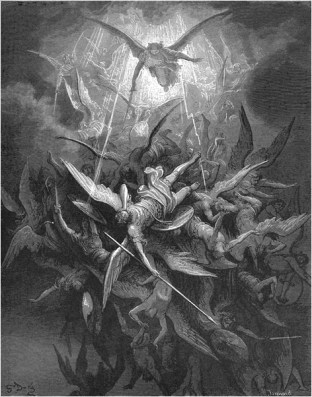
Paradise Lost – Book I Lines 1 – 191

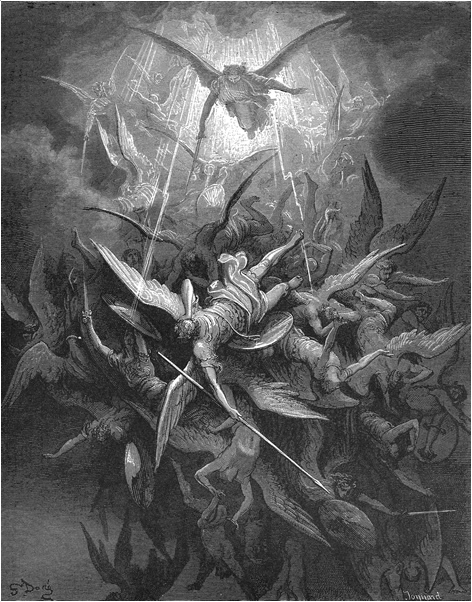
Him the Almighty Power
Hurled headlong flaming from th’ ethereal sky,
With hideous ruin and combustion, down
To bottomless perdition, there to dwell
In adamantine chains and penal fire,
Who durst defy th’ Omnipotent to arms.
Book 1, 44-49
Gustave Dore (Source)

Since I am having trouble interpreting Paradise Lost, I am painstakingly going through and interpreting it. I can then use these notes while I read it for deeper meaning later. 🙂 To see other posts about Paradise Lost, go to my master post. 

Rachel’s Notes on Lines 1 – 26 of Book I (Milton’s invocation)

Psalm 125.4 – “Do good, O Lord, unto those that be good, and to them that are upright in their hearts.” 


Milton is asking the Holy Spirit to guide him as he tells us about the disobedience of Adam and Eve. He invokes the Holy Spirit as the Heavenly Muse who inspired Moses on Sinai (lines 6-8) and then the spirit of God in the Temple on Mt. Zion (line 10). Milton believes that the Holy Spirit will help him soar above earlier poets, who invoked their muses from the oracle at Delphi (lines 11-16). He asks instruction from the Holy Spirit so that he may “justify the ways of God to men.” 

Rachel’s Notes on Lines 27 – 36 (What made Adam and Eve revolt?)

First, we will describe what caused Adam and Eve to fall from God’s favor by breaking the only law that God asked them to obey (i.e. not to eat the fruit of the Tree of Knowledge of Good and Evil). It was the Serpent who first seduced Adam and Eve to revolt. The Serpent’s guile was stirred up by envy and revenge, so he deceived Eve. 

Rachel’s Notes on Lines 36 – 83 (Satan and his minions have fallen from Heaven)

Isaiah 14:12 – “How art thou fallen from heaven, O Lucifer, son of the morning!” 

It happened after Satan’s pride had cast him and his rebel angels out of Heaven. Because Satan thought he was equal to his Lord God, he and his host of rebels had warred against Heaven in a vain attempt to place Satan above his peers. But God hurled Satan and his rebels from Heaven – headlong, like fiery meteors bound in unbreakable chains – to crash ruinously into Hell. [Much like the Titans thrown to the pits of Tartarus in Hesiod’s Theogeny (664 – 735)] the celestial demons spent nine days and nights lying vanquished in the fiery gulfs of Hell. Satan’s doom made him angrier, because he had not only lost the happiness of Heaven, but he now must endure eternal suffering instead. Pissed off, he looked around. Dismay and affliction, stubborn pride and steadfast hate were palpable in all he saw. Hell dismally stretched as far as his immortal eye could see. 

Hell was like a gigantic furnace with raging fires – but instead of giving off light, the flames emitted darkness visible. This palpable darkness illuminated sights of woe, regions of sorrow, and doleful shades. Hell was a place where peace and rest would never dwell. Hope would never come here, but instead came endless torture. The torment fed the flames, urging the fire on for eternity. Such was the place that Eternal Justice had prepared for the rebellious. Here, they would eternally remain in darkness, as far away from God and the light of Heaven as 3X the distance from Earth to the far reaches of the universe. [In other words, Hell was located in Chaos…beyond the universe. Milton’s Hell was not in the center of the Earth, like in Dante’s Inferno.] How unlike Hell was from Heaven, from whence they fell!

Satan saw his companions-in-arms overwhelmed by the tempestuous fires. Weltering in the tempestuous flames by his side, Satan saw Beelzebub – who was his peer in leading the host of fallen angels. Satan broke the horrible silence by saying: 

Rachel’s Notes on Lines 84 – 126 (Satan tells Beelzebub that he’s still pissed off and this war ain’t over yet)

[Satan speaks with obscure syntax to show that his passion overpowers reason. I’m trying to ruthlessly clarify it for the sake of my notes, though.]:

“If you are he! But how you have fallen! How changed from him who was so shiny in Heaven! If you are he who joined with me in glorious enterprise…now we join in misery and ruin. Into what pit have we been thrown? How far have we fallen? God has proven himself much stronger than we. Who knew the strength of that mighty arm?! But despite what those powerful arms and His mighty rage can further inflict on us, I do not repent.

“My pride had been injured, so I fought God with my innumerable army of spirits who  preferred me as their leader. We fought a battle on the planes of Heaven and shook His throne. So what if we lost that battle? All is not lost! We have not lost our vengeful natures, our immortal hate, or our courage to never yield! What else is there to live for, besides the will to succeed? 

“He’ll never get me to bow to him and deify his power! We had Him worried…He was afraid he would lose against my powerful army. Fate has given us immortal bodies, so our army will be just as strong as before. But now we know our Foe better! Now, we can wage a more successful war – an eternal war that is irreconcilable to our Foe…that Foe who now joyfully reigns as tyrant in Heaven.”

Though he was in pain and wracked with deep despair, Satan boasted. Beelzebub answered:

Rachel’s Notes Lines 127 – 156 (Beelzebub is concerned that they are now thralls of God)


“Oh powerful prince, you led the embattled angels to war; your deeds endangered Heaven’s perpetual king, and made him defend his supremacy (whether that supremacy was upheld by strength or chance or fate…). I regret our army’s defeat. We have lost our place in Heaven. The entire army has come as close to dying as our immortal bodies are capable. Our minds and spirits will return to us soon, but we will suffer for eternity in Hell. What if God (who I now believe is almighty, since He could not have overpowered our army otherwise) has left us our spirits and strength intact only so that we can better endure our sufferings? Or perhaps he will use us as his slaves? What good does it do us to have our strength if we are only to endure eternal punishment?”

Satan answered:

Rachel’s Notes Lines 157 – 191

“Well, Fallen Cherub, to be weak is miserable, whether we’re active or not. But be sure of this: Our acts will never be for good. Our sole delight will always be to do ill! We will always resist His wishes! If he wishes to bring good out of our evil acts, then we shall pervert His wishes and use good acts for evil. We will pervert His plan! 

“Do you see that God has called our vengeful pursuers back to the gates of Heaven?  The storm of sulfurous hail that He shot at us has abated. And the raging lightening and thunder has perhaps spent its wrath and will cease to bellow through the vast and bottomless deep. Let us not miss our chance if God’s fury has been satiated. 

“Look at the dreary plains of Hell, illuminated by the darkness of Hellfire. Let’s sail these fiery waves over there, and we can rest (if rest is possible). After we have gathered our strength, we’ll discuss how we can offend our enemy, repair our losses, and overcome this dire calamity. We will either gain reinforcement from hope, or resolution from despair.”  
The Nose, by Nikolai Gogol

Major Kovalev, a Caucus-made collegiate assessor (in other words, a minor official who has been elevated by his connections rather than his intelligence), awakens on March 25th to discover that his nose is missing. To his dismay, he later sees his nose masquarading around town in the guise of a state councilor (equivalent rank of general). Kovalev absurdly tries to put his nose in its place.

Nikolai Gogol’s “The Nose” is a satirical short story written around 1835. It is one of Gogol’s well-known Petersburg tales. Gogol is the father of Russian modernism and strongly influenced writers like Dostoevsky. Most literary critics consider Gogol to be a social satirist and protector of the little man; though Richard Pevear, in his introduction to The Collected Tales of Nikolai Gogol claimed: “Whatever semblance of social criticism or satire there may be in the Petersburg Tales is secondary and incidental.” (1) He feels that  Gogol included elements of social satire in his stories, but the satire so quickly dissolves into the absurd that this fantastic element should be considered the primary point of Gogol’s stories. While reading “The Nose” I was struck by the social satire, but I DO agree that, as quickly as it came, the satire faded and absurdity reigned.

My thoughts/summary (may contain middle-of-story spoilers)

Major Kovalev was a stupid, self-important, vain, name-dropping minor official, but as he desperately tried to regain his lost nose I couldn’t help feeling sorry for him. Imagine the horror he felt when he awoke to find his nose missing. What would all his important friends think? Would he ever be able to flirt again? This blow was clearly below the belt. He rushed out into the world, impotently searching for his nose when lo! He saw the nose! It was so finely dressed that even Kovalev had trouble recognizing it. At first, he felt chagrin – he wasn’t even sure how to address the clearly-high-ranking nose. But it was his nose, after all, and he mustered up the courage to politely suggest that the nose re-join his face. But the nose politely refused to understand Kovalev. Finally, he blurted out: “It seems you ought to know where you belong, and where do I find you?” The nose blithely answered: “Judging by your dress, there can’t possibly have been close relations between us.” (2)

I had to laugh at that quote. The nose, which had formerly been very intimate with Kovalev, but which is now an elevated rank, pretended that it couldn’t possibly have ever known him. 🙂 Remind you of anyone?

Kovalev then tried to put out a notification in the newspaper saying that his nose was masquerading as a high official, don’t let it fool you…and don’t let it leave town! But the newspaper office was much more interested in lost dogs and bicycles for sale than the heinous nose-theft. They didn’t want the responsibility of such an advert, and so they simply denied that they could do anything about it and suggested another office Kovalev should try. (That reminds me of a time when I called up the customer service of [un-named corporation] and spent a couple hours transferring back and forth from office to office – often the the same office multiple times – to fix a problem that (as it turns out) was an easy fix on the internet.)

The police commissioner was also dramatically unhelpful. The indolent police commissioner had been about to take a nice long post-lunch nap when Kovalev came with his complaint. He should not be expected to start an investigation on a full stomach, the commissioner claimed. “Moreover, they don’t tear noses off decent citizens’ faces.” (2) The police commissioner excused his laziness by blaming the victim for the crime, which, as far as I’m concerned, is crime in itself. A crime that still happens to this day. Whenever we hear “she was asking to be raped – the way she was dressed,” the speaker is excusing his inability to do anything useful about a problem by blaming the victim. 

I adored this story. I got a good laugh while nodding in emphatic agreement with Gogol’s still-relevant criticisms of society. But there are so many other ways of interpreting this work. In his introduction to The Collected Tales of Nikolai Gogol, Richard Pevear says “Gogol was made uneasy by his works. They detached themselves from him and lived on their own, producing effects he had not forseen and that sometimes dismayed him.” Although this statement was not in reference specifically to “The Nose,” it is clear that Pevear (perhaps unconsciously) views the story as an allegory for Gogol’s dismay at the unintentional social impact of his stories. 


(1) Gogol, Nikolai. The Collected Tales of Nikolai Gogol, translated by Richard Pevear and Larissa Volokhonsky. Knopf  Doubleday Publishing Group. 2001. ISBN-13: 9780307803368.
(2) Dialog is taken (sometimes paraphrased) from Gogol, Nikolai. The Diary of a Madman and Other Stories, translated by Andrew MacAndrew. Penguin Group. 1960. ISBN 0451524039.

The Marshal’s Promise, by Rhonda Gibson

Book 158: The Marshal’s Promise, by Rhonda Gibson


Reason for reading: This is one of November’s picks for the American Christian Fiction Writers Association online book club. Anyone is welcome to join. Discussions start on the 20th, and this book only takes a couple hours to read.

My Review
In this sweet little Christian historical romance put out by the Harlequin publishing company, Rebecca Ramsey has been forced by her evil stepmother to answer an advert for a mail-order bride. But upon arriving in New Mexico territories, she discovers that her husband-to-be has been killed. With nowhere to go, she decides to make her home in New Mexico. Luckily, the Marshal offers her a job as his housekeeper. But does the Marshal have an ulterior motive for his offer? Sparks fly as these two learn that communication works better than secrets. This was a very cute little book, and there were some really sweetly romantic moments in it. There were also some tartly romantic moments. 😉 If you’re looking for a light historical romance, this is a good choice; however, this book has quite a few anachronisms in it so it’s not to be read by the seriously hard-core historical fiction readers. This book is meant to be fun and sweet, not cerebrally historic. 


Hamlet: Act I, Scene i

BBC’s Dramatic Works of Shakespeare Collection
Image taken from Hyperion to a Satyr

Act I Scene i: 


Setting: Sentinels stand on the battlements of the castle

Characters: 

  • Barnardo, Marcellus, and Francisco of the King’s guard. 
  • Horatio, an educated gentleman, skeptical of ghosts, friend of Hamlet

Summary:

Twice recently, Barnardo and Marcellus have had their watch interrupted on the stroke of 1AM by an apparition in the form of the recently deceased King Hamlet. Fearing to speak to the ghost themselves, they had invited the skeptical scholar Horatio. Upon the tolling of the hour, the ghost appears, and Horatio calls out, charging it to speak. But the ghost stalks silently away. Our skeptical scholar (and therefore our audience) is now convinced that the ghost is not a fantasy. Aggrieved, Horatio suggests that the ghost is an ill omen. 

The three men then begin gossiping about an upcoming war, for which the ghost might be a portent. Thus, the audience is educated: Many years before, the late King Hamlet had slain in battle Fortinbras, the King of Norway. King Hamlet had confiscated some treasures and lands in that battle, which were given to young Hamlet upon his father’s death. The son of the late King Fortinbras, also named Fortinbras, has decided (after brooding for 30 years) to avenge his father’s death and seize the lands back from young Hamlet. He’s been gathering a band of misfits to wage war on Denmark. (This band of misfits apparently morphs into a well-organized army by the end of the play…nice to have footnotes to point out all the inconsistencies!) 

Gossip-fest complete, the ghost reappears and Horatio calls out, commanding it to speak. The ghost is about to answer when the cock crows. The ghost starts, and fades away as on a dreadful summons. Horatio decides that perhaps the ghost didn’t speak because it wants young Hamlet. The men resolve to tell Hamlet about the ghost.

My thoughts: Suspenseful first scene. I think it’s fascinating the way Shakespeare has managed to introduce several very important points into the scene, without distracting from the ghost. We now know that Horatio is a skeptical scholar, that the ghost is likely the spirit of the dead king, and that Denmark is about to be attacked by the vengeful young King of Norway. All that information flowed so smoothly into the dialog that the audience wouldn’t even realize they were being educated. I also like the suspense. What does the ghost want to say? We’ll have to wait and see.

See all my posts about Hamlet on my Hamlet Master Post.