Classics Club: October Meme

It’s time for my post for the Classics Club October Meme! This meme is a way for all of us classics clubbers to interact with each other and remind ourselves that we can’t always be introverts. 😉 The question of the month is: Why are you reading the classics?


I have always loved reading the classics. First of all, if they’ve survived this long, that’s generally because they’re so powerful that they resonate throughout the ages. I appreciate a good book! Second, I enjoy learning about history. Reading books that were written in a certain historical period is a fantastic way to help me learn about that time period. Third, I enjoy picking up on allusions to classics in popular culture (and other books). It is fascinating how certain ideas stay with us forever…how some of them morph with time and become new ideas. I enjoy following this process because it helps me understand what is important to us psychologically. 

Update: So far, I have read and reviewed 3 of 50 on my classics club list.

For those of you who are not members of the classics club (and therefore don’t have your own blog post on the topic) please feel free to answer this month’s question in my comments! 🙂


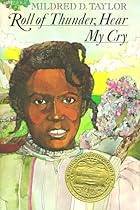
Roll of Thunder, Hear My Cry, by Mildred D. Taylor

2012 Book 143: Roll of Thunder, Hear My Cry, by Mildred D. Taylor
Reason for Reading: This is my fourth and final book for Book Journey’s blog tour for Banned Books Week. This year, I read only YA books that I happened to have lying around in my TBR pile…it was fun! 🙂

My Review

In this Newbery Medal-winner, fourth grader Cassie Logan learns that African Americans are treated as second class citizens in Depression-era Mississippi. She and her family rebel the nasty Wallace brothers by arranging a boycott of their store. Wallace-brothers-and-friends respond with horrifying violence. This was an amazing book. The narrative was engaging, the characters were lovable, and suspense was high–I sincerely worried about what the ugly white-folk were going to do. While reading, I was struck by how similar in theme this book was to all the unoriginal dystopias that are being cranked out by the YA market these days. It was about a young girl realizing that her society was not as wonderful as she had grown up thinking…it was about fighting for your rights against a seemingly hopeless situation. But, wait! This book was actually meaningful because it was describing a REAL situation! Something tragic that people actually suffered! That makes Roll of Thunder, Hear my Cry a much more powerful book than any of those dystopias can ever hope to be. I think an intelligent fourth grader who loves dystopias couldn’t help but love this book as well. 


(Oh, wait, sorry, Roll of Thunder, Hear My Cry IS missing the cheesy cliche love triangle that YA dystopias all seem to have these days. Sorry girls!)


This book was banned because of racism, violence, and language (including the use of the infamous n-word). There is no doubt at all–This book HAD racism, violence, and the n-word. However, the purpose of the book was to show young readers the horrors of racism–so that they could learn a bit of history AND learn to be better people themselves. This book is not going to make children into racists. The bad influence of parents, role models, and friends lead to racism. This book, with the right discussion, will be a good influence on our children. Yes, the book has scary scenes in it, but nothing most fourth graders couldn’t handle. We can’t protect our children from the real world indefinitely, and as far as I’m concerned it’s better for them to know what it’s like than to enter it in compete innocence and immediately have their fresh young spirits crushed. My philosophy–breed them tough, because sheltering only hurts them later!


Harry Potter and the Sorcerer’s Stone, by J. K. Rowling

2012 Book 142: Harry Potter and the Sorcerer’s Stone


Written by J. K. Rowling, Narrated by Jim Dale


Reason for Reading: This is my third book for Book Journey‘s blog tour for Banned Books Week, and this time I decided to try something familiar. Since Lostgenerationreader is having a Harry Potter readalong, I decided to join in and read the first HP book for Banned Books week. 🙂 This is probably my third time reading this particular book, but it will be my first time reading the series “in one go.”


My Review:
Harry Potter has been living with his neglectful and emotionally abusive parents ever since his parents died when he was a baby. But on his 11th birthday, everything changes. He finds out that his parents were a witch and a wizard and that he, himself, has been accepted to Hogwarts, a school for witchcraft and wizardry. He is thrilled to feel comfortable and welcome for the first time in his life, but he soon discovers that not all the teachers at Hogwarts are looking after his best interest. Can Harry and his adventurous friends save the Sorcerer’s Stone from being stolen and used for nefarious purposes?

Of course, you all know the answer to that question. If you don’t, then you probably aren’t interested in the answer and I’m surprised you’ve gotten this far into my review. Any comments I make about my appreciation for this book will fade in the wake of the raving of others. Therefore, I’ll only comment on the Jim Dale narration (which was the narration released in the US, but which is apparently no longer for purchase–I’m not sure if they intend on putting out a different narration? Releasing the Stephen Fry narration in the US would be a kind, generous, and profitable move!) Jim Dale did a pretty good job on the narration–If I didn’t already have a very set impression of what all the characters should sound like, then I’d have been much more happy with this rendition. Unfortunately for Dale, however, most anybody who would listen to this audiobook today already has a very set impression of how a centaur should sound and how to pronounce “Voldemort.” This isn’t Dale’s fault, but I suspect his reading has been taken off the market because of these issues. However, I was quite able to ignore this rather amusing issue and enjoy the audiobook. 🙂 I will continue with the rest of the Dale narrations.


My comments on book banning

Harry Potter is #1 Top 100 Banned/Challenged Books: 2000-2009 AND #48 on 100 most frequently challenged books: 1990–1999.  As several people commented, Harry Potter was banned for similar reasons as The Headless Cupid, which was my first Banned Books Week review. Parents are concerned that their (apparently not-very-bright and way-too-malleable) children will be driven to the darkside of the occult and Satan worship by this book. I’m afraid I have to disagree and say “that is hogwash.” Harry Potter and the Sorcerer’s Stone had a very clear good vs. evil message. Loyalty, bravery, and camaraderie are emphasized as important traits in the characters of Harry Potter. Love stands out as pretty much THE most powerful force of good available to humanity. That seems to be a pretty healthy message, even to a fundamentalist Christian. On the other hand, “doing ANYTHING to succeed in life” is portrayed as an undesirable characteristic. Killing or taking advantage of the innocent is touted as the most sinful act possible. People whose views of good and evil have faded away to “there’s-only-the-weak-and-the-powerful” are portrayed as demented. Again, the views of “evil” that are communicated in this book are in fitting with Christian views. This is NOT a morally ambiguous book! So why are the fundamentalists so worried? Just because their kids might use their imaginations a little bit? 


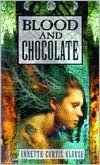
Blood and Chocolate, by Annette Curtis Klause

2012 Book 141: Blood and Chocolate, by Annette Curtis Klause

Reason for Reading: This is my second post for Book Journey’s Banned Books Week 2012 blog tour. By reading banned books, I feel that I’m expressing my freedom of speech (or in this case, the author’s freedom of speech), but I’m also interested in learning more about WHY people ban books. I don’t approve of banning most of the books on ALA’s top banned books lists, though for some of them I can empathize with the objections. In the case of this particular book, I understand the objections, though I think banning it only gives the book added attention. Blood and Chocolate is #57 on the ALA’s list of Top 100 Banned/Challenged Books 2000-2009.

My Review 

Vivian is a 15-year-old werewolf living happily with her pack in the country when a murder destroys the world she loves. In tragic disarray, her pack moves to the suburbs and tries to get reorganized. In the midst of this chaos, Vivian has an identity crisis and falls for a human “meat-boy.” Her experiences trying to fit in with meat-people teaches her a lot about herself. Meanwhile, the grisly murders continue, and the pack must hunt down the killers before they, themselves, become hunted. This book was very engaging. It was interesting and suspenseful enough that I really wanted to know how it ended, despite the fact that I disliked all the characters. Vivian was manipulative and conceited. Her mother had little character other than expressing concern for her daughter and being obsessed with sex. Vivian’s meat-boy boyfriend seemed likable enough at first (though not particularly alluring), but then his qualities took a nose-dive towards the end of the book. Honestly, I’m not sure why this book gets such good reviews, but I suppose it’s simply because the narrative is so engaging. 


My feelings about why this book was banned

I had the feeling while reading Blood and Chocolate that Klause intended this book to be a slap in the face to prudish book-banners. For me, that took a lot of the enjoyment out of the book because I felt like I was being beat over the head with a Message. Even if I agree with the Message, I think a novel’s MAIN objective should be to tell a story. If the story is told well, the message comes through in a smooth allegory. This book seemed like Klause was going for shock-value to pump up her sales. The reason I believe that this slap-in-the-face was purposeful and not simply part of the story is because Klause included a conversation between Vivian and her boyfriend about adults that objected to certain types of behavior and wanted to burn his books. 


Klause included almost all of the qualities that our book-banners of America hate: explicit sexualization of everything, the occult, disrespect for religious symbols, obscenties, violence, age-inappropriate relationships, and an entire page musing about different ways to commit suicide. None of this was bad enough to scar a child or young teen. However, I feel she REALLY overdid it with the sexualization. You’d think from this book that the defining characteristic of werewolves is that they were unabashedly and continuously horny. This seems to be the defining trait of teen-aged boys and middle-aged men as well ;). It was a bit obnoxious. The randiness of every character was SO overdone that it distracted from the story. So in the end, no, I don’t think this is subversive literature. But I have no respect for Klause’s ability to portray a message with finesse.


The Headless Cupid, by Zilpha Keatley Snyder

2012 Book 140: The Headless Cupid, by Zilpha Keatley Snyder 


Reason for Reading: This is my first post for Book Journey’s Banned Books Week 2012 blog tour. By reading banned books, I feel that I’m expressing my freedom of speech, but I’m also interested in learning more about WHY people ban books. I don’t approve of banning most of the books on ALA’s top banned books lists, though for some of them I can empathize with the objections.  For the most part, I think the people who are objecting to these books need to give their children more credit for non-gullibility. All parents should watch what their children are reading, watching on TV, playing on the computer, etc. I believe that the best way to raise children is through a lot of communication. Banning books isn’t going to save our children from the real world. 


My Review
David, the eldest of the Stanley kids has had to take care of his three younger siblings ever since his mother died. When his father gets remarried, David has to adjust not only to the new mother, but to a new teen-aged sister. And what a strange sister she is! Amanda dresses in dark flowy clothing, has a triangle in the center of her forehead, and wears an upside-down smile. Amanda begins to teach the Stanley kids about the occult, but soon things get out of hand when they awaken a poltergeist! This book is appropriate for 3rd-5th grade range.


The Headless Cupid is 98th on on the ALA’s list of the top 100 books banned between 1990-2000. The complaints about the book were that kids might become interested in the occult (or even learn to practice the occult) from this book. Of course, this is preposterous. This is not a story about an evil little teen-aged witch–it’s a book about an angry girl who wants to get revenge on her mother for getting remarried. This is a book about the very real emotions children feel when their parents make life-changing decisions. It’s about coping with that anger. It’s about love and forgiveness. Any child reading the book will end on a note of acceptance and forgiveness (unless they don’t finish the book). I think people who fear a book about kids playing let’s-pretend probably ought to lock their doors and hide away…because the real world is a lot scarier than this book.


Sunday Salon: September Update

September was a good month for my blog. I finished up my Coursera MOOC in Fantasy and Science fiction…it was a wonderful experience, but it was exhausting! I posted reviews for many of the books required for this course: 


I was going to take the Greek / Mythology Coursera course,  but have decided that it covers the materials way too quickly…I don’t think I can do justice to so much amazing literature in just 10 weeks. Therefore, I’m going to return to my focused study of Paradise Lost. Expect more posts soon! 🙂

The last 11 days of September, I led an email discussion of Sandi Rog’s new book Walks Alone for the ACFW Bookclub. I have loved every Sandi Rog book I’ve ever read. Walks Alone is a christian fiction historical romance about a young woman in post-Civil War era who travels alone from New York to Denver and is kidnapped along the way by a band of Native Americans. Although she is filled with dread and fear, she soon discovers that they have a side to their story too…and she begins to fall in love with her kidnapper. I admit that when I read the description I thought it to be a bit trite, but I gave the book a try anyway because of my love for Sandi Rog’s books. I’m so glad I did. 🙂 It wasn’t trite at all. It was a really cute book.  My review of the book is here. 


On my blog, the last week of September was dedicated to Aarti’s A More Diverse Universe blog tour. She did an amazing job, and I really appreciate the effort she put in to the tour. For this tour, I reviewed:


And, of course, I reviewed books that fit into none of these categories:

Sadly, I only had time to post one opinion article–it was about the creationism / evolution debate. 

In an attempt to become more active in the blogosphere, I also joined a few other blog activities such as R.eaders I.mbibing P.eril VII, The Classics Club, The Orange Prize Project, and The Complete Booker.
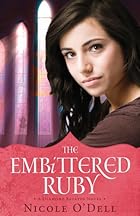
I will be starting out October with posts for Banned Books Week. Book Journey has organized a blog tour in honor of the week. I will be blogging about 4 banned children’s/YA books during that week. From October 20 – 31, I’ll be leading an email book discussion of The Embittered Ruby, by Nicole O’Dell for the ACFW Bookclub. You’re all welcome to read the book and join in the discussion! This month is dedicated to Christian YA literature, and as you can see on the ACFW Bookclub website, we discuss two books a month, and you’re welcome to choose either one of them. Besides my hope of getting farther into my study of Paradise Lost, here’s a list of books I hope to read in October: 


Surprised by Joy, by C. S. Lewis (IN PROGRESS)
Harry Potter and the Sorcerer’s Stone, by J. K. Rowling 
Roll of Thunder Hear my Cry, by Mildred D. Taylor (IN PROGRESS)
The Magician’s Nephew, by C. S. Lewis
Lord of the Flies, by William Golding
Interview with a Vampire, by Anne Rice
The Poisoner’s Handbook, by Maxwell Hutchkinson
Pride and Prejudice: A Norton Critical Edition, by Jane Austen (IN PROGRESS)
Blood and Other Cravings, ed. Ellen Datlow 
A Book of Horrors, ed. Stephen Jones
House of Wisdom, by Jim Al-Khalili

Who Fears Death, by Nnedi Okorafor

2012 Book 139: Who Fears Death
written by Nnedi Okorafor, narrated by Anne Flosnik
Reason for Reading:
 This is my fourth book for The Diverse Universe blog tour, in which we are reading speculative fiction books written by authors-of-color. Who Fears Death was a Nebula nominee in 2010 and won the World Fantasy Award in 2011.

My Review

This book takes place in a post-apocalyptic Sudan, which is peopled by two races–the dominant Nurus and their “slaves” the Okekes. Onyesonwu Ubaig-Ogundiwu (whose name means “Who Fears Death?”) is a the daughter of an Okeke woman who was raped and brutalized by a Nuru sorcerer and his genocidal army. Onyesonwu was considered “Ewu,” a mixed-race child who brings bad luck and violence wherever she goes. Despite Onyesonwu’s mother’s lucky marriage to a kind man, the girl spent most of her younger years feeling insecure and angry at the world. However, as Onyesonwu grew, she inherited the powers of a sorcerer…angry powers that she couldn’t control without the help of a teacher. This story is the coming-of-age of a young sorcerer destined to wreak vengeance on a violent father. 
I am having a really difficult time deciding what rating to give this book. Okorafor’s writing was powerful (as was the reading by Flosnik). The story was compelling, though a few sections dragged for me–these parts could have been cut out to make a shorter book with no loss to the story. The genocidal violence and rape were described in disturbing detail, though these details were tactful and necessary. Okorafor used a post-apocalyptic setting to write a powerful story about issues (like genocide, female circumcision, and oppressive sexism) that are current problems in parts of Africa today. In fact, the most powerful part of the story (the consequences of human brutality) were disturbingly realistic and representative of the world many of us Westerners choose to ignore today. But, as disturbing as this book’s content was, there was also a ray of hope and optimism. And behind all of this darkness and light, there is the story of a girl who wants nothing more to love her man, her friends, and her mother despite all odds. (Well, ok, she also wants revenge…)
About the Author:
Nnedi Okorafor is the American-born daughter of Igbo Nigerian parents. She holds a PhD in English from the University of Illinois, Chicago. She is a professor of creative writing at Chicago State University. She has written several YA fantasy novels. Who Fears Death is her first book for adults.  

The Hundred Thousand Kingdoms, by N. K. Jemisin

written by N. K. Jemisin, narrated by Casaundra Freeman


Reason for Reading:

First of all, let me thank Morphi who recommended this book a few weeks ago when I said I was reading authors-of-color…-of-speculative-fiction for the Diverse Universe Tour. This is EXACTLY what I needed after reading all those heavy literary works. This book was fun brain candy, but it also had some interesting messages as well. 🙂 


My Review:

When Yeine Darr’s mother dies, she is called for an unexpected interview with her estranged maternal grandfather, the ruler of The Hundred Thousand Kingdoms. Under the guise of adopting her into the family, her grandfather’s twisted family holds Yeine against her will in the city of Sky. Presumably, she is a third contender to take her grandfather’s place as ruler–but what are his motivations for accepting her (as outcast) into the family? On top of that, Yeine is also being seduced by the charms of the “gods” of Sky…and one of them is the ultimate bad-boy. These gods have been treated as slaves by Yeine’s family for two thousand years, and they want their own piece of Yeine’s new life. Yeine must weave her way through a maze of deceit to decide who her allies are. I loved this book because I was in great need of some brain candy right about now. It’s light, fun, fluffy…as long as you approach it like brain candy, you’ll really love it. 🙂 Despite it’s fun fluffy nature, Jemisin manged to weave in messages about unbendingly dogmatic religions, slavery, women’s rights, and abuse of power. These messages do not overpower the story, but they’re there if you want to think about them. In my mind, this was a perfect mixture and just what I needed right now. 🙂

About the Author:
N. K. Jemisin was born in Iowa city in a year un-noted by Wikipedia. 😉 She grew up in New York City and Mobile, Alabama. The Hundred Thousand Kingdoms is her debut book…it was considered for the Hugo, Nebula, and World Fantasy awards the year it came out. I look forward to watching as Jemisin’s writing develops. 🙂 If her first book is so good, then perhaps her writing will get even better as time progresses!

Zone One, by Colson Whitehead

2012 Book 138: Zone One

written by Colson Whitehead, narrated by Beresford Bennett

Reason for Reading: I read Zone One for A More Diverse Universe blog tour, which aims to increase awareness of authors-of-color…-of-speculative-fiction. (Is that the correct punctuation for that term?) Zone One is particularly fitting for this blog tour, since it is being considered for this year’s Hurston/Wright Legacy Award. Though this book is a “literary” zombie novel, so of course it is, by definition, genre defying. 😉 I also read this book for a the Surreal September LibraryThing theme read, and for the  R.eaders I.mbibing P.eril VII challenge.


My Review

This post-apocalyptic book takes place in on Manhattan Island (Zone One), where Mark Spitz and his colleges work as “sweepers.” Their job is to remove all the straggler-zombies from the area and bag them for disposal. This book isn’t plot driven so much as world-building-driven. Whitehead uses beautiful prose to describe the “reconstruction” of America. As spell-binding as his sentences are, however, this flowery language distracts from the few action scenes…making this book not so much about zombies as about compulsive and overwhelming mediocrity. I don’t mean that Whitehead’s writing is mediocre–not in the slightest!–but that the book is about mediocrity. The mediocrity of Mark Spitz is described in beautifully pregnant prose. In fact, Mark had “unrivaled mediocrity” and all the “advantages this adaptation conferred in a mediocre world.” The zombies themselves were a metaphor for the mediocre masses of Manhattan. Many of them harmlessly flipped non-existent burgers over ovens that had broken down long ago. They window shopped in front of boarded up displays and vegged in front of dead televisions. Thus, the book had a rather dark view of humanity…that we are descending irrepressibly into mediocrity. 


On top of that mediocre metaphor, Whitehead flirts with an allegory for the post-Civil War reconstruction. He compares the “untold Americans” who were not a part of the reconstruction to “slaves who didn’t know they’d been emancipated.” I pondered the meaning of this slave metaphor for a long time. Did Whitehead mean that these slaves hadn’t been told about the reconstruction? That there were untold numbers of them? That nobody would ever tell their story? Maybe he meant all of that? Following through with his mediocre-zombie metaphor, it seems that Whitehead meant that America is filled both with mediocre masses who live like zombies and their slaves…slaves of technology, slaves to the whim of the mediocre masses, slaves to the unpredictability of a fickle universe. 


I had a hard time reading this book because of all the flashbacks and literary musings–I don’t recommend people listen to the audiobook version due to these unexpected and frequent changes. I probably would have enjoyed it much, much more if I had physically read it. 🙂 I think this is an excellent work for its meaning and its prose, but it’s going to get bad reviews from the zombie-fiction-lovers out there, because, in the end, it’s not really about zombies. 


P.S. After writing that review, I’ve decided to give it 4 stars because it made me think…I was originally going to give it 3.5 stars because it was difficult for me to get through, and I didn’t immensely enjoy it. 🙂 But that may have been the fault of my choice of medium (audiobook).

About the Author
Colson Whitehead was born in New York City in 1969, and he grew up in Manhattan. After graduating from Harvard, he wrote for magazines and has published five novels. On top of that, he’s quite handsome. 😀
Kafka on the Shore, by Haruki Murakami

2012 Book 137: Kafka on the Shore

Written by Haruki Murakami; Narrated by Sean Barrett and Oliver Le Sueur

Reason for Reading: In order to increase awareness of speculative fiction authors-of-color for A More Diverse Universe blog tour, I have read and reviewed Kafka on the Shore, by Haruki Murakami, which is Japanese magical realism / surrealism. This is one of the 1001 Books You Must Read Before You Die, and it won “best novel” for the World Fantasy Award in 2006.

My Review

Kafka on the Shore follows two seemingly unrelated characters whose stories collide in surreality. The first character is a 15-year-old runaway boy who has renamed himself Kafka Tamura. Kafka runs away from his father for reasons that slowly reveal themselves as the plot thickens. He ends up in an obscure library, where he must overcome a dark curse. The second character is Nakata, an old man who suffered an injury as a child and lives as on a stipend for the mentally disabled. Nakata may not be very smart, but he can talk to cats, and he has an uncanny ability to accept surreal events at face value, thus providing a unique perspective to the strange plot twists. Kafka on the Shore highlights the extreme effects alienation can have on a person’s psyche. It had some VERY dark undercurrents (and even one scene of brutality that was quite shocking). It was a fascinating story, but after thinking about it for several days, I’m still unable to figure out quite what it meant. Perhaps it was only an expression of dark loneliness and nothing more? Whether I’m missing the deeper meaning or not, I greatly enjoyed reading my first Murakami book, and look forward to reading many more of these fascinating works. 


About the Author

Haruki Murakami was born in Kyoto, Japan in 1949 to parents who taught Japanese literature. Murakami was greatly influenced by Western culture. His “modernist” books invoke an interesting mixture of classical music, Western literature, and Japanese culture. Like many surreal / modernist writers, his novels depict alienation, loneliness, and trauma.


Final Comments

It’s interesting that I followed up The Blind Owl with Kafka on the Shore. Both are Asian surrealism (which I haven’t read too very much of) and both have explicit use of the Oedipus complex. Is the Oedipus complex a common characteristic of surreal literature? Or a common characteristic of Asian modernist fiction? Or maybe the Oedipus complex is a defining characteristic of alienated characters? Maybe it was just a coincidence. I guess I’ll see as I read more of these types of books. 🙂 I have decided to include Kafka on the Shore in the R.eaders I.mbibing P.eril VII challenge because of the unexpected dark undercurrents.