Author: hibernatorslibrary
Anna Dressed in Blood, by Kendare Blake
Clinical Mental Health Diagnosis – Psychological Assessment
In my post about the biological assessment of mental health diagnosis, I mentioned that there are three ways a clinician can focus a mental health assessment: biological, psychodynamic, and behavioral. In this post I will discuss the psychodynamic and behavioral assessments of patients.
I’m not sure what a psychological assessment feels like to the clinician, but I have been through several assessments as a patient. Some of them have been very grueling and embarrassing – my 2 hour long assessment for dialectical behavioral therapy comes to mind. Generally, the mental health worker will ask a series of questions to determine personality (am I maladaptive?), social context (am I from an abusive family? caring for an sick family member? a bullied teen?), and culture (I’m a WASC) .
Such an assessment can be either a structured or unstructured interview. In the structured interview, the patient is asked a set of pre-determined questions, even if some of the questions seem inapplicable. In the unstructured interview, the clinician decides which questions to ask. The unstructured interview is much less grueling than the structured one, but it is more likely to produce bias due to the direction of questions that the clinician chooses.
Generally while the clinician is giving the interview, she also assesses the general appearance and behavior of the individual. Is he well-dressed, have good hygiene, look the clinician in the eye? Does he seem to be lying? Observation can also be done through role-playing and self-monitoring. Self-monitoring is a fantastic way to get information that the clinician might miss in a one-hour interview, but it tends to be biased towards what the patient is willing and able to record.
There are also a lot of tests to determine personal characteristics. A famous one of these is the Rorschach Inkblot Test. It’s a series of 10 inkblot pictures to which the patient tells the clinician what she sees and thinks while looking at the picture. The Rorschach test takes a lot of time both to administer and to evaluate, though it can be very enlightening to a clinician who is well-trained in the system.
Another well-known personality-trait test is the Thematic Apperception Test (TAT). The TAT uses a series of simple pictures of people in various contexts. The patient tells a story about what the character is doing and why. Like the Rorschach test, the TAT takes a long time to administer and interpret. The TAT has become a bit obsolete since the pictures were designed in 1935, making them harder for the modern patient to relate to.
The Rorschach and TAT are considered subjective assessments, because they are subject to the clinician’s interpretation. There are also objective tests like the Minnesota Multiphasic Personality Inventory (MMPI), which was introduced in 1943, and revised to the MMPI-2 in 1989. The MMPI-2 is a computerized test consisting of 550 true-false questions on topics ranging from physical condition and psychological states to moral and social attitudes. From these 550 questions, several “clinical scales” are determined. Such scales quantify hypochondria, depression, hysteria, pscyhopathic deviance, masculinity-femininity, paranoia, psychasthenia, schizophrenia, hypomania, and social introversion. It also quantifies the likelihood of lying (inconsistent answers), addiction proneness, marital distress, hostility, and posttraumatic stress.
Such computerized objective tests are helpful because they (for the most part) lack clinician bias, and they are inexpensive. However, they depend upon the patient’s ability to honestly and accurately describe themselves, which many patients are unable or unwilling to do. These tests also tend to be impersonal, and might alienate the patient.
The Definition of Abnormal
A History of Abnormal Psychology
Abnormal Psychology in Contemporary Society
Contemporary Viewpoints on Treating Mental Illness – Biology
Contemporary Viewpoints on Treating Mental Illness – Psychology
Frontline: New Asylums
Brave New Films: This is Crazy
Clinical Mental Health Diagnosis: Biological Assessment
Clinical Mental Health Diagnosis: Psychological Assessment
Does the DSM Encourage Overmedication?
Post Traumatic Stress Syndrome – The Basics
Panic Disorder
Obsessive Compulsive Disorder
Hoarding and Body Dysmorphic Disorders
Depression – an Overview
Personality Disorders – Clusters and Dimensions
Personality Disorders – Cluster A
Personality Disorders – Cluster B
Personality Disorders – Cluster C
Biological Effects of Stress on Your Body
Somatic Symptom and Related Disorders
Dissociative Disorders
Borderline Personality Disorder
Dialectical Behavioral Therapy
Paraphilic Disorders
Gender Dysphoria – Homosexuality and Transgender
Anxiety Disorders
Bipolar Disorder – The Basics
Suicide – An Overview
References:
Clinical Mental Health Diagnosis – Biological Assessment
One is computerized axial tomography (CAT) scan, which moves X-ray beam around the head to create a 2D image of the brain. CAT scans have become more rare because of the availability of magnetic resonance imaging (MRI). MRI quantifies magnetic fields affecting varying amounts of water content in tissue, thus giving a sharp image of different structures (or lesions / tumors) in the brain.
Another brain imaging technique is the positron emission tomography (PET) scan. PET scans measure the metabolic activity in the brain, thus allowing more clear-cut diagnoses to be made. PET can reveal problems that are not anatomically obvious. However, the images in PET images are low-fidelity and the scans are prohibitively expensive.
Functional MRI (fMRI) measures blood flow of specific areas of tissues, thus providing information about which areas of the brain are active. fMRI is the scan that helps researchers discover which parts of the brain are important for certain types of thoughts or activities. At the moment, it is more important in the research than in the clinical world, but there is some optimism that fMRI might eventually be used to map cognitive processes in mental disorders.
Sometimes, a lesion hasn’t developed enough to be recognizable by brain scans. In this case, neuropsychological tests can be performed to quantify a person’s cognitive, perceptual, and motor performance to determine what parts of the brain might be affected. The neuropsychological assessment usually involves a battery of tests such as the Halstead-Reitan assessment for adults. This assessment is composed of 5 tests.
1. Halstead Category Test: Measures learning, memory, judgement, and impulsivity. Patient hears a prompt and selects a number 1-4. A right choice gets a pleasent bell sound and a wrong choice gets a buzzer. Patient must determine the underlying pattern in prompt-number combinations.
The Definition of Abnormal
A History of Abnormal Psychology
Abnormal Psychology in Contemporary Society
Contemporary Viewpoints on Treating Mental Illness – Biology
Contemporary Viewpoints on Treating Mental Illness – Psychology
Frontline: New Asylums
Brave New Films: This is Crazy
Clinical Mental Health Diagnosis: Biological Assessment
Clinical Mental Health Diagnosis: Psychological Assessment
Does the DSM Encourage Overmedication?
Post Traumatic Stress Syndrome – The Basics
Panic Disorder
Obsessive Compulsive Disorder
Hoarding and Body Dysmorphic Disorders
Depression – an Overview
Personality Disorders – Clusters and Dimensions
Personality Disorders – Cluster A
Personality Disorders – Cluster B
Personality Disorders – Cluster C
Biological Effects of Stress on Your Body
Somatic Symptom and Related Disorders
Dissociative Disorders
Borderline Personality Disorder
Dialectical Behavioral Therapy
Paraphilic Disorders
Gender Dysphoria – Homosexuality and Transgender
Anxiety Disorders
Bipolar Disorder – The Basics
Suicide – An Overview
References:
The Hobbit, by J. R. R. Tolkien
A couple of months ago I had the immense pleasure of listening to the Rob Inglis narrations of The Hobbit and Lord of the Rings. If you ever have the slightest wish to listen to these books, just do it. Inglis’ voices are fantastic; he even sings the songs! It was a true delight.
A humble hobbit named Bilbo Baggins is unwillingly thrown into a “nasty adventure” when the wizard Gandalf thrusts himself into Bilbo’s home, a troop of dwarves in his wake. Gandalf has misinformed the dwarves that Bilbo is a burglar – the dwarves want Bilbo to burgle a gigantic horde of treasure from the dragon Smaug, who had stolen the treasure (with their mountain kingdom) from the dwarves’ ancestors decades before. This is a strange coming-of-age story, since the character is 50 years old already (which is youngish for a hobbit, but still firmly in the adult range). But as the story progresses, Bilbo recognizes that he is a brave hobbit, an adventuresome hobbit, and a very sneaky burglar.
The Hobbit was Tolkien’s first major work about Middle Earth, and although it is an excellent book on its own, it is unfortunately overshadowed by his later work The Lord of the Rings. Although LOTR is a sequel to The Hobbit, these two books are very different styles. The Hobbit was intended for children, and therefore has a light-hearted, almost silly air to it. The songs tend to be funny and childish rather than somber and chilling, as in LOTR. An example is when the dwarves are teasing Bilbo with the song:
Another factor of the young audience is that the characters in the book are much more silly than they are in the live-action movies. (I will discuss the movies in a later post.) A striking example is of Thorin’s character, who in the book is silly and long-winded, but who in the movie is dark and romantic (not to mention quite handsome).
The spider scene in the movie is dark and scary. Bilbo is heroic and rescues his friends through cleverness and brave swordsmanship. In the book, he swings through the trees singing a silly song that diverts the spiders’ attention.
The themes in The Hobbit also tend to be a bit black and white – probably for the sake of the young audience. There is a clear good and evil. The good characters always end up choosing mercy and righteousness over power and wealth. (Though, there is a bit of wealth to go around!) As in any good book, there are momentary shades of grey. Thorin, who is otherwise quite honorable, is temporarily blinded by greed – though he eventually redeems himself.
An interesting fact that I found out while researching this review is that J. R. R. Tolkien changed The Hobbit after writing LOTR in order to better fit with the dark purpose of the One Ring. Originally, Gollum willingly bet the ring in the riddle contest. Gollum was dismayed when he found out that he could not keep his promise of the ring, and he instead bargained to lead Bilbo out of the cave. They parted on good terms.
In LOTR, the ring changed from a helpful charm to a powerful device that would suck the soul out of the wearer. Because of this change in the ring’s nature, The Hobbit‘s Gollum had to turn murderous when he discovered the ring was missing.
Overall, this story was quite enjoyable, and I’m glad that I decided to “re-read” it as an adult. I got a lot more out of it this time around than I did when a child.
![]() |
| 4.5 snowflakes for originality, adventure, humor, morals, and fun |
Reason for reading: Interest, TBR Pile, Classics Club List
Format: Audiobook
Knights of Badassdom
Reason for watching: Thought this would be a nice touch for the Halloween season
My Bipolar Mixed State
I decided to drop the EMT class, and they were kind enough to let my tuition transfer to next semester. I will NOT sign up for another class – so I’ll be able to focus on the EMT class in January.
Movies/Shows watched:
September 2015 Update
![]() |
| Favorite picture of the month my brand new niece Leilani |
A History of Abnormal Psychology
Abnormal Psychology in Contemporary Society
Contemporary Viewpoints on Treating Mental Illness – Biology
Contemporary Viewpoints on Treating Mental Illness – Psychology
Frontline: New Asylums
Brave New Films: This is Crazy
My book reviews are:
The Blank Slate, by Stephen Pinker
The Epic of Gilgamesh – Historical Background
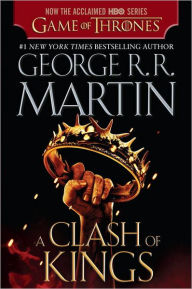
Game of Thrones, by George R. R. Martin
I am currently reading or listening to:
![]() |
| I’m hoping to finish this one in time for Aarti’s A More Diverse Universe |
![]() |
| Thought this spooky book would be a good one for October |
This month I finished reading or listening to:
![]() |
| This was my RL book club’s choice for September |
![]() |
| I read this with Doing Dewey‘s nonfiction book club |
![]() |
| Read this to supplement my posts about warehousing the mentally ill in prisons |
![]() |
| I think I’m going to a conference on addiction in a couple weeks. Thought this would be a nice supplement. |
Next month’s blogging activities include:
![]() |
| Aarti’s A More Diverse Universe at BookLust |
![]() |
| The Halloween Reading Challenge at Reading Every Season |
![]() |
| R.I.P. X hosted this year by The Estella Society Picture used by permission by creator Abigail Larson |
Brave New Films: This is Crazy
The video begins by dramatically pointing out a problem: police and correctional officers are not trained to deal with mentally ill “offenders,” which results in unnecessary deaths. This is an issue that I’ve already been seething about in my home suburb here in Minnesota. There have been a few times in recent years when our police have killed mentally ill people that they have been called to help. For instance, an officer shot a knife-wielding suicidal teen after his family called the police for help. Because the police are untrained to deal with mentally ill, families are left in a quandary: they sometimes don’t feel safe around their mentally ill loved one, but they don’t want to call the police for fear that their loved one will either be killed or get tied up indefinitely in a revolving-door judicial system.
The video continues by describing the Crisis Intervention Training (CIT) program. In CIT, officers are trained to drop the authoritative attitude that they are supposed to use in non-crisis occasions. They are trained to use soothing and empathetic tones of voice to disarm the mentally ill. The video included a heartwarming interview with a mother of a schizophrenic man who is grateful for the CIT officers’ treatment of her son during a crisis – how the officers managed to defuse the situation without anyone getting hurt or being sent to jail.
CIT officers in San Antonio can now bring mentally ill people to treatment centers instead of emergency rooms. This change keeps ER and officer overtime costs down. (Officers must be paid overtime because they spend hours in the ER waiting for the “offenders” to get psych evaluations.) An officer on the video claims that in the past 5 years they’ve saved about $50 million of taxpayer money by utilizing CIT and treatment centers.
Watching this video made me feel optimistic about the future of mental health. There’s a lot of work to be done – a lot of training to do, a lot of lobbying to resistant politicians (and an unsympathetic public), a lot of treatment centers to be built – but there is a solution. New Asylums was a fantastic documentary, but it left me feeling hopeless. I’m happy I found the Brave New Films’ snippet.
I also watched this Brave New Films documentary:
This video begins in much the same way as Why are we using prisons to treat mental illness, providing different examples. It continues by discussing brutality within prisons, and the over-use of solitary confinement for mentally ill inmates. One mentally ill woman claims that of the 18 years she spent in prison, 4 of them were in solitary confinement. Each person in solitary confinement costs taxpayers $75,000 a year; compared to the $16,000 a year per person in supportive housing.
Finally, This is Crazy discusses the fate of prisoners once they are released from prison. As discussed in New Asylums, prison is like a revolving door for the mentally ill. Most of the homeless population are mentally ill. They break laws either because they are delusional or because they have basic needs. When they are arrested, they spend 3 to 4 times more jail time than “normal” inmates. They often get shuttled back and forth between stabilization hospitals and jail (where their psychiatric treatment, and their mental state, degenerates). When released, they are given 2 weeks’ worth of medication and are left out on the streets again – with nowhere to look for treatment. Despite the fact that community treatment would save taxpayer money, the first item on the political finance chopping block are treatment centers and institutions for mental illness.
The take-home point of these documentaries is that because police are not trained to deal with mentally ill people in crisis, many mentally ill people end up being abused, killed, or put in a revolving door prison system. Once a mentally ill person has a bad experience with cops, he is likely to be fearful and uncooperative in the future. I have seen this myself. I have a mentally ill friend who suffers from PTSD after being brutalized by police for a case of mistaken identity. Now whenever he sees a cop, even if the cop is completely uninterested in him, my friend goes into a blind panic. I strongly suspect that my friend wouldn’t have been brutalized by the cops if he hadn’t been mentally ill. Another important point is that outrageous amounts of taxpayer money would be saved, and deserving human beings would be treated with compassion, if only cities around the US would develop CIT programs and fund more treatment centers. If only the taxpayers and politicians would listen to reason.
The Definition of Abnormal
A History of Abnormal Psychology
Abnormal Psychology in Contemporary Society
Contemporary Viewpoints on Treating Mental Illness – Biology
Contemporary Viewpoints on Treating Mental Illness – Psychology
Frontline: New Asylums
Brave New Films: This is Crazy
Clinical Mental Health Diagnosis: Biological Assessment
Clinical Mental Health Diagnosis: Psychological Assessment
Does the DSM Encourage Overmedication?
Post Traumatic Stress Syndrome – The Basics
Panic Disorder
Obsessive Compulsive Disorder
Hoarding and Body Dysmorphic Disorders
Depression – an Overview
Personality Disorders – Clusters and Dimensions
Personality Disorders – Cluster A
Personality Disorders – Cluster B
Personality Disorders – Cluster C
Biological Effects of Stress on Your Body
Somatic Symptom and Related Disorders
Dissociative Disorders
Borderline Personality Disorder
Dialectical Behavioral Therapy
Paraphilic Disorders
Gender Dysphoria – Homosexuality and Transgender
Anxiety Disorders
Bipolar Disorder – The Basics
Suicide – An Overview