Frontline: New Asylums

New Asylums (2005) is a Frontline documentary that delves into the problem of housing the mentally ill in prison systems. Believe it or not, the world’s three largest asylums for mentally ill are the Cook County Jail in Chicago, the Twin Towers of the Los Angeles County Jail, and Riker’s Island in New York. This problem has been escalating ever since the mid 1900’s when deinstitutionalization of mentally ill and intellectually challenged became a popular movement to encourage “humane” treatment of mentally ill and to reduce state expenditures on medical care. 
The original plan, as described by the Community Mental Health Act of 1963, was to fund community mental health centers in which the mentally ill could be treated while working and living at home. However, most of the proposed centers were never built, and few of those built were fully funded. As deinstitutionalization accelerated, hundreds of thousands of mentally ill patients were released without a place to go and without adequate access to mental health care. A lot of them ended up on the streets. And on the streets, their mental illnesses flared up, leading to law-breaking. Many of the laws broken were for basic living purposes – theft of food, break-ins to get a place to sleep, stealing blankets out of a car – and many were violent crimes fueled by a desperate situation combined with psychosis. And this is how jails and prisons became the new asylums. 

The documentary New Asylums focuses on the Ohio state prison system, which has a relatively well-developed system for dealing with the mentally ill. In 2005, when the documentary was filmed, there were nearly 500,000 mentally ill people housed in America’s prison systems – 10 times more than the 50,000 housed in mental institutions. 

The documentary begins with a disturbing scene of “group therapy” in which inmates are locked inside tiny cages, with just enough room to sit in a chair. In this warm, inviting environment, the inmates are encouraged to share their problems with their fellow inmates. I think it is fantastic that group therapy is provided for inmates, but how helpful is it really, in this environment? Can an inmate really share his fears and heartbreaking secrets with other inmates? Wouldn’t rumors get around quickly among the inmates and less sympathetic officers in prison? How much help can group therapy really do these inmates, especially since they are locked in a tiny cage; which probably doesn’t encourage openness? 

A while back, I told my therapist that I thought Dialectic Behavioral Therapy (DBT), which I was currently undergoing, would be a world of help to many people in prison. She agreed. But now that I see this video, I realize the limitations of such therapy. Prison does not provide a safe environment to let those feelings out. But what to do? Do we just not provide the inmates with therapy because of these limitations? Clearly, the problem needs to be solved before the mentally ill people are imprisoned, but I don’t know how to solve that problem, other than reinstitutionalization. 

The documentary only became more horrifying after that. There were scenes in which a naked, frightened, screaming man was resisting being handcuffed. Eventually, a group of 5 men who were dressed like a SWAT team and carrying a riot shield burst into the cell, pinned the man down, and carried him kicking and screaming away. One officer tells the camera “A lot of the mentally ill inmates in here, you gotta use more…I mean, you do have to use force on them.” 

Having seen the footage, I understand why the officers feel that they need to use a lot of force. I mean, how else would they get the naked, psychotic, screaming man down to solitary? But don’t you think that the strict and unforgiving culture of prisons is part of the reason these inmates are acting out? Isn’t the fear of solitary, which would certainly exacerbate psychotic symptoms, part of why they’re acting out? Most of them would certainly be better behaved in a healthier, more caring environment. And then force wouldn’t have to be used. 

I can see two solutions (both of which I think should be implemented): the number of mentally ill patients housed in mental institutions should be increased, thus decreasing the prison population. And people in prison should be treated with more kindness – providing a rehabilitative instead of punitive justice system. 

The documentary continued by describing Oakwood Correctional Facility, which is a temporary housing unit for mentally ill inmates who need to be stabilized. The culture and environment seems so much more caring and open – it appears that inmates who were dangerously psychotic in the general prison are stable and well-behaved at Oakwood. There’s a heartbreaking scene in which one of the inmates is being told by a panel of mental health workers that he’s stabilized and ready to go back to the general prison population. The inmate practically begs to stay at Oakwood. The panel is at first kind, but they become more and more firm. They show a depressing lack of empathy. The tragedy is that they have to. They have to send the inmate back to the general population, because they don’t have enough beds to house all the thousands of mentally ill inmates in the Ohio state prison system. 

At this point I got into a discussion with a classmate about why these inmates aren’t all housed in such therapeutic environments as Oakwood. But where would Ohio state get the money to pay for those units to be built? How would they decide who is mentally ill enough to end up in such a facility? And is it ethical to treat some 16% of their inmate population so humanely and ignore the inhumane treatment of all the other prisoners? Do the “healthy” prisoners not matter just because they don’t have a serious mental illness? Once we start creating this humane prison system, where do we stop? 

During most of the documentary, I was applauding Ohio state for at least trying to create a therapeutic environment for its mentally ill inmates. But there were a couple of comments which made me rethink. Reginald Wilkinson, the Director of the Ohio Department of Corrections said that he once had a judge mention to him: “Well, I hate to do this, but you know the person will get treated if we send the person to prison.” So judges are more likely to give a prison sentence because they feel there’s better mental health care there? My question was confirmed later in the documentary when it pointed out: “We shouldn’t devote ourselves to continually raising the level of mental health care in prisons because the better you make an institution that shouldn’t be used for the purpose you’re improving, the more you’re ensuring its use.”
It’s a catch-22. If you don’t work to take care of the mentally ill in prisons, they’ll get worse and you’ll have to stash them away in solitary or other “general population” punishment areas. If you do develop a system to care for the mentally ill, then you end up with even more mentally ill people dumped into your system, where they don’t belong. So tragic. I wish enough people cared about this highly stigmatized group so that money could be raised to properly care for both the imprisoned and the unimprisoned mentally ill. 

4 snowflakes for interest level, research, approachableness, and subject


This is a series of posts summarizing what I’m learning in my Abnormal Psychology course. Much of the information provided comes from reading my James N. Butcher’s textbook Abnormal Psychology. To read the other posts, follow these links: 

The Definition of Abnormal
A History of Abnormal Psychology
Abnormal Psychology in Contemporary Society
Contemporary Viewpoints on Treating Mental Illness – Biology
Contemporary Viewpoints on Treating Mental Illness – Psychology
Frontline: New Asylums
Brave New Films: This is Crazy
Clinical Mental Health Diagnosis: Biological Assessment
Clinical Mental Health Diagnosis: Psychological Assessment
Does the DSM Encourage Overmedication?
Post Traumatic Stress Syndrome – The Basics
Panic Disorder
Obsessive Compulsive Disorder
Hoarding and Body Dysmorphic Disorders
Depression – an Overview
Personality Disorders – Clusters and Dimensions
Personality Disorders – Cluster A
Personality Disorders – Cluster B
Personality Disorders – Cluster C
Biological Effects of Stress on Your Body
Somatic Symptom and Related Disorders
Dissociative Disorders
Borderline Personality Disorder
Dialectical Behavioral Therapy
Paraphilic Disorders
Gender Dysphoria – Homosexuality and Transgender
Anxiety Disorders
Bipolar Disorder – The Basics
Suicide – An Overview

Contemporary viewpoints on treating mental illness – psychology

This post will discuss the psychological causes and treatments of mental illness, as described in Butcher’s Abnormal Psychology.

Psychological viewpoints consider humans not only as biological entities but as products of our personalities and experiences. There are three major psychosocial views on behavior: psychodaynamic, behavioral, and cognitive-behavioral. 

They psychoanalytical school was founded by Sigmund Freud, as described in my summary of Chapter 2. Freud structured personality into three elements: id, ego, and superego. 

The id is the individual’s instinctive drives, and is the first element to develop in infancy. It is separated into life instincts (such as libido) and death instincts (such as aggression). The id can generate wish-fulfilling fantasies but cannot undertake any actions to meet these desires. The superego develops later in childhood, and basically comprises the conscience.

After a few months of life, the ego develops. The ego mediates between the demands of the id, the urging of the superego, and the realistic constraints of the world. For instance, during toilet training, the id tells the child that he needs to go poo, the superego urges the child not to go poo in his mother’s bed because she is annoying, and the ego takes these two drives and determines the right place and time to go poo. Sometimes these three drives can come into conflict because they are striving for different goals. These intrapsychic conflicts can cause mental illness. 

Freud also described a set of psychosexual stages, which you can read about on Wikipedia. I do not put much credence in the psychosexual stages, so I will skip them in my summary.

Later, a few psychoanalysts branched off from Freud with the interpersonal perspective. Alfred Adler focused on social and cultural forces instead of instincts. In Adler’s view, humans are social beings, and we are driven to interact effectively with other members of our group. Erich Fromm focused on the dispositions of people, and how that affected their interactions with other members of society. 

Despite the current unpopularity of Freud’s psychosexual stages and gender prejudices, Freud is considered the father of psychoanalysis. He developed the groundwork for further psychotherapy. He showed that certain maladaptive behaviors develop as a result of an attempt to cope with difficult problems. He also laid the foundation for the study of unconscious motives of maladaptive behaviors. 

Another psychological approach to treatment of mental illness is the behavioral perspective. It is described in my summary of Chapter 2. In addition to Pavlov’s classical conditioning and Skinner’s operant conditioning, we can also learn by observation. For instance, my sister apparently developed a fear of insects only after seeing a friend respond very negatively to an insect that my sister had collected in a jar. 

Behavior theory was not well-received by psychoanalysts, but it provided several important views of the causes of mental illness. It suggested that maladaptive behaviors develop when a person fails to learn the adaptive behaviors, or when he learns maladaptive solutions. 

The third psychological viewpoint is my favorite – the cognitive-behavioral perspective. Albert Bandura developed an early form of cognitive-behavioral theory when he suggested that people learn by internal reinforcement rather than external reinforcement – we choose to perform a difficult task because we can visualize the negative outcomes of not performing that task. For instance, I’m writing this blog post despite the fact that I’m so tired my eyes are blurring over and I’m not sure my sentences make sense because I can envision the negative consequence of doing poorly on my upcoming exam. 

Today, cognitive behavioral therapy focuses on how distorted perspectives can influence maladaptive behaviors. For instance, if I’m walking down the street, and I see a friend getting on a bus…I wave at that friend, and he doesn’t wave back. I might have the distorted perspective that the friend hates me, and I might consequently be rude or abusive to that friend. The maladaptive cognitive process is called assimilation, where I gather new information (the friend didn’t wave at me) and distort it to fit my existing self-schema (nobody likes me). 

The adaptive cognitive process that our therapists attempt to elicit is accommodation, in which we change our existing frameworks to incorporate new information that doesn’t fit. In this case, my self-schema might be “nobody likes me,” but for some reason I’ve been asked out to prom. Instead of distorting the friendly behavior (he’s only asking me to prom so that he can dump pig’s blood on me in a highly public setting), the therapist encourages me to accommodate the information (he might actually like me). 

Chapter 3 finished its description of the psychological causes of mental illness by describing some of the events that can lead to a predisposition to mental illness. It discussed early deprivation or trauma, inadequate parenting styles, marital discord and divorce, and maladaptive peer relationships. I found this section interesting since I’ve just finished reviewing The Blank Slate, by Stephen Pinker, which discussed Pinker’s views of the relative influences of parenting styles verses peer relationships on a child’s behavior. Pinker claimed that parenting style had much less to do with the child’s ability to adapt than peer influences did. He implied that the reason we don’t accept that peers have a greater impact than parents is because parents don’t want to think that all the love they’re pouring into their child doesn’t matter. (He also points out that such a worry is silly, since we’d never say that all the love we’re pouring into our spouses doesn’t matter.)

Butcher’s text, on the other hand, spent a lot of space discussing the different parenting approaches (authoritative, authoritarian, permissive/indulgent, and neglectful/uninvolved) and their effects on child development. Despite Pinker’s strong arguments, I’m still convinced that parents have just as much impact on a child’s development as his peers.

This is a series of posts summarizing what I’m learning in my Abnormal Psychology course. Much of the information provided comes from reading my James N. Butcher’s textbook Abnormal Psychology. To read the other posts, follow these links: 

The Definition of Abnormal
A History of Abnormal Psychology
Abnormal Psychology in Contemporary Society
Contemporary Viewpoints on Treating Mental Illness – Biology
Contemporary Viewpoints on Treating Mental Illness – Psychology
Frontline: New Asylums
Brave New Films: This is Crazy
Clinical Mental Health Diagnosis: Biological Assessment
Clinical Mental Health Diagnosis: Psychological Assessment
Does the DSM Encourage Overmedication?
Post Traumatic Stress Syndrome – The Basics
Panic Disorder
Obsessive Compulsive Disorder
Hoarding and Body Dysmorphic Disorders
Depression – an Overview
Personality Disorders – Clusters and Dimensions
Personality Disorders – Cluster A
Personality Disorders – Cluster B
Personality Disorders – Cluster C
Biological Effects of Stress on Your Body
Somatic Symptom and Related Disorders
Dissociative Disorders
Borderline Personality Disorder
Dialectical Behavioral Therapy
Paraphilic Disorders
Gender Dysphoria – Homosexuality and Transgender
Anxiety Disorders
Bipolar Disorder – The Basics
Suicide – An Overview

Contemporary viewpoints on treating mental illness – biology


Chapter 3 of Butcher’s Abnormal Psychology has too much information for me to adequately summarize in one post. Therefore, I will break it into a few posts. So please bear with me. Of the chapters so far, this chapter was the longest and the least interesting to me. Which is unfortunate, because it’s also the chapter that has the highest distribution of points in the upcoming exam. 

The main purpose of this chapter is to review the three contemporary viewpoints on treating mental illness – biological, psychological, and social. This post will review the biological causes of mental illness.

From the biological viewpoint, there are four commonly accepted causal factors of mental illness: neurotransmitter and hormonal abnormalities, genetic vulnerabilities, temperament, and brain dysfunction and neural plasticity. 


The reason scientists believe that neurotransmitter imbalances lead to mental illness is the success of serotonin reuptake inhibitors (SSRIs) and similar drugs on alleviating symptoms. Serotonin is a molecule which is released by neurons to send signals to other neurons. The other neurons have serotonin receptors, which stimulate the neuronal response. They also have serotonin reuptake molecules, which bind to the serotonin and remove it from the system. An SSRI inhibits the reuptake of serotonin, thus increasing the length of time serotonin is present and able to bind the serotonin receptor. 

According to the book, sometimes psychological stress can lead to neurotransmitter imbalances. There could be excessive production and release of the neurotransmitter, dysfunction in the reuptake or enzymatic breakdown of the neurotransmitter, or problems in the neurotransmitter receptors which may be overly- or under-sensitive. 

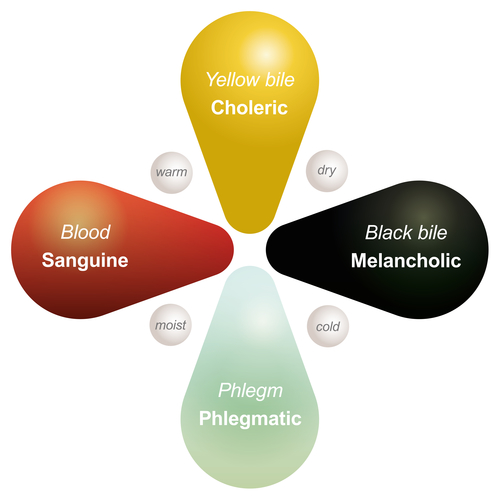
My professor  suggested during last week’s lecture that he doesn’t think the theory of “chemical imbalance” is necessarily plausible. Just because an SSRI decreases symptoms, doesn’t mean that the symptoms were caused by abnormally low levels of serotonin; anymore than the fact that Aspirin decreases certain symptoms means that those symptoms were caused by abnormally low levels of Aspirin. My professor even said that the “chemical imbalance” theory is  just as well-founded as the ancient Greek humor imbalance theory (discussed in my summary of Chapter 2). I admit that I’m not familiar with the neurotransmitter research, so I can’t say whether my professor’s reservations are well-founded. But he certainly made me think critically about the subject. 


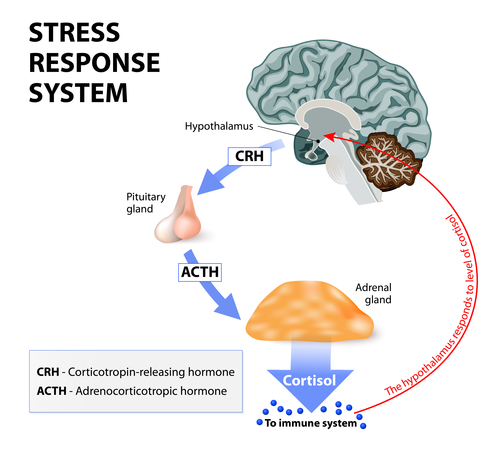
Hormonal imbalances can cause mental illness; an example is hypothyroidism leading to depression because it causes fatigue and slows the body down. My textbook focuses on the hypothalamic-pituitary-adrenal (HPA) axis. This focus seems to be because the HPA axis can release the stress hormone cortisol. 

The genetic effect on mental illness seems fairly straight-forward at first glance. Some mental illnesses can be heritable. This heritability is because of genes that can, when activated by the right stressors, cause mental illness. If someone has such a gene, she has a preinclination for the mental illness but doesn’t necessarily develop symptoms. 

What makes genetic effects complicated is that genes can interact with the environment. For instance, a person with a gene for depression might also have depressive parents who create an environment that is less nurturing and functional, thus providing stressors which may lead to depression in the child. This is considered a passive effect. On the other hand, the child’s genotype may actively affect her environment. For example, a sulky child may have trouble making friends, thus changing her environment to be one that increases likelihood of depression. There is also an evocative effect, in which parents may react negatively to sulky babies, leading to a less healthy relationship and more likelihood of depression. (I admit I’m having difficulty distinguishing between an active effect and an evocative effect – unless it is simply whether the child’s temperament affects the parent’s behavior or not.) 


Psychologists study the genetic factor in mental illness using three models: pedigree analysis, twin studies, and adoption studies. In pedigree analysis, a psychologist can determine the strength of heritability within a family by comparing incidence within a family versus incidence within the community at large. The problem with this method is that families not only share genes, but also environments. 

Thus, the other two methods are used to tease out the environmental factors from the genetic factors. Looking at the concordance rate in identical twins (the percentage of twins who share the disorder), compared to the concordance rate in siblings or fraternal twins could indicate how big of a role genetics plays. 

Another method to tease out environmental factors from genetic factors is studying siblings (or better yet, identical twins) who are adopted into different families – and thus different environments. If identical twins who are adopted into different families have a high concordance rate for a mental illness, then it is likely that the genetic effect is strong. 

An environment that is often forgotten is the womb during pregnancy. The child of a mother who was undergoing intense stress during pregnancy may have an inclination to respond strongly to stressful situations. The stress during pregnancy could be the cause of epigenetic changes – in which the genes themselves don’t change, but there are changes in the chromosomes, such as the binding of certain molecules which change the expression of a particular gene (or set of genes). 

This is a series of posts summarizing what I’m learning in my Abnormal Psychology course. Much of the information provided comes from reading my James N. Butcher’s textbook Abnormal Psychology. To read the other posts, follow these links: 

The Definition of Abnormal
A History of Abnormal Psychology
Abnormal Psychology in Contemporary Society
Contemporary Viewpoints on Treating Mental Illness – Biology
Contemporary Viewpoints on Treating Mental Illness – Psychology
Frontline: New Asylums
Brave New Films: This is Crazy
Clinical Mental Health Diagnosis: Biological Assessment
Clinical Mental Health Diagnosis: Psychological Assessment
Does the DSM Encourage Overmedication?
Post Traumatic Stress Syndrome – The Basics
Panic Disorder
Obsessive Compulsive Disorder
Hoarding and Body Dysmorphic Disorders
Depression – an Overview
Personality Disorders – Clusters and Dimensions
Personality Disorders – Cluster A
Personality Disorders – Cluster B
Personality Disorders – Cluster C
Biological Effects of Stress on Your Body
Somatic Symptom and Related Disorders
Dissociative Disorders
Borderline Personality Disorder
Dialectical Behavioral Therapy
Paraphilic Disorders
Gender Dysphoria – Homosexuality and Transgender
Anxiety Disorders
Bipolar Disorder – The Basics
Suicide – An Overview

Abnormal Psychology in Contemporary Society

Our class only read part of chapter 17 of Butcher’s Abnormal Psychology: a section about inpatient mental health treatment in contemporary society and another about controversial legal issues and the mentally ill. 

Mental health treatment in contemporary society

In the late 19th century, mental hospitals were filled with patients. Many of these patients lived in a horrific environment that was unhealthy both physically and mentally. In those hospitals that had humane treatment of patients, there was a concern that patients would get “institutional syndrome” – in which people lost their ability to socialize and live independently because they had been in a mental hospital for so long. 

In the mid-to-late 20th century, a movement to deinstitutionalize the mentally ill gained momentum. It began in the 1950s and 60s, when antipsychotic drugs were developed. These medications made it possible for patients to leave hospitals and live independent lives. Later, a desire to rescue people from inhumane environments and to keep them from getting “institutional syndrome” accelerated the rate of deinstitutionalization. Another consideration in deinstitutionalization was the desire to decrease medical expenditures. As mentioned in my earlier post on Chapter 2deinstitutionalization was detrimental to many mentally ill people. One third of the homeless population is comprised of mentally ill people, and a horrifying number of the mentally ill are incarcerated with little to no mental health treatment (which, by the way, means that society is still doling out the bucks to pay for the housing of mentally ill). 

In contemporary American society, if a person is unable to care for himself, or if he is a danger to himself or others, he can be placed in a psychiatric hospital. Such a commitment can be voluntary, but if someone is considered a danger to himself or society and he refuses hospitalization, civil commitment procedures can be undertaken, and he can be confined involuntarily in a mental hospital. 

Such hospitals generally combine traditional forms of therapy with a constructive social environment. A study in 1977 by Gordon L. Paul and Robert L. Lentz compared the relative effectiveness of three treatment approaches. 

Milieu therapy, which focuses on providing the patient with a very clear idea of what the staff expectations are and providing feedback about compliance with those expectations, encouraging the patients to be active in their own treatment decisions, and providing social groups for support and “positive” peer pressure.

Social-learning, in which the patients learn socially acceptable behavior through a token economy (they get tokens when they behave well). With tokens, the patients can buy privileges. 

Traditional treatments, with pharmacotherapy, occupational therapy, and individual group therapy. For instance, a friend of mine was recently released from a mental health ward which had psychological therapy, psychiatry, yoga, prayer meetings, knitting classes, and all sorts of social groups. 

Paul and Lentz studied 28 schizophrenic patients for resocialization, learning new roles, and reducing bizarre behavior. From the social learning program, 90 percent of the patients remained in the community after release; compared to the 70 percent who’d had milieu therapy, and the less than 50 percent who’d had traditional therapy. I haven’t read it, but there’s a review of Paul and Lentz’s study available here

All of these programs seem like a positive change from the early 20th century, but in order to voluntarily get into one of these hospitals, the patient must have both resources and mindfulness of illness. In order to get involuntarily committed, the patient must have an advocate willing to report his danger. Most of the homeless do not have such advocates, and thus they slip between the cracks. 


Controversial legal issues and the mentally ill
In recent years news reports have sensationalized grizzly murders committed by sociopaths and psychotic people. In fact, one such grizzly murder was just discovered in the Twin Cities (where I live). It’s easy to say that if only the mental health system were better, we could prevent such tragedies. But how do you really know when someone is dangerous before they actually do anything? A mental health professional is authorized to make such a judgement call, though the dangerous person must first be seeing a mental health professional before any judgement can be made. And often a patient gives no hint of his violent thoughts. 

If the patient does give a hint of violent thoughts, the mental health worker (or even a priest during confession), has the duty to report the dangerous individual to the authorities, and in some states to warn the individual who has been threatened. 

One huge controversy about dangerous mentally ill people is the insanity defense (or not guilty by reason of insanity, NGRI). Someone can be successful with this plea if he is thought to not know right from wrong or if he was compelled irresistibly to perform the violent act. The defense attorney must obtain the testimony of a mental health professional who convincingly claims that the accused was insane at the time of the crime. 

Because it is very difficult to be acquitted as NGRI some people plea “guilty but mentally ill (GBMI).” With success of this plea, the convicted would be found guilty but placed in a mental institution instead of a prison. Many hope that this plea will decrease the number of patients who are found not guilty by reason of insanity, are confined to a mental institution, soon judged to be in recovery, and are unconditionally released into society. When a person is found guilty but mentally ill, he remains for his entire sentence in the mental institution. 

A third way that a mentally ill person can protect himself from unethical treatment is to claim incompetence to stand trial.  If a person is charged with a crime but is unable to understand the proceedings due to mental health, he can postpone the trial until they have recovered sufficiently to understand. Such people can be hospitalized until they are deemed competent. 

An interesting point that the authors brought up was about patients diagnosed with disassociative identity disorder, DID – formerly known as multiple personality disorder. If one personality commits a crime, is it ethical to punish all personalities? This is a question that first occurred to me several years ago while reading A Fractured Mind, by Robert B. Oxnam. Oxnam gave a few examples of when one personality did something “wrong,” and Oxnam implied that he, himself, was not guilty of those transgressions, because it was his other self that committed them. The two examples I remember are when one of his personalities cheated on his wife and when one of his personalities stole a bunch of stuff from a boating store. It peeved me that Oxnam thought it was ok to brush off those acts by saying “the other (bad) me did it.” But perhaps that is because I’m skeptical of true multiple personalities that are unaware of, and unable to control, the others’ actions. If it does exist, I’m sure it’s very, very rare. 

On the other hand, I do know someone who has disassociative episodes and was caught doing something illicit during an episode. But my friend has never blamed the “other” guy – he seems quite willing to step up and take the blame. Somehow that willingness to accept the blame makes him seem less culpable, in my eyes, than Oxnam.  

What do you think? Do you believe that people with DID can have completely separate identities that are unaware of, and unable to control, each others’ actions? Do you think the entire set of identities should be punished if one personality commits a crime?

This is a series of posts summarizing what I’m learning in my Abnormal Psychology course. Much of the information provided comes from reading my James N. Butcher’s textbook Abnormal Psychology. To read the other posts, follow these links: 

The Definition of Abnormal
A History of Abnormal Psychology
Abnormal Psychology in Contemporary Society
Contemporary Viewpoints on Treating Mental Illness – Biology
Contemporary Viewpoints on Treating Mental Illness – Psychology
Frontline: New Asylums
Brave New Films: This is Crazy
Clinical Mental Health Diagnosis: Biological Assessment
Clinical Mental Health Diagnosis: Psychological Assessment
Does the DSM Encourage Overmedication?
Post Traumatic Stress Syndrome – The Basics
Panic Disorder
Obsessive Compulsive Disorder
Hoarding and Body Dysmorphic Disorders
Depression – an Overview
Personality Disorders – Clusters and Dimensions
Personality Disorders – Cluster A
Personality Disorders – Cluster B
Personality Disorders – Cluster C
Biological Effects of Stress on Your Body
Somatic Symptom and Related Disorders
Dissociative Disorders
Borderline Personality Disorder
Dialectical Behavioral Therapy
Paraphilic Disorders
Gender Dysphoria – Homosexuality and Transgender
Anxiety Disorders
Bipolar Disorder – The Basics
Suicide – An Overview

References:

Butcher, James N. Hooley, Jill M. Mineka, Susan. (2014) Chapter 17: Contemporary and Legal Issues in Abnormal Psychology. Abnormal Psychology, sixteenth edition (pp. 583-607). Pearson Education Inc.

The Epic of Gilgamesh – Historical Background

History of the epic

The Epic of Gilgamesh is the oldest epic still in existence. Coming from the third millennium BCE, it predates Homer’s epics by at least one and a half thousand years. It is from a time long forgotten by historians – only rediscovered in the last century by archaeologists in the Middle East. The fascinating part about the Epic of Gilgamesh is that even though it is 5 millennia old the humanity and passion of the story still resonate with readers today. 

The most complete version of Gilgamesh yet discovered is a series of eleven tablets in the Akkadian language found in the library of Ashurbanipal in Nineveh. Ashurbanipal  (668-627 BCE) was a great king of the Assyrian empire and a collector of literature from all over the Middle East. His library disappeared after the fall of Nineveh in 612 BCE, and was uncovered by archaeologists in 1839. The tablets were transferred to the British Museum where they received little attention until 1873, when a scholar named George Smith realized that they included an account of the flood (recounted in the Bible as the story of Noah’s ark). This announcement set off an immediate sensation because it suggested that the authors of the Bible might have been familiar with Gilgamesh’s story (though possibly both versions come from an earlier source). After this discovery, archaeologists dug up more and more tablets and scholars busied themselves with translations. Unfortunately, some of the tablets are fragmented, and the story has to be pieced together from different versions. This leaves the story very open to interpretation. 

Who was Gilgamesh?

The character of Gilgamesh is thought to be based on a real king of the Mesopotamian city of Uruk (Erech in the Bible). The historical Gilgamesh probably raised up the famous walls of Uruk, described in glorious detail in the epic. The walls had a 6 mile perimeter and more than nine hundred towers. Its ruins are near the town of Warka, in southern Iraq. Archaeologists date parts of the wall to around 2700 BCE, so they believe Gilgamesh may have lived around then. According to the “Sumerian king list,” Gilgamesh was the fifth king of the founding dynasty of Uruk. 

Gilgamesh was clearly a great builder – not only building the great wall, but also restoring the shrine of the goddess Ninlil. He very likely led a successful expedition to retrieve timber from the lands to the North – a story which was related in the epic.  

This is a series of posts about The Epic of Gilgamesh. Here is a list of all posts thus far: 

A History of Abnormal Psychology

Chapter 2 of Butcher’s Abnormal Psychology is a bit harder to summarize than Chapter 1. It covered the reactions of people towards  the mentally ill throughout history. There were lots of names mentioned, and trends galore. But I will try to focus on the ones that I found most interesting. 

During the classical age of Greek and Roman philosophers, mental illness began to be viewed more as a physiological trait than as demonic possession, which was the common viewpoint before this time. Hippocrates, a Greek philosopher considered the father of modern medicine, believed that mental illnesses were due to brain pathology. He recognized heredity, predisposition, and head injuries as common causes of mental illness. The doctrine of the four humors was related to Hippocrates and later to the Roman physician Galen. These four fluids in the body could combine in different ways to regulate the personality of an individual. Hippocrates promoted healthy living as a remedy to mental illness.


Plato, also, supported the kind, empathetic treatment of mentally ill individuals. He suggested that mentally disturbed individuals were not responsible for criminal acts. However, Plato viewed mental illness, at least partly, as an effect of spirituality. Hippocrates’ and Plato’s support of humane treatments for mental illness influenced later Greek and Roman philosophers. 
During the Middle Ages, the belief that mental illness had physiological origins almost disappeared in Europe. The texts of the Greeks and Romans survived in Islamic and Middle Eastern regions, but very few Europeans of this time were able to read Greek or Roman texts. The Middle Ages marked a regression in both scientific and philosophical thought. The Greek and Roman texts weren’t “rediscovered” until the Renaissance

Supernatural explanations for mental illness gained popularity, and treatment was left mainly to the clergy. At least the treatment of the mentally ill by the clergy was mainly humane. 


It is commonly thought that the mentally ill were often accused of being witches during the Middle Ages, and were thus cruelly executed. However, recent research suggests that witchcraft was not believed to be an effect of possession, as mental illness was. Usually the accused were ill-tempered, impoverished women. 

Scientific explanations for mental illness reemerged in the late Middle Ages and Renaissance. Even some of the clergy were falling away from possession as the cause of mental illness. Saint Vincent de Paul declared “Mental disease is no different than bodily disease and Christianity demands of the humane and powerful to protect, and the skillful to relieve the one as well as the other.” 

Despite the resurgence in the belief of physiological explanations for mental illness during the Renaissance, inhumane asylums for the storage of individuals who could not care for themselves were on the rise. 

In the late 1700s, humanitarians began to intervene on behalf of the mentally ill. Physicians began to experiment with more humane treatment of individuals. The French physician Philippe Pinel demonstrated that the removal of chains, and introduction of healthy living in an asylum had extraordinary effects on the recovery of mentally ill individuals. English Quaker William Tuke later established a pleasant retreat for mentally ill patients, with similar positive results. 

The success of Pinel and Tuke led to a period of humanitarian reform and the use of moral management. This movement promoted the rehabilitation of moral and spiritual character, as well as manual labor. Moral management was highly effective. Recovery and discharge rates increased dramatically.

Unfortunately, moral management made way to the mental hygiene movement, which emphasized the physical (rather than spiritual) treatment of institutionalized patients. Although hygiene and the belief in physiological as well as spiritual causes of mental illness were important, improving the hygiene of the patients alone was not successful, and recovery rates plummeted. However, the mental hygiene movement was meant to create a more humane environment for the institutionalized – so in that way it was progress. 


The number of institutionalized patients increased throughout the 19th and 20th centuries, but during the late 20th century humanitarians began to support deinstitutionalization of the mentally ill. Popular culture seems to believe deinstitutionalization to be a good thing – and for many, it was. Reintroduction of the mentally ill and developmentally challenged  to their supportive families was a huge success when that family had the resources to care for its loved one. However, deinstitutionalization occurred too quickly, leaving many people without shelter, and of those who had shelter, many families didn’t have the resources to care for the patients. Many of the shelterless people became homeless, and others were quickly shunted off into prisons. 

During the 19th and 20th centuries, four major themes in psychology developed: 1) biological discoveries, 2) classification system for mental disorders, 3) the emergence of psychological causations and views 4) experimental and research psychology. 

The first major breakthrough in biological treatment of mental illness was the discovery that a form of paresis was caused by syphilis. This discovery boded well for the discovery of more biological treatments for other illnesses. Later discoveries showed deterioration of the brain led to senility and that some disorders could be caused by exposure to toxic substances. Biological treatments also had some mishaps – such as surgical removal of body parts including tonsils, part of the colon, gonads, and the frontal lobe of the brain. 

Emil Kraepelin, a German psychiatrist, pioneered classification of mental illnesses, and his system became the forerunner to the DSM. 

The Nancy school began a movement exploring psychological causations of mental illness. Two scientists in Nancy, France, discovered that some of the traits observed in hysteria – psychological paralysis, blindness, deafness, and pain – could be introduced in healthy patients through hypnosis. These symptoms could also be removed by hypnosis. Therefore, the Nancy school believed that hysteria, and later other disorders, were a form of self-hypnosis. Jean Charcot, a French neurologist, disagreed with the Nancy School. His research suggested that mental disorders were caused by brain degeneration. Toward the end of the 19th century, it was accepted that mental disorders could have a psychological basis, biological basis, or both. 

Sigmund Freud was a student of Charcot, but later leant more towards the psychological causations mental illness. Freud discovered that if patients were encouraged to discuss their problems under hypnosis, they felt considerable emotional release. The patients, upon awakening, made no connection between their problems and their disorder. This led to the discovery of the unconscious mind. Freud also discovered that free-association and dream analysis had the same cathartic effect on his patients. 

By the first decade of the 20th century clinical psychology labs, which performed experiments on causes and treatments of mental illness, were on the rise. Soon, the behavioral perspective developed. This perspective emphasized the role of learning in disorders. It began with Ivan Pavlov’s serendipitous discovery that he could condition dogs to salivate upon the ringing of a bell. Watson used Pavlov’s discovery to develop behaviorism – the belief that humans gain personalities through changes in their environments. Watson believed that he could train a child to become anyone he wanted the child to become simply by creating the right environment. (Stephen Pinker’s argument against this belief is discussed in my review of The Blank Slate.) 

B. F. Skinner developed his own form of behaviorism in which consequences of behavior influenced subsequent behavior. This type of learning was named “operant conditioning.” For example, positive conditioning occurs when someone is rewarded for a behavior, such as when we give a treat to a potty-training child who has successfully used the toilet. Negative conditioning occurs when a child receives a shock when sticking his finger into an electrical outlet. 

And thus abruptly ended Chapter 2 – after a long list of names and dates that the book thought were important for us to remember.

This is a series of posts summarizing what I’m learning in my Abnormal Psychology course. Much of the information provided comes from reading my James N. Butcher’s textbook Abnormal Psychology. To read the other posts, follow these links: 

The Definition of Abnormal
A History of Abnormal Psychology
Abnormal Psychology in Contemporary Society
Contemporary Viewpoints on Treating Mental Illness – Biology
Contemporary Viewpoints on Treating Mental Illness – Psychology
Frontline: New Asylums
Brave New Films: This is Crazy
Clinical Mental Health Diagnosis: Biological Assessment
Clinical Mental Health Diagnosis: Psychological Assessment
Does the DSM Encourage Overmedication?
Post Traumatic Stress Syndrome – The Basics
Panic Disorder
Obsessive Compulsive Disorder
Hoarding and Body Dysmorphic Disorders
Depression – an Overview
Personality Disorders – Clusters and Dimensions
Personality Disorders – Cluster A
Personality Disorders – Cluster B
Personality Disorders – Cluster C
Biological Effects of Stress on Your Body
Somatic Symptom and Related Disorders
Dissociative Disorders
Borderline Personality Disorder
Dialectical Behavioral Therapy
Paraphilic Disorders
Gender Dysphoria – Homosexuality and Transgender
Anxiety Disorders
Bipolar Disorder – The Basics
Suicide – An Overview

References:

Butcher, James N. Hooley, Jill M. Mineka, Susan. (2014) Chapter 2: Historical and Contemporary Views of Abnormal Behavior. Abnormal Psychology, sixteenth edition (pp. 29-53). Pearson Education Inc.

The Definition of Abnormal

Well, my first week of Abnormal Psychology is through. We’ve read chapters 1-2 of our textbook, Abnormal Psychology by James N Butcher.

Chapter 1 was mainly about defining “abnormal” in the sense of “abnormal psychology.” This is a lot more difficult than you might imagine. 


You could try a statistical approach, for instance. If someone’s behavior is statistically rare, then that behavior is abnormal. But lots of people have behavior that is statistically rare. For instance, I went to the Minnesota Renaissance Festival just yesterday, and enjoyed some good people-watching. The Ren Fest has a variety of people – some are just pop-culture “nerds.” Some are people who love cosplay (where you dress up as a character – either made up by you or pre-created in popular culture – and act as if you are that person). And some people honestly believe they are wizards. Should we consider any of these statistically rare behaviors due to mental illness? Well, perhaps people who really believe they are wizards, but some of those people are pagans – and should we consider people of a rare religion to be mentally ill per se

You could also try a societal norm approach. If someone behaves outside the behavioral norm, then they are abnormal. But this, in itself does not imply mental illness. Societal norms can change from culture to culture. As an example, in some tribal cultures, the men cut themselves over and over again to “beautify” themselves with scars; but in America teens who cut are generally diagnosed with depression. Norms can also change within one culture over time. For instance, a couple decades ago homosexuality was considered a mental illness, but now it is, for the most part, accepted as “normal” behavior for certain individuals. 

There is also the maladaptive approach. If someone’s behavior is injurious to himself or to society, then he is abnormal. A person with OCD who washes her hands so much that they are cracked and bleeding is maladaptive. But this approach is not full-proof either. Not everyone who commits a crime is mentally ill. Likewise, should we consider someone who donates bone marrow, blood, or a kidney mentally ill?


Many people who are mentally ill suffer. But not all. The mania state of bipolar disorder is often pleasant to the patient, but he is considered mentally ill. Also, where do we draw the line of diagnosing mental illness for those who are suffering? If someone has just lost her home or a loved one, she is suffering from grief. But isn’t grief a natural and healthy response, within limits? 

Another approach is irrationality and unpredictability, but teenagers and young adults often do irrational and unpredictable things for attention or just because they’re trying to impress a girl. Mental illness? Nah. 

The last approach I will discuss is dangerous behavior. But yet again, that is not always indicative of mental illness. Many people jump out of planes, bungee jump, or fight in a war. These people are not considered “abnormal.” 

The DSM-5 defines mental disorder as: 

“a syndrome characterized by clinically significant disturbance in an individual’s cognition, emotion regulation, or behavior that reflects a dysfunction in the psychological, biological, or developmental processes underlying mental functioning. Mental disorders are usually associated with significant distress in social, occupational, or other important activities. An expectable or culturally approved response to a common stressor or loss, such as the death of a loved one, is not a mental disorder. Socially deviant behavior (e.g., political, religious, or sexual) and conflicts that are primarily between the individual and society are not mental disorders unless the deviance or conflict results from a dysfunction in the individual, as described above.”

What the heck does that mean? 

In the end, mental illness diagnoses are subjective to the clinician. For instance, I was diagnosed with bipolar disorder II. This means that I experience abnormal highs and lows (as well as other traits). I totally agree with this diagnosis. But another psychiatrist diagnosed me with borderline personality disorder. “What?!” I said. I don’t have an intense fear of abandonment, a pattern of intense interpersonal relationships characterized by alternating states of idealization and devaluation, paranoid ideation, or disassociative symptoms. Granted, I have more than 5 other traits, which makes me diagnosable with borderline. But all of those symptoms are traits that can be explained by bipolar disorder. So why the boderline personality disorder diagnosis?

What do you think? How would you define “abnormal”?

This is a series of posts summarizing what I’m learning in my Abnormal Psychology course. Much of the information provided comes from reading my James N. Butcher’s textbook Abnormal Psychology. To read the other posts, follow these links: 

The Definition of Abnormal
A History of Abnormal Psychology
Abnormal Psychology in Contemporary Society
Contemporary Viewpoints on Treating Mental Illness – Biology
Contemporary Viewpoints on Treating Mental Illness – Psychology
Frontline: New Asylums
Brave New Films: This is Crazy
Clinical Mental Health Diagnosis: Biological Assessment
Clinical Mental Health Diagnosis: Psychological Assessment
Does the DSM Encourage Overmedication?
Post Traumatic Stress Syndrome – The Basics
Panic Disorder
Obsessive Compulsive Disorder
Hoarding and Body Dysmorphic Disorders
Depression – an Overview
Personality Disorders – Clusters and Dimensions
Personality Disorders – Cluster A
Personality Disorders – Cluster B
Personality Disorders – Cluster C
Biological Effects of Stress on Your Body
Somatic Symptom and Related Disorders
Dissociative Disorders
Borderline Personality Disorder
Dialectical Behavioral Therapy
Paraphilic Disorders
Gender Dysphoria – Homosexuality and Transgender
Anxiety Disorders
Bipolar Disorder – The Basics
Suicide – An Overview

References:

Butcher, James N. Hooley, Jill M. Mineka, Susan. (2014) Chapter 1: Abnormal Psychology: An Overview. Abnormal Psychology, sixteenth edition (pp. 2-27). Pearson Education Inc.

The Blank Slate, by Stephen Pinker

The Blank Slate, by Stephen Pinker; narrated by Victor Bevine

In The Blank Slate, Pinker outlines three dogmas that he says are the prevailing views of human nature in modern philosophy: 

1) The blank slate, in which the mind has no innate (genetic) properties and, as John Watson boasted, through conditioning you could train a child to become anybody you want her to become. 

2) The noble savage, in which people are born good, and society forms them into deviants. Pinker suggested that Rousseau was a strong proponent of this theory, but according to Wikipedia (which is always accurate), Rousseau never used this term. 

3)  The ghost in the machine, in which people’s choices are solely dependent upon their soul. 

Personally, I’m a little skeptical that these are the dominant views of most scholars of human nature. I’m sure there are quite a few people who believe quite firmly in a genetic component to behavior, as Pinker does. But perhaps I’m biased because I’m a biologist and not a psychologist. 

Pinker provides evidence that these three dogmas are false, and that there is a strong genetic drive in human behavior.  
The first section in The Blank Slate that really caught my attention was the one on racism. He brings up the controversial book The Bell Curve, by Richard J Herrnstein and Charles Murray. Much to the dismay of the politically correct (I’m sure), Pinker suggests that Herrnstein’s data are correct and that African Americans have a lower IQ than white people, and that this difference is at least partly genetic. He says that the reason people are so horrified by The Bell Curve is due to their fear of inequality. That it is not racist to report such data – what is racist is to judge someone solely upon that data and not upon the person’s demonstrated abilities. 

Pinker also suggests that we only fear inequality when bigotry on the subject already exists. For instance, there is another set of studies in which height and IQ are positively correlated. He points out that no one frets about those studies, because there isn’t an already existing negative bias about short people. 

I was originally offended by Pinker’s thoughts on racism, but then I realized that at some level, at least, he is correct. I don’t like the data because it implies something that I don’t want to believe. I still cringe at the data presented in The Bell Curve, and I like to think there was some bias in the studies which led to incorrect results. That Herrnstein and Murray were terrible racists who should be shunned from academia. But Pinker managed to sew a seed of doubt. 

More interesting sections were those on violence and rape. Pinker suggests that both violence and rape are part of human nature. He says that most people cringe at this concept because we believe that anything that is “human nature” must be good. But why do we believe that? Are we all proponents of “the noble savage” dogma? 

In the section on rape, Pinker references Randy Thornhill and Craig Palmer’s book A Natural History of Rape. This book posits that rape is motivated by sexual and aggressive urges, not upon a male desire to dominate females (as many feminists claim). Personally, I have no problem believing that rape is motivated by sex and violence and not by male domination. In fact, it never occurred to me that men rape women for the purpose of oppressing them. Is this really a currently common belief? I guess I should follow the #YesAllWomen hashtag on Twitter more. Perhaps that would educate me on this subject. If you follow that hastag, please let me know your thoughts.

This brings us into Pinker’s section on the genetic differences between women and men. Pinker points out that it is not sexist to suggest that there are genetic (and therefore emotional as well as physical) differences between women and men. There are two kinds of feminism: gender feminism and equity feminism. Gender feminists believe that the male and female “roles” are determined by society and not by genetics. Pinker argues that these roles are genetically driven – that girls naturally want to play with dolls and boys naturally want to roughhouse. He points out that although his beliefs are contrary to gender feminism, they are compatible with equity feminism, in which women and men deserve civil and legal equality. Pinker says that most modern women don’t consider themselves feminists because they equate “feminism” with gender feminism. That most women are equity feminists, they just don’t know it. 

In fact, that’s true of me. I always considered myself “not a feminist” because I believe that my feminine qualities are naturally derived and not societally derived. Now I know that I am a feminist. 🙂

Overall, I found this book fascinating. I didn’t think I was going to agree with Pinker…especially when I first started the book. But he presented some pretty good arguments. One problem I did have with the book, though, is how arrogant Pinker is. Instead of saying “I will now provide evidence that…” he says “I will now prove…” 

He also makes an off-putting comment that poked a pet peeve of mine. He says that any scientist that believes in the three prevailing dogmas of human nature should be as skeptical of evolution as the Pope. I guess I’ve never asked the Pope his personal opinions of evolution, but being a Roman Catholic, I know that evolution is quite acceptable in the Church. If you don’t know anything about what Catholics believe, then don’t write about them. 

This is a pet peeve of mine because I’ve had people tell me: “I know about Catholics because I’ve read about them. If you don’t believe [insert false belief here] then you aren’t a very good Catholic.” Someone literally said that to me (where the inserted false belief was that mother Mary is divine). It is ignorant statements by otherwise intelligent and educated people like Pinker that make well-read people think they know more about my religion than I do. 

That aside, I still recommend the book. 🙂

4.5 snowflakes for fascinating subject, good research, and writing style

Reason for reading: Interest, TBR pile
Format: Audiobook

The Epic of Gilgamesh – Analytical Summary

The Epic of Gilgamesh is a story about the futility of seeking immortality. It’s a journey of self-discovery in which Gilgamesh learns the ultimate truth – every human dies. It follows Gilgamesh, king of the ancient city of Uruk in southern Mesopotamia. As a youth, Gilgamesh was a capricious and domineering king. He deflowered the maidens, bullied the children and elderly, and forced labor on the men. His people prayed to the gods that they would send respite. So the gods formed the magnificent wild-man Enkidu out of clay. Enkidu fought in mighty hand-to-hand combat with Gilgamesh. When they found themselves nearly equal in strength, they embraced and became dear friends. 

Gilgamesh found entertainment and love in his new friend, and left the people of Uruk alone. But the two unearthly men soon became bored. They decided that they wanted to earn immortality by achieving great feats – or at least die trying. Rash youths, they glorified death, thinking it would immortalize them. 

First, they set out to defeat the beast Humbaba, whom the god Enlil had appointed protector of the forest. Once conquered, Humbaba begged for mercy. But the two youths, mistaking death for victory, chopped off his head and then downed many of the huge trees Humbaba had protected. 

Gilgamesh and Enkidu certainly made an impression, because upon returning to Uruk, Ishtar, the fertility goddess, fell in love with Gilgamesh. In his blood-glory, Gilgamesh scorned the love of Ishtar, who ran to daddy and pouted and screamed until her father loaned her the Bull of Heaven to punish Gilgamesh. 

The Bull brought famine and drought. He drank the Euphrates in a few gulps. He snorted, and the earth cracked before him. But Gilgamesh and Enkidu were in a blood-lust fury. They tore the Bull apart, and Enkidu threw the shank of the Bull at Ishtar claiming he’d tear her limb from limb if only she’d come down from the wall. Then Gilgamesh and Enkidu rode through the streets exclaiming: “Who is the most magnificent hero? Gilgamesh is! Enkidu is!”
With these two “victories” over death, Gilgamesh and Enkidu fancied themselves equal to the gods. But they soon found themselves sorely wrong. The gods punished the two by giving Enkidu a wasting illness. Before, they had glorified death as a path to immortality. But now they were standing face-to-face with death, and they were appalled by what they saw. To slowly die breath by breath? Humiliating! The loss of life, of friendship, of love? Tragic!
Gilgamesh could not face the reality of his friend’s death; refusing burial until maggots fell out of Enkidu’s nose. Then Gilgamesh melted down. He realized that he is human – and humans die. And death is not glorious. It leads to rot and decay. This was the second stage of Gilgamesh’s folly: he no longer saw death as a path to immortality, nor did he see it as a natural part of life. To Gilgamesh, death was an enemy who must be defeated.

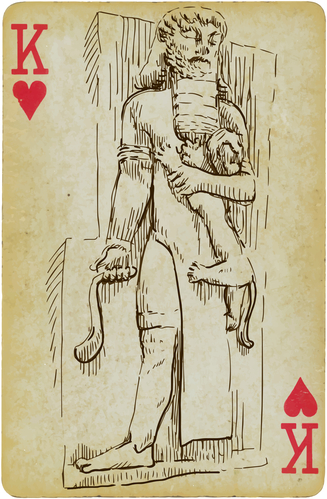
Gilgamesh wrapped himself in the bloody skins of a lion and roamed the earth trying to hide from death. He became increasingly more violent and insane. In one passage, he found a boat that would take him to a man-god who Gilgamesh thought could advise him on becoming immortal. But instead of asking the boatman to ferry him across the lake to Utnapishtim, Gilgamesh furiously destroyed everything in sight. Having shown his power, he then demanded the boatman ferry him. But the boatman told him “How can I? You have destroyed the tools I need to do that.”

Everyone Gilgamesh talked to on his journey told him the same thing – death is inevitable. You are wasting your life in futility. But he would not listen. 

He finally reached Utnapishtim and asked the man-god how he had become immortal. Utnapishtim related the story of an annihilating flood which killed all but him, his family, and the animals he brought on his ship with him. Realizing the horror that they had empowered, the gods rewarded Utnapishtim with god-hood – promising never again to destroy the inhabitants of earth. But, Utnapishtim assured, the gods would never again grant immortality. Death was now the inevitable finale of life.

Gilgamesh was relentless, so Utnapishtim challenged him to fight death’s younger brother sleep for only seven days. Gilgamesh reclined and immediately fell asleep from exhaustion. He slept for 7 days before Utnapishtim woke him. 

Defeated in the realization that death could not be overcome, Gilgamesh prepared for his journey home. He bathed, anointed his body with oils, and donned civilized clothes. He was now willing to face death as a man. But there was one more lesson Gilgamesh had to learn before returning to his kingdom. 

As a parting consolation prize, Utnapishtim told Gilgamesh that at the bottom of the lake lay a plant that would return youth to whomever ate it. Gilgamesh dove into the lake and retrieved the plant. Instead of eating it right away, Gilgamesh decided to take it back to Uruk. In his hand, he finally clutched a tiny morsel of immortality, something that would allow him to return to Uruk wise and youthful. Yet he hesitated.

While on his return journey, Gilgamesh stopped by a lake and bathed. He carelessly placed the plant on the shore. Of course, the plant was stolen by a passing snake, which sloughed its skin and slithered youthfully into the ground. 

Thus Gilgamesh realized that his entire quest for immortality – from the glory-seeking of his youth, to the insane grasping for godhood, to his desperate clutching at the comfort of youth – was in vain. He returned to Uruk an introspective, wise king. This elderly Gilgamesh finally attained a form of immortality: he built temples, halls, and the great wall of Uruk (parts of which have been found by archaeologists today). He brought prosperity to the city. 

My one lingering question after writing this analytical summary is why did Gilgamesh hesitate to eat the plant? Was it his final folly to hesitate? Or was this hesitation encouraged by his new-found wisdom? I can’t decide.

There are so many things to say about The Epic of Gilgamesh, and I had big plans for this post. But I see now that there’s no way to give even a small portion of Gilgamesh’s due in one post. So I will break this into a series of posts. More is yet to come. If you have anything specific you’d like me to discuss, let me know.

This is a series of posts about The Epic of Gilgamesh. Here is a list of all posts thus far: 

Fighting the Healthy Battle

So that time of year has come – the one in which the days become more dark – along with my thoughts. Every year about this time, I get bipolar depression. Or perhaps I should call it seasonal affective disorder. Regardless of the name, it’s very real. I become lethargic, I cry for no reason, and suicidal thoughts traipse through my brain. 

But that can’t happen to me this year because I’ve got a full time job to hold down at the same time as taking Abnormal Psychology and an EMT training class. So what do I do? Preemptive strike!


First thing: give up caffeine. I always say: I’m not addicted to caffeine – I give it up all the time. And I will try, try again. Starting today, I will only drink one can of Diet Dew a day. At the end of August, I’ll switch to one every other day. And at the end of September, I’m done. Part of my worry is that my teeth will rot out of my head. But I’ve also heard a lot of stories about how getting caffeine and aspartame out of your body does wonders for health and decreases anxiety. Let’s try it out. 


Next: exercise. Now, I have a job where I’m scrubbing and lifting and squatting all day long. I’m exhausted when I get home. But I can exercise on Saturdays and Sundays. I plan on spending an hour or so each of these two days at the gym. Running and biking is the goal  – I can listen to my audiobooks while doing that. 😉


I’ve always promised myself I wouldn’t become a pill-popper, but over the years I’ve added more and more supplements to my list. I’m going to ween it down to just a few – and make sure they’re quality. My doctor tells me that most Minnesotans are low in Vitamin D, and that raising Vit D can help fight depression. Sure enough, when tested, I was low. I will start taking Cod Liver Oil each day – it’s high in Vit D and is apparently the magical oil that fixes everything from brainpower to complexion. I will switch from the CVS brand of calcium (which is calcium carbonate) to one that uses calcium citrate. Apparently, this increases absorption. And I’m going to take an iron supplement because often when I go to the Red Cross they find that my hemoglobin is too low. 

That’s it. Those, and my multi-vitamin tablet, is all I need. Get rid of all those extra, dubious supplements. 

Last but not least, I’m going to be like this woman – basking in a happy lamp each morning. I’ve never tried this out, but I hear it works wonders. It’ll mean I have to get up a half hour earlier, but if it will save me from depression, it’s worth it. 

The scientist in me is flinching switching so many variables at once – but I must ignore those anxieties and journey on.