The Hour Between Dog and Wolf, by John Coates

The Hour Between Dog and Wolf: Risk Taking, Gut Feelings, and the Biology of Boom and Bust

Written by John Coates, Narrated by Paul Michael Garcia

Reason for Reading: This book was shortlisted for the Wellcome Trust Book Prize. 

Review
In this Wellcome Trust shortlisted book, Coates describes his research into the feedback loop between testosterone and success in the financial market. When a person has high levels of testosterone, they are prone to risk taking – which generally promotes the market; however, success raises their testosterone levels, which increases their risks and creates bubbles (like the dot-com bubble) which are unnatural and eventually pop. Loss of money leads to decreased testosterone levels and release of stress hormones – which, if sustained for long periods of time can lead to a depressed, risk-averse market. This is when the government should step in and perk up the market themselves. (You can probably guess Coates’ politics from that statement, but the book is generally apolitical.)

I found Coates’ research quite fascinating, and his writing was engaging to someone who’s interested in the topic. I, unfortunately, am not generally interested in finance and so my attention wavered a bit during the finance-heavy bits. But the book was written in an approachable way such that I (who know nothing of the matter) could understand the financial/market bits and that someone who knows very little medicine could understand the science bits. In fact, it was shortlisted for the Wellcome Trust Book Prize because because it makes medicine approachable to the general population. For anyone interested in how hormones/neuroscience/psychology can affect the market, this would be an excellent book to pick up. An easy and interesting read. 

The Last Battle, by C. S. Lewis

The Last Battle, by C. S. Lewis

Reason for reading: This is the seventh (and final) book in the Chronicles of Narnia, which I’ve been reading in order-of-publication. I plan on rereading them all in chronological order using Planet Narnia: The Seven Heavens in the Imagination of C. S. Lewis, by Michael Ward as a guide.

Review
The final book in The Chronicles of Narnia depicts the apocalypse of Narnia. When a shrewd monkey teams up with Calormen to trick the Narnians into thinking Aslan has returned – and they are his spokespeople – Narnia is cut to ruins. Forests are destroyed, Narnians begin to doubt Aslan, and cities fall to heathen invaders. I’m afraid to say this was my least favorite of the Narnia books (though I still liked it quite well!). Intellectually, I know Lewis had to have an apocalypse – whatever begins must also end – but it was still a bit dreary.  So although I understand why the apocalypse had to come, I still liked the other books so much better. Not only because they were much more cheerful, but also because they had more fun-filled adventure.

However, despite my misgivings about uplifting-yet-dreary endings, I want to address Philip Pullman’s opinions about the Narnia series (which I first mentioned in my blog post about The Amber Spyglass). WARNING: This commentary will have spoilers for the Narnia series! In his 1998 article in The Guardian, The Darkside of Narnia, Pullman stated his opinion about the Narnia series: “there is no doubt in my mind that it is one of the most ugly and poisonous things I’ve ever read.”   Pullman is an atheist, and he believes that the being-dead-in-Heaven-is-better-than-being-alive-on-Earth philosophy is “life-hating.” It is unsurprising, therefore, that he feels The Last Battle is “one of the most vile moments in the whole of children’s literature.” Happily, I disagree with his anger at this belief in Heaven. Even though I found The Last Battle to be a bit dreary, I appreciated the message of love and Heavenly gift that Lewis was portraying.

Pullman continues to say:

But that’s par for the course. Death is better than life; boys are better than girls; light-coloured people are better than dark-coloured people; and so on. There is no shortage of such nauseating drivel in Narnia, if you can face it.  

I agree that Narnia conveys some rather sexist and ethnocentric views, but that’s what English literature of that period was like. Lewis (and the Narnia books) are a product of their time.


I don’t think any of those arguments is strong enough to merit my discussion alone. The reason I felt moved to discuss Pullman’s opinions are in this paragraph (which I unfortunately read before completing the series):

And in The Last Battle, notoriously, there’s the turning away of Susan from the Stable (which stands for salvation) because “She’s interested in nothing nowadays except nylons and lipstick and invitations. She always was a jolly sight too keen on being grown-up.” In other words, Susan, like Cinderella, is undergoing a transition from one phase of her life to another. Lewis didn’t approve of that. He didn’t like women in general, or sexuality at all, at least at the stage in his life when he wrote the Narnia books. He was frightened and appalled at the notion of wanting to grow up. Susan, who did want to grow up, and who might have been the most interesting character in the whole cycle if she’d been allowed to, is a Cinderella in a story where the Ugly Sisters win.  

When I read this paragraph, I wondered what Lewis actually did do with Susan in the book. But when I read the book, I interpreted those events differently than Pullman: Susan wasn’t allowed into Heaven at that time. It was made clear that Susan was in one of the silly stages of life, but it was just a stage. She still had a chance to grow out of it. She hadn’t been rejected from Heaven permanently, and it wasn’t her time to die. Susan lived. And Susan had the ability to change (just as Pullman points out). Lewis wasn’t saying that grown-ups can’t go to Heaven. After all, the kids’ parents went to Heaven, didn’t they? Lewis was saying that Susan was in a phase where she idolized material things – and had thus turned away from her spiritual health.

Also, I’m not certain Susan really is the most interesting character. By Pullman’s definition (he-who-changes-is-most-interesting) I believe Eustace’s character developed much more than Susan’s character. Why is Pullman ignoring Eustace?

What do other people think about Susan’s character? Do you think Lewis meant for her to be denied Heaven permanently?
Losing Christina: Fog, by Caroline B. Cooney

Losing Christina: Fog, by Caroline B. Cooney

Reason for Reading: I had hit a reading slump and wanted to perk myself up by reading something “exciting.” I was browsing through the ebooks at my library, and found this. I remembered how much I loved it when I was a child and thought “I wonder how bad it could be?” So I borrowed it. 🙂 I’m rather glad I did!

Review
Christina is excited because this year she is 13 and she gets to leave the island she grew up on and attend junior high on the mainland in Maine. Despite her excitement, she is torn by worry about whether she’ll be bullied by the mainland kids, who think islanders are stupid and poor. But those worries soon take second place when she realizes that the owners of the bed and breakfast where she and her islander friends lodge are using psychological torment to suck the souls out of girls. She’s terrified as she watches the beautiful and brilliant senior Anya fade away. And soon the psychopaths are after her own mind. 

When I was pre-junior high I used to gobble up these Point Horror books like a turkey dinner. (haha. ok, I know that wasn’t funny. Just work with it.) There are very few of those books that I actually remember liking though. This is one that has really stuck with me through the years. When I found it in the library recently I thought: “I wonder…” And I’m glad I did, because I found this book terrifying. When I was a teenager, I think I found the spooky psychological aspects of going insane scary. Now, the book is even more terrifying, but for a different reason. Those psychopath adults who have FULL control over those poor children were horrible! They were charming, and fantastic liars, and those kids’ parents weren’t around to see what was going on. They just believed whatever the adults told them rather than believing their own children. And the things those psychopaths said to the kids! Ohhhhh shudder. Yes, the book lacked subtlety. But the fact that it terrified me even now gets it four stars in my blog! My only complaint (besides the lack of subtlety – which is really due to its target audience) is that it ended in a cliffhanger. This is a trilogy of short books. It really should be one longer book. Even combined, I think the book would still be reasonably short. But it WAS Point Horror, after all. They had to be short.

The Magician’s Nephew, by C. S. Lewis

The Magician’s Nephew, by C. S. Lewis

Reason for Reading: I’m finishing up the Narnia chronicles in order-of-publication. This is the penultimate book. 🙂 I chose to read this book NOW because of the Classics Children’s Literature Challenge.

Review
When Digory’s evil magician uncle tricks Polly into entering another world,   Digory must rescue her. Their adventure heightens when they discover an evil witch and then witness the creation of Narnia. This is the first time I’ve read this adorable classic. I’ve heard it was the book that Lewis meant to start the series with, but it was so difficult to write that he put it off until he had developed Narnia a bit more. It’s probably good that he did, because I enjoyed seeing references to the earlier books…like the story of how the light-post ended up in the middle of a forest in Narnia. 🙂 I look forward to re-reading this book later (this year?) when I read them in chronological order. 😀

Old Curiosity Shop, by Charles Dickens

The Old Curiosity Shop, 

Written by Charles Dickens, Narrated by George Hagan

Reason for Reading: I’m making a point of reading all of Dickens’ major works. This month, Caroline from Beauty is a Sleeping Cat and Delia from Postcards from Asia hosted Dickens in December, a month dedicated to Charles Dickens. This will also count for the 7th completed book in my Classics Club list

Review 
When Little Nell’s grandfather drives himself into gambling debt (in hopes of raising money for Nell’s future), they must take to the streets to escape the malicious designs of more than one nasty character. Nell’s grandfather increasingly becomes a doddering old fool, and Nell is left to her own devices in finding refuge from the cold, the hunger, and the devious people-of-the-streets. Unbeknownst to them, their good friend (and former servant) Kit is desperately looking for them – praying for their safety and not knowing why they have left. I think this is my least favorite Dickens book so far. Generally, I am able to get involved in the complex narrative and the variety of character in a Dickens novel, but kit was the only character I really cared much about. Nell and her grandfather were so melodramatically pathetic that, although I felt sorry for their situation, I couldn’t get myself to really care about the outcome. Perhaps this was just timing – maybe I’d have liked the book better in another mood. But I can’t say I’ll ever try reading it again to find out. Not a bad book – but Dickens can do better.


A Christmas Carol, by Charles Dickens

2012 Book 172: A Christmas Carol

Written by Charles Dickens, Narrated by Tim Curry

Reason for Reading: I read this for a Dickens in December readalong hosted by Beauty is a Sleeping Cat and Postcards from Asia. Unfortunately, I’m a day behind on my post! This is also one of the 1001 Books You Must Read Before You Die (sign-up for Team 1001 here).

Review (contains spoilers :p)
When grumpy and miserly Ebeneezer Scrooge is visited by the ghost of his long-deceased business partner, he gets the shock of his life. Apparently, a person’s job on earth is to walk among his fellow men and help them. For those who were too selfish to help during life, they are doomed to an eternity of walking among men while desiring to help, but not being able to. Scrooge is about to be given a chance at redemption. He will be visited by three ghosts. The Ghost of Christmas Past will remind him that although he’d had a rather dreary childhood, he’d had plenty of chances to make people (rather than wealth) his passion. The Ghost of Christmas Present will show him how happy people can be when they are surrounded by the people they love at Christmas. And the Ghost of Christmas Future will reveal a dreary future which may come to pass if Scrooge continues on his miserly path. On Christmas morning, Scrooge will awaken a new man – someone who knows how important it is to love one’s neighbors and to rejoice in their friendship. This is such a great story because it reminds us that wealth does not necessarily make us happy. It reminds us to look at the world through a different perspective. And, it’s pretty darned funny. 🙂 

This well-known story was excellently narrated by Tim Curry…and I’m SO glad I decided to pay the extra couple of dollars for the Curry narration! His voice is soothing yet engaging at the same time. His voices for each character are spot on. And his delivery of the humor was so well-timed! 

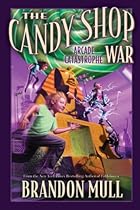
The Arcade Catastrophe, by Brandon Mull

2012 Book 171: The Arcade Catastrophe, by Brandon Mull

Reason for reading: This is a sequel to a book I loved – The Candy Shop War. Plus, I’ve read all of Mull’s books, so I can’t stop now, can I? This book counts for California in my Around the World Challenge. It’s this week’s review for Read and Review Hop, hosted by Anya from On Starships and Dragonwings.

Review
Nate, Summer, Pigeon, and Trevor believe that things have calmed down since the wicked plans of Belinda White were foiled last year. But when they find out that Jonas White, Belinda’s brother, is running a suspicious Arcade in the area the kids are plunged into a new adventure. Because magicians can MAKE magic, but can’t actually USE it (and because they’re only safe from magical attack if they’re in a magical sanctuary – so they’re not often mobile), they use magical candy to recruit kids to do all their dirty work. Nate and his friends must use magical powers provided by the Magician/Candyman Mr. Stott to infiltrate White’s team. White sends them on a wild and magical treasure hunt for a dangerous artifact. How can the kids keep undercover without providing White unimaginable power? How can they keep such a huge secret from Lindy Stott? 

Mull intended The Candy Shop War to be a standalone book, but because people kept asking for a sequel, he delivered. And you know what? I’m pretty sure it was better than the first book! Mull’s writing has developed quite a bit since he wrote The Candy Shop War. This book has adventure, humor, and good characters. It was a delight to read. I had a hard time putting it down. Originally, I was skeptical because I’m a fan of keeping standalone books standalone, but I’m really happy Mull wrote this book and I’m eager for the following one. 😀 These books are aimed at a slightly younger crowd than the standard YA book…I’d say they’re appropriate for 11-year-olds, but could be enjoyed by kids (and adults) of other ages too. 


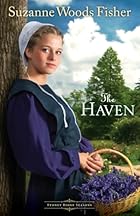
The Haven, by Suzanne Woods Fisher

2012 Book 170: The Haven, by Suzanne Woods Fisher

Reason for Reading: I’m leading a discussion on The Haven for the ACFW bookclub. Discussion starts tomorrow, but it lasts until the end of the month, and anyone is welcome to read the book quickly and join in the discussion! This is the second book in the Stoney Ridge Seasons series.

Review
When Sadie Lapp returns home after several months of living with her newly-married sister, she comes bearing a foundling baby. She wants the baby to remain a secret until she can discover who the  mother might be, but to her dismay rumors immediately start flying around town that she is the mother. On top of all that stress, Sadie is now questioning her own interest in Gideon Smucker, who has been in love with her for years. Does she like him? Or does she prefer Will Stoltz, the city-boy who’s living on the farm as a wildlife intern who babysits a pair of endangered falcons that are nesting in the area? This is a sweet romance about the painful effects of gossip and  the power of forgiveness. I think this was a wonderful follow-up to the first book in the series, The Keeper. Although you could, theoretically, read The Haven as a stand-alone book, I’m really glad I read The Keeper first. Reading The Keeper helped me to understand some issues that would have gone right over my head if I hadn’t read it first. On the other hand, although The Haven continues with themes introduced in The Keeper, The Haven is a very different book because the lead characters are so different. Sadie is a cautious, awkward, unobtrusive girl who (at the beginning of the book, anyway) allows people and circumstances to take advantage of her. She needs to blossom into a more assertive young lady. Although I’ve read reviews which criticized her personality, I rather liked her. She reminded me of myself when I was that age. Fisher did a wonderful job of portraying the tortured shyness of Sadie – and then Sadie’s transformation into assertiveness was very touching. No, her character isn’t perfect, she made mistakes – as everyone else in the book did – but she was a realistic character. And one that I loved. If you like Amish romance, you’ll like this series. 🙂 (These were my very FIRST Amish books, to be honest!)

The Fox Inheritance, by Mary E. Pearson

2012 Book 169: The Fox Inheritance

Written by Mary E. Pearson, Narrated by Matthew Brown

Reason for Reading: It’s the second book in the Jenna Fox Chronicles.


Review 
After 260-years of purgatory, Locke Jenkins awakens with a body that seems familiar – yet somehow changed. His friend, Kara, who died in the car crash that killed Locke, also has a achingly similar body…but her mind isn’t quite right. Locke and Kara soon learn that their minds had been downloaded and saved centuries ago by the father of Jenna Fox – another victim of the fatal crash. Although Jenna had been given a new life right away, the copies of Locke’s and Kara’s minds had collected digital dust until Dr. Gatsbro brought the teens back to life in this brave new world. But Dr. Gatsbro’s motives are not altruistic. Locke and Kara make a desperate attempt to escape the doctor’s nefariousness clutches…and are jettisoned into the foreign world of the future. But can Locke keep Kara from making a terrible mistake?

When I read The Adoration of Jenna Fox years ago I really liked it, but as I was reading The Fox Inheritance, I realized that I remembered almost nothing of the first book (perhaps it wasn’t so great after all?). I had to rely on spoiler reviews of the first book, and on the hints-of-what-came-before in the second book to remember. This made the first part of the book rather confusing. I’d recommend familiarizing yourself with The Adoration of Jenna Fox before starting The Fox Inheritance. Although I enjoyed this book, I wasn’t as impressed as I had been after reading the first in the trilogy. The Fox Inheritance had some world-building and good characters. It brought some interesting moral issues to the table: Is it ethical to bring someone back to life after they’re dead – and risk changes? Is it ethical to use a sentient being that of human-creation for our own purposes, or do they deserve civil rights? These are intriguing questions, but they’ve been explored in many other books/movies. So, in the end, I liked this book. It was a fun read. I’ll probably pick up the third book when it comes out. But I would have been perfectly happy if this trilogy had stayed as ONE standalone book. And I’m pretty sure I’ll forget the plot of this book within a few weeks.

Three Men in a Boat, by Jerome K. Jerome

2012 Book 168: Three Men in a Boat (To Say Nothing of the Dog)

Written by Jerome K. Jerome, Narrated by Frederick Davidson

Reason for Reading: This was my “monthly random pick” which took me two months to get to. 🙂 My next “monthly random pick” is The Passage, by Justin Cronin. This book is a classic, so it fits in my Classics Club list. 🙂 

Review
In this classic novel of humor, three men (to say nothing of the dog) decide to cure their hypochondriac ailments by getting fresh air and exercise. They decide to travel down the Thames in a boat. The narrator jumps back and forth between humorous description of their preparations/trip and silly reminiscences of loosely connected incidents about the characters. This is the type of book where, at the end, you’re not sure if there was any story in there at all, but you certainly enjoyed the trip regardless. It was a good-natured, happy sort of humor. This is a short book, and certainly worth reading if you like the classics. 🙂