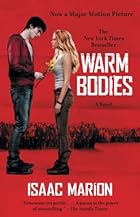
Warm Bodies, by Isaac Marion

Warm Bodies, by Isaac Marion

Reason for Reading: Loved the movie and trying to kill reading slump.

Review
R is an above-average-intelligence zombie (he can speak 4-6 syllable sentences!) who is living a doll-drum life in an abandoned airplane – but his un-life gets a sharp slap in the face when he meets Julie, who by all rights he should have eaten. Instead, he takes Julie home and tries to communicate with her. This small act of curiosity on R’s part ignites a chain event of new perceptions. The world must crawl out of it’s stagnant existence and remember what it was to live.

I admit that I watched the movie first. I generally don’t do that, but it just happened that way. I LOVED the movie and had to rush out to get the book. This is one example where I’d say I liked the movie and the book equally. 🙂 Warm Bodies is unquestionably a retelling of Romeo and Juliet (right down to the balcony scene), but it was certainly the most unique retelling I’ve read. Additionally, I interpreted the book as a parody of YA paranormal romance – I took it very tounge-in-cheek. So I got a LOT of laughs while reading it. But what I thought was most interesting was the allegory. The zombies symbolized passionless people who have simply accepted life as directed by the ruling body (Bonies, in this case). And R was a zombie who just couldn’t quite conform. I loved the idea that a renewal of passion (and I don’t just mean romantic passion) could revive R’s potential as an individual. One simple act of individuality could change the course of history. On the other hand, I got a little tired at the end of the book of the cheesy internal dialog (and I DO mean internal dialog and not monologue). I think Marion was laying on his philosophy a little too thick. It would have been much more elegant to leave these philosophical discussions out – anybody who was willing to see Marion’s philosophy would be able to do so without cheesy dialog. But that was my only complaint about this funny, quirky, and delightful story. 🙂

Unnatural Issue, by Mercedes Lackey

Unnatural Issue

Written by Mercedes Lackey,  Narrated by Kate Reading

Reason for Reading: This was meant to be included in a fairy tale challenge in February, but that didn’t work out for me too well. But I’m still going to finish up my Donkeyskin books, regardless! 


Review
When Earth Master Richard Whitestone’s wife dies in childbirth, he discards their newborn  daughter Suzanne in a fit of rage. Suzanne is raised as a servant of the household, while her father wastes away in his chambers. After many years, Whitestone develops a new passion – necromancy. When he sees his daughter wandering his lands, he realizes she is the perfect vessel in which to trap his dead wife’s spirit. Suzanne must flee her father, and hide in the guise of a servant in another household. But her skill in Earth magic is difficult to hide…

This is a non-canonical retelling of the fairy tale Donkeyskin, and is part of Lakey’s Elemental Master series. Although it certainly has charm and originality, it is not my favorite of the Donkeyskin retellings, nor of the Elemental Master series. I felt the premise of the book – a necromantic father, Elemental Masters fighting in WWI, with a touch of romance – had promise. Unfortunately, it just wasn’t delivered as well as it could have been. The romance seemed forced, and the war sections uninteresting. Not that it was a terrible book, but it could have been so much better. Lackey is better than this. 

But, if you’re looking for a fluffy-quick read, or an original fairy tale retelling, this book will certainly deliver that. 🙂 The narration by Kate Reading was quite good. She did the voices well, and had good timing. 

Noughts and Crosses, by Malorie Blackman

Noughts and Crosses 

Written by by Malorie Blackman, Narrated by Syan Blake and Paul Chequer

Reason for Reading: Group read for my Social Justice February theme (which didn’t go so well this year due to a month of hospital runs….but things are looking more perky now!)

Review
Callum McGregor and Sephy Hadley have been best friends for as long as they remember. But recently their feelings for each other have begun to develop into something…stronger. Unfortunately, Sephy is a member of the dark-skinned upper class of Cross, and Callum is a pale-skinned, low-class Nought. The teens’ romantic problems intensify when Callum’s family gets caught up in a terrorist liberation organization that Sephy’s father (a politician) has sworn to stamp out. Sephy and Callum must learn to love each other in a tumultuous world of hatred. Does this scream out “star-crossed lover” to you? But soft, what light through yonder window breaks? (I got the same Romeo and Juliet vibe from Warm Bodies, which I just finished reading. I think it’s fun when the cosmic net of connected concepts captures me.) 

I’ve heard fantastic things about this book, but I wasn’t as impressed as I thought I’d be. Maybe it’s just because I wasn’t in the mood to read depressing race-relations books (and they’re all a bit depressing, aren’t they?), but this book wasn’t a slap in the face of my preconceived notions.  It was just another book about racism, much like a book written about a white girl and teenaged member of the Black Panthers. The whole skin-color switcharoo seemed like an unnecessary literary device to me. Now, don’t get me wrong, I’m not saying it was a bad book…I was just expecting more amazingness, that’s all. It was a tragically-sweet love story about a very important issue – racism, and the ease with which we can be swept away by other people’s causes. But I think the book would have been more powerful if she’d focused on  the realism of the story instead of trying to build a new world that was simply too similar to our own to justify the effort of creation.  

What do other people think? I imagine there are people out there who think the skin-color switcharoo added to the story? If so, please let us know. 🙂


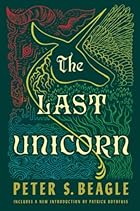
The Last Unicorn, by Peter S. Beagle

The Last Unicorn, by Peter S. Beagle

Reason for Reading: Group read on LibraryThing’s Green Dragon 

Review
When a unicorn realizes that she may be the last remaining unicorn, she leaves her peaceful home on a quest to find out what happened to all her brothers and sisters. Along the way, she picks up bumbling magician seeking his talent and a dour cook looking for her lost innocence. The unicorn soon discovers that the world has changed since she last ventured out. Humans have lost their youthful innocence, and they are no longer able to see things as they truly are – humans have excelled in the art of deceiving themselves. 

When I originally picked up this book, I’d expected a cute young adult tale, but never expected such depth. The Last Unicorn is a multi-layered allegory: about lost innocence, self-fulfilling prophecies, and self-deception. But these cynical themes aren’t the main point. The main point is that only in fully understanding humans can the ethereal unicorns save themselves. Only by sacrificing a piece of their ineffable essence can they form a closer bond to humans. And this closer bond can lead humans to do wonderful things. 

Yes, it is a Christian allegory by my interpretation. But I think it’s amazing the way Beagle didn’t just throw in a Christ Figure and be done with it….The allegory of Beagle’s unicorn isn’t uniquely Christian – it defies religious boundaries. It is a story of love and innocence that mixes cynicism and hope. Quite extraordinary! 🙂

I was also a HUGE fan of the bumbling wizard Schmendrick who (in my opinion) was only fooling himself into believing he wasn’t a capable wizard. He’s like the Lion, the Scarecrow, and the Tin Man in Wizard of Oz – just the fact that he wanted so badly to be a wizard made him into one. He could laugh at all the people who deceived themselves, as he unconsciously deceived his own self. He reminded me of myself when I’m in a glum mood thinking I’m not capable of anything when, of course, I’m quite capable if I’d stop expecting so little of myself. 😉 This book was a good reminder to have faith in yourself and think about the consequences of your beliefs. 🙂

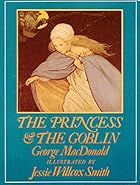
The Princess and the Goblin, by George MacDonald

The Princess and the Goblin, by George MacDonald

Reason for Reading: Group read with Simpler Pastimes

Review
This classic fairy-tale-style story is set in a land where the Goblins and Humans have had a “cold war” for many, many years. Long ago, the Goblins threatened that some day they will steal a princess…and their day finally comes when Princess Irene’s nurse accidentally keeps the Princess out after sunset. Luckily, they are rescued by a miner’s boy, Curdie – but now the Goblins know where the Princess lives and what she looks like. When the Goblins hatch a devious plot, Curdie and Irene become fast-friends as they act in turn as heroes. First and foremost, this is a fairy-tale. But it is also an allegory about faith. Princess Irene has a great-great-grandmother – a mysterious and heavenly woman that only she can see. Irene’s very-great grandmother gives the Princess a magical string and tells her to follow the string whenever she’s afraid – never doubting it or deviating from it, regardless of where it may take her. Irene must learn to have faith even when she thinks that the string has led her astray. And Curdie must learn to have faith in a very-great grandmother that he has never seen.  This is a sweet story, nice for reading aloud to young children. 

The Sandman – Preludes and Nocturnes, by Neil Gaiman

Preludes and Nocturnes, by Neil Gaiman

Reason for Reading: Group read on LibraryThing

Review
In this classic graphic novel, Dream (The Sandman) is captured by a sinister magician and remains trapped for decades. While he is gone, his kingdom falls apart and dreams on Earth are disrupted. I’m not very experienced with graphic novels, having only read Satrapi’s Persepolis before this, so reading Preludes and Nocturnes took some getting used to. But I’m glad I decided to climb out of my comfort-zone for a while – I was REALLY enjoying the book by the time it ended. Neil Gaiman’s mind never ceases to amaze me. He’s so darkly creative. There are a few issues I had with this book, though. I thought the tie-in to DC superheroes was a bit cheesy – though I recognize that this cheese was do to the development of the graphic novel as a genre. I hear these elements disappear later in the series to leave only the good stuff. 🙂 Also, I found one incident at the end of the book darkly depressing. It made me very sad to see the dark insides of humanity (as Gaiman and his illustrators see them)…but I guess my emotional reaction is exactly what Gaiman was going for. So, points to him. 😉 Overall, this was a promising beginning, and now that I am more used to the graphic novel style, I’m looking forward to enjoying the rest of the series much more – after all, it’s only supposed to get better from here!

Midnight Riot, by Ben Aaronovitch

Midnight Riot 

Written by Ben Aaronovitch, Narrated by Kobna Holdbrook-Smith

Reason for Reading: Real-life Book Club

Review
Peter Grant is a bumbling, easily distracted constable on the fast-track for a paper-pushing job. His luck unexpectedly turns when a ghost approaches him at a murder scene. Apparently Grant does have a talent – he can see dead people. Suddenly, he is adopted as the sole apprentice of Detective Chief Inspector Nightengale, who heads the supernatural division of the police. Grant is up to his ears in weirdness as he tries to solve the murder while learning the ropes in the unexpectedly supernatural world. I mostly enjoyed Midnight Riot for its interesting world-building and a lot of dry humor. The character of Grant was likable enough – even if he was bumbling – and I suspect I’d grow attached to him after a few books in the series. The plot tended to stray a bit more than I prefer, though. Nothing too bad, mind you, but there were a few moments where I wondered if we were still trying to catch the murderer or just enjoy the scenery. I prefer a little more focus. But these passages were never very long, and the book was, for the most part, quite enjoyable. I’m sure I’ll pick up the next in the series some day.

As for the narration by Kobna Holdbrook-Smith…I think his cadence, tone, and delivery was done perfectly for our character. He was so dead-pan with the dry humor that I sometimes only caught the humor by delayed reaction. Which made it funnier. 🙂 On the other hand, he was a rather loud (and wet) breather. I figured at first that this was put on for the character effect – but then I realized that such breathing would be difficult to fake unless he narrator was really congested. So…the loud breathing wasn’t enough to put me off, but it might be enough to put SOME people off. 

Harry Potter and the Order of the Phoenix, by J. K. Rowling

Harry Potter and the Order of the Phoenix

Written by J. K. Rowling, Narrated by Jim Dale

Reason for Reading: I’ve been going through the Harry Potter books by audio now. This is my first time reading straight through the entire series, and by “straight” I mean I finish one every one or two months. 😉

Review (WARNING: Contains unavoidable spoilers from earlier novels!!!)
Voldemort has recently returned, and Harry Potter has spent the entire summer listening to the muggle news for some sign of terror. But it turns out that most people don’t believe Harry and Dumbledore that Voldemort has risen, and Voldemort is using that ignorance to his advantage.  Furthermore, the Ministry of Magic has decided that Dumbledore isn’t stable, and they’re interfering at Hogwarts with the addition of a new teacher – the throttle-worthy Dolores Umbridge. *Yes. I wanted to throttle her EVERY time she entered the narrative. That shows excellent caricaturization by Rowling.* This year, Harry must battle the disciplinary hand of the Ministry and skepticism from his fellow students, without losing focus on his upcoming OWL exams. Will he pass Potions?!

This is one of the more complex books in the series (which wins it bonus points with me), but it is also the angstiest book. Harry spends the entire book angry at his friends, angry at Dumbledore, angry at the Ministry, angry at Umbridge, and just plain pissed off in general. His confusion is compounded by his interest in Cho, who is still mourning the death of her dead boyfriend Cedric. Overall, it’s a good book because it advances the story and develops character, but I got a bit tired of angsty Harry. This is my least favorite (though still highly enjoyable) of the Harry Potter books.

Jim Dale’s narration is quite enjoyable now that I’ve gotten used to it. He has recognizable voices for each of the characters, and his voice is entertaining and engrossing.

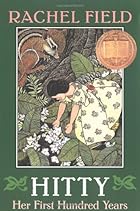
Hitty: Her First Hundred Years, by Rachel Field

Hitty: Her First Hundred Years, by Rachel Field

Reason for Reading: This book won the Newbery Medal in 1930 and has been sitting on my shelf for years. 

Review
While sitting idly one evening in her antique shop, Hitty, a 6-inch-long doll carved out of Mountain Ash wood, decides to write her memoirs. She begins her narration with her birth into the brave new world of 1830’s Maine. Her little girl drags her on many adventures beginning first with their village and ending in a far-off land…where she finds a new owner. Follow Hitty’s adventures over a hundred years as she changes hands and lands and occupations. This is an adorable little classic of historical fiction for 8-9 year-old girls. The story is sweet and generally easy to read (though some of the historical references went over my head, and the book succumbed to the racial stereotyping common for books written around the turn of the century). I’m glad I finally picked this one up. 

The Last Battle, by C. S. Lewis

The Last Battle, by C. S. Lewis

Reason for reading: This is the seventh (and final) book in the Chronicles of Narnia, which I’ve been reading in order-of-publication. I plan on rereading them all in chronological order using Planet Narnia: The Seven Heavens in the Imagination of C. S. Lewis, by Michael Ward as a guide.

Review
The final book in The Chronicles of Narnia depicts the apocalypse of Narnia. When a shrewd monkey teams up with Calormen to trick the Narnians into thinking Aslan has returned – and they are his spokespeople – Narnia is cut to ruins. Forests are destroyed, Narnians begin to doubt Aslan, and cities fall to heathen invaders. I’m afraid to say this was my least favorite of the Narnia books (though I still liked it quite well!). Intellectually, I know Lewis had to have an apocalypse – whatever begins must also end – but it was still a bit dreary.  So although I understand why the apocalypse had to come, I still liked the other books so much better. Not only because they were much more cheerful, but also because they had more fun-filled adventure.

However, despite my misgivings about uplifting-yet-dreary endings, I want to address Philip Pullman’s opinions about the Narnia series (which I first mentioned in my blog post about The Amber Spyglass). WARNING: This commentary will have spoilers for the Narnia series! In his 1998 article in The Guardian, The Darkside of Narnia, Pullman stated his opinion about the Narnia series: “there is no doubt in my mind that it is one of the most ugly and poisonous things I’ve ever read.”   Pullman is an atheist, and he believes that the being-dead-in-Heaven-is-better-than-being-alive-on-Earth philosophy is “life-hating.” It is unsurprising, therefore, that he feels The Last Battle is “one of the most vile moments in the whole of children’s literature.” Happily, I disagree with his anger at this belief in Heaven. Even though I found The Last Battle to be a bit dreary, I appreciated the message of love and Heavenly gift that Lewis was portraying.

Pullman continues to say:

But that’s par for the course. Death is better than life; boys are better than girls; light-coloured people are better than dark-coloured people; and so on. There is no shortage of such nauseating drivel in Narnia, if you can face it.  

I agree that Narnia conveys some rather sexist and ethnocentric views, but that’s what English literature of that period was like. Lewis (and the Narnia books) are a product of their time.


I don’t think any of those arguments is strong enough to merit my discussion alone. The reason I felt moved to discuss Pullman’s opinions are in this paragraph (which I unfortunately read before completing the series):

And in The Last Battle, notoriously, there’s the turning away of Susan from the Stable (which stands for salvation) because “She’s interested in nothing nowadays except nylons and lipstick and invitations. She always was a jolly sight too keen on being grown-up.” In other words, Susan, like Cinderella, is undergoing a transition from one phase of her life to another. Lewis didn’t approve of that. He didn’t like women in general, or sexuality at all, at least at the stage in his life when he wrote the Narnia books. He was frightened and appalled at the notion of wanting to grow up. Susan, who did want to grow up, and who might have been the most interesting character in the whole cycle if she’d been allowed to, is a Cinderella in a story where the Ugly Sisters win.  

When I read this paragraph, I wondered what Lewis actually did do with Susan in the book. But when I read the book, I interpreted those events differently than Pullman: Susan wasn’t allowed into Heaven at that time. It was made clear that Susan was in one of the silly stages of life, but it was just a stage. She still had a chance to grow out of it. She hadn’t been rejected from Heaven permanently, and it wasn’t her time to die. Susan lived. And Susan had the ability to change (just as Pullman points out). Lewis wasn’t saying that grown-ups can’t go to Heaven. After all, the kids’ parents went to Heaven, didn’t they? Lewis was saying that Susan was in a phase where she idolized material things – and had thus turned away from her spiritual health.

Also, I’m not certain Susan really is the most interesting character. By Pullman’s definition (he-who-changes-is-most-interesting) I believe Eustace’s character developed much more than Susan’s character. Why is Pullman ignoring Eustace?

What do other people think about Susan’s character? Do you think Lewis meant for her to be denied Heaven permanently?