Girl from the Well, by Rin Chupeco


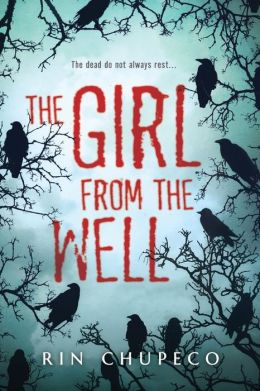
The Girl from the Well, by Rin Chupeco 

Genre: Teen Horror / Suspense

Reason for Reading: This book was provided by the publisher, Sourcebooks Fire, through Netgalley in exchange for an honest review. 

SummaryTarquin (Tark) Halloway has been haunted his entire life. With a mentally ill mother and a caring father who works too much, he feels he has no one to talk to about the strange lady that slinks through mirrors and makes Tark do terrible things. But when he meets a roaming spirit, Okiku, they both begin to remember what it is to be human. With the help from Tark’s cousin Callie, Okiku and Tark must rid himself of his haunting. 

My Thoughts: Let me tell you, if I had read this book when I was 14, I would have been sleeping with the lights on for weeks. The spookiness / imagery is reminiscent of Japanese horror films that The Grudge (Ju-On: The Grudge) and The Ring (Ringu) were based on. (Have you seen the originals? Not the American remakes. Watch the real thing. Darn spooky! That’s what The Girl From the Well is like.) Same evil-ghost-child-with-long-creepy-hair-staring-at-you-in-crazy-fast-did-that-actually-just-happen-flashes feel to it. 

Part of Rin Chupeco’s spooky genius is her narration style. The story is narrated from the POV of the ghost, Okiku. Often, it reads like a 3rd person omniscient narrative, because Okiku mostly observes rather than acting. I often forgot I was reading a first person POV, and then suddenly Okiku would say something in the first person, and it was like she had just appeared out of nowhere. Like a ghost. Spooky. And then, sometimes Okiku would describe herself in the third person – a description of a ghost as Callie or Tark would have seen. This gave Okiku’s character a sense of otherness. She felt inhuman. Ineffable.

Overall, I think this was an fantastic book, and I look forward to reading more of Chupeco’s works. I miss the old days when ghosts were ghosts and monsters were monsters. I applaud Chupeco’s work as one more for the #reclaimhorror team. (Ok, I just made that hashtag up, so technically she’s the first on the team. But it’s all good.)


Rin Chupeco: Despite uncanny resemblances to Japanese revenants, Rin Chupeco has always maintained her sense of humor. Raised in Manila, Philippines, she keeps four pets: a dog, two birds, and a husband. She’s been a technical writer and travel blogger, but now makes things up for a living. The Girl from the Well is her debut novel. Connect with Rin at www.rinchupeco.com.

//widget.rafflecopter.com/load.js

The Drowning Girl, by Caitlin R Kiernan

The Drowning Girl, Written by Caitlin R. Kiernan, Narrated by Suzy Jackson

Genre: Dark Fantasy

Reason for Reading: This was one of the nominations last year for the World Fantasy Awards

Synopsis: In The Drowning Girl a young schizophrenic woman, Imp, tells the story of her meetings with Eva Canning – a ghost? a mermaid? a werewolf? a normal, disturbed young woman? As Imp’s mind roils in schizophrenic fantasy, the readers are left wondering how much of the story is reality and how much is fantasy. 

My thoughts: I’m having a hard time coming up with viable thoughts about this book. I just don’t know what to think! I was interested throughout; I always cared about Imp – and about her girlfriend Abalyn – but I never knew quite what to think. Which, I suppose, is the point of the book? Kiernan did a fantastic job of spiraling Imp’s writing in and out of control, and the pacing of the spirals was quite amazing. This is a skilled bit of writing. Likewise, Jackson was a superb narrator for this role. Her inflections were perfect for hinting at whether Imp was “in control” or “out of control” when certain passages were read. I would recommend this book to people who enjoy open-ended stories, especially those stories with an aura of unreality. 

Losing Christina: Fog, by Caroline B. Cooney

Losing Christina: Fog, by Caroline B. Cooney

Reason for Reading: I had hit a reading slump and wanted to perk myself up by reading something “exciting.” I was browsing through the ebooks at my library, and found this. I remembered how much I loved it when I was a child and thought “I wonder how bad it could be?” So I borrowed it. 🙂 I’m rather glad I did!

Review
Christina is excited because this year she is 13 and she gets to leave the island she grew up on and attend junior high on the mainland in Maine. Despite her excitement, she is torn by worry about whether she’ll be bullied by the mainland kids, who think islanders are stupid and poor. But those worries soon take second place when she realizes that the owners of the bed and breakfast where she and her islander friends lodge are using psychological torment to suck the souls out of girls. She’s terrified as she watches the beautiful and brilliant senior Anya fade away. And soon the psychopaths are after her own mind. 

When I was pre-junior high I used to gobble up these Point Horror books like a turkey dinner. (haha. ok, I know that wasn’t funny. Just work with it.) There are very few of those books that I actually remember liking though. This is one that has really stuck with me through the years. When I found it in the library recently I thought: “I wonder…” And I’m glad I did, because I found this book terrifying. When I was a teenager, I think I found the spooky psychological aspects of going insane scary. Now, the book is even more terrifying, but for a different reason. Those psychopath adults who have FULL control over those poor children were horrible! They were charming, and fantastic liars, and those kids’ parents weren’t around to see what was going on. They just believed whatever the adults told them rather than believing their own children. And the things those psychopaths said to the kids! Ohhhhh shudder. Yes, the book lacked subtlety. But the fact that it terrified me even now gets it four stars in my blog! My only complaint (besides the lack of subtlety – which is really due to its target audience) is that it ended in a cliffhanger. This is a trilogy of short books. It really should be one longer book. Even combined, I think the book would still be reasonably short. But it WAS Point Horror, after all. They had to be short.

The Keeper, by Suzanne Fisher

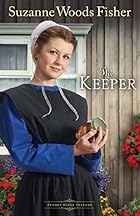
2012 Book 166: The Keeper, by Suzanne Fisher

Reason for Reading: It’s the first book in a series. I’ll be leading a discussion on the second book, The Haven, from 20Dec – 31Dec for the ACFW Bookclub. Anyone is welcome to join, and apparently you don’t have to read the first book to enjoy the second. 🙂

Review 
When Julia Lapp’s fiance, Paul Fisher, postpones their wedding again, Julia blames Roman Troyer, a wandering bee-keeper who isn’t too fond of emotional attachments. Blaming Roman is easier than blaming Paul, after all. Julia keeps herself busy trying to regain Paul’s attention and taking her frustrations out on Roman while at the same time holding together the crumbling pieces of her family’s farm. Her father is having heart problems, and the family needs to stand strong in order to get through these difficult times. This is a sweet and simple romance, with a lot of emotional twists. The entire Lapp family (as well as Roman) are very lovable, and you can’t help but root for them. I’m eager to read the second book, The Haven, which tells the story of Julia’s younger sister. 

Our Lady of Alice Bhatti, by Mohammed Hanif

2012 Book 162: Our Lady of Alice Bhatti 

Written by Mohammed Hanif, Narrated by Nimra Bucha 

Reason for Reading: Shortlisted for the Wellcome Trust Book Prize 


Review 

After spending over a year in a women’s prison on some jacked up manslaughter charges, Alice Bhatti secures a job as a junior nurse in a Catholic hospital in the predominantly Muslim city of Karachi. There, she fights to salvage some amount of pride as she fends off roaming hands and gun-toting suitors. In the midst of this chaos, she manages to save a few lives. But is she performing miracles? Hanif’s narrative has some truly beautiful moments, but I was left wondering: What’s the point? There wasn’t really a story-line…it was just a series of events. The scenery and characters supported the novel, but they lacked plot. This book was shortlisted for the Wellcome Trust book prize, and I understand why – it displays the woes of practicing medicine in a religiously-charged, seedy environment. I certainly have a better appreciation, now, for medical practitioners in neighborhoods like this. I was moved by the characters, but not enthralled by the story. 

Pale Fire, by Vladimir Nabokov

2012 Book 161: Pale Fire

Written by Vladimir Nabokov, Narrated by Marc Vietor

Reason for Reading: November was Russian Reading Month, hosted by Tuesday in Silhouette

Review

In this complex piece of literature, we explore the psyche of Charles Kinbote, an eccentric and obsessive man who is writing the introduction and notes to a 999-line poem entitled Pale Fire by a recently deceased poet with whom Kinbote has become enamored. Nabokov’s novel isn’t written in novel-form, though. It has four major parts: Kinbote’s introduction to Pale Fire, the poem itself, Kinbote’s prolific footnotes, and his index. This doesn’t really sound like an engrossing story, I know, but descriptions can be misleading. Kinbote’s notes are hilarious, sad, and frightening. As the book proceeds, we readers become more aware of the depth of Kinbote’s obsessions – we learn more about who he is (arguably, who he thinks he is) and, through the unreliable testimonies of Kinbote, we learn about the passions of the poet John Shade. This is the type of book that has so many layers, you’ll never find the core…but you’ll be fascinated and laughing in turns while you look. This was my first reading of the book, and I’d have to read it again to decide on my own interpretation. I was really impressed by the audiobook production…this isn’t the type of story that lends itself well to audio, but they did an admirable job. There were two readers, one for Kinbote’s thoughts and one for the poem of John Shade. Both readers did a fantastic job…especially Vietor with Kinbote. He put JUST the right emphasis on words so that I would catch the humor in the complex word-play. However, if I read it again, I’ll probably do it using the written-word so I can flip back and forth. This book is definitely worth a read if you like unique stories and complex psyches.

The Garden of the Evening Mists, by Tan Twan Eng

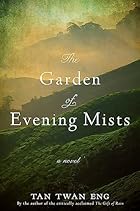
2012 Book 159: The Garden of the Evening Mists, by Tan Twan Eng

Reason for Reading: Short-listed for the 2012 Booker Prize

Review

Having suffered through a Japanese slave-camp during WWII, Yun Ling Teoh, a young Chinese-descent lawyer in Malaysia, carries around a lot of anger against the Japanese. However, she’d made a promise to her deceased sister that she would build a Japanese garden, so she reluctantly visits Aritomo – the only Japanese gardener in Malaysia. Aritomo refuses to design a garden for Yun Ling, but he offers to take her on as his apprentice so that she may design one herself. Yun Ling learns to let go of her anger as her friendship with Aritomo grows. But Aritomo has his own secrets. 

How can I express what an amazing book this was? Sure, it had a couple of slowish spots (it WAS, after all, a book about gardening) but the story is magical. The historical and cultural backdrop is intriguing (I learned a lot while reading, but didn’t feel like I was being “taught”). Because the book takes place in two different times (current day and shortly after WWII), the story unfolds gracefully – allowing the reader to learn the story of Aritomo and Yun Ling at just the right rate…but yet somehow the time also blends together giving an impression of continuity that is particular to Eastern philosophy. On top of that, the more I learned about the story, the more fascinated I was by the two characters. This book is definitely worth your time. 

Interpretive note with possible spoilers
One thing that struck me while I was reading this book is that I noticed an inconsistency in what the narrator (Yun Ling) was saying. At first, I wasn’t sure whether the author had made a mistake or if he had purposely introduced inconsistencies to show that Yun Ling had either an unreliable memory or was hiding something. I finally came to the later conclusion (though the unreliable memory was possible too). I think it’s fascinating that such inconsistencies added to the overall effect rather than subtracting from it. I applaud Tan Twan Eng for his careful writing of this book. 🙂

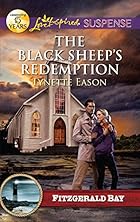
The Black Sheep’s Redemption, by Lynette Eason

2012 Book 157: The Black Sheep’s Redemption, by Lynette Eason

Reason for Reading: This is one of November’s picks for the American Christian Fiction Writers Association online book club. Anyone is welcome to join. Discussions start on the 20th, and this book only takes a couple hours to read.


My Review

In this sweet little Christian romantic suspense from the Harlequin, Charles Fitzgerald has been accused of the murder of his nanny, and the only woman who is willing to replace the nanny is Demi Taylor, a young woman who recently suffered a head wound and can’t remember who she is. Fitzgerald’s family, who pretty much runs the town, is suspected of hiding evidence on the case. Will they be able to clear his name to everyone’s satisfaction? And just who IS Demi, and why does she feel someone is stalking her?

This book is the penultimate book in a romantic suspense series about the Fitzgerald family (who apparently has a very suspenseful and romantically inclined few months during the murder investigation). Although I hadn’t read any of the previous books in the series, this book had all of the information needed to understand what was going on. However, there are several loose ends in the book, leaving an opening for us to explore the romantic inclinations of Ryan Fitzgerald AND to discover *dum dum dum* the murderer. (At least I certainly HOPE we discover who the murderer is.) 🙂 I really needed some fluffy reading at the moment that I picked this book up, and this certainly delivered. Light, quick, fun, romantic, and suspenseful. I’m glad I read it, and I’ll probably pick up some of the others in the series.

Kafka on the Shore, by Haruki Murakami

2012 Book 137: Kafka on the Shore

Written by Haruki Murakami; Narrated by Sean Barrett and Oliver Le Sueur

Reason for Reading: In order to increase awareness of speculative fiction authors-of-color for A More Diverse Universe blog tour, I have read and reviewed Kafka on the Shore, by Haruki Murakami, which is Japanese magical realism / surrealism. This is one of the 1001 Books You Must Read Before You Die, and it won “best novel” for the World Fantasy Award in 2006.

My Review

Kafka on the Shore follows two seemingly unrelated characters whose stories collide in surreality. The first character is a 15-year-old runaway boy who has renamed himself Kafka Tamura. Kafka runs away from his father for reasons that slowly reveal themselves as the plot thickens. He ends up in an obscure library, where he must overcome a dark curse. The second character is Nakata, an old man who suffered an injury as a child and lives as on a stipend for the mentally disabled. Nakata may not be very smart, but he can talk to cats, and he has an uncanny ability to accept surreal events at face value, thus providing a unique perspective to the strange plot twists. Kafka on the Shore highlights the extreme effects alienation can have on a person’s psyche. It had some VERY dark undercurrents (and even one scene of brutality that was quite shocking). It was a fascinating story, but after thinking about it for several days, I’m still unable to figure out quite what it meant. Perhaps it was only an expression of dark loneliness and nothing more? Whether I’m missing the deeper meaning or not, I greatly enjoyed reading my first Murakami book, and look forward to reading many more of these fascinating works. 


About the Author

Haruki Murakami was born in Kyoto, Japan in 1949 to parents who taught Japanese literature. Murakami was greatly influenced by Western culture. His “modernist” books invoke an interesting mixture of classical music, Western literature, and Japanese culture. Like many surreal / modernist writers, his novels depict alienation, loneliness, and trauma.


Final Comments

It’s interesting that I followed up The Blind Owl with Kafka on the Shore. Both are Asian surrealism (which I haven’t read too very much of) and both have explicit use of the Oedipus complex. Is the Oedipus complex a common characteristic of surreal literature? Or a common characteristic of Asian modernist fiction? Or maybe the Oedipus complex is a defining characteristic of alienated characters? Maybe it was just a coincidence. I guess I’ll see as I read more of these types of books. 🙂 I have decided to include Kafka on the Shore in the R.eaders I.mbibing P.eril VII challenge because of the unexpected dark undercurrents. 


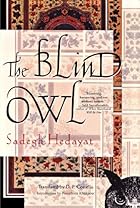
The Blind Owl, by Sadegh Hedayat

2012 Book 136: The Blind Owl  

Written by Sadegh Hedayat; Translated by D.P. Costello; Introduction by Porochista Khakpour

Reason for Reading: 
In order to increase awareness of speculative fiction authors-of-color for A More Diverse Universe blog tour, I have read and reviewed The Blind Owl, by Sadegh Hedayat. Although The Blind Owl may not be considered speculative fiction by critics, I felt that the surreal nature of this book fit with the spirit of speculative fiction. 

My Review
In this surreal novella, an unnamed protagonist unburdens the deadly weight on his chest by confessing to his own grotesquely owl-shaped shadow on the wall. 


“in order to explain my life to my stooping shadow, I am obliged to tell a story. Ugh! How many stories about love, copulation, marriage and death already exist, not one of which tells the truth! How sick I am of well-constructed plots and brilliant writing!”

In his mind-spinning narration, it is difficult to tell when the events described are cloaked with opium, veiled with madness, or are simple truth. This novel is deeply disturbing in many ways. It narrates horrific events, certainly, but it is the manner that they are conveyed that is frightening. His imagery is surreal. His repetition is hypnotic. His words are oppressive. 

“Only death does not lie. The presence of death annihilates all superstitions. We are the children of death and it is death that rescues us from the deceptions of life.”

The imagery and symbolism used by Hedayat portrays his personal marriage between Western and Eastern culture. Although this book is considered the essence of Persian literature, there are signs of Poe and Kafka. The Blind Owl bled, vomited, and wept Freudian symbolism. 

This was an amazing book, and highly recommended to people interested in Persian fiction or in modernist fiction. 

About the Author and Book: 

Sadegh Hedayat (1903-1951) was one of the two fathers of Persian fiction, and sole father of modernist Persian literature. He was born to an aristocratic family in Tehran, and grew up during a turbulent time in the history of Iran. After WWI, the country underwent “modernization” and “Westernization.” As always happens with modernization, many people felt oppressed by the loss of culture and ceremony…by the loss of what makes them THEM and by the adoption of foreign values. Hedayat was apparently not one of these people. In 1925 he left Iran for studies in Europe. After short-lived attempts at studying engineering, architecture, and dentistry, he dedicated his life to studying Western literature and to learning Iranian folklore and history. From 1937 to 1939, Hedayat lived in India. The Blind Owl was first published in 1937 in Bombay, India with the label: “Not for publication in Iran.” At the time of publication Iran was suffering from the oppressive later years of the reign of Reza Shah. Free press was limited, the middle class was ruled with an “Iron Fist,” and the bureaucracy was falling apart under corruption. 

In Hadayat’s later years, his writings attacked the monarchy and the clergy of Iran, which he felt were leading to its downfall. However, he felt alienated by everyone around him in Iran, and moved to Paris. In 1951, he gassed himself in his apartment by plugging all the windows and doors with cotton. He left money for his burial in plain view. 

The introduction to The Blind Owl, written by Porochista Khakpour in the Costello translation is well worth reading. She tells about her history with the novel…how her father wouldn’t let her read it when she was a child because it had lead to so many suicides among Iranian youths. I get the impression that Khakpour’s family was of a melancholic nature and was strongly affected by books of this nature. I found The Blind Owl disturbing, but I didn’t experience any inconvenient urge to off myself after reading it. 

Personal interpretation that will contain middle-of-story SPOILERS:

I generally roll my eyes whenever the phrase “Oedipus complex” is introduced into an interpretation. However, in this case, I think “Oedipus complex” is exactly what Hedayat was aiming for. The ONLY character named in the entire book was his mother. He described his mother’s dancing in sensual detail. He obsessed sexually about all maternal figures in his life, including his aunt and his nanny. He admits to marrying “that bitch” his wife because she reminded him of his aunt (whom he worshiped with an almost sensual passion). He viewed his mother, nanny, and aunt as sexually unattainable…but that view was extended to his wife. He insisted that he had never slept with her. That he had gone mad from her denial of him and her promiscuity with flea-ridden brutes off the streets. I interpreted these obsessive delusions as false. I assumed that he had, indeed, coupled with his wife, but in his madness repressed those memories and created new delusional memories about other men. (On a side note, I’m not even certain his wife was his aunt’s child…she may have been the daughter of his nanny…but I don’t know why that would matter?)

The Oedipus complex extended towards his feelings for his father, his father’s brother, and his father-in-law. He seemed to fear and loathe the very idea of any of these men–they had, in fact, merged with each other in his own mind. Worse, they had merged with his own self-image so that he feared and loathed himself–probably for his unsatisfied sexual desires towards maternal figures. 

Of course, I don’t think the entire story was about an Oedipus complex…that was just the theme that jumped out at me on my first perusal. The story was about a man who was isolated from the rest of the world. A man who would never belong. A man who had no one to unburden himself to as the world around him crumbled into surreal chaos. The isolation was likely a reflection of Hedayat’s own feelings of alienation. The world crumbling around him was likely how he viewed the socio-economic failure of Iran. 

I’m sure this is the type of book that you find something new each and every time you read it…even if you meticulously study it for years.