
Procrastination.
This is the first demon two of us face.
Only the One friend
urges entry through the gate.
The other and I bicker
Bring up old angers that should have been buried
long ago.
So long ago.
Category: Uncategorized
Solving the Opioid Crisis: A Physician’s Perspective

The University of Michigan is teaming up with Coursera to create Teach-Outs which are week-long MOOC lecture series which address problems currently faced in society today. The following are notes for lecture set 2 of Solving the Opioid Crisis.
 This is an interview with Pooja Lagisetty, whose research interests focus on culturally tailored behavioral interventions, social determinants, health disparities, neighborhood determinants of chronic diseases, and urban design. She is a primary care physician who provides medication assisted therapy (MAT) for opioid addiction to patients at the Ann Arbor VA, has studied the literature about MAT in primary care, and is involved in efforts to increase the number of primary care teams that provide MAT to patients as a way to combat the shortage of treatment options.
In Dr. Lagisetty’s interview, she said that the opioid crisis is drawing international attention because people die of opioid overdose at much higher rates than of other drug types. However, it’s not just the overdosing that is a problem with opioids – there is a spectrum of severity, but that even people who will never overdose can have their lives hijacked by drug use.
Risk factors that doctors should look for are addiction to other drugs, lower socioeconomic status, depression/mental illness, misuse of drugs (higher or more frequent dosing than prescribed), and the use of the drug with benzodiazepines. (Though, personally, I am loathe to suggest doctors choose to not prescribe pain medications for people based on socioeconomic status or because they’re depressed!)
Medication assisted treatment of addiction (e.g. Methadone, Buprenorphine, Naltrexone) is more successful than quitting without medications, but there is very low accessibility. This low accessibility is due to many factors. For one, Methadone has to be prescribed within a specialized facility. Buprenorphine and Naltrexone can be taken home by patients, but must be prescribed by specialists. Unfortunately, there aren’t many specialists because there is a stigma attached to treating addiction patients, and many doctors don’t want to be associated with that stigma. Furthermore, there is a stigma for the patients that go to addiction specialists, so they are less likely to go than they would to a primary care physician.
Dr. Lagisetty suggests that the reason our society has such an opioid over-prescription problem in the US is because doctors treat pain like a vital sign: “how much pain are you in on a scale of 1 to 10?” Because of this understanding of pain as a vital sign, doctors and patients in the US now think that patients should be as pain-free as possible. She says that she doesn’t think other cultures are like that.
The first discussion question with this lecture was: As patients, should we ever experience pain? If so, when? If not, why?
Wow. I’m not sure how to answer that question. I can see where she’s going with the question – because of the addictive properties of opioids, where should doctors draw the line for prescribing pain medications? I simply don’t know the answer to that question. I’ve never been in real pain before, so I don’t want to make blanket statements about something I’ve never experienced. However, I have been around patients who have claimed to be in a lot of pain and were upset when the doctor didn’t prescribe them pain medications. At the time, I sympathized with them – though I recognized that the ones who complained the most about their pain were the ones who complained the most in general. And this is an example of where the squeaky wheel might not actually get the attention.
The second discussion question with this lecture was: How would you characterize your society’s attitude towards “acceptable pain,” and do you think it has changed over time? (Please indicate where you reside.)
I live in the US, and I’ve never thought about “acceptable pain.” Pain feels different to different people. We will never know how another person feels. Dr. Lagisetty says that in the US we think pain should be minimized if at all possible, and I suppose that’s probably true.
Facing My Demons 5
I don’t know how long I stand there
transfixed by the horrific gate
seconds?
days?
Suddenly I am aware
two friends have followed me.
They have not deserted me, as I had thought.
One – I am relieved to see
for he can face my demons with me
keeping me strong.
But the other?
Why have you come here?
It is dangerous!
He looks at me
his eyes a chaotic mixture
friendship
love
vulnerability
fear.
He, too, has demons to face.
We will face them together.
The three of us.
A team.
Top Ten Tuesday

That Artsy Reader Girl hosts a weekly meme in which we respond to a pre-determined prompt. As the prompts seem interesting, I thought I’d give it a whirl. This week’s prompt is books that surprised me. My top 10 in no particular order are:
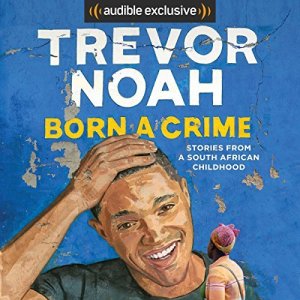
I usually don’t like celebrity memoirs because they are so full of boring drugs and sex. They all kind of blur in together to me. But this one really stood out for me. Trevor Noah is so funny and honest. And his anecdotes are so interesting. Definitely a must read.
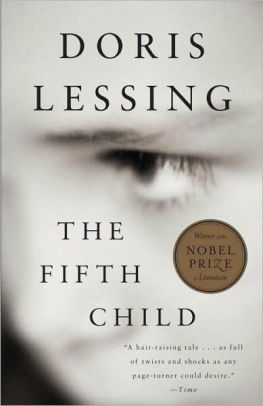
I hated The Golden Notebook. I do not understand what that book was about. Of course, I didn’t finish it. So imagine my surprise that despite hating Lessing’s seminal work, I’d love some of her other books so well. The Fifth Child was so haunting that I will never forget it. Review
 I don’t read a lot of romances. Granted, I love Austen, but I see her more as a satirist than a romance writer. I wanted to try out some Heyer because I’ve heard that lovers of Austen are also lovers of Heyer, and I was pleasantly surprised by what I read. This book was awesome. Loved it. Review
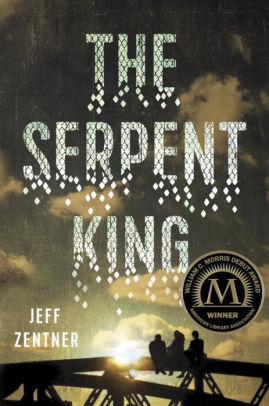 It’s rare for a teen book to make me cry these days. Especially since the popular teen books seem to be fantasies and dystopias with silly love triangles. But The Serpent King was a very serious book, with a light enough edge that it would be interesting to a good number of well-read teens. And this is one of those books that I think make the person who reads it a better person. Review
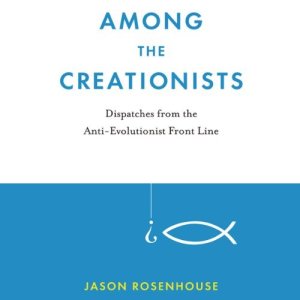 Most atheists I know are not able to keep an open mind about religion. Yes, there are a few I know who are, but most of the open minded people call themselves agnostics. This book is an excellent example of an atheist trying to keep an open mind. I mean, I’d have a hard time keeping an open mind being surrounded by creationists, and I believe in God, so I can only imagine what it must have been like for Rosenhouse, who’s an atheist. Review
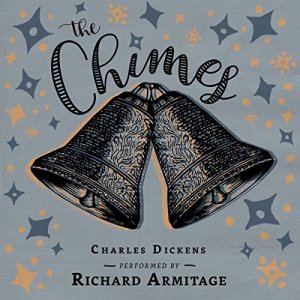
Love Dickens. Hated Chimes. What was the point of that story? Review
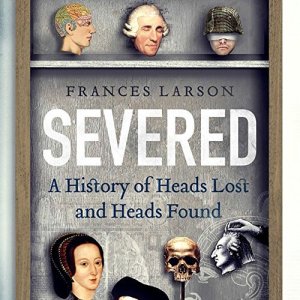
Who would have expected a book about severed heads to be so interesting? Review
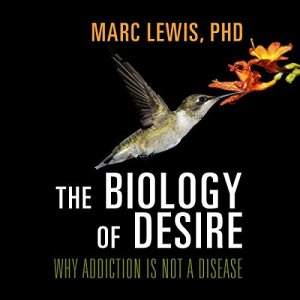
This book was surprising in its thesis. Lewis argued that addiction is not a disease (as the addiction experts would like us to believe these days). He made some very interesting points, and I see where he’s coming from. But I still tend to think of addiction as a disease. Review
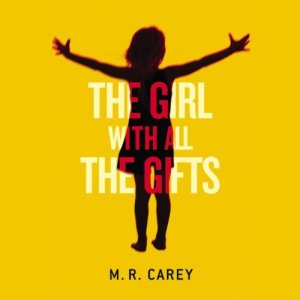
Here’s a fantastic book where I was surprised by the end.
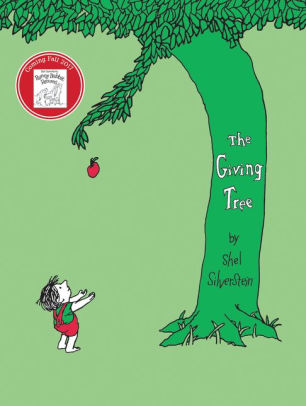 And here’s another book that made me cry. How sad can you be Mr. Silverstein?! Why do this to me?
I Stop Somewhere, by T. E. Carter
 Summary: Ellie starts her freshman year of high school simply wanting to blend in, but when the handsome and rich Caleb starts flirting with her, she starts craving more – romantic love. But then, Ellie is brutally raped…
My Thoughts: This was a hard book for me to read, and it was clearly written by an author who is very angry at rape culture. Carter is ruthless in expressing the emotional strain – the feeling of being vulnerable and invisible at the same time – that comes after being raped. However, she also manages to never have a fully physically violent scene in the book, and for that I am grateful. It is important for teens these days to understand rape culture so that they do not get trapped in their own horror story – and also to teach them some empathy for those who are trapped. Books like this are exactly what is needed right now. At first, I felt that maybe the subject was too heavy for teens. But no. If they can read books like Hunger Games where teens are brutally murdering other teens, then they can certainly handle a book like this. And the subject of this book is infinitely more important than the average teen book these days. Good job to T. E. Carter – this was probably a very difficult book for her to write.
My thanks to NetGalley and Feiwel & Friends for providing a galley copy of this book.
Facing My Demons 4
The walls of the catacombs
pulse inwards
closer
closer
The path downwards is claustrophobic.
At times, I slither on my belly
through tunnels slick with…
is it puke?
blood?
excrement?
The smells combine
choking me
I retch.
Suddenly, I am sliding
out of control
down
down
down.
I land with a splash in a knee-deep puddle.
Try not to think about the reeking, slimy mess.
I have arrived at the Gate.
Alone.
Disgusted.
Afraid.
The Island of Doctor Moreau, by H. G. Wells
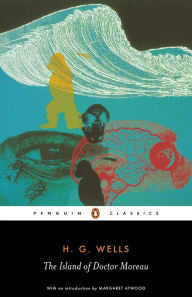 Summary: Mr. Prendrick is stranded on a strange island with two people – the drunken and uncaring Montgomery and the enigmatic, violent Doctor Moreau. As Prendrick begins to discover the mysteries of the island, he feels more and more danger to his life.
My thoughts: Wells’ stories are so deep and thoughtful. He explores his unique belief system in a way that is inspiring and energetic. I love his allegory, I love the plot, and I love how much this book made me think.

Well-Educated Mind Analysis (SPOILER ALERT): Even though this book is not one of those suggested by Bauer’s The Well Educated Mind, I’m using her outline of questions to analyze this story:
👽What is the most central life-changing event?
Predrick’s landing on the island is the most central life-changing event in the book.
👽Am I transported? Do I see, feel, and hear this other world?
Yes
👽Can I sympathize with the people who live there? Do I understand their wants and desires and problems? Or am I left unmoved?
I can sympathize with all characters in that they are well-developed enough that I understand what their motives are. Prendrick is motivated by a will to stay alive, no matter what. Moreau by a desire for great discovery. And Montgomery is simply controlled by forces more powerful than himself.
👽Is this a fable or a chronicle?
The Island of Doctor Moreau is a fable in that it has fantastical elements, and a chronicle in that it supposedly takes place to a “real” character in the “real” world.
If the novel is a chronicle, how are we shown reality: Physical? Mental?
This story is told mainly through the observations of the physical reality around Prendrick.
If the novel is a fable, what was the intent? Is it an allegory? If not, is it speculation?
To me, this story has two major allegories: The beastly nature of man, and the devolution of God as science emerges, and the fact that this can have terrible consequences.
The first allegory is first seen in Montgomery’s boredom with whether or not he saves Predrick’s life. Montgomery is an apathetic man who is motivated by nothing but the chaotic world around him. Just as beasts most generally are. Moreau epitomizes the beastly nature of man by not caring about the pain he inflicts on his victims – he is motivated solely by his own interests. Even Prendrick’s motivations are animalistic in nature – he is motivated by survival. But it’s not just the characters that show the animalistic nature of man in this story. It’s the events. The “men” of the island started out as animals, they struggled for years against their animalistic urges when they were “men,” but those urges were always there, and then, when there was no god to keep them in order, they regressed back into animals.
The second allegory, the devolution of god, develops when Prendrick is first visiting the beast people and they begin to recite the Law – building up Moreau to be a god. It shows how beasts with a mind (i.e. men) can build up a god in their head based on their fear and sense that there must be some punishment to not follow their values. Then, when Moreau dies, the beast people realize that god is mortal; that there is no reason to obey the law. They therefore descend again into bestiality. This suggests that the state of religion in modern times, as a result of an understanding of science, is falling apart. Religions, as they stand, don’t fit the needs of the people any longer, and without a god, there is no reason to keep a moral law and we become beasts.
This fits a statement made by H. G. Wells in The Fate of Homo Sapiens: “there is no creed, no way of living left in the world at all, that really meets the needs of the time… When we come to look at them coolly and dispassionately, all the main religions, patriotic, moral and customary systems in which human beings are sheltering today, appear to be in a state of jostling and mutually destructive movement, like the houses and palaces and other buildings of some vast, sprawling city overtaken by a landslide.”
👽What does the central character want? What is standing in his or her way? What strategy is pursued to overcome this block?
As I said earlier, Prendrick was motivated by a desire to survive. Ever since stepping foot on the island, every decision he made was one which took into account his own personal safety. There were many dangers (real of imagined) that he faced. Would Doctor Moreau torture him like he tortured these animals? Would the beast men eat him alive? Prendrick’s first attempt to escape was run into the island, but that was before he realized what kinds of dangers inhabited the island. After Moreau and Montgomery were killed, he protected himself by trying to uphold the law in the eyes of the beast-men. When he discovered that without their “god,” they were descending into beasts again, he built a raft to float away from the island.
👽Who is telling you this story? Is this person reliable?
The person telling the story is Prendrick in the first person. The prologue to the story provided some “historical” evidence that the story was, indeed, truthful; though the fact that this evidence had to be presented in the first place seeded doubt in the minds of the readers. Overall, I’d take the story as literal (though fictional) truth.
👽Where is the story set?
The story is set on an island, mostly natural but with some human construction. The wild untamed natural part of the island where the beast people lived represents the real world of humans. It is something to explore, something to get to know, something that can be dangerous if not understood. The huts that the humans lived in (called The House of Pain by the beast people), represented the structure in which god currently resides – i.e. the House of Pain represents the world religions in which we house our beliefs in god. However, as soon as the beast people realize that these structures can be destroyed and therefore have no power over them, the beast people no longer feel compelled to obey the law (their morals).
👽 Beginnings and endings. Does the beginning sentence/scene come with meaningful imagery that represents where the story is going? Does the end have a resolution or a logical exhaustion?
The first sentence is a detailed and precise description of what happened to Prendrick’s ship when he was originally marooned. This is provided as evidence to say “what is about to take place is true.”
The ending chapter of the story entitled “The Man Alone” shows the state of man as Wells presumably saw it. That man is degrading to a beast because the world religions are no longer enough to keep our values safe. As Prendrick says:
“Then I look about me at my fellow men. And I go in fear. I see faces keen and bright, others dull or dangerous, other unsteady, insincere; none that have the calm authority of a reasonable soul. I feel as though the animal was surging up through them; that presently the degradation of the Islanders will be played over again on a larger scale.”
👽Did the writer’s times affect him?
Wells lived in a time where the theory of evolution was having a powerful impact on the way people saw humanity. Eugenics was taking off and people were asking the questions: “Are there different stages of humanity in which some are more evolved than others?” “Are there people who are more ‘fit’ and therefore more deserving of survival?” These are huge moral questions that, before, were left for God to sort out.
👽Is there an argument in this book? If so, do you agree?
This is a hard question for me. I am a Catholic, so I am part of an organized religion which Wells apparently scorned. However, I do believe that organized religions did not keep up with the needs of its followers. We are stuck in a world in which there are so many reasons not to believe in God, and those reasons are mainly due to the rigidness of organized religions. Because of this doubt, it is easy to let our values slip because we doubt that anyone is watching or that there will be consequences to our actions. In that way, we may become beasts – driven by animalistic pleasures and not by a higher moral ground. Then again, I know plenty of atheists who have a very good value system (by my standards) as well as many who do not (again, by my standards). So it remains to be seen whether humanity will win out, or if the beasts inside of us will.
Facing My Demons 3
The screams of despair intensify
like razors slashing my soul
like a heavy net entrapping my essence
confining me.
Agony
Terror
The heat sears my lungs
smoke stings my eyes
I cannot breathe!
My movements are slow
aching
viscous
I turn back to the entrance
but it is gone.
I am committed.
Sunday Update Week 5

This week was pretty eventful on my wedding plans. I finally picked out a dress for myself and my maid of honor (sister), and I got the invitations addressed. My dress looks nothing like that pictured above.
It was also an eventful week on my blog, since I decided to compile all my 3 blogs into one. I started one around 2012, and then decided after a while that my blogging skills had progressed to the point where I wanted to start fresh. I started a new one in 2015. Then I had a blogging pause in 2016, and instead of picking up where I left off, I moved from Blogger to WordPress (a change which I’m very happy I made, this is such a wonderful platform). Now I’ve decided to suck it up and say “people will understand that my posts from 2012 aren’t as quality as they are now.” So I uploaded the other two blogs to this one, and am slowly completing the Review page to have all of my old reviews. I’m glad I did this, because there were some hidden gems in the oldest blog. 🙂 I still have quite a few reviews to add to the Review page, so stay tuned.
Saturday was the first day of our new screen-time rules for the kids, and they took it much better than I thought. We ended up playing a game of Sorry as one screen-time earning opportunity and then I read [Amulet: Stonekeeper] for a while as the second screen-time earning opportunity. They didn’t throw a fit or anything – seemed to take it as a challenge.
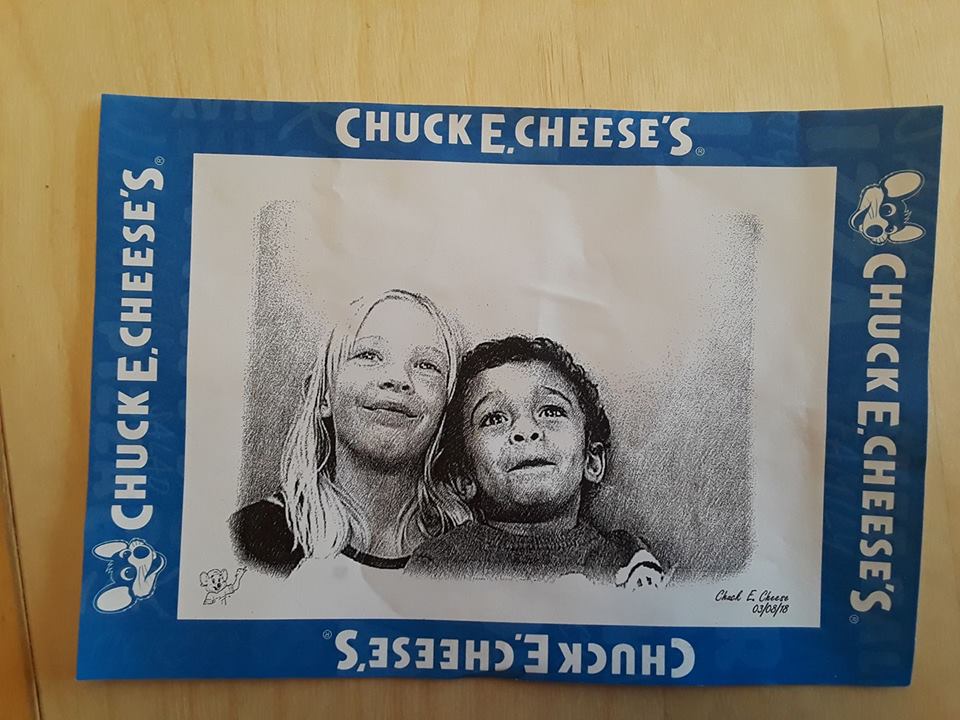
Saturday we went to a birthday party for my friend’s nephew, L (3). I brought my nephew B (3), my niece L (2), and my step-kids-to-be M (5) and D (8). The party was a lot of fun, though A and I came home a bit over-stimulated. Luckily D did a good job of dragging B around with her, so I really only had one little one to chase around. I thought this portrait of them was a gem:
Acquired

A and I decided that we would subscribe to The Economist. I’ve subscribed on and off in the past and always felt that it provided more information than I was capable of reading in a week. But now that there are two of us reading it, the subscription feels more worthwhile.
Completed
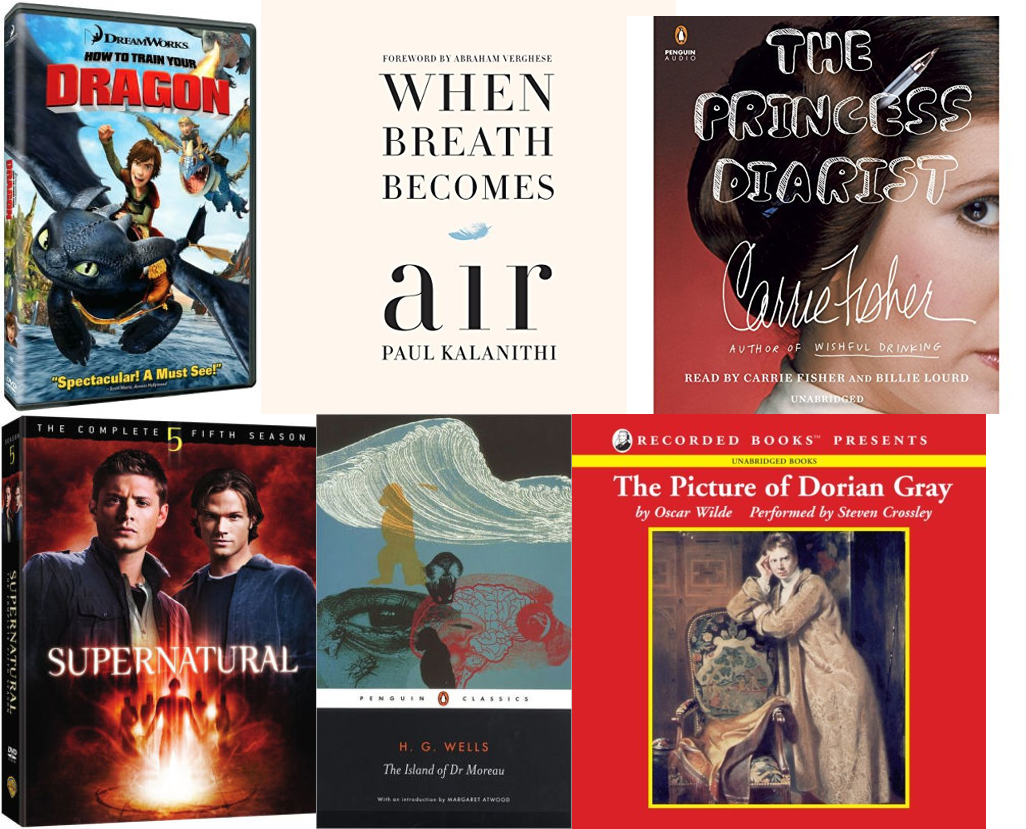
For our family night on Sunday, we rented How to Train Your Dragon. That is such an adorable movie.
A and I also finished watching the fifth season of Supernatural, and started in on the 6th. I’m as of yet unimpressed and wish they’d ended it at the natural conclusion of the series (5). They had to jump the shark a bit to reboot after they tied up most of the important plots in 5.
I finished reading The Island of Doctor Moreau and listening to three audiobooks. Reviews all upcoming.
Currently Reading
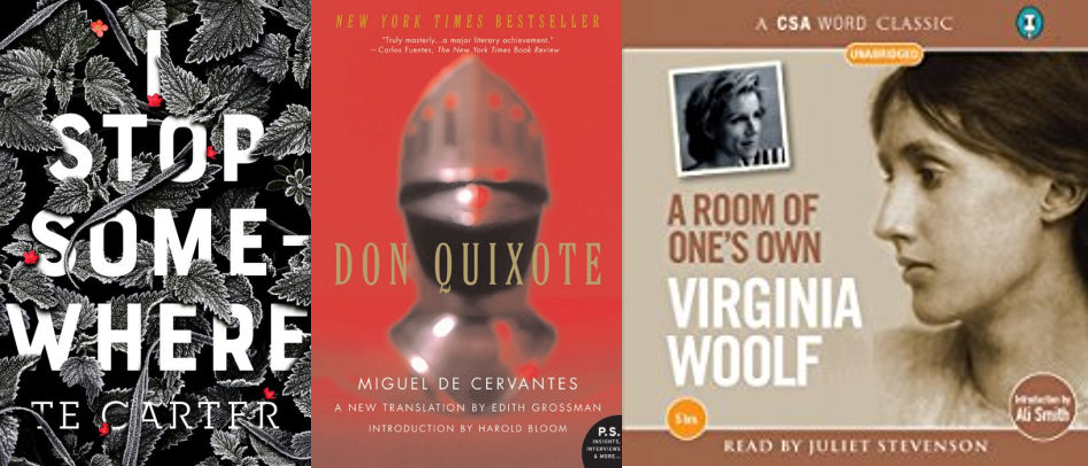
I’ve decided to tone down my currently reading pile so that I feel like I’m making more progress, so now I’m only reading two books and listening to one.
Last week on the blog
I published two reviews: The Shadow Land, by Elizabeth Kostova and Against the Tide, by Tui T. Sutherland. I published notes on Coursera lectures about Everyday Parenting and Solving the Opioid Crisis. And I republished two stanzas of a poem I’d published in my first blog: Facing my Demons One and Two.
Facing My Demons 2
I hesitate before taking my first step.
Once I make this choice
down is the only way out.
Am I ready for this?
Or will I be just another lost soul?
Stuck
Unable to retreat
Too afraid to face the demons further down.
My friends outside have become quiet
have they given up?
moved on to happier friends
who walk easier paths?
Why burden themselves
with my problems?
I take the step.
 Hibernator's Library