
Facing My Demons 9

Procrastination

As the cesspool rises to our chins

we panic.

Surely it will be worse further down.

We are paralyzed by indecision

all rational thought escapes.

Incongruously, I think:

Should I apply to that job tomorrow?

the one I think I won’t get?

Or do I buy a bottle of vodka

swim out into Lake Superior

as far as I can go?

To be washed out to sea

eaten by fish

escaping yet another rejection

another abandonment

another betrayal?


The final procrastination.

Solving the Opioid Crisis: Analyzing Opioid Prescription Trends

pexels-photo-356054.jpeg

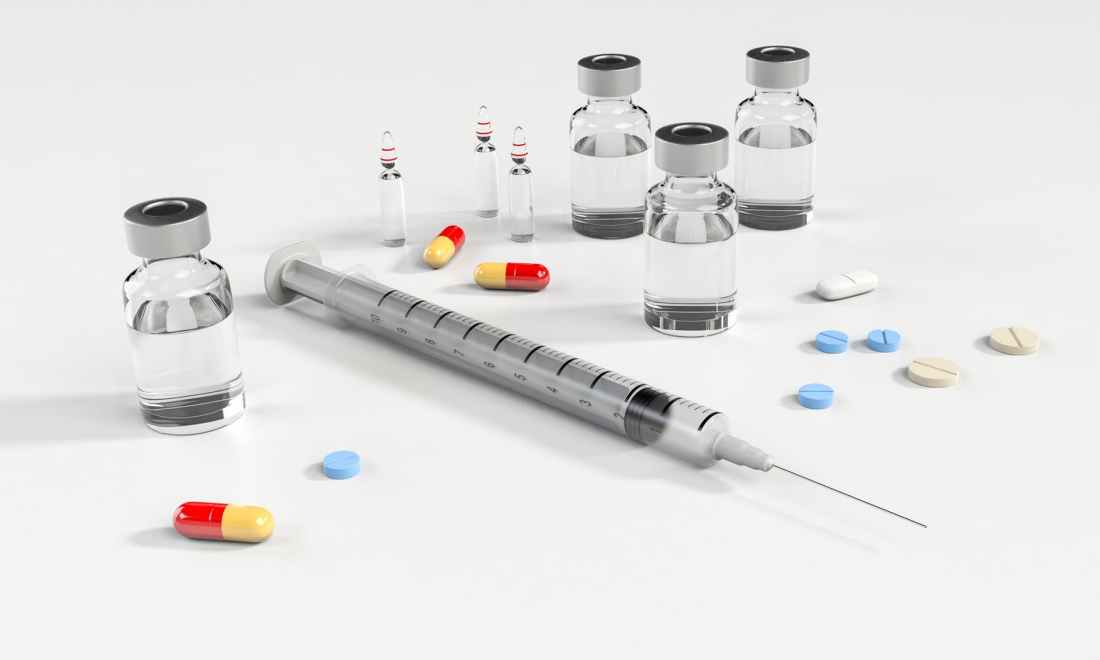
The University of Michigan is teaming up with Coursera to create Teach-Outs which are week-long MOOC lecture series which address problems currently faced in society today. Following will be notes for The Opioid Crisis.

leejay_0Jay S. Lee, MD, is a health services research fellow at the University of Michigan Center for Healthcare Outcomes & Policy, and a General Surgery resident at the University of Michigan. He received his undergraduate degree in Chemical Engineering from the University of Michigan, and his medical degree from the University of Michigan. Dr. Lee’s research focuses on characterizing variation in postoperative opioid prescribing and consumption, with a specific interest in opioid use after cancer surgery. His research is supported by a T32 training grant from the National Cancer Institute. After residency, he plans to complete a fellowship in Complex General Surgical Oncology, and pursue a career in academic surgery.
Cancer patients are generally given opioids post-surgery, and since the opioids help manage the patients’ pain, these prescriptions are a good use of opioids. However, these patients are often observed taking those medications longer than necessary. Years ago, doctors didn’t know how much opioid to prescribe, and often over-prescribed. Now that the epidemic is in the front of their minds, they are surveying patients to see how many opioids are actually being taken in order to make a guess at how much they should prescribe. They found the the actual number used is much lower than they have been prescribing. Doctors have also been spending more time talking to patients about the risks of opioid use, and patients have been responsive by taking less of the medication.

The discussion question that accompanied this lecture was: Several of our experts have mentioned the pharmaceutical industry’s aggressive promotion of opioids to doctors and patients as a significant contributing factor in the opioid crisis. Should there be some controls or limits on the pharmaceutical industry’s influence on physicians? If so, what should they be? If not, why?

Wow. Of course there should be some limits on the pharmaceutical industry’s influence on physicians! At the very least, physicians should receive no kickbacks from any pharmaceutical company, ever. I wish there could be a go-between who gathered all the information about the new meds and talked to the physicians in a disinterested way – rather than the physicians talking directly to people who are trying to market the drug.

Solving the Opioid Crisis: How do Opioids Work?

pexels-photo-356054.jpeg

The University of Michigan is teaming up with Coursera to create Teach-Outs which are week-long MOOC lecture series which address problems currently faced in society today. The following are notes for lecture set 3 of Solving the Opioid Crisis.

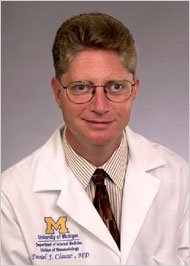
clauw_190This lecture was given by Daniel Clauw, Professor of Anesthesiology, Medicine (Rheumatology) and Psychiatry at the University of Michigan. He serves as Director of the Chronic Pain and Fatigue Research Center. Until January 2009 he also served as the first Associate Dean for Clinical and Translational Research within the University of Michigan Medical School, and PI of the UM Clinical and Translational Sciences Award (CTSA).
People are mainly focused on the deaths by overdose due to opioids, but another aspect of the epidemic is that many people are on opioids long term due to chronic pain. This is not a good use of opioids, since they do not target many forms of chronic pain, so doctors are no longer prescribing them (as often) for this purpose. Chronic pain that is located in a certain body part (such as in osteoarthritis) can be helped by a small dose of opioids, but pain originates in the nervous system (like fibromyalgia) is not helped by opioids. 

Opioids bind the same receptors as endorphins, so when people are given opioids their endorphin systems are being hijacked. When someone has been on opioids for years, it is difficult to take them off because they no longer have a normally functioning endorphin system. There should be two sets of rules for prescribing opioids: those for people who have been on opioids chronically and those who are newly starting with a pain control regimen. 

Until the 1990s, people who died of opioid overdose were heroine addicts that started on heroine. They were lower socioeconomic class, inner city, and black. Therefore, it wasn’t considered a major problem by the privileged classes. However, in the 90’s, doctors started over-prescribing opioids so that now, 60 to 70 percent of people who die of opioid overdose started with a prescription. That’s something the privileged majority is willing to pay attention to.

This lecture came with the following discussion question: Dan Clauw mentions the pharmaceutical industry’s argument that access to opioids are “a human right”. Do you agree with this sentiment? If so, why? If not, why?

I believe that healthcare and access to proper medications is a human right. However, I do not believe that there is a human right to be pain-free. If the risks of giving opioids outweighs the benefits, then opioids should not be prescribed.


Facing My Demons 7

Procrastination.

We would rather stand knee-deep 

in sludge

frigid

Colder than is physically possible. 

I should be numb

but I can feel disturbingly warm currents as well. 

The levels rise.

The reek intensifies.

And yet we bicker.

Tears

Wall punching

Gut wrenching sobs

Cruel words that neither of us mean

Emotional destruction

is what we choose

rather than facing our demons inside.

Killers of the Flower Moon, by David Grann

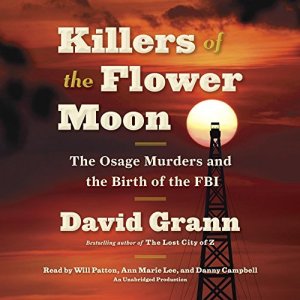
51rjdnbi1il-_sl500_Summary: In the 1920s, the Osage Indians of Oklahoma were the richest people per capita due to the discovery of oil on their land. The federal government decided that the Osage were not “fit” to make monetary decisions on their own, and they were appointed legal guardians who did anything but guard the safety of their legal charges. Over a period of several years, many rich Osage were murdered (or died suspiciously) in what appears to be a conspiracy among legal guardians to gain control of the wealth. Outlining malicious greed and terror, Killers of the Flower Moon begins by following a specific set of murders that the FBI “solved.” Grann then continues the book by describing his own research into other mysterious deaths that happened around the same time.

My Thoughts: This book is engaging and terrifying at the same time. It’s sadly too easy to believe that people appointed to be “guardians” would act so despicably. It is disgusting and bigoted that the federal government claimed the Osage needed guardians to begin with. Such a tragic story. But one that I think every American should read to understand how the government has treated Native Americans.

5 snowflakes

Solving the Opioid Crisis: A Physician’s Perspective

pexels-photo-356054.jpeg

The University of Michigan is teaming up with Coursera to create Teach-Outs which are week-long MOOC lecture series which address problems currently faced in society today. The following are notes for lecture set 2 of Solving the Opioid Crisis.

lagisetty20pooja202This is an interview with Pooja Lagisetty, whose research interests focus on culturally tailored behavioral interventions, social determinants, health disparities, neighborhood determinants of chronic diseases, and urban design. She is a primary care physician who provides medication assisted therapy (MAT) for opioid addiction to patients at the Ann Arbor VA, has studied the literature about MAT in primary care, and is involved in efforts to increase the number of primary care teams that provide MAT to patients as a way to combat the shortage of treatment options.

In Dr. Lagisetty’s interview, she said that the opioid crisis is drawing international attention because people die of opioid overdose at much higher rates than of other drug types. However, it’s not just the overdosing that is a problem with opioids – there is a spectrum of severity, but that even people who will never overdose can have their lives hijacked by drug use.

Risk factors that doctors should look for are addiction to other drugs, lower socioeconomic status, depression/mental illness, misuse of drugs (higher or more frequent dosing than prescribed), and the use of the drug with benzodiazepines. (Though, personally, I am loathe to suggest doctors choose to not prescribe pain medications for people based on socioeconomic status or because they’re depressed!)

Medication assisted treatment of addiction (e.g. Methadone, Buprenorphine, Naltrexone) is more successful than quitting without medications, but there is very low accessibility. This low accessibility is due to many factors. For one, Methadone has to be prescribed within a specialized facility. Buprenorphine and Naltrexone can be taken home by patients, but must be prescribed by specialists. Unfortunately, there aren’t many specialists because there is a stigma attached to treating addiction patients, and many doctors don’t want to be associated with that stigma. Furthermore, there is a stigma for the patients that go to addiction specialists, so they are less likely to go than they would to a primary care physician.

Dr. Lagisetty suggests that the reason our society has such an opioid over-prescription problem in the US is because doctors treat pain like a vital sign: “how much pain are you in on a scale of 1 to 10?” Because of this understanding of pain as a vital sign, doctors and patients in the US now think that patients should be as pain-free as possible. She says that she doesn’t think other cultures are like that.

The first discussion question with this lecture was: As patients, should we ever experience pain? If so, when? If not, why?

Wow. I’m not sure how to answer that question. I can see where she’s going with the question – because of the addictive properties of opioids, where should doctors draw the line for prescribing pain medications? I simply don’t know the answer to that question. I’ve never been in real pain before, so I don’t want to make blanket statements about something I’ve never experienced. However, I have been around patients who have claimed to be in a lot of pain and were upset when the doctor didn’t prescribe them pain medications. At the time, I sympathized with them – though I recognized that the ones who complained the most about their pain were the ones who complained the most in general. And this is an example of where the squeaky wheel might not actually get the attention.

The second discussion question with this lecture was: How would you characterize your society’s attitude towards “acceptable pain,” and do you think it has changed over time? (Please indicate where you reside.)

I live in the US, and I’ve never thought about “acceptable pain.” Pain feels different to different people. We will never know how another person feels. Dr. Lagisetty says that in the US we think pain should be minimized if at all possible, and I suppose that’s probably true.

Facing My Demons 5

I don’t know how long I stand there
transfixed by the horrific gate
seconds?
days?
Suddenly I am aware
two friends have followed me.
They have not deserted me, as I had thought.
One – I am relieved to see
for he can face my demons with me
keeping me strong.
But the other?
Why have you come here?
It is dangerous!
He looks at me
his eyes a chaotic mixture
friendship
love
vulnerability
fear.
He, too, has demons to face.
We will face them together.
The three of us.
A team.

Top Ten Tuesday

ttt-big2

That Artsy Reader Girl hosts a weekly meme in which we respond to a pre-determined prompt. As the prompts seem interesting, I thought I’d give it a whirl. This week’s prompt is books that surprised me. My top 10 in no particular order are:

61mjhmwaq8l-_sl500_

I usually don’t like celebrity memoirs because they are so full of boring drugs and sex. They all kind of blur in together to me. But this one really stood out for me. Trevor Noah is so funny and honest. And his anecdotes are so interesting. Definitely a must read.


9780679721826_p0_v1_s550x406

I hated The Golden Notebook. I do not understand what that book was about. Of course, I didn’t finish it. So imagine my surprise that despite hating Lessing’s seminal work, I’d love some of her other books so well. The Fifth Child was so haunting that I will never forget it. Review


51sbgtoykkl-_sl500_I don’t read a lot of romances. Granted, I love Austen, but I see her more as a satirist than a romance writer. I wanted to try out some Heyer because I’ve heard that lovers of Austen are also lovers of Heyer, and I was pleasantly surprised by what I read. This book was awesome. Loved it. Review


9780553524024_p0_v3_s550x406 It’s rare for a teen book to make me cry these days. Especially since the popular teen books seem to be fantasies and dystopias with silly love triangles. But The Serpent King was a very serious book, with a light enough edge that it would be interesting to a good number of well-read teens. And this is one of those books that I think make the person who reads it a better person. Review


41mzpqhngml-_sl500_Most atheists I know are not able to keep an open mind about religion. Yes, there are a few I know who are, but most of the open minded people call themselves agnostics. This book is an excellent example of an atheist trying to keep an open mind. I mean, I’d have a hard time keeping an open mind being surrounded by creationists, and I believe in God, so I can only imagine what it must have been like for Rosenhouse, who’s an atheist. Review


61dkg0t-zvl-_sl500_

Love Dickens. Hated Chimes. What was the point of that story? Review


61xp-ral4cl-_sl500_

Who would have expected a book about severed heads to be so interesting? Review


51x1g292idl-_sl500_

This book was surprising in its thesis. Lewis argued that addiction is not a disease (as the addiction experts would like us to believe these days). He made some very interesting points, and I see where he’s coming from. But I still tend to think of addiction as a disease. Review


41zrrzqd1fl-_sl500_

Here’s a fantastic book where I was surprised by the end.


9780060256654_p0_v7_s550x406And here’s another book that made me cry. How sad can you be Mr. Silverstein?! Why do this to me?