The Rape of Nanking, by Iris Chang

2012 Book 165: The Rape of Nanking

Written by Iris Chang, Narrated by Anna Fields

Reason for Reading: Reading Globally group on LibraryThing’s China and surrounding countries theme read. 


Review

In the early 1930’s the Chinese city of Nanking was occupied by Japanese soldiers. Tens of thousands of civilians were killed by Japanese soldiers to save money for supplies. Women were brutally raped and mutilated. But the stories of these victims and the foreigners who risked their lives to help them are not often told. Iris Chang wanted the world to know about these atrocities. Her brutal history was very difficult for me to read because the atrocities were described in such detail that I felt sick. I had to take frequent breaks. But it was a very engaging narrative, so I always wanted to pick it back up again. Chang certainly knew how to write an interesting story! Several times while reading the book, though, I felt as though Chang was too emotionally involved to write a completely reliable narrative. I’m not denying the massacres at Nanking, mind, but I think Chang had a very anti-Japanese view which would have made her prefer the larger estimates for death numbers, made especially-brutal rapes sound more common than they may have been, and made the Japanese sound purely evil as a whole group without exception. Nevertheless, this book taught me a lot about the relationship between the Chinese and the Japanese. As long as the readers keep in mind Chang’s emotions, they can learn a lot from this engaging history.

I now have a hankering for a nice book about friendly, likable Japanese people. If you have any suggestions, let me know! 🙂

Crossed, by Ally Condie

2012 Book 164: Crossed

Written by Ally Condie, Narrated by Kate Simses and Jack Riccobono

Reason for Reading: Second book the the Matched trilogy


Review

Cassia has been at a work camp for months now, but she hasn’t had the chance to find her lost love, Ky. So, when an opportunity arises for her to be sent “accidentally” to the Outer Provinces she snatches it up. Upon landing in the Outer Provinces, Cassia and her new friend Indie run away from Society, following Ky’s path. Meanwhile, Ky has also run away from Society with a couple of new friends. Will they find each other before Society or The Enemy find them? I thought Matched was a cute book – nothing amazing, but not disappointing. Crossed was pretty much the same. This story is more about world building than action or teenanged angst. That makes it unique in the YA dystopia genre right now. I look forward to reading the third, but it’s not going to be in my hands tomorrow, by any means. 🙂


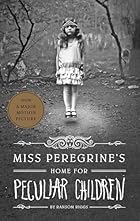
Miss Peregrine’s Home for Peculiar Children, by Ransom Riggs

2012 Book 163: Miss Peregrine’s Home for Peculiar Children, by Ransom Riggs

Reason for Reading: I was originally going to give it to my dad for Christmas, but it wasn’t as amazing as I thought it would be

Review

Jacob has grown up believing that his grandfather’s tales of adventure and magical children were a fantasy. However, when Jacob’s life is suddenly turned upside down, he must go on a quest to a tiny island off Wales to see the orphanage his grandfather grew up in. There, he discovers that there was some element of truth in his grandfather’s stories…and he finds out that his life is in danger. This book was a fantastic idea. Riggs used some unique vintage photographs that he’d borrowed from a few collectors and built a story around the weird images. The photos were fascinating…I really loved looking at them. And I was excited to see what sort of story was built around them. However, the story was a bit contrived. I suppose that it would have to be, given that it’s built around some randomly rescued photos…So Riggs deserves some credit for a good eye and a creative idea. His writing was a bit lack-luster…as I said, it was a bit contrived, and it leaned too heavily on formulaic fantasy. Shades of X-men, Groundhog Day, etc. abound. Nothing wrong with using old formulas, of course – no concept is every fully new – but overall the writing just didn’t hold its own. I might or might not pick up the next book in the series…we’ll see. 🙂 I’ll probably read it eventually because I imagine Riggs’ writing might improve on the second book, and it will seem less contrived if it’s based on plot development instead of photographs. 🙂

Hamlet Act II

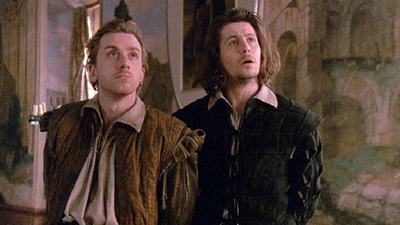
Rosencrantz and Guildenstern
Rosencrantz and Guildenstern are Dead (1990)
Directed by Tom Stoppard
Clearly some time has passed since the first act. Enough time that Ophelia has been able to rebuff Hamlet’s attentions, for Hamlet to “go insane,” and for his royal parents to send off for Rosencrantz and Guildenstern to come from abroad. Maybe a few weeks? A couple months? Hamlet still hasn’t done anything to avenge his father’s death, and he’s starting to feel worthless. He’s not quite sure whether his father’s ghost is a demon sent to tempt Hamlet into a wrongful act, but he feels like he ought to believe the ghost’s story. And he ought to have acted on it. When the troupe of actors arrives, Hamlet thinks this is his chance to throw a wrench in Claudius’ gears – to make him betray his guilty conscience in an unguarded moment. Hamlet admonishes himself for his weakness – he ought to act on his vengeful instincts, but he lacks the courage. 

Some questions that I’m thinking about while reading this: 

First, I wanted to see for myself whether I thought Ophelia was a virgin or not. (Remember in my notes on the introduction by Harold Jenkins I said that Jenkins believed Ophelia died a virgin.) During Hamlet’s discussion with Polonius, Hamlet first compares Polonius to a fishmonger. According to Jenkins, the daughters of fishmongers are seen as having more than ordinary propensity to breed. Hamlet then says: “Let her not walk i’th’ sun. Conception is a blessing, / but as your daughter may conceive – friend, look to’t.” Now, outwardly, Hamlet referred “conception” to the breeding of maggots under the sun (from an earlier line), but how can there be any question that Hamlet meant also to suggest that Ophelia might conceive a child? But does Hamlet mean “Don’t let her out, or something bad might happen to her.” Or does he mean “Don’t let her out, because everyone will soon be able to see she’s pregnant.” I guess that’s open to interpretation. Later in the scene, Hamlet compares Polonius to the Hebrew judge Jephthah, who sacrificed his virgin daughter. That might be a hint that she’s still a virgin, and that Polonius is endangering her.

My second question was whether Hamlet is feigning madness or was really mad. I can see why many people believe he was only feigning madness – his “mad” ranting during this act was calculated to mock Polonius, Rosencrantz, and Guildenstern. There was a method to his madness. 🙂 But, as far as I’m concerned, the phrase “fake it till you make it” applies in Hamlet’s case. He certainly had enough to go mad over…

(TO SEE MORE ABOUT HAMLET GO TO MY MASTER POST)
Polonius and Reynaldo
The Royal Shakespeare Production 2009
Directed by Gregory Doran
Act II, Scene i: The act starts with Polonius instructing his man Reynaldo to spy on Laertes. A very untrusting father, is Polonius. As soon as that important business is through, Ophelia dashes in to tell her father about a shocking encounter with Hamlet. The prince has apparently entered her chamber uninvited, grabbed Ophelia by the arm and creepily stared at her. Then he turned and left the room – eyes cast over his shoulder to gaze fixedly upon the distraught maiden. Polonius gets excited…not only has he discovered the reason for Hamlet’s madness (which the King and Queen want to know), but he now has the opportunity to say “Look! I did everything I could to discourage this mis-match, but the Prince is still in love with my daughter…perhaps they ought to marry?” *gleeful aspirations shine in eyes*

Rosencrantz and Guildenstern 
Rosencrantz and Guildenstern are Dead (1990)
Directed by Tom Stoppard
Act II, Scene ii: Hamlet’s friends Rosencrantz and Guildenstern have arrived in from abroad, and Claudius and Gertrude are asking them to check on Hamlet – to discover the reasons for his madness and perhaps soothe the melancholy prince. When they leave in search of Hamlet, Polonius comes with their messengers, newly arrived from Norway. The messengers tell Claudius that Fortinbras’ uncle has admonished the prince for threatening war with Denmark, but upon Fortinbras’ apology, his uncle has furnished the prince with more money for his army and told him to attack Poland instead. They now ask Claudius’ permission for Fortinbras’ army to cross through Denmark on the way to Poland.


Hmmm. Does someone smell a ploy? They’re just going to allow Fortinbras’ army to cross through Denmark? Oh well, it’s their kingdom. 

After the messengers have been thanked and sent away, Polonius tells the royal couple that Hamlet has gone mad with love for Ophelia. They decide to test this theory later by setting Ophelia loose on Hamlet. (Poor Ophelia.) Then Hamlet walks in. Polonius has a rather nonsensical conversation with Hamlet, partly because Polonius isn’t very clever and partly because Hamlet is playing with Polonius’ mind. Rosencrantz and Guildenstern walk in. The nonsensical conversation continues with them (and for the same reasons). *Why do Claudius and Gertrude keep sicing idiots on Hamlet? What do they hope to achieve?* Finally, a troupe of actors arrives, and Hamlet decides to use them as bait for Claudius’ guilty conscience.

Hamlet, Act I

In the first act of Shakespeare’s Hamlet, the scene is set. We meet the mournful young prince Hamlet who feels wronged by his mother’s hasty marriage to her deceased husband’s brother…and by their incessant partying in a time of sorrow. We meet Ophelia, admired by Hamlet, her brother Laertes and father Polonius. Finally, we are handed a juicy bit of gossip (adultery and murder!), which give Hamlet his excuse to vent his rage against the tyrant King Claudius. (For a more detailed summary, look below.)

This is my first time reading Hamlet since I was in high school, and I’m looking at it through very different eyes this time around. For instance, I’ve always been under the impression that Polonius was ridiculous. But this time, he appeared long-winded, but his advice seemed sound enough. Is he really ridiculous, or just verbose? I was gratified upon reading Harold Jenkins’ endnotes, where he suggests that Polonius was not meant to be ridiculous but paternal. Emphasizing Polonius’ fatherly relationship develops Laertes’ role as an avenger against Hamlet later in the play. 

A phrase that jumped out at me on this reading was when the ghost told Hamlet (I.v): “Taint not thy mind nor let thy soul contrive against thy mother aught.” Interesting. Because I recall Hamlet being very lusty in his anger against the Queen later in the play. Do I remember wrongly? Or is Hamlet disobeying the ghost? I will have to read on and see. Also, what did the ghost mean by “taint not thy mind”? Was the it admonishing Hamlet to keep his mind clear? Because Hamlet either feigns madness or actually goes mad later in the play. Again, did Hamlet disobey the ghost? 

The final thing that struck me in Act I was the questionable nature of the ghost. If Horatio (a clear-headed scholar) hadn’t believed in the ghost, I would suspect that Hamlet had hallucinated it in a fit of psychotic rage. Hamlet does incoherently rant during the scenes with the ghost. In his endnotes, Harold Jenkins suggests another alternative – perhaps Shakespeare meant the ghost to be a devil – an evil apparition sent to drive young Hamlet to vengeful madness. After all, the ghost has gone below stage, which represents Hell in classical theater. In a later scene (II.ii), Hamlet even questions the nature of the ghost: “The spirit that I have seen May be a devil.” However, based on all the swearing which closes Act I, Hamlet does seem to believe the ghost’s story, even if the ghost’s nature is questionable.

Perhaps I’ll be able to answer these questions as I read on…

(TO SEE MY OTHER POSTS ABOUT HAMLET, GO TO MY MASTER POST)

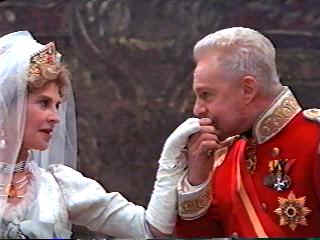
Claudius and Gertrude
Kenneth Branagh’s 1996 film

Act I, Scene ii: Only months after King Hamlet’s death, his brother Claudius has married the Queen, and wrested the throne Denmark. Claudius scolds Hamlet mourning the  dead King and then leaves to continue reveling in his new-found power. Left behind, Hamlet bemoans the disgraceful marriage…How could his mother have married so quickly? And to such a man?! Horatio then rushes in to tell Hamlet about the king’s ghost. Hamlet decides that he MUST see this for himself.


Ophelia, Laertes, and Polonius
The Royal Shakespeare Production 2009
Directed by Gregory Doran

Act I, Scene iii: Ophelia believes that Hamlet loves her, but her brother Laertes and her father Polonius both caution her against the young prince. Laertes believes that Hamlet, as heir to the throne, will not choose Ophelia for future Queen. Polonius agrees. “Hamlet is young!” he says. “Don’t set your heart on him.” Despite her assertions that Hamlet is courting her in a gentlemanly manner, Ophelia agrees to be cautious. After a long-winded speech from Polonius, Laertes departs for France.

Plate XLIV from Volume II
of 
Boydell’s Shakespeare Prints
Image taken from Emory’s Shakespeare Illustrated

Act I, Scene iv and v: It’s night, and Hamlet, Horatio, and Marcellus are looking for the ghost. When the apparition appears, it beckons Hamlet to follow. Hamlet desperately tries to follow, while his friends hold him back. Finally, he orders them to let him be.

Once alone, the ghost demands that Hamlet avenge his death. But it admonishes: “Taint not thy mind nor let thy soul contrive against thy mother aught.” Hamlet swears to avenge his father’s death, and then forces Horatio and Marcellus swear an oath of silence.
Our Lady of Alice Bhatti, by Mohammed Hanif

2012 Book 162: Our Lady of Alice Bhatti 

Written by Mohammed Hanif, Narrated by Nimra Bucha 

Reason for Reading: Shortlisted for the Wellcome Trust Book Prize 


Review 

After spending over a year in a women’s prison on some jacked up manslaughter charges, Alice Bhatti secures a job as a junior nurse in a Catholic hospital in the predominantly Muslim city of Karachi. There, she fights to salvage some amount of pride as she fends off roaming hands and gun-toting suitors. In the midst of this chaos, she manages to save a few lives. But is she performing miracles? Hanif’s narrative has some truly beautiful moments, but I was left wondering: What’s the point? There wasn’t really a story-line…it was just a series of events. The scenery and characters supported the novel, but they lacked plot. This book was shortlisted for the Wellcome Trust book prize, and I understand why – it displays the woes of practicing medicine in a religiously-charged, seedy environment. I certainly have a better appreciation, now, for medical practitioners in neighborhoods like this. I was moved by the characters, but not enthralled by the story. 

Harry Potter and the Goblet of Fire, by J. K. Rowling

2012 Book 162: Harry Potter and the Goblet of Fire

Written by J. K. Rowling, Narrated by Jim Dale

Reason for Reading: Harry Potter Read-along hosted by Lost Generation Reader.


Review

In this fourth installment of the Harry Potter series, Harry is thrust against his will into the Triwizard Tournament – a competition for which he is his underaged and underqualified. Is someone trying to get him killed? Furthermore, Harry, Ron, and Hermione are experiencing the first pangs of teenaged angst. They all feel misunderstood and a bit angry at times. Will they be able to overcome their emotions in order to quash the rising power of Lord Voldemort? Well, at least they’ll have a lot of adventure while they’re trying. One of the highlights of this book is meeting the students of the two other large wizarding schools in Europe: The dark and broody students from Durmstrang and the too-formal sissies from Beauxbatons. (Ok, maybe they’re not ALL sissies.) 😉 This is my favorite book of the series because it has *swoon* Viktor Krum. It is also the first book in the series with “mature” content. It’s longer, moodier, and more dangerous than the first three. And, it’s the first book in the series to leave significant strings untied – leaving room for more plot development. I’m SO glad Rowling knew what to tie up and what to leave open though. She’s managed to leave a reasonable opening without cliffhangers. I really appreciate that. Thank you Ms. Rowling!


Pale Fire, by Vladimir Nabokov

2012 Book 161: Pale Fire

Written by Vladimir Nabokov, Narrated by Marc Vietor

Reason for Reading: November was Russian Reading Month, hosted by Tuesday in Silhouette

Review

In this complex piece of literature, we explore the psyche of Charles Kinbote, an eccentric and obsessive man who is writing the introduction and notes to a 999-line poem entitled Pale Fire by a recently deceased poet with whom Kinbote has become enamored. Nabokov’s novel isn’t written in novel-form, though. It has four major parts: Kinbote’s introduction to Pale Fire, the poem itself, Kinbote’s prolific footnotes, and his index. This doesn’t really sound like an engrossing story, I know, but descriptions can be misleading. Kinbote’s notes are hilarious, sad, and frightening. As the book proceeds, we readers become more aware of the depth of Kinbote’s obsessions – we learn more about who he is (arguably, who he thinks he is) and, through the unreliable testimonies of Kinbote, we learn about the passions of the poet John Shade. This is the type of book that has so many layers, you’ll never find the core…but you’ll be fascinated and laughing in turns while you look. This was my first reading of the book, and I’d have to read it again to decide on my own interpretation. I was really impressed by the audiobook production…this isn’t the type of story that lends itself well to audio, but they did an admirable job. There were two readers, one for Kinbote’s thoughts and one for the poem of John Shade. Both readers did a fantastic job…especially Vietor with Kinbote. He put JUST the right emphasis on words so that I would catch the humor in the complex word-play. However, if I read it again, I’ll probably do it using the written-word so I can flip back and forth. This book is definitely worth a read if you like unique stories and complex psyches.

Culture and Imperialism, by Edward W. Said

2012 Book 160: Culture and Imperialism

Written by Edward W. Said, Narrated by Peter Ganim

Reason for Reading: Got it on sale from Audible

Review

Culture and Imperialism describes how the language used in literature can powerfully impact our stereotypes of other cultures. Using examples in classical literature (ranging from Jane Austen, to Joseph Conrad, to Albert Camus), Said shows us how imperialism was reinforced by the written word. Then, (using examples including V.S. Naipaul and Salman Rushdie) he illuminates how today’s societies – who are so focused on multi-culturalism – read the right books for the wrong reasons. I found this book intriguing. I listened to it on audiobook – Ganim’s reading was smooth and engaging – but I’m now tempted to pick up a hard-copy of the book and use it as a reference in my perusal of literature. This book would be interesting to anyone interested in the culture of imperialism or in literary criticism of literature in the imperialist era.

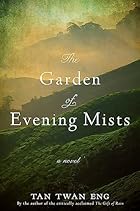
The Garden of the Evening Mists, by Tan Twan Eng

2012 Book 159: The Garden of the Evening Mists, by Tan Twan Eng

Reason for Reading: Short-listed for the 2012 Booker Prize

Review

Having suffered through a Japanese slave-camp during WWII, Yun Ling Teoh, a young Chinese-descent lawyer in Malaysia, carries around a lot of anger against the Japanese. However, she’d made a promise to her deceased sister that she would build a Japanese garden, so she reluctantly visits Aritomo – the only Japanese gardener in Malaysia. Aritomo refuses to design a garden for Yun Ling, but he offers to take her on as his apprentice so that she may design one herself. Yun Ling learns to let go of her anger as her friendship with Aritomo grows. But Aritomo has his own secrets. 

How can I express what an amazing book this was? Sure, it had a couple of slowish spots (it WAS, after all, a book about gardening) but the story is magical. The historical and cultural backdrop is intriguing (I learned a lot while reading, but didn’t feel like I was being “taught”). Because the book takes place in two different times (current day and shortly after WWII), the story unfolds gracefully – allowing the reader to learn the story of Aritomo and Yun Ling at just the right rate…but yet somehow the time also blends together giving an impression of continuity that is particular to Eastern philosophy. On top of that, the more I learned about the story, the more fascinated I was by the two characters. This book is definitely worth your time. 

Interpretive note with possible spoilers
One thing that struck me while I was reading this book is that I noticed an inconsistency in what the narrator (Yun Ling) was saying. At first, I wasn’t sure whether the author had made a mistake or if he had purposely introduced inconsistencies to show that Yun Ling had either an unreliable memory or was hiding something. I finally came to the later conclusion (though the unreliable memory was possible too). I think it’s fascinating that such inconsistencies added to the overall effect rather than subtracting from it. I applaud Tan Twan Eng for his careful writing of this book. 🙂