Rose Daughter, by Robin McKinley


2012 Book 132: Rose Daughter, by Robin McKinley (9/9/2012)

Reason for Reading: More light reading. 🙂 I chose this book because I had just finished reading Beauty, by Robin McKinley and I wanted to compare her two versions of the Beauty and the Beast story. They had a lot of similarities (both were rather canonical retellings rather than “twists.” But they were also very different. In the end, I think I enjoyed reading Beauty more, but I found the ending of Rose Daughter more satisfying.

My Review
Beauty and her two sisters were living in the lap of luxury with their successful father when suddenly everything changed. Her father’s business failed, and they were left destitute. They made a new beginning in Rose Cottage, where things weren’t quite what they seemed. The coming of Beauty’s family to Rose Cottage was the first step to opening an ancient curse that would change their lives forever. This was an adorable little story…just as enjoyable as McKinley’s first retelling of the Beauty and the Beast story. I was skeptical that McKinely could tell the story twice but, although there were some similarities, the two stories were very different. THIS Beauty used her magical gardening capabilities to change the world…

Matched, by Ally Condie


2012 Book 131: Matched, by Ally Condie (9/9/2012)

Reason for Reading: Needed something light to get rid of all that “meaning” that’s been invading my mind from all those “meaningful” books I’ve been reading. This one was sufficiently fluffy, and was one of my top 5 LibraryThing recommendations. (LT seems to think that I love YA dystopia, which isn’t particularly true, but oh well.)

My Review
Cassia is thrilled about her matching ceremony, in which the officials of her government choose her perfect match…her future husband. But when she views her match, she is perplexed–TWO faces show up on her screen. Because of this “mistake” Cassia is thrown into a confusion of emotions and falls for the “wrong” boy. She begins to question the right of her government to make so many choices for their citizens. Perhaps no one is free in this seeming utopia? This was a cute book, and I certainly am eager to read the rest of the series. I appreciate it as one of the few non-violent YA dystopias out there on the market. On the other hand, love triangles are getting rather blase, aren’t they? And it’s not really possible to write a unique YA dystopia at the moment. Everything’s been done over and again. That said, it was certainly a quick, fun read; and it had very likable characters.

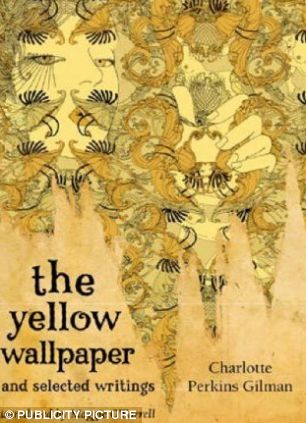
The Yellow Wall Paper, by Charlotte Perkins Gilman

I decided that since I’m reading Herland, by Charlotte Perkins Gilman, I would read Gilman’s best-known piece of fiction, the short story “The Yellow Wallpaper.” This is one of the few short stories included in the list of 1001 Books You Must Read Before You Die (the others mostly being by Edgar Allan Poe). 


The main character is a young wife and mother who is taken by her affectionate husband to a summer home so that she could rest from her “nervous” behavior for a while. Her husband wanted her to rest as much as possible–not to exert herself by writing, reading, taking care of her baby, or doing any other sort of wifely work. She was kept in a room with viciously ugly yellow wallpaper. At first, she wanted to be free of the wallpaper, but her husband affectionately refused to move her to another room. As the story continues, she (in the boredom of “rest”) becomes more and more fascinated by the wall-paper and is eventually driven to madness. Her descent into madness is so eerie that this work was classified as “horror” before it was brandished as a feminist gem. 

Gilman describes the descent into madness with the naked honesty that can only come from a semi-autobiographical story. In fact, this story was a dire warning to herself, and to the world. Gilman became deeply depressed after giving birth to her own daughter. Her affectionate husband sent her to the well-known neurologist S. Weir Mitchell, who was a specialist in “women’s disorders.” Mitchell’s famous cure involved a regimen of rest–the woman would give up all work and simply gain back her health by bed-rest and isolation. Gilman was forbidden to write or paint, and was only allowed to read for 2 hours a day. Such treatment is enough to drive anyone crazy in my opinion! As Gilman got worse and worse, she made the difficult decision to leave her affectionate husband and find her health by other means. She never fully recovered, and she suffered from the world’s censure for leaving an affectionate husband–this was in the late 1800’s when such a divorce was a scandal. She wrote “The Yellow Wallpaper” as a warning to herself that she would have gone mad had she stayed with her husband. She wrote it as a warning to the doctors who supported Mitchell’s cure–she even sent a copy of the story to Mitchell himself. And she wrote it as a warning to young women who might be suffering from similar “cures.” Gilman never suffered from hallucinations herself, but the description of the descent into madness clearly bore her soul, making the story frighteningly realistic. 

Creationism: A Worldwide Phenomenon?

I was rather shocked today to see this in my Scientific American newsfeed: Science and Archaeopteryx Overcome Creationism in South Korea, by Soo Bin Park (reprinted from a Nature publication). I had no clue classroom rejection of evolution in favor of creationism is a world-wide phenomenon! I figured it was something that stubborn ultra-Christians clung to only in the US. I suppose that’s just my Americentric mind at work again. I wonder how wide-spread this problem is?

This issue reminds me of a forum conversation that’s been going on at my favorite book-social-network LibraryThing. We’ve been discussing the movement of some parents to decline immunization for their children–for fear of unproven (and unlikely) threats like the autism-due-to-vaccination scare. These parents fail to appreciate the pain and suffering and endless fear of their parents’ parents during epidemics such as for polio in the early 20th century. Out of sight, out of mind, as it were! By not vaccinating their children, these people are not only risking the health of their own children, they’re risking the health of others’ children AND the health of our already-fragile medical system here in the US. 

Furthermore, there is a discouraging trend in the US for ultra-conservatives to take an anti-science stance. They want our kids to be world leaders in the classroom, but they also want them to be taught that evolution and global warming are “just theories” for which there is scanty evidence. Furthermore, they often approve of huge funding cuts for scientific research. Although I’ve posted a couple of times about studies where I asked “really? my tax dollars paid for that?!” I think funding for scientific research is an investment that the US needs to make if we want to continue as a world power. If we don’t stoke the fire, it’s going to die. I have personally witnessed the changes that have occurred in academia due to the funding lapses during the Bush administration, and the temporary relief that the Obama administration provided. Unfortunately, this relief came too late and academic (rather than for-profit) scientific research is on the decline. It’s harder and harder for professors to get tenure, so more and more of them enter “industry,” where the “evil” drug companies take over their souls. 😉 

I don’t know what the right solution is, but we mustn’t let academic science research go on a decline. We must nip the anti-science movement in the bud before it impacts our global position (and the quality of our health system) irrevocably. 

I am also reminded of this article in the Scientific American newsfeed: Obama and Romney Tackle 14 Top Science Questions. Romney isn’t as supportive of science as I’d wish, but at least he’s not leaning too far in the anti-science direction. There’s a (very small) blessing. I DID get a chuckle about how Romney made almost all of his answers about how Obama is a failure, whereas Obama actually focused on the questions at hand. 

A Princess of Mars, by Edgar Rice Burroughs

2012 Book 131: A Princess of Mars, by Edgar Rice Burroughs (9/8/2012)

Reason for Reading: Coursera Science Fiction and Fantasy course. 🙂 

Review
In the post-Civil War era, John Carter enters an Arizona cave and is unexpectedly whisked away to Mars. There, he witnesses the depravity of a “highly developed” race of people who, because medicine helps them to live long lives, they perform population control by warring with each other. In some ways, though, they’re happier than people on Earth, because they have no lawyers. John Carter takes Mars (and a Princess’s heart) by storm. I’m not a huge fan of pulp fiction, so I expected very little out of this book. Because of that, I was impressed at how “not bad” it was. Actually, it was sort of interesting in a history-of-science-fiction sort of way. It did have some rather racist comments about Native Americans (an artifact of when it was written), and the Princess was a weak annoying little thing whose only virtues were rare beauty and a penchant for getting into trouble so that we could witness the excitement of her rescue (this is an artifact of being pulp). Overall, not too shabby. But not literature, either. I DID wonder whether John Carter was meant to be some sort of pulpy Christ figure. He was very good at saving people. And he had the right initials. 😉

August Sunday Salon

I’ve decided to try out posting for The Sunday Salon, only I’m going to limit these posts to summaries of last month’s reading. I’m starting a little late, but this will be my August round-up. 

In August, I participated in The Middle Eastern Literature theme read on LibraryThing, it ran July through September and I’ve read quite a few Middle Eastern-themed books over the past few months. In August, I finished The Lemon Tree, by Sandy Tolan. 

I have also been taking the a free internet course Fantasy and Science Fiction: The Human Mind, Our Modern World from Coursera. It’s a fun little class (notwithstanding some growing pains for the system and the persistence of mean “anonymous” people on the forum). For that, I read: Alice in Wonderland, by Lewis Carroll; Dracula, by Bram Stoker; and The Bells and The Philosophy of Composition, by Edgar Allan Poe. 

As group reads for the 1001 Books You Must Read Before You Die group on LibraryThing, I read Agnes Grey, by Anne Bronte; and attempted to read White Teeth, by Zadie Smith. I gave up on White Teeth because it had too much crudity and obscenities, though I thought it was a rather witty book. 

I read Beauty, by Robin McKinley as a group read with The Green Dragon on LibraryThing. The Embittered Ruby, by Nicole O’Dell for a group read at a Christian Fiction group ACFW…I’m leading the discussion for it in October. Skios, by Michael Fryan for the Booker 2012 longlist. 

And, finally, I read Inheritance, by Christopher Paolini; Al Capone Shines My Shoes, by  Gennifer Choldenko;  and Riptide, by Douglas Preston & Lincoln Child just for fun. 

I finished only one issue of The Economist and one issue of New Scientist. 

I’ve been preparing to read Paradise Lost, by John Milton, and have made a few new posts on my blog. 

In September, my plans are to participate in the R.eaders I.mbibing P.eril VII challenge, I’ll continue with the Fantasy and Science fiction class on Coursera, I’ll continue reading Booker longlisted books (at least those that are available in the US), I’ll START reading the Wellcome Trust Book Prize longlist (at least those that are available in the US), and at the end of the month I’ll start another Coursera class in Greek and Roman Mythology. So I’ll have a busy month ahead! 🙂

Man’s Search for Meaning, by Viktor Frankl


2012 Book 130: Man’s Search for Meaning, by Viktor Frankl (9/5/2012)


Reason for Reading: One of the essays in Fantasy Media in the Classroom, talked about a fusion class which combined Man’s Search for Meaning and The Lucifer Effect with science fiction books like The Invisible Man and The Strange case of Dr Jekyll and Mr Hyde in which men choose “evil.” I thought since I’ve been reading a lot of books about men who choose “evil” that I’d try out Man’s Search for Meaning. I’ll try to fit in The Lucifer Effect soon. It gives an interesting perspective on why some people choose “good” and other choose “evil.” Frankl’s message was that people can choose to be “swine” or “saints,” but they make this choice over and over throughout their lives and their search for meaning is the motivation behind each decision.

My Review
In the first half of this fascinating little book, Frankl describes his years in the concentration camps (including Auschwitz) with the purpose of analyzing the behavior of people in extreme situations. He admits that someone who wasn’t there can’t give a very detailed or personal account, but a person who WAS there can’t give a detached account because they were emotionally involved. I think he did an excellent job of viewing the situation with detachment, considering the situation. This was a really interesting little memoir. The second half of the book introduces his theory of psychoanalysis: logotherapy. Logotherapy is focused on man’s search for meaning; in contrast to Freudian theory focusing on man’s search for pleasure and Adlerian theory focusing on man’s search for power. I think Logotherapy is the most sensible form of psychotherapy I’ve ever heard of. How can I argue that our happiness depends on our perceiving our own purpose? I admit I felt a little skepticism when he kept bringing up examples of how he’d “cured” someone after only one session–he must have been a particularly clever person to manage that so often. 😉 But that aside, I think the technique of finding meaning in a patient’s life is rather useful. 🙂

The Country of the Blind, by H. G. Wells


SPOILERS OF THEMATIC RATHER THAN PLOT-SPECIFIC NATURE

As another Coursera Fantasy and Science Fiction assignment, I’ve finished reading H. G. Wells’ short story “The Country of the Blind,” first published in 1911. In this story, a mountaineer has an accident and falls into a valley inhabited by blind people who have been separated from humanity for fourteen generations. They do not believe that there is a sense called “sight.” Likewise, the mountaineer discovers that the blind people have strengthened hearing and smell which make them much less helpless than he’d imagined. 

This story is deeply meaningful on many levels, and I had difficulty grasping exactly what to say about it. I could see that it was an allegory in perception…but what was he REALLY trying to say? One student on the class forum suggested a novel with a similar theme of questionable perception: Flatland: A Romance of Many Dimensions, by Edwin A Abbott, first published in 1884. I haven’t had time to read it yet, but it, too, introduces the concept that what we perceive might only be shadows of reality–there may be more dimensions out there that we are blind to. 


A few other students noticed the similarity of Wells’ story to the “Allegory of the Cave” in Plato’s Republic.  I should have seen this myself, but apparently I am blind. 😉 This metaphor pops up often. The best-known reference in today’s popular culture is probably The Matrix–which I suppose can be considered cyberpunk Plato with a Christ figure. 🙂

The allegory is a conversation that Plato attributed to Socrates with Plato’s brother Glaucon. The idea is this: People are chained to chairs in a cave and cannot even turn their heads. Their whole lives, they’ve been watching shadows of the real world which are cast on the cave wall by the light of a fire behind them. To them, these shadows ARE the real world. But imagine the confusion of someone who is untied from his chair and introduced into the real “real world.” After suffering from shock of seeing direct light for the first time in his life, he grows accustomed to the light. Then he is amazed by all that he learns. He wants to share his new knowledge with those in the cave, but when he returns he is blinded by darkness. This blindness is true of the mind’s eye, as well. Both upon walking into and walking out of the light, a person is confused and blinded. I believe Plato meant for the light to be goodness of spirit or divine contemplation.  

Like the people in the cave, the blind people have lived their entire lives without the sense of sight…indeed, without knowing that sight existed. They can’t even imagine what sight is when the mountaineer describes it to them. The mountaineer sees them as blind (literally and figuratively) to the “real world.” Thus far, the allegory fits with Plato’s. However, because the blind people had heightened smell and hearing, I don’t feel that they were in “darkness” and the mountaineer in “light.” I think they were all equally in the dark because they assumed that their OWN world view was the correct one. 

That was the reason I thought this story might be an allegory about the evils of colonization. The mountaineer is like the white man who tries to “enlighten the savages” by forcing “civilized” customs and religions on them. Finally, the mountaineer realized that “you cannot even fight happily with creatures who stand upon a different mental basis to yourself. ” He couldn’t convince them of something that their own senses told them was impossible. In order to fight, you have to be in the same plane of reality.
The Unlikely Pilgrimage of Harold Fry, by Rachel Joyce

2012 Book 130: The Unlikely Pilgrimage of Harold Fry, by Rachel Joyce

Reason for Reading: This is the third Booker longlist book for 2012 that I’ve read.

My Review:
When Harold Fry gets a letter from an old friend who’s dying of cancer, he decides in a leap of faith to take a pilgrimage across England to “save” her. Along the way, he meets many interesting characters and learns to listen to their troubles. He also has time to reminisce about his past…some happy memories, but mostly memories of things he should have done better. This is a bitter-sweet story with deep characters and a good message. The type of person who would love this book is sentimental, and loves reminiscent stories about past mistakes and new beginnings. 

Personally, I’m not that sort of person. Bitter-sweet stories tend to make my eyes tear up, and then I get angry at myself for being so infernally hormonal. 🙂 Stories in which people reminisce about past mistakes also are a little depressing to me. I’ve always felt that we should learn from the past, but not waste energy with regrets. Everybody makes mistakes. If we regret them, do something about it. If we can’t do something about it, accept it as a part of our pasts that makes us who we are today. Try not to make the mistake again. But maybe I just feel that way because I don’t have anything worth regretting yet, I don’t know. *shrug* 

This was a cute book, but I don’t see it winning the Booker.

The Star, by H. G. Wells

Image taken from a NASA Google+ post*

The Star” is an apocalyptic short story written by H. G. Wells in 1897. According to Wikipedia, it founded a science fiction sub-genre of post-apocalyptic fiction in which two celestial objects crash into each other. The description of apocalypse-on-Earth was probably rather original for its time–it was vivid and striking. It also had a very powerful message that was told in a rather unique way. I was reminded of a book I read recently, Half of a Yellow Sun, by Chimamanda Ngozi Adichie…not in narrative style (not in the slightest!) but in underlying message.

Spoilers start here:
While I was reading “The Star” I was distracted by the detachment of it all. We seemed to be observing it from afar rather than experiencing it through the eyes of tortured souls. At the last sentence, I realized WHY he made the story so detached. He was writing with the detachment of a far-away observer. Of someone who’s just reading about the events in a newspaper. We see the murders, the famines, the plagues; but we don’t FEEL them. This reminded me of a touching novel about the Biafra / Nigeria civil war: Half of a Yellow Sun, by Chimamanda Ngozi Adichie. In this gut-wrenching, but beautiful book Adichie asks the question “were you silent when we died?” 

Spoiler-free zone commences:
I think it’s horrible how we can watch news of horror and tragedy from afar and simply shake our heads and say “that’s too bad….” and not worry about it any more. The idea of such uncaring thoughts (literally) brings tears to my eyes. And then the biologist in me rears her ugly head and says: this detachment is necessary for our own individual sanity. We have to, at some level, separate personal tragedy from the tragedy of people who have no impact on ourselves. If we didn’t, we would be constantly overwhelmed by emotions that distract us from our own lives and do not provide any personal advantage. I suppose if I were constantly overwhelmed with emotion about distant tragedies, I’d be on the far-opposite end of the autism spectrum. 🙂 I think we should honestly consider the pain of other people and, if we can, do something about it. But where do we draw the line for emotional involvement? I suppose this is something that each individual must answer for him or herself.