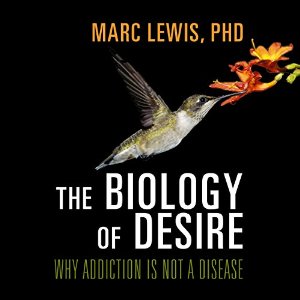
The Biology of Desire, by Marc Lewis

The Biology of Desire, by Marc Lewis, narrated by Don Hagen
Neuroscientist and former addict Marc Lewis writes an engaging study of the biological changes that occur in an addicted brain, complete with personal stories about himself and several addicts that he interviewed. Lewis points out that there are two major models for addiction – the disease model and the choice model – and argues why he believes the disease model has outlived its use and is now harming rather than helping addicts. 

The disease model of addiction is highly accepted by clinicians, psychologists, and insurance companies right now. It posits that the more an addict uses a substance, the more his brain changes, and the more he needs the drug. Furthermore, some people have a biological preinclination for addiction – it doesn’t mean that they will become addicts, but the genetic preinclination raises their chance of becoming an addict under the right environmental stimulus. The combination of genetic factors and changes in the brain suggest to clinicians that addiction is a disease. A lot of money, therapy, and medication currently goes into treating addiction as a disease – often successfully.

Lewis argues, though, that changes in the brain and genetic preinclination do-not-a-disease-make. After all, every experience changes your brain – and some events, like falling in love, change your brain in much the same way addiction changes it. Furthermore, much as people have a preinclination for addiction, they also have a preinclination to temperament. For instance, an introverted, agreeable parent is more likely to have an introverted, agreeable child. Despite this heritability, temperament is not considered a disease. So why do we pick-and-choose which heritable brain-changing habits are a disease?

My answer is that addiction is considered a disease whereas in-love and temperament are not considered diseases because in-love and temperament do not generally cause clinically significant impairment in an individual’s ability to function in the workplace and social interactions. And when they do inhibit the individual’s ability to function, then they are considered a disease. 

Instead of the disease model, Lewis supports the “choice” model. People choose to abuse substances in the first place, and continue to make that choice. And when they give up the substance abuse, it is generally because they have chosen that now is the right time to give it up. 

Lewis spends the great part of this book describing why he feels viewing addiction as a disease is harmful to addicts as well as unhelpful for treatment. When an addict views his problem as a disease, then he might feel helpless to make his situation better. Whereas if he views it as a choice, he recognizes that he has power over this problem. You might notice that this is in stark contrast to the first step of AA in which the addict accepts that he is powerless over his addiction. In fact, in the stories of Lewis’ interviewees, none of them mentioned AA or NA as a helpful tool for stopping their addiction. 

Lewis also points out that although medication and therapy generally help the individual to give up alcohol to begin with, there is a very high relapse rate. And that is because although the individual doesn’t want the negative effects of his addiction, he has not yet accepted the choice to give up the drug.

Lewis claims that many people view the choice model and the disease model as mutually exclusive, but he believes that they are not. I would tend to agree with him on this. I don’t see the harm in viewing addiction as a disease – in fact, I think this model would be very helpful to a certain subset of addicts – it provides them a reason to say “this is not my fault, I have a disease, and I need to live as healthy a life as I can in order to not let it ruin my life.” But I also think the choice model is helpful to another subset of addicts – it provides them the ability to say “I have the power to choose not to use. I am not powerless.”


Nonfiction Book Pairings

This week’s Nonfiction November prompt given at Regular Ruminations is book pairings. 

One obvious pairing that comes to mind is Chimamanda Ngozi Adichie’s Half of a Yellow Sun, and Chinua Achebe’s There Was a Country. Both of these books are about the Nigerian civil war of 1960-1963. The Igbo people felt that they could no longer live under the rule of the North because of no representation and persecution of their race. They seceded from Nigeria and called themselves Biafra. The war lasted from 1960-1963, when Biafra lost the war and rejoined Nigeria. During this time, there was a lot of ethnic cleansing and other atrocities on both sides. 

Half of a Yellow Sun follows 3 characters: Ugwu, a village boy who is taken in by some politically-inclined academics as a house boy; Olanna, Ugwu’s mistress and a rich heiress; and Richard, a British expat who desperately wants to be accepted by the Biafrans as one of them. The stories of these three characters are superbly and tragically woven together on a backdrop of war, racial hatred, and famine.

This is one of the most impressive books I’ve read in quite a while. The characters were so deep that I felt I knew them. The events described had an eerie realism to them that comes from the author’s intimate knowledge of the history and people. This is one of those books that makes you feel like every incident described is important and well-planned. This is a story not only of war, but of people–their dreams, their loves, their fears, their strengths and weaknesses. Half of a Yellow Sun is a must-read for anyone interested in international literature.

(Those two paragraphs were stolen from my review on the old blog in July of 2012.)

I have not had the opportunity to read There Was a Country yet, but it is the memoir of Chinua Achebe, social activist and author of Things Fall Apart. This book is the story of Achebe’s experience during the Biafra war. It’s been sitting on Mt. TBR ever since it was released.


I thought I’d add in a NF/NF/NF pairing as well, since it’s one that I’ve been considering. Lawrence in Arabia and From Beirut to Jerusalem are both histories of the Middle East. Seven Pillars of Wisdom is T. E. Lawrence – Lawrence of Arabia’s – memoir of his time spent in Arabia during WWI. I own two of these books, but am too intimidated to start on this journey. 

Maybe I’ll make it a goal to read these non-fiction books – and perhaps re-read Half of a Yellow Sun before next year’s Nonfiction November. I could even do a readalong of these books, if anybody would like to join in. Though I know all of them are pretty intense and “read like a textbook” which is something that I’ve seen complained about by many participants of Nonfiction November. So I doubt I’ll get any takers. 

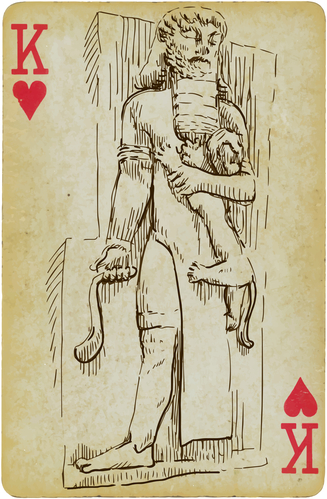
Gilgamesh Translations

When I chose to read Epic of Gilgamesh, I had a difficult time choosing which translation to use. Did I want a prose translation which flowed freely instead of showing me all the sections that were questionable and fragmented? Did I want a translation which showed me how the tablets were separated and where the fragments were? Luckily, I had access to both types of translation, and read both of them. In addition, I also listened to an adaptation of the various translations. There were pros and cons of each approach. 

English version with an introduction by N. K. Sandars

This just happened to be sitting on my dad’s bookshelf, so I snatched it up. It’s a prose translation which separates the narrative into six “chapters:” Prologue, The Coming of Enkidu, The Forest Journey, Ishtar and Gilgamesh and the Death of Enkidu, The Search for Everlasting Life, The Story of the Flood, The Return, and The Death of Gilgamesh. In addition, this included a lengthy introduction. Of the written translations, I admit to enjoying this one more than the verse translation. Although it is important to some people (especially scholars) to see what portions of the text are questionable and where the fragments are, I don’t think that information is important to my enjoyment of the story. To me, the important part is to understand the meaning of the story. So this translation was quite enjoyable. 

The Norton Critical Edition
Translated and edited by Benjamin R. Foster
This translation was in the “original” eleven tablet format – as it was discovered (in part) in the library of Ashurbanipal in Nineveh. Like the translation by Sandars, this book had a lengthy introduction, but it also had footnotes and a lot of supplementary sources. There were several translations of related stories (also discovered in tablet format), and there were essays written by Gilgamesh experts. Thus, although I found the […] and question marks indicating fragmented and questionable translation disruptive, I found the supplementary information in this book well worth reading. So this book was just as valuable to me as the Sandars translation. 

The Gilgamesh Epic and Old Testament Parallels
by Alexander Heidel

I wasn’t a huge fan of this translation, though it’s a classic that many scholars use as one of their base translations. It, like the Foster translation, is in fragmented verse. Only, it didn’t have the annotations. And the typeset in my book was difficult to read. I’d say the benefit of reading this book rather than the Norton Critical Edition is that it is a classic translation and includes Heidel’s analysis about Old Testament parallels. 

Stephen Mitchell’s adaptation of Gilgamesh Epic –
adapted from several translations in English
Read by George Guidall
Wow. This reading was fantastic. I want to get every audiobook ever read by Guidall – and he’s narrated a lot. What’s interesting about this book is that it is not a translation of Gilgamesh. Nor does Mitchell claim to be a Gilgamesh scholar. He simply wanted to bring to life the story in powerful language rather than stilted precise translation. Therefore, he used every English translation he could get his hands on, and adapted them into a powerful verse epic. No changes were made to the story. Trust me. I would have noticed after reading two different translations of the story. There were only a few times where I felt that the language was unfitting to either of the translations I read – he tended to use more shocking (rude) words than the other two translations. 

I read a criticism of this adaptation which complained that it inappropriately made the relationship between Gilgamesh and Enkidu homoerotic – but the possible implication of homosexual love between the two was present in both of the other translations I read. I think it may have been more evident in this adaptation because of the powerful language Mitchell used. But it was not inappropriate given the context. He was just taking the story that was there and conveying it with powerful words rather than exact translation. 

So which of these books would I suggest you read? Depends on what you want to get out of it. Do you want to just read and get the gist of the story? I’d go with the Mitchell adaptation – audiobook if possible, but that’s not necessary. The Sandars translation is also quite readable. If you want precision in fragments or a lot of analysis essays, go for the Norton Critical Edition. 

This is a series of posts about The Epic of Gilgamesh. Here is a list of all posts thus far: 

Personality Disorders – Cluster A

As mentioned in my opening post about personality disorders, personality disorders are split into three clusters: A, B, and C. This post will discuss the cluster A personality disorders. Cluster A disorders are characterized by distrust, suspiciousness, and social detachment. Often, people with cluster A personality disorders are considered eccentric or odd.

The characteristic traits of paranoid personality disorder are suspiciousness and mistrust of others, tendency to see oneself as blameless, and tendency to be on guard for perceived attacks by others. The disorder develops in early adulthood. To be diagnosed, a person must exhibit 4 or more of 7 traits: 1) he suspects, without sufficient basis, that others are exploiting, harming, or deceiving him; 2) he is preoccupied with unjustified doubts about the loyalty or trustworthiness of friends or associates; 3) he is reluctant to confide in others because of unwarranted fear that the information will be used maliciously against him; 4) he reads hidden demeaning or threatening meanings into benign remarks or events; 5) he persistently bears grudges; 6) he perceives attacks on his character or reputation that are not apparent to others and is quick to react angrily 7) he has recurrent suspicions, without justification, regarding fidelity of spouse or partner. 

Of course, I am unqualified to diagnose anyone with a personality disorder, but I think real-life stories are helpful. 

When I worked in retail, there was a guy that I had a crush on. We had been “friends” for almost a year, and I figured it was ok to tell him I liked him. He freaked out and said that I’d betrayed him (because he wasn’t ready to date anyone due to a bad experience in the past). 

He soon became incredibly paranoid. He accused me to the manager first of stalking him within the store, then of calling his phone number just to hear the sound of his voice (mind you, this guy never handed his phone number out to anyone, so he was basically accusing me of sneaking into the office and illicitly looking up his number), and finally, he accused me of placing a kilo of marijuana near his car. (Though he couldn’t produce said kilo for evidence.) 

Looking back, I realized his behavior had been odd all along. He was huge on conspiracy theory; stockpiled guns; thought everyone was out to get him; didn’t tell anyone where he lived, what his phone number was, or any personal details about his past; and he accused me of being nasty and demeaning when I made a casual comment “Oh, you’ve already started Christmas shopping? Seems a bit early.” And boy could he hold a grudge.

Since then, I’ve wondered what happened to this guy. He was really a sweet, caring person. I worry about his health and safety, since his paranoia clearly had a huge negative impact on his life. 

This is one of the personality disorders that would be abolished if the next DSM adopts a dimensional approach as discussed in my previous post. I wonder what category these traits would fall into then? 

Schizoid personality disorder is characterized by impaired social relationships and low desire to form attachments to others. To be diagnosed with schizoid personality disorder, a patient must have 4 of the following 7 traits: 1) he neither desires nor enjoys close relationships, including being part of a family; 2) he almost always chooses solitary activities; 3) he has little, if any, interest in having sexual experiences with another person; 4) he takes pleasure in few, if any, activities; 5) he lacks close friends or confidants other than first-degree relatives; 6) he appears indifferent to the praise or criticism of others; 7) he shows emotional coldness, detachment, or flattened affectivity. 

This is another personality disorder that would disappear with the dimensional approach.

People with schizotypal personality disorder are also loners. People with scizotypal personality disorder tend to have superstitious beliefs, and some experience psychotic symptoms like believing they have magical powers. They can also be paranoid, have distorted speech, or see special meaning in ordinary objects or events. Schizotypal personality disorder is thought to be related to schizophrenia – perhaps a less severe manifestation or a precursor to schizophrenia. 

In order to be diagnosed with schizotypal personality disorder, a patient must have five or more of the following traits: 1) he has ideas of reference (believing innocuous events or objects have strong personal meaning); 2) he almost always chooses solitary activities; 3) he has unusual perceptual experiences (mild hallucinations); 4) he has odd thinking and speech (e.g. vague, circumstantial, metaphorical, overelaborate, or stereotyped); 5) he exhibits suspiciousness or paranoid ideation; 6) he has inappropriate or constricted affect; 7) his behavior or appearance is odd or eccentric; 8) he has a lack of close friends or confidants other than first-degree relatives; 9) he has excessive social anxiety. 

This is the only cluster A personality disorder that would not be lost if we switched to the dimensional approach of diagnosis.

This is a series of posts summarizing what I’m learning in my Abnormal Psychology course. Much of the information provided comes from reading my James N. Butcher’s textbook Abnormal Psychology. To read the other posts, follow these links: 

The Definition of Abnormal
A History of Abnormal Psychology
Abnormal Psychology in Contemporary Society
Contemporary Viewpoints on Treating Mental Illness – Biology
Contemporary Viewpoints on Treating Mental Illness – Psychology
Frontline: New Asylums
Brave New Films: This is Crazy
Clinical Mental Health Diagnosis: Biological Assessment
Clinical Mental Health Diagnosis: Psychological Assessment
Does the DSM Encourage Overmedication?
Post Traumatic Stress Syndrome – The Basics
Panic Disorder
Obsessive Compulsive Disorder
Hoarding and Body Dysmorphic Disorders
Depression – an Overview
Personality Disorders – Clusters and Dimensions
Personality Disorders – Cluster A
Personality Disorders – Cluster B
Personality Disorders – Cluster C
Biological Effects of Stress on Your Body
Somatic Symptom and Related Disorders
Dissociative Disorders
Borderline Personality Disorder
Dialectical Behavioral Therapy
Paraphilic Disorders
Gender Dysphoria – Homosexuality and Transgender
Anxiety Disorders
Bipolar Disorder – The Basics
Suicide – An Overview

References:

Butcher, James N. Hooley, Jill M. Mineka, Susan. (2014) Chapter 10: Personality Disorders. Abnormal Psychology, sixteenth edition (pp. 328-366). Pearson Education Inc.

Dark Eden, by Chris Beckett

Dark Eden, by Chris Beckett; narrated by Matthew Frow, Jayne Entwistle, Ione Butler, Robert Hook, Heather Wilds, Nicholas Guy Smith, Hannah Curtis, Bruce Mann


When a group of four people have to land on an unknown planet to regroup and repair their ship, they decide to split into two groups – a man and woman who do not want to risk the flight back remain on “Eden” alone, and the two others set back off for Earth with promises to send a rescue ship as soon as possible. Generations later, the people of Eden are still waiting. Still hanging out in exactly the same crash-landing spot. Still following the matriarchal rules structured by the mother of all. But their small area is becoming too crowded. They have to forage farther and farther for food. 


John Redlantern is frustrated with “Family.” With their stubbornness at remaining in one spot when they could clearly spread out over the vast planet and have enough food for all. He’s tired of the extreme ritualistic nature of “Family.” The artifacts from planet Earth are passed around to be “ooohed” and “ahhhed” at, but they are meaningless to a people who have never experienced technology. John is tempted to disrupt the circle of the past, and create a new path for the “Family.” In doing so, he breaks down everything “Family” represents.

Let me start with an important point: although John Redlantern and his friends are teenagers, this is not a teen book. It’s “literary science fiction.” The beginning of the book, which builds the world, the people, and the tension, is really long and slow. It was a bit of a slog to get to the turning point. Once that happens they story finally begins to move a little faster – but even the post-turning-point action is slow. 

The reason the narrative is so slow is because this is a story about Meaning with a capital M, and not about plot or action. Don’t get me wrong. There’s a plot. A plot with Meaning. There were several allegories to the story. The obvious one is the Biblical creation story. It’s all about how innocence is lost when people begin to get bored. But boredom is in our nature. Without boredom, we never learn new things. And new experiences don’t just change you, they change the world. 

Dark Eden also explores a destructive nature of men – as opposed to a more structured, peaceful and confining nature of women. (This seems to be what the book implies, it’s not exactly what I think of the gender divide.)

Dark Eden demonstrates the irony that change is needed to survive, but change is destructive to survival. It’s not just a book about changing the world. It’s also about how the world changes the individual. The main characters in the book, especially John Redlantern and his lover Tina Spiketree, develop into strikingly different people as they adapt to the changing world. Innocence is replaced with deviousness. Ivory towers collapse, covering all bystanders with dust and grime. This is a story of identity.

In other ways, Dark Eden is a book about faith. How faith can lift you up and keep you strong during difficult times. But how it can be manipulated against you, as well. And how, as you realize everything you had faith in is mistaken, you are first paralyzed with numbness, but then are able to move on as a new person. 

I want to give a good review for this book with so much Meaning. I mean, it should have been good. It had Meaning. But a great book has both Meaning and an ability to fascinate even if you don’t see the Meaning. Dark Eden did not. In Dark Eden, the story was lost in the darkness because you were blinded by the bright, shiny Meaning. It was too slow, the hero wasn’t even likable if you considered him an anti-hero, and it was thoroughly uncaptivating. I totally understand why it won the Arthur C Clark award and why it comes so highly recommended. Beckett’s world was unique – colorful and dark at the same time. The setting was unsettling and realistic within the boundaries of science fiction. The lingual drift was a nice, realistic touch. But most of all, the book was slow and Meaningful.

3.5 snowflakes for unique world building and Meaning

As an afterthought – I would like to post this Twitter conversation: 

It is authors that are willing to interact with their readers, even when given a mediocre review, that are truly great. I had been on the fence about whether to read the second book in the series or not – because I am a little curious where his Meaning will go – this conversation put me over the edge to want to read it. Because when someone cares about his readers, I want to like his books more. 🙂

Personality Disorders – Clusters and Dimensions

Personality disorders are a difficult topic for me. For one thing, they are highly stigmatized. And I think the term “personality disorder” encourages that stigma by suggesting that there is something terribly wrong with a person’s identity, rather than implying that people with these disorders respond to the world in a highly ineffective manner that creates problems for themselves and others. In fact, Butcher describes “personality disorder” in his textbook Abnormal Psychology as: characterized by “chronic interpersonal difficulties and problems with one’s identity or sense of self.” This description is good as long as we accept that the “problem with one’s identity” is that one’s self-esteem and view of one’s relationships with others is unstable. 


Everybody exhibits some dysfunctional beliefs and behaviors, but they should not be diagnosed with a personality disorder unless the behavior is pervasive and inflexible, and causes “clinically significant” distress or impairment in functioning. People with personality disorders generally cause just as many problems for others as they do in their own lives. Most do not recognize the dysfunction in their own thoughts or behaviors; therefore, it is often friends, family, or the law that force people with personality disorders to seek treatment. 

Personality disorders are grouped into three clusters: 

Cluster A includes paranoid, schizoid, and schizotypal personality disorders. People with cluster A disorders tend to be suspicious, paranoid, and/or withdrawn. 

Cluster B includes histrionic, narcissistic, antisocial, and borderline personality disorders. People with these disorders have a tendency towards drama, emotionality, and erratic behavior. 

Cluster C includes avoidant, dependent, and obsessive-compulsive personality disorders. These people tend to experience anxiety and fear. 

Most personality disorders are not caused by a few traumatic events, but by a build-up of many stressors throughout life – like childhood abuse, neglect, or criminal behavior in parents. A child’s natural temperament may also have a strong impact on the development of a personality disorder later in life. 

Compared to the other mental illnesses, there is little research on personality disorders. This is because people with personality disorders often do not feel there is anything wrong with themselves, or if they realize there is something wrong, they have less-than-helpful personality characteristics (such as lack of empathy or withdrawn social interaction). Another difficulty in studying people with personality disorders is the large amount of misdiagnosing that occurs. The criteria for diagnosis are more influenced by a clinician’s judgement than are the criteria for other mental illnesses. 

Due to these difficulties in diagnosis of personality disorders, much work has been done in developing dimensional systems as an alternative to the cluster model. A dimensional model would rate a person on a set of personality traits, thus providing an overall behavioral pattern. Such an analysis would theoretically be more empirical than the cluster model. Such changes were proposed for the DSM-5, but they were deemed too complex for rushed clinicians and were shunted off into the “Emerging Measures and Models” section. 

One popular dimensional approach is the five-factor model. According to proponents of the Big Five, everyone’s personalities can be defined by our strengths and weaknesses in five traits: neuroticism, openness to experience, extraversion, agreeableness, and conscientiousness. Each of these traits are further separated into sub-traits.

Neuroticism: anxiety, anger/hostility, depression, self-consciousness, impulsiveness, and vulnerability. 

Extraversion: warmth, assertiveness, gregariousness, activity, excitement seeking, and positive emotions.

Openness to experience: fantasy, aesthetics, feelings, actions, ideas, and values.

Agreeableness: trust, straightforwardness, altruism, compliance, modesty, and tender mindedness. 

Conscientiousness: competence, order, dutifulness, achievement striving, self-discipline, and deliberation.

Using this model, when a patient comes in for analysis, she would be rated high or low for each of the factors. The overall pattern (combined with knowledge of whether the individual experiences clinically significant distress) can be used to diagnose a personality disorder. Using the five-factor model, only six of the personality disorders would remain:  borderline, antisocial, schizotypal, narcissistic, obsessive-compulsive, and avoidant. The others (paranoid, schizoid, histrionic, and dependent personality disorders) would be dropped. 

Hopefully much research will go into developing a more empirical approach to diagnosis of personality disorders, for I feel that patients would benefit greatly from treatments that target specific dysfunctional traits instead of a generalized “personality disorder.” 

If you’re interested, there are quite a few Big Five tests on the internet. I just took the Truity test. If you take it, you don’t have to create an account. There’s a “skip” option. My scores were: 

Open to experience: 80%
Conscientiousness: 85%
Extraversion: 57.5%
Agreeableness: 92.5%
Neuroticism: 52.5%

Apparently, a score of 50% is considered “average person.” This test was fun and gives you an idea of what types of questions might be asked with a dimensional approach to diagnosis; however, it was certainly too short and silly to accurately diagnose a personality disorder. I’m surprised I didn’t get a higher score on neuroticism because of my bipolar disorder. Hopefully the test developed by clinical psychologists is much more extensive and precise. 🙂

This is a series of posts summarizing what I’m learning in my Abnormal Psychology course. Much of the information provided comes from reading my James N. Butcher’s textbook Abnormal Psychology. To read the other posts, follow these links: 

The Definition of Abnormal
A History of Abnormal Psychology
Abnormal Psychology in Contemporary Society
Contemporary Viewpoints on Treating Mental Illness – Biology
Contemporary Viewpoints on Treating Mental Illness – Psychology
Frontline: New Asylums
Brave New Films: This is Crazy
Clinical Mental Health Diagnosis: Biological Assessment
Clinical Mental Health Diagnosis: Psychological Assessment
Does the DSM Encourage Overmedication?
Post Traumatic Stress Syndrome – The Basics
Panic Disorder
Obsessive Compulsive Disorder
Hoarding and Body Dysmorphic Disorders
Depression – an Overview
Personality Disorders – Clusters and Dimensions
Personality Disorders – Cluster A
Personality Disorders – Cluster B
Personality Disorders – Cluster C
Biological Effects of Stress on Your Body
Somatic Symptom and Related Disorders
Dissociative Disorders
Borderline Personality Disorder
Dialectical Behavioral Therapy
Paraphilic Disorders
Gender Dysphoria – Homosexuality and Transgender
Anxiety Disorders
Bipolar Disorder – The Basics
Suicide – An Overview

References:

Butcher, James N. Hooley, Jill M. Mineka, Susan. (2014) Chapter 10: Personality Disorders. Abnormal Psychology, sixteenth edition (pp. 328-366). Pearson Education Inc.

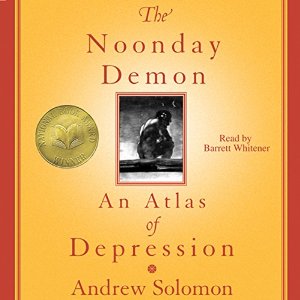
The Noonday Demon, by Andrew Solomon

The Noonday Demon: An Atlas of Depression,
by Andrew Solomon, narrated by Barrett Whitener 

Noonday Demon is Andrew Solomon’s amazing memoir / history of depression – it’s a must-read for anyone who wants to delve deeply into the causes and effects of depression. Solomon begins with his own journey through several severe depressive episodes. For a broader personal understanding of depression, he intermittently includes stories of “depressives” that he’s interviewed. In his research for this book, Solomon explored many standard therapies for depression (i.e. medicine, psychotherapy, cognitive behavioral therapy, electroconvulsive therapy, etc.); but he also explored some very atypical therapies such as an African ritual in which he lay naked and covered in goat blood while people danced around him with a dead chicken. (He actually found it very cathartic.) 


He followed his personal journey with epidemiology, biological causes, and historical development of depression. 

One subject that I found particularly interesting was when he discussed children of depressed mothers. Solomon claimed that such children are sadder, have lower IQ, more anxiety, and poor social skills. He said that it is often more beneficial to the child to treat the mother instead of the child. 

Solomon made me cringe when he suggested that people who talk about suicide are more likely to commit suicide; therefore, crisis hotlines may actually be promoting suicide rather than preventing it. I’d rather not believe this, since I volunteer for a suicide hotline, though this information does match what Butcher’s Abnormal Psychology textbook claims in chapter 7: that research shows no evidence that crisis hotlines reduce the rate of suicide. However, I’m going to stubbornly continue my work at the crisis hotline, because I can’t possibly think that I’m doing any harm. And I know that most of the people I talk to feel better after the conversation.

Solomon shared a story about a suicidal octopus who was a retired circus performer. Apparently, this octopus kept trying to do its tricks, but was no longer receiving positive reinforcement. The octopus began to fade in color (a sign of stress) and stopped eating. After several months it performed its tricks one last time and then pecked itself to death. Although this was a moving anecdote suggesting that depression can occur in animals as well, I find it a little fishy. After all, anyone who was paying such close attention to the octopus to notice its change of color, appetite loss, and melodramatic last-show would certainly have tried to alleviate the octopus’ suffering. 

Solomon’s history of depression was also quite fascinating. He pointed out that in the late 16th century it was in vogue to be melancholic, and that people would pretend to be depressed – loafing around on couches and saying melodramatic things – in order to appear intellectual. 

Solomon suggested that depression might have evolved in hunter-gatherers in order to promote an appropriate social hierarchy. That early humans became depressed because they were at the bottom of the hierarchy – or after they had challenged the leader and lost. This depression helped them to stay where they belonged in the hierarchy and to discourage them from re-challenging the leader. 

Depression may have had an evolutionary advantage at one time, but it has now lost that purpose. It now manifests for other, less suitable, reasons. Solomon suggests that one reason it is so prevalent these days is our increased choices. Hunter-gatherers didn’t have to stand in a grocery store looking at all the different types of food to eat. They ate whatever came their way. They didn’t have an uncountable number of potential mates, they had only a few. Thus they weren’t plagued by the notion that they may have chosen the wrongly. 

Although the hierarchy-stress hypothesis fits well with Robert Sapolsky’s findings about baboons (I’m currently listening to a set of lectures by Sapolsky and will review soon), I feel a little bit of skepticism about the choice hypothesis. I think there are a lot of reasons we experience stress – choice might be one of them, but it’s not the main factor. 

I found this book fascinating. Solomon did a great job of inserting little vignettes of his own story or stories of people he interviewed into his more intellectual portions of the book, so that the material never became dry despite its length. Solomon came up with so many interesting points that I was always interested in what he would say next. His own story was touching. His facts seemed very well-researched. In short, it was simply an amazing book.

4.5 stars for incredible research, ability to keep up interest,
and generally good writing style.

My Year in Nonfiction – Nonfiction November 2015

This month I will be participating in Nonfiction November, hosted by Doing Dewey, Sophisticated Dorkiness, I’m Lost in Books, and Regular Rumination. In this event, people will be reading and blogging about nonfiction. The event kick-off question is hosted by Sophisticated Dorkiness. 

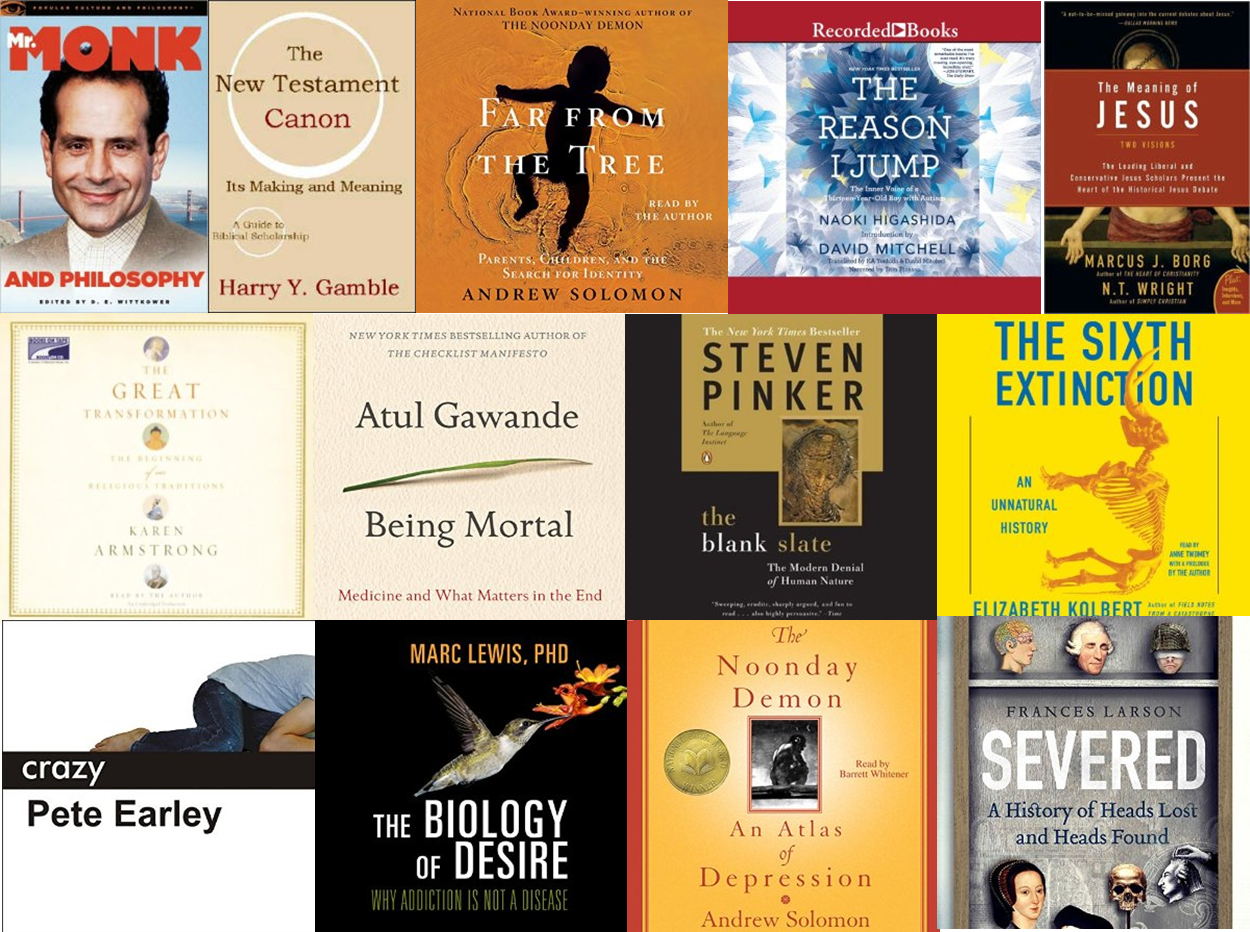
To date this year, I have read or listened to 51 books, 13 of which were nonfiction (unless you count the Epic of Gilgamesh, of which I’ve read three different translations – hopefully to be reviewed on Friday). So approximately a quarter of my books were nonfiction. 


My favorite nonfiction book of the year would have to be Severed, by Frances Larson. Although all of these books were fantastic , I guess that’s the one that really stands out to me. 


The nonfiction book (of these) that I have recommended the most is Being Mortal, by Atul Gawande. This is actually the book that inspired me to give up my fruitless job search and go back to school to be a physician’s assistant. Of course, I’m far from PA school at the moment, but I’m working my way there slowly. Unfortunately, this book was read before I decided to start up a new blog. So there’s no review.

One topic in nonfiction that I would like to read more of is social justice – especially in terms of mass incarceration, and the horrifying ratios of mentally ill or minority inmates compared to “normal” or white inmates. I have a bunch of these books on my wishlist, so hopefully I’ll get to them soon.

One thing I hope to get out of participating in Nonfiction November is to catch up on my nonfiction reviews. It’s also nice to meet other intelligent people who review books other than YA. Don’t get me wrong – I love my YA. But there are a glut of blogs out there that only review YA, and it’s hard to sift through them to find the more intellectual people. 

What about you? Do you have any nonfiction planned for this month?

Depression – an overview

Depression is a surprisingly common mental health issue, affecting 17% of Americans at some point throughout their lifetimes. Depressions almost always are a result of a stressful life event, though not all of these depressions are severe enough or long enough in duration to be considered a mood disorder. 


For instance, grief or bereavement often occurs when an individual has lost a loved one. Grievers tend to experience numbness and disbelief, yearning and searching for the lost person before acceptance that he is gone, disorganization and despair as realization is reached, and finally acceptance and reorganization of life. The DSM-IV had a bereavement exclusion for major depressive disorder (MDD): a person might not receive a diagnosis for MDD if he had experienced a major loss in the last two months. However, in a controversial move, this exclusion principle was left out of the DSM-5, allowing clinicians to diagnosis MDD soon after a major loss. 

There are a surprising number of types of depression – many of them are well-known but not generally considered when we think about depression. For instance, postpartum depression is a negative mood response to the birth of a child. Feelings of changeable mood, crying easily, sadness, and irritability occur in 50 to 70 percent of women within 10 days of the birth. These symptoms generally subside on their own. 

Another type of DSM-5 diagnosable depression is premenstrual dysphoric disorder. (That’s right. PMS.) In order to get this diagnosis, one of four symptoms must occur a week before onset of menses, and disappear within the first couple of days after onset. Those four symptoms are: mood swings, irritability or anger, depressed mood or self-deprecation, and anxiety or being “on edge.” 

MDD is characterized by persistent symptoms that occur most of the day, every day for at least two weeks. The patient must either have a depressed mood or a loss of interest or pleasure (anhedonia). There is also a list of 7 symptoms, of which the patient must have 4: significant weight change, hypersomnia or insomnia, psychomotor agitation or retardation, fatigue, inability to concentrate, and recurrent thoughts of death. Untreated, these symptoms generally last 6 to 9 months. 

There are several types of MDD. The specifiers are: “with melancholic features,” “with psychotic features,” “with atypical features,” “with catatonic features,” and “with seasonal pattern.” 

The melancholic patient awakens early in the morning, has depression that is worse in the morning, exhibits psychomotor agitation or retardation, loss of appetite, and/or excessive guilt. 

Psychotic features are delusions or hallucinations that are “mood congruent” (in other words, they tend to be a very depressing psychotic experiences). One example is the belief that one’s internal organs have completely deteriorated, leading to the depression. Patients with psychotic features generally experience extreme guilt and feelings that they deserve depression as punishment.

Atypical features include more mood fluctuations than a person with MDD would usually experience. The patient’s spirits might temporarily lift at a positive event. Other atypical features are increase in appetite, hypersomnia, arms and legs feel as heavy as lead, and being acutely sensitive to interpersonal reaction. 

I find the description of atypical features to be interesting because in the times that I have experienced severe depression, I have experienced all of these symptoms. But apparently people with bipolar disorder tend to have atypical features to their depressive episodes. In fact, a person should not be diagnosed with MDD if they have ever experienced a manic or hypomanic episode, as I have. Another interesting difference between MDD and bipolar disorder is that those with bipolar tend to have much deeper depression than those with “unipolar” depression.

Catatonic depressives experience extreme psychomotor retardation often to the point of complete immobility. They often stop talking as well. I have an aunt who experienced these symptoms for weeks at a time during her teenage years. Apparently, she would just sit at the kitchen table all day, every day. Not moving, not talking, just staring. I’ve asked my dad “didn’t she eat or go to the bathroom or to bed?” He just answers “I don’t know. I never saw her doing those things.” 

In order to be diagnosed with a seasonal pattern, you must have experienced two or more depressive episodes in the past two years that occurred at the same time of year, usually fall or winter, with a full remission at the same time of year, usually spring or summer. Sometimes the seasons can be switched – these patients tend not to get as much sympathy as those who get depressed in the winter. To get this diagnosis, non-seasonal depression must not have occurred in this 2 year period. 

When depression occurs almost every day for most of the day for more than two years, the patient is generally diagnosed with persistent depressive disorder. “Normal” moods may occur, but they generally only last for a few days. This depression contains many of the same characteristics of MDD, though they are not as severe. Persistent depressive disorder generally lasts for 4-5 years, but can last longer than 20 years. It often starts during adolescence. This disorder is quite common, occurring with a lifetime prevalence of 2.5-6% in Americans. 

Depression has been attributed to many biological causes. There is a genetic factor – people with family members who have MDD are more likely to develop MDD themselves. The serotonin-transporter gene, which is responsible for the uptake of serotonin in the brain, has a heritable mutation which makes depression much more likely. An imbalance of the neurotransmitters norepinephrine or serotonin is strongly associated with depression, and most anti-depressant medications target these neurotransmitters. 


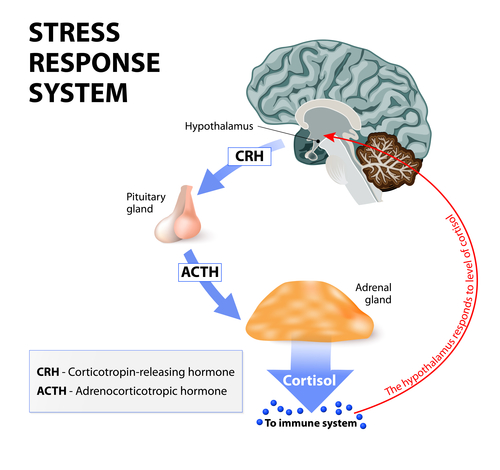
Another biological cause can be a dysregulation of the hypothalamic-pituitary-adrenal (HPA) axis. In response to a perceived threat, norepinephrine signals the hypothalamus to release a signal which eventually leads to release of the stress hormone cortisol from the adrenal gland. Cortisol is not harmful for short periods of time, but long-term it can promote hypertension, heart disease, and obesity. It is hypothesized that during MDD, the signal stimulating cortisol release is continuously present in the system, or the feedback inhibition mechanism, which tells the adrenal gland that it should stop releasing cortisol, is not functional. The HPA axis is related to the stress response, which explains the onset of depression after stressful life events, and also explains the concurrence of depression with anxiety. 

There are several theories about psychological causes of depression. In 1967, Aaron Beck proposed the cognitive theory of depression – which led to the development of cognitive behavioral therapy (discussed in my post Contemporary viewpoints on treating mental illness – psychology). Beck proposed that before experiencing depression, a person experienced dysfunctional thinking – these thoughts could be about oneself, about the world, or about one’s future. Dysfunctional thinking may include: 1) all-or-none thinking, for example someone thinks he must get 100% on a test or he is a complete loser; 2) selective abstraction, which includes a tendency to focus on one negative event even if surrounded by positive events; and 3) arbitrary inference in which the individual jumps to a conclusion based on little to no evidence. (Examples of these are given in my previous post.) Although research shows that this dysfunctional thinking occurs during depression, research leaves it unclear whether dysfunctional thinking occurs prior to depression, suggesting that such thinking might not be the cause of depression, as theorized by Beck.

There are also the hopelessness and helplessness theories of the psychological causes of depression. In these, the individual might feel incredibly pessimistic about the future, or incapable of having any impact on himself or his environment. A final theory is the ruminative theory, in which a person’s tendency to roll negative thoughts over-and-over in her head leads to depression. Women tend to ruminate more than men, and they also are more likely to experience depression than men. But when a study controls for rumination, the sex difference disappears, suggesting that rumination has a strong impact on depression. 

This is a series of posts summarizing what I’m learning in my Abnormal Psychology course. Much of the information provided comes from reading my James N. Butcher’s textbook Abnormal Psychology. To read the other posts, follow these links: 

The Definition of Abnormal
A History of Abnormal Psychology
Abnormal Psychology in Contemporary Society
Contemporary Viewpoints on Treating Mental Illness – Biology
Contemporary Viewpoints on Treating Mental Illness – Psychology
Frontline: New Asylums
Brave New Films: This is Crazy
Clinical Mental Health Diagnosis: Biological Assessment
Clinical Mental Health Diagnosis: Psychological Assessment
Does the DSM Encourage Overmedication?
Post Traumatic Stress Syndrome – The Basics
Panic Disorder
Obsessive Compulsive Disorder
Hoarding and Body Dysmorphic Disorders
Depression – an Overview
Personality Disorders – Clusters and Dimensions
Personality Disorders – Cluster A
Personality Disorders – Cluster B
Personality Disorders – Cluster C
Biological Effects of Stress on Your Body
Somatic Symptom and Related Disorders
Dissociative Disorders
Borderline Personality Disorder
Dialectical Behavioral Therapy
Paraphilic Disorders
Gender Dysphoria – Homosexuality and Transgender
Anxiety Disorders
Bipolar Disorder – The Basics
Suicide – An Overview

References:

Butcher, James N. Hooley, Jill M. Mineka, Susan. (2014) Chapter 7: Mood Disorders and Suicide. Abnormal Psychology, sixteenth edition (pp. 212-262). Pearson Education Inc.