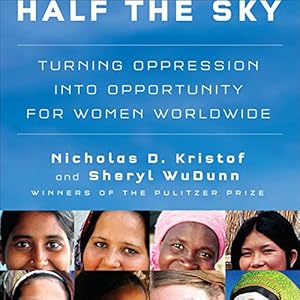
Half the Sky, by Nicholas D. Kristof and Sheryl WuDunn

Half the Sky: Turning Oppression into Opportunity for Women Worldwide
by Nicholas D. Kristof and Sheryl WuDunn
narrated by Cassandra Campbell
In Half the Sky Pulitzer Prize winning journalists Nicholas D. Kristof and Sheryl WuDunn share a heartbreaking study of oppression of women around the world. It begins with a long section on the sex trafficking of women, sharing personal stories of many victims. Girls may be told that they are about to go to earn money selling fruit in a city, and then they are kidnapped, beaten and raped until they submit to prostitution. Some are born into brothels. Many who escape or are rescued from their situation return “willingly” because they know no other way to make a living and they are stigmatized in their community for their past occupation. And many return because they crave the drugs that their pimps have forced upon them to keep them complacent and needy. The book also explores lack of freedom to get educated, honor killings, genital mutilation, and maternal mortality.  


Half the Sky was a difficult read because it’s hard not to be dragged down by the pain these women have experienced – and that millions worldwide are still experiencing. This is a powerful and important book, and I believe that everyone even remotely interested in the topic should either read this book or watch the documentary that is based on it. 


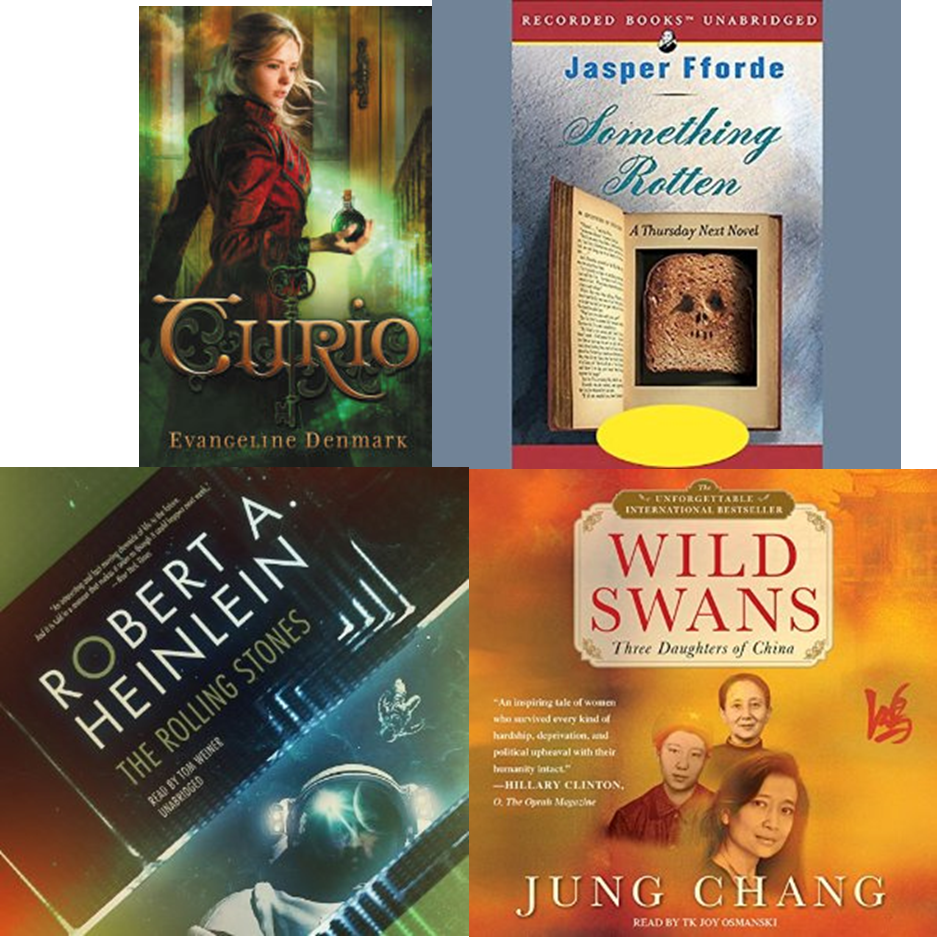
The Well of Lost Plots & Something Rotten, by Jasper Fforde

The Well of Lost Plots, by Jasper Fforde
narrated by Emily Gray
After Thursday Next’s husband is erased from existence (eradicated), she decides to take a break from the real world by vacationing in the Well of Lost Plots. She finds a nice unpublished book to hide in – and in her spare time she begins an apprenticeship with Jurisfiction – the group responsible for policing fictional characters. 

This is the third book of the Thursday Next books, and although not as great as the first, it was quite funny. It has some healthy British humor and is probably one of the weirdest alternate realities I’ve ever read. Highly recommended. 

Something Rotten, by Jasper Fforde
Narrated by Emily Gray
Now that little Friday Next has been born, Thursday decides her son must meet his father – eradicated or not. Thursday returns to the “real” world and takes her job back in Spec Ops. She keeps herself busy smuggling Danish books out of the country while pretending to hunt them down and burn them, fighting Goliath Corporation for the existence of her husband, and trying to get her town’s cricket team to win the championship so that a fictional character won’t achieve world domination. 

This fourth book in the Thursday Next series is just as funny as the third. Definitely going to hunt down the next book soon(ish). 

Jane Eyre, by Charlotte Bronte

Jane Eyre, by Charlotte Bronte
Narrated by Juliet Stevenson

Warning: here be spoilers

When Jane fights back against her abusive aunt and cousins, she is sent away to a boarding school for charity cases. There, she is starved, punished severely, and witnesses deaths of students due to school negligence. After living this life for 18 years, she is thrilled to find a place as a governess for the ward of the mysterious and wealthy Mr. Rochester. They find love, but only at a great cost. 


I first read Jane Eyre as a teenager and wasn’t thrilled with the book. I thought Rochester was a jerk. And Jane. Well. She started out feisty enough, but as an adult she allowed Mr. Rochester to be a total jerk to her. When she discovers his deep, dark secret, she throws herself about dramatically upon the steppe until she is rescued. Then she meets this nice cousin (St. John Rivers) who proposes to her and offers to whisk her off to India and she says no! 

I just listened the brilliant Juliet Stevenson narration of Jane Eyre with a more mature ear. I noticed several things – Jane’s fiestiness in the first chapters of the book were not necessarily looked on as a good character trait by Charlotte Bronte. In current times we have this view that everyone is equal and we should defend ourselves against abuse instead of just taking it with a bowed head. But look at it from the perspective of a Christian in the 19th Century who may have been taught to accept what she can not change. 

This acceptance is demonstrated to perfection in young Helen Burns – Jane’s friend at school. Helen patiently explains her philosophy to the angry Jane, and Jane heartily disagrees. They seem to be opposite ends of a spectrum. Jane wants to change everything because it’s unacceptable, and Helen wants to accept everything because it’s unchangeable. When Helen’s character dies with acceptance, Jane seems to adopt her philosophy – thus taming the fire within.

It is with this acceptance that she deals quite calmly (most of the time) with the rudeness and games of Mr. Rochester. Jane recognizes that this is how he is, she’s unable to change it, but she is still able to see the kindred spirit within. In other words, it is her acceptance that gives her a trait that I can admire – forgiveness. And it is this acceptance which brings her love in the long run. 

But Jane does not accept to the point of having a weak character. When Rochester gives her an unacceptable choice – living with him as an unmarried couple – she chooses to leave. This is not weakness. This is strength. Yes, she flopped about dramatically on the steppe for a couple of chapters, and it was her own fault for losing her money, but this was a choice she made when she left Mr. Rochester. She couldn’t stay, so she took an option that was very brave: the total unknown. Many a weaker character would have sacrificed her own values and self-worth by staying with Mr. Rochester because she had nowhere else to go. But Jane found a way to change when the “unchangeable” finally became “unacceptable.”

Jane is strong to accept what she can not change and she is strong to change what she can not accept. 


Where has the first week gone?


Hello everyone! This has apparently been a busy week, since I’m behind on everything – including answering comments and visiting everyone’s blog. It’ll probably be that way for about a month, but I’ll do my best to swing by and leave comments whenever I have time. This was my last week of vacation, but I’ve been busy covering for my employee who went on vacation during my vacation. 🙂 I also celebrated Christmas with my boyfriend’s family on Sunday – got three Lockwood & Co. books – gave platelets and then fainted on Tuesday, celebrated my sister’s birthday with my whole family one Wednesday, went to The Force Awakens for a second time on Thursday. Today I’m thrilled to not have any plans at all. 🙂 


Posts: 


Curio, by Evangeline Denmark 

Currently Reading: 


Books Completed:

Watched: 


Acquired: 


Curio, by Evangeline Denmark

Curio, by Evangeline Denmkark
ARC provided by publisher through NetGalley
in exchange for a fair and honest review
Grey Haward lives in a world where people can’t digest food unless they drink a potion provided by a tyrannical ruling group. When her friend Whit gets punished for saving her life, Grey discovers a hidden trait inside herself – she is a Defender who protects people from tyranny. Just as she’s discovering her new powers, she is thrown into a strange new steampunk world in which she must find the Mad Tock in order to escape. 

Curio had unique plot-line and world-building, and the mystery remained throughout the book. It was good, clean fun with no sex and minimal violence. Both worlds in the book were quite fascinating, and I wish I knew more about each. However, I did have some difficulty because the transition from the first world to the second was quite abrupt. I was just starting to get emotionally involved in the first when it was taken away, and I suddenly had to start from scratch learning the rules of a foreign world. I would have preferred reading two books each with one world than one book with two. It was a little confusing. Overall, I think Denmark has a lot of potential as an author, and will keep a look-out for other books by her.

Psychopath Whisperer, by Kent A Kiehl

The Psychopath Whisperer: The Science of Those without Conscience
by Kent A Kiehl, narrated by  Kevin Pariseau

In this fascinating scientific exploration into the biological differences between psychopaths and non-psychopathic people, Kiehl discusses his own dealings with psycopaths in prisons. Kiehl is known as the first person to use an MRI in a prison to study the differences between psychopaths and non-psychopathic prisoners. 


Kiehl would determine psycopathy by interviewing prisoners and then rating them 1-3 on a list of 20 attributes. A score of 30 indicates a psychopath. Approximately 20% of inmates were psychopaths. A balanced number of people who rate high and low on the psychopathy scale would be chosen for the experiments. 

Once the study subjects were put in the MRI, they would be shown pictures of three types: a morally neutral photo (perhaps an ice cream cone), a morally ambiguous photo (perhaps a wrestling match), and a immoral act (perhaps someone placing a bomb in a car). The prisoners would then rate one a 1-5 scale how immoral the picture was. When a person who scores low on the psychopathy scale sees an immoral picture, his limbic system lights up; but a psychopath’s limbic system remains eerily dark. 

In his book, Kiehl also discusses findings other people have made about psychopaths – like the fact that they have no startle reflex. This mixture of scientific, psychological, and personal narrative make for a fantastic book. 

I enjoyed this book quite a bit – especially the ethical implications of whether a psychopath deserves an insanity plea because their brains function differently than “normal” people and they are unable to physiologically respond the “right” way to the thought of immoral activity. Kiehl himself longs for a day when psychopathy will be caught earlier in childhood, so that they can receive treatment rather than incarceration. But the issue is quite an ethical dilemma. Where do you draw the line on the insanity plea? 

I have previously discussed another ethical dilemma of the insanity plea: whether, in a patient with dissociative identity disorder, it is ethical to punish one personality for what another personality has done. Again, where’s the line? And then I wonder about what the neurodiversity movement would say about the whole thing? Things that make you go hmmmm. 


Happy New Year 2016!

Happy New Year everyone!

Well, the new year has rung in and I’m eager to get out here and get all my challenges complete. This week went well – no glitches at work, hung out with some laid back friends for New Year’s Eve, that kind of stuff. And I don’t work today! YAY! (I work the weekend, but having a holiday in the middle is wonderful.)

Studies: I finished the first two chapters of my EMT book in anticipation of January being a very full month for me. If you’re interested in checking out my short notes. 

Posts:


Currently Reading


Books Completed:

Film / Theater Completed: 

Acquired: 

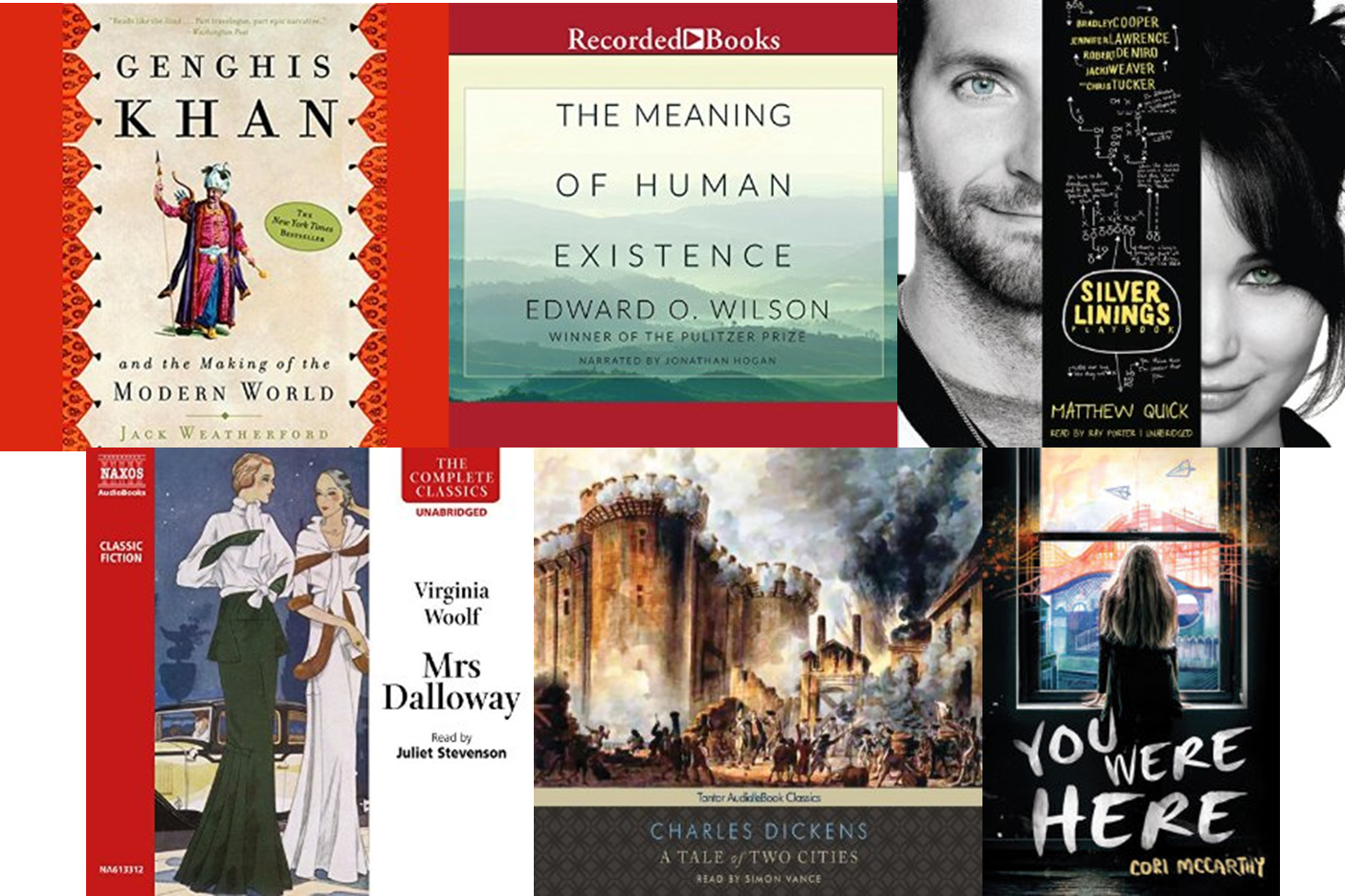
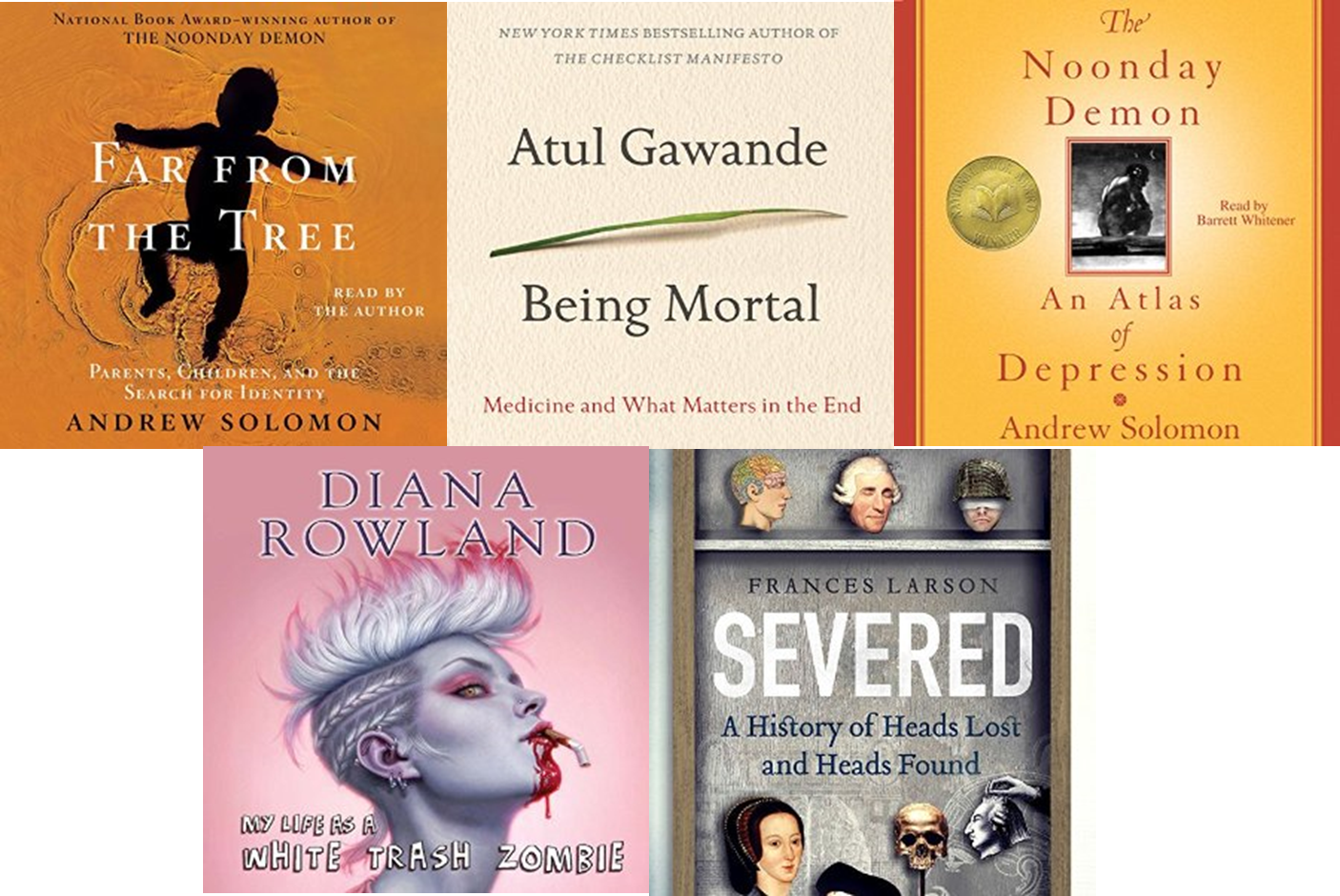
Favorite Books of 2015, in no particular order:


I note an interesting pattern here, which I’ve never seen before – 4 of the five are non-fiction. Also, White Trash Zombie jumped in there even though I hadn’t really expected it to be all that great. Who knew?


This update is posted to Stacking the Shelves @Tynga’sReviews, Sunday Salon, Sunday Post @CaffeinatedBookReviewer,   @MailboxMonday, It’s Monday What are You Reading @BookDate

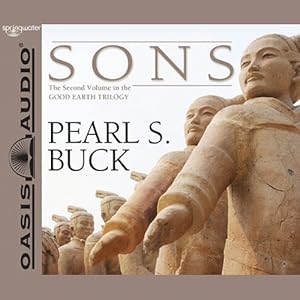
Sons, by Pearl S. Buck

Sons (The Good Earth Book 2)
by Pearl S. Buck, narrated by Adam Verner

This second book of The Good Earth trilogy picks up exactly where the first book, The Good Earth, left off. Wang Lung, the protagonist of the first story, is on his deathbed and his sons solemnly promise not to sell this precious land. But as time passes, the men who have barely known the sweat and blood that went into that land begin to sell it off piece by piece. Meanwhile, Wang “The Tiger” has become a rising warlord. In distant parts of China, a revolution is gaining force. The story takes place in a time of warlords between between Imperial China and WWII. It focuses most of its attention on Wang the Tiger and his slow rise to power, though it jumps over to Wang Lung’s other sons frequently. 


This book was powerful – almost as powerful as the first. It was a story of disintegration and rebellion. It showed how dedicated sons of a hard-working land-owner can become soft and negligent with wealth. The sons of Wang Lung rebel against his wishes not to sell his land. Their sons become even softer and less willing to fight for the wealth they’ve been born into. And, of course, the seeds of revolution are rumored but never seen. 

Buck’s writing is as subtle as it is powerful. I found myself learning a bit of Chinese history while listening, even though there was no outright explanation of what was going on. It just became clear. What’s more, it made me want to read more about the fall of Imperial China, the time of warlords, and the subsequent revolution. To me, the fact that she can teach and make me crave to learn more shows what a fantastic author she is. I definitely recommend that everyone interested in classics pick up a copy of The Good Earth. And if they really enjoyed it, this is a fantastic sequel.


Among the Creationists, by Jason Rosenhouse

Among the Creationists: Dispatches from the Anti-Evolutionists Front Line
by Jason Rosenhouse, Narrated by George Orlando

This is the story of Rosenhouse’s exploration of Creationism. Rosenhouse is an intelligent, rational mathematician and declared atheist (though the way he describes his beliefs I’d put him in the agnostic category myself). He decided in college to explore the seemingly irrational views of ultra-conservative Christians to try to understand how they can possibly deny evolution. This book describes his journey through conferences, museums, and personal conversations. It also has a light smattering of history of the creationist-evolutionist debate.


This was a surprisingly considerate and fair book considering the fact that it was coming from an atheist talking about Creationists. From the beginning, Rosenhouse insisted that although he was well-known as “that atheist guy who goes to Creationist conferences,” he was almost always treated with respect and kindness. This is possibly because his main goal was to educate himself rather than to change anyone’s mind. He did, of course, make public comments/questions to the speakers at the conferences, but they always were polite and seemed to be answered politely as well. 

Despite this even-handedness, there were a few times that I cringed while reading this book. For instance, he lumped Intelligent Design, Theistic Evolution, Christian Science and and other lesser known ideologies all in with Creationism. He even said that they were pretty much the same thing. They’re really not, though. Denying the possibility of evolution is not the same as saying that God directed evolution. Yes, I can see where an atheist might think the second option wasn’t sensible either. But the basic difference remains – one set denies evolution altogether the other does not. To me, and I would imagine to many atheists as well, an all-out denial of the evidence for evolution is less sensible than saying God directed the evolution. Another lapse in his even-handedness was when he criticized the Creationists as being name-callers – as if that doesn’t go both ways. Trust me, I’ve been disappointed in interviews and essays by prominent evolutionary theorists like Stephen Jay Gould and Richard Dawkins. Scientists can disparage and name-call too.

From what I could tell of his book, the conferences were all about getting together with people who totally agree with you to say “Here’s what we agree on, now how can we get others to see the light?” Then they’d have the requisite book signings and other gatherings. So Rosenhouse had plenty of time to hobnob. In his book, he related several interesting conversations between himself and Creationist individuals. Most of these conversations seemed to include teenagers. He’d give information about which authors to read if they wanted to learn more about evolution, or just have an interesting discussion about the points of each argument. I imagine he had a lot of conversations with teenagers because they’re less jaded about trying to convince people of their points of view.

This was an interesting book, and I’m glad I read it. It had some shortcomings (noted above), but listening to this book actually educated me on certain things. For instance, years ago I was turned off by Richard Dawkins when I heard an NPR interview in which he disregarded a question from a Creationist. This question could have been easily answered: it was the old “how could evolution be scientifically possible when entropy (chaos) is always increasing?” (This is the second law of thermodynamics.) 

The answer is: entropy always increases in a “closed system.” A closed system is one that doesn’t have any exchange of energy with the outside. Like the entire universe. There’s only one universe. There’s nothing that it can exchange energy with. On the other hand, Earth is not a closed system. It’s always losing atmosphere to the space surrounding it. It’s always getting light and heat from the sun. That’s called an open system. Animals are open systems too. We breathe, we eat, we poop. That’s energy exchange. Evolution took place in an open system, therefore the second law of thermodynamics doesn’t apply and there is no contradiction. 

Ok, maybe that wasn’t easy to explain…Point is, Dawkins could have answered the question politely instead of rudely disregarding it. Although I still think Dawkins was in the wrong, after reading this book I now understand how frustrating it might be to be constantly answering exactly the same question over and over and people ignoring my answer. 

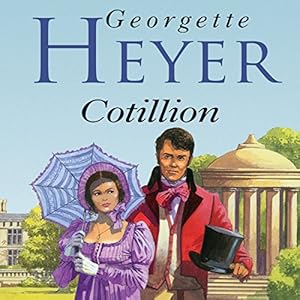
Cotillion, by Georgette Heyer

Cotillion, by Georgette Heyer, narrated by Phyllida Nash
When Kitty’s cantankerous care-taker insists that one of his own nephews marry Kitty for her to inherit his fortune, three of them rush to Kitty’s home to propose. When she spurns those three, they patiently explain that she must marry one of them or else she will be left destitute. Kitty hatches a plan (which the reader is left only vaguely aware of) to free herself from these constraints – but it requires her to go to London for a few weeks. That’s where her cousin Freddy comes in. He didn’t propose – had no wish to propose – but only came because he was curious what this big summons from his uncle was about. In secret, Kitty convinces Freddy to propose marriage so that he could take her to London. Of course, she’ll break it off when the few weeks are over….


This is my first book by Georgette Heyer. I’ve heard so many great things about her that I wanted to see for myself. At first, I wasn’t too pleased with the book, but I warmed to it once time had passed, and Kitty matured in London. You see, I didn’t like Kitty at first. She seemed so manipulative – getting Freddy to propose when he clearly didn’t want to. And it seemed her plan could end up destructive to both of them – even if we didn’t know what the whole plan was about. I realized as she grew that the plan was just naivete and not pure manipulation, but I still found all the dangerous lies a bit disturbing. Regardless, everything turned out well in the end, and I was left with a warm fuzzy feeling about the novel. 

Heyer’s writing is delightful. She mixes humor with the beloved Regency Romance genre, and she’s often suggested to readers who have finished all the Jane Austen novels. They definitely have the same feel as an Austen, though the humor has a slightly different tone. Austen has more sarcasm in her books. Both writers have a mixture of wit and silliness. I will hopefully have time to read another Heyer soon. Just think, a brand new author to explore!