![]() |
| 4.5 stars for creative subject, research, and engaging narrative. |

Author: hibernatorslibrary
Panic Disorder
![]() |
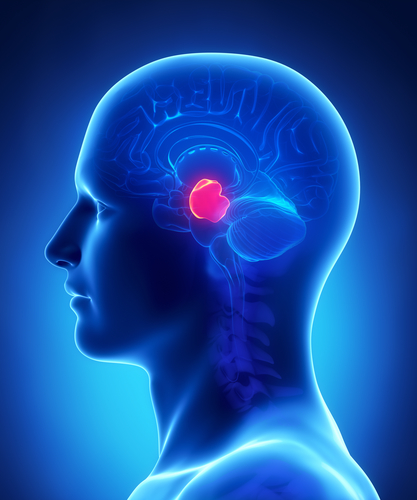
The fear response in a panic attack originates in the amygdala, which is thought to be the central component of the “fear network.” According to the prevailing theory, panic attacks occur when the fear network is activated. Panic disorder develops in people who have a non-adaptive fear network which is overly-sensitive. Although the physiological response to a panic attack originates in the amygdala, there are also cognitive components to panic disorder (e.g. fear of another panic attack in particular situations). The hippocampus, which is involved in learning and emotional responses, is likely involved in this aspect of panic disorder. The cognitive factors in panic disorder (e.g. fears of dying or going insane) are likely controlled by higher cortical centers of the brain.
There are a couple of theories about the development of panic disorder. In the comprehensive learning theory of panic disorder, a person undergoes classical conditioning – such as Ivan Pavlov discovered when his dogs began to salivate reflexively to the sound of a metronome that was always ticking when the dogs ate. In a process called interoceptive conditioning, the person begins to unconsciously associate physiological arousal (e.g. pounding heart, head rush, increased breathing rate) with panic. Thus, when a person is physiologically aroused, such as while running, she will suddenly experience a panic attack. Panic attacks can also be induced by happy events. For instance, when something exciting happens, such as a marriage proposal, the happy person can suddenly rush into panic.
Another theory of panic disorder is the cognitive theory. In this case, the person consciously associates physiological arousal with impending doom. When his heart is pounding, he thinks he could be having a heart attack. When his breathing becomes labored, this could be lung cancer. Such thinking is called “catastrophizing.”
Panic provocation studies support the cognitive theory of panic disorder. In such a study, a subject is given a stimulant that increases heart rate or other physiological symptoms of arousal. One test group is told in advance that the stimulus will increase heart rate, and that it is completely harmless. The other test group will not receive any explanation. It turns out that people who are forewarned of the physiological arousal are less likely to experience a panic attack. This is not in line with the comprehensive learning theory, in which the panic is induced reflexively, and cognition has nothing to do with the attack.
In all likelihood, both theories play some part in the origin of panic attacks.
Many people with panic disorder are prescribed benzodiazapines such as Xanax or Klonopin. These medications are very useful for anxiety relief, but they can be addictive. Upon cessation of the medication, a patient can undergo uncomfortable side effects such as nervousness, sleep disturbance, dizziness, and panic attacks. For those of you who wonder why we are so dependent upon medications for treatment of anxiety, try undergoing a three hour anxiety attack like the one described in My Bipolar Mixed State. You will soon understand that immediate relief is necessary.
Because of the negative side effects of medication, it is good to treat panic disorder with psychological therapy, such as cognitive-behavioral therapy, as described in Contemporary viewpoints on treating mental illness – psychology. In such treatment, a patient can be exposed to internal stimuli of physiological arousal; for instance, running in place, spinning in a chair, or hyperventilating. The patient must continue this activity until he dissociates the physiological symptoms with panic. Such deconditioning therapy can be combined with education about the nature and causes of panic disorder. The patient can be taught to meditate or control their breathing. Patients are also taught about the cognitive errors that they might be making (i.e. my heart is pounding, I must be having a heart attack).
This is a series of posts summarizing what I’m learning in my Abnormal Psychology course. Much of the information provided comes from reading my James N. Butcher’s textbook Abnormal Psychology. To read the other posts, follow these links:
The Definition of Abnormal
A History of Abnormal Psychology
Abnormal Psychology in Contemporary Society
Contemporary Viewpoints on Treating Mental Illness – Biology
Contemporary Viewpoints on Treating Mental Illness – Psychology
Frontline: New Asylums
Brave New Films: This is Crazy
Clinical Mental Health Diagnosis: Biological Assessment
Clinical Mental Health Diagnosis: Psychological Assessment
Does the DSM Encourage Overmedication?
Post Traumatic Stress Syndrome – The Basics
Panic Disorder
Obsessive Compulsive Disorder
Hoarding and Body Dysmorphic Disorders
Depression – an Overview
Personality Disorders – Clusters and Dimensions
Personality Disorders – Cluster A
Personality Disorders – Cluster B
Personality Disorders – Cluster C
Biological Effects of Stress on Your Body
Somatic Symptom and Related Disorders
Dissociative Disorders
Borderline Personality Disorder
Dialectical Behavioral Therapy
Paraphilic Disorders
Gender Dysphoria – Homosexuality and Transgender
Anxiety Disorders
Bipolar Disorder – The Basics
Suicide – An Overview
References:
Carmilla, by J. Sheridan Le Fanu
References
Le Fanu, J Sheridan. (2010) Carmilla: A Vampyre Tale [BBC Audio Version. Follows, Megan (na).] Retrieved from audible.com.
Post Traumatic Stress Syndrome – the Basics
This is a series of posts summarizing what I’m learning in my Abnormal Psychology course. Much of the information provided comes from reading my James N. Butcher’s textbook Abnormal Psychology. To read the other posts, follow these links:
The Definition of Abnormal
A History of Abnormal Psychology
Abnormal Psychology in Contemporary Society
Contemporary Viewpoints on Treating Mental Illness – Biology
Contemporary Viewpoints on Treating Mental Illness – Psychology
Frontline: New Asylums
Brave New Films: This is Crazy
Clinical Mental Health Diagnosis: Biological Assessment
Clinical Mental Health Diagnosis: Psychological Assessment
Does the DSM Encourage Overmedication?
Post Traumatic Stress Syndrome – The Basics
Panic Disorder
Obsessive Compulsive Disorder
Hoarding and Body Dysmorphic Disorders
Depression – an Overview
Personality Disorders – Clusters and Dimensions
Personality Disorders – Cluster A
Personality Disorders – Cluster B
Personality Disorders – Cluster C
Biological Effects of Stress on Your Body
Somatic Symptom and Related Disorders
Dissociative Disorders
Borderline Personality Disorder
Dialectical Behavioral Therapy
Paraphilic Disorders
Gender Dysphoria – Homosexuality and Transgender
Anxiety Disorders
Bipolar Disorder – The Basics
Suicide – An Overview
Does the DSM-5 encourage overmedication?
Before the publication of DSM-5 Dr. Frances strongly argued against many of the changes proposed…he even admitted that there were some mistakes made in the DSM-IV. One of his main arguments is that the DSM-5 added many new diagnoses that could push people formerly considered “normal” into the disordered range. For instance, disruptive mood dysregulation disorder is a new diagnosis for children who have too many temper tantrums; internet gaming disorder is a diagnosis for hard-core gamers. The DSM-5 also rejected the bereavement exclusion, which had previously discouraged clinicians from diagnosing major depressive disorder in people who had undergone a major loss in the past two months.
The Definition of Abnormal
A History of Abnormal Psychology
Abnormal Psychology in Contemporary Society
Contemporary Viewpoints on Treating Mental Illness – Biology
Contemporary Viewpoints on Treating Mental Illness – Psychology
Frontline: New Asylums
Brave New Films: This is Crazy
Clinical Mental Health Diagnosis: Biological Assessment
Clinical Mental Health Diagnosis: Psychological Assessment
Does the DSM Encourage Overmedication?
Post Traumatic Stress Syndrome – The Basics
Panic Disorder
Obsessive Compulsive Disorder
Hoarding and Body Dysmorphic Disorders
Depression – an Overview
Personality Disorders – Clusters and Dimensions
Personality Disorders – Cluster A
Personality Disorders – Cluster B
Personality Disorders – Cluster C
Biological Effects of Stress on Your Body
Somatic Symptom and Related Disorders
Dissociative Disorders
Borderline Personality Disorder
Dialectical Behavioral Therapy
Paraphilic Disorders
Gender Dysphoria – Homosexuality and Transgender
Anxiety Disorders
Bipolar Disorder – The Basics
Suicide – An Overview
References:
Frances, Allen. (2010, July 08). Normality Is an Endangered Species: Psychiatric Fads and Overdiagnosis. Retrieved from: http://www.psychiatrictimes.com/blogs/dsm-5/normality-endangered-species-psychiatric-fads-and-overdiagnosis.
Zisook S, Corruble E, Duan N, Iglewicz A, Karam EG, Lanouette N, Lebowitz B, Pies R, Reynolds C, Seay K, Katherine Shear M, Simon N, Young IT. (2012).The bereavement exclusion and DSM-5. Depress Anxiety. (29):5, 425-43.
Bloodchild and Other Stories, by Octavia E. Butler
Her stories were incredibly creative. They covered important issues like race, slavery, sexuality, and identity, all in the guise of alien occupation or dystopic disease and other dark fantasy themes. Her prose was smooth and eloquent.
The most interesting of the stories was her novella Bloodchild, which is about a child that is about to be “sexually” adopted by some alien worm-thing. The story encompassed the feelings of the boy, his mother, and the alien – providing some very startling insight.
After each story, Butler included a short essay of what she intended the story to mean or background in her life when the story was written. These brought further understanding to the story, though I was a little skeptical when she insisted that she hadn’t intended Bloodchild to be about slavery. But, I guess, sometimes meanings creep in there unintended. And there’s also something to say for the readers’ interpretation regardless of intended meaning. To me, slavery was one of the many underlying themes of the story.
At the end of the book, Butler included a couple of essays about what it was like being an African American science fiction author, and encouraged young people to follow their dreams and become authors. Finally, there were a couple of never-before-published stories.
This little book is well worth your time if you are interested in deeper cultural issues of race, slavery, and sexuality – possibly even if you are not specifically interested in science fiction and fantasy.
![]() |
| For pure brilliance |
Octavia E. Butler was born in 1947 into an impoverished African American community to a 14-year-old girl. Despite struggling with dyslexia, she had a passion for reading and writing ever since she was very young. As a teenager, she started attempting to publish her stories, despite the extreme difficulty for African Americans publishing science fiction / fantasy. At the time she was one of only a couple African American sci-fi writers. Despite being taken advantage of by money-hungry agents, she finally published Patternmaster in 1976. This book was praised for its powerful prose, and she ended up writing four prequels. She finally became mainstream upon publication of Kindred in 1979. Butler died outside of her home in 2006.
Girl of Nightmares, by Kendare Blake
Anna Dressed in Blood, by Kendare Blake
Clinical Mental Health Diagnosis – Psychological Assessment
In my post about the biological assessment of mental health diagnosis, I mentioned that there are three ways a clinician can focus a mental health assessment: biological, psychodynamic, and behavioral. In this post I will discuss the psychodynamic and behavioral assessments of patients.
I’m not sure what a psychological assessment feels like to the clinician, but I have been through several assessments as a patient. Some of them have been very grueling and embarrassing – my 2 hour long assessment for dialectical behavioral therapy comes to mind. Generally, the mental health worker will ask a series of questions to determine personality (am I maladaptive?), social context (am I from an abusive family? caring for an sick family member? a bullied teen?), and culture (I’m a WASC) .
Such an assessment can be either a structured or unstructured interview. In the structured interview, the patient is asked a set of pre-determined questions, even if some of the questions seem inapplicable. In the unstructured interview, the clinician decides which questions to ask. The unstructured interview is much less grueling than the structured one, but it is more likely to produce bias due to the direction of questions that the clinician chooses.
Generally while the clinician is giving the interview, she also assesses the general appearance and behavior of the individual. Is he well-dressed, have good hygiene, look the clinician in the eye? Does he seem to be lying? Observation can also be done through role-playing and self-monitoring. Self-monitoring is a fantastic way to get information that the clinician might miss in a one-hour interview, but it tends to be biased towards what the patient is willing and able to record.
There are also a lot of tests to determine personal characteristics. A famous one of these is the Rorschach Inkblot Test. It’s a series of 10 inkblot pictures to which the patient tells the clinician what she sees and thinks while looking at the picture. The Rorschach test takes a lot of time both to administer and to evaluate, though it can be very enlightening to a clinician who is well-trained in the system.
Another well-known personality-trait test is the Thematic Apperception Test (TAT). The TAT uses a series of simple pictures of people in various contexts. The patient tells a story about what the character is doing and why. Like the Rorschach test, the TAT takes a long time to administer and interpret. The TAT has become a bit obsolete since the pictures were designed in 1935, making them harder for the modern patient to relate to.
The Rorschach and TAT are considered subjective assessments, because they are subject to the clinician’s interpretation. There are also objective tests like the Minnesota Multiphasic Personality Inventory (MMPI), which was introduced in 1943, and revised to the MMPI-2 in 1989. The MMPI-2 is a computerized test consisting of 550 true-false questions on topics ranging from physical condition and psychological states to moral and social attitudes. From these 550 questions, several “clinical scales” are determined. Such scales quantify hypochondria, depression, hysteria, pscyhopathic deviance, masculinity-femininity, paranoia, psychasthenia, schizophrenia, hypomania, and social introversion. It also quantifies the likelihood of lying (inconsistent answers), addiction proneness, marital distress, hostility, and posttraumatic stress.
Such computerized objective tests are helpful because they (for the most part) lack clinician bias, and they are inexpensive. However, they depend upon the patient’s ability to honestly and accurately describe themselves, which many patients are unable or unwilling to do. These tests also tend to be impersonal, and might alienate the patient.
The Definition of Abnormal
A History of Abnormal Psychology
Abnormal Psychology in Contemporary Society
Contemporary Viewpoints on Treating Mental Illness – Biology
Contemporary Viewpoints on Treating Mental Illness – Psychology
Frontline: New Asylums
Brave New Films: This is Crazy
Clinical Mental Health Diagnosis: Biological Assessment
Clinical Mental Health Diagnosis: Psychological Assessment
Does the DSM Encourage Overmedication?
Post Traumatic Stress Syndrome – The Basics
Panic Disorder
Obsessive Compulsive Disorder
Hoarding and Body Dysmorphic Disorders
Depression – an Overview
Personality Disorders – Clusters and Dimensions
Personality Disorders – Cluster A
Personality Disorders – Cluster B
Personality Disorders – Cluster C
Biological Effects of Stress on Your Body
Somatic Symptom and Related Disorders
Dissociative Disorders
Borderline Personality Disorder
Dialectical Behavioral Therapy
Paraphilic Disorders
Gender Dysphoria – Homosexuality and Transgender
Anxiety Disorders
Bipolar Disorder – The Basics
Suicide – An Overview
References:
Clinical Mental Health Diagnosis – Biological Assessment
One is computerized axial tomography (CAT) scan, which moves X-ray beam around the head to create a 2D image of the brain. CAT scans have become more rare because of the availability of magnetic resonance imaging (MRI). MRI quantifies magnetic fields affecting varying amounts of water content in tissue, thus giving a sharp image of different structures (or lesions / tumors) in the brain.
Another brain imaging technique is the positron emission tomography (PET) scan. PET scans measure the metabolic activity in the brain, thus allowing more clear-cut diagnoses to be made. PET can reveal problems that are not anatomically obvious. However, the images in PET images are low-fidelity and the scans are prohibitively expensive.
Functional MRI (fMRI) measures blood flow of specific areas of tissues, thus providing information about which areas of the brain are active. fMRI is the scan that helps researchers discover which parts of the brain are important for certain types of thoughts or activities. At the moment, it is more important in the research than in the clinical world, but there is some optimism that fMRI might eventually be used to map cognitive processes in mental disorders.
Sometimes, a lesion hasn’t developed enough to be recognizable by brain scans. In this case, neuropsychological tests can be performed to quantify a person’s cognitive, perceptual, and motor performance to determine what parts of the brain might be affected. The neuropsychological assessment usually involves a battery of tests such as the Halstead-Reitan assessment for adults. This assessment is composed of 5 tests.
1. Halstead Category Test: Measures learning, memory, judgement, and impulsivity. Patient hears a prompt and selects a number 1-4. A right choice gets a pleasent bell sound and a wrong choice gets a buzzer. Patient must determine the underlying pattern in prompt-number combinations.
The Definition of Abnormal
A History of Abnormal Psychology
Abnormal Psychology in Contemporary Society
Contemporary Viewpoints on Treating Mental Illness – Biology
Contemporary Viewpoints on Treating Mental Illness – Psychology
Frontline: New Asylums
Brave New Films: This is Crazy
Clinical Mental Health Diagnosis: Biological Assessment
Clinical Mental Health Diagnosis: Psychological Assessment
Does the DSM Encourage Overmedication?
Post Traumatic Stress Syndrome – The Basics
Panic Disorder
Obsessive Compulsive Disorder
Hoarding and Body Dysmorphic Disorders
Depression – an Overview
Personality Disorders – Clusters and Dimensions
Personality Disorders – Cluster A
Personality Disorders – Cluster B
Personality Disorders – Cluster C
Biological Effects of Stress on Your Body
Somatic Symptom and Related Disorders
Dissociative Disorders
Borderline Personality Disorder
Dialectical Behavioral Therapy
Paraphilic Disorders
Gender Dysphoria – Homosexuality and Transgender
Anxiety Disorders
Bipolar Disorder – The Basics
Suicide – An Overview
References: