Invisible Women, by Caroline Criado Perez

41nhdjjsqtl._sl500_

Invisible Women is about how women are missing from data collected and used to, say, create crash test dummies for cars, plan bus routes, design cell phones, etc. She points out that disparity in collecting data about women leads to dangerous situations for women. For instance, women are more likely to die in a car accident because seat-belts are designed to safely hold a man in place, and does not account for the difference in body composition and fat / lean mass location. The bus routes are planned around where men go to work, and not so much around shopping trips, which are more often performed by women. This creates very inconvenient travel for women.

The thoughts in this book were well-expressed, and interesting. I did feel at times that she was over-stating her case, but that is often true of books with a strong bias (in this case feminism). Not that I’m saying feminism is a bad bias, only that it IS a direction that can be leaned too heavily upon at times (like every other social issue). Overall, a highly suggested book for those interested in feminism.

four snowflakes

Social Justice 2020 First Linkup

Social Justice Challenge

This is the first linkup for Social Justice Book Reviews for the 2020 Social Justice Nonfiction Challenge, hosted by yours truly. Please put reviews in the comments section. As they arrive in the comments section, I will read them and then move them to the main text so that everyone can read them more easily.

Invisible Women, by Caroline Criado Perez – @Hibernator’s Library (Feminism)


Update November 29, 2019

Well, my week went well. D loved her birthday slumber party, despite the fact that only one guest was able to come.

76681725_10101240869928577_5879400591423176704_o

76727098_10101240872932557_4853630962254217216_o

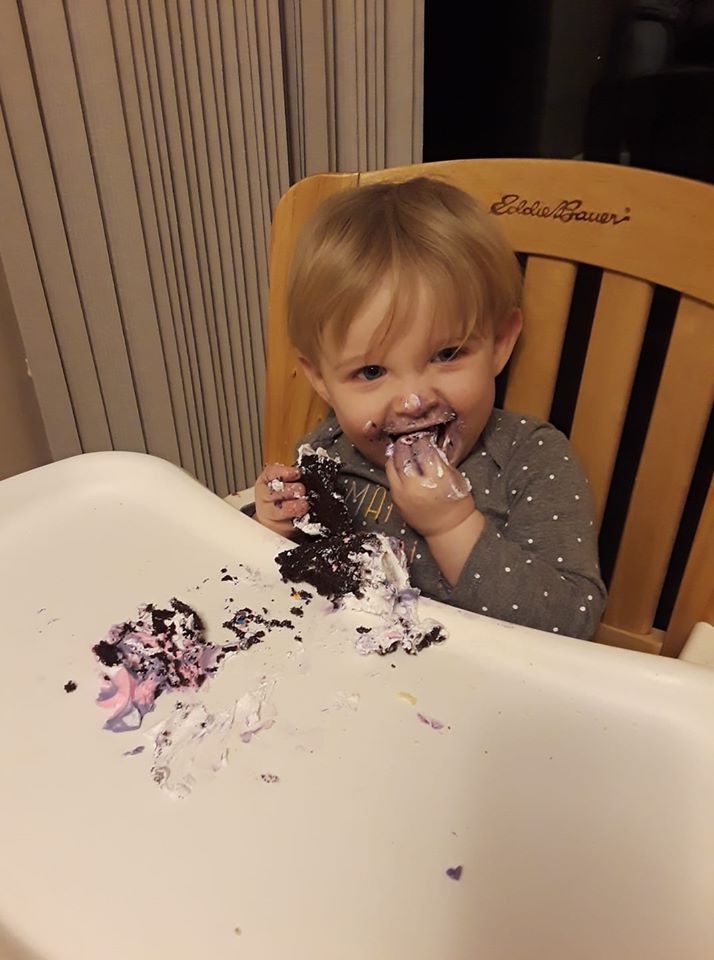
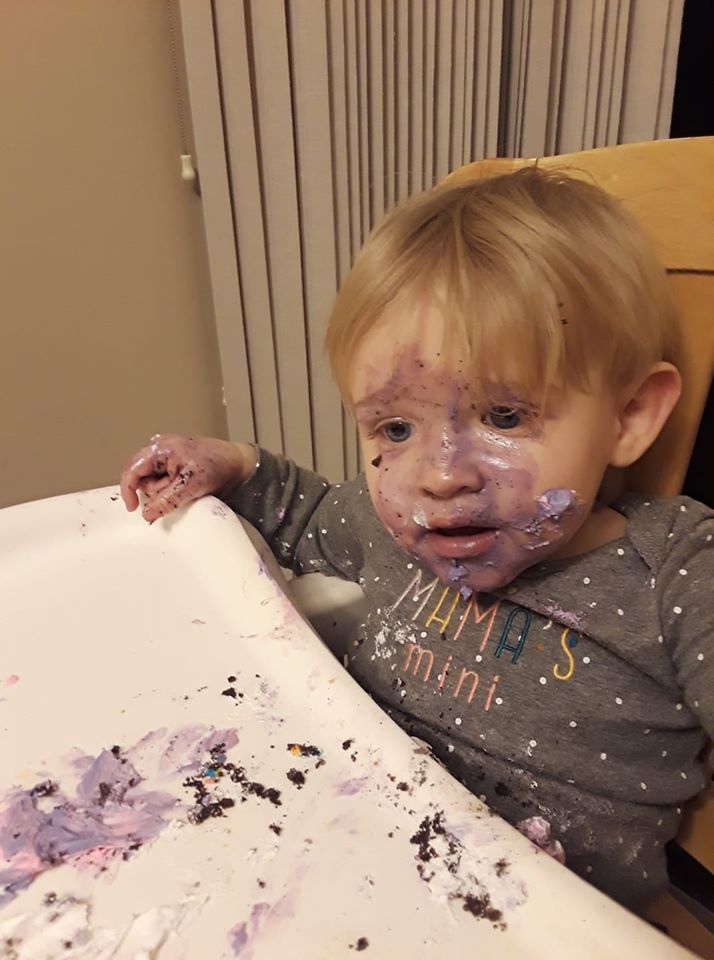
I think IL had a stomach ache after all that cake.

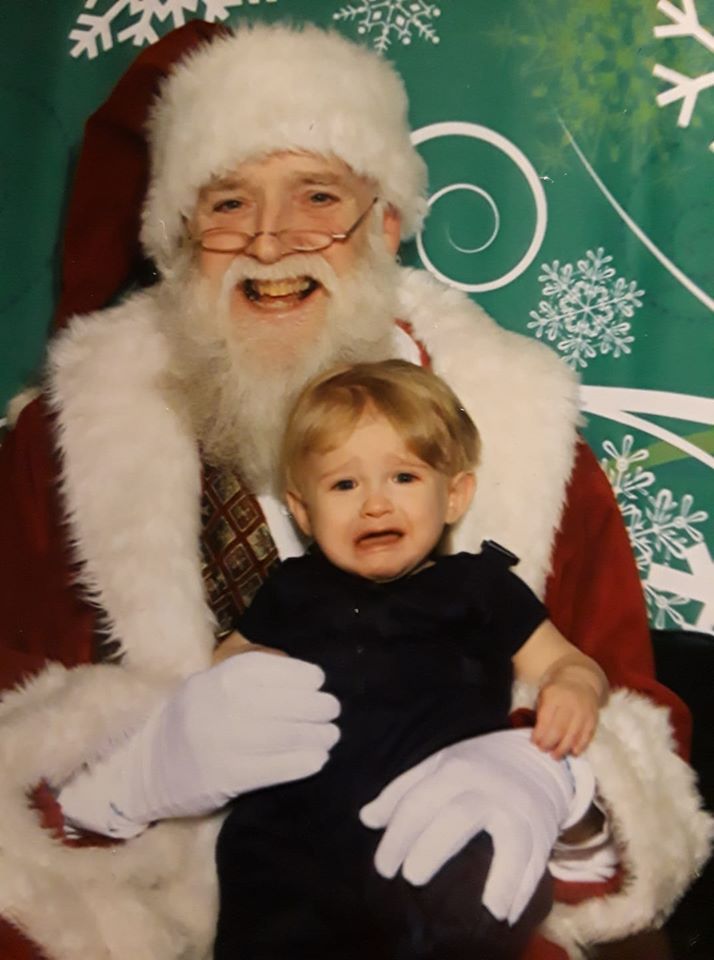
I also took IL to see a very special Santa – the stepfather of a life-long friend. He didn’t appreciate it very much.

77117008_10101242560171317_7750174825280176128_o

I met up with an old friend that I hadn’t seen in 5 years, and I watched all three Hobbit movies with Aaron, who hadn’t seen them before. The kids did end up going on their trip with their mother, despite the storm and other unexpected difficulties, so I’m getting my readathon on. I’m hoping to get lots read this weekend. 🙂

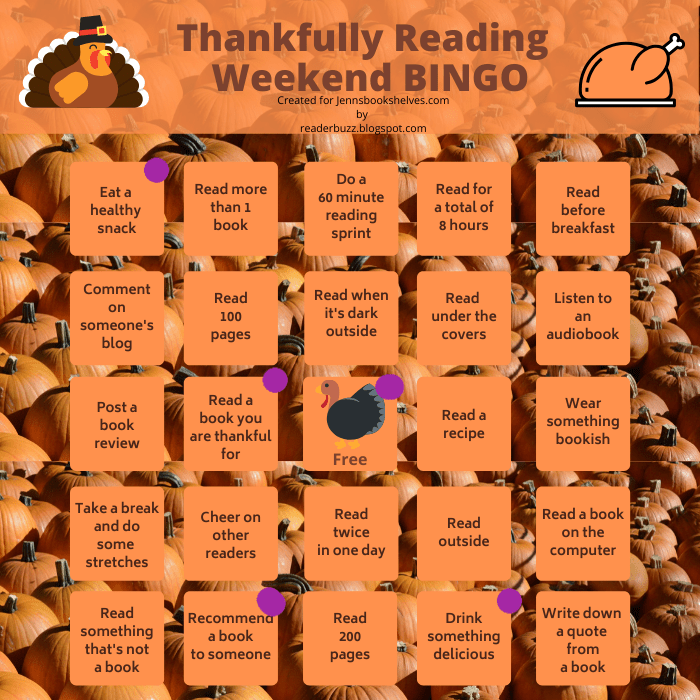
Deb at Readerbuzz is hosting an Thanksfully Reading Weekend BINGO, which I’m going to participate in. There’s a purple dot on all the stuff I’ve done so far, but I hope to get a lot more done through Sunday.

I had Thanksgiving dinner with my parents and Aaron. It was a small feast, but the turkey was delicious. Unfortunately, my car wouldn’t start on Thursday, and I had to have it towed today, thus missing my doctor appointment for my hip. I’ve had a hip problem ever since my pregnancy, and it seems to be getting much worse lately, so I was hoping I could get some physical therapy. I took a 2 mile walk on Thursday morning, and that loosened up the hip for a while, but made it hurt more in the evening. I will try taking walks more often and see if the exercise helps.

I wasn’t a productive reader this week, having difficulty concentrating. But I’m hoping next week as well as readathon weekend will be much more helpful.

Cheers! And I hope everyone had a good Thanksgiving.


Thanksgiving Readathons

So, the weekend I’ve been looking forward to has arrived! The two older kids are (supposed to be) gone with their mom, leaving me with spare time! Ok. So they’re not gone. Things beyond our control have happened, but I’m going to readathon anyway! Either that, or we’re marathoning Hobbit and LOTR, and the kids will have to suck up the scary parts. lol

There are two readathons being hosted this week.

thanksgivingreadathon-2019-banner

The one at Death by Tsundoku already started on Monday, but I was unable to participate at that time. Luckily, there’s still plenty of time to participate.

The other is Thankfully Reading Weekend, hosted by Jenn’s Bookshelves

thankfullyreading-300x228


Here are Jenn’s kick-off questions:

  • How will/did you celebrate Thanksgiving?

Well, I was going to have a quiet dinner with my husband, baby, and parents – but the group may have expanded to include my two step children. The more the merrier! (But hopefully they can go on their trip still, they really want to.)

  • What’s in your TBR pile for the weekend?

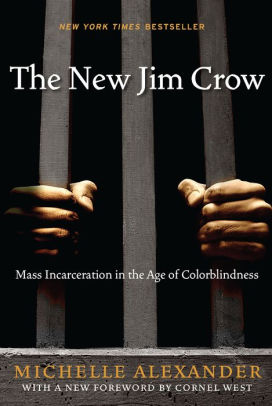
I want to work on the first two chapters of The New Jim Crow, by Michelle Alexander

9781595586438_p0_v3_s550x406

I am buddy reading this with a friend on LibraryThing at a chapter a week, and I’m half a chapter behind already!

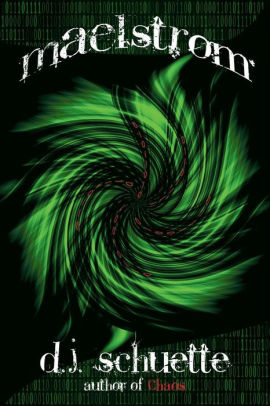
I also hope to start and finish Maelstrom, by D. J. Schuette. It’s an indie book published by a friend of mine. I really loved the first book in the series, and am looking forward to this one.

9780998429397_p0_v1_s550x406

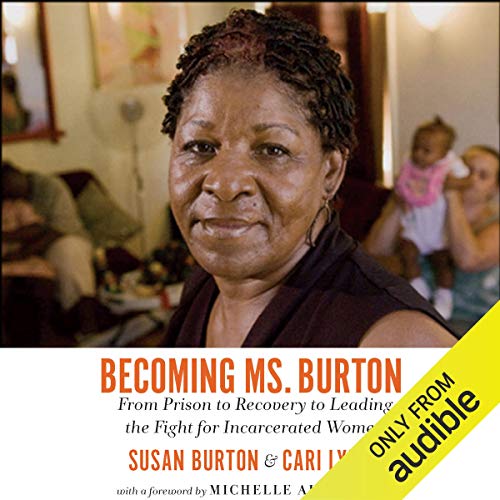
Finally, I hope to finish listening to Becoming Ms. Burton, by Susan Burton and Cari Lynn

51pspnrgall._sl500_

  • How much time do you think you’ll have for reading?

Oh, please tell me I’ll have lots! Please, please, please.

  • What book are you starting out with?

Any of those three will do.

  • Are you reading print, ebooks, or audio? Maybe a bit each?

All three.

  • What books will you be talking about during Thanksgiving dinner? Be sure to keep track of any recommendations you receive and share when you have the time.If you don’t celebrate Thanksgiving, don’t worry, this is a weekend for everyone throughout the world.

I don’t know. I guess I’ll see!

Genetic modification: To do or not to do

nonfiction

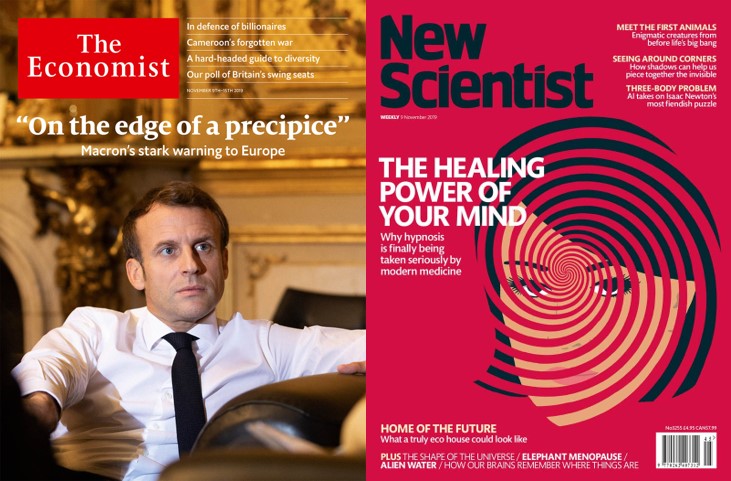
I noticed an interesting commonality in the New Scientist and The Economist a couple weeks ago: they both had articles about genetic modification.

The New Scientist (November 9, 2019) article entitled Spray-on CRISPR described how scientists are creating “better” crops by coating nanoparticles with CRISPR DNA and spraying it on plant leaves. The DNA then enters almost all the cells that it comes in contact with, and codes for genes which are desirable. I’m not a GMO avoider by any means, but I do wonder what kind of impact those nanoparticles will have on creatures that eat the plants? Will we incorporate the DNA into our cells too? The article said this effect is unknown and will have to be further studied.

The Economist (November 9-15 2019) had an article entitled A Design for Life about using a new form of genetic profiling, single-nucleotide polymorphism (SNP), to check the DNA of potential babies that can then be implanted in vitro in human mothers (IVF). They could make sure the potential baby didn’t have any genetic disorders. Furthermore, they could code for less tangible aspects like intelligence, athleticism, etc. The author suggested that this, compounded over generations, could produce a super-race of humans like in the movie Gattaca or the alphas in Huxley’s Brave New World. Not exactly a world we want to see, right?

But there are potentially good things that can be done with genetic engineering sometime soon, too. For instance, I read an article By Pam Belluck in the New York Times on November 4, 2019 entitled, Why Didn’t She Get Alzheimer’s? The Answer Could Hold a Key to Fighting the Disease. It was discussing a woman whose family carried a gene for early onset Alzheimer’s. But one of the family members never got dementia. It turns out that this woman has another mutation that counteracts the dementia gene. Could CRISPR or other technologies be used to help avoid Alzheimer’s? Furthermore, there was an article in New Scientist back on July 4, 2019 entitled Exclusive: Five couples lined up for CRISPR babies to avoid deafness. I wonder what the Deaf Community feels about this, given how tight-knit they are? Of course, some people may make the choice to let their child live an easier life by not being deaf in the first place, even though they’re losing out on that community. But where does it stop? Could people use CRISPR to, say, code for heterosexual offspring to make sure their lives are as easy as possible? (This said with the understanding that many people in the LGBTQ+ community have very difficult lives.) Is it a parent’s choice to decide what sort of communities they want their children to belong to?


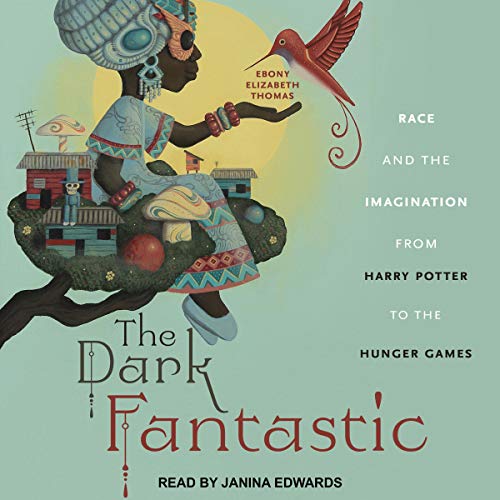
The Dark Fantastic, by Ebony Elizabeth Thomas

51wnggixxml._sl500_

In The Dark Fantastic, Thomas writes a study of darker-skinned people in fantastic popular culture. She covers Rue, from Hunger Games, who is described as “dark-skinned” in the book, but got a torrent of horribly racist comments when Rue was cast as black in the movie. To the white mind, and sometimes even to the brown or black mind, innocent characters should not be cast as black. Another rage emerged when Guinevere was cast as black in the TV show Merlin.

Thomas mentions that there is a paucity of dark-skinned people in fantastic literature, and that could be part of the reason why dark-skinned people tend to not be considered the audience of fantastic literature – because they can’t relate to the characters. It is quite possible for dark-skinned people to find heroes in white people, but why not have some dark-skinned people that they can view as heroes?

In most shows / books, dark-skinned people are shoved off to the side as supporting characters to white characters like Luka Martin in Vampire Diaries. They are meant to serve, not to be powerful characters themselves.

I had heard previously that fantastic literature lacked in diverse characters, but had never spent much time thinking about it. Now I feel like reading books more carefully to see how they are portrayed. This was a fantastic piece of nonfiction for anyone interested in diverse voices in literature.

5-snowflakes

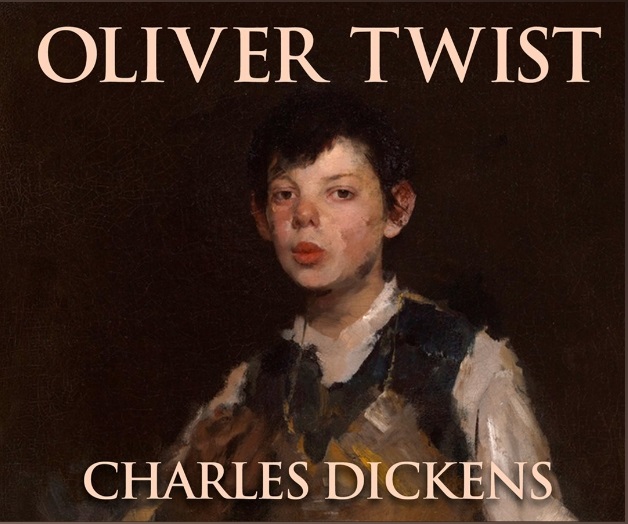
Oliver Twist, by Charles Dickens

Screenshot_20191104-155248_hoopla (1)

Most people are familiar with the tale of Oliver Twist. He is born in a workhouse to a woman whose identity is unknown. He is then sent from one horrible situation to another, abused, hungry, and expected to work for his living. When he runs away, he falls in with some pickpockets. His life takes a powerful turn after that.

I really enjoyed this book. It’s not my favorite as favorite as far as Dickens go – Great Expectations and Hard Times are reserved for that spot. However, I felt moved by Oliver’s predicament and by the style of life Dickens was trying to portray. It is so sad we can treat our children that way, though luckily things have improved quite a bit since then. But mass incarceration in the US is another way to create orphans…

5-snowflakes

The following is my analysis adapted from Susan Wise Bauer’s The Well Educated Mind’s description of how to think about a novel. It will have spoilers.

👽What is the most central life-changing event?

I’d say running away to London is the central life-changing event. Oliver meets the Artful Dodger, who inadvertently leads him to a rich benefactor who rescues Oliver.

👽Am I transported? Do I see, feel, and hear this other world?

Oh yes. I love Dickens.

👽Can I sympathize with the people who live there? Do I understand their wants and desires and problems? Or am I left unmoved?

Oliver’s life is so hard, and Dickens is so good at describing his troubles that it would be hard for a reader of classics to not sympathize with him. He only wants to have a reasonable amount of food, and to be safe.

👽Is this a fable or a chronicle?

Chronicle

👽What does the central character want? What is standing in his or her way? What strategy is pursued to overcome this block?

As I said above, he wants food and safety, but the adults in his life don’t think he deserves these things since he is an orphan. Even running away landed him in a worse spot than he was, and it was only being shot and asking for help which finally got him to a safe home.

👽Who is telling you this story? Is this person reliable?

It is an omnipresent, semi-omnipotent narrator. He (or she) seems reliable enough.

👽Where is the story set? Is it natural or human constructed? If natural, does nature reflect the emotions and problems of characters? Or is the universe indifferent?

London and the surrounding areas from which Oliver walked are certainly human constructs. However, I’d say the universe does care about Oliver, as he has some jolly good luck at the end there.

👽Images and metaphors. Are there any repeated images? If so, is this a metaphor, and if so, what does it represent?

I think the Artful Dodger (the pickpocket of London) is a metaphor himself – as he keeps appearing but does not seem to have much purpose in the narration other than to pick a pocket at a book store. Can people be metaphors? I will have to think more deeply on what he represents. Maybe I’ll write a discussion post on the topic, as I’ve decided to include more discussion posts (on Mondays).

👽 Does the end have a resolution or a logical exhaustion?

It does. Oliver is safe with family at the end.

👽How might the writer’s times have affected him?

This book was specifically a chastisement on how orphans are treated in England (and elsewhere) during Dickens’ life.

👽Is there an argument in this book? If so, do you agree?

The argument is: this is a terrible way of treating a human being. With a little honesty, compassion, and perception, people would have seen what a quality child Oliver was to begin with.

Update November 22, 2019

Hi all! This was a good week! D’s room is all pink and purple, with her loft bed in place! We now need to get her desk assembled and get all her stuff back in there. That’s a task for Sunday, though, because the house needs a major cleaning on Saturday for Deirdre’s “slumber party.” I put quotes around that, because only one girl has RSVP’d. D’s still REALLY excited, though.

I had a lovely date with Aaron at a Mongolian Grill last Friday. 😁 And I really enjoyed my fortune (above).

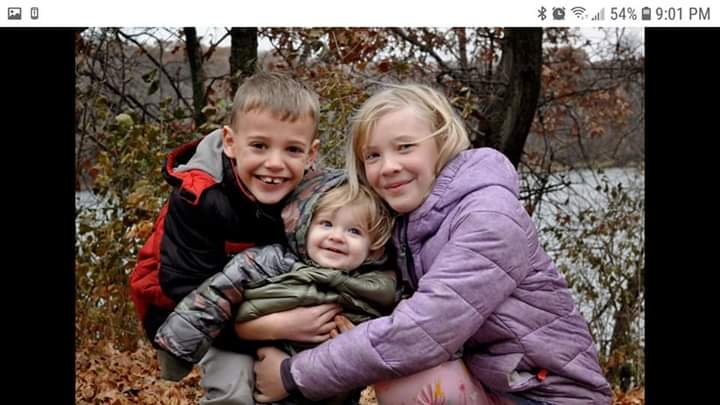
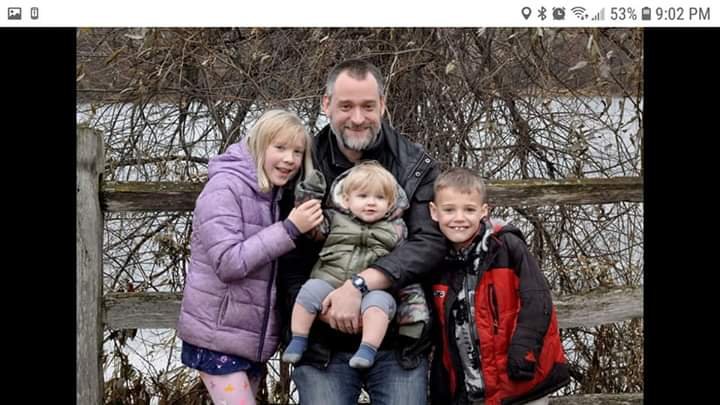
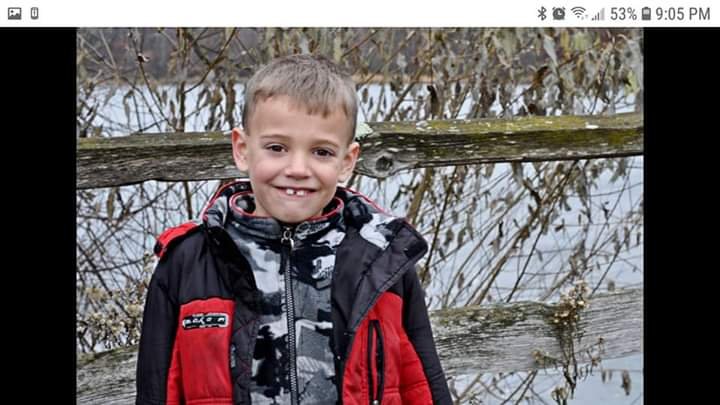
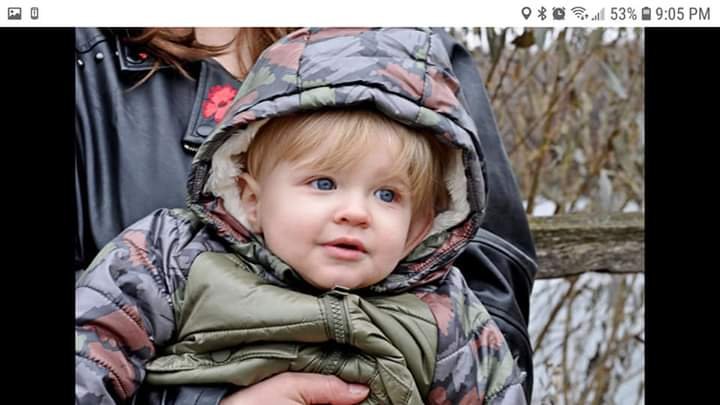
On Saturday, we got pictures taken of the kids with their mom, for gifts for hanging on their wall. We also got shots of our family. Here are some screenshots:

We also have a photo we’ll use for our holiday cards, so that’ll be nice. Now I just need to collect addresses! I have a good number of them from the wedding, hopefully.

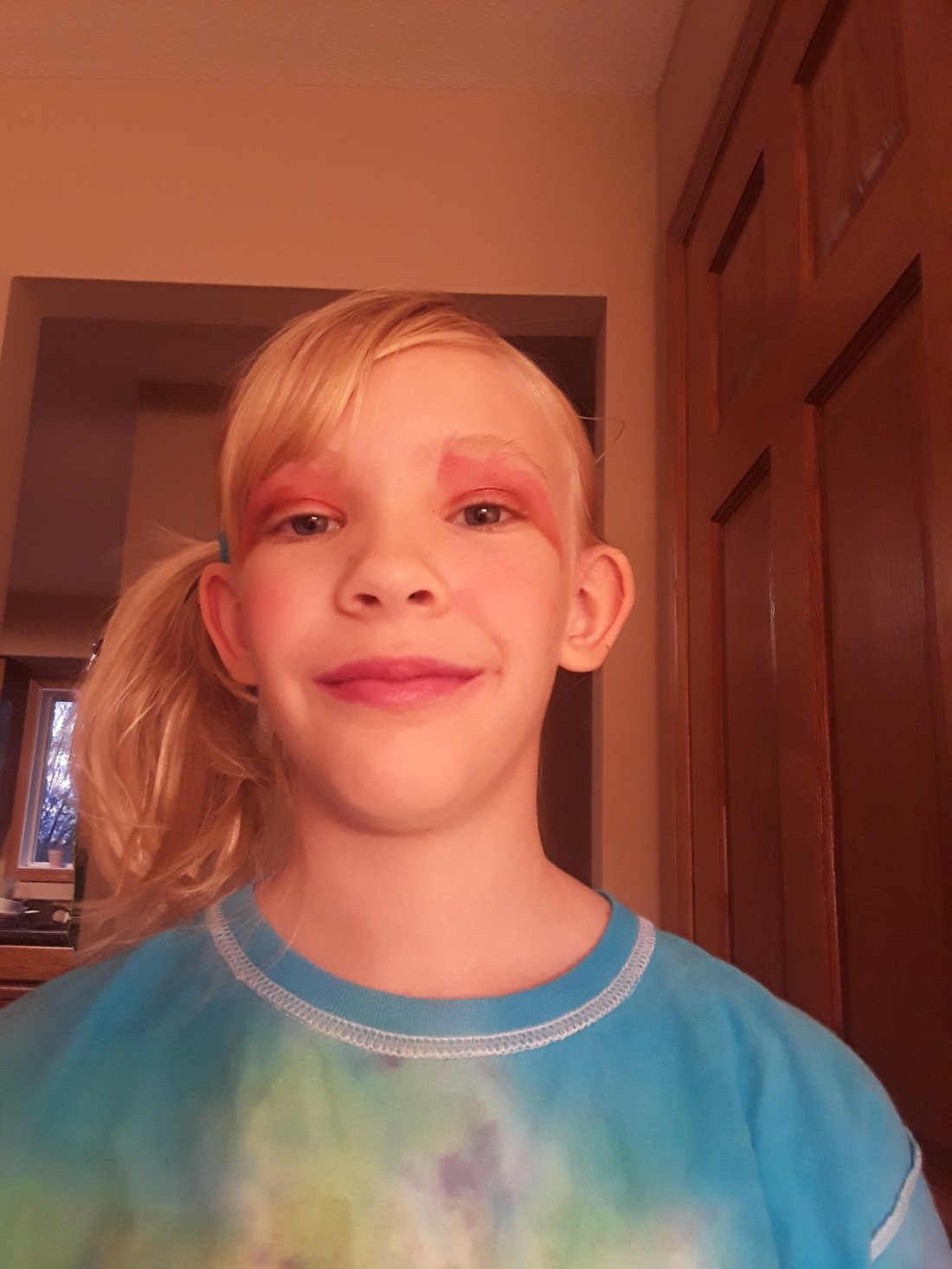
Today is 80’s day at the kids’ school, so I’m afraid I let her go like this:

Oh, and M has been so affectionate lately it’s maudlin. First he said he loves everyone in the family even if they’re bad because even then they have good in them. Then he had a bad morning, but ended the sendoff with “I still love you Rachel, our invisible string [of love] is still attached.”

This week, I finished reading:

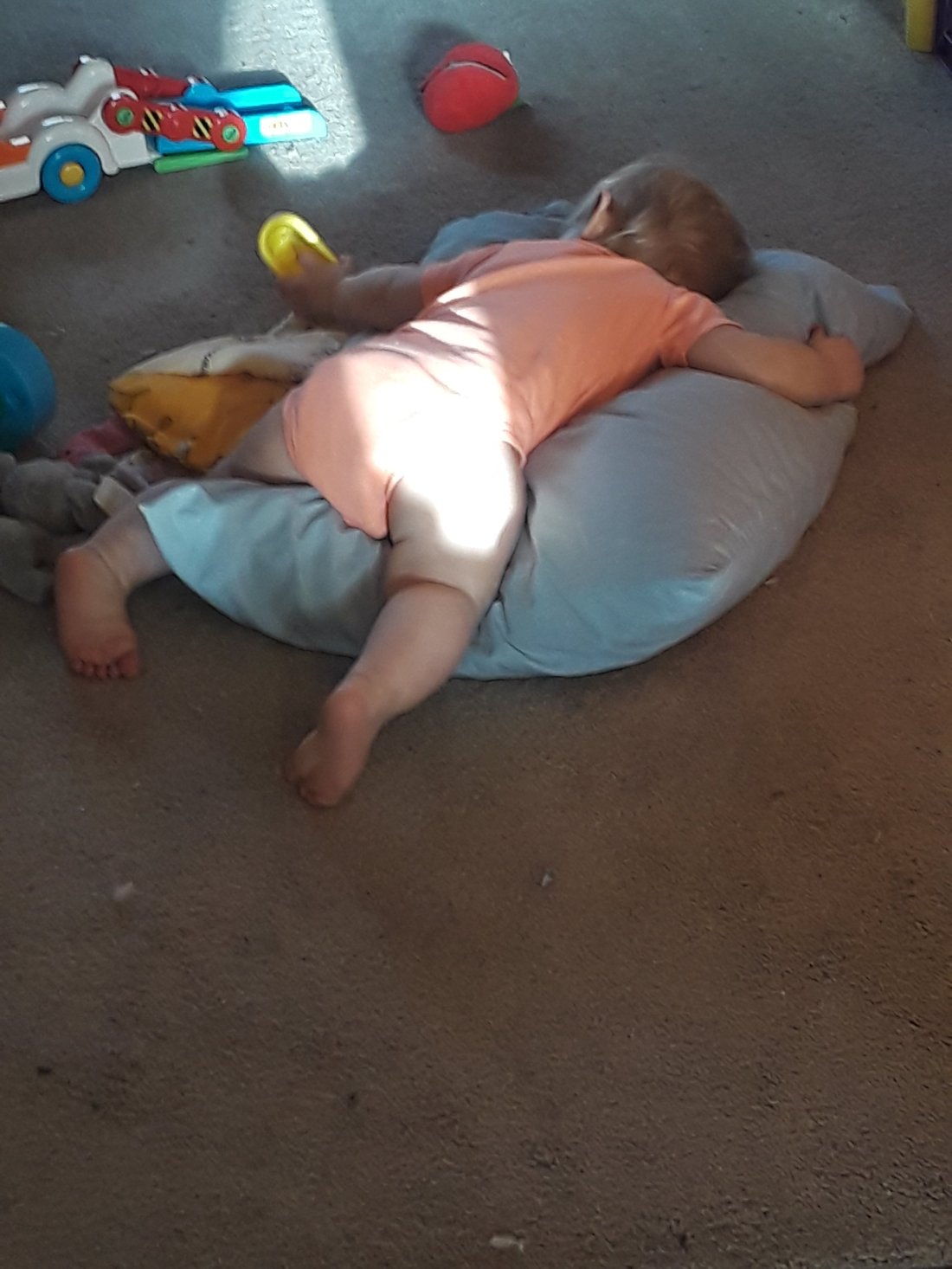
Ps: IL didn’t sleep well last night

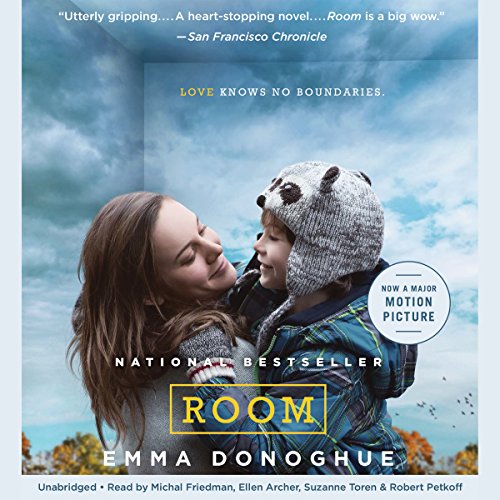
Room, by Emma Donghue

51yzqhno2vl._sl500_

Summary: 5 year old Jack has never left Room. To him, it’s all of reality. But then his mom tells him of an outside world that she lived in before the bad man took her away. He has a hard time believing.
5-snowflakes


The following is my analysis adapted from Susan Wise Bauer’s The Well Educated Mind’s description of how to think about a novel. It will have spoilers. 

👽What is the most central life-changing event?

The life-changing event that actually is narrated in the book is when Jack and his mother escape Room and have to start a life outside. Everything seems so strange to Jack, he has to learn to talk to other people, to navigate stairs, to understand the “fame” that he has archived by simple fact of escaping.

👽Am I transported? Do I see, feel, and hear this other world?

At first, I had difficulty with the voice of the narrator doing a 5-year-old voice, but I got used to it. After that, I was completely immersed in the story.

👽Can I sympathize with the people who live there? Do I understand their wants and desires and problems? Or am I left unmoved?

Oh yes, from wanting to escape the room to wanting to go back to the room where he felt things were “normal” this book does a fantastic job of giving a realistic and sympathetic portrayal.

👽Is this a fable or a chronicle?

Chronicle

👽What does the central character want? What is standing in his or her way? What strategy is pursued to overcome this block?

Jack wants to please his mom, but he is not excited to be brave and escape the room, and when he does escape, he’d like to go back to where it’s safe, quiet, and small. But he can’t go back because the kidnapper has been arrested and, obviously, his mom won’t let him. He repeatedly asks his mom to take him back, or at least to have his stuff from his room. That is his one power, really, is to ask adults to give him what he wants.

👽Who is telling you this story? Is this person reliable?

Jack is telling the story. As a 5 year old, I don’t think he’s lying, but I think some things may not be perceived the same as the would in an adult’s point of view.

👽Where is the story set? Is it natural or human constructed? If natural, does nature reflect the emotions and problems of characters? Or is the universe indifferent? 

The story is at first set in a room that they have been kept in since the kidnapping of ma and the birth of Jack. It was built by the kidnapper. This is a story in which the universe is indifferent to what happens to the characters. They must make their own way.

👽What style does the writer employ?

First person from POV of a 5 year old.

👽Images and metaphors. Are there any repeated images? If so, is this a metaphor, and if so, what does it represent?

Wow, so many. Anything and everything in the room has a name and a significance to Jack. That’s why he yearns for it all when he escapes.

👽 Does the end have a resolution or a logical exhaustion?

It does, the story is circular in that it starts in Room and it ends with a final visit to Room to say goodbye.

👽How might the writer’s times have affected her?

You know, I’m not sure. It was written during the Great Recession, but I don’t see how that, or Obama, or any other major event during that time changed the tone or voice of Room.

👽Is there an argument in this book? If so, do you agree?

Not really, it’s a narrative of escape, a story and nothing more.