Finals are Over and Winter is Coming

She’s ready to defend the galaxy
This week was much less eventful and more delightful than last week. I took a furlough from blogging so that I could reduce stress and concentrate on studying for my final exam in Abnormal Psychology. I’m optimistic about my grade in that class. 🙂


When Fall began, I made some fitness plans – lets re-explore them. Did I give up caffeine? NO! Not even close. Did I exercise? Well, my job is a workout, so I suppose I did. Did I use the happy lamp? Well, yes, but then I went mixed bipolar and my therapist told me to stop using it. 😦 End result? Didn’t lose weight, still addicted to caffeine, and got sicker than I imagined I would. But….Winter is coming! A new season means some new plans. 

Inspired by Ipsofactodotme’s #NoSugar challenge, I will start a semester-long #NoCaffeine challenge. I will white-knuckle the caffeine and hope that all of you will cheer me on. I’ll give you an update each week on how I’m doing.

This semester, I’m taking an EMT training class (yes, the one I dropped last semester). This class will be less easy to adapt to blog posts, so instead I’ll include a bullet point list of anything interesting I’ve learned. Hopefully that will keep me on my toes.  

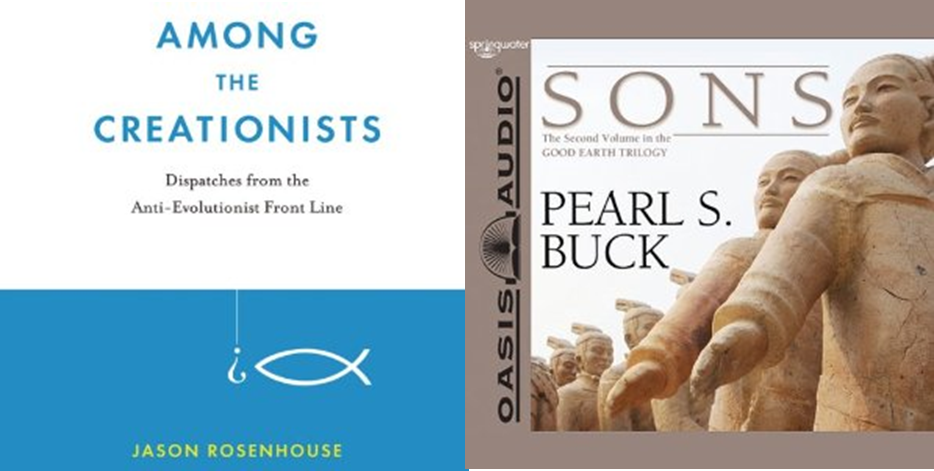
Books Completed


Books Acquired


This update is posted to
Stacking the Shelves @Tynga’sReviews

Sunday Salon
Sunday Post @CaffeinatedBookReviewer  
@MailboxMonday
It’s Monday What are You Reading @BookDate

Update: Work stress and new purses

This is my new (to me) Chanel purse.
Bought it at Goodwill at a steal. 
Weekly update

This was a stressful week, and I’m ready to start a new one and move on with life! Yay! A new week! 

Here’s what happened: On Monday I was upset at work because I had to play the bad-guy and tell my employee that she might not be able to take her vacation on the days requested, despite having already bought the tickets. I told her she may have to reschedule, and she cried, and I felt awful. So I went shopping with my good friend, and I bought this awesome Chanel purse at Goodwill. I didn’t get much studying done, but I certainly felt better. 

The next day, my employee texted me (it wasn’t her day to work) that her last day would be December 31st. I told her that she’d have to sign a resignation form on Thursday, when she returned. After a couple of stressful hours of trying to remake the schedule (which is already short one employee) work without her, she texted back “But don’t you WANT me to work for you?” Apparently, she’d been bluffing and hadn’t expected me to take her up on the offer to quit. I was enraged. Another night that I would rather just relax rather than study. 

To cut to the chase, I ended up taking my test on Thursday without studying at all. It looks like I did ok, and am still going to be able to pull off an A in the class. So here’s to next week and studying for my final exam coming up on Thursday!


Feature and Follow Question:

What is your favorite non-bookish website hangout? 

 Well, I don’t really hang out on the web that much except for book-related stuff. But I guess the next best place is Netflix or YouTube. I’m trying to start reviewing more documentaries to add some spice to my blog. I’ve already started last week!

Reviews:

Living in a Gray World, by Preston Sprinkle
Lamb, by Bonnie Nadzam

Lecture Posts: 

Anxiety Disorder
Bipolar Disorder
Suicide

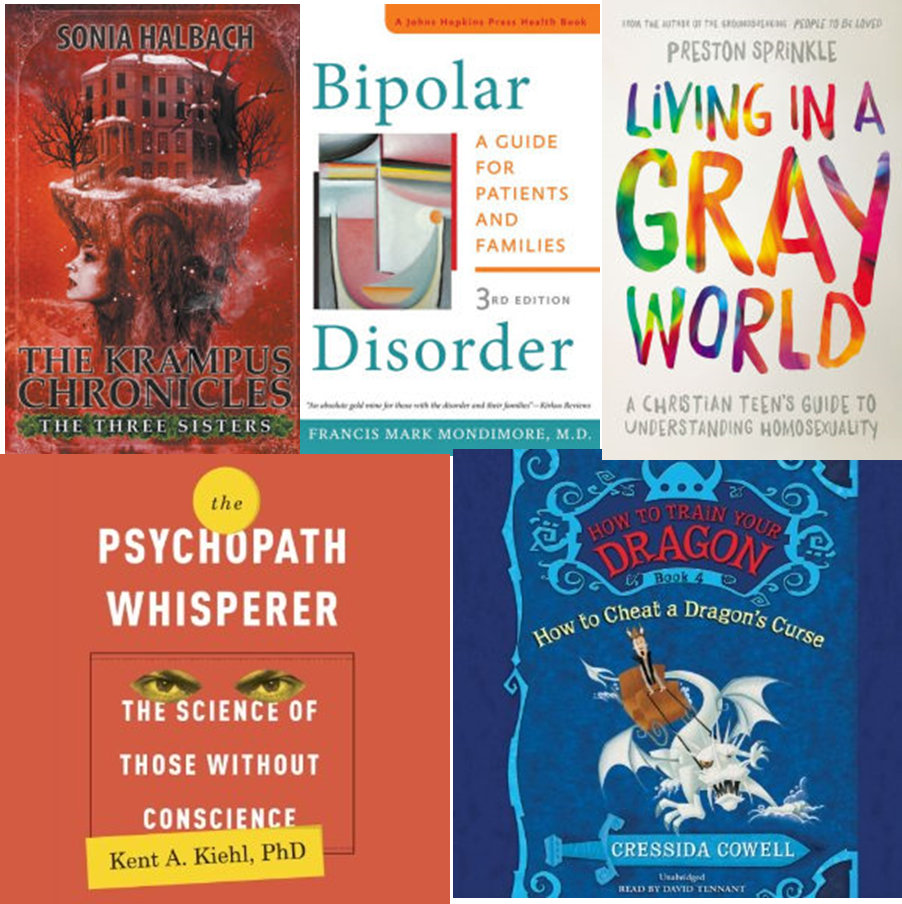
Books Completed

Film Completed

Acquired

Boo-hoo!


This update is posted to Feature and Follow Friday @Parajunkee and @Alison Can Read
Stacking the Shelves @Tynga’sReviews, Bought Borrowed and Bagged @TalkSupe,  Sunday Salon, Sunday Post @CaffeinatedBookReviewer  @MailboxMonday, It’s Monday What are You Reading @BookDate

Suicide – An Overview


Suicide is a huge issue that is extremely stigmatized and ignored. It ranks among the 10 leading causes of death in most Western countries – and the number of suicides is likely higher than estimated since many deaths are ruled “accidental” rather than being given the stigmatized label of “suicide.” 

Suicide is a huge tragedy. Many people label it as “selfish” – but those people don’t understand that when someone is in the state of mind in which they would commit suicide, they are severely mentally ill; they think life is hopeless and see no way out; they often think that people will be happier and more successful without the burden of knowing the suicidal individual. Another tragedy is that many “survivors of suicide” – that is the families, friends, and even acquaintances of suicide victims – are often traumatized and blame themselves for not noticing the signs; not being there when they were needed the most. 

Although in the past people who attempted / completed suicide were between the ages of 25 and 45, there is an appalling trend of teenagers and elderly men who are now killing themselves. Women are more likely to attempt suicide, and men are more likely to complete suicide. This is because, at least up until now, women tend to use “less messy” or “romantic” – and therefore less dangerous – ways to kill themselves. Men, on the other hand, generally choose guns. However, from reading the news, I personally believe that the number of women who use guns in suicide attempts are dramatically increasing. 

At this time, the highest rate of suicide completion is elderly males who are widowed or divorced or have terminal illnesses. This may be because men of that era were taught to hold in their emotions rather than express them. Thus, they are less likely to seek help when suicidal thoughts arise. 

As much as 90% of individuals who attempt/complete suicide are mentally ill at the time. Major depression is the highest predictor of suicidal ideation, but people with impulsivity disorders – such as borderline personality disorder or bipolar disorder – have a higher rate of attempt/completion. 

The rate of suicide attempt/completion for people between the ages of 15-24 has tripled between the 1950s and 1980s. Suicide is the third most common cause of death (after accidents and homicide) of people between the ages of 15-19. It is unclear why the rates of suicide has increased in teens and young adults, but it may be because of increased drug and alcohol use, and perhaps use of antidepressants which often increase suicidal ideation in teens. Young adults in college seem particularly susceptible – this seems to be due to academic pressure, though those who commit suicide are generally doing quite well academically; therefore it is thought that the anxiety of perfectionism or fear of disappointment may be a leading cause. Teen suicide hotlines have become increasingly popular in the past years. I volunteer at one called TXT4LIFE, in which a teen or young adult can text the word “LIFE” to 61222 and have a text conversation with someone who will hopefully deescalate them. There are also websites, including this one, that provide further suicide hotlines for teens.   

Many people who commit suicide are ambivalent about wanting to die – this is likely why they call suicide hotlines. Although, I must admit, even indirectly insinuating that a texter might feel ambivalent in my volunteer work only encourages them to say how much they really want to kill themselves. 

There are three basic ideation types that occur in people who attempt suicide. Most people are ambivalent. These are often women or teens who are attempting to send a message about their state of mind. These people generally use a non-lethal means of suicide attempt – such as ingesting a small amount of pills, a bottle of not-so-dangerous pills, or minor cutting. It is thought that Sylvia Plath, who died by sticking her head in the oven, had expected a friend to stop by the house shortly after she attempted suicide; thus saving her from an actual death. A small minority of individuals seem to have no ambivalence at all, and tend to use “messy” paths to suicide, such as guns or jumping. The third group leaves it up to fate. The figure “If I die, I’m meant to die. If I live, I’m meant to live. These people generally use more dangerous means to suicide like ingestion of large doses of pills or major cutting. 

There is a myth that people generally do not leave hints that they are having ideation before attempting suicide. And there’s another unfortunate myth that people who threaten suicide seldom actually attempt. Both of these myths are false. Studies show that of people who committed suicide 40% made direct comments about suicide and 30% made comments about dying in the months leading up to suicide. Only 15 to 25% of people leave suicide notes, and they are often unclear as to what the reasons for suicide were. 

Suicidal ideation is generally treated with mood stabilizing or antidepressant medications, therapy, and a large number of crisis hotlines. Unfortunately, there is little research to show whether these hotlines actually decrease the number of suicides. In his bestselling book Noonday Demon, Andrew Solomon even suggests that talking about suicide with the callers might increase the likelihood of suicide because it makes it seem like a viable option. 

Most suicide hotlines are staffed by unprofessionals (like myself) who assess the gravity of the situation and either deescalate the individual or intervene by calling the police. I’d very much like to think these suicide hotlines are helpful. I know, at the very least, that they are help make the callers/texters feel better on an immediate basis, which makes them seem worthwhile to me. 

This is a series of posts summarizing what I’m learning in my Abnormal Psychology course. Much of the information provided comes from reading my James N. Butcher’s textbook Abnormal Psychology. To read the other posts, follow these links: 

The Definition of Abnormal
A History of Abnormal Psychology
Abnormal Psychology in Contemporary Society
Contemporary Viewpoints on Treating Mental Illness – Biology
Contemporary Viewpoints on Treating Mental Illness – Psychology
Frontline: New Asylums
Brave New Films: This is Crazy
Clinical Mental Health Diagnosis: Biological Assessment
Clinical Mental Health Diagnosis: Psychological Assessment
Does the DSM Encourage Overmedication?
Post Traumatic Stress Syndrome – The Basics
Panic Disorder
Obsessive Compulsive Disorder
Hoarding and Body Dysmorphic Disorders
Depression – an Overview
Personality Disorders – Clusters and Dimensions
Personality Disorders – Cluster A
Personality Disorders – Cluster B
Personality Disorders – Cluster C
Biological Effects of Stress on Your Body
Somatic Symptom and Related Disorders
Dissociative Disorders
Borderline Personality Disorder
Dialectical Behavioral Therapy
Paraphilic Disorders
Gender Dysphoria – Homosexuality and Transgender
Anxiety Disorders
Bipolar Disorder – The Basics
Suicide – An Overview


References:

Butcher, James N. Hooley, Jill M. Mineka, Susan. (2014) Chapter 7: Mood Disorders and Suicide. Abnormal Psychology, sixteenth edition (pp. 212-262). Pearson Education Inc.

Lamb, by Bonnie Nadzam


(This is another book review republished from my old blog. This is a timely subject for some of the information I’m covering in my Abnormal Psychology class, and I figured I’d share it with them.)

Lamb hits a mid-life crisis when his wife divorces him for infidelity and his father passes away. Just after his father’s funeral, he meets Tommie – an 11-year-old girl who desperately needs guidance. Lamb is strangely attracted to the girl – he wants to help her seize life, he wants to buy her presents and make her happy. Then, with Tommie’s consent, he abducts her. 

I had a really hard time deciding how to rate Lamb. The narrative was intriguing – almost addictive – but the subject matter was very disturbing. I had a hard time putting it down because I wanted to know how it would end. I felt compelled to keep reading despite a deepening sense of unease. From the subject, I should have known it would make me feel that way, but I thought it would be a book with more hope in it. I respect the way Nadzam kept the details subtle. There were no highly disturbing scenes (well, there was ONE scene that was a bit disturbing, but it could have been much, much worse). My recommendation – read this book if you would enjoy looking at pedophilia from another perspective, but avoid it if this is a sensitive topic for you.

Spoilerish Discussion 

Before deciding how to rate the book, I took a look at what other people had said about it. There are, predictably, people who loved the book and people who hated it. In the interest of proving to myself that I’m not narrow-minded, I want to have a spoilerish discussion to address some issues that came up in the positive reviews.

First of all, one review pointed out that it was unclear who the narrator of this book was. To me, it seemed that the book was in the third person subjective, focusing on Lamb. There were a few scenes where it seemed to be from the POV of Tommie, but even that could have been in Lamb’s head. So that’s how I’m interpreting the book – our narrator is telling us what Lamb is thinking, and sometimes Lamb thinks about what Tommie is thinking, and sometimes he thinks about what might be happening back in Chicago as Tommie’s parents look for her, but we’re always inside Lamb’s head.  That is very important for how I interpreted the book.

Another thing that affects the way I perceive Lamb – I despised him from the beginning. Even before he abducted Tommie. Even when his intentions seemed kind. I despised him because of how he treated his girlfriend. He was manipulative and creepy and a liar. All he wanted was sex, and although he claimed to have qualms of conscience about his behavior, that’s ALL he had. Small qualms. These qualms didn’t stop him from manipulating her, did they? Qualms of conscience don’t make someone a “good” person. Listening to qualms makes a person “good.” Behavior is what I’m interested in, not whether a person feels guilt or not. The fact that he feels guilt proves that he’s not a sociopath, but he’s still a jerk. Just because he rationalizes his behavior, does not mean his rationalizations are justification. We need to interpret his rationalizations with skepticism.

Yes, he rationalized his original interest in Tommie as helpfulness. But let’s think about it. The very first time he met Tommie, he grabbed her arm and threw her in his truck so hard that her head hit the window. She was terrified. Yes, he rationalized that he was helping her to see what could have happened. She shouldn’t have approached him – a stranger – because he could have been dangerous. He rationalized that he taught her a lesson. But the fact that he was willing to frighten her like that was the first hint that his behavior towards her was driven by darker urges. Yes, perhaps this time around his rationalization had some grain of truth in it. Perhaps she did learn a lesson. But was that lesson his to teach?

Lamb’s rationalizations continued throughout the entire book. I never interpreted them as anything but rationalizations. So I was rather surprised when I read in some reviews that they interpreted his intentions as good. Let’s think about this. 

Rationalization 1) Abducting her in front of her friends taught her a lesson about approaching strangers and about shallow friends. – We discussed this above.

Rationalization 2) Encouraging her to skip school and lie to her parents in order to hang out with him didn’t corrupt her, because she was already doing those things. – Well, if he really cared, he wouldn’t encourage her to skip school and keep secrets. That’s sleazy, creepy behavior. 

Rationalization 3) Abducting her and teaching her to be a woman was helpful, because she needed that experience…it would help her break out of that awkward phase in life and burst into the world with new confidence. She’d look back with fondness on him. – Now this is where the rationalization gets sticky. I interpreted these flash-forwards to be rationalizations taking place in Lamb’s head. BUT, if you interpret these flash-forwards to be accurate or from the point of view of Tommie, I can see where you might (as some people apparently do!) think that Lamb helped Tommie. In the interest of not being narrow-minded, I tried to look at it from that point of view. But, no. The story simply makes more sense to me if I interpret these flash-forwards as rationalizations in the head of Lamb. And Lamb is rationalizing because he knows he’s hurting her. In fact, it’s clear he knows he’s hurting her, because there are other scenes in which he’s crying and telling Tommie that if she ever hates him, she should kick his balls in. Doesn’t that show us that he knows he’s doing wrong?

Some reviews actually suggested that Lamb loved Tommie, and that his intentions were good. But he knew he was hurting her (or else he wouldn’t break down into tears and tell her to kick his balls in, and he wouldn’t rationalize). He was consciously lying and manipulating her. (It’s clear that these were conscious acts, because in one scene he pointed out to his girlfriend that he “makes people say and do things.”)  So, I’m convinced that Lamb knew he was hurting her – why would he act that way if he loved her? That’s not love. Love is selfless. That’s a darker sort of obsession. That’s acting on urges. Love can be an obsession, but we shouldn’t assume that obsession is love.

Finally, some people questioned whether Lamb had actually had intercourse with Tommie. There was nothing that directly said he did, but I felt it was implied. He definitely kissed her, saw her naked, and slept in the same bed as her. Furthermore he got kicks out of letting Tommie watch him having sex with his girlfriend, which is a form of molestation in itself. So, yes, how far he went is still a question, and I’m glad I didn’t have to read that one last detail. But I made my own conclusion about the issue – and it wasn’t good.

Bipolar Disorder – The Basics

Bipolar mood disorders are distinguished from “unipolar” mood disorders (such as depression) by periods of emotional highs, the extreme case of which is called a “manic episode.”


To be diagnosed with a manic episode, you must have a distinct period of abnormally and persistently elevated, expansive, or irritable mood lasting most of the day, every day for a week. Three or more of the following symptoms must be met: 1) inflated self-esteem or grandiosity; 2) decreased need for sleep; 3) more talkative than usual or pressure to keep talking; 4) flight of ideas or racing thoughts; 5) distractability; 6) increase in goal-directed activity (socially at work, or sexually), or psychomotor agitation; 7) excessive involvement in activities that have a high potential for painful consequences.

To be diagnosed with bipolar disorder I, you have to have had at least one manic episode in your life. You do not have to have had any depressed episodes. The manic episode must be what is considered “fully manic” (meeting the criteria above, and generally requiring hospitalization) and not the less elevated state called “hypomanic.”  On the other hand, people with bipolar disorder II experience hypomania – never a fully manic state – and they have to also have experienced periods of depression. Bipolar II is more common than bipolar I, but only evolves into bipolar I in 5 to 15 percent of the cases. 

People with bipolar disorder tend to show more mood lability, psychotic features, psychomotor retardation, and substance abuse than people with unipolar mood disorders. Bipolar depression also tends to be much more severe than unipolar depression, and is characterized by more of the “atypical” depression features (i.e. hypersomnia, arms as heavy as lead, mood lability), as described in my post about depression. As I said in my previous post, I generally experience atypical features during my depressive episodes. One time, I even remember sitting at a table looking at a glass of water. I really wanted to drink that water. But my arms were just too heavy to reach over and grab it. 

Usually, an episode – which can be either manic/hypomanic or depressive – occur every 3 to 4 months, with periods of “normal” in between. However, some people rapid cycle, remaining in one state or another almost all the time. They experience at least 4 episodes per year, but generally far more than 4. 

Rapid cycling should not be mistaken for “mixed episode,” which is characterized by symptoms of mania both mania and depression for at least one week. In fact, I have been in a “mild mixed state” since the beginning of October, and my symptoms just keep getting worse and worse. During this time, I have experienced intense suicidal ideation mixed with motivation, energy, and impulsivity. I have had mild  dissociative symptoms in which I feel outside myself, and am unable to care about the past or future – which makes the suicidal ideation even more dangerous. I have had bipolar rage – red-in-the-face screaming at people, punching walls, and throwing stuff with little provocation. And I’ve spent a half hour at a time laughing and crying at 10 second intervals. It’s not a fun state to be in. Apparently, my current treatment plan is to dope me up so much during the day and night that I am unable to experience emotions, therefore I’m fairly stable. It works. My mood is so stable right now, it feels like there’s no mood there at all. 

“Full recovery” is very rare with bipolar disorder; most people must remain on mood stabilizers for the rest of their lives. The first mood stabilizer, lithium, was discovered 1948 by Dr. John Cade. It is an effective mood stabilizer, but it has several side effects, and it is not very easy to patent a mineral, so lithium is not generally used for the treatment of bipolar disorder. Other mood stabilizing medications are from a group considered to be anti-seizure meds, or from another considered to be anti-psychotic meds. I’m currently on both types. 


This is a series of posts summarizing what I’m learning in my Abnormal Psychology course. Much of the information provided comes from reading my James N. Butcher’s textbook Abnormal Psychology. To read the other posts, follow these links: 

The Definition of Abnormal
A History of Abnormal Psychology
Abnormal Psychology in Contemporary Society
Contemporary Viewpoints on Treating Mental Illness – Biology
Contemporary Viewpoints on Treating Mental Illness – Psychology
Frontline: New Asylums
Brave New Films: This is Crazy
Clinical Mental Health Diagnosis: Biological Assessment
Clinical Mental Health Diagnosis: Psychological Assessment
Does the DSM Encourage Overmedication?
Post Traumatic Stress Syndrome – The Basics
Panic Disorder
Obsessive Compulsive Disorder
Hoarding and Body Dysmorphic Disorders
Depression – an Overview
Personality Disorders – Clusters and Dimensions
Personality Disorders – Cluster A
Personality Disorders – Cluster B
Personality Disorders – Cluster C
Biological Effects of Stress on Your Body
Somatic Symptom and Related Disorders
Dissociative Disorders
Borderline Personality Disorder
Dialectical Behavioral Therapy
Paraphilic Disorders
Gender Dysphoria – Homosexuality and Transgender
Anxiety Disorders
Bipolar Disorder – The Basics
Suicide – An Overview

References:

Butcher, James N. Hooley, Jill M. Mineka, Susan. (2014) Chapter 7: Mood Disorders and Suicide. Abnormal Psychology, sixteenth edition (pp. 212-262). Pearson Education Inc.

Living in a Gray World, by Preston Sprinkle

Living in a Gray World, by Preston Sprinkle
This advance release copy was provided through NetGalley
in exchange for a fair and honest review.

(Disclaimer: I do not agree with everything stated in this book. However, the message of love and acceptance is very timely, necessary, and wonderful. My own views on the topic of sin and Bible interpretation are unimportant for my review of the book, since I agree full-heartedly with the message of love and the importance of educating teenagers on how to deal with a situation that still draws too much stigma and ignorance in schools and Fundamentalist Christian communities.)

In Sprinkle’s short and to-the-point book for teenagers, he explains his views on homosexuality – suggesting that although homosexual sex is a sin, Christians should show love and acceptance rather than hate, disgust, and venom. In a conversational format, Sprinkle educates the readers on the differences between being attracted to people of the same gender (homosexuality – which is not a sin in itself) and actually acting on those desires (which, according to his interpretation of certain Bible verses, is a sin). He also educates the readers on the nature of transgender and transsexualism. 


Throughout his discussion, he asserts that although Christians should hate sin, they should not be the ones to cast stones. He points out that name-calling, or even incautious unaccepting statements, can cause great pain in a confused and vulnerable teenager – it can lead to self harm and suicide. The behavior of the Christian adults around Sprinkle’s readers might show disgust, but this hatred is not becoming of a Christian and is just as sinful as the sin they are judging. Sprinkle calls his readers to love without judgement. He points out that sinners more easily change their sinful behavior if they are gently called to the church by acceptance and love. Sprinkle also addresses homosexual and transgender teens themselves – urging them to build a support network of loving and accepting people, hopefully Christians. He even provides his own contact information in case the teen can’t find someone understanding to talk to. 

At the end of his book, Sprinkle provides an appendix with Bible verses and discusses why these verses show that homosexual sex is a sin. 

Sprinkle suggests that this book is aimed towards young teens through early twenties, though personally I feel the book was a bit to “young” for even older teens (unless they have lived a very “sheltered” life in the comfort of only a society of people with similar beliefs). Sprinkle has another book, People to be Loved,  that might be more appropriate for older teens and adults, though I haven’t read it. 

All-in-all, I loved the message of acceptance throughout Sprinkle’s book. As a person who works in a suicide hotline for teenagers, I know that there are a lot of teens out there who are just realizing they have homosexual desires. These teens can be confused, scared, and self-loathing. The reason they are self-loathing is often because of the rancor about homosexuality that they have been exposed to through a supposedly “Christian” living. But in my opinion, and apparently Sprinkle’s, it is more sinful to hate and judge than it is for a person to feel something that he can not control and did not choose. Next time I deal with such a teenager I will suggest this book as a way to know that he is loved.

4.5 snowflakes

Anxiety Disorders


In my post about panic disorder, I described fear as an emotion that elicits the “fight-or-flight” response of the autonomic nervous system. In anxiety, unlike fear, there is no activation of the fight-or-flight response. Anxiety is a long-term response oriented towards future events rather than imminent danger. Short-lived, low levels of anxiety can be good because they help prepare a person for upcoming activities such as an exam or sports event. However, long-term high-intensity anxiety creates a state of chronic over-arousal that can lead to physical troubles such as reduced immune response (i.e. susceptibility to disease) and increased blood pressure, as described in my post about the biological effects of stress.


In generalized anxiety disorder (GAD), anxiety is chronic, excessive, and unreasonable. The excessive worry must be accompanied by at least three of six other symptoms: restlessness, fatigue, difficulty concentrating, irritability, muscle tension, and sleep disturbance. People with GAD live in a constant state of future-oriented apprehension. They are generally hypervigilant for signs of threat and tend to engage in avoidance behaviors such as procrastination and checking. The most common worries are about family, work, finances, and personal illness. They have difficulty making decisions, and then worry endlessly about whether their decision is correct.


My anxiety diagnosis is “anxiety – not otherwise specified (NOS),” which means that my anxiety doesn’t fit into any of the cookie-cutter DSM-5 diagnoses. To me, my symptoms seem to be a combination of those described in panic disorder and those of GAD. Like in panic disorder, my anxiety symptoms seem to have no obvious stimulus, so they become associated with whatever I’m thinking about at the time of the attack. (Though unlike panic disorder my attacks never peak at pure panic – they remain at high-level anxiety.) Like GAD, however, I have difficulty making decisions and can’t stop worrying about whether I’ve made the right choice. 

As an example: during my 3-hour anxiety attack described in a previous post, my anxiety took on a very strange form. Instead of worrying about something really troubling, I began obsessing about what book I would read next – probably because that’s what I was thinking about when the anxiety attack hit. While in my physiologically aroused state (heavy breathing, pounding heart, sweating) I had to keep making list after list after list of the books I wanted to read, and reordering them by priority. Every time I made a new list, I’d calm down a little and go back to work. But within 5 minutes my anxiety would peak again, I’d have to make a new list. Rationally, I knew that what I read next was of very little import, and whatever it was I would (hopefully) thoroughly enjoy it. But for some reason my body couldn’t stop panicking, and my unconscious mind associated that anxiety with books. Luckily, I don’t have an anxiety attack every time I think about books. 🙂

Most people with GAD are able to continue with their daily activities despite their impaired ability to function. Therefore, they are less likely to request psychological treatment for their disorder. They do, on the other hand, show up in physician’s offices with medical complaints, probably partly due to unnecessary worry about their health and partly to the negative psychological repercussions of stress.

People with GAD are extremely sensitive to the feeling that they are unable to control their environments. It’s possible that teaching the patients to feel in control (or to let go of things they can’t control) will help them to moderate their own anxiety. Perhaps they should all recite the AA serenity prayer every day. 😉

God grant us the serenity to accept the things we cannot change,
courage to change the things we can,
and wisdom to know the difference.

(Of course, this prayer assumes that the patient believes in God, which makes it annoying to many potential members of AA who are atheists or not of monotheistic origin. But I suppose that’s a gripe for another post.) 

This is a series of posts summarizing what I’m learning in my Abnormal Psychology course. Much of the information provided comes from reading my James N. Butcher’s textbook Abnormal Psychology. To read the other posts, follow these links: 

The Definition of Abnormal
A History of Abnormal Psychology
Abnormal Psychology in Contemporary Society
Contemporary Viewpoints on Treating Mental Illness – Biology
Contemporary Viewpoints on Treating Mental Illness – Psychology
Frontline: New Asylums
Brave New Films: This is Crazy
Clinical Mental Health Diagnosis: Biological Assessment
Clinical Mental Health Diagnosis: Psychological Assessment
Does the DSM Encourage Overmedication?
Post Traumatic Stress Syndrome – The Basics
Panic Disorder
Obsessive Compulsive Disorder
Hoarding and Body Dysmorphic Disorders
Depression – an Overview
Personality Disorders – Clusters and Dimensions
Personality Disorders – Cluster A
Personality Disorders – Cluster B
Personality Disorders – Cluster C
Biological Effects of Stress on Your Body
Somatic Symptom and Related Disorders
Dissociative Disorders
Borderline Personality Disorder
Dialectical Behavioral Therapy
Paraphilic Disorders
Gender Dysphoria – Homosexuality and Transgender
Anxiety Disorders
Bipolar Disorder – The Basics
Suicide – An Overview

References:

Butcher, James N. Hooley, Jill M. Mineka, Susan. (2014) Chapter 6: Panic, Anxiety, Obsessions, and their Disorders. Abnormal Psychology, sixteenth edition (pp. 163-210). Pearson Education Inc.

Weekly Update Dec 6th


This was a fantastic week. I ended up November with a bang – lots of good books read and acquired. Work has been going well. Abnormal Psychology class has been going well. I had a bit of a mishap at the Red Cross when I was trying to donate platelets. They had to do quite a bit of “adjusting.” But everything came out right in the end. On Saturday, I went to the Hippie Modernism exhibit at the Walker Art Center with my boyfriend and another friend (who is pictured above with me). The exhibit was fun, but we preferred some of the other parts of the museum. The Jack Whitten exhibit was fantastic. 


Lecture Posts


Reviews
Books Completed


Film Completed
I also watched The Third Sex, which is episode 8 of season 5
of the National Geographic series Taboo
Books Acquired


The Hijra – the Trans Community of India

Communities of transsexual women called Hijra have existed in India for centuries – they began as a holy group which could bless people and places and remove the Evil Eye. But as the British colonized India, the Hijra began to be shunned and stigmatized. These communities still exist in India today, but now the Hijra are generally beggars and prostitutes. They are often shunned by their families and by society in general. Those who were once great have fallen due to Western stigma. 


I will share my thoughts about two documentaries about the Hijra. The first is called Harsh Beauty, which was distributed by Frameline, a nonprofit LGBT media arts organization: 


This hour-long documentary is almost entirely in Hindi and Tamil, with English subtitles. It is interview style – focusing on several people. These people range from holy people who ask for alms in exchange for blessings to politicians to prostitutes. Unfortunately, it appears that the former (more “presentable”) categories have very, very few people, whereas the majority of Hijra are beggars and prostitutes. 

In some ways, the trans communities in India are tighter than those in the US. In India, the Hijra live, work, and die together. They form very strong bonds. However, this also means that they do not have strong relationships with their birth families. They do not live with their families or marry (at east not conventionally, as I’ll discuss later). In fact, many have been shunned by their families, or must visit them only discretely.  

Transsexuals in the US have to jump through an amazing amount of red tape for years in order to get their surgeries, but when they have the surgery it is in a safe, sterile, finely-tuned environment. A man->woman surgery can rearrange the nerve endings to form a clitoris. Although this is a major surgery in the US, and it takes much dedication to jump through all the hoops, it seems to me that the Hijra must be even more dedicated than American trans people to get their operation:.

In India, the surgery is much more “brutal” than it is here. There’s no anesthesia (because this is a spiritual ritual). The boy stands naked in a temple looking up at his deities. Then, the guru cuts off his “manhood” (testicles and penis). There is no delicate reorganization of the nerves in this surgery. After the surgery, hot oil is poured on the wound for 41 days to help it heal. 

This procedure may make me shudder in its “brutality,” but I doubt it seems brutal at all to the Hijra community. As I said, to them it’s a spiritual experience. After the surgery, Hijra from all over the area will come to have a huge festival of celebration – because a new member of their community has been initiated. 

I would say this documentary was an excellent introduction to transsexual culture in non-Western cultures. However, because of its format (interviewees speaking in a foreign language, and very little other action), it wasn’t the most dynamic of documentaries.
3.5 stars for good coverage of an excellent topic

The second documentary I watched was The Third Sex, which was episode 10, season 5 of National Geographic’s Taboo series. 

This film had a fantastic description of a Hijra festival which takes place in Koovagam, Tamil Nadu. This festival celebrates the wedding of the god Aravan, who was destined to die in battle in one day. He prayed to be married before his death, but no woman would marry him and become a widow so quickly (widows do not have very good lives in India). So the male god Vishnu came in woman’s form and married Aravan. Every year, Hijra from all around India flock to Koovagam to celebrate their own marriage to Aravan. It is a happy marriage festival with much celebration. Then, the next day, the Hijra cover their faces in turmeric, beat their chests, wail, dress in white, and morn the death of their husband. 

Watching this documentary was a much more enjoyable experience than watching Harsh Beauty. It was more dynamic and had beautiful filmography; however, it was also more sensationalized and less realistic and informative than Harsh Beauty. Of the two, I think Harsh Beauty was the better.   

3.5 stars for dynamic filmography and interesting topic

Narcopolis, by Jeet Thayil

Narcopolis, by Jeet Thayil
Narrated by Robertson Dean 
(This is an edited version of a review I wrote for my retired blog. I’m republishing because it is timely with a documentary I’ll be reviewing on Saturday.)

In this opiate-veiled book, Thayil introduces readers to the seedy underbelly of Bombay. It begins in the 1970’s and transitions with surreality into modern-day Mumbai–which has lost not only its tradition and identity, but also it’s name. The story follows several memorable characters, all of whom fight addiction in one form or another. Addictions range from opiates to violence to sex. 
The most memorable character is Dimple, a pipe-wallah, a prostitute, and an addict. Dimple was abandoned by her mother and sold into prostitution as a child. At the age of 9, she was castrated and her penis was removed, transforming her into India’s “third sex:” a hijra. Some men specifically prefer hijra over male or female prostitutes. When we are introduced to Dimple, she is a little older, and is suffering the ill effects of her surgery–including addiction to opium, which was originally given to her as a narcotic for her pain. The story follows Dimple as she transforms from a beautiful young woman to a sickly and shriveled middle-aged woman.

Perhaps I’m reading too much into the story (I think it would be clearer after a second reading), but I think Dimple was meant to represent India. When we met Dimple, she was young and beautiful, as was the young India. She had been docked and gelded, yes, but she was beautiful, intelligent, and had potential if ONLY she could get out of her rut. Perhaps this is meant to imply that the Westerners had “docked and gelded” India (by their colonization and then partitioning of the land), but that India still had potential. She was still beautiful. But time passed, and the slow-and-easy opium life in the “best opium den in Bombay…maybe even India,” was forcibly supplanted by frightening hallucinatory “cheap” chemical-laced heroin. During this time, Dimple became increasingly sick. Likewise, India itself was getting sicker from the negative influences of modernization. As time passed, Dimple’s name changed, as did Bombay’s, and their identities were lost in the harsh new world.

This book was allegorically very deep, and I’m sure that a second, third, and fourth reading would teach me something new every time. But, unfortunately, once was enough for me. I don’t regret reading the book…it will stay with me forever. But the violence, sex, drugs, and sickening human condition described was enough for me the first time around. Don’t get me wrong, all of these negative issues were handled with graceful tact. But it was still difficult for me to read.

Now, a note on the narration: I imagine this book was a very difficult one to read aloud. Robertson chose to represent surreal quality behind the veil with an airy tone of detachment. This tone was meaningful and perhaps necessary, but some might prefer to read the book instead. For me, Robertson’s tone of detachment didn’t distract from the story once I got used to it and understood the purpose. I was happily able to engross myself in the flow.