References
Le Fanu, J Sheridan. (2010) Carmilla: A Vampyre Tale [BBC Audio Version. Follows, Megan (na).] Retrieved from audible.com.
This is a series of posts summarizing what I’m learning in my Abnormal Psychology course. Much of the information provided comes from reading my James N. Butcher’s textbook Abnormal Psychology. To read the other posts, follow these links:
The Definition of Abnormal
A History of Abnormal Psychology
Abnormal Psychology in Contemporary Society
Contemporary Viewpoints on Treating Mental Illness – Biology
Contemporary Viewpoints on Treating Mental Illness – Psychology
Frontline: New Asylums
Brave New Films: This is Crazy
Clinical Mental Health Diagnosis: Biological Assessment
Clinical Mental Health Diagnosis: Psychological Assessment
Does the DSM Encourage Overmedication?
Post Traumatic Stress Syndrome – The Basics
Panic Disorder
Obsessive Compulsive Disorder
Hoarding and Body Dysmorphic Disorders
Depression – an Overview
Personality Disorders – Clusters and Dimensions
Personality Disorders – Cluster A
Personality Disorders – Cluster B
Personality Disorders – Cluster C
Biological Effects of Stress on Your Body
Somatic Symptom and Related Disorders
Dissociative Disorders
Borderline Personality Disorder
Dialectical Behavioral Therapy
Paraphilic Disorders
Gender Dysphoria – Homosexuality and Transgender
Anxiety Disorders
Bipolar Disorder – The Basics
Suicide – An Overview
References:
Frances, Allen. (2010, July 08). Normality Is an Endangered Species: Psychiatric Fads and Overdiagnosis. Retrieved from: http://www.psychiatrictimes.com/blogs/dsm-5/normality-endangered-species-psychiatric-fads-and-overdiagnosis.
Zisook S, Corruble E, Duan N, Iglewicz A, Karam EG, Lanouette N, Lebowitz B, Pies R, Reynolds C, Seay K, Katherine Shear M, Simon N, Young IT. (2012).The bereavement exclusion and DSM-5. Depress Anxiety. (29):5, 425-43.
![]() |
| For pure brilliance |
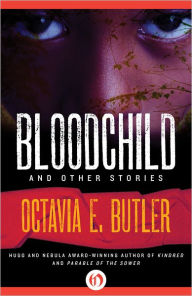
Octavia E. Butler was born in 1947 into an impoverished African American community to a 14-year-old girl. Despite struggling with dyslexia, she had a passion for reading and writing ever since she was very young. As a teenager, she started attempting to publish her stories, despite the extreme difficulty for African Americans publishing science fiction / fantasy. At the time she was one of only a couple African American sci-fi writers. Despite being taken advantage of by money-hungry agents, she finally published Patternmaster in 1976. This book was praised for its powerful prose, and she ended up writing four prequels. She finally became mainstream upon publication of Kindred in 1979. Butler died outside of her home in 2006.
In my post about the biological assessment of mental health diagnosis, I mentioned that there are three ways a clinician can focus a mental health assessment: biological, psychodynamic, and behavioral. In this post I will discuss the psychodynamic and behavioral assessments of patients.
I’m not sure what a psychological assessment feels like to the clinician, but I have been through several assessments as a patient. Some of them have been very grueling and embarrassing – my 2 hour long assessment for dialectical behavioral therapy comes to mind. Generally, the mental health worker will ask a series of questions to determine personality (am I maladaptive?), social context (am I from an abusive family? caring for an sick family member? a bullied teen?), and culture (I’m a WASC) .
Such an assessment can be either a structured or unstructured interview. In the structured interview, the patient is asked a set of pre-determined questions, even if some of the questions seem inapplicable. In the unstructured interview, the clinician decides which questions to ask. The unstructured interview is much less grueling than the structured one, but it is more likely to produce bias due to the direction of questions that the clinician chooses.
Generally while the clinician is giving the interview, she also assesses the general appearance and behavior of the individual. Is he well-dressed, have good hygiene, look the clinician in the eye? Does he seem to be lying? Observation can also be done through role-playing and self-monitoring. Self-monitoring is a fantastic way to get information that the clinician might miss in a one-hour interview, but it tends to be biased towards what the patient is willing and able to record.
There are also a lot of tests to determine personal characteristics. A famous one of these is the Rorschach Inkblot Test. It’s a series of 10 inkblot pictures to which the patient tells the clinician what she sees and thinks while looking at the picture. The Rorschach test takes a lot of time both to administer and to evaluate, though it can be very enlightening to a clinician who is well-trained in the system.
Another well-known personality-trait test is the Thematic Apperception Test (TAT). The TAT uses a series of simple pictures of people in various contexts. The patient tells a story about what the character is doing and why. Like the Rorschach test, the TAT takes a long time to administer and interpret. The TAT has become a bit obsolete since the pictures were designed in 1935, making them harder for the modern patient to relate to.
The Rorschach and TAT are considered subjective assessments, because they are subject to the clinician’s interpretation. There are also objective tests like the Minnesota Multiphasic Personality Inventory (MMPI), which was introduced in 1943, and revised to the MMPI-2 in 1989. The MMPI-2 is a computerized test consisting of 550 true-false questions on topics ranging from physical condition and psychological states to moral and social attitudes. From these 550 questions, several “clinical scales” are determined. Such scales quantify hypochondria, depression, hysteria, pscyhopathic deviance, masculinity-femininity, paranoia, psychasthenia, schizophrenia, hypomania, and social introversion. It also quantifies the likelihood of lying (inconsistent answers), addiction proneness, marital distress, hostility, and posttraumatic stress.
Such computerized objective tests are helpful because they (for the most part) lack clinician bias, and they are inexpensive. However, they depend upon the patient’s ability to honestly and accurately describe themselves, which many patients are unable or unwilling to do. These tests also tend to be impersonal, and might alienate the patient.
References:
Sometimes, a lesion hasn’t developed enough to be recognizable by brain scans. In this case, neuropsychological tests can be performed to quantify a person’s cognitive, perceptual, and motor performance to determine what parts of the brain might be affected. The neuropsychological assessment usually involves a battery of tests such as the Halstead-Reitan assessment for adults. This assessment is composed of 5 tests.
1. Halstead Category Test: Measures learning, memory, judgement, and impulsivity. Patient hears a prompt and selects a number 1-4. A right choice gets a pleasent bell sound and a wrong choice gets a buzzer. Patient must determine the underlying pattern in prompt-number combinations.
References:
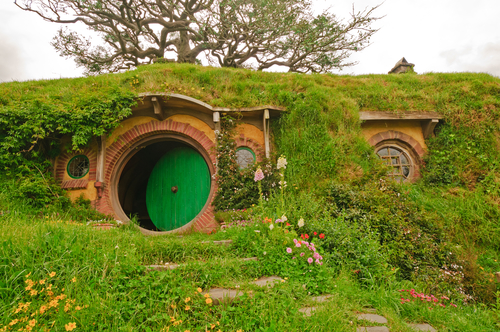
A humble hobbit named Bilbo Baggins is unwillingly thrown into a “nasty adventure” when the wizard Gandalf thrusts himself into Bilbo’s home, a troop of dwarves in his wake. Gandalf has misinformed the dwarves that Bilbo is a burglar – the dwarves want Bilbo to burgle a gigantic horde of treasure from the dragon Smaug, who had stolen the treasure (with their mountain kingdom) from the dwarves’ ancestors decades before. This is a strange coming-of-age story, since the character is 50 years old already (which is youngish for a hobbit, but still firmly in the adult range). But as the story progresses, Bilbo recognizes that he is a brave hobbit, an adventuresome hobbit, and a very sneaky burglar.
The Hobbit was Tolkien’s first major work about Middle Earth, and although it is an excellent book on its own, it is unfortunately overshadowed by his later work The Lord of the Rings. Although LOTR is a sequel to The Hobbit, these two books are very different styles. The Hobbit was intended for children, and therefore has a light-hearted, almost silly air to it. The songs tend to be funny and childish rather than somber and chilling, as in LOTR. An example is when the dwarves are teasing Bilbo with the song:
Another factor of the young audience is that the characters in the book are much more silly than they are in the live-action movies. (I will discuss the movies in a later post.) A striking example is of Thorin’s character, who in the book is silly and long-winded, but who in the movie is dark and romantic (not to mention quite handsome).
The spider scene in the movie is dark and scary. Bilbo is heroic and rescues his friends through cleverness and brave swordsmanship. In the book, he swings through the trees singing a silly song that diverts the spiders’ attention.
The themes in The Hobbit also tend to be a bit black and white – probably for the sake of the young audience. There is a clear good and evil. The good characters always end up choosing mercy and righteousness over power and wealth. (Though, there is a bit of wealth to go around!) As in any good book, there are momentary shades of grey. Thorin, who is otherwise quite honorable, is temporarily blinded by greed – though he eventually redeems himself.
An interesting fact that I found out while researching this review is that J. R. R. Tolkien changed The Hobbit after writing LOTR in order to better fit with the dark purpose of the One Ring. Originally, Gollum willingly bet the ring in the riddle contest. Gollum was dismayed when he found out that he could not keep his promise of the ring, and he instead bargained to lead Bilbo out of the cave. They parted on good terms.
In LOTR, the ring changed from a helpful charm to a powerful device that would suck the soul out of the wearer. Because of this change in the ring’s nature, The Hobbit‘s Gollum had to turn murderous when he discovered the ring was missing.
Overall, this story was quite enjoyable, and I’m glad that I decided to “re-read” it as an adult. I got a lot more out of it this time around than I did when a child.
![]() |
| 4.5 snowflakes for originality, adventure, humor, morals, and fun |
Reason for reading: Interest, TBR Pile, Classics Club List
Format: Audiobook