Preludes and Nocturnes, by Neil Gaiman
Reason for Reading: Group read on LibraryThing
Review
In this classic graphic novel, Dream (The Sandman) is captured by a sinister magician and remains trapped for decades. While he is gone, his kingdom falls apart and dreams on Earth are disrupted. I’m not very experienced with graphic novels, having only read Satrapi’s Persepolis before this, so reading Preludes and Nocturnes took some getting used to. But I’m glad I decided to climb out of my comfort-zone for a while – I was REALLY enjoying the book by the time it ended. Neil Gaiman’s mind never ceases to amaze me. He’s so darkly creative. There are a few issues I had with this book, though. I thought the tie-in to DC superheroes was a bit cheesy – though I recognize that this cheese was do to the development of the graphic novel as a genre. I hear these elements disappear later in the series to leave only the good stuff. 🙂 Also, I found one incident at the end of the book darkly depressing. It made me very sad to see the dark insides of humanity (as Gaiman and his illustrators see them)…but I guess my emotional reaction is exactly what Gaiman was going for. So, points to him. 😉 Overall, this was a promising beginning, and now that I am more used to the graphic novel style, I’m looking forward to enjoying the rest of the series much more – after all, it’s only supposed to get better from here!
Midnight Riot, by Ben Aaronovitch
Midnight Riot Written by Ben Aaronovitch, Narrated by Kobna Holdbrook-Smith
Reason for Reading: Real-life Book Club
Review

Peter Grant is a bumbling, easily distracted constable on the fast-track for a paper-pushing job. His luck unexpectedly turns when a ghost approaches him at a murder scene. Apparently Grant does have a talent – he can see dead people. Suddenly, he is adopted as the sole apprentice of Detective Chief Inspector Nightengale, who heads the supernatural division of the police. Grant is up to his ears in weirdness as he tries to solve the murder while learning the ropes in the unexpectedly supernatural world. I mostly enjoyed Midnight Riot for its interesting world-building and a lot of dry humor. The character of Grant was likable enough – even if he was bumbling – and I suspect I’d grow attached to him after a few books in the series. The plot tended to stray a bit more than I prefer, though. Nothing too bad, mind you, but there were a few moments where I wondered if we were still trying to catch the murderer or just enjoy the scenery. I prefer a little more focus. But these passages were never very long, and the book was, for the most part, quite enjoyable. I’m sure I’ll pick up the next in the series some day.
As for the narration by Kobna Holdbrook-Smith…I think his cadence, tone, and delivery was done perfectly for our character. He was so dead-pan with the dry humor that I sometimes only caught the humor by delayed reaction. Which made it funnier. 🙂 On the other hand, he was a rather loud (and wet) breather. I figured at first that this was put on for the character effect – but then I realized that such breathing would be difficult to fake unless he narrator was really congested. So…the loud breathing wasn’t enough to put me off, but it might be enough to put SOME people off.
Harry Potter and the Order of the Phoenix, by J. K. Rowling
Harry Potter and the Order of the PhoenixWritten by J. K. Rowling, Narrated by Jim Dale
Reason for Reading: I’ve been going through the Harry Potter books by audio now. This is my first time reading straight through the entire series, and by “straight” I mean I finish one every one or two months. 😉
Review
(WARNING: Contains unavoidable spoilers from earlier novels!!!)Voldemort has recently returned, and Harry Potter has spent the entire summer listening to the muggle news for some sign of terror. But it turns out that most people don’t believe Harry and Dumbledore that Voldemort has risen, and Voldemort is using that ignorance to his advantage. Furthermore, the Ministry of Magic has decided that Dumbledore isn’t stable, and they’re interfering at Hogwarts with the addition of a new teacher – the throttle-worthy Dolores Umbridge. *Yes. I wanted to throttle her EVERY time she entered the narrative. That shows excellent caricaturization by Rowling.* This year, Harry must battle the disciplinary hand of the Ministry and skepticism from his fellow students, without losing focus on his upcoming OWL exams. Will he pass Potions?!
This is one of the more complex books in the series (which wins it bonus points with me), but it is also the angstiest book. Harry spends the entire book angry at his friends, angry at Dumbledore, angry at the Ministry, angry at Umbridge, and just plain pissed off in general. His confusion is compounded by his interest in Cho, who is still mourning the death of her dead boyfriend Cedric. Overall, it’s a good book because it advances the story and develops character, but I got a bit tired of angsty Harry. This is my least favorite (though still highly enjoyable) of the Harry Potter books.
Jim Dale’s narration is quite enjoyable now that I’ve gotten used to it. He has recognizable voices for each of the characters, and his voice is entertaining and engrossing.
Short Retellings of Donkeyskin
“Thousandfurs,” by Doug Allyn (in Once Upon a Crime, ed. Ed Gorman): When mob-boss King’s wife dies, he starts losing his sanity. In hopes of salvaging his career in crime, King’s second-in-command hurries to find a look-alike to appease his boss. But the actress just happens to be the daughter of King…
–This was an interesting retelling of Allerleirauh which placed the characters in modern-day Detroit and made the King into a mob-boss. The concept of the coat of a thousand furs had an interesting twist. 🙂
“Donkeyskin,” by Terri Windling (in The Armless Maiden and Other Tales for Childhood’s Survivors, ed. Terri Windling): In this striking poem, Windling mixes gritty modern-day reality with fairy tale imaginings. A girl runs away from her abusive father and becomes a waitress at a truck-stop. There, she hides behind a tough skin, waiting for her prince.
–One of my favorite short retellings
“Allerleirauh,” by Jane Yolen (in The Armless Maiden and Other Tales for Childhood’s Survivors, ed. Terri Windling): In this fairy tale retelling of Allerleirauh, a motherless princess would like nothing better to win the love of her father – but he blames her for the loss of his queen. But…what happened to the fairy tale ending?
“Suit of Leather,” by Barbara Wilson (in Salt Water and Other Stories): Carter grew up a sheltered heiress, but when her father attempts to sexually molest her, she runs away to the streets. She buys a suit of leather, which makes her feel tough and protected from the world around her. It makes her feel attractive and it hides her identity of “runaway heiress” well. She finds a dishwashing job (and a room off the kitchen to shelter her) in a gay restaurant. There, everyone decides she’s butch because of her suit of leather, but she is secretly attracted to Nat – a woman who is interested in a more softly-clad type. Carter must climb out of her protective leather suit in order to get Nat’s attention.
–This was a very well-written story, and possibly one of the most memorable. But I personally found the adult content a bit off-putting.
“The Tale of the Skin,” a short story by Emma Donoghue (in Kissing the Witch: Old Tales in New Skins, by Emma Donoghue): This is an almost canonical retelling of Donkeyskin, except that it has a cynical twist at the end.
“Tattercoats,” by Midori Snyder (in Black Thorn, White Rose, ed. Ellen Datlow and Terri Windling): On her wedding night, a princess inherited three walnuts which housed her mother’s golden ring, spindle, and reel; her mother’s dresses the color of the sun, the moon, and the weather; and a raggedy old coat. At first, the princess thinks the raggedy old coat is useless and ugly – but her mother explained that the coat helped her to better know herself. Years later, the passion of the princess’ marriage is fading, and she finally decides to make use of her mother’s gifts.
–This is an interesting sequel to Allerleirauh, but it has adult content.
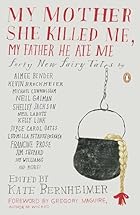
“The Color Master,” by Aimee Bender (in My Mother She Killed Me, My Father He Ate Me, ed. Kate Bernheimer): When the Color Master falls ill, an apprentice must fulfill an impossible request for three dresses for the princess – one the color of the moon, the next the color of the sun, and the third the color of the sky. The apprentice must put all of her passion and anger into the dresses in order to provide courage to the troubled princess.
-This is a retelling of Donkeyskin from the point of view of the dressmakers. A very imaginative story, with colors like poetry. 🙂
“Dancing in the Ashes,” by Richard E. Friesen (in Once Upon a Galaxy, ed. Will McCarthy and and Martin H. Greenburg): In order to escape her emotionally abusive father, Ally uses her mother’s time machine to travel into the Middle Ages. There, she discovers that not everything is as romantic as she expected. There is filth and stench everywhere, not enough food, not enough water, and a social hierarchy that she’d never dreamed of. Will she be able to find her handsome prince in this world? Or can she find a way back to her own?
-This is a retelling of Donkeyskin/Cinderella that was written by Friesen as an example to modern readers that our fascination with the Middle Ages wouldn’t last very long if we actually tried living there.
“Moss Gown,” by William H. Hook: When Candice’s father decides to split his lands among his daughters, he puts them to the test by asking each how much she loves him. Candice’s sisters flatter her father with fancy words but no sincere affection. Candice answers that she loves her father like “meat loves salt.” Candice’s father doesn’t understand the simple elegance of Candice’s answer, and he gives all his land to the two older sisters, who banish her. While running through the forest, she meets a witch who gives her a magical gown made of moss. She finds a job in the kitchen of a rich man’s house, and attends his balls dressed in her gown of moss (which becomes a beautiful dress at night). They fall into insta-love, and the young master yearns to meet the young lady again. Candice learns that the young master is able to lover her despite her tattered clothing. They get married, and the father (now blind and abandoned on the streets by his older daughters) shows in the area – begging for food. Candice throws a feast cooked entirely without salt, and this is when her father discovers how much meat loves salt.
-This children’s picture book has elements of Cinderella, Donkeyskin, and King Lear. A cute story, especially for little girls.
“Princess Furball,” by Charlotte Huck: When a king promises his daughter in marriage to an ogre, she tries to postpone the wedding by requesting four impossible gifts – three unearthly dresses and one fur coat made from the fur of all the animals in the kingdom. But when these gifts are quickly provided, she runs away and becomes a servant in the kitchen of another palace. She attends three balls dressed in her beautiful gowns, and the prince falls in love with her.
Sense and Sensibility, by Jane Austen

Sense and Sensibility, by Jane Austen
Review

This is the story of two very different sisters: Elinor is a sensible (yet secretly passionate) young woman who must continuously reign in the wild passions of her mother and sisters – especially Marianne whose head is filled with romantic notions of one-true-love and tragedy. When their father suddenly dies with their newly-acquired estate entailed away to their half-brother John, the sisters are left destitute. John and his wife Fanny descend upon the mourning family within a fortnight and make the sisters and mother feel like unwelcome guests in their beloved home. Elinor soon forms an attachment with Fanny’s brother Edward, but Fanny doesn’t approve of Elinor’s lack-of-fortune-or-name. So the family moves away to a cottage, leaving Edward behind. Poor Elinor must struggle with her own worries about Edward while at the same time monitoring the expensive of the house and trying to reign in the wild, all-consuming attachment of Marianne to the dashing young Willoughby. The romantic hopes of both girls spiral downwards as more and more obstacles appear.
I love this story because I’ve always admired Elinor for both her passion and her ability to handle all problems that come her way. I also admire Colonel Brandon for his devotion to Marianne despite her ecstatic preference for the younger, handsomer, and less reserved Willoughby. This time around, I also really appreciated Marianne’s character. Her youthful ideas about love were cute – and realistic for many girls of 16. 🙂 Her development throughout the story was extraordinary. I loved the way she slowly, cluelessly, began to understand the world around her. I don’t admire her, but I think she’s cute and very funny. And, frankly, a more interesting character than Elinor (due to her development-of-character).
To be honest, this book is just as much a favorite as Pride and Prejudice. Yes. That is right. I ADMIT that I like this book just as much (possibly a little more) than the beloved P&P.
Hamlet, Act III
Act III is the pivotal act in Hamlet. The Prince had been dragging his feet for months trying to force himself to avenge his father’s death. At one time, he’d be certain that the ghost was truly the restless spirit of his father seeking revenge; another time he’d fret that the ghost may be a demon sent to tempt the Prince into a fatal and condemning act. In scene i, he had his famous “get thee to a nunnery” fight with Ophelia. Frustrated with his own impotence, he extended the blame of his mother’s inconstancy to all women. Maddened at the thought of Ophelia’s future marriage to someone else; maddened at what he saw as her certain inconstancy in the future, he demanded that she commit herself to a convent. His interaction with Ophelia was observed by Polonius and Claudius, who decided that he was dangerously addled and must be sent away to England (presumably with hopes that the distraction would clear his mind).
In scene ii Hamlet made pointed remarks during a play, hoping to draw out Claudius’ guilty response. Hamlet succeeded in drawing out Claudius, who angrily retorted at the content of the play and stomped out of the room. In the immediate rush of fear at Hamlet’s knowledge, Claudius suddenly felt his own guilt. He regreted killing his brother – not because it was a treacherous act in itself, but because he had been found out and might suffer consequences. He knelt down and prayed that God help him; he asked forgiveness while simultaneously acknowledging that he’s not really sorry that he got the Crown and the Queen, but he was very sorry that Hamlet found out about the murder. The Prince discovered Claudius praying and at first set his mind upon killing the King here (when the royal back is turned). But then Hamlet worried: if he killed Claudius now, while praying, the King’s soul would be clean and he would be dispatched to heaven. Hamlet wanted Claudius to be damned, like the late King Hamlet. The prince decided to wait.
In the final scene, Hamlet was summoned to the Queen’s chambers, where she tried to talk sense into him. There, Hamlet swelled again into his accusatory rage at the inconstancy of women. Polonius, who had hidden himself behind the curtains upon Hamlet’s entry, thought to rescue the Queen from her raving son – but when he called out, the infuriated prince stabbed at the curtains and slayed Polonius. With this act, Hamlet’s path of revenge was cemented. He had killed once, he had no choice but to continue with his revenge quickly or fail entirely. Shakespeare punctuated this pivotal act with the ghost of dead King Hamlet – who only the prince can see. Prince Hamlet’s shock at the escalation of events and the sudden appearance of the ghost muddled his already maddened state, and he ranted wildly while the terrified Queen tried to calm him. The act ends with Hamlet lugging the body of Polonius off stage.
(TO SEE MORE ABOUT HAMLET GO TO MY MASTER POST)
![]() |
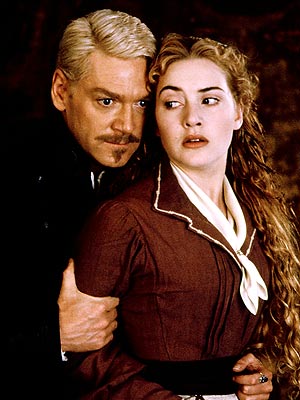
| Hamlet and Ophelia Hamlet (1996) Directed by Kenneth Branagh |
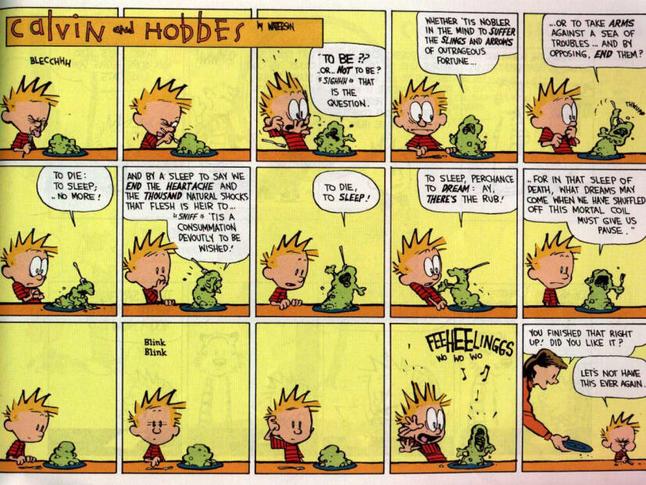
Act III, Scene i: The King and Polonius decided to observe Hamlet as he interacted with Ophelia. They told Ophelia to linger where she was sure to meet Hamlet, and the two men hid. Before noticing Ophelia, Hamlet was deep in his own meditations. To be or not to be? Apparently, Hamlet was considering suicide. Did he know the King was watching? Or was his doubt genuine? There is no indication that he knew the King was near. Personally, I think Hamlet was genuinely considering suicide. He’d experienced some terrible blows in the last few months – his father died unexpectedly, his mother married her brother-in-law, and Hamlet was being haunted by the ghost of his father who was making shocking demands of the Prince. Hamlet was tortured by a feeling of failure that he hadn’t avenged his father, stress at the idea of killing the King, and doubt about the nature and intentions of the ghost. That’s enough to make any sane person consider suicide. The sudden appearance of Ophelia reminded him of yet another failure in his life.
Like Claudius and Polonius, I observed Hamlet very closely in this scene because I wanted to consider the age-old question: was Hamlet mad or was he faking it? I saw no signs of actual insanity, despite Hamlet’s nonsensical word-play and his irrational anger at Ophelia. He seemed genuinely enraged at Ophelia’s perceived inconstancy, and he blamed her for future inconstancies which she had not yet committed; but sane lovers can also be irrational in this way.
Another question I pondered during this scene was whether Hamlet meant to imply that Ophelia wasn’t a virgin (since Harold Jenkins, the editor of my edition, claims that there is no evidence that Ophelia and Hamlet had any pre-action action). And, frankly, I have to agree with Jenkins. There is a lot of double-meaning innuendo during this scene (and the next), but that doesn’t prove that they’d been together. Men are quite capable of innuendo in the company of maidens. That proves nothing in itself. So I leave that one open to interpretation.
![]() |
| The Play Hamlet (2009) Royal Shakespeare Company Directed by Gregory Doran |
Act III, Scene ii: In this scene, the troupe of traveling actors put on a play which closely resembled the murder of King Hamlet. The Prince made continual jibes and probes at the King until Claudius angrily announced that he’d had enough and stomped out of the room – which was exactly the guilty reaction that Hamlet was hoping for. Now Hamlet could avenge his father’s death with confidence that Claudius is guilty.
This scene is scrutinized closely by critics. The play began with a dumbshow which silently portrayed the murder – but Claudius apparently didn’t respond to this dumbshow. The King only responded upon seeing the murder in the spoken play. Critics ask the question: did the King see the dumbshow? Why wasn’t he offended by it? Why did he wait until the second enactment of murder before retorting? Some directors believe that Claudius didn’t see the dumbshow. They have him turned away from it, chatting with a neighbor. Others believe that Claudius saw the dumbshow, and silently blanched, but wasn’t truly provoked until Hamlet’s comments during the second enactment. Harold Jenkins (forever the literalist) believes that neither of these two things happened, because otherwise it would have been mentioned in the stage directions. 🙂 A sophisticated connoisseur of Hamlet apparently watches Claudius during this scene in hopes of determining which interpretation the director has chosen.
![]() |
| Hamlet almost kills Claudius Hamlet (2009) Royal Shakespeare Company Directed by Gregory Doran |
Act III, Scene iii: Shocked by the realization that Hamlet knew Claudius’ guilt, the King prayed for help from God. Hamlet discovered Claudius praying, and almost killed him there…but then decided that if he killed Claudius when his soul was cleansed by prayer, Claudius would achieve salvation. Hamlet wanted Claudius to be damned, so he waited a better opportunity for revenge.
The question I asked while reading this scene: Was Hamlet just procrastinating, or did he really not kill Claudius in prayer because he wanted to damn Claudius’ soul? Personally, I think he was procrastinating. He had resolved that he must kill Claudius, but he didn’t have the nerve to do it in cold blood.
![]() |
| Hamlet in the Queen’s Closet Hamlet (2009) Royal Shakespeare Company Directed by Gregory Doran |
Act III, Scene iv: Hamlet ranted at the Queen in her chambers. Polonius, hidden behind the curtains, moved to assist the Queen, and Hamlet stabbed him. Hamlet seemed rather surprised to discover that he’d killed Polonius. What did he expect? That the King was hidden behind the curtains? Personally, I think he wasn’t thinking. He had worked himself up into a frenzy talking to the guilty Queen, and was surprised by Polonius’ sudden call. He stabbed the curtain, not knowing what lay behind it, and only afterwards asked “Is it the King?” His confusion at finally having spilled blood – though the wrong person’s blood – was compounded by the sudden appearance of the ghost. This is the first scene where Hamlet truly appeared, to me, to have lost his wits. He was acting violently without thought of consequence or purpose. His speech was confused. He was utterly out of his depth.
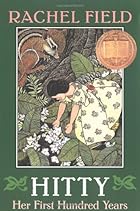
Hitty: Her First Hundred Years, by Rachel Field
Hitty: Her First Hundred Years, by Rachel FieldReason for Reading: This book won the Newbery Medal in 1930 and has been sitting on my shelf for years.
Review

While sitting idly one evening in her antique shop, Hitty, a 6-inch-long doll carved out of Mountain Ash wood, decides to write her memoirs. She begins her narration with her birth into the brave new world of 1830’s Maine. Her little girl drags her on many adventures beginning first with their village and ending in a far-off land…where she finds a new owner. Follow Hitty’s adventures over a hundred years as she changes hands and lands and occupations. This is an adorable little classic of historical fiction for 8-9 year-old girls. The story is sweet and generally easy to read (though some of the historical references went over my head, and the book succumbed to the racial stereotyping common for books written around the turn of the century). I’m glad I finally picked this one up.
Call It Courage, by Armstrong Sperry
Call It Courage, by Armstrong SperryReason for Reading: This book won the Newbery Medal in 1941. It’s been sitting on my shelf for years.
Review

Mafatu is afraid of the ocean because he almost drowned when he was a boy. But in his culture, fear is scorned and laughed at. Mafatu feels that he must redeem his good name and prove that he is not afraid anymore. He climbs in a boat and goes on a voyage, but he soon finds himself shipwrecked on an apparently-deserted island. There, he keeps himself alive by making all of his own tools, weapons, and a new canoe. He battles a tiger shark, an octopus, and a boar. He defies the cannibals when they return to their island. But will he be able to return home? This was a cute book, and I enjoyed the adventure – though it’s very short and all the adventure is packed in at a very unrealistic pace. Regardless, I really enjoyed the couple of hours I spent with it. I think a young reader might find this book fun. It’s appropriate for someone reading at maybe the 3rd grade level.
The Hour Between Dog and Wolf, by John Coates
The Hour Between Dog and Wolf: Risk Taking, Gut Feelings, and the Biology of Boom and BustWritten by John Coates, Narrated by Paul Michael Garcia
Reason for Reading: This book was shortlisted for the Wellcome Trust Book Prize.
Review

In this Wellcome Trust shortlisted book, Coates describes his research into the feedback loop between testosterone and success in the financial market. When a person has high levels of testosterone, they are prone to risk taking – which generally promotes the market; however, success raises their testosterone levels, which increases their risks and creates bubbles (like the dot-com bubble) which are unnatural and eventually pop. Loss of money leads to decreased testosterone levels and release of stress hormones – which, if sustained for long periods of time can lead to a depressed, risk-averse market. This is when the government should step in and perk up the market themselves. (You can probably guess Coates’ politics from that statement, but the book is generally apolitical.)
I found Coates’ research quite fascinating, and his writing was engaging to someone who’s interested in the topic. I, unfortunately, am not generally interested in finance and so my attention wavered a bit during the finance-heavy bits. But the book was written in an approachable way such that I (who know nothing of the matter) could understand the financial/market bits and that someone who knows very little medicine could understand the science bits. In fact, it was shortlisted for the Wellcome Trust Book Prize because because it makes medicine approachable to the general population. For anyone interested in how hormones/neuroscience/psychology can affect the market, this would be an excellent book to pick up. An easy and interesting read.
The Last Battle, by C. S. Lewis
The Last Battle, by C. S. LewisReason for reading: This is the seventh (and final) book in the Chronicles of Narnia, which I’ve been reading in order-of-publication. I plan on rereading them all in chronological order using Planet Narnia: The Seven Heavens in the Imagination of C. S. Lewis, by Michael Ward as a guide.
Review

The final book in The Chronicles of Narnia depicts the apocalypse of Narnia. When a shrewd monkey teams up with Calormen to trick the Narnians into thinking Aslan has returned – and they are his spokespeople – Narnia is cut to ruins. Forests are destroyed, Narnians begin to doubt Aslan, and cities fall to heathen invaders. I’m afraid to say this was my least favorite of the Narnia books (though I still liked it quite well!). Intellectually, I know Lewis had to have an apocalypse – whatever begins must also end – but it was still a bit dreary. So although I understand why the apocalypse had to come, I still liked the other books so much better. Not only because they were much more cheerful, but also because they had more fun-filled adventure.
But that’s par for the course. Death is better than life; boys are better than girls; light-coloured people are better than dark-coloured people; and so on. There is no shortage of such nauseating drivel in Narnia, if you can face it.
I agree that Narnia conveys some rather sexist and ethnocentric views, but that’s what English literature of that period was like. Lewis (and the Narnia books) are a product of their time.
And in The Last Battle, notoriously, there’s the turning away of Susan from the Stable (which stands for salvation) because “She’s interested in nothing nowadays except nylons and lipstick and invitations. She always was a jolly sight too keen on being grown-up.” In other words, Susan, like Cinderella, is undergoing a transition from one phase of her life to another. Lewis didn’t approve of that. He didn’t like women in general, or sexuality at all, at least at the stage in his life when he wrote the Narnia books. He was frightened and appalled at the notion of wanting to grow up. Susan, who did want to grow up, and who might have been the most interesting character in the whole cycle if she’d been allowed to, is a Cinderella in a story where the Ugly Sisters win.
When I read this paragraph, I wondered what Lewis actually did do with Susan in the book. But when I read the book, I interpreted those events differently than Pullman: Susan wasn’t allowed into Heaven at that time. It was made clear that Susan was in one of the silly stages of life, but it was just a stage. She still had a chance to grow out of it. She hadn’t been rejected from Heaven permanently, and it wasn’t her time to die. Susan lived. And Susan had the ability to change (just as Pullman points out). Lewis wasn’t saying that grown-ups can’t go to Heaven. After all, the kids’ parents went to Heaven, didn’t they? Lewis was saying that Susan was in a phase where she idolized material things – and had thus turned away from her spiritual health.
Also, I’m not certain Susan really is the most interesting character. By Pullman’s definition (he-who-changes-is-most-interesting) I believe Eustace’s character developed much more than Susan’s character. Why is Pullman ignoring Eustace?
What do other people think about Susan’s character? Do you think Lewis meant for her to be denied Heaven permanently?