Around the World in 80 Books

I’m joining in a five-year project to read “around the world” in 80 books. This blogging project is hosted by Have Books, Will Travel. You can sign up here. Here are my (somewhat modified rules):

My rules for this challenge are:
  • I have five years to complete my journey. My start date is November 2012 and I will complete my journey in October 2017.
  • I generally read a variety of books (I THINK!) so this is more of a how many countries can I hit in five years? challenge, rather than a challenge to read precisely 80 books. I will list the books off by country. It is the setting of the book that I’m counting (rather than the nationality of the author), and if the book takes place in more than one country, I will choose the country in which most of the book is set.
  • For books set in the US, I will try to read one from all 50 states in the next 5 years.

United States

The Americas (not US)
Europe
Africa
Australia

Polar Regions

Oceania 

Outer Space


visited 12 states (24%)
Create your own visited map of The United States


visited 11 states (4.88%)
Create your own visited map of The World

The Horse and His Boy, by C. S. Lewis

2012 Book 153: The Horse and His Boy, by C. S. Lewis

Reason for Reading: Fifth Book (publication order) of the Chronicles of Narnia

Review*****

Shasta grew up as practically a slave to his “father,” until he meet a talking horse. Bree (the horse) has been kidnapped from Narnia, a foreign land that Shasta has never heard of. Bree is convinced that Shasta, too, has been taken from Narnia. They escape together, and have many adventures on the way to Narnia. This book takes place during the original reign of High King Peter and his brother and sisters. It was a delightful little book, and complements the Narnia series quite well. I DID have a good laugh at the rather xenophobic treatment of Archenland–most people from this land were portrayed as corrupt, degenerate, and evil. By the way they dressed and some of their habits, Lewis clearly meant for Archenland to be similar to the Orient. This snafu made me chuckle a little bit, since I took into consideration the age in which Lewis was writing…and that he was writing about a fantasy land. In the end, I enjoyed this book just as much as the other books in the series. It is fun, cute, and a delight to read.

Sunday Salon – November 4, 2012


Well, another month has passed, and this one has been busy! I gave up on job prospects here in Ohio and decided to try the waters in Minnesota where my family (and many friends) live. I won’t move until December, but I’ve already made one trip to move my stuff up there. I can’t believe it costs less to make three trips in my car than it does to rent a truck!!! What’s with that?

I also got lots of books read and participated in a few blog events. 🙂

Weekly Update

Reviews

Events/Memes
  • The first three books that I reviewed were for the R.eaders I.mbibing in P.eril VII event hosted by Stainless Steel Droppings. That was my first time participating in the RIP event, and I really enjoyed meeting all the new bloggers and seeing good spooky/scary books to read!
  • The last book reviewed was for the Harry Potter Read Along hosted by Lost Generation Reader. This event is still ongoing, but I’m beginning to fear that I won’t make it through all the Harry Potter books in time! Oh well, I can continue them on my own. 🙂
  • I participated in my second Feature and Follow Friday, a weekly blog hop hosted by Parajunkee and Alison Can Read. I found several new book blogging buddies there. I really like the you-follow-me I-follow-you rule. I think I’ll generally try to return the favor to book bloggers who follow me on GFC from now on. It broadens my horizons and increases my own following. 🙂
  • I joined Random Reads hosted by i’m loving books. I’ve been feeling trapped within a highly structured reading curriculum for a while now. This way, I can introduce one random book a month into my reading schedule. Yay for structured randomness! 😀 My random book for November is Three Men in a Boat, by Jerome K. Jerome.
  • I joined Project Fairytale hosted by The Cheap Reader.  This event will take place either in February or March of next year. Each person chooses a different fairy tale, reads the original, reads a few retellings, and does a comparison. Sounds like fun, doesn’t it? 🙂 Sign-up ends on November 30th, so you can still join! (Vote for March! :p) My fairy tale is Donkey Skin. My introductory post is here


And now! Let me introduce the theme that I’m hosting in February 2012: Social Justice Theme Read

This is going to be an informal theme read where people can hop in at any time and   comment with a link to their blog posts about social justice (or social injustice). At the end, I’ll have a wrap-up post including everyone’s links. To see my potential reading list, you can read my introductory post. If you’d like to participate, you can sign up in advance at my intro post, or you can just jump in at any point as it suits you. If you sign up on my introductory post by February 7th, 2013 AND write one blog post / book review about social justice (or the lack thereof) you will be entered to win a $10 gift certificate from Amazon

Finally, my post popular blog post for this week was: Cleopatra: A Life, by Stacy Schiff. I have no idea why this post is suddenly so popular. 🙂

October Wrap-up

Books Reviewed
  1. The Headless Cupid, by Zilpha Keatley Snyder
  2. Blood and Chocolate, by Annette Curtis Klause
  3. Harry Potter and the Sorcerer’s Stone, by J. K. Rowling
  4. Roll of Thunder, Hear My Cry, by Mildred D. Taylor
  5. Surprised by Joy, by C. S. Lewis
  6. Devil’s Pass, by Sigmund Brouwer
  7. Narcopolis, by Jeet Thayil
  8. Blood and Other Cravings, ed. Ellen Datlow
  9. Pride and Prejudice (A Norton Critical Edition), by Jane Austen
  10. The Poisoner’s Handbook, by Deborah Blum
  11. The Assassin’s Code, by Jonathan Maberry
Additionally, I led a discussion of The Embittered Ruby, by Nicole O’Dell for the ACFW bookclub

Plans for November

Our theme in the 75ers group on LibraryThing is “New Novels November,” so I will try to read a few books that were published in 2012. 🙂 I’m also participating in a Russian Reading month over at Tuesday in Silhouette. I’ll be reading Pale Fire, by Vladimir Nabokov.

I’m participating in Let’s Read Plays! hosted by Fanda at Fanda Classiclit and Dessy at Ngidam Buku. This is a year-long event in which we will read classic plays. This month, I’m reading Shakespeare’s Hamlet.

Harry Potter and the Chamber of Secrets, by J. K. Rowling

2012 Book 152: Harry Potter and the Chamber of Secrets

written by J. K. Rowling, narrated by Jim Dale

Reason for Reading: I’m rereading these books along with Lost Generation Reader

My Review*****

Harry hopes his second year at Hogwarts School for Witchcraft and Wizardry will be calmer than last year’s. However, even before the school-year begins, Harry meets a house elf who is determined to keep Harry from even STARTING his school year. Harry perseveres, however, and delves into trouble yet again when the Chamber of Secrets is opened and some stealthy beast begins to petrify his classmates. Will Harry and his friends be able to stop the beast before it manages to kill someone? Harry also gets his first taste of xenophobia in the wizarding world, when he learns a new naughty epithet (the m-word). And I bet you’d never guess which bratty little villain uses the word? I’ll give a hint. He’s blonde. 😉

This second installment of the Harry Potter series is just as delightful as the first. It, like its predecessor, is aimed at the younger end of the YA spectrum, which suits me just fine. The narration by Jim Dale is quite enjoyable–in fact, I liked this narration better than his narration of the Sorcerer’s Stone. He’s got different voices for each of the characters, and his voice definitely engaged me. 

The entire Harry Potter is a popular book on the “banned and challenged” lists released by the ALA. Personally, I didn’t see anything objectionable in this book. Accusations of “satan worship” and “encourages interest in the occult” are silly. There isn’t any language or objectionable morals that I can see–other than the fact that Harry, Ron, and Hermione steal, lie, and generally disobey rules. Of course, they do these things with the best intentions, and often because they feel the adults don’t listen to them. Also, they don’t hurt anyone with their antics (though they certainly endanger themselves). But let’s be honest with each other. Would YA books be interesting to ANYBODY if the protagonists were perfect little angels who allowed the adults to take care of all the important stuff? Of course not. 


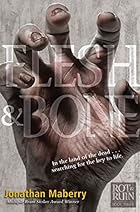
Flesh & Bone, by Jonathan Maberry

2012 Book 151: Flesh & Bone, by Jonathan Maberry

Reason for Reading: Third book in the Benny Imura series


Review:

Benny, Nix, Chong, and Lilah are on a quest through the zombie-infested Rot & Ruin to find a rebuilt civilization that they can only hope is out there. In the Mojave dessert (doesn’t that just scream “Area 51” at you?) they clash with a religious death-cult whose goal is to send all living humans into the darkness before they, themselves, are allowed to enjoy the eternity of dark peace. However, our team of teens also discovers more evidence that somewhere out there civilization is trying to re-exert itself. This book isn’t as strong as the first two in the series, but it was still enjoyable. Maberry tries to squeeze in so much action into his books that I go into action overload and start to get bored. I think the first book this series was strongest because Maberry spent a good amount of space developing the characters and setting. But the characters, setting, and plot don’t make a whole lot of progress in this book…That space is reserved for extra action scenes. The theme that I appreciated from the earlier books was upheld in this one (zombies were people too, and sometimes the real monsters are human), and there is a newer theme of coping with loss. This theme could have helped the characters develop, but their development was pretty shallow. (As an aside, I notice that other reviewers liked the “mature development of Nix’s and Benny’s relationship,” so I may be alone in feeling that they didn’t really develop any. :p) That said, I’m not trying to tear the book apart…it was a fun read and had lots of action. 🙂 It’s good fluff and I’m eager for what I believe is the fourth and final book.


Assassin’s Code, by Jonathan Maberry

2012 Book 150: Assassin’s Code

written by Jonathan Maberry, narrated by Ray Porter

Reason for Reading: 4th book in the Joe Ledger series. Figured the brainless action would be entertaining for a long car ride. Also, it fits in nicely with the Halloween theme. 🙂


My Review

In this fourth installment of Joe Ledger’s story, Ledger kicks the @$$ of evil Iranians, a Romanian? weirdo cult, and a group of religious doomsday vampires…all while trying to figure out where the mysterious group of psychotic women fit in to this mess. This book is brainless military sci-fi/horror action at its best. I only gave the book three stars because I started to get bored of all the bad @$$ military action. And it waxed a little too political for me at times. This is also a book that you shouldn’t think too deeply about–for instance, why the heck did he bring his DOG for a mission in Iran (when clearly the dog wasn’t being used for the mission)? Certainly, the dog HAPPENED to come in handy at times, but it seems poor planning to bring a dog and then leave him pointlessly in the hotel during the mission, so that if things didn’t go as smoothly as planned, Ledger would have to go back and get his dog before getting out of harm’s way. I also felt some of the “intrigue” plot was rather overcooked. Really? Intrigue in the Catholic Church? Gasp! Never seen THAT in a book before! So, like I said, this book is great if you’re interested in some mindless action…just don’t think too much. 🙂

If you liked the rest of the Joe Ledger books, then this is more of the same. If you liked the first and felt “meh” about the rest, then this book is similar to the rest of the sequels. If you haven’t read any of the others, pick up Patient Zero (it’s good!) and then keep in mind that the rest of the books are less intelligent, but just as much pulpy action.


The Poisoner’s Handbook, by Deborah Blum

2012 Book 149: The Poisoner’s Handbook 

written by Deborah Blum, narrated by Coleen Marlo

Reason for Reading: October Halloween theme

My Review

This fascinating book outlines the development of forensic science in the 1920’s. It begins by describing the poor state of forensics the late nineteen-teens, and pointing out WHY it was so necessary to develop a proper procedure for determining cause of death. I’ve always taken such things for granted and never even thought about the effort it would take to develop the science–not only scientifically, but also as a social movement. Although the Prohibition theme resonates throughout the book, each chapter focuses on a different poison–including the background/development of the poison, the effects it has on the victim, and the measures taken by forensic scientists to discover cause of death. This book was fascinating on so many different levels. It’s interesting as a Prohibition-era history, but it would also be interesting to lovers of popular science. Highly recommended for a little light reading.


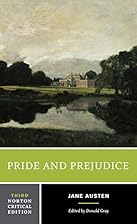
Pride and Prejudice, by Jane Austen (NCE; WLC)

2012 Book 148: Pride and Prejudice (A Norton Critical Edition)
written by Jane Austen, edited by Donald J. Gray
My Review

The Bennet household is in a bit of a financial bind. They have five unmarried daughters with almost no dowry, and the estate is to be inherited by a mysterious cousin that no one’s met yet. But things get exciting when a rich bachelor moves to town and brings is even richer bachelor friend. Every young lady in the area is ready to throw themselves at these men. Except, of course, for Elizabeth Bennet. She instantly decides that the rich bachelor is perfect for her sister, Jane, and his richer friend is the most detestable man on the planet. Thus starts one of the best-loved romances in Western literature. And, like most everyone else, I loved this story. Even on the nth reading of it. 🙂

This book is also a social satire, which is a fact unfortunately ignored by many readers. I think many of the people who hate the book (mostly men) see it simply as a romance and don’t look any further. This failing to see the humor was one of the reasons I so loathed Seth Graham-Smith’s Pride and Prejudice and Zombies. I had high hopes that he had managed to weave Austen’s sense of humor (i.e. a wry, witty social satire) with zombie-whacking humor. I would have eaten such a book alive. 😀 But, alas, Graham-Smith clearly didn’t understand the humor in P&P…I wasted a couple hours of my life on that book that I will NEVER get back again.

Since there’s not much else I can say in a mini-review of the story that hasn’t been said over and over, I’ll discuss the supplementary material in the Norton Critical Edition. There wasn’t a LOT of supplementary information in the book, but it was generally of good quality. It started with a biography of Austen, punctuated with letters written by the author. This part would be helpful to someone who isn’t familiar with Austen’s life, but wouldn’t be particularly new to anyone who’s read a biography of her. Additionally, there were several critical analyses of Pride and Prejudice, both contemporary and modern. I enjoyed most of these–though I admit I got bored with the Freudian one and moved on to the next. The piece I found most surprising was the interview with Colin Firth. I really didn’t think that this interview belonged in a critical edition of P&P and wasn’t expecting much from it. But I was very wrong. Colin Firth had a strong understanding of Darcy’s character (of course! how could I doubt? It IS his job!). It was fascinating to read his thoughts about how he incorporated his understanding of Darcy’s motivations in the most powerful scenes (such as the first ball, the drawing room discussion when Lizzy was at Netherfield, the dance at Netherfield, and the proposal). It gave me a completely new impression of Darcy’s character and made me want to watch the whole miniseries again.

I found the excerpt by Marilyn Butler Jane Austen and the War of Ideas: Pride and Prejudice, quite helpful…I feel encouraged to read Butler’s entire book (after I finish re-reading the rest of Austen’s novels). In this excerpt, Butler shows how Darcy and Elizabeth have elements of both pride and prejudice in their personalities. I had always thought about Darcy being proud and Elizabeth being prejudiced…but now I see that it is not that simple. Darcy was proud of his lineage and wealth, and he was prejudiced against people who had less wealth and less sophistication than himself. Elizabeth was prejudiced against Darcy because of his initial bad impression, but she was too proud to allow for the possibility that she might be mistaken in her first impressions.

SPOILERS START HERE
She stubbornly liked Wickham, despite the fact that he said he wouldn’t speak ill of Darcy, and yet gossiped about Darcy till the cows came home…despite the fact that he said he had no reason to avoid Darcy, and yet ran off when the ball came ’round…despite the fact that he was clearly a fortune hunter. Furthermore, Elizabeth stubbornly detested Darcy, even though she was warned by Jane and Miss Bingley that there might be more to the story than Wickham acknowledged….despite the fact that Darcy made clear efforts to be more polite to her as he got to know her better….despite the fact that he politely asked her not to “sketch his character” at the present moment because it would do neither of them any justice.

I had never before thought of the flaws of Elizabeth’s character. But, indeed, she had to have flaws so that she could develop throughout the book. One of her most amusing flaws was that she was judgmental and critical of everyone–and THAT is exactly the complaint she had of Mr. Darcy’s character! It is quite common, I suppose, to detest your own flaws when you see them in other people. 🙂

I think this is an interesting time to insert the Jane Austen Character Quiz. I was a little annoyed at question 7 which asks which actress would play me in a movie, because if I said I’d be played by Gwenneth Paltrow, isn’t that just ASKING to be Emma? So I decided to take the quiz several times, and see what answer I got for EACH of the actresses. It turns out that I would be Elizabeth Bennet for five of the seven actress choices, and I would be Elinor Dashwood if played by Emma Thompson, and Anne Elliot if played by Amanda Root. I took that to mean that I COULD be Elinor if I really wanted to be, but really I was Elizabeth.
I was a little put out at first. I really wanted to be Elinor. But, then again, I am really NONE of the Austen characters, am I? I did some thinking about this issue, though. And I considered: Elizabeth Bennet’s most outstanding characteristics are that she’s witty/sarcastic and fun-loving. I don’t know if I’m particularly witty, but I am a bit sarcastic, and I think I’m fun-loving as well. Her characteristic that drives the plot of Pride and Prejudice, however, is that she tends to be critical of her fellow humans, makes strong and lasting immediate impressions, and stubbornly sticks to these first impressions despite contradictory evidence. I don’t really want to be those things. But you know what? I don’t think those are good characteristics, but, as I said above, we tend to detest our own flaws when we see them in other people. 😉 I have been writing a lot of letters to my cousin Steve lately, and it made me realize that I spend an awful lot of time criticizing other people. Not that I feel I’m BETTER than those other people…but, still, I was surprised that I must seem (to Steve) to be rather judgmental. This was a side of my personality that I hadn’t seen before, because I’d never had the chance to talk so freely as I do in those prolific letters. So…perhaps the quiz knows what it’s talking about after all?

The Great Courses: Western Literary Canon

Lecture 24: Pride and Prejudice, Women in the Canon
SPOILERS CONTINUED
I’ll just finish up with some comments on Lecture 24 in the Western Literary Canon course. Professor Bowers begins by pointing out that, unlike many other canonical works, Jane Austen’s books are generally read for pure pleasure. I found similar opinions in the Norton Critical Edition. Apparently, one really shouldn’t look for a “deeper meaning” in Austen’s books–they’re simply not that deep. They’re meant to entertain, not to educate. I suppose I can understand this point of view, as Pride and Prejudice is certainly less deep than Candide, by Voltaire (for example). They are both social satires, but Austen is much lighter. 🙂 Professor Bowers claims that the charm of Austen’s books is that she portrayed humanity accurately and honestly. I think this is true in that her books portray human folly. However, I feel many of her characters satirize human folly to (humorous) extremes.
Jane Austen was one of the first women authors who was accepted into the “Western literary canon.” Mostly, the great critics-on-high chose books by deeply educated male authors. However, once Austen was accepted, critics opened to the idea of women canonical authors ,and efforts were made to retreat into history and rescue women authors who deserve canonical status like Sappho, Marie deFrance, and Christine de Pizan. Professor Bowers didn’t point this out, but another impact that I think Austen had is that she is the mother of “regency romance.” Most regency romances today are thematically copied from Austen’s style. Regency romances, ranging from Christian to erotica, abound in today’s market.
Bowers makes the interesting point that Mrs. Bennet is the protagonist of Pride and Prejudice by Aristotelian view–she is the one who schemes to get her daughters married, and she is the one whose dreams come true. Margaret Drabble, in her introduction to Pride and Prejudice [1], even suggests that Mrs. Bennet may be simply misunderstood by modern readers. Due to the circumstances and time, her life revolves around finding suitable husbands for her daughters to ensure that they don’t end up poverty-stricken old maids. She is, perhaps, a bit over-zealous and foolish in her attempts at matchmaking…but her intentions are very maternal. This is an interpretation of Mrs. Bennet that I have never considered, and I found it refreshing.

On this reading, I wasn’t any less impressed by the silliness of Mrs. Bennet than I had previously been; but I was surprised at a new opinion of Mr. Bennet. I had always considered him to be a sensible man with a delightfully sarcastic edge. But he wasn’t at all sensible. He SHOULD have laid aside money over the years instead of assuming he’d eventually have a son. When he realized he wasn’t going to have a son, he should have made more efforts to keep Mrs. Bennet from overspending. Instead of laughing at the folly of his daughters and wife, he should have spoken some sense into them–at the very least into his daughters. By laughing at their folly, he allowed them to expose themselves both to ridicule and to the preying eyes of ungentlemanly men. He shouldn’t have encouraged his daughters to laugh at his wife. He is just as much at fault for the ridiculousness of the family as his wife is.

[1] Austen, Jane. Pride and Prejudice. New York: Penguin Group 2008. ISBN: 1-101-08421-98

Texts that I have read for this lesson:
Jane Austen: Pride and Prejudice (Norton Critical Edition) (required reading)
Blood and Other Cravings, ed. Ellen Datlow

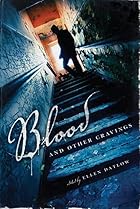
2012 Book 147: Blood and Other Cravings, ed. Ellen Datlow

Reason for Reading: This seemed like a good book to read in October. I chose it because it’s currently being considered for the World Fantasy Award.

My Review  
This is an anthology of vampire stories…but not just ANY vampires.Vampires are inundating the market these days, and they’re beginning to get a tad predictable and boring. This new collection is meant to delight the reader by displaying the variety of thirsts that plague vampires (and humans). There are your classic blood-sucking varieties, but there are also soul-sucking vampires, and vampires from different folkloric traditions, and vampires that…well, ARE they vampires, or are they humans…or…are humans really vampires at heart?

Although I thought the theme of this anthology was creative, and I generally enjoyed the stories, I wasn’t wowed. I’m not a huge short story reader because I really like plot and character development, and short stories simply don’t have the space for such development–unless they really pack the info in. And in the case of THOSE stories, I tend to feel a little bogged down and need to read very slowly to pick up all the information. For me, these stories were either too insubstantial or too substantial. 😉 Being unaccustomed to reading anthologies, I don’t know if this issue was because I have difficulty with short stories, or if it was because the anthology was less than fantastic. Either way, I thought the anthology was interesting, but I’m glad to be moving on to other books. 

I was originally going to share a mini-review of each story. But these stories are so short, and the joy (for me) depended entirely on not knowing what sort of “vampire” I was reading about. There’s just not much to say about the individual stories without giving spoilers. 

All You Can Do Is Breathe, by Kaaron Warren: When a mine collapses, a minor is trapped for several days. He keeps himself alive by remembering the good things in life. But he keeps a dark secret from the media-craze that descends upon him when he is rescued. A scary “long man” came to him while he was trapped…a man who didn’t want to rescue him. 

Needles, by Elizabeth Bear: Two vampires descend upon the home of a tattoo artist. Do they want more than just a tattoo? 

Baskerville’s Midgets, by Reggie Oliver. A boardinghouse landlady befriends a set of 7 midgets and pays a dire price.  ***This one was darkly funny. One of my three favorites.

Blood Yesterday, Blood Tomorrow, by Richard Bowes: A woman in need of money seduces her rich ex-lover to come back to the dark-side.  

X for Demetrious, by Steve Duffy: This is a fictional story based on the true-life news story of a man who, in January 1973, was found dead on his mattress–having choked on a bulb of garlic. The room was filled with crucifixes, sprinkled with salt, and “protected” with salt-laced urine and garlic-laced excrement. ***This was one of my three favorite stories in the anthology. It was thoughtful and a bit frightening.

Keeping Corky, by Melanie Tem: A mentally disabled woman who believes that she has the power to “punish” people by sucking away bits of themselves becomes angry when she is not allowed to write a letter to her biological son Corky, who’d been adopted by a couple years ago. But does she really have the power to punish?

Shelf Life, by Lisa Tuttle: While rummaging through her parent’s attic, a woman finds a dollhouse that she’d become obsessed with as a child. She takes it home and gives it to her daughter–with disastrous results. Some people just shouldn’t have dollhouses. 

Caius, by Bill Pronzini and Barry N. Malzberg: Caius is a radio talk-show host who has an almost magical power to resolve people’s internal conflicts and make them feel satisfied. They flock to him. But what’s really going on?

Sweet Sorrow, by Barbara Roden: When a little girl disappears in a quiet neighborhood, her friend Brian feels that his elderly neighbors are acting suspiciously. They seem to thrive on the grief around them.

First Breath, Nicole J. LeBoeuf: A mysterious narrator goes on a trip to “find herself.” 

Toujours, Kathe Koje: After dedicating the later years of his life to help a young fashion designer become famous, Gianfranco jealously guards the young man from encroaching threats–like love interests.

Miri, by Steve Rasnic Tem: Ricky is a devoted husband and father, but something is lacking. He constantly seems drained and distracted. He spends a lot of time thinking about a woman from the past…

Mrs. Jones, by Carol Emshwiller: Two old-maid sisters entertain themselves through a long, dreary life by intentionally annoying one another. Then one day, a little demon shows up in their lives…and everything suddenly changes. 

Bread and Water, by Michael Cisco: The story of a vampire plague from the perspective of one of the original hospitalized patients. 

Mulberry Boys, by Margo Lanagan: Fifteen-year-old John helps hard-hearted Phillips track down and surgically care for a Mulberry Boy. As talks to Phillips for the first time in his life, he learns more about who the Mulberry Boys are and begins to wonder who’s the REAL monster. ***This was my third favorite story…and it was definitely the most memorable for me. I’ll probably look for more works by this author.

The Third Always Beside You, by John Langan: Weber and Gertrude suspect that there is another woman involved in their parent’s marriage. When curiosity finally overcomes Gertrude and she asks a family friend, she finds out much more than she’d bargained for.