Dracula, by Bram Stoker

2012 Book 123: Dracula, by Bram Stoker (8/15/2012)

Reason for Reading: Coursera Fantasy and Science Fiction Course. Listened to it on my car ride to MN. 🙂 Didn’t finish it in time for the assignment though!

My Review
This review is for the Audible Edition of Dracula, narrated by Alan Cumming et al. (Wow, I just used et al. in a review. That makes me pretty darned special.) 

In this classic novel, a group of acquaintances must rid themselves of the sinister Count Dracula who has descended upon London with the eager desire to create a flock of bloodsucking fiends. This is my second reading of the novel–the first being when I was a young teenager. This time, I was impressed by Stoker’s ability to set a dark mood and maintain it through the entire book. There was always some creepy fog or a terrified dog or a creepily sleep-walking woman to spook the reader. The full-cast performance was delightful. It really brought the various characters to life. The end of the book dragged for me a little because I was on a long car trip, counting down the last 6 hours in 10 minute intervals. But that’s not really the fault of the book. 🙂

Riptide, By Douglas Preston and Lincoln Child

2012 Book 122: Riptide, by Douglas Preston and Lincoln Child (8/8/2012)

Reason for Reading: It was there 

My Review
Malin Hatch has avoided Ragged Island, Maine ever since he had witnessed a disaster there as a child. But when a treasure hunter finally convinces him that it’s time to delve into the mysteries of the Ragged Island Treasure once again, he signs on as the team’s physician. The team must wend their way through a booby-trapped tunnel to find the treasure. This book was a quick, light read without much substance. It’s much like Douglas and Preston’s other adventure novels (and rather like Michael Crichton)–a mixed team of scientists gathers for the “big find” and ends up with more than they bargained for. I felt that the characters made poor decisions throughout the book, but I guess gold has that effect on some people. If you like Preston&Child, you’ll probably like this book.

Inheritance, by Christopher Paolini

2012 Book 120: Inheritance, by Christopher Paolini (8/7/2012)

Reason for Reading: Fourth and final book of the Inheritance Cycle

My Review 
I can’t claim to actually have READ this book. I only burdened myself with it because I wanted to know how Galbatorix was killed (assuming he was, of course). I read the first 300 pages, skimmed the next 350 pages, and skipped the last 100 pages. 🙂 I got what I wanted out of it, which is the important part. All I can really say to those of you who are interested: Paolini’s writing got significantly better in this book. Still not fantastic, but he’s got potential. He did a much better job of pacing (though it could have been shorter), and the style flowed better than the last two books–it was less pedantic. If you’re a more patient person than me and are interested in how the story ends, I think it’s worth a read. 🙂

Alice in Wonderland (Norton Critical Edition)

2012 Book 119: Alice in Wonderland Norton Critical Edition, by Lewis Carroll (8/5/2012)

Reason for Reading: Coursera Fantasy and Science Fiction course

My Review 
This NCE contains Alice’s Adventures in Wonderland, Through the Looking Glass, and The Hunting of the Snark. I was pleased with the footnotes, which were helpful in clarifying many of Carroll’s jokes. The critical information included some interesting biographies/diaries of Dodgson (Carroll), as well as a few critical essays. I was disappointed in these because although they were mostly good, the editor clearly has some negative feelings about Dodgson’s morals and included many unnecessary Freudian-finger-pointing passages. If I were younger or more impressionable, I’d have been left with a very negative view of Dodgson indeed! Because of these attempts at manipulating the readers’ good opinions of Dodgson, I wish I had gotten The Annotated Alice instead.

Note about the stories themselves: These were a re-read for me. Although I love Alice and really enjoyed reading the stories with footnotes (I understood them a lot better this time around!), I tend to prefer books with a little more plot development. Scandalous, I know, but what can I say?

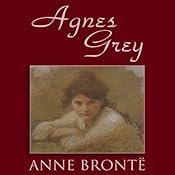
Agnes Grey, by Anne Bronte

2012 Book 121: Agnes Grey, by Anne Bronte (8/8/2012)

Reason for Reading: Group read 1001 Books You Must Read Before You Die

My Review
When the Grey family begins to have financial problems, Agnes, a sheltered minister’s daughter, begins life as a governess. She is shocked and appalled by how she is treated and what miracles she is expected to achieve. This book is a social commentary on the treatment of governesses and unruly children. It also touches on the charms of marrying for love instead of money. It was a quick read, but rather unexceptional.

Alice Transformed: Coursera Essay

Lewis Carroll*


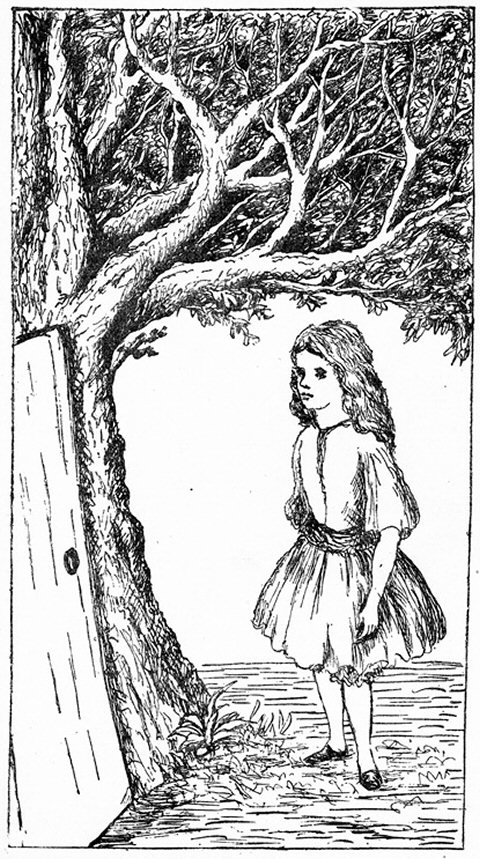
In the beginning, Alice falls down a rabbit-hole, landing in a room containing a tiny key, a tiny door, and a large table. When she is small, the door is locked–she’s not allowed out. But then she grows very large…so large, she can hardly fit into the womb room anymore. Ah! Now she can reach the key! But the way out is so tiny! Luckily, she is taken up by a force outside of her control (a sea of tears) and is thrust into Wonderland.

This initial entrance into Wonderland is a metaphor for Alice’s birth into a new life. In Wonderland, she sees many unusual sights that amaze, frustrate, and/or delight her. The Caterpillar leads her to question her own identity—an elusive concept in the ever-changing world of Wonderland. The Cheshire Cat encourages her to be self-aware: “we’re all mad here. I’m mad. You’re mad.” The Cat is the only creature in Wonderland who recognizes his own madness! After talking to the Cat, Alice is less frustrated by the madness that surrounds her. She allows the Mad Tea-Partiers to entertain instead of frustrate her.

After the tea party, she again finds the room from which she was first thrust into Wonderland. This time, she does not hesitate. She confidently grabs the key, drinks the shrinking potion, and walks through the door–reborn as a new, confident Alice.

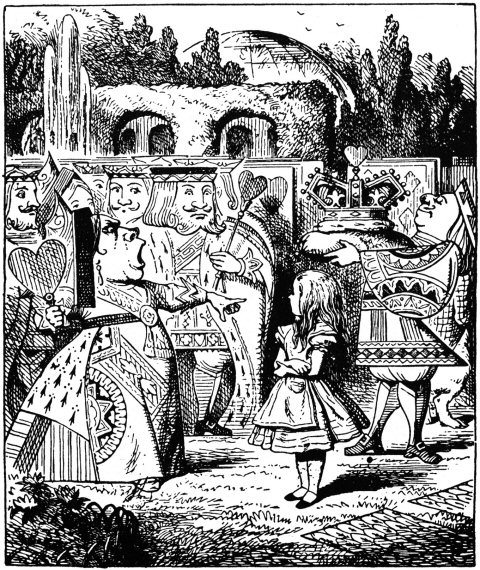
Alice is essentially “born” into Wonderland twice. The first birth is full of frustration and self-doubt. But the second birth is followed by self-confidence. She now applies lessons that she learned the first time around. For instance, she stops herself before telling the Mock-Turtle that she eats lobsters and fish. She confidently deals with the intimidation tactics of the Queen of Hearts, whereas she would have been frightened or angry before. Alice’s Adventures in Wonderland is an allegory in transformation. It’s a story about growing up.

*******
Yes, I have done the unthinkable. Just to spite all those angry essay-format-Nazis, I have written *dum dum dum* AN ESSAY WITHOUT A THESIS STATEMENT. I hope you will all forgive me for this unkindness. 😉


*Images were taken from: 
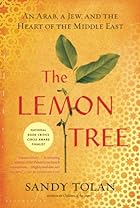
The Lemon Tree, by Sandy Tolan

2012 Book 118: The Lemon Tree: An Arab, a Jew, and the Heart of the Middle East, by Sandy Tolan (8/4/2012)

Reason for Reading: I realized I know much less than I should about this politically vital conflict and am enjoying learning more about it. I read this for the Reading Globally Middle Eastern Literature theme read.


My Review

Ostensibly, this is the (true) biography of the friendship between the Israeli woman Dalia Eshkenazi and the Palestinian man Bashir Khairi. However, the book also focuses strongly on background information–providing a wonderful history of the Israel-Palestine conflict since the 1940’s. I was hugely pleased by this book for two reasons. First, the friendship between Dalia and Bashir was touching because they both had such strong nationalistic feelings. Somehow, despite their very different views, they were able to remain on good terms for many years. That’s touching to me because many books with this let’s-make-peace message tend to be about people who are all about love and peace and aren’t as strongly influenced by their negative emotions as Dalia and (especially) Bashir. This is a friendship that was difficult to maintain, and yet it prevailed. The second reason I loved this book is because of the wonderful history of the region it provided. It’s supposedly a “balanced” view–and it is, in the sense that it recommends justice (and sacrifice) be made by both sides. However, I’d say the book tended to be sympathetic towards to Palestinians. This SLIGHT bias is necessary in this case because many people in the Western world are over-exposed to the Israeli side and don’t realize the Palestinians have a side at all. This book is highly recommended to anyone interested in the conflict.

Kidnapped, by Robert Louis Stevenson

2012 Book 117: Kidnapped, by Robert Louis Stevenson (7/30/2012)

Reason for Reading: It was one of the top 5 books in LibraryThing’s recommended list for me. 🙂

My Review
When 16-year-old David Balfour meets his estranged uncle for the first time, he is shocked by the man’s cruelty. Soon, Balfour has been kidnapped and he must rescue himself and travel back to the town of his uncle to claim his inheritance. This is an exciting little book…not quite up to scratch with Treasure Island, but still has quite an adventure. It would probably be a fun book for teenagers to read, if they like classics (or if you want to thrust classics upon them).

Milton–Epic Evil

The Great Courses
Why Evil Exists
Lecture Eighteen
Milton–Epic Evil


I want to explore the nature of “evil” and popular ideologies. It is, of course, impossible to ever really understand evil, but I think that even scratching the surface of the nature of evil will broaden my horizons. 🙂 I have found what looks like an excellent set of lectures from The Great Courses called Why Evil Exists. I plan on using these lectures as a guide during my quest. I will record my adventures here in my blog. The course’s introduction states: people have been addressing the problem of the existence of evil in a “divinely governed or morally ordered world” for millennia. The course aims to chart the answers that the Western world has outlined throughout time. I suppose I am to be left in the dark about the Eastern world’s answers to these questions? How evil. 😉

Because I have already started my study of Milton, I will skip ahead to Lecture 18: Milton–Epic Evil. *Watches lecture while taking notes.*

*******

John Milton was a political revolutionary as well as a poet (see also: Milton and Paradise Lost: A Quest to Understand). All of Milton’s writings, even the political ones, were centered around how humanity can avoid corruption by evil. As a Calvinist and a republican,1 Milton meant Paradise Lost as an allegory for the failure of Oliver Cromwell’s rebellion. “Paradise Lost is the story of a rebellion gone terribly awry, and a leader horribly mutilated by his own revolt.” 2

Milton suggests in Paradise Lost that he intended the epic to “justify the ways of God to men.” He views God as timeless and eternal–existing at once in the past, present and future. So, although God knows all that has been or will be, it is not preordained. Adam and Eve had free choice, and they chose sin. But their sin was different from the sin of Satan, who represents Evil’s self-understanding in Milton’s epic.

In order to depict the embodiment-of-evil as a character, Milton had to display Satan in all his alluring charisma–for that is the nature of evil, it charms and tempts the unwary. It is easy to sympathize with Milton’s Satan. He oscillates between self-doubt (God has tempted me to fall thus!) and self-confidence (I am acting out my own ambitions, while God thinks he can control me!). Even though his emotions are self-contradictory, they make him more real to the reader…they make him someone the reader can understand. Along with Satan’s oscillating paradoxical motivations, Milton also uses paradoxical metaphors to represent evil. One of the most famous examples is Milton’s description of Hell as a “visible darkness.”

Milton had the difficult task of portraying self-aware evil (as opposed to portraying man’s perception of evil, as in Dante’s work). Because of this, he portrayed Satan as a much more interesting character than God or Jesus. Many critics believed that Milton himself sympathized with Satan. In The Marriage of Heaven and Hell, William Blake wrote: “The reason Milton wrote in fetters when he wrote of Angels & God, and at liberty when of Devils & Hell, is because he was a true Poet and of the Devil’s party without knowing it.” Other critics, like C. S. Lewis, insisted that Milton’s poem complimented Christian faith.

Unlike Satan, Adam and Eve are “surprised by sin.” Even though the angel Raphael warns them about sin, they are incapable of understanding the warning because they are too innocent. The warning is useless. Theirs is not “self-aware” sinning like Satan’s. Eve sins out of careless folly, vanity, and pride…not a “self-aware” wish to rebel. Adam’s sin was that he loved Eve more than he loved God, whom he was supposed to love above all else. This is the difference between Satanic sin and human sin. Satanic sin is about the sin itself; human sin tends to rope in emotions about other people.  


*******

Now that I have a good idea of what Milton was trying to say in Paradise Lost, I’m ready to attack the first book! 🙂

(TO SEE MORE ABOUT PARADISE LOST, GO TO MY MASTER POST)

1. “Republican,” at the time, meant a person who believed that the people should govern themselves (as opposed to a monarchy). 

2. Charles Mathewes, The Great Courses: Why Evil Exists, Lecture 18.

3. This is the title of a well-accepted contemporary critical analysis of Paradise Lost: Surprised by Sin: The Reader in Paradise Lost, by Stanley Fish.


The Confidence of Alice


As I said in my previous post on Alice (Alice, the Caterpillar, and the Serpent), Lewis Carroll used asterisks to denote metamorphoses in Alice. The last row of asterisks in Alice’s Adventures in Wonderland was when she shrunk back from a serpent to a reasonably-sized girl at the end of Chapter V. This sudden absence in transformative asterisks suggests that Alice is beginning to gain confidence in herself and to settle into the Alice she will be. 


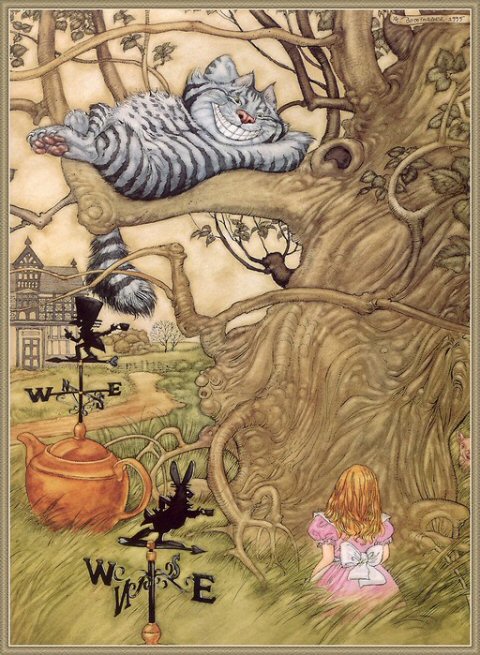
Chapter VI introduces another well-recognized icon of the Alice books: the Cheshire Cat. The conversation that commences is probably the most sensible she has in Wonderland. Alice asks:

“Would you tell me please, which way I ought to go from here?”

“That depends a good deal on where you want to get to,” said the Cat.

“I don’t much care where–” said Alice.

“Then it doesn’t matter which way you go,” said the Cat.  

Alice, in her newly acquired perfectly-sized body, is now feeling ready for an adventure. But she doesn’t know where to find one. The Cat, in the guise of nonsense, sensibly points out that if she doesn’t have a goal, she’ll be wandering aimlessly through life. This prods Alice into a decision–she’d like to meet more creatures in Wonderland, but she doesn’t want to “go among mad people.”

“Oh, you ca’n’t help that,” said the Cat: “we’re all mad here. I’m mad. You’re mad.”

The Cat is the only creature of Wonderland who recognizes that he’s mad! This self-awareness allows him to sensibly see the rest of the world as it really is–mad. I believe that, like the Caterpillar, the Cheshire Cat is Alice’s alter-ego. He represents the sense, self-confidence, and goal-orientation that arises from self-awareness. After meeting the Cat, Alice marches right up to the Mad Tea-Party and sits down despite the party’s calls of “No room! No room!” Later, in the Queen’s croquet ground, she stands proud and erect as the queen’s procession nears. Her companions lie quaking face-down in the dirt. The Queen interrogates Alice:  

“Off with her head! Off with–“

“Nonsense!” said Alice, very loudly and decidedly, and the Queen was silent.  

Ever since meeting the Cat, Alice does not need to be over-sized to have self-confidence. Her responses to the Mad Tea-Party and the Queen are quite sensible and self-assured. Earlier in the book, Alice’s self-confidence fluctuated with size. But the self-assurance she demonstrates at the end of the book is unlike the childish spats she had when she was over-sized. Think of the incident in Chapter IV, where she was stuck in the White Rabbit’s house. Instead of sensibly standing up for herself, as with the Queen, she simply used her bulk to terrorize the White Rabbit and poor Bill. 

Alice also demonstrates a mature self-assurance when she bursts out laughing (twice) in the Queen’s croquet ground. Earlier in the story, Alice’s main emotions were tear-soaking-frustration, foot-stomping-frustration, timidity, and confusion. Now that she is self-aware, she can see the rest of the world as it is–amusingly silly. 
*Images were taken from: