Weekly Update 29

Hi! I’m on family vacation in Oregon and having a delightful time. So far, I went to the beach, met some blogging friends in Portland, bought some books, and drove to the top of a mountain while the non-pregnant family members hiked. M was dragging by the end of the hike, but he made it up, and he got to ride in the car on the way down. He looks pretty proud of himself at the summit up there in the picture.

Next week, school starts and I will have more opportunity to read and keep up on my blogging. Last month I got behind on both because I was finally recovered from pneumonia and spent a lot of time cleaning and watching the kids.

Exercise this week:

I walked about 3 miles on Tuesday, did a lot of standing and strolling on a beach on Wednesday, and did a lot of standing and strolling at a mountain summit on Saturday. This doesn’t sound like much…but it’s a huge step up from nothing. Now that the kids will be in school, I hope to add a walk to most days. 😁

Currently Reading

The Hate U Give is for a bookclub meeting in October. I still need to finish some heavier books that I decided not to bring on the trip. Gulliver’s Travels is my current Well Educated Mind project book.

Completed

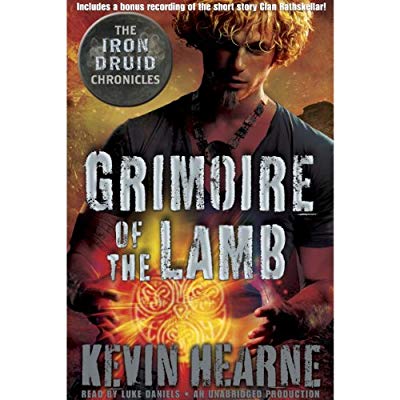
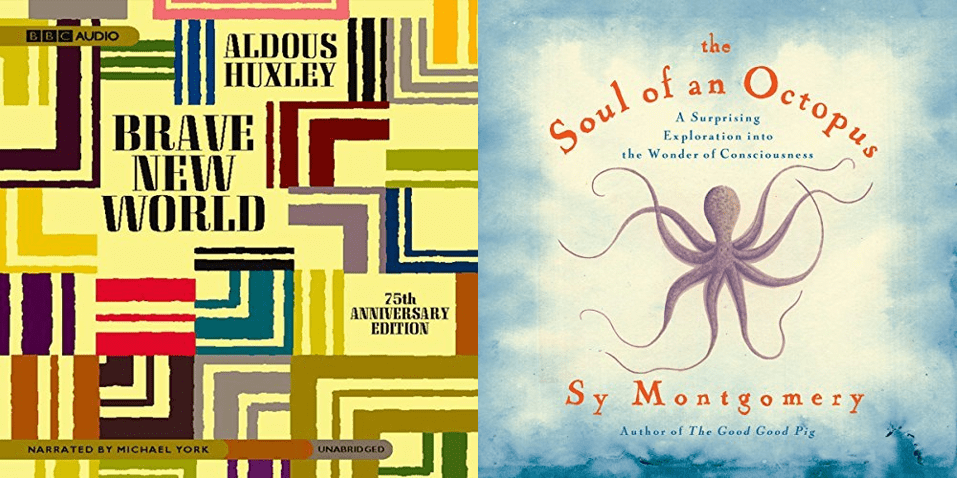
These are audiobooks that we have listened to on our intra-Oregon drives.

Acquired

The bottom three are mine, top four are Aaron’s.

R.I.P. 13

I’ll participate in Readers Imbibing in Peril this year.

The purpose of the R.I.P. Challenge is to enjoy books that could be classified as:

Mystery.
Suspense.
Thriller.
Dark Fantasy.
Gothic.
Horror.
Supernatural.

I will challenge myself with:

Peril the first:
Read four books, any length, that you feel fit (our very broad definitions) of R.I.P. literature. It could be Stephen King or Sir Arthur Conan Doyle, Shirley Jackson or Tananarive Due…or anyone in between.

I will work on the Sherlock Holmes series, by Arthur Conan Doyle and the trilogy The Passage, by Justin Cronin.

Peril of the Short Story:

We are fans of short stories and our desire for them is perhaps no greater than in autumn. We see Jackson in our future for sure! You can read short stories any time during the challenge. We sometimes like to read short stories over the weekend and post about them around that time. Feel free to do this however you want, but if you review short stories on your site, please link to those reviews on our RIPXII Book Review pages.

I will read one short story a week from The Weird, edited by Ann and Jeff Vandermeer.

Peril on the Screen:

This is for those of us who like to watch suitably scary, eerie, mysterious gothic fare during this time of year. It may be something on the small screen or large. It might be a television show, like Dark Shadows, or your favorite film. If you are so inclined, please post links to any R.I.P.-related viewing you do on our book review pages as well.

I will watch as much of the TV show Grimm as I see fit.

Weekly Update 27

39203649_10100984533144547_4632796465587027968_n

Well, it’s been an eventful week. I had a bit of a reading slump last week, but I’m starting to recover. I was also able to get some house cleaning done, and am motivated to take a walk today, as I have no kids to watch. It’ll be my first walk in quite a while, and I’m looking forward to it.

Last week we went on a spontaneous trip to Wisconsin Dells. We camped at Jellystone Camping Resort (which was overcrowded and loud) and headed off to the huge water park Noah’s Ark the next day. M and D loved Noah’s Ark, though M didn’t want to ride any of the slides, and spent most of the time in the wave pool; which was fine by me, since I’m pregnant and couldn’t ride the slides, anyway. This is the first time the kids have ever been camping (besides in their backyard), so it was a bit of an adventure.

The big event this week is that my mom was diagnosed with Alzheimer’s. It’s not a huge surprise, since her memory has been bad for a while – what was surprising is to find out she had been diagnosed since February, and I never knew. I guess my sister and I are going to have to watch her medical situation a lot more closely.

Above is a picture from my niece L’s 3rd birthday party. They grow so fast!

Currently Reading

Currently Reading

Completed

Completed

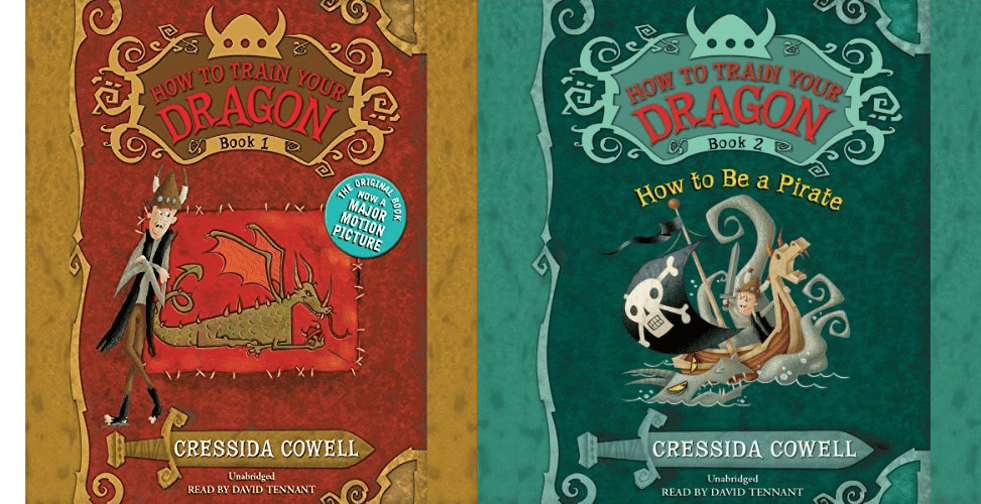
On the road trip, we listened to the first two books in the How to Train Your Dragon series, while D read along in the actual book. She was thrilled to be “reading” as fast as she was, and I think that it is a good lesson in speed reading above her reading level. And comprehension is still good, since she’s listening at the same time.

Acquired

Acquired


Pilgrim’s Progress, by John Bunyan

9781593082543_p0_v4_s550x406

Summary: In this allegorical novel, a pilgrim named Christian travels a journey in which he loses the heavy weight of his sins, is tempted to sin again, and eventually reaches paradise.

My thoughts: I’m not sure why this is the most printed book in English, other than the Bible. I love allegory generally, but this allegory beat you over the head with obviousness. Everyone and everything was given a name (like Christian) that said explicitly what the character or impediment represented. The story itself was interesting enough, I suppose, as a concept, I just wish it were more subtle. This is also not a book for non-Christians, unless they are reading for the sake of learning about classic literature.

3 and half snowflakes

This is my analysis using the method proposed by Susan Wise Bauer in The Educated Mind. It will contain spoilers. 

👽What is the most central life-changing event?

Meeting with Evangelist after discovering the prophecy that his city would be destroyed by fire was the life-changing event which lead Christian on his journey. Evangelist told Christian what path to follow to lead to paradise.

👽Am I transported? Do I see, feel, and hear this other world?

Not really. It all felt a little flat because of the obviousness of the allegory.

👽Can I sympathize with the people who live there? Do I understand their wants and desires and problems? Or am I left unmoved?

Yes, I understood exactly what was wanted by each character, as they were named after their characteristics.

👽Is this a fable or a chronicle?

This novel is a fable. It represents a spiritual journey rather than actual events.

👽What does the central character want? What is standing in his or her way? What strategy is pursued to overcome this block?

Christian would like to reach paradise, but it often led astray by temptation and hardships.

👽Who is telling you this story? Is this person reliable?

The story is third person limited. It told exactly what was happening to Christian (allegorically), but did not tell the thoughts of the other characters.

👽Where is the story set?

The story is set in a fantastic land which Christian has to traverse in order to reach paradise. It is filled with both glorious and horrible things. It is a universe that cares deeply about Christian, whether its motivations are to lead him astray or to encourage him to reach paradise.

👽Images and metaphors: Are there any repeated images? If so, is this a metaphor, and if so, what does it represent?

I’d say the most repeated image is the cross and the savior – but every character and impediment that Christian comes across is a metaphor.

👽 Does the end have a resolution or a logical exhaustion?

Christian eventually reaches paradise, which is the resolution to his problems.

👽Do you sympathize with the characters? Which ones, and why? Did the author choose characteristics to make a statement about the human condition?

I guess I sympathized with the character in the sense that I would not like to burn in Hell. 🙂 Yes, every character and impediment in the story made a statement about the human condition. The human condition was represented as destined for destruction unless a straight and narrow path were followed to the safety of paradise.

👽Does the author’s technique give you a clue as to her argument: her take on the human condition? 

Oh yes, it does. The human condition is pounded into the story with hammer and ax.

👽Is the novel self-reflective?

Yes. This story represented the struggles that Bunyan went through in his younger years (and expected to go through in his later years). At first, he struggled to see the goodness of God, but eventually repented his feelings of sin and moved on to a life that he hoped would lead to paradise.

👽Is there an argument in this book? If so, do you agree?

The argument to the book is that if you don’t follow a straight and narrow path, you will not be led to paradise. As a Christian, I believe it is true for myself, but I do not judge those who follow other religions or no religion at all. That is their choice, and I believe that, for the most part, that choice is right for them.

 

Weekly Update 26

ball ball shaped blur color
Photo by Pixabay on Pexels.com

Posting this a bit early in the week since I didn’t get one last week, and (mostly) I wanted to get a picture posted so it had a url I could use elsewhere. 🙂

The past week and a half have been mostly uneventful. I have not had much time to read, and I am concerned that will continue for the rest of the summer, but reading will perk up again once the kids are back in school. There was some drama here and there, but nothing worth mentioning in a public place. My garden is getting overrun by weeds again, but the tomatoes and peppers are coming along beautifully. Now that I am feeling well again, I’m hoping to catch up on weeding.

I had another appointment for the unborn baby, and he is cooking up quite nicely as well. 🙂

This Saturday, I have my first Twin Cities Classics Club meeting – a group I started myself on Meetup. We will be discussing Fahrenheit 451. Wish me luck in my discussion- leading

Currently Reading

Currently Reading

Completed

61lqb9nqzrl-_sl500_


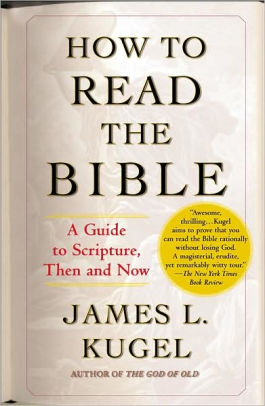
How to Read the Bible, Chapter 6 by James L. Kugel

9780743235877_p0_v1_s550x406

In Chapter 6, Kugel writes about Abraham leaving his homeland, as ordered by God. He is said, in the Bible, to be blessed.

Ancient Interpretation

The question the ancient interpreters asked is why was Abraham so special? They figured he must have stopped worshiping the gods of his homeland and begun to worship the one true God. He was therefore the first monotheist (in their view – modern scholars believe that Zoroastrianism was actually the first monotheistic religion). But why did he stop worshiping the other gods. Possibly because he realized that the other gods made so little sense. Why was a year 365.25 days instead of a nice round number (as was known in Mesopotamia at the time)? Certainly a god would have chosen a more round number.

One ancient interpreter, Philo (c. 20BCE 0 c. 50BCE ), believed that Abraham also had an allegorical meaning: that he symbolizes any soul looking for God.

Modern Interpretation

Modern interpreters are having trouble agreeing whether Abraham really existed or not. Many scholars believe that Abraham is an etiological explanation for why the Jews are entitled to the Promised Land. But there is archaeological evidence that the cities that Abraham traveled through did, actually exist.

Chapter 1

Chapter 2

Chapter 3

Chapter 4

How to Read the Bible, Chapter 5 by James L. Kugel

9780743235877_p0_v1_s550x406

In chapter 5, Kugel describes the very short section of the Bible concerning the tower of Babel. In this story, the descendants of Noah decided to build a great city with a tall tower. At this time, they all spoke the same language. For some reason unexplained, God took insult at this, and destroyed the tower, halting the building of the city. He scattered the people around the world, confounding their language so that they could no longer understand people from different regions of the world.

Ancient Interpretation: Interpreters of ancient times thought that the purpose of this story was the Tower of Babel itself. That this is a story of human hubris, in which the people were trying to reach heaven by building such a tall tower.

Modern Interpretation: People of modern times look back at the ziggurats of ancient Mesopotamia – how they were built of materials that would easily crumble with time. They figured ancient people saw these ruins and wrote the story of Babel to explain them. They also have an etiological interpretation in which this story explains how so many languages developed from one prototypical language.

Chapter 1

Chapter 2

Chapter 3

Chapter 4

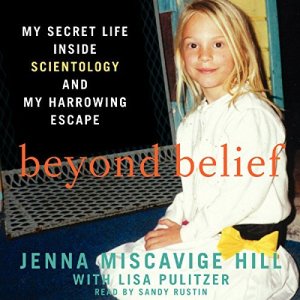
Beyond Belief, by Jenna Miscavige Hill

51zydywacll-_sl500_

Summary: Ms. Hill describes growing up within the inner echelons of Scientology. How, at first, she was fully indoctrinated (brainwashed, as she later called it), but after much emotional abuse she realized the church was not for her. She became an advocate for those who also escaped the inner echelons of Scientology, which (if her description is accurate) can only be described as a cult.

My Thoughts: This book was an eye-opener for me. I try not to call any religion a cult, even though I read Dianetics at one point and felt that it was very silly indeed. But if Ms. Hill’s descriptions are accurate (I also tend to take the descriptions of former members of churches with a grain of salt), Scientology is indeed a cult. And a fairly abusive one at that. I enjoyed listening to Jenna’s journey from indoctrination to disillusionment, and was emotionally involved in whether she would escape with any semblance of a  family life.

four snowflakes

Weekend Update 24

Happy weekend everyone! As you can see, I decided to chop my hair off today. It’s never been this short before, so this was a big move for me. My cough is much better on my new steroid inhaler, though I’m still feeling uber-fatigued. The haircut and lunch out with my friend was about all I could handle today.

I’m already tired from a long day yesterday driving my mom to the library, grocery shopping, and a follow-up appointment after her recent ER visit. Looks like she might have COPD. After that, I took the kids to swim lessons, and I could hardly stand up anymore. But the cough is gone!

On the blog

This week I published notes on chapter 4 of Kugel’s How to Read the Bible, a review of Powers’ No One Cares About Crazy People, and a review of Bradbury’s Fahrenheit 451.

I am thinking about hosting a very informal readalong of a classic like Plath’s The Bell Jar, or Goethe’s The Sorrows of Young Werther in September for Suicide Prevention and Awareness Month, if anybody would be interested in one or both books (perhaps two weeks per book?).

There are also two Coursera courses that I’m considering posting notes on for that month: Psychological First Aid, and The Social Context of Mental Health and Illness. But we’ll see what I can manage.

You are welcome to join me in any of these activities, or reviewing other suicide-related books as a guest blogger. Just let me know.

Currently reading

Due to lying in bed and typing this on my phone, I will list a few, rather than make a composite picture like usual:

Nonfiction: Hillbilly Elegy, by J. D. Vance

Fiction: Handmaid’s Tale, by Margaret Atwood & Harry Potter and the Goblet of Fire, by J. K. Rowling.

Audiobook: Doctor Who: 10th Doctor Tales, by various

Well Educated Mind: Gulliver’s Travels, by Jonathan Swift

Completed

Beyond Belief, by Jenna Miscavage Hill

Harry Potter and the Prisoner of Azkaban, by J. K. Rowling

Pilgrim’s Progress, by John Bunyan

Fahrenheit 451, by Ray Bradbury

6148sazvahl-_sl500_

Synopsis: Guy Montag is a fireman – in other words, his job is to burn down houses of anybody who is found to own books. He thinks he’s happy with his job until he meets Clarisse, a teenager who makes him question his belief about books, his marriage, and society in general.

My Thoughts: Loved it. I’m a fan of Ray Bradbury as it is, but this is my favorite so far. It’s so meaningful and scary. I suggest anyone read it, even those who are not interested in dystopias generally. This is not your typical teenage dystopia that are being mass produced at the moment.

5 snowflakes

The following is my analysis adapted from Susan Wise Bauer’s The Well Educated Mind’s description of how to think about a novel. It will have spoilers. 

👽What is the most central life-changing event?

Meeting Clarisse changing Montag’s entire outlook on life.

👽Am I transported? Do I see, feel, and hear this other world?

Oh yes, this world was very real to me.

👽Can I sympathize with the people who live there? Do I understand their wants and desires and problems? Or am I left unmoved?

I am moved by Montag’s desire to understand what he has been doing, and why society has become the way it is. I feel for him when Clarisse is removed from his life, and he mourns her loss.

👽Is this a fable or a chronicle? If the novel is a chronicle, how are we shown reality: Physical? Mental?

Despite being a dystopia, this world is very believable. It chronicles the time of Montag meeting Clarisse to the moment he discovers what he is going to do about the mess that has become of his society. The book takes place mainly in the mind of Montag, so I would say reality is shown mentally.

👽What does the central character want? What is standing in his or her way? What strategy is pursued to overcome this block?

Montag wants to understand the world around him, and to spend as much time with Clarisse as possible. Clarisse is taken away from him, which is tragic to him. He is also blocked by the illegality of his desire to find out more about the past in general and books in specific. His strategy to overcome this is to perform illegal acts which lead to his eventually being found out.

👽Who is telling you this story? Is this person reliable?

Montag is telling the story in his head. I would guess that this person is reliable, other than having been indoctrinated in society’s rules for all of his life.

👽Where is the story set? 

The story is set in a futuristic dystopian society in which it is unwise to think for yourself and illegal to own books. The universe is indifferent to Montag’s plight.

👽Images and metaphors: Are there any repeated images? If so, is this a metaphor, and if so, what does it represent?

The repeated images are Clarisse, who represents revelation and clarity, books, which represent knowledge, and fire, which represents destruction of knowledge.

👽 Endings: Does the end have a resolution or a logical exhaustion?

The story does have a resolution – the city is destroyed by war, and Montag runs into a group of people who has memorized certain passages of books so that when society grows again, they are able to start reprining the books.

👽Did the author choose characteristics to make a statement about the human condition?

Yes, the human condition in this represented as becoming less and less interested in knowledge and more interested in instant gratification and zoning out the life that surrounds them.

👽Is the novel self-reflective?

To a certain extent, I believe that Bradbury is worried about where society is going, and that, in a way, is self reflective. But I don’t think Montag is supposed to be a reflection on himself.

👽Did the writer’s times affect him?

Always