Update November 15, 2020

Another uneventful week. And another picture taken for the sole purpose of having one for the blog. That’s a picture of Aaron reading the second Percy Jackson book to the kids. They’re enjoying the series. It’s blurry because I took it from far away, where I couldn’t be seen by D. Whenever I take a picture of one kid, the other kid demands one be taken of him or her. lol But really, it was meant to be a picture of Aaron reading – not one of M in particular. 🙂
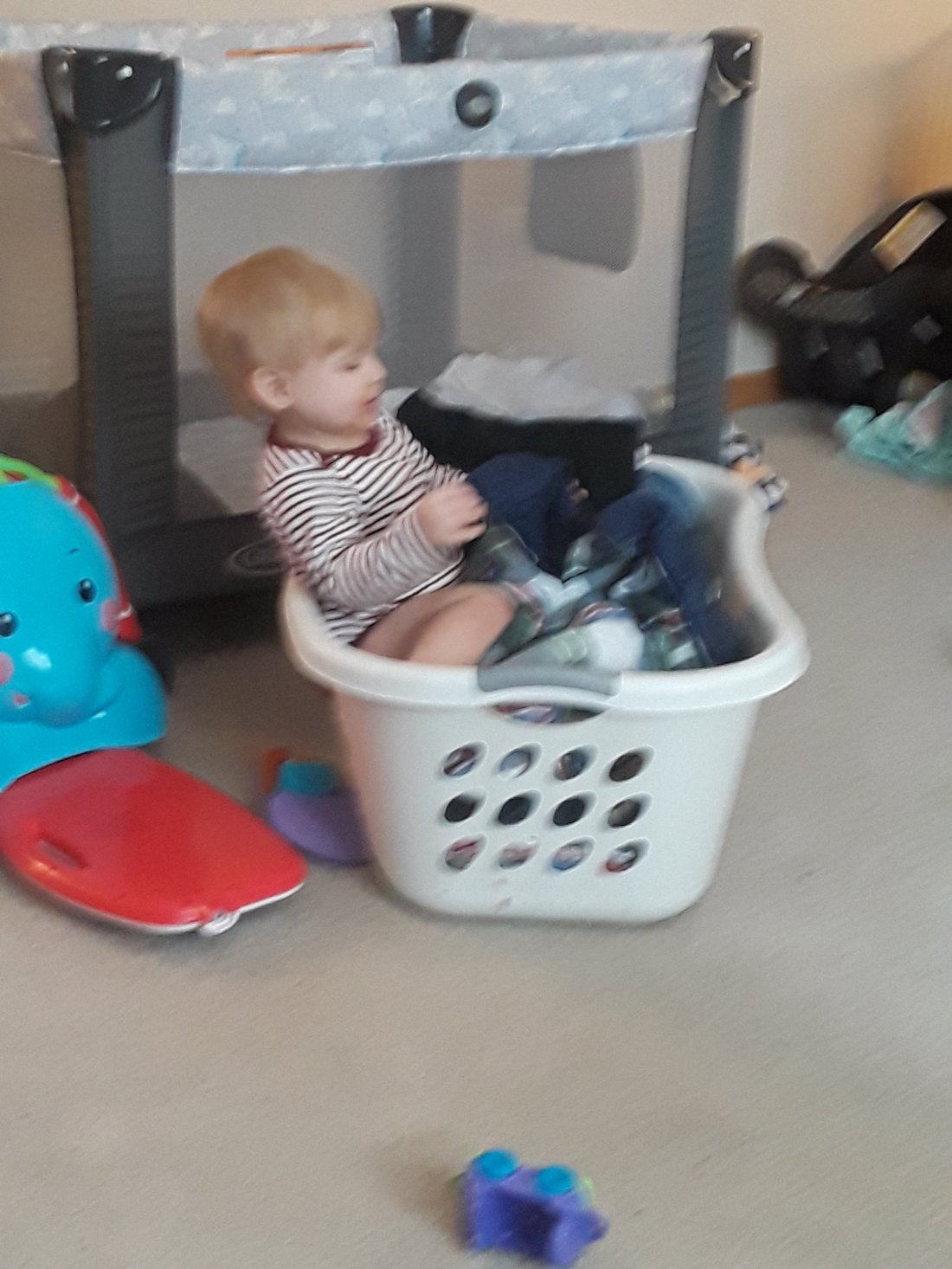
Why do I even bother folding clothes?! (Again, the blurry zoom-in.)

This week we worked on painting D’s room pink and purple. It looks surprisingly good. 😁 Hopefully this weekend we’ll get her new loft bed and desk (also pink and purple) assembled. Then she’ll be set to do homework away from distractions. So far, she hasn’t had much homework, though. On Sunday, we’ll be taking pictures of the kids with their biological mom so that we can frame them hang them on their walls. It’s my birthday / half birthday present to them. They’re both pretty excited about that. We’ll also get a family photo, since we don’t have any with all of us. I’ll hopefully be able to share them with you next week.

Ooh! I found out that my library carries digital copies of Economist and New Scientist! I don’t have to pay for them!

This is the time of year when I start searching for reading challenges that fit my goals for next year. I couldn’t find one, so I started a Social Justice Nonfiction Challenge. I’m going to focus some of my reading time on social justice books next year, and hope people will add links to their own reviews on my blog so I can see what they’re reading and learn about new books.

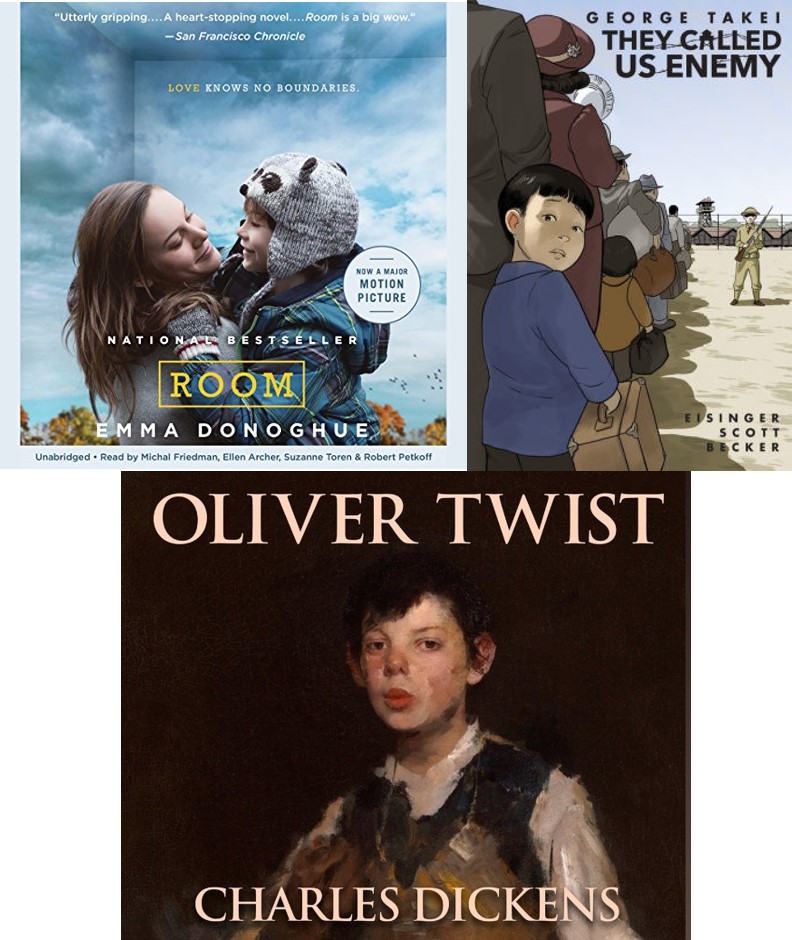
Books Completed

Completed

Currently Reading

Currently Reading

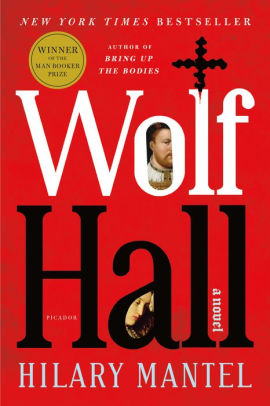
I’m getting to the point where I’m reading too many books at once again, lol. I have Economist and New Scientist checked out from the library and hope to get them finished up by this weekend. I restarted my Bible-reading project, and will be posting updates about that a couple times a week. I’m doing a study of the sociopolitical landscape around the time of Henry VIII in anticipation of my reading of Wolf Hall trilogy next year (feel free to join me in a buddy / group read! I’ll be reading about 50 pages a week). I hope to post notes on one lesson a week for 24 weeks.
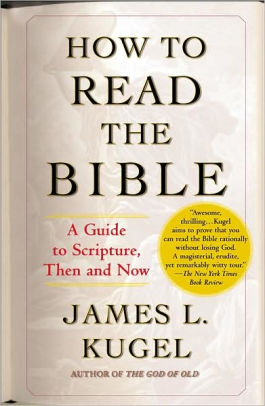
How to Read the Bible: Chapter 7, by James Kugel

9780743235877_p0_v1_s550x406

You may remember from long ago that I was working on a long-term project to read the Bible along with a lot of supplementary reading. I have read the Bible a few times, and this time I really want to study it. One of the supplementary works that I have been reading on and off is How to Read the Bible, by James L. Kugel. If you want to read my summaries of earlier chapters:

Chapter 1

Chapter 2

Chapter 3

Chapter 4

Chapter 5

Chapter 6

Chapter 7 is a short chapter in which Kugel describes to aspects of the Bible: the two ways of conceiving God, and the perception of angels in the Old Testament.

Modern readers of the Bible tend to view god as omnipresent, omniscient, and omnipotent. That is the later model of God in the Bible. In earlier texts, God is not everywhere simultaneously. As an example, during the Tower of Babel story (Genesis 11:1-9), God has to go down to earth to see what was going on.

But the Lord came down to see the city and the tower the people were building. Genesis 11:5

If he omnipresent and omniscient, he wouldn’t have to go make this trip. He would simply be there and know. Furthermore, God walks in the garden of Eden, as well as appearing in other places in the early texts as a human-like figure. This is against the currently common conception of God.

As for angels: it is common for men and women in the bible to mistake angels for men at first. One example is when an angel comes to Manoah and his wife in Judges 13:2-24.

God heard Manoah, and the angel of God came again to the woman while she was out in the field; but her husband Manoah was not with her. The woman hurried to tell her husband, “He’s here! The man who appeared to me the other day!” Judges 13:9-10

As the flame blazed up from the altar toward heaven, the angel of the Lord ascended in the flame. Seeing this, Manoah and his wife fell with their faces to the ground. When the angel of the Lord did not show himself again to Manoah and his wife, Manoah realized that it was the angel of the Lord. Judges 13:20-21

This general confusion is a theme throughout the Old Testament. It isn’t entirely clear why people are so confused about whom they are talking with.

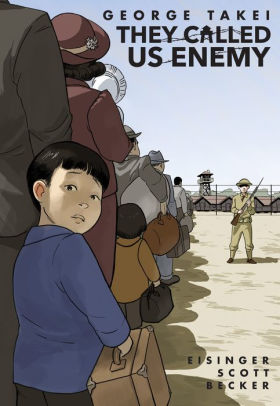
They Called Us Enemy, by George Takei

9781603094504_p0_v1_s550x406

Many of you know who George Takei is, but in case you don’t he’s a social activist who acted as Hikaru Sulu in the original Star Trek series. In this touching graphic memoir, Takei chronicles his time in a Japanese internment camp in America during WWII. The story is tragic and uplifting at the same time (uplifting in the fact that as a child, he didn’t really realize what was going on, and although it certainly colored his view of the world later, it did not crush his soul). This is highly recommended to anyone who is interested in Takei, or in Japanese internment camps, or simply likes graphic nonfiction.

Social Justice Nonfiction Challenge 2020

Social Justice Challenge

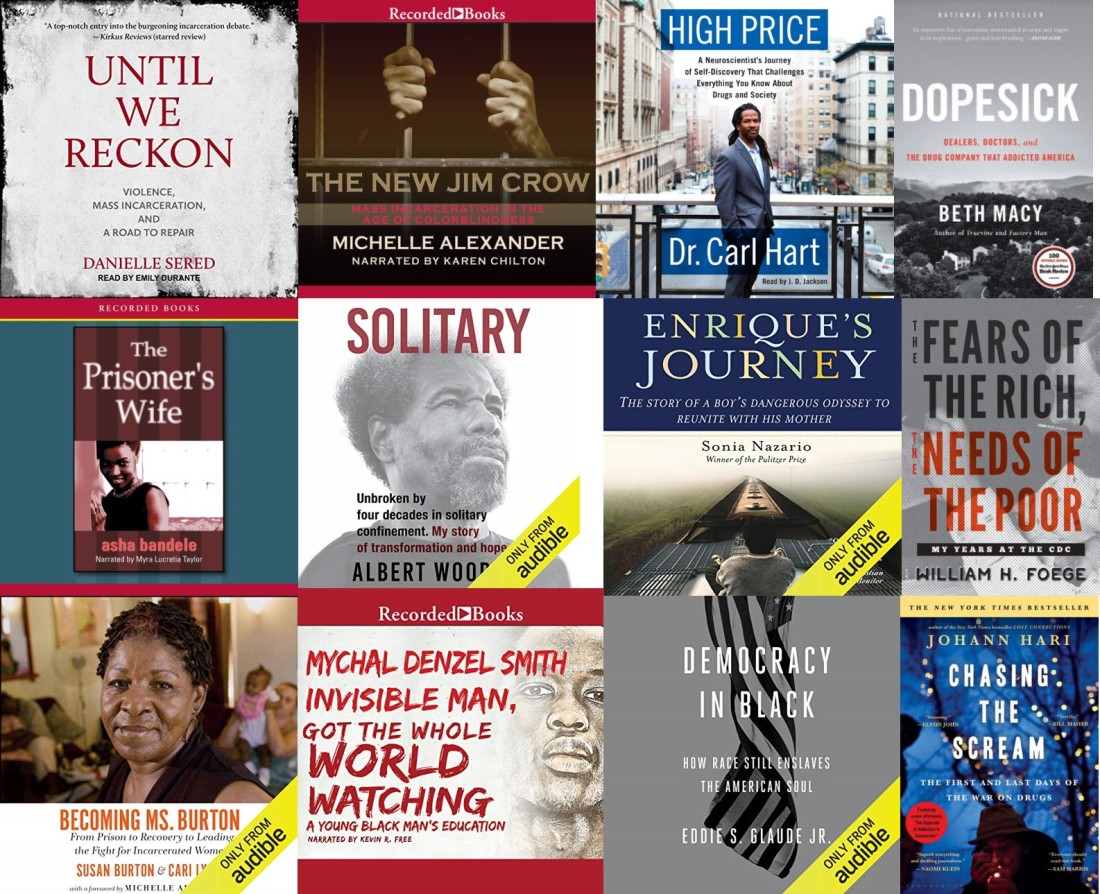
Hi! I plan on focusing a good deal of my nonfiction reading on social justice issues next year (and the end of this year). I have been unable to find such a challenge in the past, so decided to host one this coming year. I will have a post each month on the first day for people to link up their reviews, starting in December 2019. Feel free to read as many or as few books as you desire. I will be aiming for about one book a month. Books that I plan on reading:

nonfiction

Please say in the comments if you would be interested in joining with your own selection of social justice books, so I can watch your blog.

Wolf Hall Trilogy Readalong

In anticipation of the upcoming release of the third book in Wolf Hall trilogy, I will be reading all three books as well as some supplemental nonfiction to help me understand the sociopolitical history of those times. Some of the books I plan on reading are:

I plan on reading slowly, at about 50 pages a week starting in January, and if people would like to join, I would be more than happy to post my thoughts and have a linky for your thoughts (or reviews of related literature) each month.

Let me know in the comments if you are interested:

Nonfiction November Week 3

Week 3: (Nov. 12 to 16) – Be The Expert/Ask the Expert/Become the Expert (Katie at Doing Dewey): Three ways to join in this week! You can either share three or more books on a single topic that you have read and can recommend (be the expert), you can put the call out for good nonfiction on a specific topic that you have been dying to read (ask the expert), or you can create your own list of books on a topic that you’d like to read (become the expert).

Well, a wonderful person over on LibraryThing has offered to tutor me in the Wolf Hall trilogy next year, so starting January, I’ll be reading the whole trilogy at 50 pages a week.  (If anybody wishes to join me in this journey, let me know! Buddy reads are always fun.) I’ll be supplementing my reading with the following nonfiction books:

nonfiction


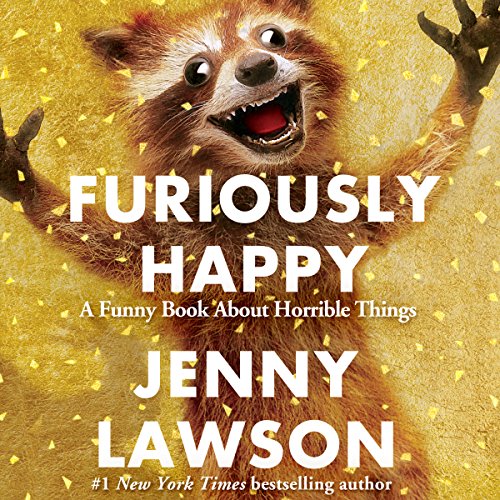
Furiously Happy, by Jenny Lawson

61yssnyqyxl._sl500_

I’d like to get back to writing real reviews rather than mini-reviews – at least for some books. I’ll use a line of questioning outline in Susan Wise Bauer’s The Well Educated Mind.

Summary: Blogger Jenny Lawson writes an hysterical memoir about her adventures while trying to be furiously happy. She is a warrior for destigmatizing mental illness, and this subject is the main point of her memoir. She wants to be furiously happy rather than wallowing in self-pity.

Review:

👽 Is there meaning to the title or cover?
Yes, the cover is a happy raccoon, which represents her own stuffed raccoon which she uses for all sorts of pranks and shenanigans. (She is a taxidermist.)
The title is the main point of her book – instead of wallowing in self-pity about mental illness, we should try to be furiously happy despite the mental illness. Let go of our inhibitions and be happy in the face of adversity (and especially the face of people who don’t like you).
👽 What are the central events of the book?
It’s hard to pinpoint the central events of this book. It, of course, centers around her deciding to be furiously happy – so she starts going on adventures even though they are outside of her comfort zone. Adventures like going to Australia despite her agoraphobia. Fun like wearing a koala suit while going to see the koalas.
👽 What historical events coincide – or merge – with these personal events?
Well, the book was written around 2015, so I’d say the major events that were going on in Obama-era times was the Great Recession, though I don’t recall her mentioning it.
👽 Who is the most important person (or people) in the writer’s life? What events form the outline of that story?
Her husband is the most important person in her life – considering how many times he was mentioned in the memoir. He is a Republican, and she is a Democrat; he is sensible, and she is often irrational.
👽 What is the theme that ties the narrative together?
The theme of the book is being furiously happy, of course. 🙂
👽 Where is the life’s turning point?
In this memoir, it’s when she decides to become furiously happy.
👽 For what does the writer apologize? In apologizing, how does the writer justify?
The writer doesn’t really apologize, but I suppose she offers excuses for being so deeply depressed that she had to decide to be furiously happy out of spite. She justifies this by having an array of mental illnesses and sleeping disorders. She also excuses herself for bugging her husband with shenanigans by pointing out that it’s her way of fighting her depression.
👽 What is the model – the ideal – for this person’s life?
The ideal, I guess, would be perfect mental health. But that’s not going to happen, so she settles for being furiously happy.
👽 What is the place where the writer has arrived, found closure, discovered rest?
Lawson has developed as a blogger and gotten a strong following due to her efforts to destigmatize mental illness and encourage people to be furiously happy.
👽 What are the three moments / time frames of the work?
This story’s timeline is all out of order, as far as I can determine. But I suppose they would center around her deciding to be furiously happy. She talks very little about her time before deciding to be furiously happy. She was deeply depressed at that time. The book is almost a set of short essays about events in her life while attempting to be furiously happy.
👽 Where does the writer’s judgement lie?
I guess if she judged anyone, it was people who stigmatize mental illness and people who want her to be unhappy. These people were not talked much about in her memoir, but she dropped hints of them on occasion.
👽 Do you reach a different conclusion than the author about the pattern of his / her life?
Nope
👽 What have you brought away from this story?
That a good sense of humor can solve many problems. 🙂

Nonfiction November 2019 Week 2 (A little late)

nonficnovgraphicjulz

Week 2: (Nov. 4 to 8) – Book Pairing (Sarah of Sarah’s Book Shelves): This week, pair up a nonfiction book with a fiction title. It can be a “If you loved this book, read this!” or just two titles that you think would go well together. Maybe it’s a historical novel and you’d like to get the real history by reading a nonfiction version of the story.


Completed

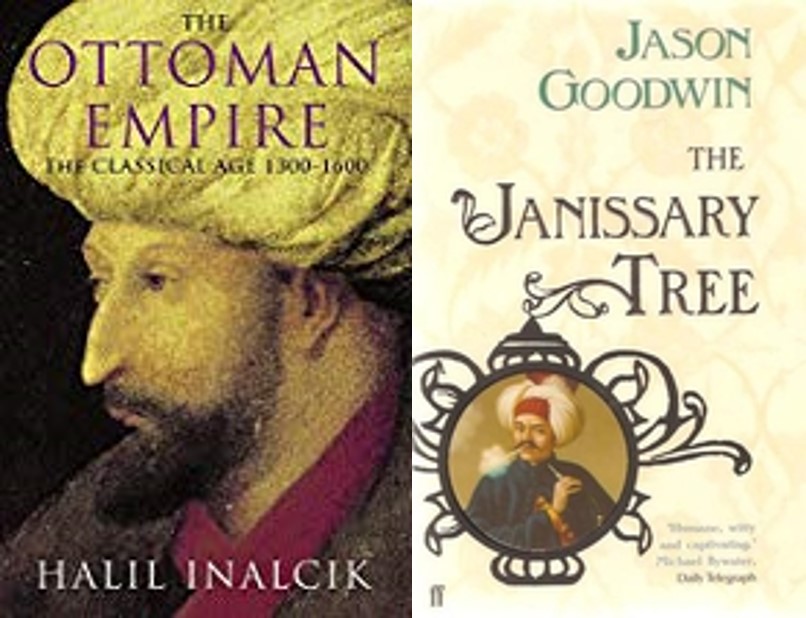
First, a pair I’d like to read. I have been fascinated at the concept behind The Janissary Tree (a mystery novel set in 1830’s Istanbul) for a while, and it would be fun to pair that with an historical book on the Ottoman Empire. This empire has been haunting the imagination of historical fiction writers for quite a while – I wish there were as many fantastic history books on the subject as there are fiction, but most have a poor rating. I’m trying to find one that appeals. Any suggestions other than the book above?


Completed

Since the third book in the Wolf Hall trilogy is finally coming out in March, I may listen to the first two, along with a biography of Thomas Cromwell this coming year. This one looks well-written.


Update November 9, 2019

This has been a pretty uneventful week. In fact, yesterday I took these pictures of the family specifically because I had nothing new for the blog. 🤪 Of course, the first is of M and me. He actually sat by me of his own accord. I don’t recall him ever doing that in the past. (I met him when he was 5, and he was a little skeptical of the stepmom thing.) The second picture is Aaron and D, followed by a picture of IL.

I did get a lot of audiobook listening in last week, as well as more than usual reading. (I decided it’s not “cheating” to use some of the baby’s nap-time for reading. He takes two naps, so I can always do some cleaning during the other nap.)

Currently Reading

Currently Reading

Completed last week

Completed

Acquired

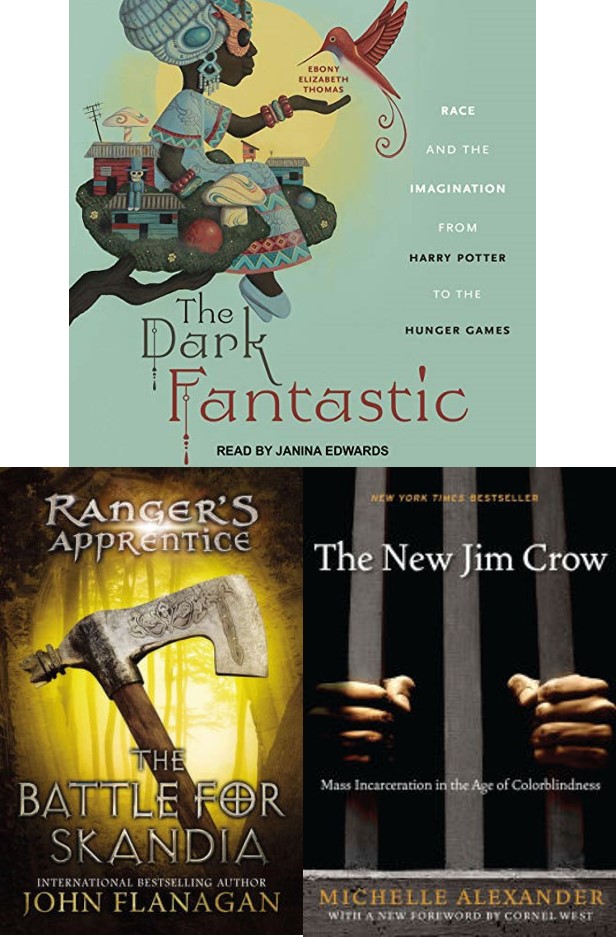
Just The Dark Fantastic (shown above) from the library.


This has been posted to:

stacking
Tynga’s Reviews

Nonfiction November Week 1 (A Little Late)

nonficnovgraphicjulz

Well, I decided a little late to jump on the Nonfiction November bandwagon. I’ll just do a little catch-up.

Week 1: (Oct. 28 to Nov. 1) – Your Year in Nonfiction (Julz of Julz Reads): Take a look back at your year of nonfiction and reflect on the following questions – What was your favorite nonfiction read of the year? Do you have a particular topic you’ve been attracted to more this year? What nonfiction book have you recommended the most? What are you hoping to get out of participating in Nonfiction November?

Completed

These are the nonfiction books I read this year. Few, I know. But I’ll do better next year, I hope.

What was your favorite nonfiction read of the year?

My favorite of the year was American Overdose. So tragic and eye-opening.

Do you have a particular topic you’ve been attracted to more this year?

I guess all of these books have a theme: they are about prejudice. Whether it be racial, gender, or occupation prejudice – it all sucks.

What nonfiction book have you recommended the most?

Of these, I’d say Radium Girls was the most readable.

What are you hoping to get out of participating in Nonfiction November?

Since moving to WordPress, I haven’t had opportunity to connect with people with similar reading interests. This is my attempt to do so.