The New Testament Canon, by Harry Y Gamble


The New Testament Canon, by Harry Y. Gamble

Reason for reading: This is one of the supplementary books for the great course The New Testament (The Great Courses, Course Number 656), by Bart D. Ehrman. 

Thoughts: This short “guide to biblical scholarship” glossed over some of the reasons certain books, and not others, were chosen for the New Testament canon. This is a very heavy topic with lots of scholarship, and this book tended to disagree with most of the specific theories in favor of the broader theory that there’s no evidence that any specific movement had a great impact on the formation of the New Testament canon, but added all together they DID have an impact. I found this book rather dense at times. It assumed prior knowledge of the topic, which I’m only beginning to study. 

Notes
Chapter 2: The History of the New Testament Canon

The history of the New Testament (NT) canon must be pieced together on fragmentary evidence. There are a couple types of evidence that are useful: 1) The contents of the ancient manuscripts of the NT together with scriptural aids like concordances or prologues. This evidence is mainly from the fourth and fifth centuries. 2) The use of early Christian documents written from the second through the fifth centuries. By noting early scholars’ allusions to various texts, we can deduce which of these early texts were widely accepted.

The gospels which were incorporated into the NT did not gain clear prominence until the late second century. Mark, written around 65, appears to have been the first narrative gospel. But it originally ended at 16:8 and thus lacked any post-resurrection narrative of Jesus. John, too, was originally lacking sections that were later accepted as gospel – Chapter 21 was not composed by the same person that wrote the rest of the Gospel of John. Additionally, the story of the adulteress (John 7:53 – 8:11) wasn’t originally part of the Gospel of John. These discrepancies might have cast doubt on the authoritative truth of these gospels. Furthermore, having too many gospels, especially ones that seem to contradict each other, cast doubt on the adequacy of any gospel. 

The first evidence for a collection of four Gospels was in a document written by Irenaeus, bishop of Lyons in Gaul, writing around the year 180. There is also evidence of a four-gospel collection in the Muratorian canon list, which claims that the diversity of the gospels “matters nothing for the faith of believers.” This comment suggests that some people had indeed found the discrepancies in the gospels disturbing.

The formation of a four-gospel collection was neither a necessity nor a natural outcome of the history of gospel literature in the early church. It is a compromise which balances an unmanageable number of gospels and a single self-sufficient gospel. Writers of the period tend to speak of the group of gospels as “gospel” (singular); thus, there are not four gospels but a fourfold gospel. Thus a balance is reached between two extremes. 

There are several theories as to why Paul’s letters gained the widespread appreciation that led to their placement in the canon. 

One theory is that because his letters were highly valued by the communities he wrote to, they all sent his letters to neighboring communities so that everyone could share. But if this were the case, why did some letters survive and others disappear? And why did the author of Acts of the Apostles not mention the letters, if they were so important? 

Another theory (Goodspeed’s) is that Paul’s letters were highly valued by one scholar, who went out of his way to collect as many of them as he could. He then wrote the letter to the Ephesians, in Paul’s name, as an introduction to his collection. That would explain the difference in writing styles of that letter to the rest of them. Gamble suggests that this is an extremely romantic theory, but with no evidence to support it.

Another scholar (Schmithals) changed Goodspeed’s theory a bit to say that the collector/editor of the letters did so to create a weapon against gnosticism, since many of Paul’s letters contain comments that are in opposition to gnostic spirituality. Again, there’s no evidence that this theory is true, and it’s too complex to accept without evidence. (Occam’s Razor and all that jazz.)

Schenke suggested that the letters were collected by a Pauline school of scholars that valued Paul’s teaching. This theory seems to be the most attractive to our author Gamble. 

Chapter 3: Factors in the Formation of the Canon

In the early years of Christianity, there were several Christian movements. Many theologians suggest that the New Testament was developed specifically to refute the claims of one or more of these movements. Gamble lists a few of them, and provides the arguments for and against particular groups having strong influence on the formation of the NT. Although Gamble does not support beliefs that any of these groups had much influence on the NT formation, he does suggest that all of them together could have had a larger effect on the NT.

The Marcionite Christians (second century) – movement begun by Marcion, a shipowner-turned-scholar who arrived in Rome in about the year 140. Marcionites Believed that there was an angry Jewish Creator God and a good God that Jesus came to save us from. Since Jesus was not created by the Creator God, he did not have a corporal body – he only appeared to. Thus, Jesus was not human, but he was divine. (This would sorely undervalue Jesus’ gift of dying for our sins if he only appeared to suffer.) Because Judaism had nothing to do with Christianity (different Gods) the Jewish scriptures had no place in the Church. 

Marcion was the potentially the first scholar to compile a canon of literature – composed of the letters of Paul and Gospel of Luke. Some theologians believe that the Church adopted Paul’s letters into their canon because of pressures from Marcionites, and that it was compelled to compensate for Marcion’s bias towards Paul by including a variety of other apostolic writings to the canon. However, this theory does not explain why Paul’s letters were widely known before Marcion’s time. 

The Gnostic Christians – Believed that the real truth was only revealed to a select few. That when Jesus was baptized, a spirit entered him and he became the savior who taught the way to salvation. This spirit left Jesus and returned to heaven when Jesus was dying on the cross. We, also, are spiritual in nature, stuck in corporal bodies. (This doesn’t fit exactly with the way Elaine Pagels described Gnostics in the two books of hers that I’ve read, but I guess there’s room for error in studying a group of people on which so little information is available.)

It is commonly supposed that the NT was developed as an effort to oppose The privacy of many Gnostic beliefs, which were only abailable to the select few, and to oppose the “heretical” literature circulated by the Gnostics. However, Gnostics made free use of canonical literature, too, and it seems that the major difference between Gnotics and the Church was more about interpretation than literature.

Montanism – The Montanists were followers of a charismatic prophet named Montanus who claimed that the Paraclete promised by Jesus in the Gospel of John had come, and the end of times were at hand. (Seems like the end of times was always at hand for millennia on end.) Many theologians suggest that the New Testament was formed as a retaliation against Montanism for two reasons. First, the Montanists created new prophetic documents and claimed authoritative truth that the Church wanted to refute. Second, Montanists claimed prophetic revelation and the Church claimed that all prophetic revelations were in times past – that Jesus was the last prophet. However, as with the Marcionites and the Gnostics, Gamble refutes claim that Montanism had much impact on creation of the NT. First of all, Montanists, like the Gnostics, made free use of the canonical literature, but had different interpretations. Second, at the time that Montanism was popular the Holy Spirit and prophetic charisma were accepted by even the anti-Montanists in the Church.

In addition to the groups above, these Early Christian groups were outlined in Chapter 1 of Bart D. Ehrman’s The New Testament: A Historical Introduction to the Early Christian Writings. I thought it would fit in well with these notes on Gamble’s book.

The Jewish Christian Adoptionists – Believed that Jesus was born a human of a non-virgin. He was adopted by God as His son upon baptism. Jesus was not, however, divine. (I could believe this pretty easily if I were inclined to have fixed beliefs.)

Proto-Orthodox Christians – These are the ones that modern Christianity sprouted from. They believed that Jesus was divine and human. They believed there was only one God. 

Another factor possibly affecting the formation of the New Testament is that the technology to create a codex large enough to hold the entire NT was not developed until the fourth century.

On psychopaths – guestpost by Daniel Schuette

First of all, let me forewarn you: THIS GUEST POST WILL CONTAIN ADULT CONTENT.


When I was asked to write a post for Mental Health Awareness, my first thought was: “What on earth qualifies me to even do such a thing?” I mean, sure, I’m on medication for depression and anxiety, I was intimately involved with someone with bipolar disorder, and I’ve been called crazy plenty of times, but that hardly makes me some kind of expert. So allow me to preface this post by saying I am not a mental health professional and am in no way qualified to be writing this post, so feel free to take what I have to say with a whole shaker of salt.
With that disclaimer out of the way, let me explain what I might be able to contribute to the mental health topic and why I think your host asked me to be a part of the conversation. For the past several years, I’ve been developing a character for a series of novels named Aleksandr Zorin. Aleksey is not a nice guy. In fact, he’s a psychopath and a sadist and a serial killer. As much fun as it can be to create such a character, I’m one of those anal retentive types that finds it necessary (nay, imperative) to be as accurate as I possibly can about his motivations and behaviors, and therefore—by extension—his mental condition. And since I don’t have an anti-social personality disorder like sociopathy or psychopathy (as least insofar as anyone knows)—that requires lots and lots of research.
What I have found is that it’s rarely like what you see on TV. If programs like Hannibal and Criminal Minds and Profiler are to be believed, there is a virtually endless onslaught of sadistic psychopathic killers out there, and they will (almost without fail) be brought to justice in approximately 42 minutes. In reality (and though I personally question the accuracy of this statement), the FBI estimates that there are only thirty-five to fifty serial murderers active at any given time in the United States. With the abundance of crime dramas currently on TV, it would only take a few short weeks to declare society completely safe from a horrible demise at the hands of a violent psychopath. So let’s take a bit to separate fact from fiction.
Sociopath or Psychopath? There is much debate on what (if any) difference there is between sociopathy and psychopathy, even among mental health professionals. Both are classified as Anti-Social Personality Disorders. Both are primarily characterized by a profound lack of emotion, empathy, and fear. Some state that the classifications are two names for the same disorder and can be used interchangeably. Others believe that psychopaths are born with the deficiency, and sociopaths are more a product of their environment during early development. Some say psychopaths are charming, cunning and organized; some say those are actually the hallmarks of the sociopath. The Sociopath Next Door suggests that 4% of the population is sociopathic, yet Robert Hare—the foremost authority on psychopathy—estimates that 1% of the population are psychopaths. Considering that is a difference of roughly 9 million people, there must be a distinction between them, but no one really seems to know or define what that is. So, for the sake of this post, we’ll just have to say that between 3 million and 12 million people can be classified as psycho/sociopaths.
Those are astonishing numbers, though, wouldn’t you say? Think of that—at least three million people are psychopaths. They can do virtually anything with little or no fear of consequence, and have no internal moral compass to guide their actions. They frequently view the rest of us as either inferior prey or insignificant pieces to be manipulated in some grand game of their own design—a game we don’t even realize we’re playing.
Contrary to what many believe (and quite fortunately for the rest of us), only a very small percentage of those psychopaths will ever become violent. Many will instead find ways to harness their uncommon skillset by entering law enforcement or enlisting in the military, becoming politicians, surgeons, or successful CEO’s. One might, as you read this, be playing the stock market fast and loose with your money. Any role where a proclivity for risk-taking, fearlessness and emotional detachment are considered advantageous, the psychopath would most likely excel at it. Odds are, you’ve even known a few without recognizing them for what they were. In reality, psychopaths are rarely “monsters” and are much more likely to be the successful leaders that we look up to and even admire.
On the flip side of that coin, however, is something that can be truly terrible to behold. Some psychopaths will become violent rapists and murderers. But contrary to what popular media frequently depicts, they don’t look like creepy fuckers/scoundrels, nor are they all brilliant cannibals like Hannibal Lecter. They may be the quiet bloke that lives next door or your asshole/hardnosed/tyrant boss or the cute ripped guy at the gym. Like any other slice of the population, they are quite diverse. They can be any race or gender (but are predominantly male), come from any background, and will have varying degrees of intellect. What most of them do have in common is a frightening ability to blend in. They are the chameleons of our society. They learn to mimic behaviors that they don’t understand in order to fit in; they are often charming and disarming. They are the ones whose chain-smoking, muumuu-wearing neighbors wind up on the news exclaiming: “I just can’t believe it! He was such a nice, normal guy.” Well, no. He really wasn’t. He was actually a vicious predator that wore a very convincing mask.  
            The most asked and obvious question is “why?” What is it that causes one human being to revel in the agony of another? Psychopaths themselves can’t usually provide a clear, objective answer for that. They tend to place the blame squarely on their victims, or their upbringing. But there is some new research that seems to shed some light on the subject. Functional Magnetic Resonance Imaging (or fMRI) of the brains of known psychopaths has shown significant deficiencies in the areas that process emotion and fear. They also do not experience the same brain activity that “normal” people do when shown images or words with violent connotations. In short, the words table and rape elicit precisely the same emotional response in the psychopath—none. For them, hacking off someone’s limbs is no more or less remarkable than chopping wood. 
        Perhaps Aleksandr Zorin can provide us with another part of the answer: Imagine an existence without any feeling at all. A vast desert of nothing as far as the eye can see in every direction. It is an endless ocean of sand. Empty. Barren. Then one day you do something and find it to be… exhilarating. Suddenly within this existence of dust, there is a small oasis—a place that quenches the endless thirst of nothing. Not an emotion, per se, but a feeling. Something you’ve never experienced. Adrenalin flows. Your stomach knots. Your cock gets hard. Your heart races. Your senses become heightened. It may never be happiness or love but it is something where there once was naught. It is new. It is a stirring. It is enjoyable. It is purpose. It is life.” 
If Zorin is right, sociopaths and psychopaths eventually discover just a tiny spark of what the rest of us experience every minute of every day. It is a glowing ember in the void of their existence. And they like it. They are compelled to ignite it again and again—to feel again and again. Unfortunately, it is sometimes the suffering of others that provides the kindling for those feelings in the psychopath. 
           Are these broken individuals that need to be “fixed”, or are they a natural variant in the evolutionary process? Violent psychopaths are in direct opposition to the laws of civilized society, so they are hunted by law enforcement. They are often referred to as “evil” and punished to the fullest measure—by life in prison, and sometimes death. Still, they fascinate many of us, who perhaps see in them the boogeymen of our nightmares, or the monsters under our beds. But they are far scarier than any of our mythological constructs. They are human beings devoid of humanity, barely (and not always) held in check by our nebulous concepts of compassion and justice. 
         So how might this post relate to mental health awareness? First, understand that the portrayals of psychopaths and serial killers in the media are rarely accurate. Remember that one of every hundred people you meet is completely indifferent to your feelings, and they have a tendency to wreak hell and havoc on the lives of those around them. If someone you know is charming yet constantly takes advantage of those around them and then ultimately destroys those relationships, you may be dealing with a functional psychopath. Urge those that you care about to steer clear—there is zero hope of “fixing” them, or getting them to change. Transformation is impossible for the psychopath. And if the hairs on the back of your neck stand on end and you get a shiver when someone approaches, listen to your instincts—you are programmed to sense danger from predators and psychopaths are the equivalent of modern sabre-tooth tigers. 
           While I doubt many with Anti-Social Personality Disorder have read this post, and though I suspect you wouldn’t listen even if you had, I encourage you to seek help from therapists. There are cognitive therapies available that will help you channel your unique assets and minimize destructive behaviors. It is possible for you to lead extremely productive and successful lives, despite (or perhaps even because of) your lack of compassion for others. 
  
          Whether we view them as a different species entirely, or those saddled with an unmanageable mental “illness”, the three million psychopaths among us already own a link in the evolutionary chain. We must learn to adapt to—and accept—the reality that there are ruthless predators in our midst. We are sometimes hunted. We are sometimes stalked.
We are sometimes prey.

Guest Post: The Survivor’s Side of Suicide, by Julie Cantrell

The Survivor’s Side of Suicide
By Julie Cantrell


Suicide is one ugly word. It’s the kind of word that swings heavy from lips. The kind that is whispered, and stilted, never sung.

As an author, I build my life around words. Every word has worth. Even those words we are not supposed to say. But suicide is the one word I do not like. I wish there was no need for such a word in our world. Especially since 1997, when my teen brother ended his own life two months before his high school graduation.

It is one thing to be on the other side of suicide, where you may offer prayer or casseroles or even a hug. It is another thing entirely to be on the side of the survivor, after a loved one puts a gun to the head or a rope to the neck or a blade to the vein. That dark depth of despair is no easy channel to navigate because unlike every other form of death, this one was intentional. This one could have been prevented. This one carries immeasurable sting.

The what-ifs and but whys and I wonders never cease. They haunt all hours, whether moonlit or shine. And the stares don’t stop either, the constant conversation that hangs silently between friends — at the grocery store, or in the church pews, or at the birthday party. No one says it, but they are thinking… That poor mother, how does she stand it? Or – That poor child, knowing his father took his own life.

What people on that side of suicide don’t understand is that we, the survivors left in the wake, are barely keeping our heads above water. We don’t want pity, or sympathy, or stares. We don’t want whispers, or questions, or help. We want one thing only. We want our loved ones back. And there’s one simple way you can give this to us.

Talk about the people we loved and lost. Don’t dance around us as if their ghost is in the way. Acknowledge the lives they lived. Recognize the light they once shined. Laugh about the fun you once had together.

There’s nothing you can tell us — no detail too small, no memory too harsh — that will hurt us. We crave it all. We are hungry for any piece of time travel you offer. Bring us back, to that space, when the one we loved was in the here and now.

Suicide is something most of us struggle to understand. It is difficult to rationalize the selfish part of such an act. How could someone not care about the pain they would throw on their loved ones? How could someone not be strong enough to stay alive?

But here’s the truth: suicide was not the cause of my brother’s death. Depression was the cause of his death. And depression is a beast unlike any other. It is an illness we still struggle to cure, despite all the therapeutic and pharmaceutical intervention available today.

Sometimes, even with all the help in the world, a person cannot see through the pain. They cannot imagine a better day ahead. They see only more hurt. And when I say hurt, I mean suffering. Blood-zapping, brain-numbing, soul-bursting agony.

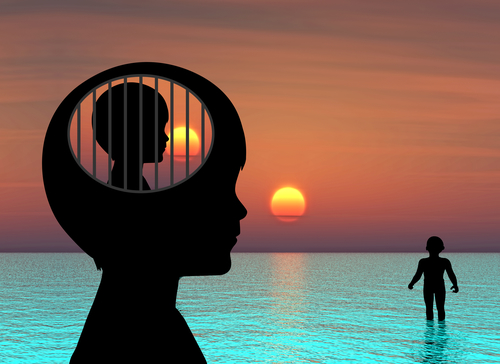
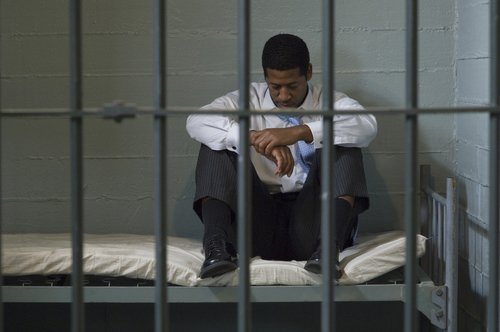
Imagine this: you wake every day as a prisoner. You are trapped in a cell with no freedom in your future. You are tortured — physically, emotionally, psychologically. The anguish never stops. Just when you think you cannot survive another blow, it comes again. More pain.

You try to ignorethe ache. You cannot. You try to numbthe hurt. You cannot. You try to rise above the pain. You cannot. The brutality persists. And you see no end to it.

If you knew you had to endure only one more round of abuse, or one more month, or even a year, or longer. If there was an end in view, you could be strong enough to handle it. You could take whatever is thrown at you because you want, more than anything else, to live.

You are a sensitive soul and you have so much left in you to give. You want only to love and be loved. But the cell has you trapped. You have tried everything. There is no end to the insufferable situation.

A person with depression becomes suicidal when they finally give up all hope. When they accept that nothing they do, no matter how long they survive, no matter how many medications or prayers or therapists they turn to, the pain will never end.

Can you imagine the pain you would have to be in to take your own life? Can you imagine the fear of a suicidal person (regardless of faith), daring to face the unknown because even the possibility of eternal hellfire or permanent purgatory or absolute absence seems less scary than another day in this world?

When Robin Williams passed away, the world was abuzz weighing the controversial issues of mental illness, depression, and suicide. While some people were unable to extend kindness or understanding, proving we have a long way to go in our culture’s recognition of chemical imbalances, the international conversation gave me hope. It proved that people are finally willing to say the word SUICIDE out loud, without the hushed whispers and back corner gossip. Putting this word on equal footing with all the other words in our vernacular is important. It lessens the sting.

I consider this progress, and I am optimistic the forward momentum will continue. It is time.
I write this blog today for several reasons:

·         One, I am proud to have been the sister to an amazingly bright spirit who left this world too soon and whose memory I want to keep alive.

·         Two, I want to increase understanding and support for the millions of people struggling with chemical imbalances.

·         Three, I want to offer support and empathy to all who have lost a loved one to suicide and encourage you to speak out loud to honor their spirit and to educate those on the other side.

·         Four, and most importantly, I have a very important message for anyone struggling with depression.

One week after my brother died, we received notice that he had landed the career opportunity he wanted with the Department of Wildlife and Fisheries. That job may have been enough to offer him the key to that cell, the something to cling to, the reason for reason. Maybe, if he could have stuck it out one more week, he would still be alive today. Seven days, and he may have had hope again.

Today, when I see someone struggling for hope, looking for a signal, a reason, proof that their life matters and that the pain will indeed end, I think of my brother and that phone call that came one week too late.

If you are struggling with depression, please remember… you are in this world for a reason. You have a very important journey you must complete. You were born to accomplish something, something only you know. You will suffer, you will hurt, you will feel hopeless and alone at times. But you are not in that space forever. Keep walking, keep moving forward, and you will find your way through in time.

When you hit bottom, please remember this: You are loved. You are never alone. You were born with everything you need to survive this journey. You matter.

And once you are on the other side, as you will soon be, then, you will look back with wiser eyes, the eyes of a survivor. You will know your soul survived the stretching season. And you will move through the world with greater empathy and understanding, a gift like none other. For you, sensitive one, are the blessed. And we need you here. In this life.

Be brave. Wage war. Hold fast to the light inside of you.

“For God hath not given us the spirit of fear; but of power, and of love, and of a sound mind.” 2 Timothy 1:7

Julie Cantrell is the New York Times and USA TODAYbestselling author of Into the Freeand When Mountains Move. She works to promote suicide awareness and prevention in memory of her brother, Jeff Perkins. Learn more: www.juliecantrell.com

Emotional Fitness – Happiness

This post comprises my thoughts for several activities this week. First, Novel Heartbeat‘s topic for Life of a Blogger this week is Fitness. Because I’ve been focusing so much on my own mental health lately, I’m going to cheat a little bit and talk about emotional fitness. Don’t get me wrong. Physical fitness is really important. And usually I’m out there training for triathlons and zombie runs, etc. But this year I was whacked upside the head with mental illness which gave me pretty severe fatigue. So, I’ll have to focus on emotional fitness and hope that physical fitness will follow. I thought this post would also be nice for Create with Joy‘s Friendship Friday

So. Mental fitness. What is it? I think the first step to such fitness is happiness. I found this little book stashed in my mom’s sewing basket today. It was rather uplifting if you like thought-of-the-day sorts of books. 
In  Instant Happy, Karen Salmansohn tries to break negative thinking patterns by introducing positive thinking patterns – with the belief that every time we think a negative thought, it reinforces that negative thought in our minds; therefore, if we break that pattern, we can become happy. Although I’m skeptical of instant happiness being anywhere in my near future (that’s just too easy, isn’t it?), I did enjoy the book, and I appreciate the theory behind it. Obviously, I can’t tell you all of the thoughts that I found compelling – that would take the fun out of it for you. But one page asked: What’s your pet excuse? It listed a bunch of typical excuses. My pet excuse is: I can’t until. I can’t start working out again until I’m not fatigued by my mental health. I can’t find the perfect job for myself until my metal health is better. If I hadn’t planned for a couple of months for my Suicide and Mental Health Awareness theme, I probably would have postponed even that for “this year,” just as I’m thinking about postponing my Social Justice and Human Rights Awareness theme at the beginning of next year. Because I can’t until my mental health is better. I read a fantastic post about NOT waiting for the “perfect moment”  on Jeff Goins’ Blog.
Another activity that I’m combining into my happiness post is a pre-assignment for the upcoming MOOC from edX The Science of Happiness. (Yes, everyone, you can still sign up! It starts on September 9th and is free open enrollment!) Our pre-assignment is to introduce ourselves with a short video saying what makes us happy. 🙂 

Doon, by Carey Corp and Lorie Langdon

Let me tell you about an adorable little series of teen romance novels published through Zondervan by Carey Corp and Lorie Langdon. 

Genre: Teen romance / Fairy Tale

Reason for Reading: The publisher, Zondervan, provided a copy of Destined for Doon in exchange for an honest review. 


The first book in the series is Doon

Summary: For Veronica’s entire life other people have walked all over her and abandoned her. When a recent break-up leads to Veronica hallucinating a handsome Scottish boy, she’s half convinced she’s crazy…but as she continues to see flashes of him, she realizes it is her destiny to cross over the Brig ‘O Doon in Scotland and meet her destined. MacKenna, her best friend, has other plans for herself and Veronica, though.

Review: This was a sweet teen romance for people who are fans of fairy-tale endings. It had a nice combination of adventure (saving an imperiled kingdom from a nasty witch, while dodging angry mobs) and angsty teen romance. It was fun to watch how close Veronica and MacKenna were, despite their differences in personality. They each had strengths and weaknesses, making them a fantastic team. This is a story just as much about friendship as it is about romance.

Destined for Doon  ●  Authors: Carey Corp and Lorie Langdon
Zondervan ● September 2, 2014 ● ISBN: 9780310742333
Hardcover/$17.99 U.S. ● Ages 15+

The second book in the series is Destined for Doon 
Summary: Unlike Veronica, MacKenna didn’t have a fairy-tale ending in the first book. She chose a difficult path, and one that didn’t make her as happy as she’d wished. But when MacKenna is given a chance to redeem herself (as well as save the imperiled kingdom of Doon from zombies), she snatches it up. But can she redeem the mistakes of her past? 

Review: For me, this book seemed faster-paced than the first one. It picked up a few months after the first one left off, and instead of focusing mainly on Veronica’s relationship with Jamie, it focused on Mackenna and Duncan. One thing I liked about this continuation is that (unlike many teen romance series) the problems that must be overcome in the second book are not simply continuations of problems from the first book. Mackenna and Duncan, as a couple, are so different to Veronica and Jamie. Again, this story is a nice combination of adventure and angsty teen love. 

And, of course, the moment you were all waiting for – this is where I give a free copy of Destined for Doon to one lucky winner. This offer is for a hardcover copy of the book, and it’s good for anyone within the US. 

a Rafflecopter giveaway//widget.rafflecopter.com/load.js


Carey Corpe: Carey Corp lives in the metropolitan Midwest with her loveable yet out-of-control family. Carey wrote her first book at the age of seven, and currently begins each morning consuming copious amounts of coffee while weaving stories that capture her exhaustive imagination. She harbors a voracious passion (in no consistent order) for mohawks, Italy, musical theater, chocolate, and Jane Austen. Carey’s debut novel for teens, The Halo Chronicles: The Guardian, earned her national recognition as 2010 Golden Heart finalist for best young adult fiction and was featured at the 2012 RT Booklovers Convention in Chicago in YA Alley.  

Lorie Langdon: Lorie Langdon has wanted to write her own novels since she was a wee girl reading every Judy Blume book she could get her hands on. So a few years ago, she left her thriving corporate career to satisfy the voices in her head. Now as a full-time author and stay-at-home mom, she spends her summers editing poolside while dodging automatic water-gun fire, and the rest of the year tucked into her cozy office, Havanese puppy by her side, working to translate her effusive imagination into the written word and continue to build the young-adult-focused blog, HonestlyYA. Read more at HonestlyYA.com.

Why I’d switch places with Emma

This week’s Feature and Follow Hop, hosted by Parajunkee and Alison Can Read, asks us to write about characters we’d like to trade places with. This was a really hard question for me, because the books I love the most tend to be about people that have problems galore. Hermione Granger? No thank-you. Don’t want to battle Voldemort. I have my own demons to battle.

After a while, I realized the character I’d most like to switch places with is Emma from Jane Austen’s novel of that name. Reason? Clearly I’d be better at handling Emma’s problems than Emma. 😉 Of course, I also have 15 years on her…and maybe if I grew up all spoiled and rich I would be just as stubborn as Emma. Emma is so sensible but misapplies her sense so gratuitously – and Mr. Knightly loves her anyway – that’s what makes me want to change places with Emma. Although this isn’t my favorite Austen novel, and Mr. Knightly isn’t quite as romantic as Colonel Brandon (from Sense and Sensibility), Emma is my pick. 🙂 You can see my review of Emma here

The last two weeks on Resistance is Futile

Coming next week at Resistance is Futile
Anybody who’s been reading my blog for a while will know that I have an upcoming event to raise awareness and personal education about suicide and mental illness. The stigma for these two issues is very high in our culture, and that means that many people who are feeling suicidal have no one to talk to about their problems. Many people who kill themselves could have been saved if only our culture didn’t frown upon expressing so-called weaknesses. Many people who could have been treated for mental illness before cascading to rock bottom are left floundering with no one to talk to. Educate yourself and others about mental illness and suicide in order to fight this dangerous stigma!

My upcoming event is one small way to educate yourself. You can read a book or watch a film / show that educates you on mental illness. Mention it on your blog / goodreads / other place, and provide the link to the review in my comments section. I’ll collect them all and make a tab of this year’s selections, so that you can see what everyone else has been reading. 🙂


Destined for Doon, by Carey Corp and Lorie Langdon will be released on September 2nd, and I’ll be hosting a giveaway of this sweet little teen romance. My review and author spotlight goes up on September 2nd. 

The last two weeks on Resistance is Futile
Watched this movie with my nephew and my friend for her birthday.
This movie was surprisingly fantastic. I hadn’t expected them to be able to keep so close to the story of the book and yet have it adapt to screen so well. I am SO happy that I went to it. Even my 10-year-old nephew loved it, though it seems to be aimed at a slightly older audience. 
I volunteered 28 hours at the crisis hotline
Had an orientation for my new job 🙂

I read the August 8 issue of New Scientist. I was most struck by the article about the “big beasts” – bears, lynx, and wolves – returning to Europe. It included a sweet story about one collared wolf that walked from the Balkans in Eastern Europe, over alps 6 meters deep in snow, to Italy. The story actually brought a little tear to my eye, so I must have been in an emotional state of mind. The article also discussed the social / environmental implications of the large animals returning to Europe. 
As mentioned in my post yesterday about fears and vulnerability, I was at the hospital for a good chunk of the last week. But hopefully I’m doing better now!
While I was in the hospital, my wonderful BFF gave me two books. One of them was this adorable and hilarious Japanimation  comic. It gave me (and a few of the other patients) some needed laughs. 🙂 
While locked up I also enjoyed a game of cribbage with a couple fellow detainees (er…patients). 
They also taught me how to play Rummy.
And we watched the Vikings berserk the Chiefs for a 30 to 12 score. 
Upon sweet release, I celebrated by taking my nephew to see Guardians of the Galaxy – yes, I wanted to see baby Groot dance on the big screen again. 🙂 I can do that over and over! We are Groot! My nephew, sadly, claimed that he liked Ninja Turtles better. 😦

I also celebrated by having my FIRST pumpkin spice latte of the season! Yum!
And yesterday, I got flowers for the first time in over a decade.
That makes the hospital stay worth it, right? 😉
I FINALLY got to play the game Pandemic for the fist time, thanks to someone I met in the hospital. So perhaps that made the hospital stay worthwhile as well. 🙂

Newly Acquired

Bought this at Goodwill. It will go well with my mental illness theme the next couple of months, though I don’t know if I’ll have time to read it, since I have so much else going on. *sigh*
This book was also given to me by my BFF while I was in the hospital.
Daily Deal sale at Audible
 
Daily Deal sale at Audible
Audiobook from the library. Thought it would fit in really nicely with my mental illness theme. Since I had to return A Beautiful Mind, by Sylvia Nasar before finishing it, I’ll read this for now. 

Vulnerability – My deepest fear


As usual this week I am combining my Life of a Blogger (by Novel Heartbeat) post with my Friendship Friday (by Create with Joy).  This week’s topic is fears. 

Some fears are easy to discuss, and some are harder to discuss. It depends a lot on what your fears are. For instance, I have a fear of making myself vulnerable. So stating my fears actually goes against one of my deepest fears. However, I’ve been working on this specific fear, so this post will be a good opportunity to test out my new mad skilz at being vulnerable.

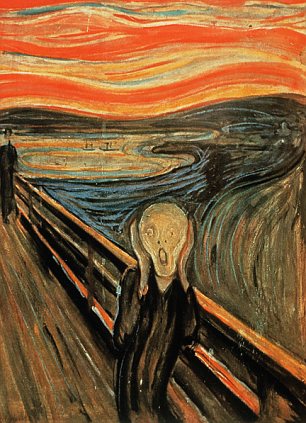
The Scream
Artist: Edvard Munch
(who theoretically had bipolar)

One of the things that has been making me feel vulnerable lately is my recent diagnosis of bipolar disorder. For those of you who are unfamiliar with this diagnosis, it used to be called manic-depressive disorder. I’m diagnosed with type 2, which means I’ve only been “hypomanic” and not “fully manic.” Hypomania increased my irritability, irrationality, and impulsivity while (on a happier note) making me feel that I couldn’t be wrong, that I had the ability to climb the highest mountains and take on the world. I lost several people I considered friends during that period. And that still makes me feel abandoned and vulnerable. (Though, I have to admit, the online community is SO amazingly supportive, and I’m very thankful for you guys. You’re all rockstars!)


With the spirit of fighting my fears, I will admit that the reason my blog has been a bit quiet last week is because I was in the psych ward of the hospital. (My doctor was unfortunately not as handsome as the one above.) I was really angry at my psychiatric NP for putting me there, because I didn’t feel that I was in crisis at that time. But now that I’m out, I realize that he was trying to make sure I was stabilized and ready for my new job, which starts on the 2nd of September. He was being forward thinking, and I was very unappreciative. I guess I’ll have to thank him later.


I hadn’t originally planned on writing about my mental illness on this post – nor had I planned to mention that I’d been hospitalized in my upcoming weekly update. But when I was searching stock photos for a nice illustration of fear, I found the one above. It seemed fitting, somehow. Before I can change (and therefore master my new job), I need to admit to myself that I actually am in crisis. And to admit that, I need to make myself vulnerable. 


The picture I wanted to choose for this post is the one above – with the spooky religious images. I’d already been having a bit of a faith crisis before I was diagnosed with bipolar, but the diagnosis put my faith into a tailspin. What if…I thought…what if all this time that I thought I was being inspired or called by God, all those feelings of “rightness” and euphoria were just figments of a hypomanic mind? That is the most terrifying feeling I’ve ever experienced. The foundation of my faith was no longer stable. I’d say on the Richter scale this faithquake was about a 6.5. Most of my faith is still there, but I’m walking around all wobbly. There were a lot of things I felt that God had called me to do – writing is among them. I started writing this blog because I felt that God wanted me to write, and a blog would be a good place to practice both writing and marketing. Now I wonder…what do I blog for? If I give up on my faith, do I stop blogging?


Anyway, putting my vulnerability and faith aside, my own diagnosis of mental illness is a fantastic segue to plug my upcoming Suicide and Mental Illness Theme Read. Don’t forget to stop by my blog in September and October to see what people are reading and watching for this event. I’ll also be having a couple of giveaways. You’re welcome to jump in and participate at any point in time…all you need to do is read or watch something that educates you on suicide or mental illness. It can even be something that’s an accurate portrayal of mental illness – just tell us why you think it’s not. 🙂 I have a list of suggestions for both books and movies.

The Week at Resistance is Futile


Well, the Suicide and Mental Illness Awareness Theme Read hosted here at Resistance is Futile is coming upon me really quickly, and I still haven’t written a post with suggestions. So I decided I would throw in some links for you to check out. 🙂

Popular Mental Illness books (Goodreads list) – Several of the books on this list I have already read or are on my TBR mountain.

11 of the most Realistic Portrayals of Mental Illness in Novels – This is a pretty interesting article with some good suggestions. And don’t miss the embedded list of 20 Greatest Memoirs of Mental Illness

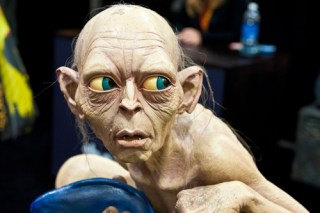
Mental Illness in Fiction (Wikipedia) – This interesting list includes some much older books as well as some unexpected inclusions (LOTR? – Ok, yeah, I guess Golem was mentally ill, but…it DOES make kind of a fun list, though. And you can feel free to be )

Contemporary YA books featuring mental illness – What is a list of books without YA these days? 😉

NAMI Blog: The Top 10 Movies about Mental Illness – This is a really good list (should be, coming from NAMI). I’ve seen 6 of them. 🙂

10 Gripping Films about Mental Illness – This list seems pretty good, as well. 

10 Best Portrayals of Mental Illness in Modern MoviesThis list, I suspect, is more about the acting than about psychology. From I totally agree with the assessment of great acting on this list!


This week in Futile Resistance World…

My friend and I watched another two storyarcs of the William Hartnell years for Doctor Who. We’ve made it a good way through Hartnell’s years, and we have decided to move ON to the second doctor. 🙂 YAY!
This week I volunteered 20 hours at the text center


I watched Elysium – which turned out to be a rather philosophical movie with liberal leanings. The whole, everybody-deserves-to-have-medical-care lean. 😉 I found the movie rather sad because the problems portrayed were SO easily translated to problems we’re seeing in today’s world. I know that’s the point of dystopias. But it still made me sad that we should have to question whether a human being deserves to be denied medical treatment just because he was born in the wrong part of the world. 😦

I watched this movie with my nephew. I didn’t think it was fantastic, but my nephew LOVED it. 🙂 Then again, I’m not a purist, so I’m not particularly concerned about the differences between the original movies and this movie…I just found the humor sort of stupid and the turtles were really ugly to look at. So. Meh.

Other posts on Resistance is Futile…

My blog has been really slow lately, but here’s a little something if you’re following my “epic poem” about Facing my demons.

Newly Acquired

Thought I would review the TV show Monk for my Suicide and Mental Illness Awareness theme. This seemed a nice accompaniment, especially since I love the Pop Culture and Philosophy series. Bought this one on my Nook.

This is the first book in a series. I was asked to do a blog tour for the second book in the series, so I’m reading this one first. Got it in hardcover from the library.

ARC provided by publisher
Blog tour and giveaway on 9/4
ARC provided by publisher
Blog tour and giveaway on 10/7
I hope to read this book during September and October’s Suicide and Mental Illness Theme Read. Purchased it in paperback.
Bought this in paperback

Storm Thief, by Chris Wooding

The Storm Thief, by Chris Wooding

Genre: Young Adult Dystopia, Science Fiction, Ages 11-14

Reason for Reading: This was my bookclub book for this month. 

Summary: The island city of Orokos has been trapped in isolation for so long that the idea of a “world outside Orokos” had become a dream for only the naive and the fanatics. There is nothing outside of Orokos, and Orokos is nothing but city, ghetto, and the ruling Protectorate. Chaos storms wreak havoc upon Orokos and its inhabitants – picking people up and dropping them elsewhere; crippling some people while giving life to others. Even eyeshadow isn’t too small to be overlooked by the probability storms.

When Rail and Moa make a snap decision to hide an expensive artifact from their Thief Mistress, they must flee with an assassin hot on their trail. While running, they come across a golem, Vago, who’d been misplaced by a probability storm before he had any idea of who he was, where he was from, or why he was made. Where can these refugees go when the Protectorate rules with an iron fist – keeping ghetto-folk away from the city? Their path is simply a series of coincidences strung together…leading, where?

My Thoughts: I really enjoyed this book. The characters were simple enough to flow well in a book for young teens, but each character had an interesting mixture of strengths and weaknesses. My favorite character was Vago, the Golem, whose process of self-discovery throughout the story made him intriguing. 

I loved the philosophical underpinnings of this story. It reminded us that the random power of entropy will always win. It always destroys what we have worked to build. Entropy is a non-stoppable machine. So why do we continue fighting it? Why do we continue dreaming of that “other world” when we have so much evidence that it doesn’t exist? Why do we clutch hopefully to mere coincidences and use them to fuel our dreams? 

Slight spoilerish material
This is a book about hope as well as one about chaos. One character, who was “fanatically” willing to risk the lives of her people in pursuit of a seemingly impossible dream said: “We can stay here with our dreams just out of reach, or we can risk everything to reach them.” Even after having finished the book, I’m still not certain which was the right thing to do – was it better for her people to risk everything in pursuit of their dreams? Or was it foolish? Is it better to keep yourself safe by being cynically aware of the brutality of the world, or is it better to hope, dream, or love?

To me, the lasting message of the book is: your life might be nothing more than a series of coincidences that are out of your control, but how you respond to the world defines who you are – and YOU decide how you respond. I’m not sure whether I agree with this philosophy or not. Lately, I’ve had a bit of a faith crisis – which makes the life-is-a-random-string-of-coincidences theory sound rather rational. But I know what everyone expects me to say is that God is in control, it’s not a string of coincidences. 😉